 Vista

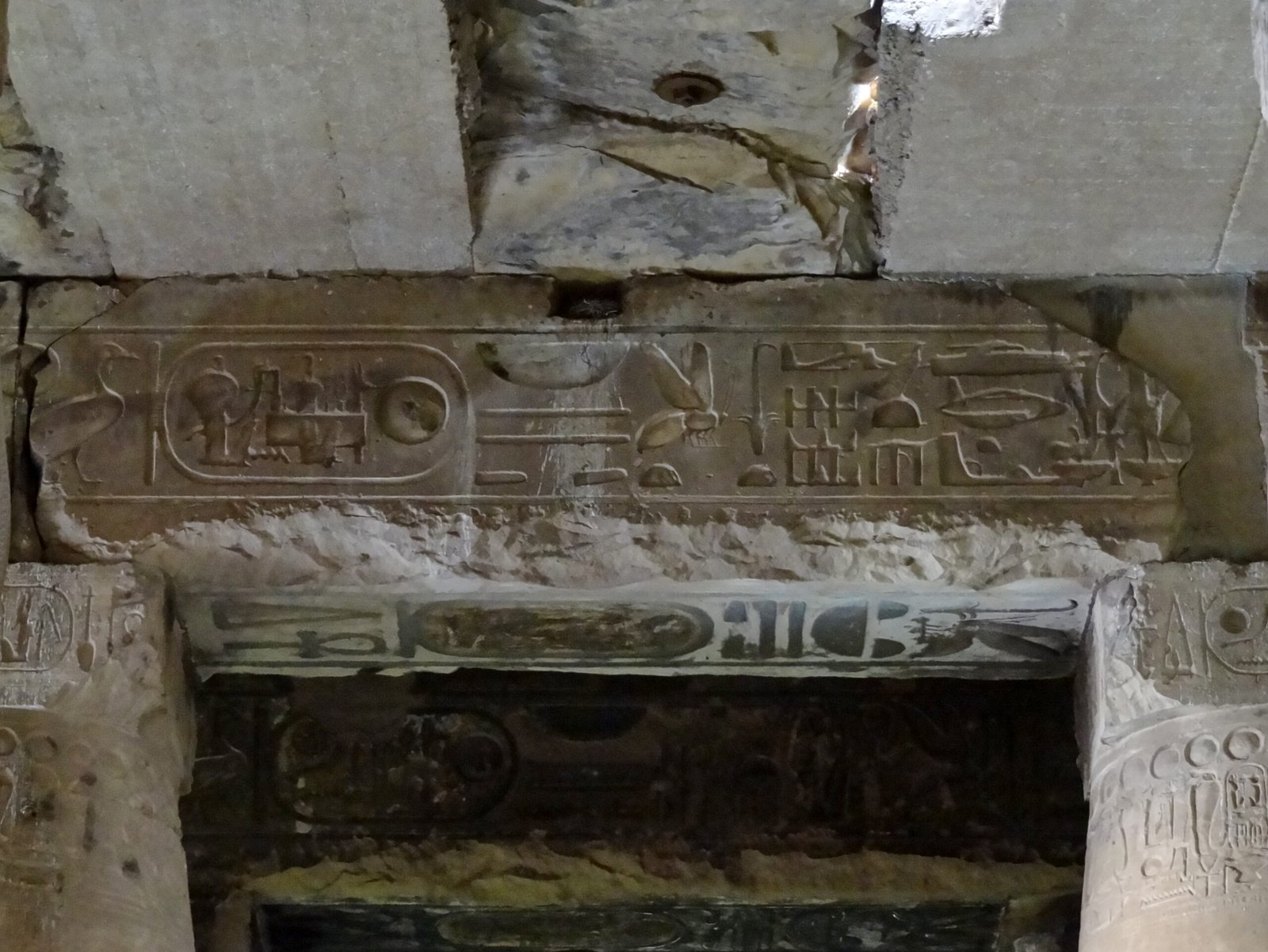
Short answer: No. The so-called “helicopter hieroglyphs” in the Temple of Seti I at Abydos are not a picture of a helicopter. They are a palimpsest: an older inscription of Seti I was filled in with plaster and carved again with the titles of his son Ramesses II. When the plaster eroded, parts of both texts became visible at once, and the overlap looks like a modern machine.

Quick Facts
| Point | Detail |
|---|---|
| Location | Temple of Seti I (Great Temple of Abydos), Upper Egypt |
| Original carving | Seti I, reigned roughly 1294-1279 BCE (dates vary by chronology) |
| Recarving | Ramesses II, Seti’s successor, roughly 1279-1213 BCE |
| What it is | A palimpsest of two overlapping royal inscriptions |
| Viral claim | A helicopter, plane, submarine or glider carved in stone |
| Scholarly view | Egyptologists reject the machine reading; the effect is pareidolia |
Where is the carving?
The carving sits on an architrave, a stone beam, in the Temple of Seti I at Abydos, one of the great temples of the New Kingdom. The temple is best known for its long gallery with the Abydos King List, where Seti I and his son Ramesses II present offerings to the cartouches of earlier kings. The “helicopter” is a small detail in the same building, and photos of it circulate widely online. Some people claim the images are fake. They are real photographs of a real carving, which is why a correct explanation matters.
What is a palimpsest?
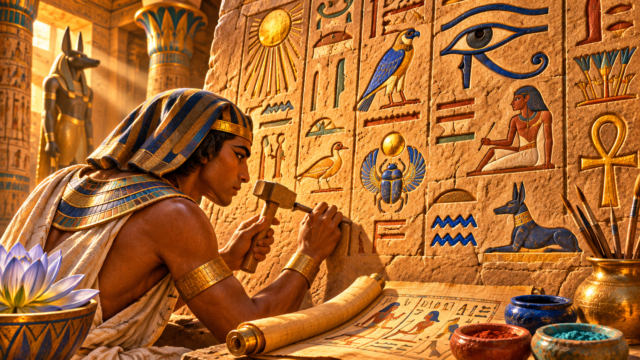
A palimpsest is a surface that has been written on more than once, with traces of the earlier text still showing. In Egypt, kings often reused or recarved monuments. The original carving made under Seti I names him as one who suppresses the “nine bows”, the traditional enemies of Egypt, and includes his throne name Menmaatra. Later, Ramesses II had those hieroglyphs filled with plaster and carved his own titles over them, such as a protector of Egypt who repels foreign lands, with his throne name Usermaatra-Setepenre.
Over the centuries the plaster weathered away. The result is two partly visible texts in the same space. One account of the pattern says that a bow sign from Seti’s text and two arm signs from the later text combine to give the illusion. The shapes that viral posts call a helicopter, a plane and a submarine are simply pieces of hieroglyphs from different inscriptions sitting on top of each other.
Why Ramesses II?
Ramesses II is known among Egyptologists for frequently overwriting or replacing earlier texts to strengthen his own legacy. Recarving his father’s titles was a normal royal practice, and it fits what we see at other sites. The layering in this case was not a puzzle left by a lost civilisation. It was a record of changing royal names.
Why people see a helicopter
The effect is pareidolia, our habit of seeing familiar patterns in random or unclear shapes. If you already know what a helicopter looks like, a long body with a tail and a rotor-like shape seems to jump out. The Egyptian reading is the opposite: the signs are standard hieroglyphs, and each one can be matched with its source text.
The claim was also helped by the way it is usually shown. Cropped photos remove the surrounding inscription, the cartouche and the rest of the line. Without that context, the shapes are free to look like anything. The full wall shows ordinary hieroglyphic lines.
- The shapes are carved in stone with the same tools and style as the rest of the wall.
- Each “vehicle” can be split into known hieroglyphs from two inscriptions.
- No tomb, text or workshop in Egypt shows any aircraft technology.
- Egyptologists unanimously treat it as a palimpsest, not a machine.
Story box (imagined): A craftsman is told to update the royal titles on a beam. He fills the old carving with plaster and cuts the new king’s name into it. He expects the plaster to last forever. Three thousand years later it falls away, and visitors with smartphones see a helicopter where he saw a title.
How to check a viral Egypt claim yourself
- Ask for the full photo, not a crop, and for the name of the temple and the room.
- Look for a transcription and translation by an Egyptologist.
- Check whether the object appears anywhere else, in texts or tombs.
- Search for the name of the site plus “palimpsest” or “recarved” before sharing.
The same habits help with the Dendera light claim and with alien pyramid theories. For the bigger picture of Egypt’s mysteries, see Ancient Egypt Mysteries.
History, Mythology and Speculation
| Category | Examples |
|---|---|
| History | Seti I’s titles, Ramesses II’s recarving, weathered plaster |
| Mythology | The “nine bows” as a symbol of Egypt’s enemies |
| Speculation | Helicopters, planes, submarines, time travel |
Myth vs Fact
| Popular claim | Careful answer |
|---|---|
| It shows a helicopter | It shows overlapping hieroglyphs from two kings |
| The photo is fake | The photo is real; the interpretation is wrong |
| Egyptologists cannot explain it | They explain it as a palimpsest |
| It proves ancient aircraft | No aircraft evidence exists in Egypt |
Frequently Asked Questions
Do Egyptian carvings show a helicopter?
No. The Abydos carving is an overlap of two royal inscriptions.
Where are the helicopter hieroglyphs?
In the Temple of Seti I at Abydos.
What is a palimpsest?
A surface where an older text was covered or erased and written over, leaving traces of both.
What did the original carving say?
A title of Seti I about suppressing the nine bows, the enemies of Egypt.
Who recarved it?
Ramesses II, the son and successor of Seti I.
Is the photo edited?
The carving is real. Many viral images are cropped or edited to remove context.
What is pareidolia?
The human tendency to see familiar shapes such as faces or objects in unclear patterns.
Why do these claims go viral?
A single striking image spreads easily, while the correct explanation needs context.
Reliable Sources
- Wikipedia: Helicopter hieroglyphs (cites Peter Brand, Ramesses II, 2023, and J. Roberson, KMT 2016)
- Egypt Museum: Helicopter Hieroglyphs
- Ancient Origins: Helicopter Hieroglyphs? Debunking the Abydos Carvings
Last updated: 25 November 2026. Related reading: Dendera light, did aliens build the pyramids?











Share Your Opinion
Comments are closed on this post.