 Vista
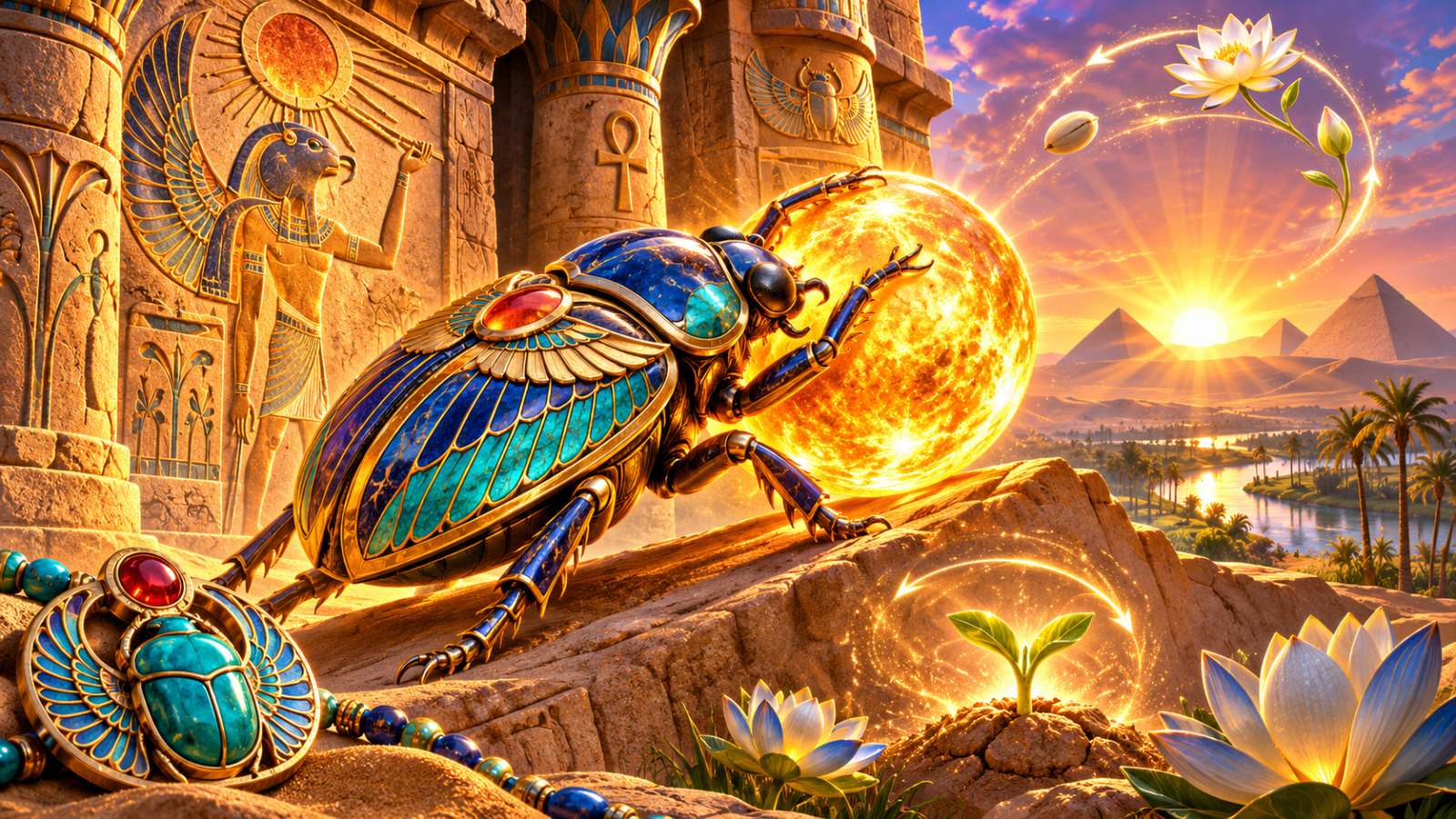
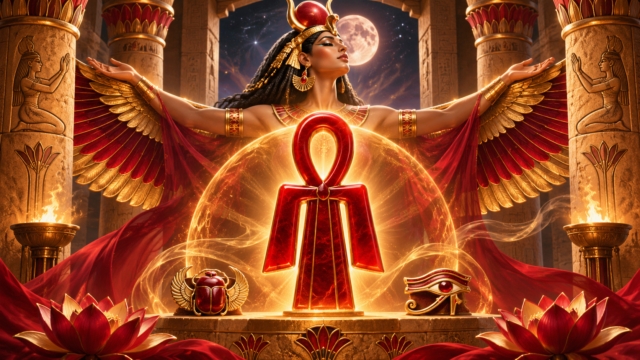
The scarab beetle was one of the most popular symbols of ancient Egypt, standing for rebirth, renewal and the rising sun. It is a dung beetle (the sacred scarab, Scarabaeus sacer) that rolls a ball of dung across the ground. Egyptians saw this as an image of the sun god’s daily journey across the sky, and linked the beetle with the god Khepri, whose name means “he who comes into being”. Scarab amulets, seals and heart scarabs were made in huge numbers, from cheap faience to precious stone. The heart scarab was placed on the mummy with a spell asking the heart not to speak against its owner at the judgment.
This guide explains why the beetle was sacred, the role of Khepri, the types of scarabs, the heart scarab, real beetle science, and which popular claims are myth.
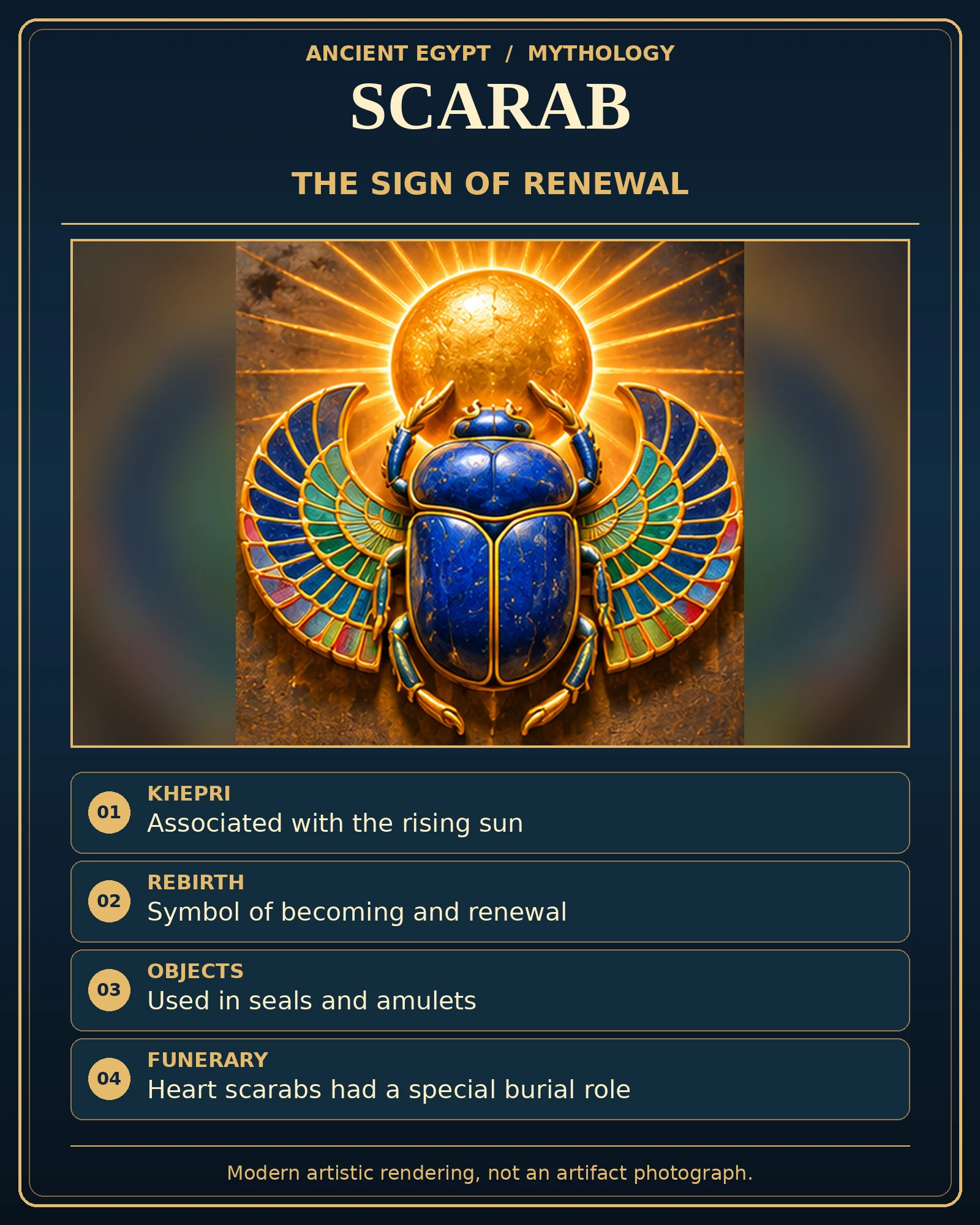
Scarab Quick Facts
| Item | Detail |
|---|---|
| Insect | The sacred scarab, a dung beetle |
| God | Khepri, the rising sun, shown with a scarab for a head or as a beetle |
| Meaning | Rebirth, renewal, transformation and the morning sun |
| Uses | Amulets, seals, jewellery, commemorative scarabs, heart scarabs |
| Key spell | Book of the Dead Spell 30B |
| Era | Common from the Middle Kingdom onward |
Why Was the Scarab Sacred?
Egyptians watched dung beetles push round balls across the desert and saw a picture of the sun disc being rolled across the sky. They also noticed that new beetles seemed to appear from the ball. In fact, the female lays eggs in the dung ball and the young feed on it, but the Egyptians believed that life came from the ball itself, which made the beetle a sign of self-created life. This idea fits with the god Khepri and with the sunrise. Our guide to Khepri explains the god in more detail.
Khepri and the Rising Sun
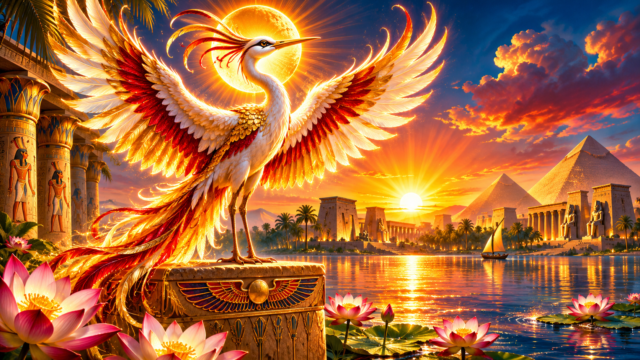
Khepri is one of the three main forms of the sun god: Khepri at dawn, Ra at noon and Atum at sunset. In art, he may appear as a man with a scarab for a head, or as a scarab pushing the sun disc. The Egyptian word for the beetle (kheper) is connected with the verb “to become”, so the beetle also stood for change and coming into being.
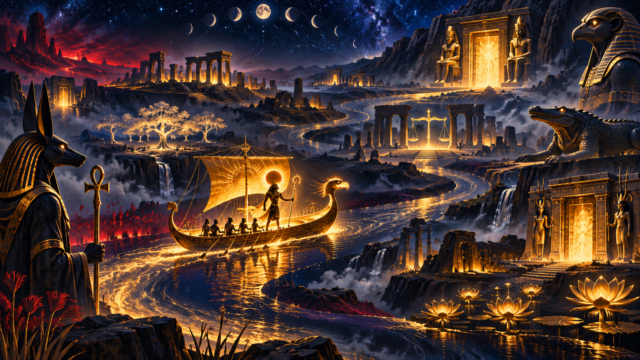
Story box (retold from solar belief): The night is almost over in the Duat. At the last gate, the boat of Ra turns into a scarab. The beetle lifts the glowing disc of the sun and pushes it up over the eastern horizon. On the riverbank, priests greet the dawn. A child sees a real beetle on the road, pushing a ball of dung, and her mother smiles and says, “Khepri is up early.” This retelling is imaginative, based on how Egyptians linked the beetle and the sun.
Types of Scarabs
| Type | Use |
|---|---|
| Amulet scarabs | Worn by the living and placed on the dead for protection and rebirth |
| Seal scarabs | Flat undersides carved with names or designs, used to stamp clay |
| Commemorative scarabs | Inscribed with royal announcements, such as those of Amenhotep III |
| Heart scarabs | Large stone scarabs placed over the heart of a mummy |
| Winged scarabs | Placed on the chest, symbolising the sun’s rising |
The Heart Scarab and Spell 30B
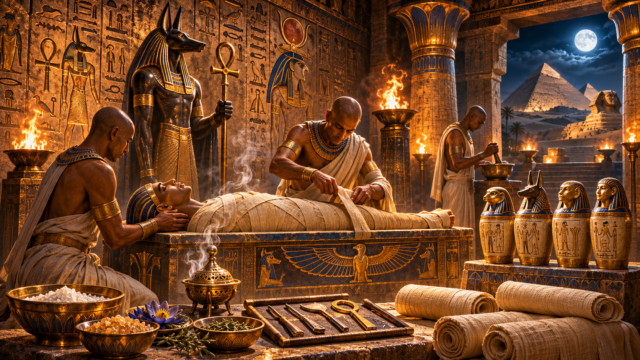
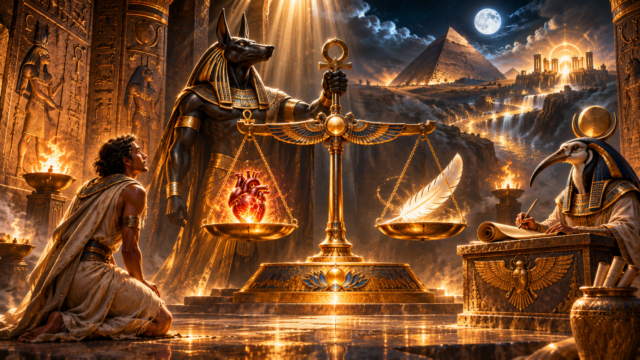
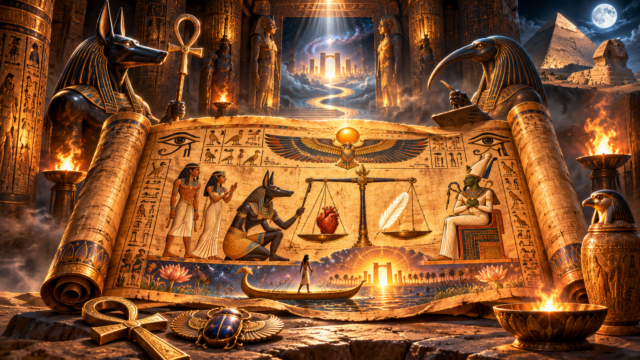
The heart scarab was inscribed with Spell 30B, in which the dead person addresses the heart and asks it not to testify against them, nor to weigh heavily in the balance. It was placed with the mummy because the heart was weighed against the feather of Ma’at. Our guide to the weighing of the heart explains the judgment, and our mummification guide explains why the heart was left in the body.
Real Dung Beetle Facts
Dung beetles are real and remarkable. Studies by scientists have shown that some species use the sun, the moon and even the Milky Way to roll their dung balls in a straight line. This does not prove that the Egyptians knew this, but it is a fun reminder that the beetle is a real animal with a real behaviour that inspired a symbol.
History, Mythology and Speculation
| Category | What belongs here |
|---|---|
| History | Scarab amulets and seals in tombs and settlements; heart scarabs; commemorative scarabs |
| Mythology | Khepri pushing the sun; the scarab as rebirth in the Duat |
| Speculation | That Egyptians knew exact beetle navigation; modern “luck” and energy claims for scarab jewellery |
Myth vs Fact
| Popular claim | Reality |
|---|---|
| Beetles are born from dung. | Eggs are laid in the dung ball. Egyptians believed the life came from the ball itself. |
| The scarab was a god. | The god was Khepri. The scarab was his symbol. |
| Scarabs were only for the rich. | They ranged from cheap faience to precious stones. |
| Scarab jewellery brings luck. | No scientific evidence supports this. It is a cultural symbol. |
| Mummies were filled with flesh-eating scarabs. | That is a film invention (for example in The Mummy movies), not an Egyptian belief. |
Frequently Asked Questions About the Scarab
What does the scarab symbolise?
Rebirth, renewal and the rising sun.
Who is Khepri?
The god of the rising sun, often shown as a scarab or a scarab-headed man.
What is a heart scarab?
A large scarab amulet placed on a mummy with a spell asking the heart not to speak against its owner.
Why was the dung beetle important?
Its rolling of a ball looked like the sun moving across the sky, and new beetles seemed to emerge from the ball.
Were scarabs used as seals?
Yes. Many have inscribed flat undersides used to stamp clay.
What is Spell 30B?
A Book of the Dead spell addressed to the heart, often inscribed on heart scarabs.
Do flesh-eating scarabs exist?
Not in Egyptian belief. They come from movies.
Is scarab jewellery lucky?
There is no evidence of luck. It is a cultural symbol with a long history.
Reliable Sources
- World History Encyclopedia: Egyptian Mythology
- Egypt Exploration Society: Gods of Egypt
- The Metropolitan Museum of Art: Divine Egypt
Last updated: 25 November 2026. Related reading on Vista Hub: our guides to Khepri, the weighing of the heart, mummification, Ra and Atum.
Related guides: Khepri: Scarab God of the Rising Sun, Rebirth and the Sacred Dung Beetle · Ancient Egyptian Symbols and Their Meanings: 15 Sacred Signs, Amulets and Mythology














Share Your Opinion
Comments are closed on this post.