 Vista
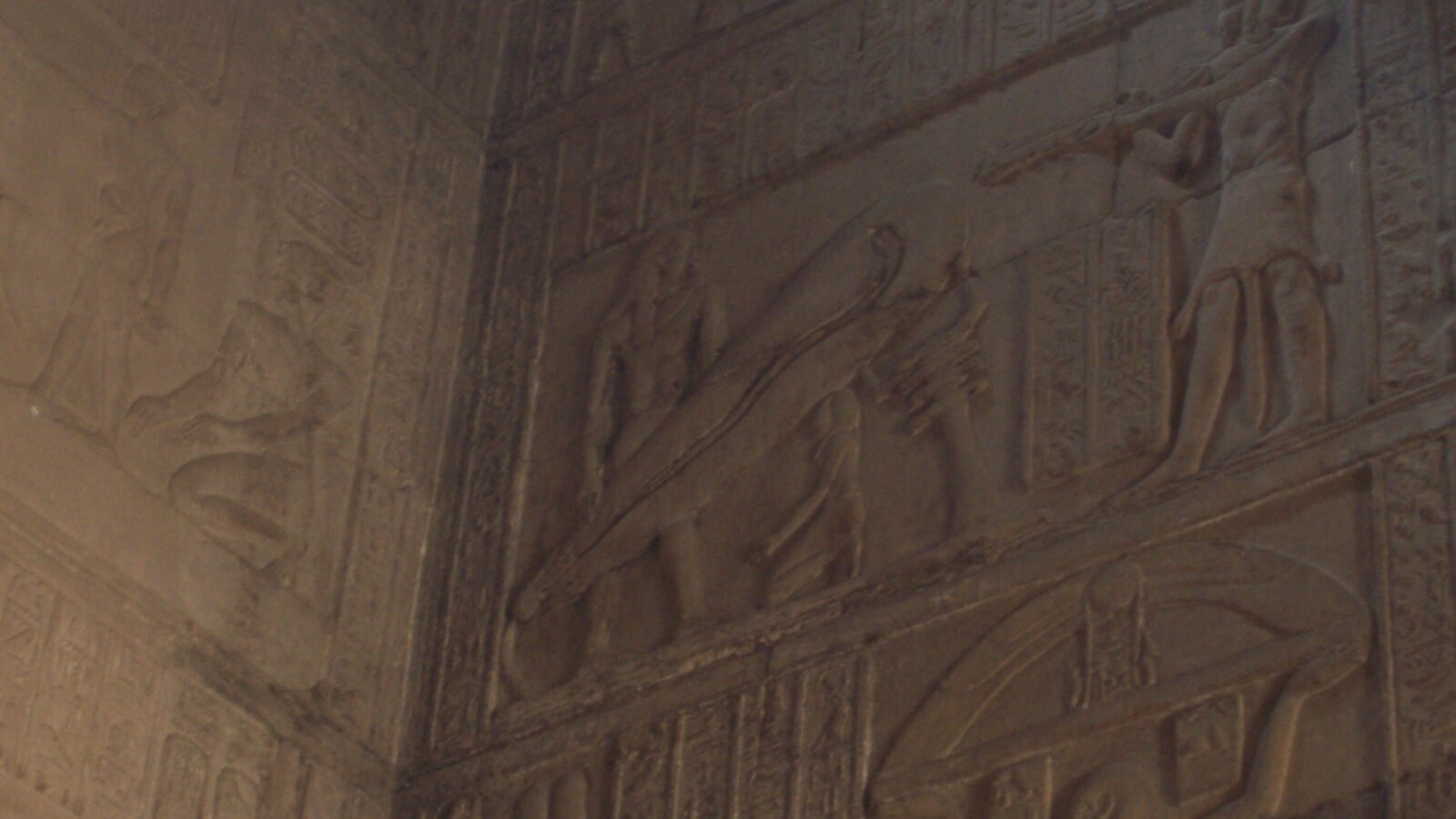
Short answer: No. The Dendera light is a set of reliefs in the crypts of the Hathor temple that some people say show giant electric light bulbs. Egyptologists read the scenes as the god Harsomtus, shown as a snake rising from a lotus flower, a creation motif. The accompanying hieroglyphs describe this, not electricity. There is no wire, socket or power source in the scene, and no evidence that ancient Egyptians had electric light.


Quick Facts
| Point | Detail |
|---|---|
| Location | Crypts of the Temple of Hathor at Dendera, Upper Egypt (Qena) |
| Period | Late temple; construction of the present building began around 54 BCE under Ptolemy XII |
| Number of scenes | Three objects, each shown in two reliefs (one in south crypt 1, chamber C; one in room G) |
| Mainstream reading | Harsomtus as a serpent emerging from a lotus, inside an oval container |
| Bulb claim | Popular online and in fringe books, not accepted by scholars |
What is the Dendera light?
The scenes show a long oval shape with a wavy snake inside it. A standing figure holds one end, and in some scenes a pillar with arms (a djed pillar) supports the other end, with small kneeling figures below. People who promote the light-bulb idea say the oval is a glass bulb, the snake is a filament and the pillar is an insulator or cable.
The temple crypts are narrow decorated chambers around the heart of the temple, on three sides and three levels. The best known scenes are in south crypt 1, chamber C. Because the same motif appears several times with small changes, scholars can compare the scenes and their texts, and that comparison is what the electricity story cannot survive.
What the hieroglyphs say
The text around the reliefs names the god Harsomtus, “the great god who dwells in Dendera”, and describes him as a living Ba rising from a lotus flower on a barge. Other scenes in the temple show the same snake-in-lotus image attached to the bow of a boat. The oval is a container called hn, which scholars suggest may represent the womb of the sky goddess Nut. In this reading, the scene is about the rising sun and creation moving through the night, a theme found throughout Egyptian religion.
The inscriptions also give practical details such as the metal and size of the images, for example “gold” and a height measured in handbreadths. These are descriptions of cult statues, not of lamps. Statues like these were kept underground in the crypts as the bodies of the gods, and according to the temple tradition they were revived through contact with light on the temple roof. So light is indeed part of the story, but as sunlight in a ritual, not electrical power.
Why the electricity claim fails
- No wires, sockets, generators or glass bulbs are known from ancient Egypt.
- The snake emerges from a lotus, and the lotus-and-serpent motif appears in other temple scenes with clear mythological captions.
- The texts name a god and describe statues. They do not describe a lamp, a current or a power source.
- The scenes are part of a ritual setting about creation and rebirth, which matches the rest of the temple’s decoration.
- Dendera is a late temple. If this were advanced technology, it would be strange that earlier and later Egyptian records never mention it.
The poles, the mirrors and other arguments
Supporters of the technology idea sometimes point to a text about high poles covered with copper plates, said to be erected to break storms from above, and argue this describes lightning rods or electrical equipment. Egyptologists have examined such arguments in detail and explain the passage differently, and no electrical device has ever been found with it.
Another long-standing question is how artists lit deep tombs and crypts. The answers discussed by researchers are oil lamps and torches, and the use of mirrors or reflected sunlight. In the 19th century the astronomer Norman Lockyer discussed a mirror system as one explanation. The lack of soot in some chambers is often quoted as a puzzle, but a missing detail in one place does not become proof of electricity. It is a reason to study the method more closely.
What about battery theories?
The so-called Baghdad battery is a clay jar from Mesopotamia, not Egypt, and what it was used for is debated. It does not show that Egyptians used electric light. Using an object from another culture and another period to explain Dendera is a mismatch, not evidence.
Story box (imagined): A modern visitor stands in the crypt and sees an oval with a snake inside. They say it looks like a bulb. An ancient priest would say it is a lotus from which creation begins, and that the statue of the god waits below until the sunrise ritual. Both see the same shape, but only one knows the religion that made it.
Why does the bulb idea feel convincing?
Humans are good at finding familiar shapes in unfamiliar images. This tendency is called pareidolia. A glass-like oval with a wavy line inside matches the picture of a bulb we already carry in our heads. Without the hieroglyphs, the match feels strong. With the hieroglyphs, the match disappears.
The claim also spreads because it is a visual claim. One photo is enough, and the photo needs no translation. Careful answers need a translation of the text, knowledge of the myth and a look at other scenes in the temple, which is slower. That is the whole reason such claims travel faster than the corrections.
If you enjoy this kind of question, read how another viral claim falls apart in the Abydos helicopter hieroglyphs and Did aliens build the pyramids?. For the goddess of the temple, see our guide to Egyptian gods in Egyptian Gods and Goddesses.
History, Mythology and Speculation
| Category | Examples |
|---|---|
| History | Hathor temple at Dendera, crypt reliefs, accompanying inscriptions |
| Mythology | Harsomtus as a serpent in a lotus, the womb of Nut, the rising sun |
| Speculation | Ancient electric lamps, lost technology, copper-pole theories |
Myth vs Fact
| Popular claim | Careful answer |
|---|---|
| It is a giant light bulb | It is read as a lotus and serpent, with a text naming a god |
| Egyptians had electricity | No evidence of electrical equipment |
| The snake is a filament | The snake is the god Harsomtus in creation imagery |
| Baghdad battery proves it | It is not Egyptian and its purpose is debated |
| The texts do not explain it | The texts around the reliefs do describe the scene |
Frequently Asked Questions
Is the Dendera light a bulb?
Scholars say no. The hieroglyphs describe a god in a lotus, not a lamp.
Where is it?
In crypts of the Hathor temple at Dendera, in Upper Egypt.
What does it show?
A serpent rising from a lotus flower inside an oval container, in the reading of Egyptologists.
Did Egyptians use electricity?
There is no evidence they did.
How did they light tombs?
Likely with oil lamps and torches, and sometimes with mirrors or daylight.
What is the Baghdad battery?
A clay jar from Mesopotamia whose use is debated. It is not Egyptian.
Is the temple ancient?
Yes, but it is a late temple. The present building dates from the Ptolemaic and Roman periods.
Why does the claim spread?
The relief looks like a bulb at first glance, and one photo is enough to start the story.
Reliable Sources
- Ancient Origins: Do the Dendera Temple Reliefs Show Electric Light Bulbs?
- Atlas Obscura: Dendera Light
- Wikipedia: Dendera light (with references to Egyptological literature)
Last updated: 25 November 2026. Related reading: Did aliens build the pyramids? Egyptian helicopter hieroglyphs.











Share Your Opinion
Comments are closed on this post.