 Vista
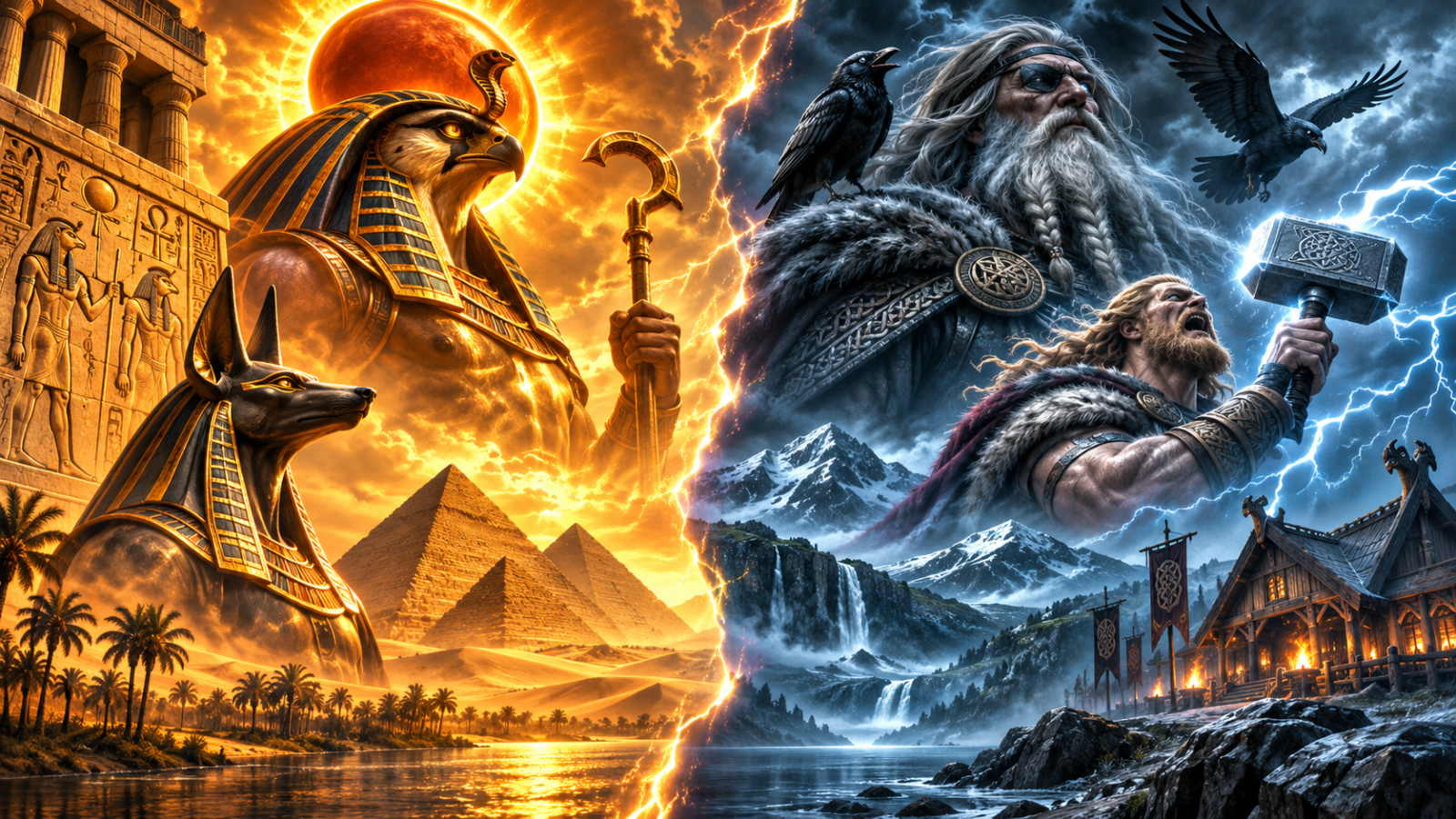
Short answer: Egyptian and Norse mythology come from very different worlds, a Nile civilisation and the Viking-age North, and there is no evidence of borrowing between them. They share broad themes such as a world of the dead, a cosmic serpent and a threatened order, but the stories are separate. Odin and Ra, for example, are not equivalents: Ra is a sun god and creator, while Odin is a god of wisdom, war and magic.
Quick Facts
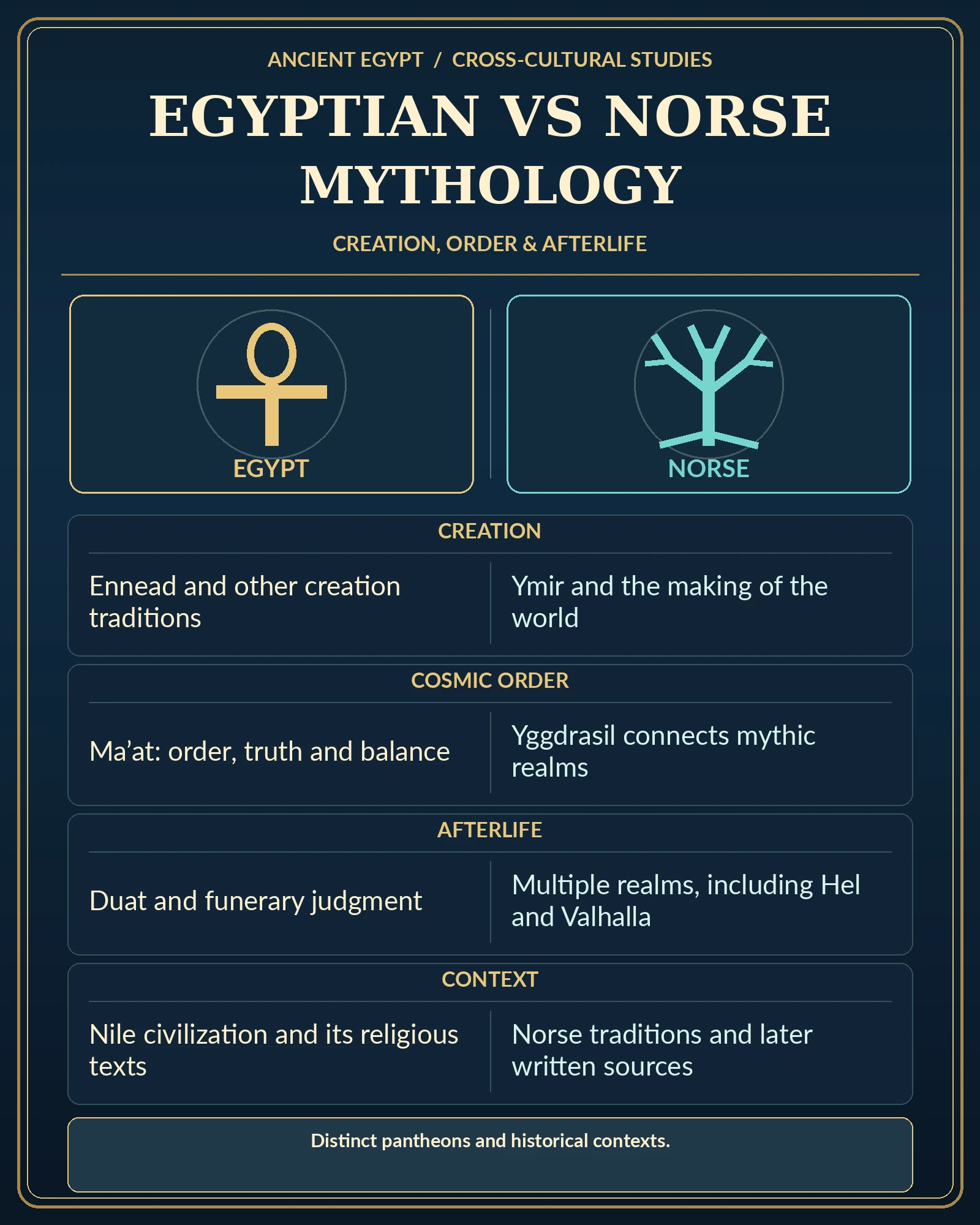
| Point | Egyptian | Norse |
|---|---|---|
| Chief god | Ra or Amun-Ra | Odin |
| Realm of the dead | The Duat, ruled by Osiris | Helheim, ruled by Hel, and other realms such as Valhalla |
| Cosmic serpent | Apep, enemy of Ra | Jormungandr, the world serpent |
| Sources | Tomb and temple texts, papyri | Poetic Edda and Prose Edda, written down in medieval Iceland |
Odin and Ra
Ra is the sun god who travels across the sky and underworld. Odin is the one-eyed Allfather who seeks wisdom and rules as a god of war and magic. If any Egyptian god is closer to Odin’s wisdom, people sometimes point to Thoth, but even that match is loose. Read more in our Norse mythology visual hub.
The Duat and Helheim
The Duat is the Egyptian underworld that the sun passes through each night and where the dead are judged. Helheim is the realm ruled by Hel, Loki’s daughter. Other Norse dead may go elsewhere, such as Valhalla for some warriors, so there is no single Norse afterlife. Learn more in our Hel guide.
Apep and Jormungandr
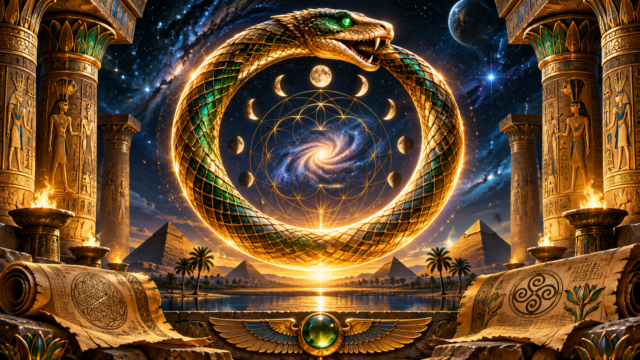
Apep is a giant serpent that attacks the sun boat every night and is defeated by gods each time. Jormungandr is the serpent that encircles the world and is fated to fight Thor at Ragnarok. Both are cosmic serpents opposing order, yet Apep is fought nightly while Jormungandr’s battle is saved for the end.
The end of the world
Norse myth has Ragnarok, a final battle followed by a renewed world. Egyptian religion emphasised daily and yearly renewal, though some late funerary texts also speak of a far future when the creator returns to the primeval waters. The ideas differ: Norse myth centres on a great final battle, Egyptian texts on cycles of renewal.
Story box (retold, simplified): Each night the sun boat sails into the Duat and a great serpent tries to stop it. In the North, a great serpent waits in the sea for the last day. Two cultures, two serpents, two different stories about order and chaos.
History, Mythology and Speculation
| Category | Examples |
|---|---|
| History | Egyptian texts from antiquity; Norse myths recorded in the Eddas |
| Mythology | Duat, Helheim, Apep, Jormungandr, Ragnarok |
| Speculation | Claims that Norse myth came from Egypt |
Myth vs Fact
| Popular claim | Careful answer |
|---|---|
| Odin is Ra | No |
| Apep and Jormungandr are the same | No, similar roles but separate myths |
| Vikings knew Egyptian myths | No evidence for direct borrowing |
Frequently Asked Questions
Is Odin like Thoth?
Both are linked with wisdom, but they differ in many ways.
Who rules the Duat?
Osiris rules the dead there.
Who is Hel?
Loki’s daughter who rules Helheim.
What is Ragnarok?
The Norse final battle that is followed by a renewed world.
Did Egyptians have an end of the world?
Some late texts mention it, but renewal themes are more central.
Are the sources equally old?
No. Egyptian texts are far older than the medieval Norse manuscripts.
Is there a Norse Anubis?
No exact match exists.
Where can I read more Norse myths?
See our guides to the Norns and Tyr.
Reliable Sources
- World History Encyclopedia: Egyptian Mythology
- Egypt Exploration Society: Gods of Egypt
- The Met: Divine Egypt
Last updated: 25 November 2026. Related reading: Egyptian vs Greek mythology, Apep the serpent of chaos.











Share Your Opinion
Comments are closed on this post.