 Vista
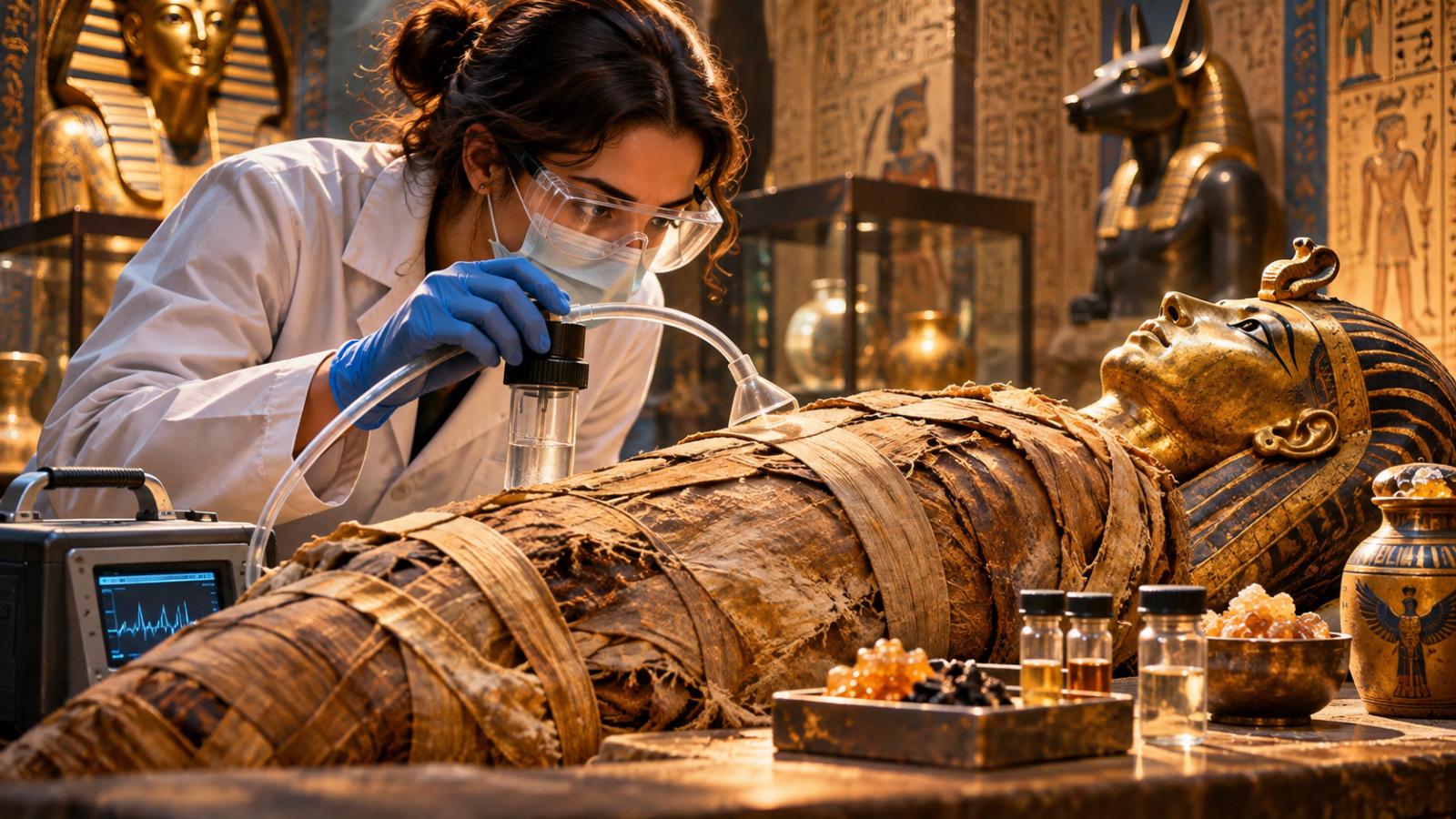
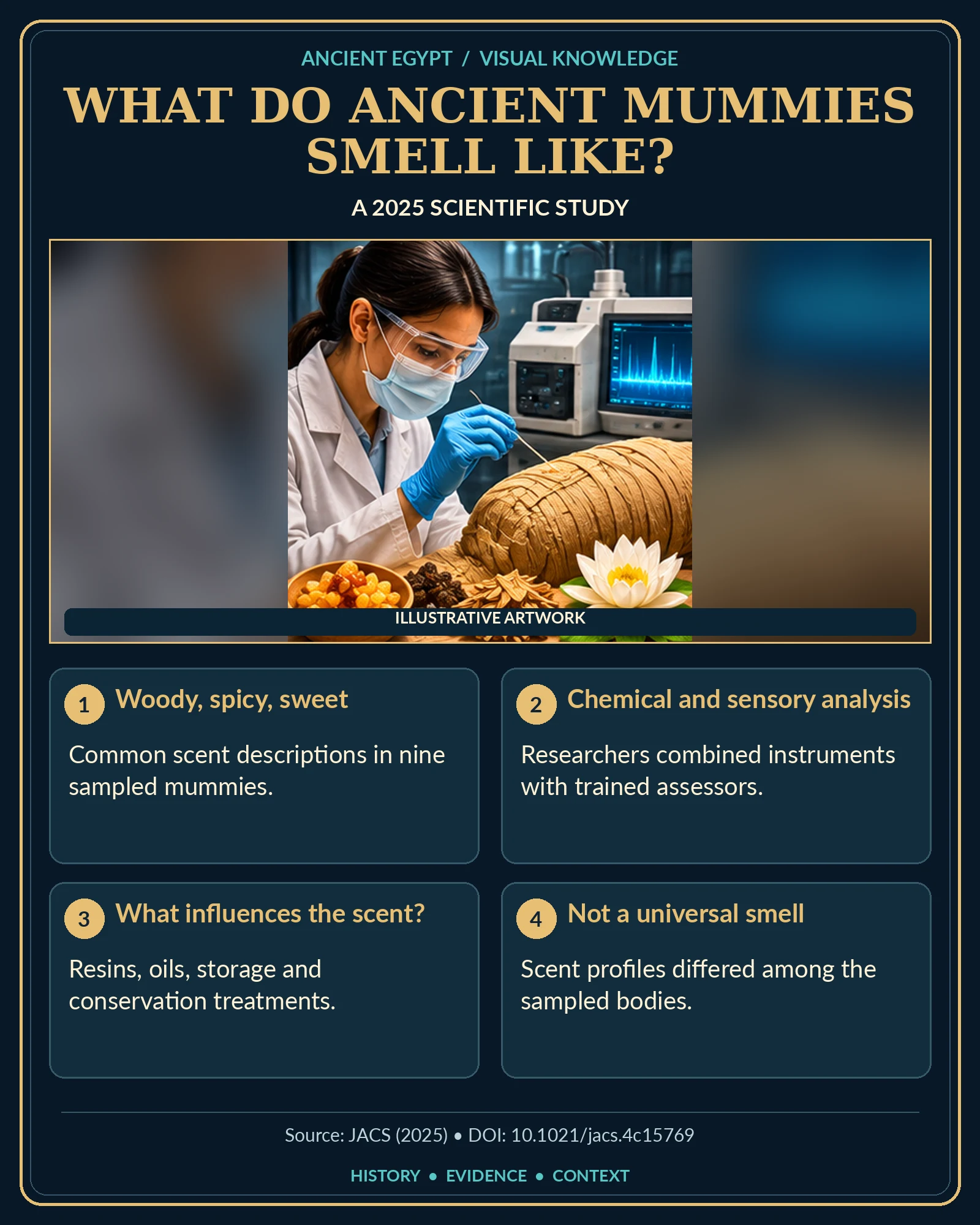
Short answer: A 2025 scientific study of mummies in the Egyptian Museum in Cairo reported scents described as woody, spicy and sweet rather than rotten, because embalming resins, oils and wood-like compounds survive and dominate. Smell varies with how a mummy was embalmed and stored.
Quick Facts
| Point | Detail |
|---|---|
| Typical reported scent | Woody, spicy, sweet |
| Main cause | Resins, oils, wood-derived compounds |
| Method | Chemical analysis plus trained human smellers |
| Variation | Depends on embalming and storage |
How do scientists study mummy smell?
Researchers use gas analysis to identify compounds released by a mummy and then ask trained panels to describe them. This avoids opening or damaging the remains. It also helps conservators judge the condition of objects.
Why does a mummy not smell like decay?
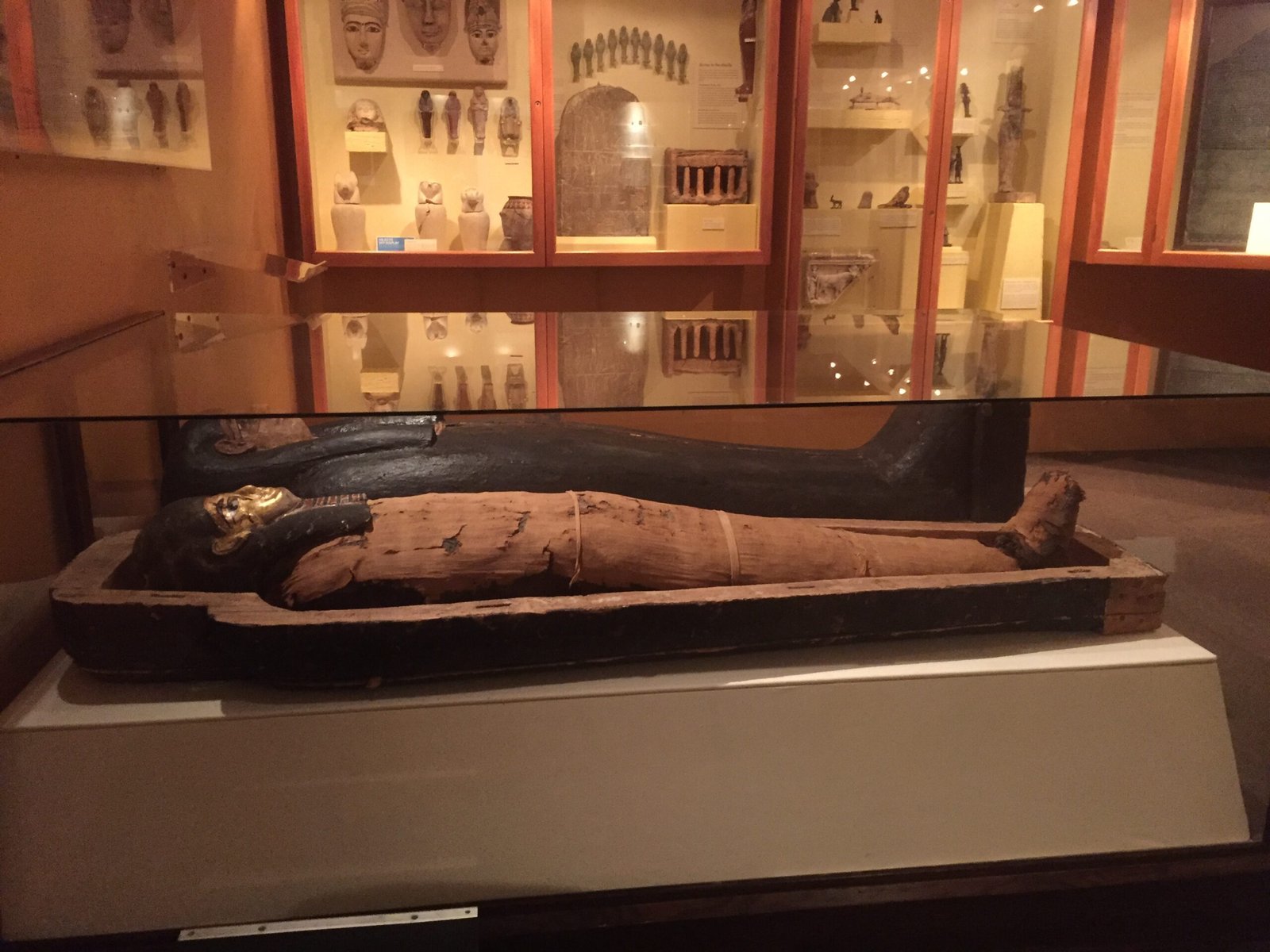
Natron salt dried the body, and resins and oils sealed it. Decay needs moisture and microbes, so thorough drying stopped it. Read the process in our guide on how mummies were made.
Hair, teeth and skin
- Hair can survive for thousands of years and may carry oils or resins.
- Teeth often survive well and show diet and wear.
- Skin becomes dry and leathery, with little odour of its own.
Story box (imagined): A conservator opens a sealed case and expects a bad smell. Instead she notices something like old cedar and sweet spice. The ancient embalmers’ ingredients are still speaking after thousands of years.
What the 2025 mummy smell experiment actually measured
The study published in February 2025 in the Journal of the American Chemical Society examined nine mummified individuals from the Egyptian Museum in Cairo. Researchers combined gas chromatography and mass spectrometry with descriptions from a trained sensory panel. The instruments separated and measured airborne chemicals, while the panel described the character and strength of the odours.
A museum mummy’s present-day smell is not necessarily identical to its smell when it was first embalmed. Chemicals can come from original oils and resins, later conservation treatments or microbial activity. This is why the study helps conservators as well as historians. Its sample of nine does not establish one universal scent for every Egyptian mummy. The scientific procedure does not require visitors to approach or touch ancient human remains.
Read the original institutional reference
History, Mythology and Speculation
| Category | Examples |
|---|---|
| History | Embalming materials, museum conservation |
| Mythology | Sweet scents tied to divine bodies |
| Speculation | Mummies smelling of death or curses |
Myth vs Fact
| Popular claim | Careful answer |
|---|---|
| Mummies smell rotten | Reported scents are woody and spicy |
| All mummies smell the same | It varies by embalming and storage |
| You can sniff mummies freely | Handling is restricted to protect remains |
Frequently Asked Questions
What does a mummy smell like?
Reported as woody, spicy and sweet.
Do mummies smell bad?
Not typically like decay.
Why do they smell like spices?
Resins and oils used in embalming.
Can hair survive in a mummy?
Yes, often.
Can I smell a museum mummy?
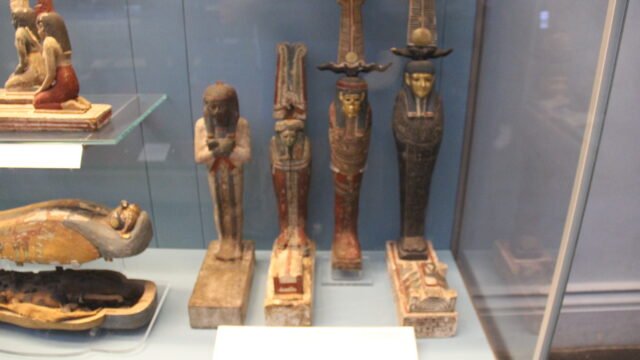
Museums keep mummies in protected cases.
Does smell help conservation?
Yes, it can show material condition.
Did Egyptians value scent?
Yes, incense and perfumed oils were used in ritual.
Is mummy dust dangerous?
Handling old remains can involve mould and dust, so experts use protection.
Reliable Sources
- World History Encyclopedia: Egyptian Mythology
- Egypt Exploration Society: Gods of Egypt
- The Met: Divine Egypt
Last updated: 25 November 2026. Related reading: Egyptian mummification explained.













Share Your Opinion
Comments are closed on this post.