 Vista
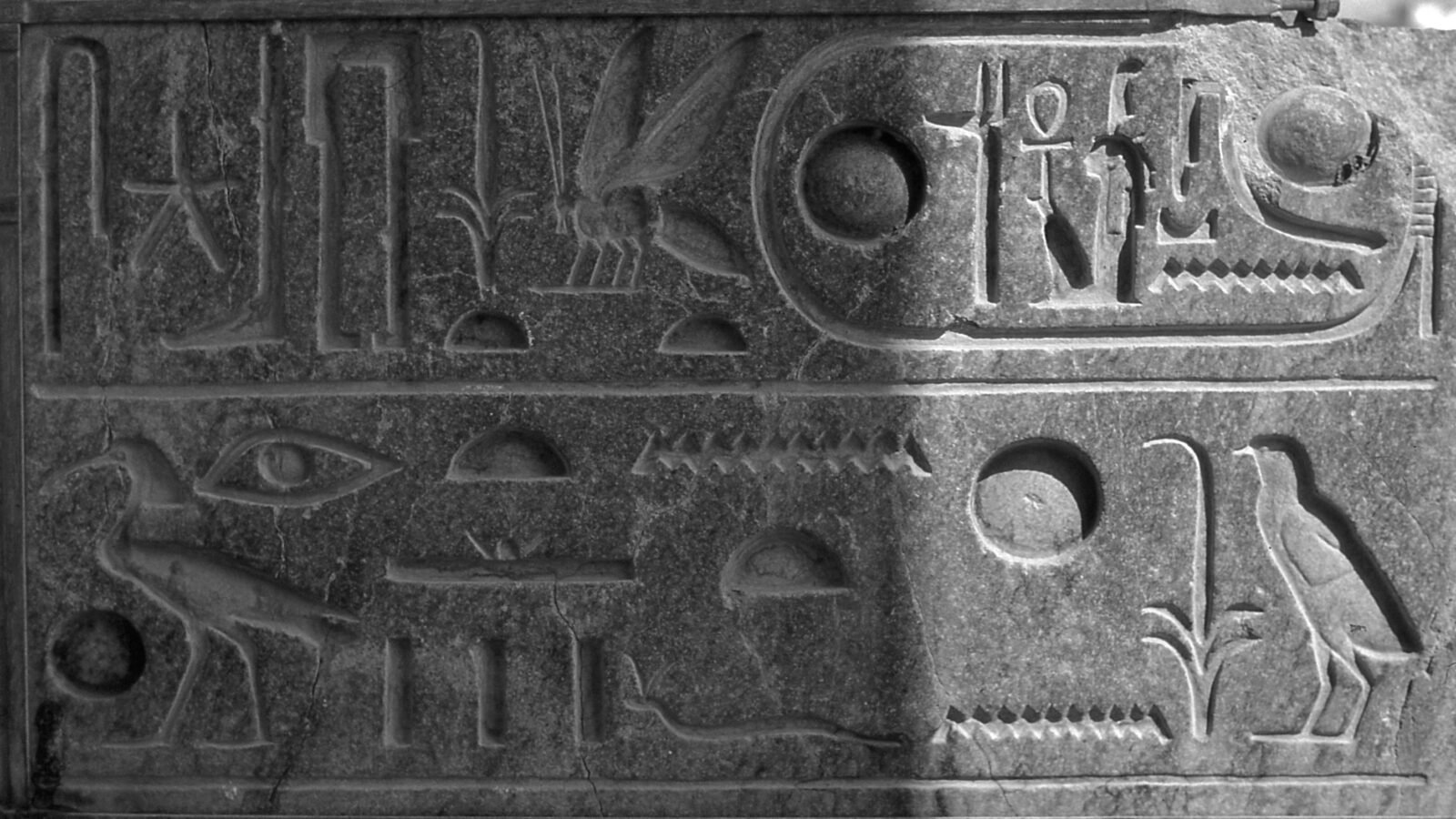
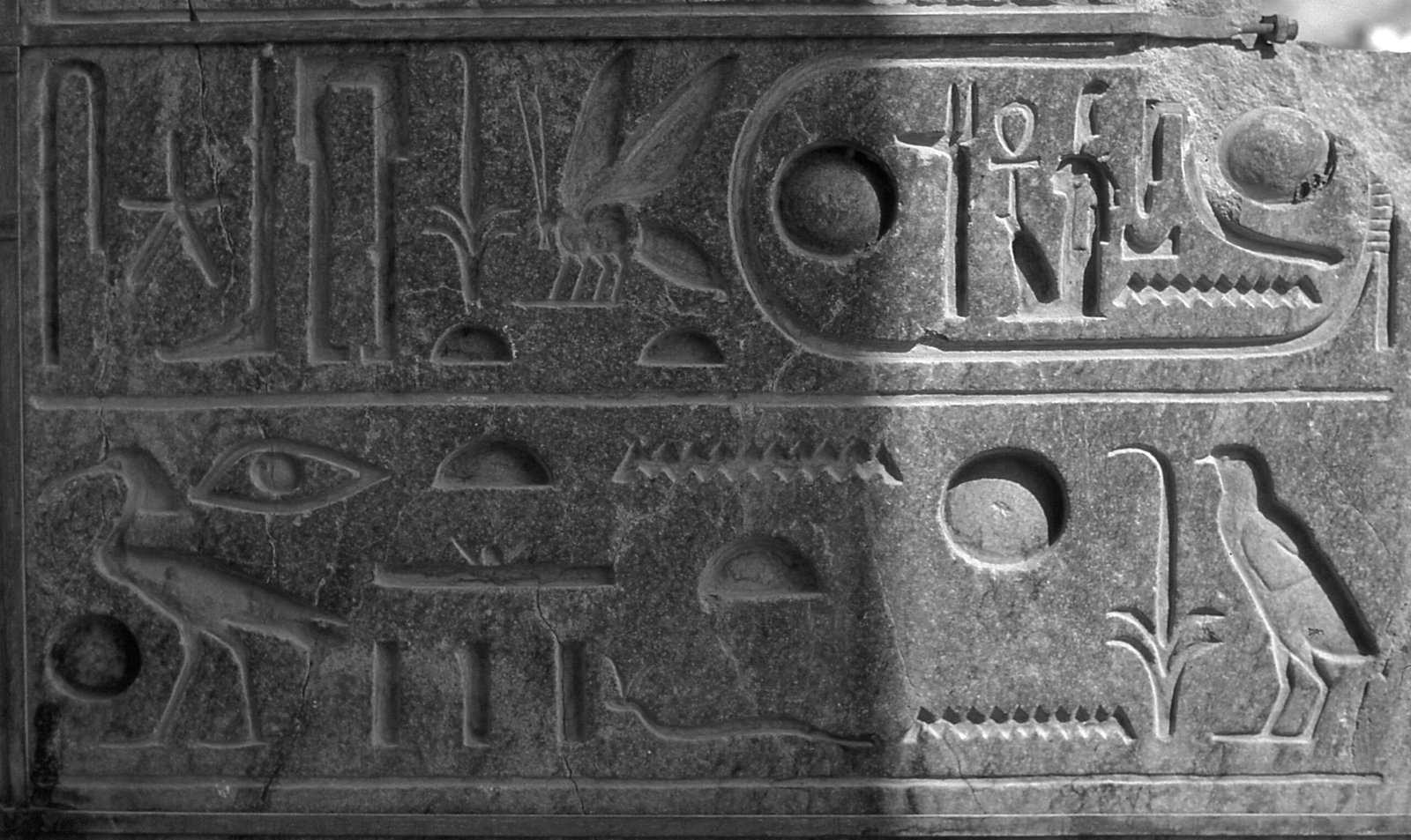
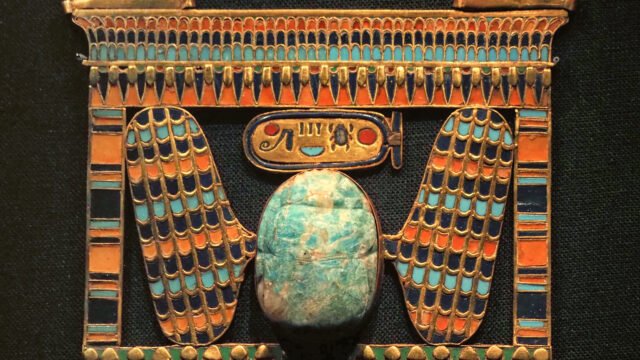
Short answer: A cartouche is an oval with a bar at one end that enclosed a royal name in Egyptian hieroglyphs. You can make a personalised one by writing your name in hieroglyphic signs by sound and placing them inside the oval. In ancient Egypt the cartouche was reserved for kings and, in some cases, gods, so a cartouche with your own name is a modern keepsake, not an ancient custom.
Quick Facts
| Point | Detail |
|---|---|
| Egyptian word | Shenu, from the shen ring meaning “encircling” |
| Shape | An elongated shen ring: oval with a tangent line at one end |
| Held | A king’s throne name and birth name |
| Early use | Appears around the end of the Third Dynasty and becomes common from the Fourth |
| Meaning | Eternal protection of the name |
| Modern name | “Cartouche” is a French word, commonly said to date from Napoleon’s Egyptian expedition |
What a cartouche means
The cartouche grew out of the shen ring, a loop of rope that stood for eternity and protection. Enclosing a king’s name in this ring was thought to protect it and the king from harm in life and after death. The discovery that signs inside cartouches spelled royal names was a key step in deciphering hieroglyphs, which is why cartouches are famous. Read the story of decipherment in our hieroglyphics guide.
How to design your own cartouche
- Write your name in hieroglyphs by sound, using our name generator guide.
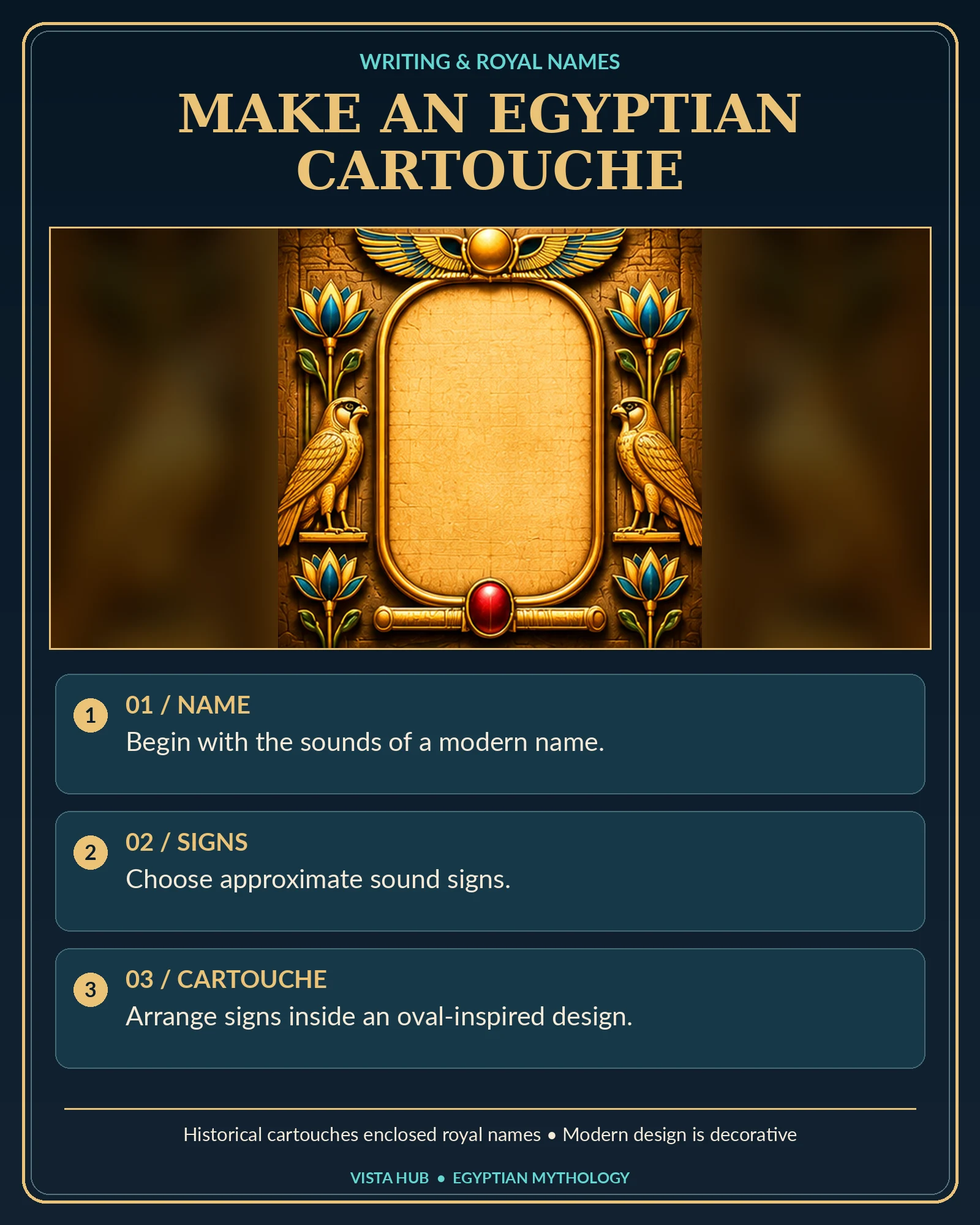
- Draw an oval around the signs, with a short straight bar at the end of the reading direction.
- For a vertical row, use a vertical oval. For a horizontal row, rotate the bar to the end side.
- Optionally add a title line, such as “Son of Ra” for a historical royal style (only as a creative design).
- Keep the signs facing the direction you want to read.
Story box (imagined): A scribe carves a king’s name inside an oval, checks the signs and presses his thumb on the bar. The name will now be protected for as long as the stone lasts. For him this was serious work, not a souvenir.
Ancient use vs modern keepsakes
| Ancient use | Modern use |
|---|---|
| Royal names only, sometimes gods | Personal names on necklaces, gifts and tattoos |
| Carved by trained scribes | Made by generators, with approximate spellings |
| Religious and political meaning | Decorative and educational |
If you plan to get a permanent tattoo or engraving, ask an Egyptologist or a museum guide to check the spelling first. Generators vary in quality.
History, Mythology and Speculation
| Category | Examples |
|---|---|
| History | Royal cartouches of Sneferu, Khufu, Tutankhamun and others |
| Mythology | The shen ring as sun and eternity symbol |
| Speculation | Magic power for the person who owns a cartouche necklace; no evidence |
Myth vs Fact
| Popular claim | Careful answer |
|---|---|
| Everyone in Egypt had a cartouche | It was royal |
| A cartouche necklace protects you | The ancient idea was religious; no modern evidence |
| The word cartouche is Egyptian | It is a French word; the Egyptian word is shenu |
Frequently Asked Questions
What is a cartouche?
An oval with a bar enclosing a royal name.
Can I have a cartouche with my name?
Yes, as a modern keepsake.
What is the Egyptian word for it?
Shenu.
Who used cartouches first?
Kings at the end of the Third Dynasty or early Fourth, with Sneferu usually named when use became common.
What does the oval mean?
Encircling and protecting the name for eternity.
Are vowels shown?
No. Egyptian writing recorded consonants.
Does the tool create a download?
The interactive tool is planned to offer an image download.
Is the cartouche related to the Rosetta Stone?
Yes. Royal names in cartouches helped scholars crack the script.
Reliable Sources
Last updated: 26 November 2026.














Share Your Opinion
Comments are closed on this post.