 Vista

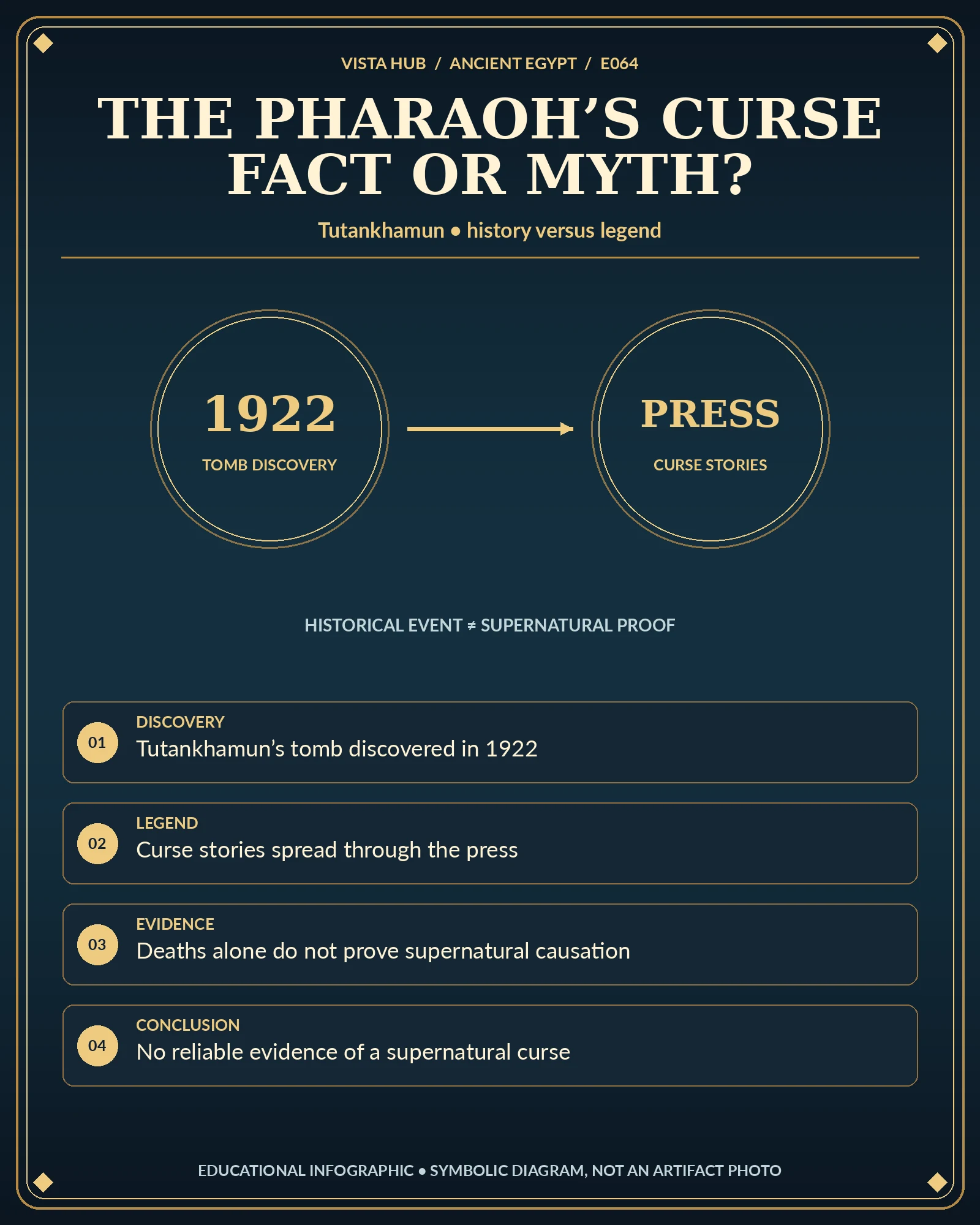
Tutankhamun’s curse is not supported by evidence. The “curse” is a story that grew in the press after Lord Carnarvon died in April 1923, months after the tomb’s discovery. Carnarvon died of blood poisoning after an infected insect bite was irritated while shaving. Researchers who later compared the lifespans of people who were present at the opening of the tomb with others found no pattern of early death. Howard Carter, who led the discovery, lived until 1939. The curse is best understood as a media legend.
Curse Fact Check at a Glance
| Claim | What the evidence says |
|---|---|
| Carnarvon was killed by the curse. | He died of an infection after a mosquito bite became inflamed. |
| Everyone who entered the tomb died. | Many lived long lives, including Howard Carter. |
| A curse was written on the tomb. | No such inscription has been found in the tomb; later sensational reports claimed otherwise. |
How the Legend Began
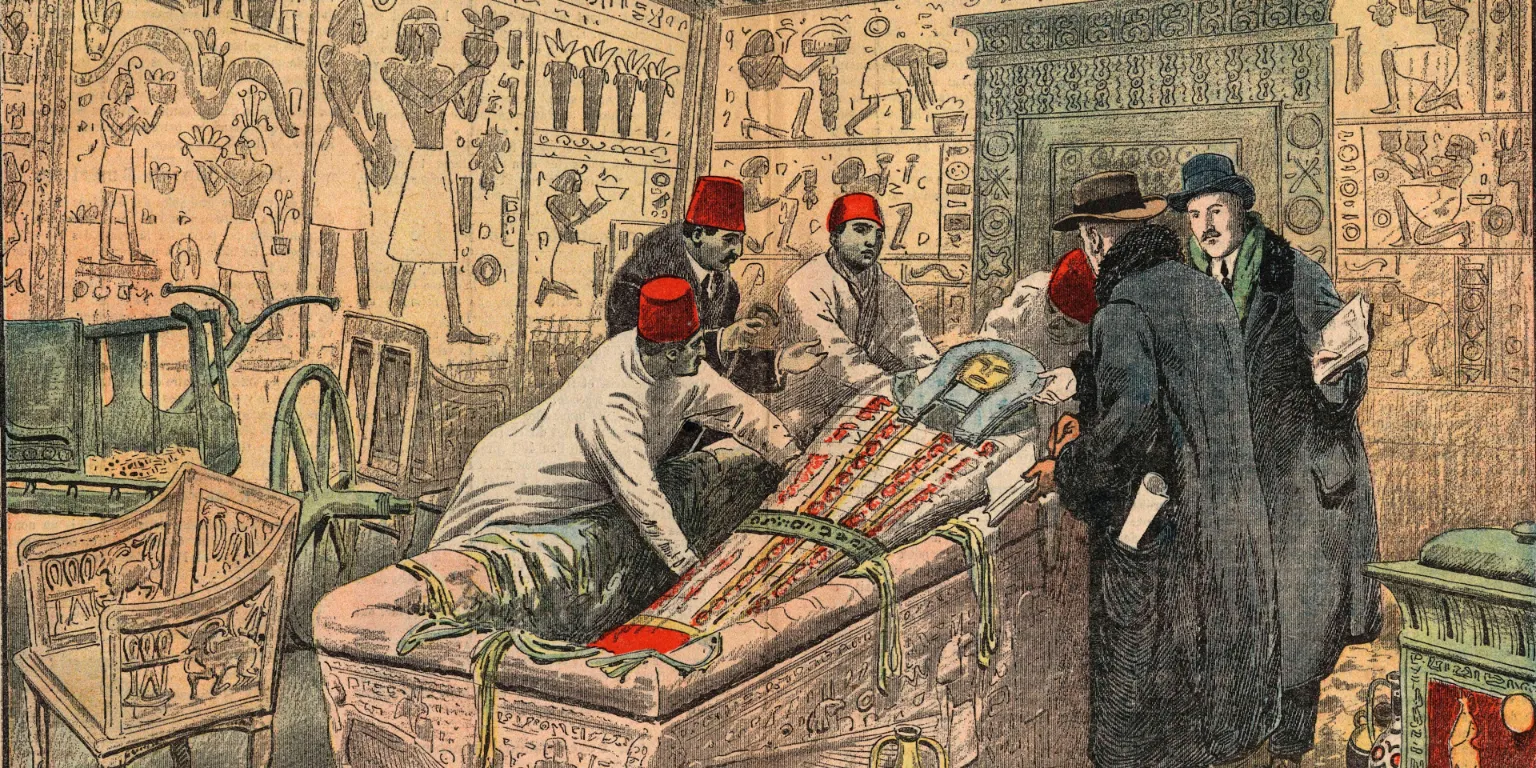
The tomb was found in November 1922. Carnarvon had given a newspaper exclusive rights to the story, which pushed rival papers to look for other angles. When Carnarvon died in 1923 the “mummy’s curse” became a sensation, helped by fiction and the public mood of the time. Writers such as Marie Corelli had warned of danger in disturbing tombs, and the story spread widely.
The Numbers
In 1934 the Egyptologist Herbert Winlock reviewed those who were present at the opening of the tomb or its contents and found that only a few had died within about a decade. A later statistical study published in a medical journal in 2002 compared people who were in Egypt at the time of the opening with others who were not and found no evidence of reduced survival. People die at all ages, and the legend tends to count the deaths and ignore the survivors.
Story box (reconstruction): A newspaper editor in 1923 reads a telegram about Carnarvon’s illness. His assistant asks, “Should we mention the tomb?” The editor smiles. “People will read that.” This scene is a reconstruction of how such stories spread, not a record of one editor.
Scientific Explanations People Suggest
| Idea | Status |
|---|---|
| Mould or fungal spores in sealed tombs | Possible irritant in principle; not shown to explain the deaths blamed on the curse |
| Bacteria or toxins | Speculative |
| Chance and media selection | The best-supported explanation |
Ancient Egyptians did sometimes write warnings in tombs to protect them from damage or theft, so the idea of tomb protection is not made up. But a curse of that kind on Tutankhamun’s tomb is not documented, and the modern mummy curse is mostly a creation of the twentieth century.
How researchers tested the curse claim
A historical cohort study published in the BMJ in December 2002 investigated whether people associated with the tomb opening had different survival patterns. The value of this approach is that it compares exposure groups rather than simply collecting dramatic deaths after the discovery. The study found no convincing association between the supposed curse exposure and reduced survival.
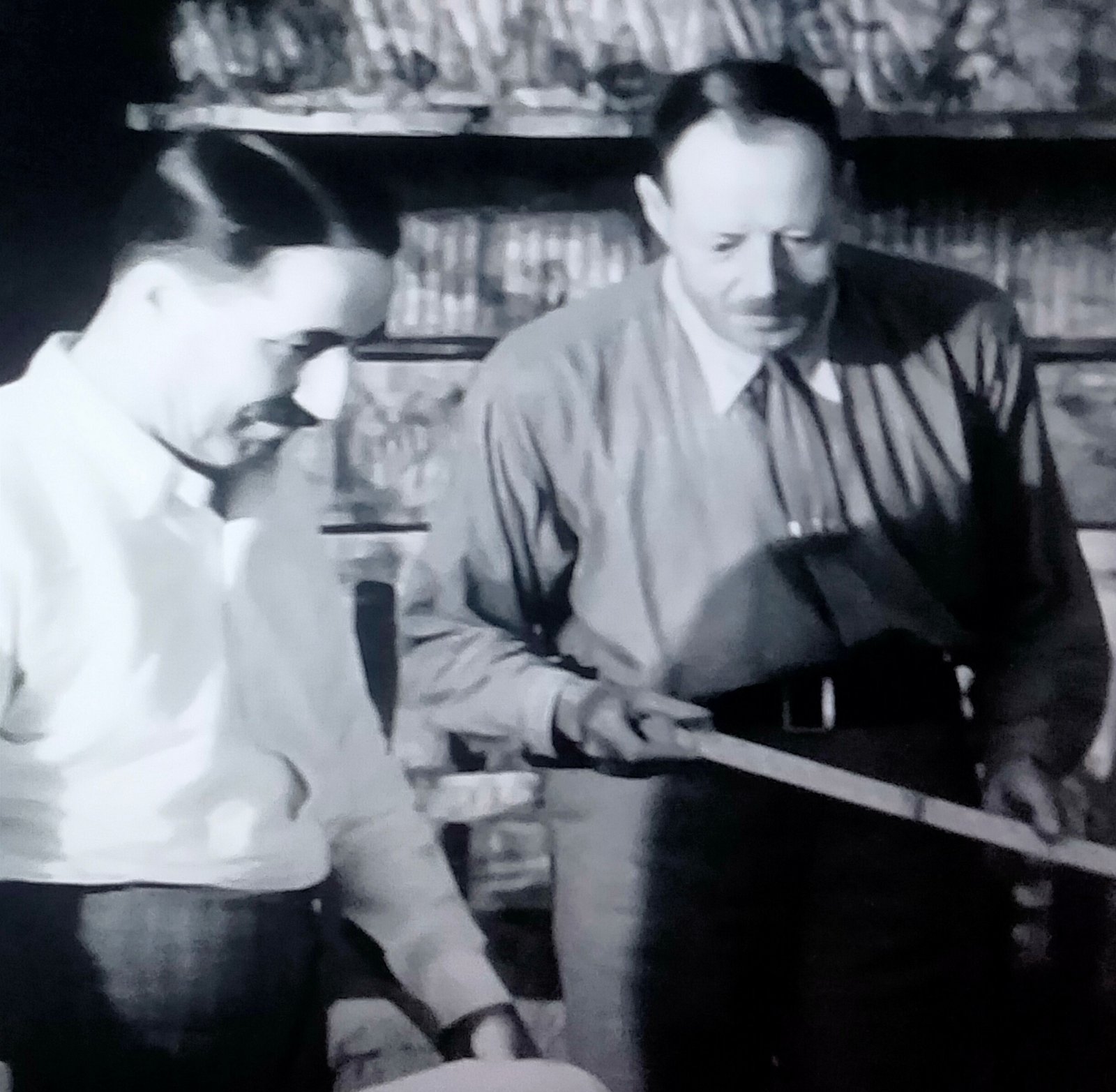
Historical research of this kind has limitations: records may be incomplete and the number of participants is small. It does not reconstruct every illness, but it tests the specific prediction that people connected with the opening died unusually early. That distinction is important because an unusual death is not itself evidence of a common supernatural cause. Carter’s journals also provide a contemporary timeline against which later newspaper stories can be checked.
Original references: Source 1 · Source 2
History, Mythology and Speculation
| Category | What belongs here |
|---|---|
| History | Discovery in 1922, Carnarvon’s death, press coverage, survival studies |
| Mythology | Curses and spells meant to protect tombs |
| Speculation | Ghosts, supernatural revenge, deadly ancient bio-weapons |
Myth vs Fact
| Popular claim | Reality |
|---|---|
| The curse killed many explorers. | Studies find no unusual death pattern. |
| The mummy rises or haunts people. | No evidence. |
| The curse is written in hieroglyphs. | No genuine curse inscription is known from the tomb. |
| Opening tombs is deadly. | Normal dust and mould precautions are advised, but there is no magical danger. |
Frequently Asked Questions About Tutankhamun’s Curse
Is the curse of King Tut real?
No evidence supports it.
How did Lord Carnarvon die?
From an infection and complications after an infected bite in 1923.
Did Howard Carter die of the curse?
No. He died in 1939, many years after the discovery.
Was there a curse written in the tomb?
No genuine one has been documented.
Where did the mummy curse idea come from?
From newspapers and fiction around the 1920s.
Could mould have caused the deaths?
It has been suggested, but it does not explain the claimed pattern.
Are ghosts of pharaohs real?
There is no scientific evidence for ghosts.
How do I judge such claims?
Ask for the dates, the full list of people and the cause of death, and compare against those who survived.
Reliable Sources
- World History Encyclopedia: Egyptian Mythology
- Egypt Exploration Society: Gods of Egypt
- The Metropolitan Museum of Art: Divine Egypt
Last updated: 25 November 2026. Related reading on Vista Hub: Tutankhamun’s treasure, Nefertiti and Tutankhamun, Egyptian mummies.
Related guides: Egyptian Mythology · Egyptian Gods and Goddesses
















Share Your Opinion
Comments are closed on this post.