 Vista
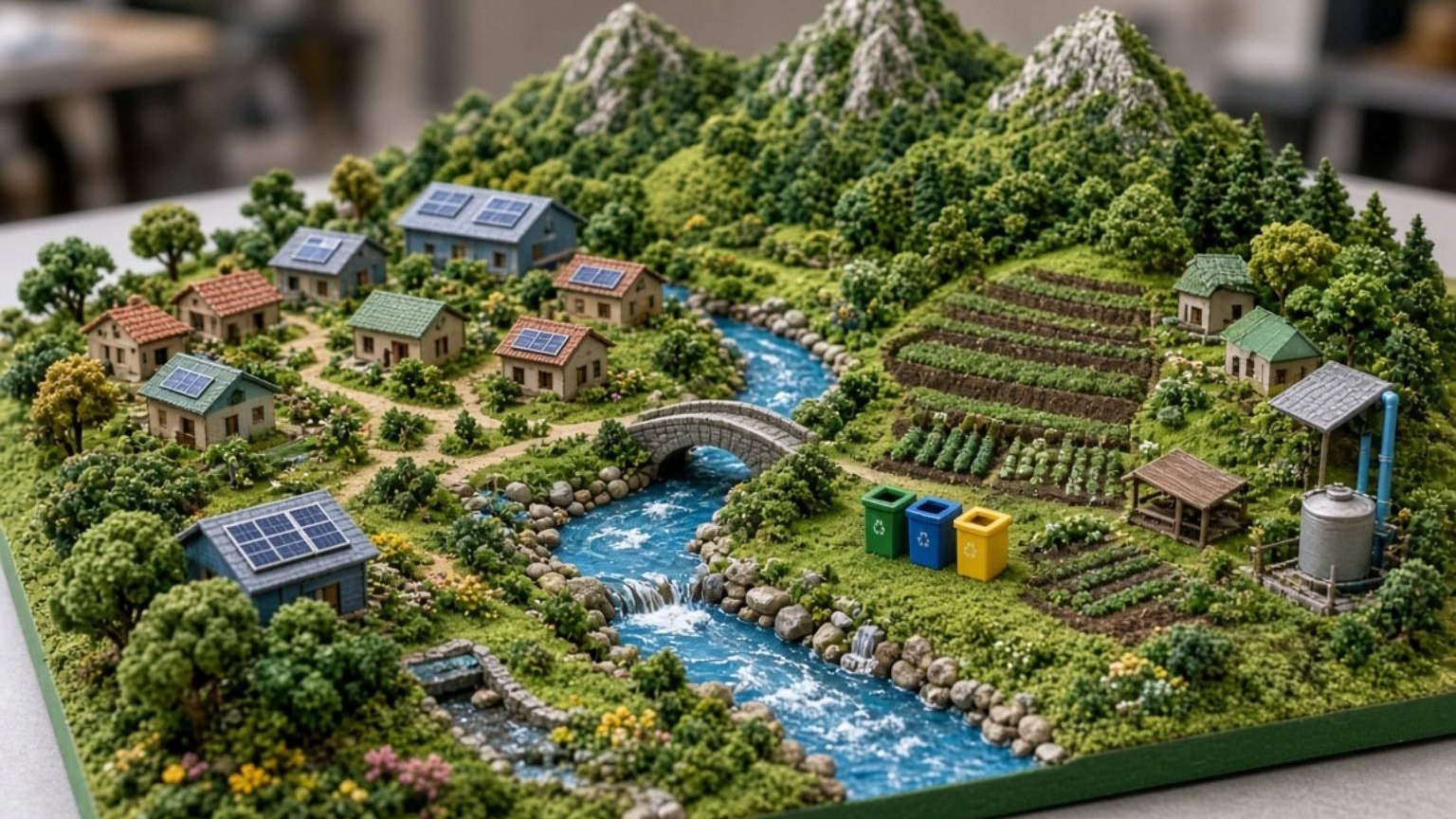
Need sustainable farming school project models for a science exhibition? This picture-led guide combines hydroponics, drip irrigation, a biogas plant concept, and an eco-friendly smart city. Each topic has a full-size educational image and a practical explanation for roughly Classes 6–12. Together they raise questions about efficient resource use, cultivation without conventional soil, controlled irrigation, biological energy systems and greener urban planning. Their technologies are not interchangeable, however. **Biogas can contain flammable methane**, so a school demonstration must use a non-functional cardboard illustration, not a gas-producing sealed container or flame. Use the other models responsibly with age-appropriate materials and suitable adult supervision.
What connects farming sustainability and a smart city?
All four subjects examine how people manage resources, but at different scales. Hydroponics provides plant roots with nutrients in water-based or supported soil-less arrangements. Drip irrigation directs water closer to the plant root zone. Biogas is produced during the oxygen-free breakdown of suitable organic material in a controlled system. A smart city project combines decisions about energy, water, transport, greenery and services. Students should not imply that one system solves every environmental problem. Give each poster its own explanation, realistic benefit and limitation. Avoid claims that a technology ‘saves 95% of resources’ unless an appropriate source and exact comparison support it.
Picture 1: Hydroponics Farming Working Model
Hydroponics is a type of soil-less cultivation. Plants receive nutrients through a carefully managed solution, sometimes while supported by an inert growing medium. The FAO explains that the nutrient solution supplies minerals that soil would ordinarily help make available. A seedling placed in plain tap water is not automatically a complete hydroponics system. Roots also need appropriate oxygen and environmental conditions. Label the support, root zone, nutrient solution and plant in the school diagram. For younger students, an illustrated model is usually enough; avoid unsupervised handling or mixing of concentrated fertilisers. Real cultivation requires monitoring and care.

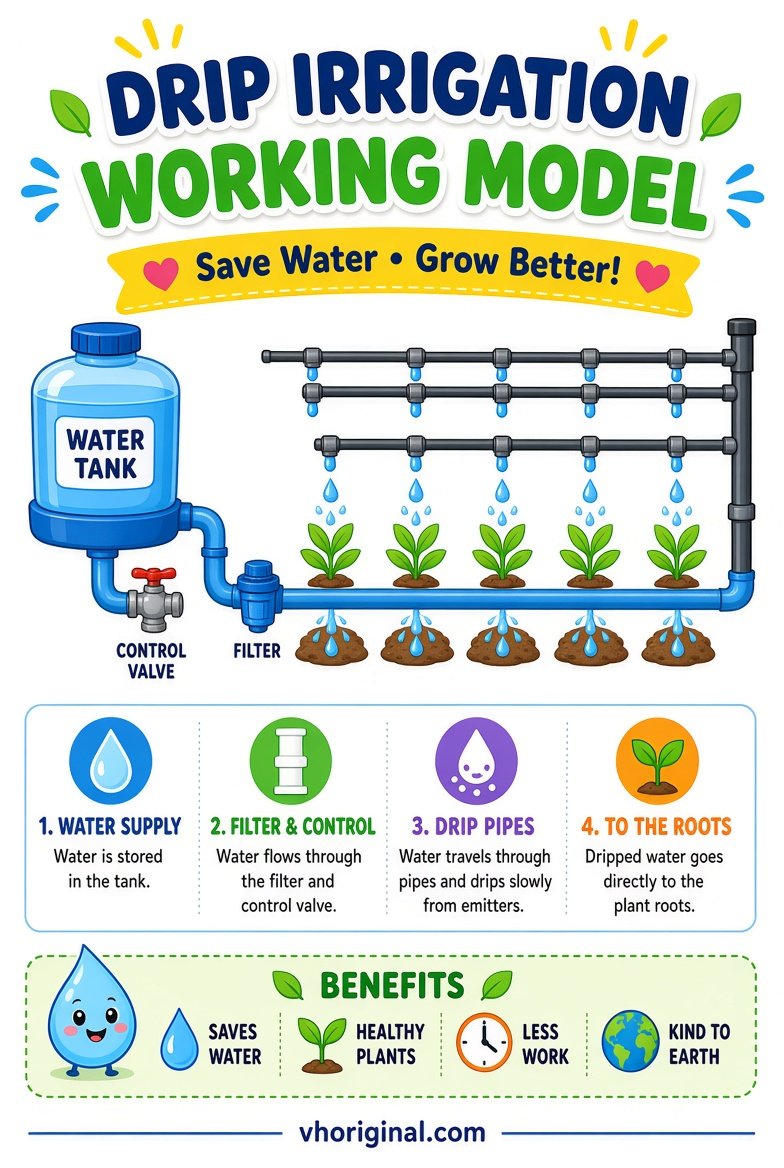
Picture 2: Drip Irrigation Working Model
Drip irrigation supplies water slowly near plants through tubes and emitters. Its effectiveness depends on crop needs, soil, weather, water quality and good system management. It can reduce some avoidable losses in suitable settings, but no single saving percentage applies everywhere. Draw a water tank, main tube, drippers and root zone clearly. A small classroom demonstration can use clean water and a stable tray, with adult help for any cut parts. Compare where water is delivered in the drip model with a broad overhead watering illustration. Students can then explain why controlling the delivery point may be useful and why clogs or leaks need attention.
Picture 3: Biogas Plant Educational Model
Biogas is produced when microorganisms break down suitable organic material without oxygen, a process called anaerobic digestion. The resulting gas commonly contains methane and carbon dioxide, alongside other substances. Methane is flammable, and real digesters require appropriate engineering and safety systems. **Do not** make a sealed school bottle to generate, collect, ignite or test biogas. Instead, create a non-functional cardboard cross-section showing the feed inlet, digester, conceptual gas outlet and digestate outlet. Coloured paper arrows can explain material and gas pathways without producing actual gas. This is enough to discuss the principle safely in class.
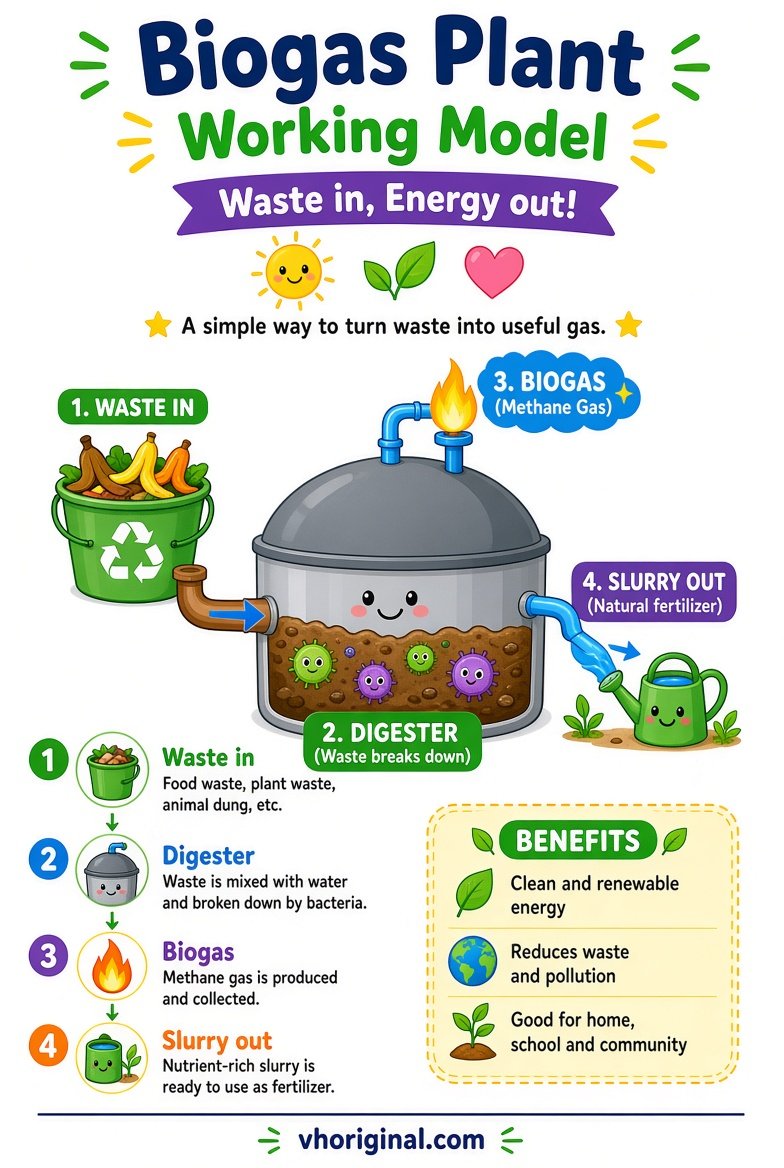
Chart note: Use only a static cutaway. Never generate, collect or ignite gas for this school project. The pictured flame is symbolic.
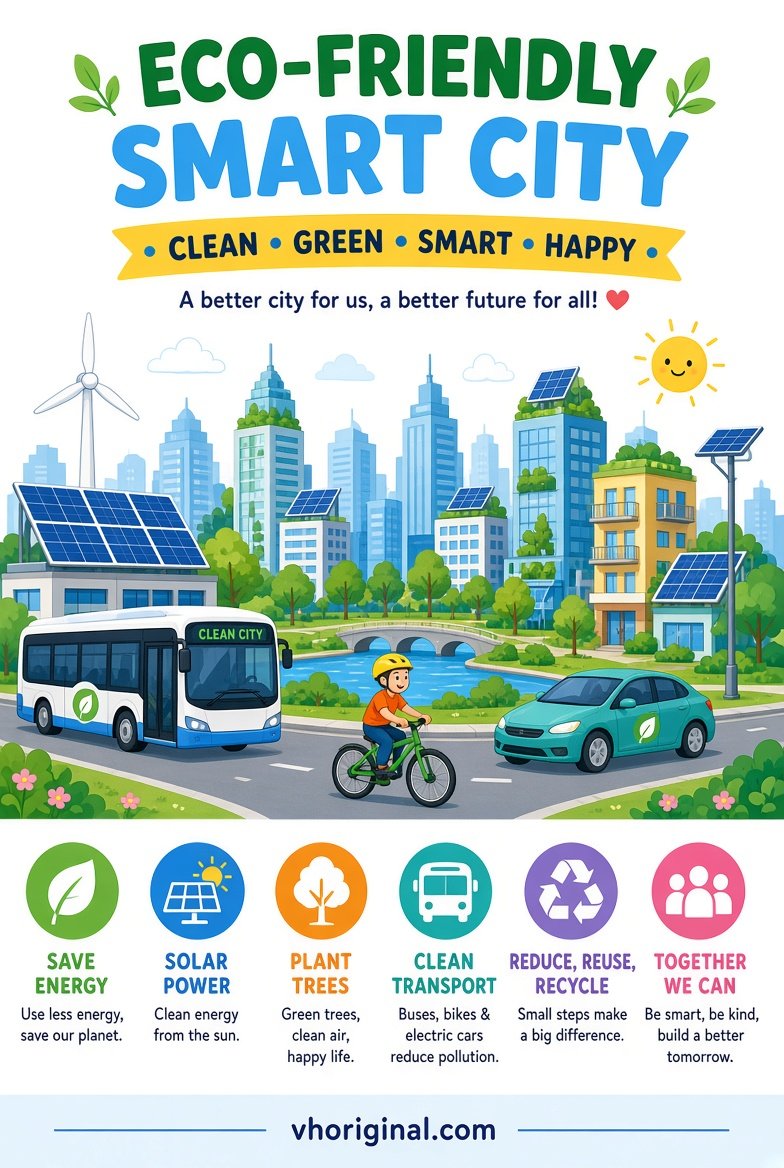
Picture 4: Eco-Friendly Smart City Model
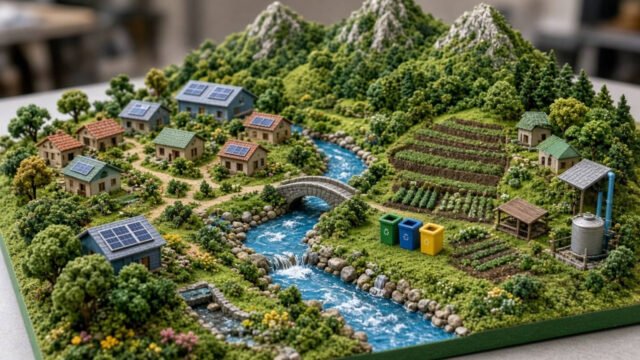
A model city may include rooftop solar panels, bus stops, walking routes, trees, rainwater collection and organised waste services. The important task is connecting the parts: a downpipe should lead to a tank, roads should support appropriate transport, and green space should be situated meaningfully. A solar-panel shape cut from paper does not produce electricity; label it as a representation rather than a functioning generator. If lights are truly required, use only safe low-voltage battery components under supervision. The project can compare design choices, but a colourful miniature city cannot prove that every real urban problem has been solved.
Materials for the four model ideas
Use clean cardboard, coloured paper, a firm base board, pencil, ruler, safe glue, paper straws, small empty containers and model plants. A hydroponics cross-section can be built without chemicals. Drip irrigation may use clean water in a small controlled setup, with a tray to collect spills. The biogas section should be a static illustration only; do not use actual gas, flames or pressurised equipment. Smart city roads and buildings can be made from folded paper. Each model needs a few readable labels and arrows rather than a huge number of decorative pieces. Keep the display easy to transport.
Step-by-step: prepare a science exhibition board
First check whether the teacher expects one working model or a comparison of sustainable technology ideas. Sketch four separate zones on a board and select the best picture for each. Build a plant-and-nutrient diagram for hydroponics, a water-tank-and-emitter diagram for drip irrigation, a safely static digester cutaway for biogas and connected buildings for the smart city. Add arrows only when they show a meaningful process. Use small text blocks that describe purpose and limitations. Inspect the finished board to ensure nothing resembles a functional gas-making setup. Practise explaining one benefit and one limitation for each topic.
Viva questions, safety and download tips
Hydroponics uses a suitable nutrient solution; drip irrigation delivers water near roots. Never generate or ignite biogas for a school demonstration. Cardboard solar panels are illustrative, not powered. Use each image’s full-size link, verify technical labels and work under adult supervision when cutting or handling model materials.
Frequently asked questions
Does hydroponics work without soil?
Yes, with an appropriate nutrient solution and management of the roots and growing environment.
Does drip irrigation always save the same amount of water?
No. The outcome depends on design, crop and operating conditions.
Can we generate real biogas in a school model?
Do not do so. Use a non-functional illustration because methane is flammable.
Must a smart city project use electronics?
No. A well-labelled cardboard layout is an effective educational display.
Conclusion and references
Sustainable school projects are strongest when the diagrams are accurate, the claimed benefits are realistic and students explain the safety boundaries of each technology.
Sources: FAO — Hydroponics Fundamentals; FAO — Drip Irrigation; US EPA — Anaerobic Digestion.
Related project: rooftop rainwater harvesting model
















Share Your Opinion
Comments are closed on this post.