 Vista
Need healthy habits and balanced diet school project charts for Classes 1–5? This page brings together six illustrated learning posters: a balanced food plate, handwashing steps, human teeth types, everyday healthy habits, fruits and vegetables, and a food groups wheel. Each image has a link to open and save its full-size version. The guide also explains what each chart teaches, how children can arrange an A4 poster, and how to present the topic without memorising complicated nutrition claims. These are classroom learning illustrations, not personalised diet plans or tools for diagnosing dental or other health problems.
What should children learn from a healthy habits project?
Healthy habits are daily behaviours that support wellbeing, including cleanliness, adequate rest, active play and varied food. They are best taught with realistic examples rather than shame or rigid rules. Indian nutrition guidance from ICMR-NIN encourages dietary variety; a generic school poster cannot determine ideal portion sizes for every child’s age, activity level or health needs. The goal is to recognise food groups and explain practical ways to stay clean and well.
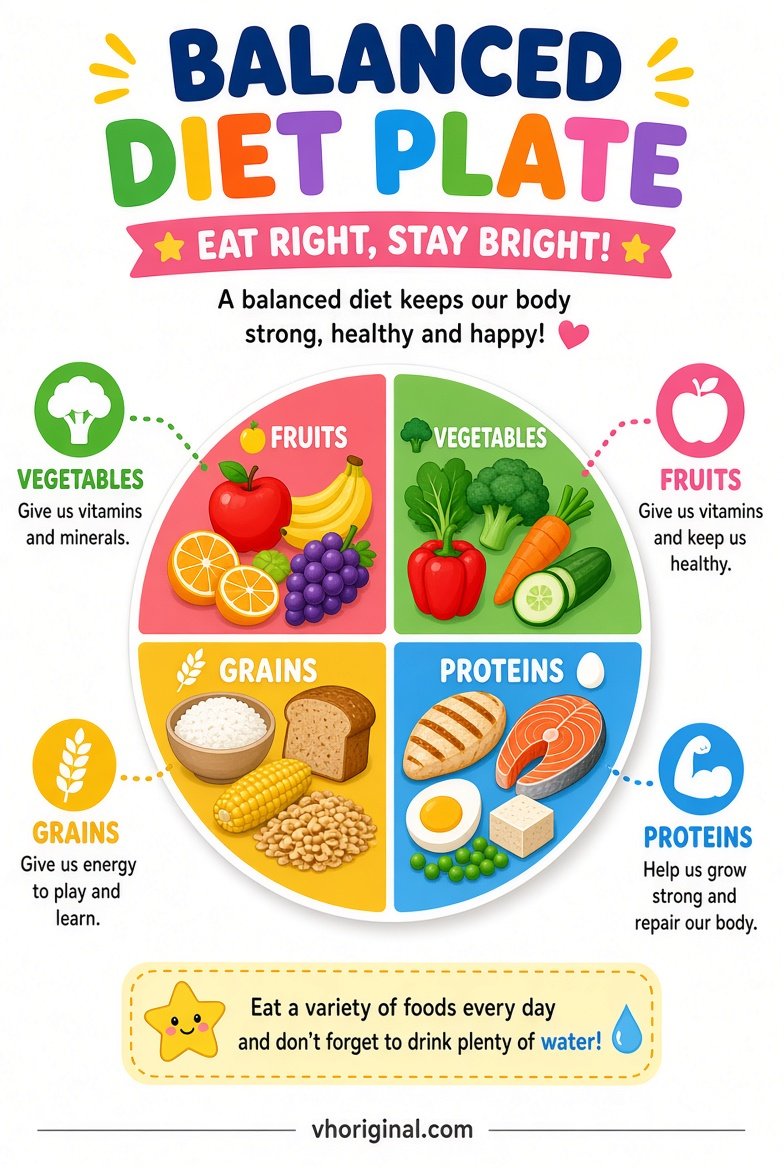
Poster 1: Balanced Diet Food Plate
A balanced food plate uses several food groups to illustrate variety. It may show vegetables, fruit, grains or millets, pulses and other protein sources. What a family eats depends on cultural preferences, allergies, availability and individual needs. Avoid telling children that every plate must match a drawing exactly or that a single food can supply all nutrients. Treat serving proportions in an illustrative poster as a broad teaching aid, not medical advice.
Poster 2: Handwashing Steps
Handwashing is a practical health lesson that children can demonstrate. Wet hands with clean running water, use soap, lather the hands and scrub palms, backs of hands, between fingers and around nails. The CDC advises scrubbing for at least 20 seconds before rinsing and drying. This is especially helpful before eating, after using the toilet and at other times hands may be dirty.

Poster 3: Types of Human Teeth
The human teeth chart can identify incisors, canines, premolars and molars. Different teeth help with different actions during eating. Children have a changing mix of primary and permanent teeth as they grow, so an adult dental chart should not be treated as a perfect diagram of every child’s mouth. Use the picture for naming and comparison, not self-diagnosis. Brushing and appropriate dental care support oral health; persistent pain, swelling or a damaged tooth is a reason to seek professional dental advice rather than relying on a school chart.
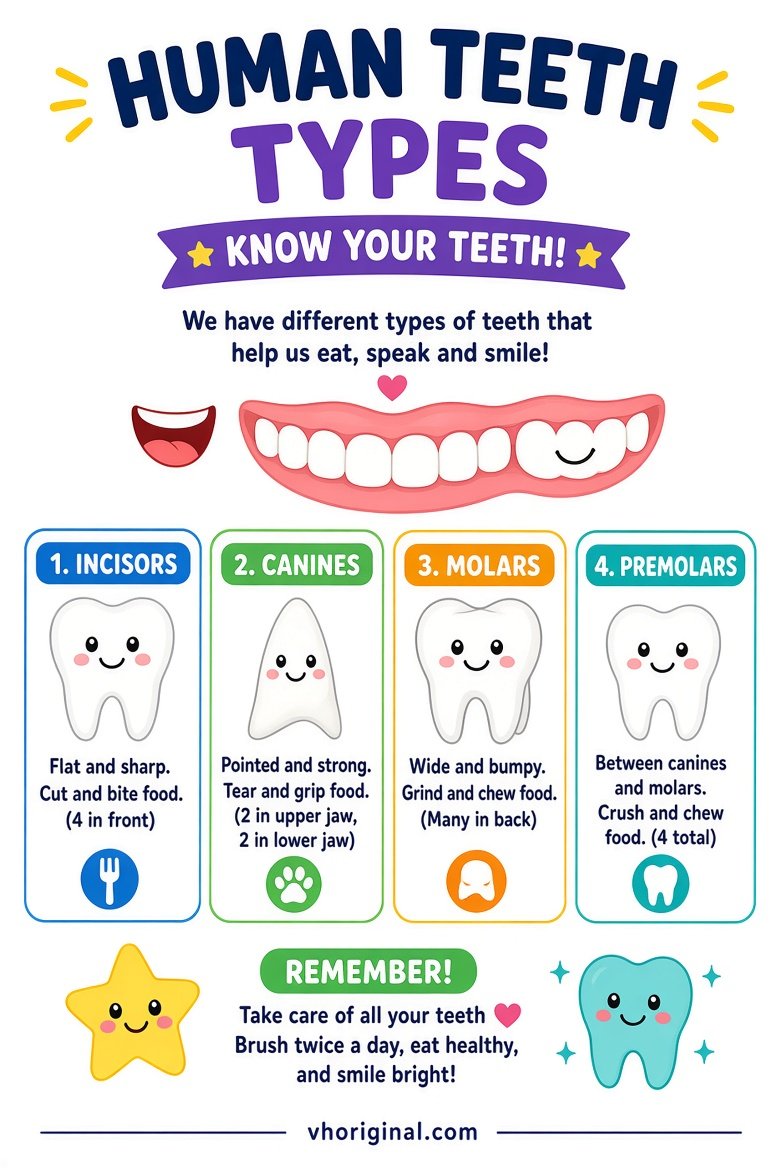
Chart note: Use the chart for tooth shapes and functions. A full permanent set typically has 8 incisors, 4 canines, 8 premolars and 12 molars including wisdom teeth. Primary teeth have no premolars.
Poster 4: Healthy Habits for Kids
Use the daily routine poster to discuss washing, eating safely, playing actively, resting and keeping shared spaces clean. Ask the class to name a healthy habit they already enjoy instead of expecting all children to follow identical schedules. For example, different active games can help children move, and adequate rest is important when they are tired or ill. A project should explain choices in simple, supportive language. Avoid claims that one habit alone will prevent every illness.

Chart note: The sleep range printed on the chart varies by age. Children ages 6–12 are generally advised to sleep 9–12 hours per 24 hours.
Poster 5: Fruits and Vegetables
Fruits and vegetables provide variety in colours, tastes and nutrients. Children can identify familiar examples such as bananas, mangoes, carrots, leafy vegetables or locally available produce. Encourage them to compare shape, texture and seasons. A project chart should not suggest that eating fruit alone replaces meals containing other food groups. Wash produce appropriately before eating or preparing it. If a generated poster labels a vegetable incorrectly, check the name using a school book before copying it.
Poster 6: Food Groups Learning Wheel
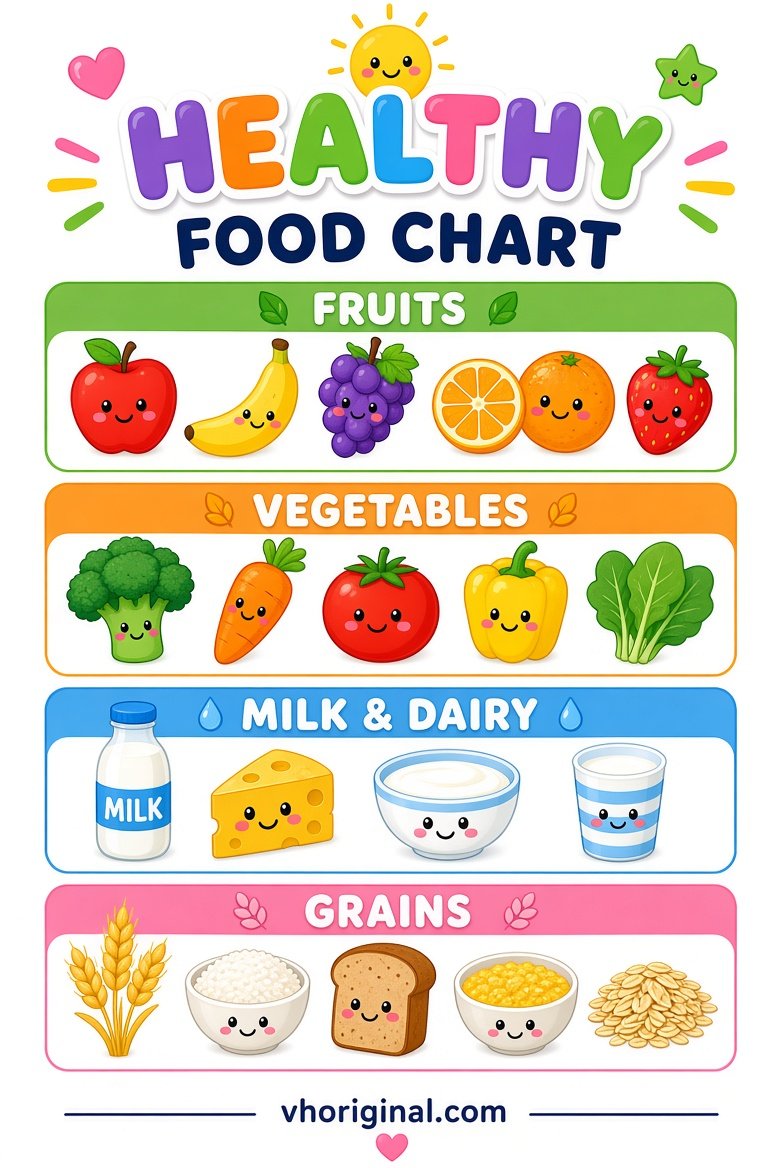
A food groups wheel is a sorting activity rather than a compulsory menu. Pupils can place common foods under suitable headings such as grains, pulses, vegetables and fruits, with further categories as appropriate for the lesson. Milk, eggs, meat and plant-based alternatives may appear in different dietary patterns. Encourage children to use local examples instead of memorising only foods pictured in the wheel. Large text and distinct colours make the categories easier to recognise and compare in class.

How to make an A4 chart with these pictures
Use a clean page, pencil, ruler, eraser and colouring tools. If printed pictures are permitted, place a clear heading above each section. Do not shrink all six posters onto one A4 sheet if that makes the labels unreadable. A practical option is to use one sheet for food groups and another for hygiene and teeth. Sketch the arrangement first, then colour and check the headings. Keep descriptions short enough that a child can explain them in their own words. Add name and class only where the school requests them.
Presentation tips and mistakes to avoid
A child can show one food group, one handwashing step and one healthy habit, then explain why each matters. Do not present an adult portion diagram as an exact child’s diet prescription. Avoid describing any ordinary food as universally forbidden, or implying that one chart can tell whether a child is healthy. For dental diagrams, confirm labels and do not invent diagnoses. Use the six images as learning aids supported by real examples, not as substitutes for reliable medical or nutritional guidance.
Frequently asked questions
Which class can use these charts?
Classes 1–5 can use the pictures with age-appropriate vocabulary and short explanations.
Should all six posters fit on one A4 page?
Use two pages or choose fewer examples when necessary so labels remain legible.
How long should children scrub hands with soap?
CDC guidance recommends at least 20 seconds of scrubbing.
Is a balanced diet poster a personalised meal plan?
No. Portion needs and individual health considerations vary.
Conclusion and sources
A good project helps children connect pictures to everyday choices. Keep the charts readable, respectful and factually sound while encouraging students to explain ideas for themselves.
Sources: ICMR-NIN Dietary Guidelines for Indians (2024) — https://www.nin.res.in/ ; CDC Clean Hands — https://www.cdc.gov/clean-hands/about/
Related project: five senses chart

















Share Your Opinion
Comments are closed on this post.