 Vista
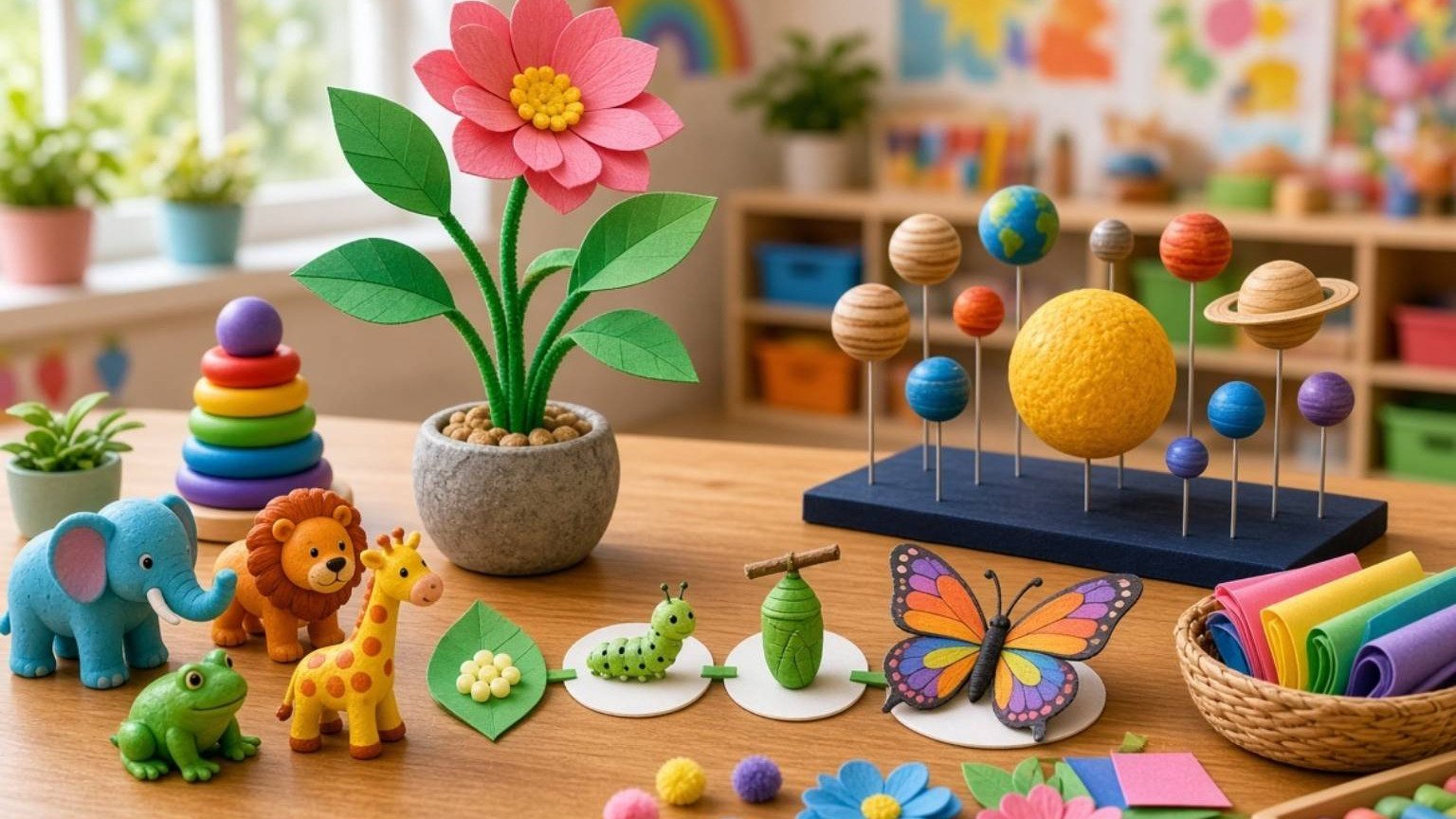
Life cycle charts for school projects become much more useful when children understand what changes from one stage to the next. This guide brings together three picture topics: seed germination, the butterfly life cycle and the frog life cycle. Each has a separate full-size school project image and an explanation that helps with labelling, drawing and classroom presentation. The activities suit different levels: younger pupils can identify a few stages, while older students can explain germination and metamorphosis more precisely. You will also find simple materials, safe observation ideas and common mistakes to avoid.
What do these three life cycle charts teach?
A life cycle describes developmental stages in an organism. These pictures are related but not interchangeable. A seed-germination chart usually shows only the beginning of a plant’s growth, not the full reproductive cycle of a flowering plant. A butterfly passes through egg, caterpillar, pupa and adult stages. Many frogs develop from eggs into aquatic tadpoles, then froglets and adults. When an image shows a simplified example, explain that exact appearance and timing differ among species rather than suggesting that all organisms follow an identical schedule.
Picture 1: Seed Germination Stages
A germinating seed can develop when it receives suitable moisture, oxygen and temperature conditions. In familiar examples such as beans or mung beans, an early root often emerges before the shoot becomes visible. A young seedling then begins developing leaves and further roots. Requirements differ between plant species, and light is not always necessary at the earliest germination stage. A safe observation activity uses a few clean seeds in a transparent container with damp material. Keep it moist, not waterlogged, and observe changes over several days. Label your chart Seed, Emerging Root, Shoot and Seedling, and do not claim that all seeds grow at the same speed.
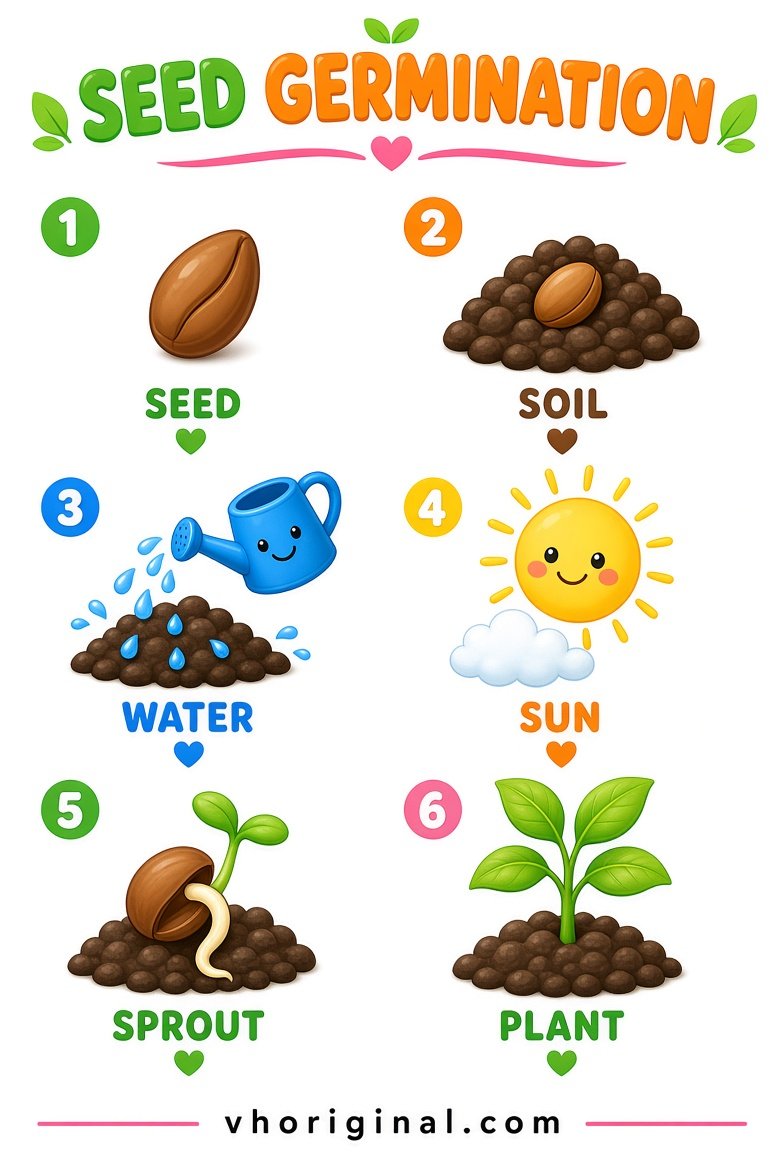
Chart note: Most seeds need water, oxygen and a suitable temperature to germinate. Soil and sunlight in the illustration are examples, not requirements for every seed. The first root usually emerges before the shoot.
Picture 2: Butterfly Life Cycle
A butterfly usually develops through four major stages: egg, larva or caterpillar, pupa, and adult. The caterpillar feeds and grows; the pupa is a developmental stage in which major changes take place. The butterfly’s pupa is commonly called a chrysalis. Some other insects, especially many moths, make cocoons, so the two words should not be used as perfect synonyms. An adult butterfly emerges and later may reproduce. Older pupils can explain what changes between each stage rather than merely memorising names.
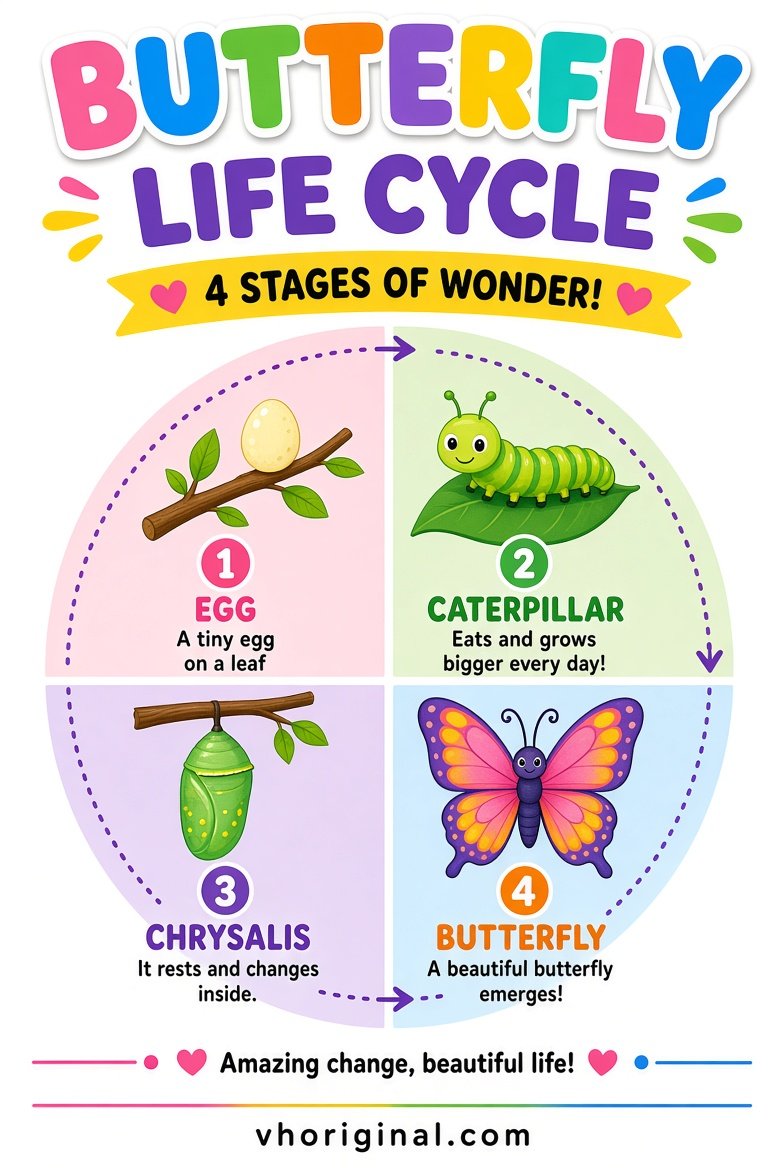
Chart note: Follow the numbered stages rather than the decorative arrows: egg → caterpillar → chrysalis (pupa) → adult butterfly.
Picture 3: Frog Life Cycle
Many frogs lay eggs in water or other moist environments. After hatching, a tadpole has a tail and is adapted to early aquatic life. As development continues, limbs emerge and other changes occur; a froglet begins looking more like the adult. The tail generally becomes smaller as the frog develops. This transformation is called metamorphosis. The usual school diagram is a simplified illustration, and there are exceptions across different frog species. Children do not need to collect wild frog eggs or tadpoles to complete the assignment. Use clear pictures, observe local wildlife without disturbing it, and explain the stages in sequence.

Chart note: This is a simplified example. Hind legs usually appear before front legs. Lungs develop during metamorphosis, which can begin before the froglet stage.
Materials for an A4 life cycle school project
An A4 page, pencil, ruler, eraser and coloured pencils are usually enough. Some schools permit a printed poster, while others expect the drawings to be made by hand. Check that requirement before preparing the final sheet. A simple seed-observation activity may use a transparent cup, clean seeds and damp cotton or cloth, with adult supervision. Avoid handling animals or unknown materials. Leave an area at the top for the heading and a short explanation below each diagram. Large labels and visible arrows are more useful than decorative borders that make the scientific stages hard to read.
Step-by-step: arrange the pictures and arrows
First, choose the stage sequence from a reliable school text. Second, mark spaces for each drawing before adding colour. Third, sketch the organisms in the correct developmental order. Fourth, connect the images with arrows that clearly point from one stage to the next. Fifth, write short labels: do not cover the pictures with arrows or long paragraphs. Sixth, compare the completed poster with the reference diagram, particularly the butterfly’s pupa and the frog’s tadpole-to-froglet change. Finally, add your class and project details if requested. Try explaining the picture from memory before taking it to school.
How to present a life cycle model in class
Begin with a one-sentence overview: “My chart shows how an organism develops through different stages.” Point to the first stage, then follow the arrows while explaining what changes. For a seed, mention the appearance of a root and shoot. For a butterfly, contrast the feeding caterpillar with the adult. For a frog, explain how the tadpole’s body changes as it develops. Teachers may ask what metamorphosis means or whether germination is a complete plant life cycle.
Common errors and safety notes
Do not use the terms seed germination and complete plant life cycle as if they mean the same thing. Do not label a chrysalis as a cocoon without checking the species. Avoid reversing arrows between tadpole and froglet, and do not invent exact development times. A school project should not involve catching butterflies, disturbing nests or removing frog eggs from ponds. Educational models are more useful when they protect living things while still encouraging observation. If an AI illustration contains doubtful details, follow the school textbook rather than copying the mistake.
Frequently asked questions
Which life cycle chart is best for Class 3?
A simple seed or butterfly chart with three to four clear pictures is suitable for many classroom activities.
Can I put all three life cycles on one sheet?
Yes, if you keep their arrows and labels clearly separated and the text remains readable.
Is a tadpole the same as a froglet?
No. A tadpole is an earlier developmental stage; a froglet has progressed toward the adult body form.
How do I download the project pictures?
Open the full-size link below each poster and save the image using your browser’s options.
Conclusion and references
Good life cycle projects focus on stages, changes and evidence. Use the pictures to support an accurate explanation, not just to decorate a page.
References: NCERT elementary science learning outcomes; NCERT Class 8 Science — Reproduction in Animals.
Related project: five senses chart



















Share Your Opinion
Comments are closed on this post.