 Vista
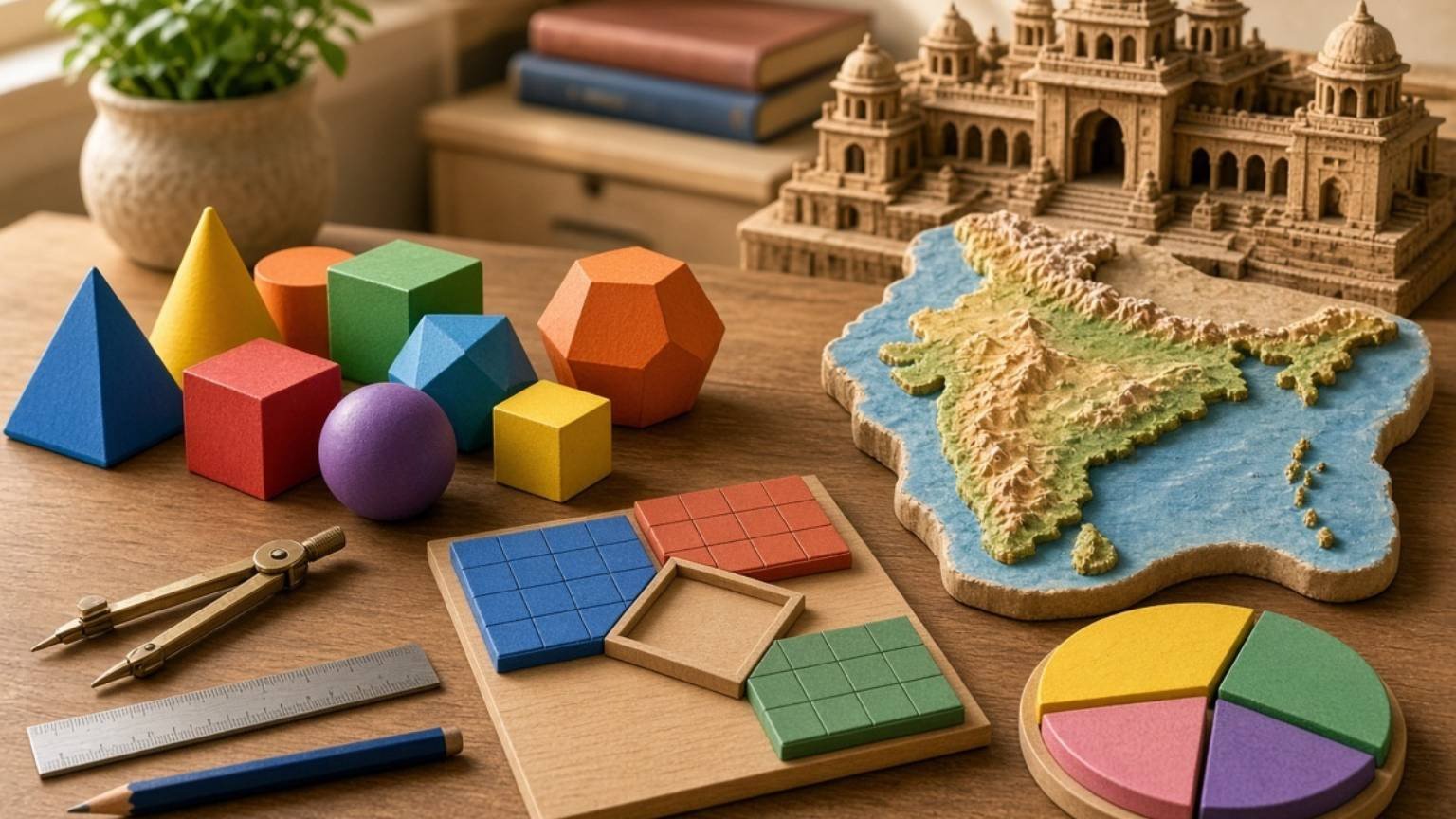
Need a probability spinner, Pascal Triangle or Fibonacci Spiral school project? This visual guide combines three diagrams for approximately Classes 6–11: a rotating spinner for probability, Pascal’s Triangle for number patterns and binomial coefficients, and Fibonacci squares with curved arcs for a geometric illustration. Each poster uses Vista Hub’s existing 15-second advertisement-supported image page. Students can build all three using paper, cardboard and simple drawing tools. Accuracy matters: sectors must be equally likely for a simple counting probability calculation, and the familiar Fibonacci square-and-arc construction is an approximation rather than an exact golden spiral. These are connected maths ideas, not the same experiment.
How are probability and number patterns different?
Probability describes how likely an event is, while Pascal’s Triangle is an arrangement of numbers built by a rule. Fibonacci numbers follow another recurrence rule and can be represented by growing squares. A strong school exhibition gives each project a separate panel: Random Experiment, Addition Pattern and Geometry. Students should understand why the next Pascal entry is fixed but the next spinner outcome is not. An attractive diagram alone is not mathematical proof of a claim about nature or randomness. Every model should have at least one simple example calculated in a way the pupil can explain.
Picture 1: Probability Spinner Working Model
Imagine a fair spinner divided into four equal-sized sectors, one red. The probability of landing on red is 1/4. If two of those four equal sectors are red, the probability is 2/4 or 1/2. But a spinner with unequal sector angles does not have equally likely sectors merely because they are different colours. Friction or an unbalanced pointer can introduce further bias. Mark each sector’s size clearly, count favourable outcomes and compare the expected fraction with several actual spins. The recorded experimental frequency need not match the theoretical probability exactly in a small number of trials.

View / Download after 15-second wait
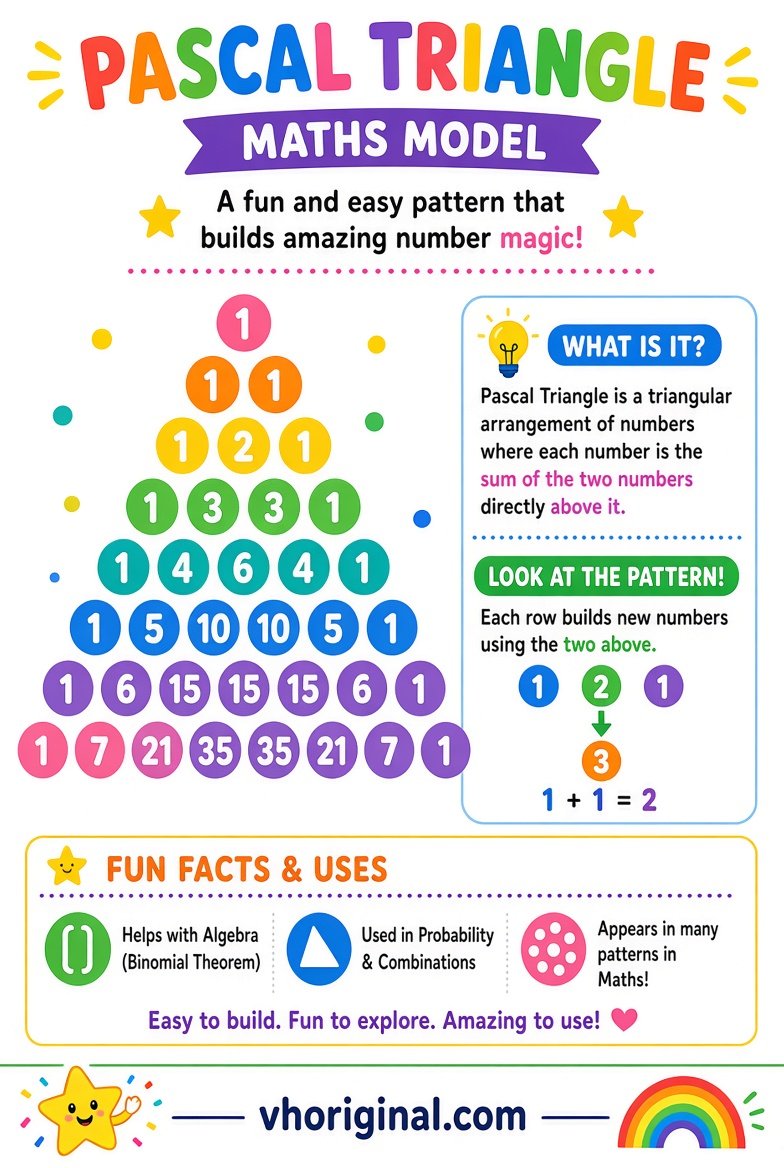
Picture 2: Pascal Triangle Number Pattern
The opening rows of Pascal’s Triangle are 1; 1 1; 1 2 1; 1 3 3 1; and 1 4 6 4 1. Each outer edge contains 1, and each interior entry equals the sum of the two entries directly above it. A useful application is the coefficients of binomial expansion: the square of (a+b) has coefficients 1, 2, 1. Students can also inspect row sums and diagonal patterns. The numbers are not random decoration; check the arithmetic before copying a printed poster. Ask a classmate to complete a missing row using the addition rule.
View / Download after 15-second wait
Picture 3: Fibonacci Spiral Geometry Chart
A common Fibonacci sequence begins 0, 1, 1, 2, 3, 5, 8, 13 and 21. After the first two terms, each term is formed from the preceding pair. On a maths board, draw squares whose side lengths follow selected Fibonacci numbers, then construct a quarter-circle arc inside each square. These arcs create a recognisable spiral-like figure. However, it is not an exact logarithmic golden spiral, and real leaves, shells or flowers do not all follow an identical Fibonacci law. Label the construction as a geometric approximation and mark the square sizes accurately for the chosen scale.

View / Download after 15-second wait
Materials and step-by-step spinner assembly
Prepare cardboard, colouring pens, a ruler, compass or circular template, a protractor and a safe paper fastener. Draw a circle and divide it into equal angles if a fair equal-sector probability model is intended. Four sectors would be 90 degrees each. Colour the regions and attach a lightweight pointer that can rotate without catching. Adults should help young pupils with sharp pins or difficult cutting. Record every spin in a small table with Trial Number and Colour, then compare counts with theoretical probabilities. A motor or electric circuit is unnecessary for this mathematical model.
Make Pascal’s Triangle and Fibonacci squares
Start the Pascal board with one at the top. Add symmetric rows below it, placing ones at the edges and calculating interior numbers from the pair above. Leave enough room for correct alignment. For the Fibonacci diagram, draw adjacent squares in the selected size order before drawing any arcs. Check the proportions with a ruler when space allows. An A4 model may need a reduced or schematic scale; label it accordingly. Only add colours after verifying the sequence. Do not treat a spiral illustration as an accurate physical growth pattern for every natural specimen.
Theoretical probability versus observed frequency
For equally likely outcomes, the event probability is the number of favourable outcomes divided by the total number of outcomes. This simple formula cannot be applied unchanged when differently sized sectors have different probabilities. A fair spinner may produce red just once in ten spins even if its probability is 1/4; short samples fluctuate. Keep a truthful tally and discuss what happens as more trials are added. Do not fabricate a result that looks mathematically neat. The key distinction is between a calculated expectation and an observed sequence of outcomes, which depends on chance.
Image downloads and final presentation checklist
Each of the three pictures opens through the existing 15-second advertisement-supported View/Download page; preserve this route rather than bypassing it with direct media-file links. Before printing, check all sequence terms and arithmetic. Hand-cut moving pointers should be stable and safe for children to operate. Add the student name, class, maths heading and one worked calculation under each poster. If a teacher requires hand-drawn work, use these diagrams as references. A correct small calculation and understandable explanation make a better project than unsupported claims about perfect patterns.
Frequently asked questions
What is the chance of red on a fair four-sector spinner with one red sector?
1/4, provided the four sectors have equal probability.
How is a middle number formed in Pascal’s Triangle?
By adding the two numbers immediately above it.
What is the Fibonacci recurrence rule?
Each later term equals the sum of the two preceding terms.
Is a Fibonacci quarter-circle construction an exact golden spiral?
No. It is a geometric approximation.
Conclusion and sources
These three models teach chance, arithmetic structure and geometry when students distinguish calculations from observations and approximations.
Related published guides: Simple Machines School Project · School Project Front Page
Sources: University of Surrey — Pascal’s Triangle; Wolfram MathWorld.
Explore more: 44 school project models, charts and pictures








Share Your Opinion
Comments are closed on this post.