 Vista
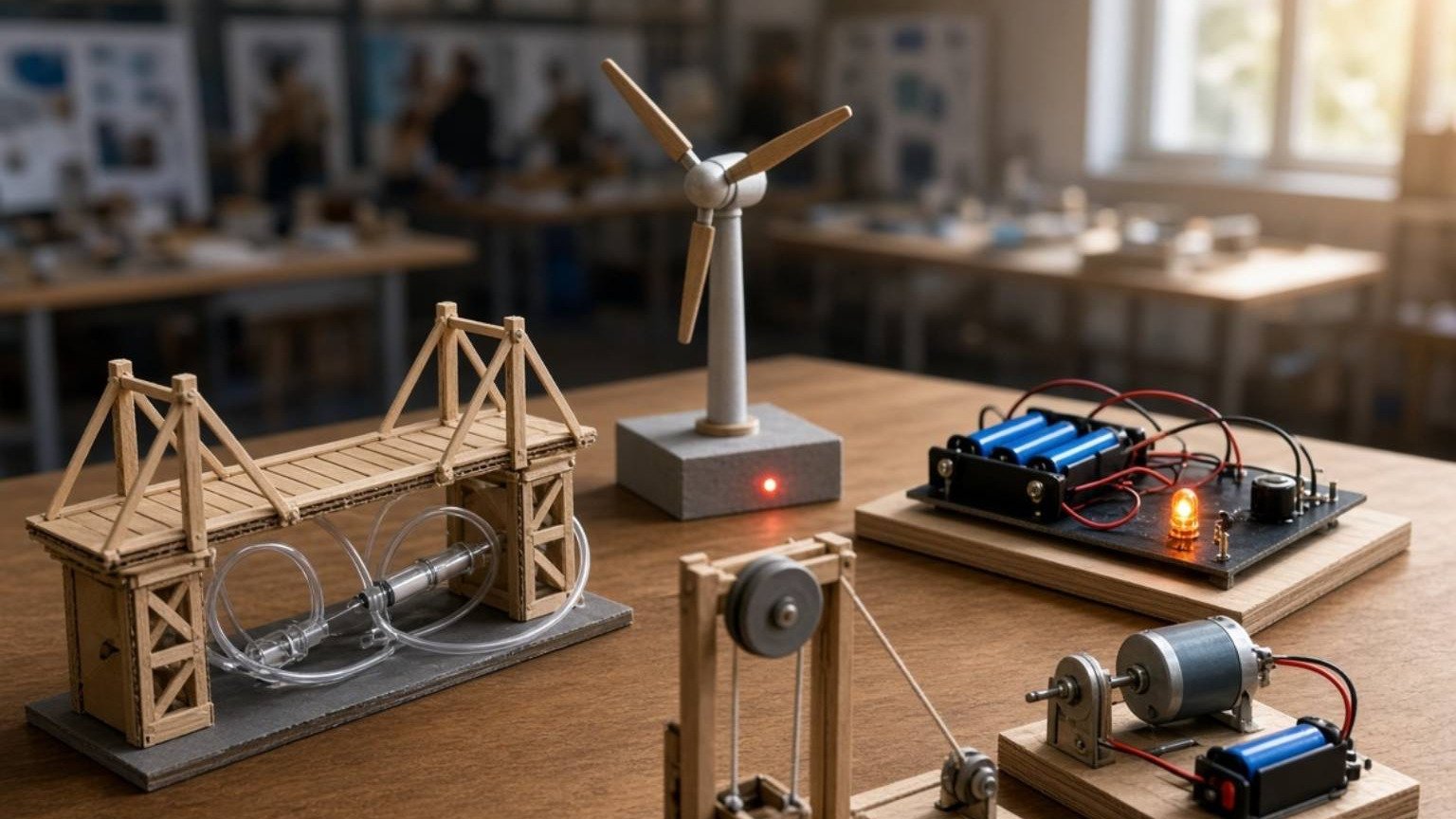
Need a liquid density tower school project or surface tension and floating/sinking experiments with pictures? This page groups three educational posters: a layered liquid tower, a water surface-tension activity and a buoyancy comparison. Students in roughly Classes 5–10 can use them for a simple A4 science chart or a supervised demonstration with household-safe materials. These are different principles: density compares mass with volume, surface tension concerns behaviour at a liquid surface, and buoyancy is the upward force exerted by a fluid. **Not every coloured liquid layer stays separate forever**—miscibility and how samples are poured matter alongside density. The images retain Vista Hub’s 15-second advertisement-supported download route.
How do density, surface tension and buoyancy differ?
Density means mass per unit volume. Surface tension concerns molecular interactions at a liquid interface. Buoyancy is an upward force related to displaced fluid weight. The three posters separately illustrate liquid layers, soap-induced surface flow and objects floating or sinking. Do not call every effect ‘water pressure’.
Picture 1: Liquid Density Tower Model
A colourful tower may show syrup below water and vegetable oil near the top because of differences in density. However, syrups and water can mix, while vegetable oil and water are largely immiscible. Carefully poured layers of miscible liquids may remain visible for a while but need not stay separated. Temperature, viscosity and turbulence also affect the outcome. A diagram showing fixed permanent boundaries for all liquids can therefore be misleading. Use a note such as ‘Some layers may mix over time’. Avoid assuming the sample with the darkest colour is automatically the most dense. Read the bottle labels rather than guessing at chemical identity.
View / Download after 15-second wait
Picture 2: Surface Tension with Pepper and Soap
Sprinkle a tiny amount of pepper over a clean water surface in a shallow tray. When a teacher adds a trace of mild dish soap, the pepper can move rapidly away from the contact region. The soap alters surface tension and can create flow along the liquid surface. The pepper is not magnetic, and it is not ‘afraid’ of soap. This is a qualitative observation, not an instrument that measures the numeric surface-tension value. Keep the pepper dust away from eyes and noses and remind pupils not to taste the solution. Use a tray to contain spills and follow teacher instructions for cleaning it afterward.

View / Download after 15-second wait
Picture 3: Floating and Sinking Demonstration
Whether an object floats depends on the forces acting on it and how much fluid it displaces. An object can float when the upward buoyant force balances its weight, even if it contains heavy material. A hollow boat can displace enough water to support its load, while a compact metal object may sink. Shape and average density therefore matter, not merely the number on a scale. Surface tension can support certain tiny objects under carefully controlled conditions, but that is a different effect from the main buoyancy explanation of ships. Do not test sharp needles around younger children.

View / Download after 15-second wait
Choose safe liquids and materials
Use transparent plastic cups, a tray, clean water, food-grade syrup, vegetable oil, labels, food colouring and small amounts of mild dish soap. Light classroom objects such as plastic caps, dry corks or wood pieces can be used for floating comparisons. Even food-grade ingredients should be labelled ‘Experiment Only—Do Not Drink’ once used in an activity. Industrial solvents, caustic cleaners, unknown oils and fragile glassware are unnecessary. Keep children from putting small test objects in their mouths. Let an adult supervise pouring where necessary and wipe spills promptly to avoid a slippery work surface.
Step-by-step density tower activity
Pour a small amount of selected syrup into a clear container. Add suitably coloured water slowly along the side if the instructor approves, then add a little vegetable oil. Observe the appearance immediately and again later. Some layers may remain distinct, while syrup and water can blend. Label actual observed positions rather than deciding that a poster’s arrangement must always happen. If the colours diffuse, discuss mixing and fluid properties. There is no need to invent density values or keep adding potentially hazardous liquids to make the colours look stronger. This is an educational comparison, not a calibrated hydrometer.
Step-by-step surface and buoyancy tests
For surface tension, float a little pepper on water and have an instructor touch the surface with a small amount of mild soap. Record whether the grains move and in what direction. In a separate clean container, place a few safe objects in water one at a time. Note whether each floats, remains suspended or sinks. Compare their shapes and materials; a hollow object can behave differently when filled with water. Avoid forcing objects under the surface and then describing the held position as natural floating. A truthful observation table is preferable to a prewritten list of guaranteed outcomes.
School presentation and common mistakes
Explain why oil and water can layer, how soap changes surface behaviour and how buoyancy supports a ship. Density and miscibility both matter. Do not invent numeric surface-tension or density readings. If an experiment differs from the poster, report the actual observation and discuss possible reasons.
Image downloads and classroom cleanup
The three posters use the existing 15-second advertisement-supported download route, not a direct-file shortcut. Check any liquid-layer diagram against real materials. Label experiment samples ‘Do Not Drink’, wash hands and clean spills. A simple chart needs correct labels and observed results, not decorative invented measurements.
Frequently asked questions
What is density?
Mass per unit volume.
Why can oil and water form layers?
Density differences and limited mutual solubility both matter.
Why does pepper move when soap touches water?
Soap changes the surface tension, producing liquid movement.
Will every heavy object sink?
No. Buoyancy, shape and average density determine behaviour.
Conclusion and sources
These three activities work best when pupils identify distinct forces and properties rather than assuming all liquid behaviour has one explanation.
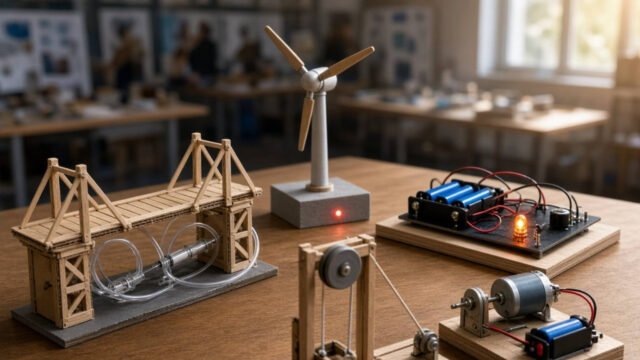
Related school projects: Hydraulic Bridge Model · Science Working Models
References: OpenStax — Archimedes Principle; OpenStax — Surface Tension.
Explore more: 44 school project models, charts and pictures







Share Your Opinion
Comments are closed on this post.