 Vista
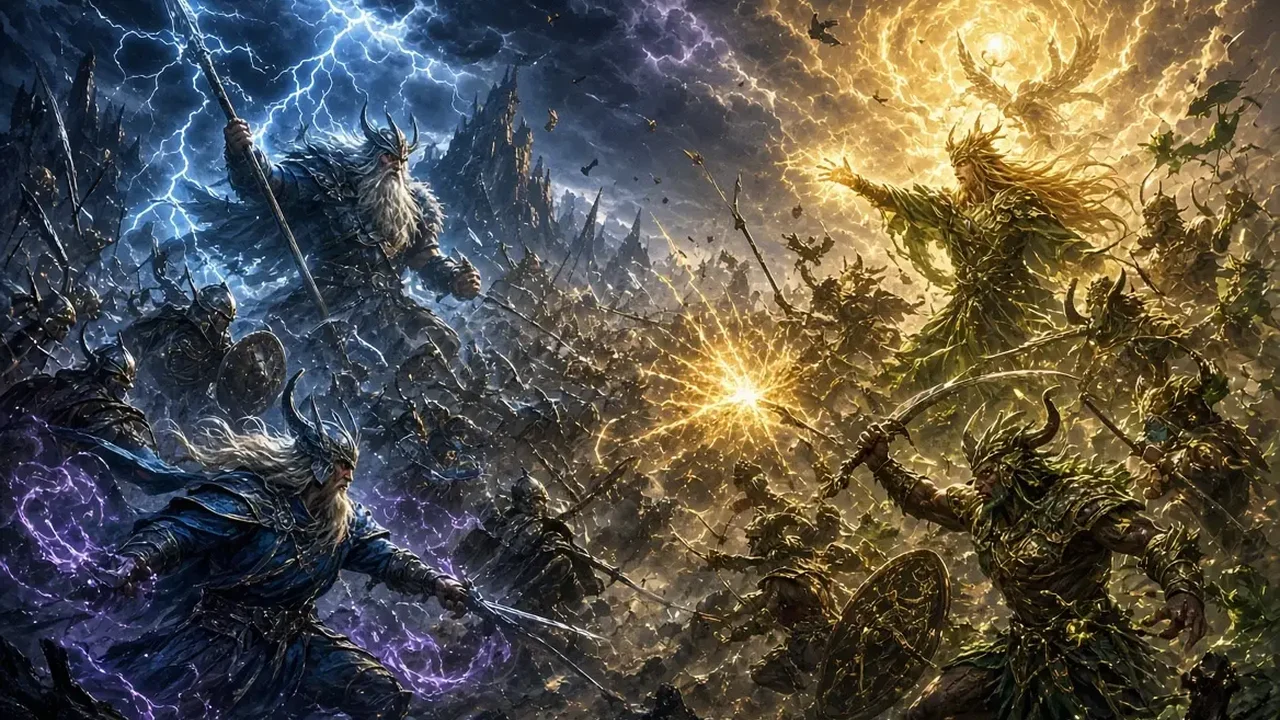
The Æsir–Vanir War is a conflict between two groups of gods in Norse mythology, remembered as an early struggle followed by reconciliation. In Völuspá, the seeress recalls Gullveig being pierced with spears and burned repeatedly, a dispute among the gods, Odin casting his spear and the Vanir breaking the defenses of the Æsir. Later prose accounts describe peace talks and an exchange of hostages, including Njörðr and Hœnir. These sources preserve important differences; there is no single surviving ancient battle screenplay that resolves every detail.
This guide answers Aesir vs Vanir war, which gods belonged to each group, what happened to Gullveig, who won, why Njord, Freyr and Freyja appear among the gods, how Kvasir entered the story and whether the conflict has an exact historical date. The images represent mythic events, not actual battle photographs.
What Are the Æsir and Vanir?
The Æsir are closely associated with Odin, Thor, Frigg and other prominent gods, while the Vanir are particularly connected with Njörðr and his children Freyr and Freyja. Modern beginner guides sometimes say the Æsir govern only war and the Vanir only fertility. That division can serve as a loose memory aid, but it is not a complete description. Odin is connected with many kinds of knowledge and magic, while Freyr’s stories include romance and a fatal battle at Ragnarök. The groups interact, marry and exchange members rather than remaining two permanently hostile biological species. Some scholars debate the antiquity and exact significance of the distinction, and that uncertainty should not be hidden by a glossy chart. A useful visual guide begins with representative names and explains that they are different social or divine groupings within the literary mythology. There is no need to invent a numerical census of all members or two opposing national flags supposedly preserved by Viking armies.
Gullveig and Heiðr in Völuspá: What Started the Conflict?
In the poem Völuspá, the seeress remembers a first war after describing how a figure called Gullveig was struck with spears and burned in Odin’s hall. The poem says she was burned three times yet remained alive, then speaks of Heiðr, a seeress practicing a form of magic called seiðr. Whether Gullveig and Heiðr represent exactly the same figure, and how their treatment is connected causally to the war, has been much discussed. Many popular summaries state that Gullveig was definitely Freyja in disguise. That is a scholarly hypothesis or modern retelling, not a fact explicitly agreed in every source. The poem places the violent treatment, divine deliberation and conflict in close sequence. It does not provide a comprehensive modern police report identifying every motive. Readers interested in ‘Gullveig meaning’ deserve the actual text’s ambiguity rather than a fully invented backstory.
Odin’s Spear and the First Great Battle
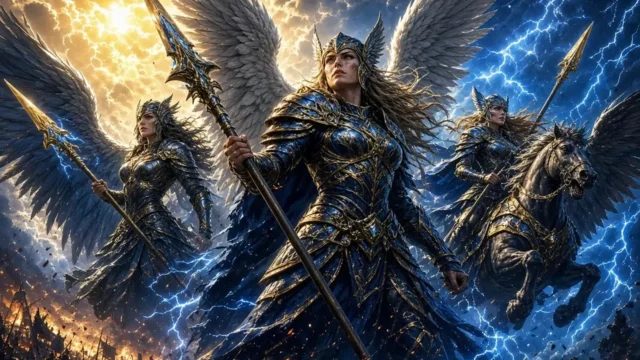
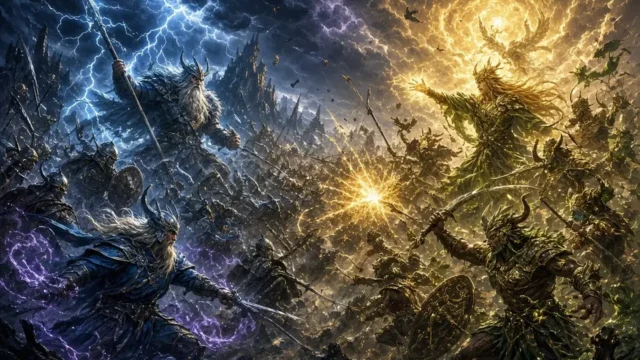
Völuspá describes Odin hurling a spear among the assembled opponents as the first war unfolds. The poem also evokes a broken defensive wall and the Vanir moving into the field. It is tempting to imagine a perfectly mapped siege between two golden castles, with Odin personally commanding exactly 10,000 warriors. No such numbers appear in the famous stanzas. The imagery is compressed and prophetic, not a detailed battle chronicle. It conveys a world in which even gods can fight among themselves and their fortified spaces can fail. Modern artwork may depict the conflict as glowing spears, storm clouds and supernatural armies. Such visuals are legitimate imaginative responses to the poetry, provided captions say ‘Æsir–Vanir War inspired illustration’ rather than ‘a Viking painting of the real first war’. The spear image is a specific poetic detail; the invented armor, formations and casualty totals are not.
Who Won the Æsir–Vanir War?
The common story does not end with the absolute destruction of one divine group. In Ynglinga saga, the two sides fight with varying success, damage each other’s lands and eventually grow weary of conflict. They hold talks, establish peace and exchange hostages. This suggests no simple permanent winner. However, the surviving poetic account and the prose saga have different interests and do not match every detail. The safest answer is that the famous prose tradition presents a negotiated settlement rather than a clean victory by the Æsir or the Vanir. A headline saying ‘Odin wiped out every Vanir’ is contradicted by the later prominent roles of Njörðr, Freyr and Freyja. Likewise, an image depicting a single supreme monarch conquering both sides should not be claimed as a settled ancient fact. The story is about conflict giving way to a new divine arrangement, even if the sources disagree about how that arrangement was created.
The Hostage Exchange: Njörðr, Hœnir and Mímir
Ynglinga saga describes hostages exchanged after peace: Njörðr and his son Freyr are sent from the Vanir, while Hœnir and the wise Mímir go from the Æsir. The prose portrays Hœnir as impressive but dependent on Mímir’s advice. When the Vanir discover this, they kill Mímir and send his head back to Odin, who preserves it by magic. The grim episode warns against reducing the peace settlement to a cheerful group portrait. Other sources present the details differently: Gylfaginning gives a shorter exchange, and the precise role of Kvasir varies. Therefore a poster should not combine all hostage lists into one universally fixed ancient treaty. It can identify the major figures and note ‘Ynglinga saga version’. The episode also has a useful connection to Odin’s pursuit of wisdom and the recurring image of Mímir as a source of counsel. It is not a historical peace treaty with archaeological signatures.
How Do Freyja and Freyr Become Connected with the Æsir?
Freyr and Freyja are the children of Njörðr in the famous Prose Edda account. Their relationships to the Vanir and to the broader divine household are important for understanding why they participate in stories involving Odin and other Æsir. Ynglinga saga speaks of Freyr coming with Njörðr among the hostages, while Freyja is closely associated with the Vanir group in other accounts. These references should not be flattened into a claim that both children appear in every text as identical hostages at the same negotiation. In later myths, Freyr’s connections with fruitful seasons and Gerðr, and Freyja’s connections with Brísingamen, Fólkvangr and seiðr, enrich the divine world. Their presence does not erase their lineage. A useful family-tree article keeps their father Njörðr clear and labels the specific source when describing the exchange. Otherwise a chart can accidentally place Freyja as Odin’s daughter or Frigg as her mother.
Kvasir and the Strange Symbol of Peace
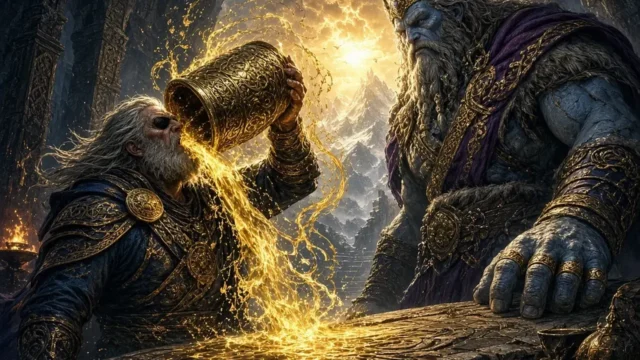
Skáldskaparmál describes the two groups of gods coming together to confirm peace and creating Kvasir from their combined spittle. Kvasir becomes exceptionally wise, but his later death at the hands of dwarfs begins the Mead of Poetry story. Yet Ynglinga saga preserves a different Kvasir tradition, treating him as a wise hostage from the Vanir. These two accounts cannot be made identical merely by changing a name or date. The variation is important for anyone researching ‘Kvasir first war’ or ‘Mead of Poetry origin’. One version presents wisdom itself as emerging from reconciliation; another fits Kvasir into a political exchange. A thoughtful article can explain both rather than conceal the tension. A beautiful image might show the gods sealing peace around a vessel, but the supernatural means by which Kvasir is created is literary material, not a documented human ceremony or medical fact.
Is the Æsir–Vanir War a Real Historical War?
The accounts were preserved in medieval Icelandic literature. Some past scholars speculated that the mythical conflict reflects encounters between different religious traditions or populations. Such theories are interpretations, not straightforward proof that archaeologists have found a dated battlefield for an Æsir army facing a Vanir army. Nor do the old poems give modern calendar years, country borders or identifiable kings who fought in this supernatural conflict. Myth can preserve cultural concerns about power, magic, exchange and social integration without documenting a literal war between gods. When explaining the source, it helps to distinguish Völuspá’s brief prophetic stanzas from Snorri’s later narrative elaboration. They were written down in different genres and historical circumstances. Modern videos or AI images can illustrate a plausible fantasy battle, but cannot serve as evidence that the event actually occurred. Readers deserve the original uncertainty rather than a made-up archaeological discovery.
Aesir vs Vanir Images, Family Trees and Norse Symbols
Searches for ‘Aesir vs Vanir war’, ‘Norse gods two tribes’, ‘Gullveig burning’, ‘Njord Freyr Freyja family tree’ and ‘Kvasir mead of poetry’ cover different aspects of this cluster. A cinematic featured image can depict divine groups facing one another, while a factual poster can present the sequence: dispute, battle, peace and exchange. Keep the group membership labels readable and avoid inventing a fixed war date. ALT text should describe what the actual artwork shows, not stuff in unrelated gods. Once companion articles are published, same-language internal links to Freyr, Freyja, Odin and the Mead of Poetry can support a useful reader journey. A draft should not claim its unpublished neighbor is already live. The most valuable visual explainer shows that a myth can be fascinating even when its medieval witnesses disagree about names and details.
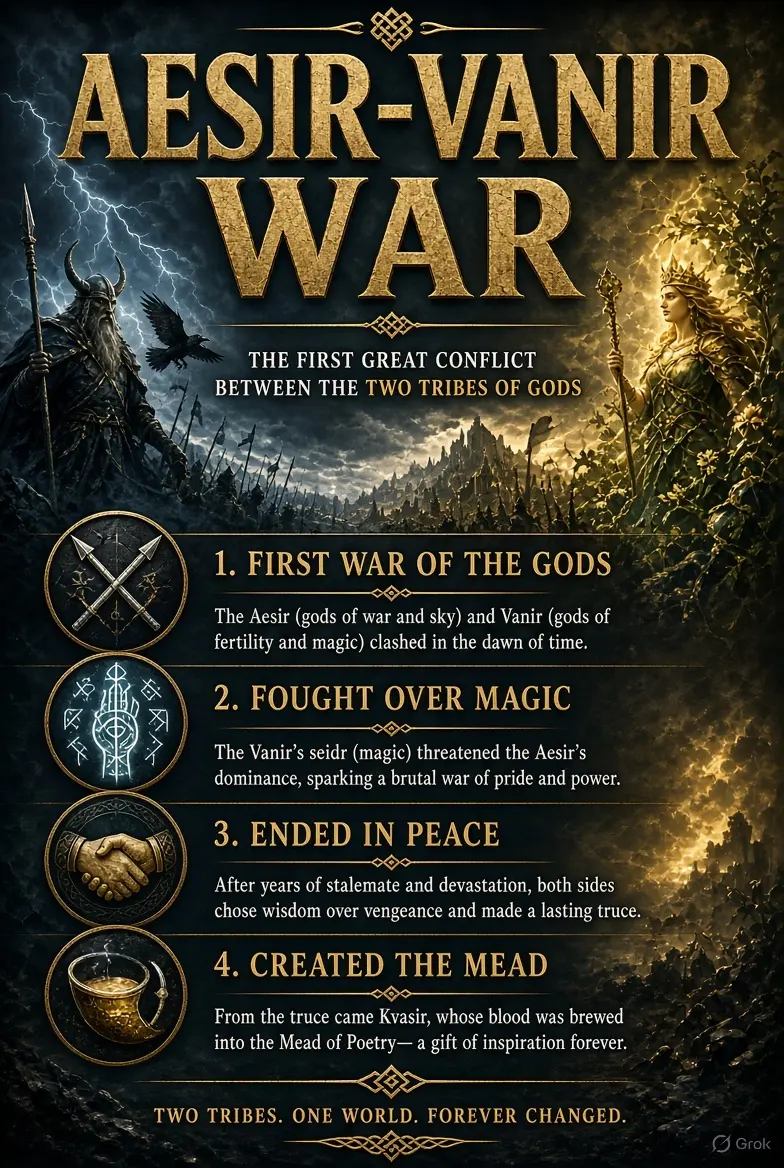
Artwork and source Völuspá associates Gullveig with the opening of the war, but a precise motive and duration are uncertain. The peace and Kvasir tellings also differ by source.
Frequently Asked Questions
What were the Æsir and Vanir?
Two groups of gods in Old Norse tradition, associated with figures including Odin and Njörðr respectively.
Did Gullveig cause the first war?
Völuspá places her violent treatment near the first conflict, but the exact interpretation is debated.
Who won the Aesir–Vanir War?
Ynglinga saga describes changing fortunes followed by negotiated peace, not one decisive permanent winner.
What hostages were exchanged?
In Ynglinga saga Njörðr and Freyr go one way; Hœnir and Mímir go the other, with Kvasir treated differently across sources.
Is Kvasir created from spittle or a Vanir hostage?
Different prose traditions preserve different origin accounts.
Was this a real dated Viking battle?
No direct historical evidence establishes a literal battlefield or calendar date for the mythic war.
Conclusion
The Æsir–Vanir War is a story of conflict and uneasy settlement among the gods, told differently in poetry and prose. Gullveig, Odin’s spear, hostages and Kvasir provide its memorable details; honest comparison of sources is more useful than invented battle statistics.
Primary sources and artwork note
Völuspá, stanzas 21–24 (the first war and Gullveig); Snorri, Ynglinga saga — conflict and hostages; Snorri, Skáldskaparmál — peace and Kvasir.
Reviewed 15 November 2026. Images are artistic mythology, not evidence of an actual battle.






















Share Your Opinion
Comments are closed on this post.