 Vista
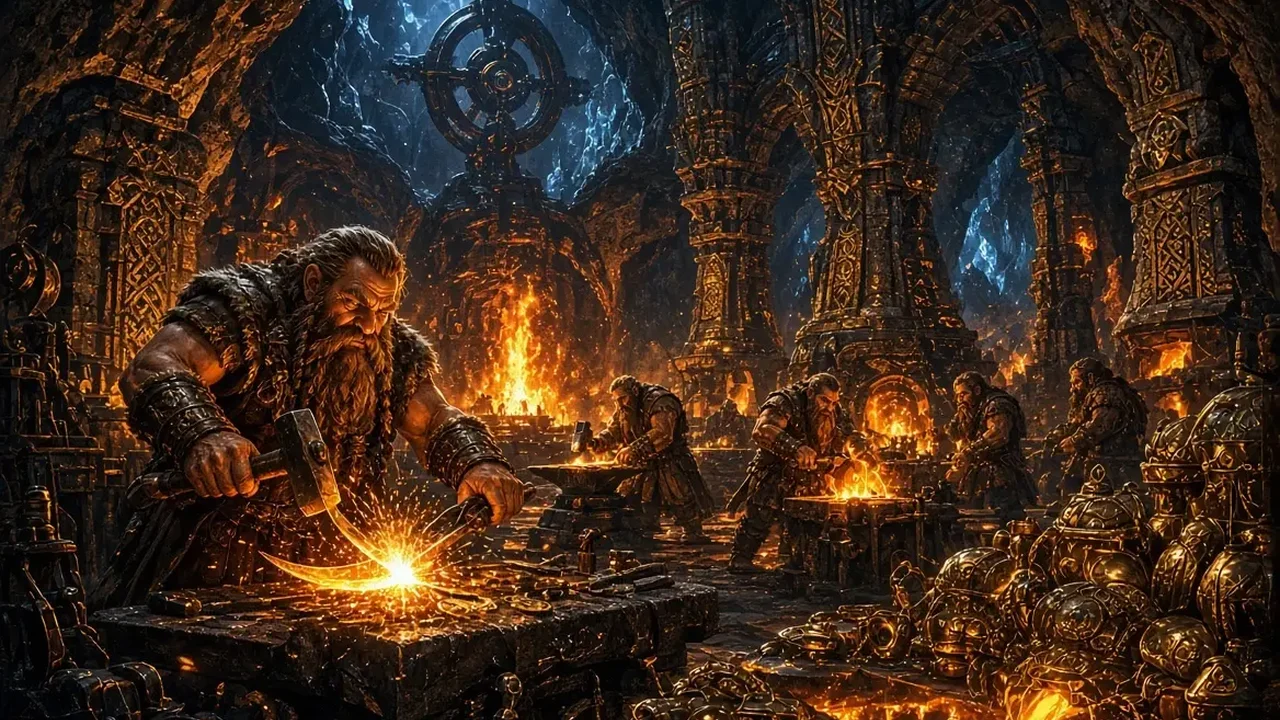
The six famous treasures of the Norse gods are Sif’s golden hair, the ship Skíðblaðnir, Odin’s spear Gungnir, Freyr’s boar Gullinbursti, Odin’s ring Draupnir and Thor’s hammer Mjölnir. In Snorri’s Skáldskaparmál, they come from two groups of skilled dwarf craftsmen after Loki cuts off Sif’s hair. The sons of Ívaldi make the first three. The brothers Brokkr and Sindri make the other three when Loki wagers his own head that they cannot match the earlier work. Mjölnir wins the gods’ judgment despite its shortened handle.
This illustrated guide explains six treasures of Norse gods, the names and powers of each object, how Loki’s trick begins, why a fly disrupts the forge, what happens to Loki’s wager and the difference between ancient literary descriptions and modern fantasy artifacts.
Why Did Loki’s Prank Lead to Six Divine Treasures?
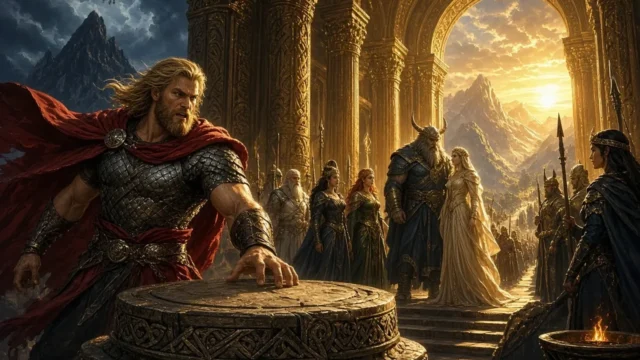
The story begins with Loki cutting off all the hair of Sif, the wife of Thor. Thor is furious, seizes Loki and threatens violent punishment until Loki promises to find a replacement made of gold that will grow like living hair. Seeking a solution, Loki visits the smiths known as the sons of Ívaldi. They make the extraordinary hair and, in the same account, two further objects: a ship called Skíðblaðnir and the spear Gungnir. Loki’s reckless competitiveness then sets up a second round of craftsmanship. He bets his head that Brokkr’s brother Sindri cannot make three treasures as good as the first three. The narrative therefore connects Sif’s personal loss with gifts that enrich Odin, Thor and Freyr. A quick chart that starts with ‘the dwarves gifted the gods six presents for no reason’ misses the central causal chain. Loki causes harm, tries to avoid Thor’s wrath and nearly loses a wager through his own overconfidence. Norse myths are often playful and morally complicated, and this episode is an outstanding example.
Who Are the Sons of Ívaldi, Brokkr and Sindri?
The sons of Ívaldi are the craftspeople credited with three works in Skáldskaparmál. The prose gives them a group identity rather than a complete modern list of individual children’s names and biographies. Brokkr is the dwarf who accepts Loki’s challenge, operates the bellows and presents the second group of treasures to the gods. Sindri, his brother in the Brodeur translation, does the forging. Other versions and retellings sometimes use the name Eitri for the smith, which is why readers may encounter ‘Brokkr and Eitri’ in popular summaries. Those names should not be casually counted as three separate brothers unless a specific source says so. The categories ‘dwarf’ and ‘black elf’ also overlap in Snorri’s phrasing in this episode; that is a literary terminology issue, not evidence for a fixed contemporary fantasy-game species chart. A readable infographic should divide the treasures into ‘Sons of Ívaldi: three’ and ‘Brokkr and Sindri: three’ instead of mixing makers across groups. The surviving texts do not provide their exact heights, forge address or dates of birth.
Treasure One: Sif’s Golden Hair
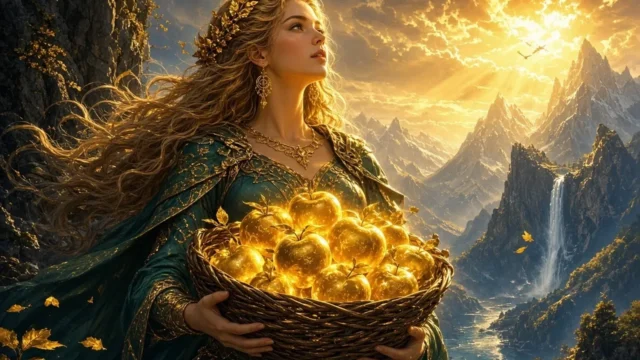
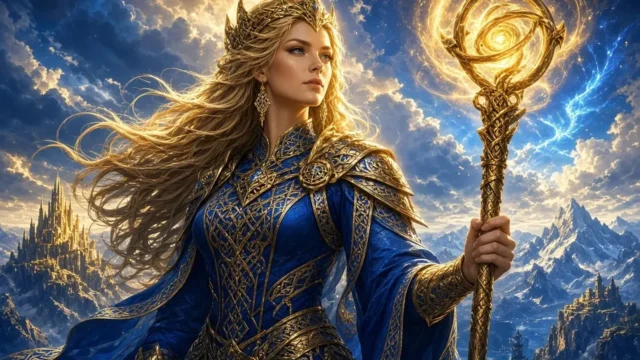
Sif’s replacement is not merely a loose golden wig. The dwarfs make gold hair with the special quality of growing like natural hair when placed on her head, fulfilling the promise Loki made to Thor. This explains why gold can be called Sif’s hair in the poetic language discussed by Snorri. Many modern illustrations show Sif with long luminous blonde hair, but the distinction between her original hair and the magically crafted replacement is essential to the plot. The text does not supply a precise braid count, a metallic chemical formula or a confirmed portrait of her appearance. It also does not make the hair a weapon used to defeat Fenrir. This object connects personal dignity, Loki’s cruelty and dwarf craftsmanship. In image search, phrases such as ‘Sif golden hair Norse mythology’ and ‘Loki cuts Sif hair’ point to this episode rather than every ordinary picture of a fair-haired goddess. A good caption describes the golden replacement and identifies the sons of Ívaldi as its makers.
Treasure Two: Skíðblaðnir, Freyr’s Foldable Ship
Skíðblaðnir is a marvelous ship associated with Freyr and credited to the sons of Ívaldi. Snorri describes a vessel that can carry all the gods with their equipment, obtains a favorable wind when its sails are raised and can be folded like a cloth or napkin to fit into a pouch when not needed. These features establish its legendary convenience and impossible scale. Some internet diagrams describe it as a flying starship with an exact engine speed, while others confuse it with Hringhorni, the ship used for Baldr’s funeral. These are separate named vessels with different stories. The mythic ship belongs in an overview of the gods’ treasures, but claims about how many sailors it held or its precise wooden dimensions are invented if no source gives them. In a visual poster, label it ‘Freyr’s foldable ship’ and indicate the favorable wind as part of the literary description. That communicates the memorable detail without turning fantasy into maritime engineering.
Treasure Three: Gungnir, Odin’s Spear
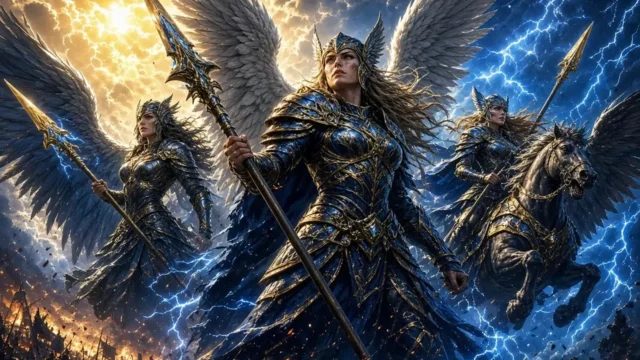
Gungnir is the spear belonging to Odin, crafted by the sons of Ívaldi in this episode. It is often portrayed as an unerring weapon and a sign of Odin’s authority; the broader tradition connects Odin’s spear with war and consecration. But popular websites sometimes make its every modern gaming ability a medieval fact, adding laser beams, teleportation and numerical damage ratings. The prose story of the contest primarily identifies the spear as a valuable work of craftsmanship and assigns it to Odin. Other texts help shape its wider symbolism. An illustration showing a straight spear with runic patterns can be dramatic, yet the exact rune sequence is not dictated by Skáldskaparmál. The weapon should not be confused with Gram, Sigurd’s sword, or with Thor’s hammer Mjölnir. Similarly, the spear that wounds Odin during his nine-night ordeal is not explicitly named Gungnir in that particular Hávamál verse. A responsible long-form article keeps these source distinctions visible while explaining why Gungnir is one of Odin’s defining objects.
Treasure Four: Gullinbursti, the Golden-Bristled Boar
Sindri places a pigskin in the forge while Brokkr works the bellows, and the first treasure to emerge is a boar with golden bristles. This is Gullinbursti, a marvelous creature later presented to Freyr. The bristles shine and can illuminate darkness, and the boar’s speed and ability to cross difficult terrain form part of its impressive reputation in Snorri’s description. Some retellings call the creature Slíðrugtanni, a name that appears in related material, but one should check a source before pretending all boar names across the literature are interchangeable. The important maker distinction is that Gullinbursti comes from Brokkr and Sindri, not the sons of Ívaldi who made Skíðblaðnir. It is also not a normal archaeological wild boar whose golden hair has been recovered from a grave. An attractive artwork may show a radiant animal with metal-like fur, while an educational caption should note its relation to Freyr and the forge contest. The animal makes a striking alternative image to the more familiar hammer and spear.
Treasure Five: Draupnir, Odin’s Ring
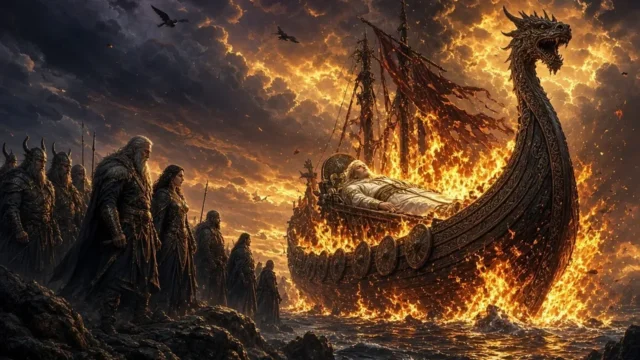
Draupnir is the golden ring created in the second round. Sindri places gold into the furnace while Brokkr maintains the fire with the bellows. The magical ring is presented to Odin, and its famous feature is that eight rings of equal weight drop from it every ninth night. This supernatural multiplication is an important detail to remember; it is not a claim about a real metal alloy reproducing itself. Draupnir also reappears in the story of Baldr’s funeral, when Odin places the ring on his son’s pyre. Its later mention connects this craft tale with another major Norse episode. A post about the six treasures should distinguish Draupnir from Andvaranaut, the cursed ring associated with Andvari’s gold and the Sigurd-Fafnir cycle. Both rings are famous, but they are not the same object. A source-faithful infographic can illustrate one main ring and eight smaller ones, labelled ‘every ninth night’. It should not claim the ring belongs to Freyja or that it is an original surviving artifact photographed in a museum.
Treasure Six: Mjölnir, Thor’s Hammer With the Short Handle
For the final treasure Sindri places iron in the furnace and warns Brokkr that the bellows must not pause. A fly bites Brokkr near his eyes so severely that blood obscures his sight. He briefly moves his hand to get the insect away, and the air supply falters. The finished object is Mjölnir, Thor’s hammer, but the interruption leaves its handle shorter than intended. Despite this flaw, its protective and destructive value makes the gods choose it as the greatest of the gifts. In the familiar account, the hammer does not fail when thrown, returns to Thor’s hand and can be carried compactly. A very short handle is therefore not evidence that the dwarfs were incompetent; the story explicitly shows a near-disaster and an impressive result. Modern Marvel versions give the weapon an additional worthiness enchantment with a specific test for lifting it, which is not the central rule of Snorri’s forging scene. The trusted fact is that this hammer wins the contest and becomes Thor’s famous possession.
The Fly, the Contest and Loki’s Dangerous Wager
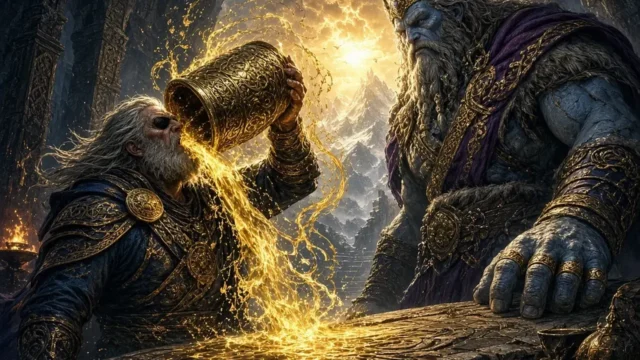
The story repeatedly describes a fly stinging Brokkr while his brother works at the forge: first on his hand, then at his neck and finally near his eyelid. Brokkr endures the first two bites while continuing the bellows, but the third distracts him momentarily and shortens the hammer’s handle. A common interpretation is that the fly is Loki trying to sabotage the wager. The text does not explicitly identify the fly as Loki in a straightforward declaration in this passage, so that link should be presented as an interpretation rather than a direct quotation. Brokkr then brings the treasures before Odin, Thor and Freyr, who consider their value. The boar, ring and hammer are evaluated alongside the first three. The gods decide Mjölnir is greatest because it provides exceptional defense against dangerous opponents. Loki loses his bet, which specified his head. The apparent victory for the smiths creates the final comic and unsettling twist of the story.
Why Is Loki’s Mouth Sewn Shut Instead of Taking His Head?
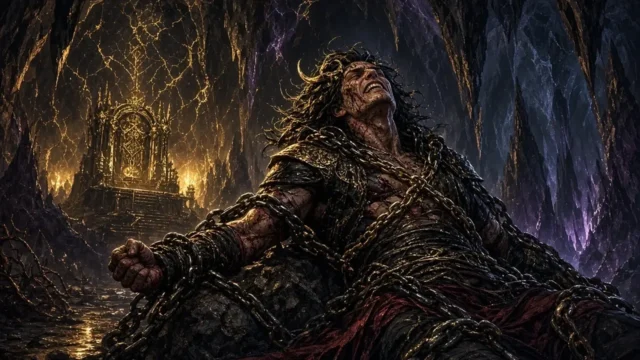
Brokkr insists on the promised prize, but Loki objects that the wager involved his head, not the neck. The story then describes a failed attempt to catch Loki through the use of his special shoes, followed by Thor restraining him. Because the dwarf cannot simply cut his neck, he decides on another punishment. He pierces Loki’s lips and sews his mouth shut, using a thong called Vartari in the prose account. This detail is memorable because Loki’s ability to talk and deceive has propelled the entire myth. The ending is not the same episode as Loki’s much later binding beneath a venomous serpent after the death of Baldr. Distinguishing ‘Loki’s lips sewn after the treasures wager’ from ‘Loki bound with Sigyn collecting venom’ prevents a common blend of separate narratives. The episode is supernatural fiction and should not be presented as a real-world instruction to harm someone. It closes a story in which reckless speech nearly costs the trickster everything.
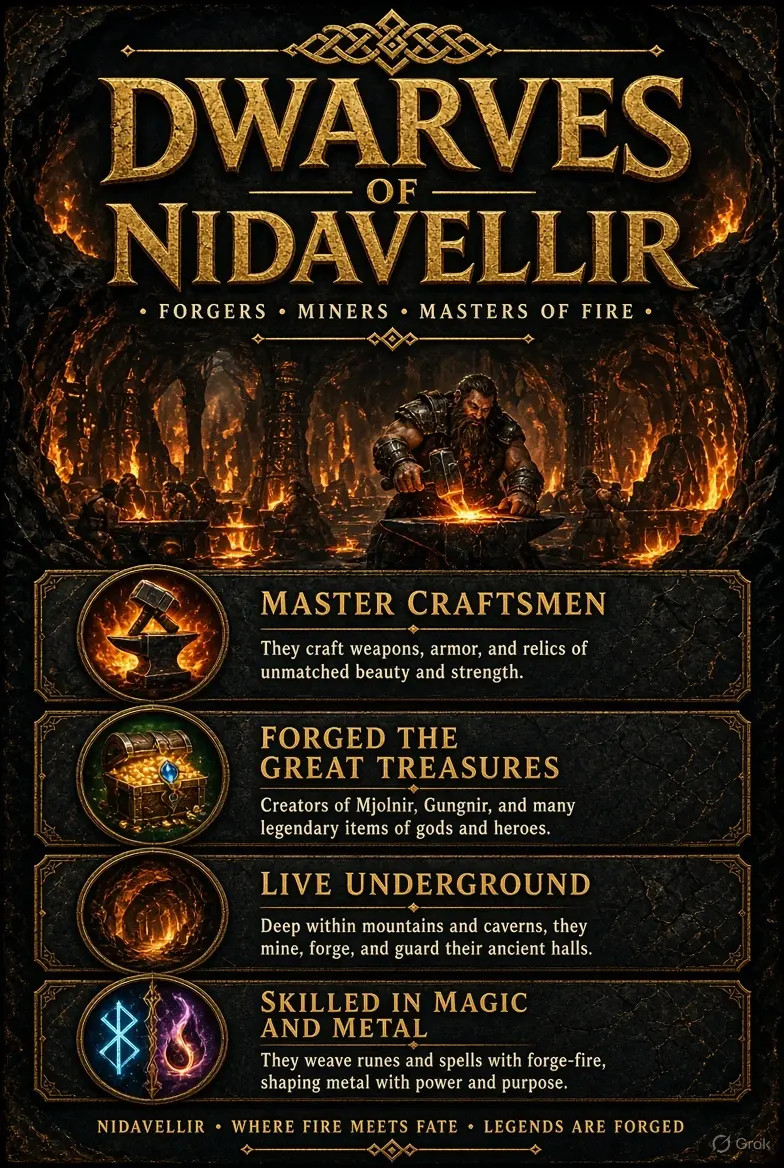
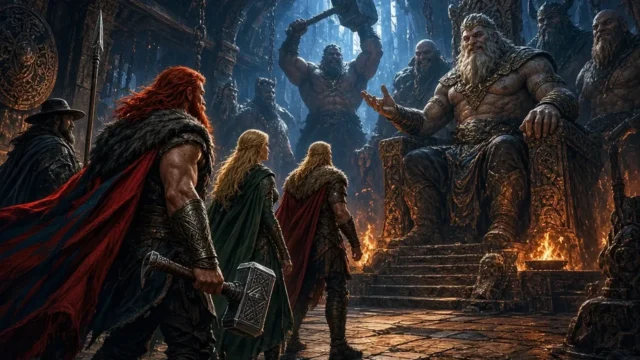
Artwork and source The source names the Sons of Ívaldi and Brokkr’s brother as the smiths in the contest. The poster depicts a modern imagined forge, and its realm label is not specified for this episode.
Frequently Asked Questions
What are the six treasures of the Norse gods?
Sif’s golden hair, Skíðblaðnir, Gungnir, Gullinbursti, Draupnir and Mjölnir.
Who made Mjölnir?
Sindri, also called Eitri in some retellings, forged it while Brokkr worked the bellows.
Who made Sif’s hair, Gungnir and Skíðblaðnir?
The dwarfs called the sons of Ívaldi.
Why is Thor’s hammer handle short?
Brokkr briefly loses the bellows rhythm after a fly stings near his eyes.
Which gift wins the contest?
Mjölnir, judged the most useful protection for the gods.
What punishment does Loki receive?
His mouth is sewn shut after he argues that his wager included his head but not his neck.
Conclusion
The six treasures story begins with Loki’s cruel prank and ends with both extraordinary craftsmanship and a disastrous wager. Two different dwarf groups make the gifts, and Mjölnir wins despite its shortened handle. Clear captions for each maker, owner and object make a mythology image hub much more informative than a collage of unlabeled weapons.
Primary sources and artwork notice
Skáldskaparmál: Sif’s hair, Loki’s wager and the treasures; Skáldskaparmál 43, Old Norse text and translation; University of Victoria MyNDIR: The Treasures of the Gods.
Reviewed 15 November 2026. Modern artwork depicts mythology, not historical photographs or surviving artifacts.









Share Your Opinion
Comments are closed on this post.