 Vista
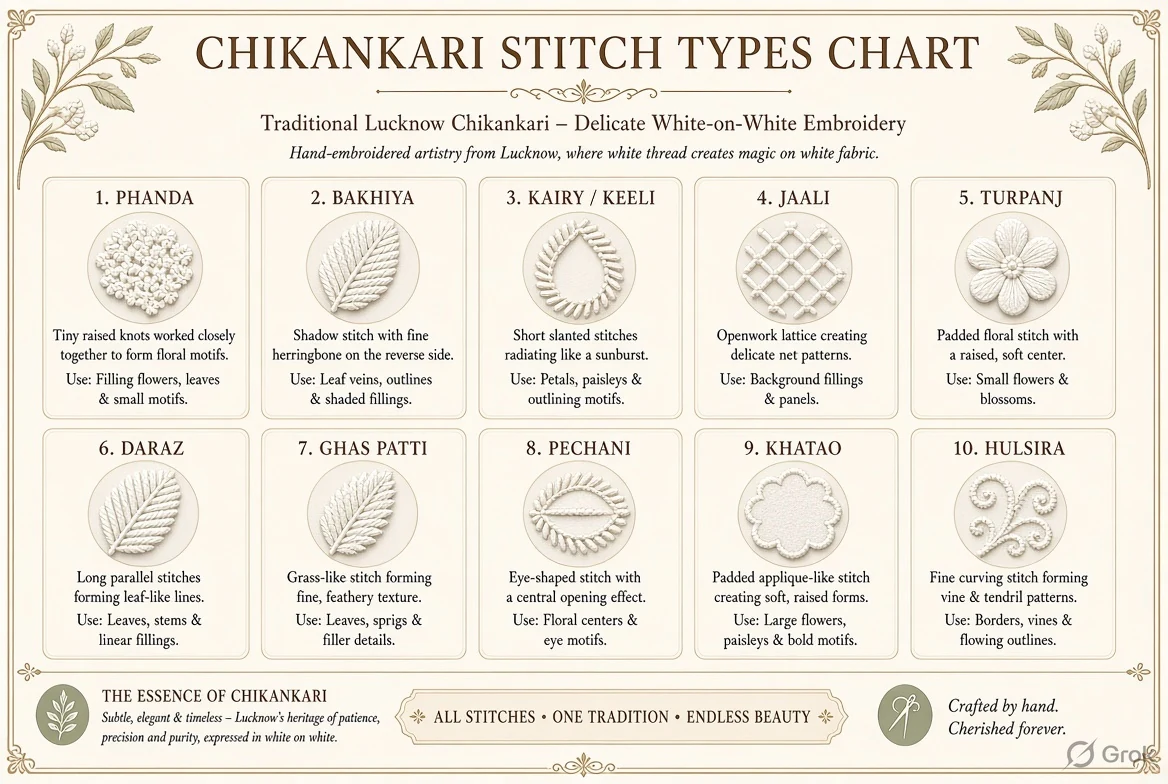
Direct answer: Lucknow’s Chikankari is a hand-embroidery tradition known for fine line work, shadow effects, small raised floral details and net-like openwork. Five frequently taught stitch groups include Tepchi (running stitch), Bakhiya (shadow work), Phanda and Murri (raised dot or grain-like details) and Jaali (delicate openwork formed by separating and holding fabric threads). They are not interchangeable techniques. Four uploaded diagrams here introduce these stitches and help readers identify handwork responsibly; a schematic illustration alone cannot authenticate an expensive garment or replace artisan training.
Updated 20 November 2026. Illustration-based guidance is not an authentication of any individual garment.
Chikankari stitch types: quick facts
| Regional association | Lucknow and Awadh, Uttar Pradesh |
|---|---|
| Tepchi | Fine running-stitch lines |
| Bakhiya | Shadow work, often seen through fine fabric |
| Phanda and Murri | Raised small dots or grain-like stitched forms |
| Jaali | Openwork made by drawing apart and securing fabric threads |
| Visuals | Four diagrams; educational references rather than a verified machine-vs-hand test |
Four Chikankari stitch charts and visual comparisons

What is Chikankari embroidery and why is Lucknow important?
Chikankari is strongly associated with Lucknow and the craft networks of Awadh in northern India. The tradition is recognized for fine hand embroidery on light cloth as well as a range of contemporary garment styles. Older descriptions emphasize white thread on pale or white textiles, but modern chikankari appears in numerous colors, fabrics and fashion products. The craft is not defined by one stitch alone: outlines, shadow work, knot-like details and openwork can be combined. When identifying a genuine handmade piece, study the workmanship and provenance, not only the floral appearance. A printed white-on-white flower on a garment is not evidence that the fabric contains hand-worked Tepchi or Bakhiya stitches.
Tepchi stitch: how the simplest running line is used
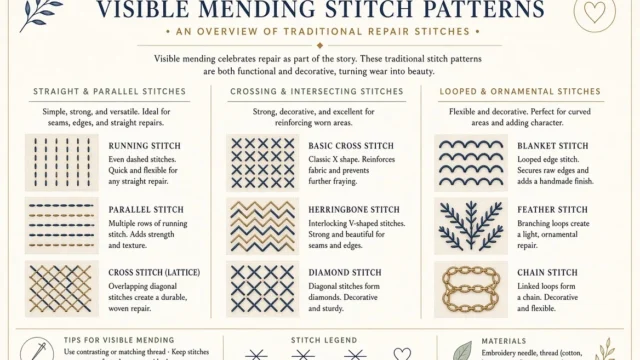
Tepchi is a fine running stitch that can form a simple outline or help establish a pattern. The needle passes into and out of cloth, leaving measured short marks visible on the surface. It is often recommended for beginners because it teaches fabric handling and tension before more complex shadow effects. To practise, mark one short line with a removable fabric marker and follow it using regular small stitches. Keep the cloth supported but not stretched out of shape. On a loose fabric, overly long stitches may snag; on fine fabric, excessive tension may pucker the line. A diagram should show the actual front-side sequence rather than merely label any dotted outline ‘Tepchi’.
Bakhiya shadow work: the distinctive effect of fine fabric
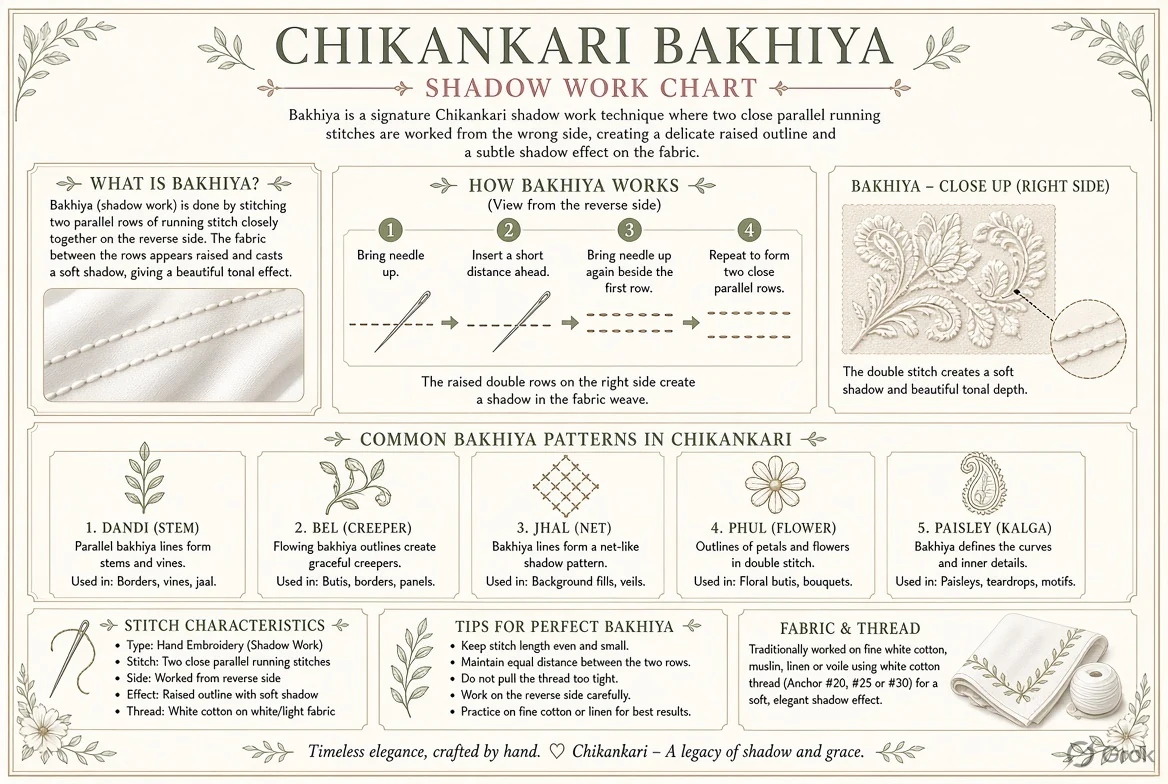
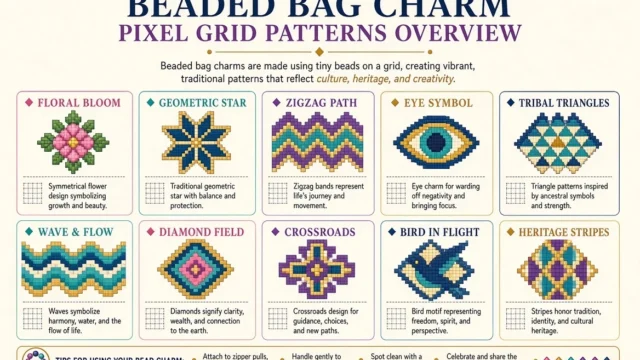
Bakhiya is associated with shadow work, in which stitches on the reverse or through the cloth create a soft filled effect visible on the front, particularly on translucent textiles. The placement of cross- or herringbone-like stitching can make a motif appear shaded without covering its entire front surface with a thick line. Distinguish the right and wrong sides before beginning: the visual result depends on the cloth and which face is meant to be seen. Practise a simple leaf outline on muslin and inspect both faces after a few stitches. Opaque heavy fabric may not show the same delicate shadow. Bakhiya is not just a synonym for every filled flower design; it names a specific technique in the Chikankari repertoire.
Phanda stitch: tiny raised decorative dots
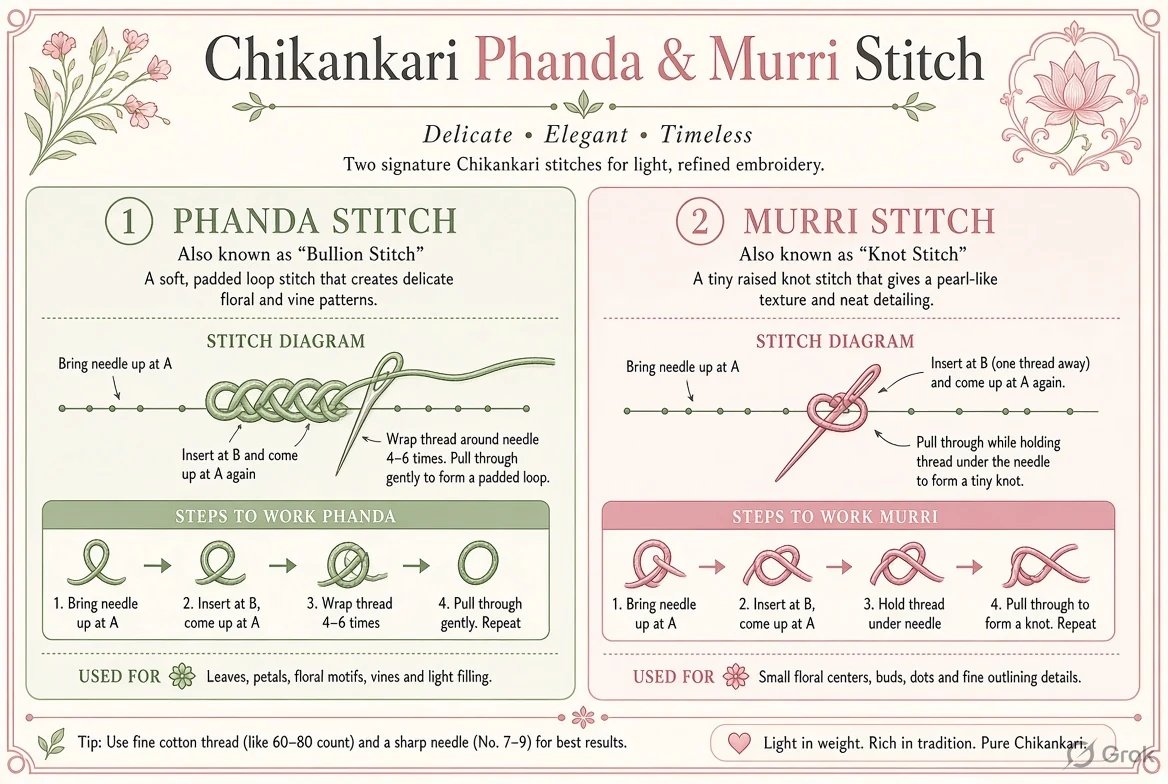
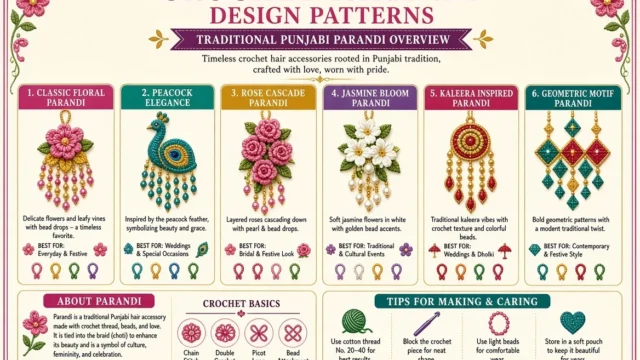
Phanda is often described as a small rounded or knot-like dot used to add texture, including at the centers of small flowers. A clustered group of phanda marks can give a delicate grainy surface without a large filled panel. Because the thread is worked closely, consistent tension matters for the dots to look similar. A beginner can practise tiny raised marks on a sample cloth before adding them to an embroidered flower. Use a needle and thread appropriate for the fabric, and do not pull so hard that delicate cloth tears around the raised area. On an actual garment, irregular hand-formed dots can be part of the craft, but inconsistent finishing alone is not a foolproof test of authenticity.
Murri stitch: what makes its raised detail different?
Murri is another raised decorative stitch in Chikankari, often described in relation to small grain or rice-like forms. It can be more elongated or pronounced than a simple phanda dot, though terminology and execution may vary among artisan teachers. The important point is that Phanda and Murri are related as fine surface embellishments but should not be treated as one identical stitch. An instructional image ought to explain the specific needle motions for the chosen sample. To learn, make two short rows side by side and compare their shape under normal light rather than zooming into a high-contrast promotional photograph. A true appreciation of Chikankari comes from recognizing these subtle hand-made textures.
Jaali stitch: openwork without casually cutting holes
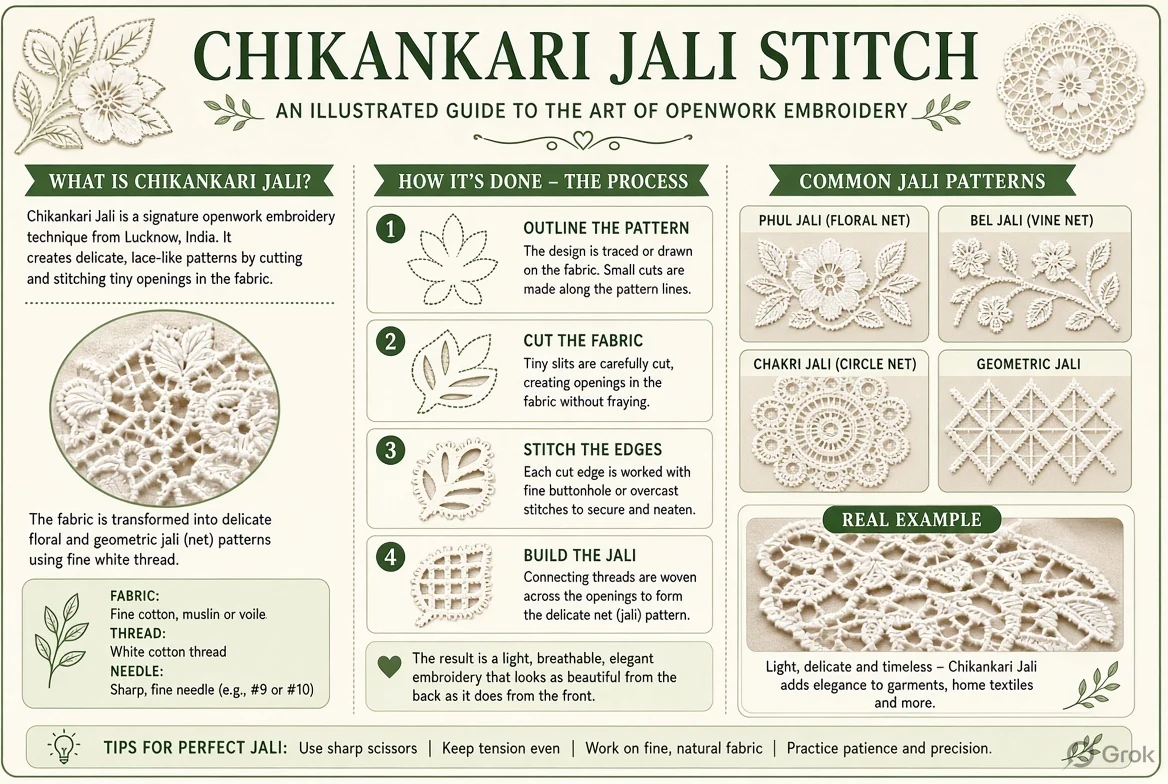
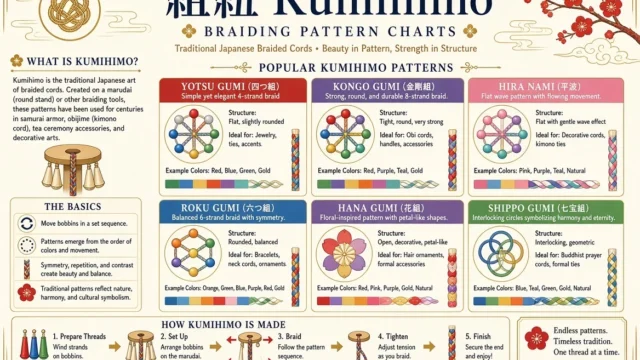
Jaali is one of Chikankari’s most admired techniques. Traditional descriptions explain its net-like or openwork appearance through carefully separating the cloth’s existing threads with a needle and securing the resulting openings with stitches. This is different from simply cutting out holes and stitching a loose mesh panel over them. The method requires skill because the fabric must stay strong enough around the open spaces. A beginner should avoid attempting intricate jaali directly on an expensive kurta. Study a well-documented artisan guide and practise on stable cotton first. A decorative printed lattice is not itself authentic hand-crafted jaali, and cut holes should not be advertised as the same technique without evidence.
Comparing Tepchi, Bakhiya, Phanda, Murri and Jaali
These stitch names refer to different visual and structural jobs. Tepchi builds a relatively simple running line. Bakhiya contributes a translucent shadow-like fill. Phanda gives a small raised dot, while Murri creates another refined grain-like detail. Jaali creates open spaces by manipulating and securing the fabric threads. In one floral motif, a craftsperson might combine an outline with shadow work and raised centers, so a finished flower may contain more than one stitch type. A clear chart separates the techniques and labels their purpose. It should not promise that a single diagram teaches all traditional variations of Lucknow’s complex embroidery repertoire.
Choosing fabric and thread for a Chikankari practice piece
Cotton, muslin and other light fabrics can support beginner stitching, but the choice should match the technique. Bakhiya needs a fabric that allows a shadow effect to show; jaali requires a structure whose threads can be manipulated without breaking. Very loosely woven or damaged cloth may tear during practice. Use a suitable embroidery needle, thread of an appropriate thickness and a washable or removable marking method. Test any marker on scrap fabric first to avoid permanent lines. A hoop may help keep a sample stable if used gently; stretching transparent cloth too hard can distort the weave. Start with one basic stitch instead of attempting all techniques on the same untested cloth.
How artisans build a Chikankari motif from planning to finish
A handmade motif commonly involves design planning, transferring an outline to cloth, selecting suitable stitches, executing the embroidery and then cleaning or finishing the textile. The exact workshop process differs, and not every maker uses the same transfer method. For a simple practice leaf, mark the outline, work Tepchi around it and try a modest Bakhiya shadow fill on the reverse. Add a small group of Phanda dots only after the ground is secure. Jaali is best reserved for a separate practice swatch under skilled guidance because its openwork construction is more demanding. Check the back as well as the front and trim thread ends carefully without cutting any structural threads.
Handmade Chikankari versus machine and print: sensible checks
A sticker saying ‘handmade’ or ‘Lucknow Chikan’ is not proof of the manufacturing method. Look for actual needle-made thread structures on the front and reverse, ask for production details and check whether the listing identifies the stitch techniques accurately. Some modern garments combine handwork, machine embroidery and printed elements, so one photographed flower cannot settle the question. Jaali and tiny raised embroidery can require specialist skill, but a viewer should not claim that every uneven stitch proves authentic workmanship. If geographic authenticity or GI-linked claims affect a purchase, inspect official registration information and seek reputable sellers rather than relying on social-media captions.
Chikankari in kurtas, dupattas, saris and modern garments
The same general craft vocabulary may be adapted to various clothing styles, but fabric weight and garment movement influence the result. A sheer dupatta can show Bakhiya’s shadow effect clearly; a heavier kurta may emphasize outlines and raised stitches more. Dense embellishment near a seam can feel uncomfortable, so motif placement is practical as well as decorative. When laundering a detailed garment, follow the fabric care label and consider the vulnerability of fine Jaali and raised work. Do not tug at loose thread loops or scrub delicate embroidery aggressively. If a repair is needed, a knowledgeable embroiderer can help preserve the structure instead of treating it as ordinary surface printing.
Printing the four charts and next search keywords
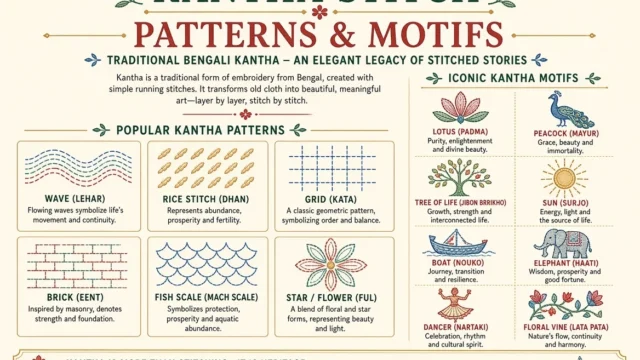
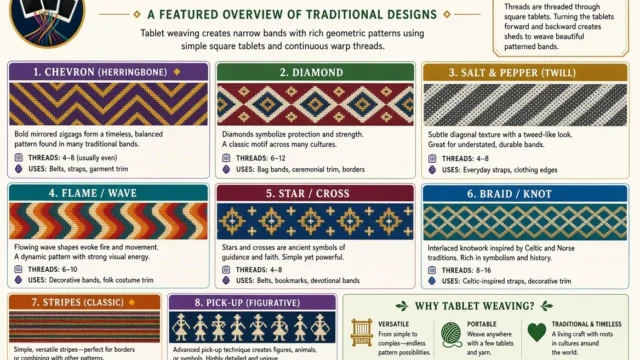
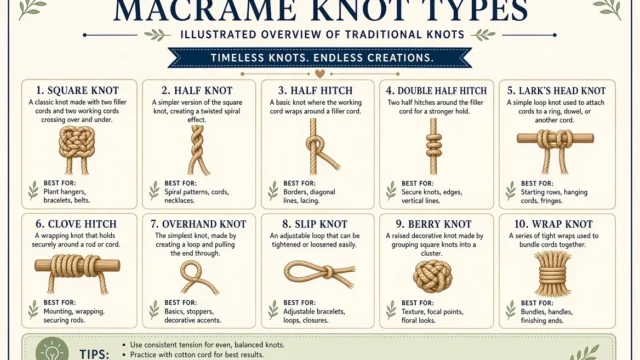
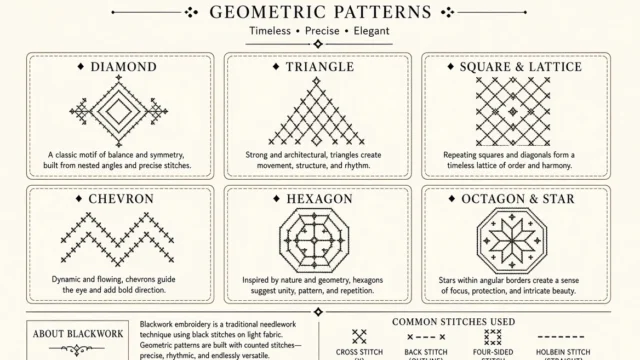
The four uploaded pictures illustrate Tepchi, Bakhiya, Phanda/Murri and Jaali. They are educational visuals, not a separate downloadable exact-size PDF stitch pack. A printout is useful for comparing styles, but a stitch-by-stitch course with verified needle routes remains necessary for accurate advanced work. Potential next searches include ‘Chikankari stitch types chart’, ‘Tepchi stitch tutorial’, ‘Bakhiya shadow work’, ‘Phanda vs Murri’, ‘Chikankari Jaali original’, ‘Lucknow hand chikankari identification’ and ‘Chikankari embroidery patterns printable’. These are reader-intent ideas rather than fabricated keyword volumes. A truthful guide distinguishes cultural craft knowledge from claims about an individual seller’s product.
Frequently asked questions
What are the main Chikankari stitch names?
Tepchi, Bakhiya, Phanda, Murri and Jaali are among the most frequently explained types.
What is Tepchi?
A fine running stitch used for lines and details.
What makes Bakhiya different?
A shadow-work effect, often created through the reverse on light fabric.
Are Phanda and Murri identical?
No. Both create small raised details, but the resulting forms and technique differ.
Is Jaali just cut holes in cloth?
No. Traditional Jaali manipulates and secures woven threads to create openwork.
Does a picture prove a garment is handmade?
No. Inspect thread construction and provenance, ideally with an experienced artisan.
Sources and conclusion
Learn from documented Indian textile-design sources: D’source: Chikankari Lucknow Stitches and Government skill document: Traditional Hand Embroiderer. Related published guide: Tailoring work and materials guide. Identify genuine needle paths and distinguish traditional techniques from generic printed imitation.



Share Your Opinion
Comments are closed on this post.