 Vista
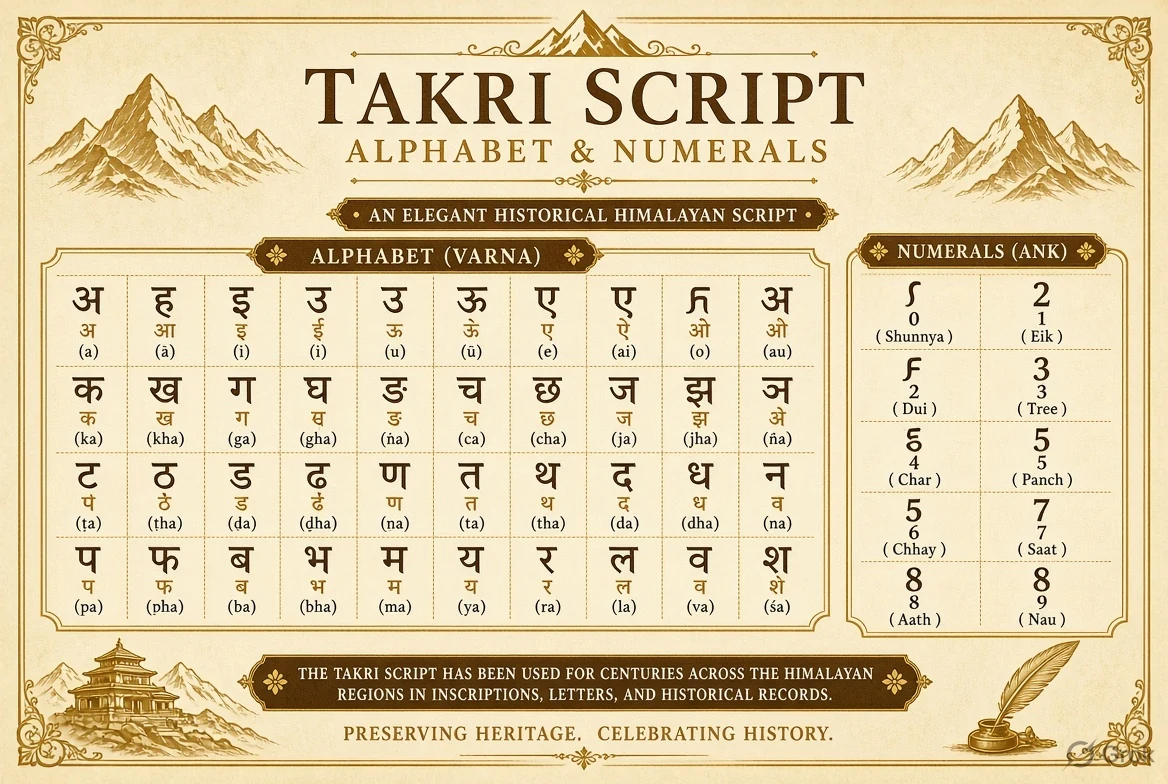
Direct answer: Takri (also spelled Ṭākrī or Tankri) is a historic script of the western Himalayas, associated with Chambeali, Dogri and several Pahari language communities. It is written left to right and belongs to the Brahmi-derived family of writing systems. Takri has the Unicode block U+11680–U+116CF, including a dedicated numeral set. Here is how to read a Takri alphabet chart, understand its relationship to Sharada and Dogra, and avoid confusing historical letter variants with modern standardized forms.
Updated 20 November 2026. Historical script posters here are educational illustrations, not authenticated manuscript facsimiles.
Takri alphabet chart: quick facts
| Region | Western Himalayas: Jammu, Himachal, nearby areas |
|---|---|
| Historical uses | Pahari/Dogri manuscripts, administration and trade |
| Writing direction | Left to right |
| Unicode block | U+11680–U+116CF |
| Often confused with | New Dogra script and Sharada |
| Not every form identical | Regional and historical variants occur |
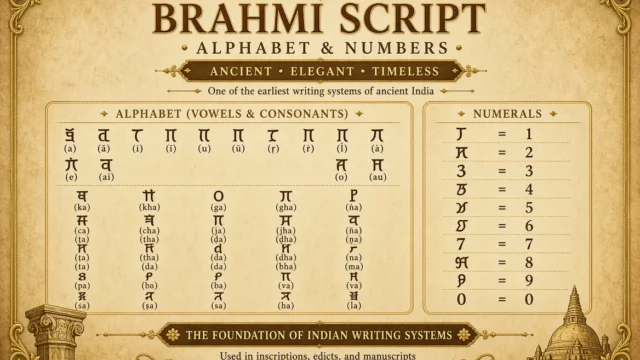
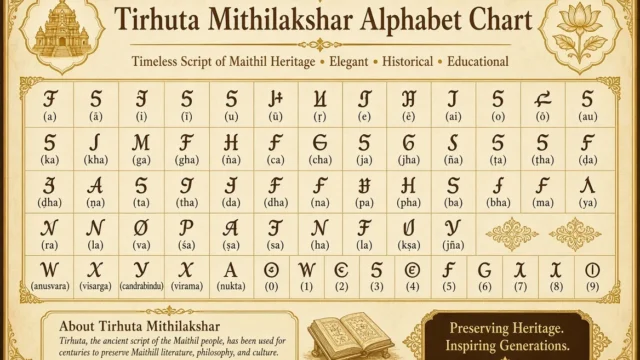
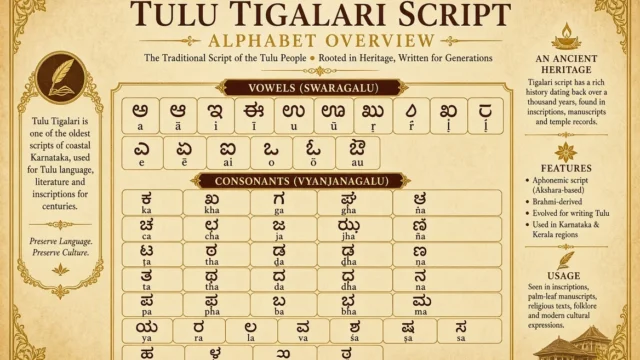
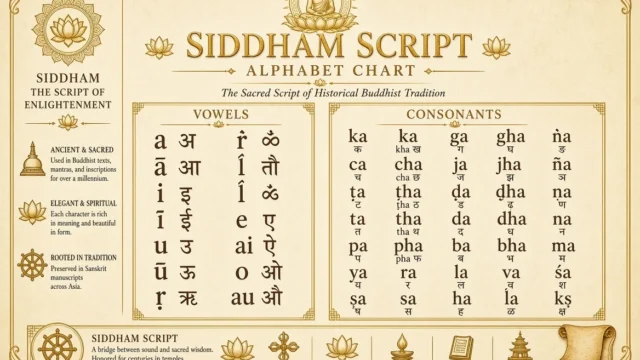
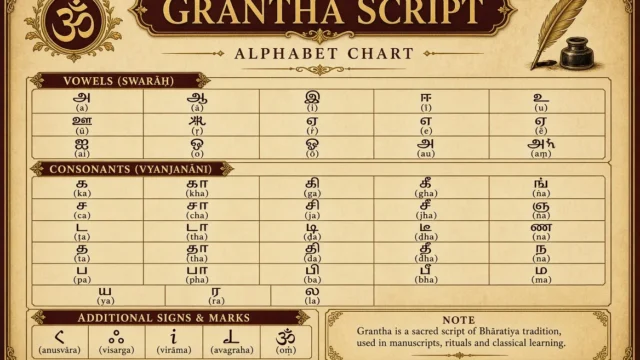
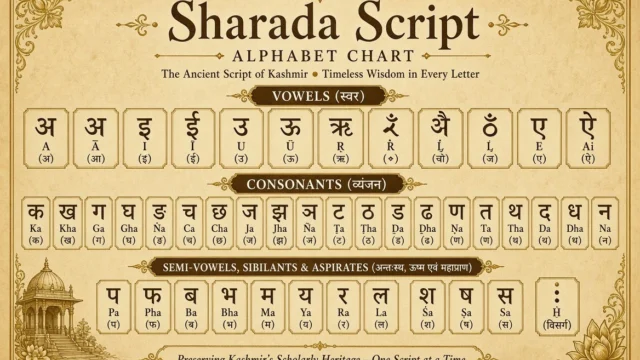
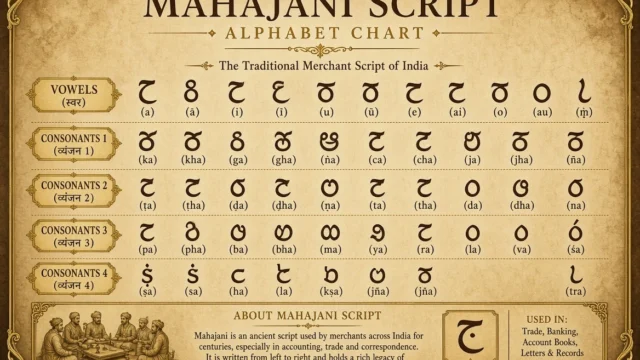
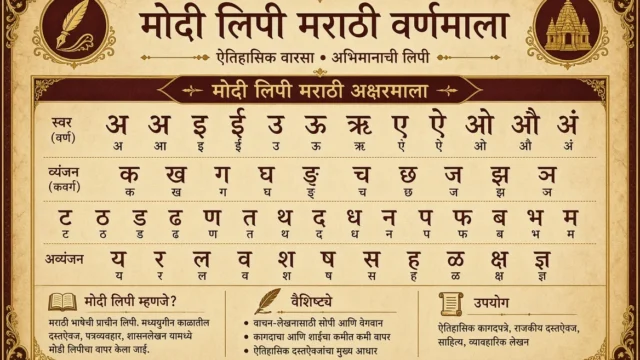
Picture chart and visual references

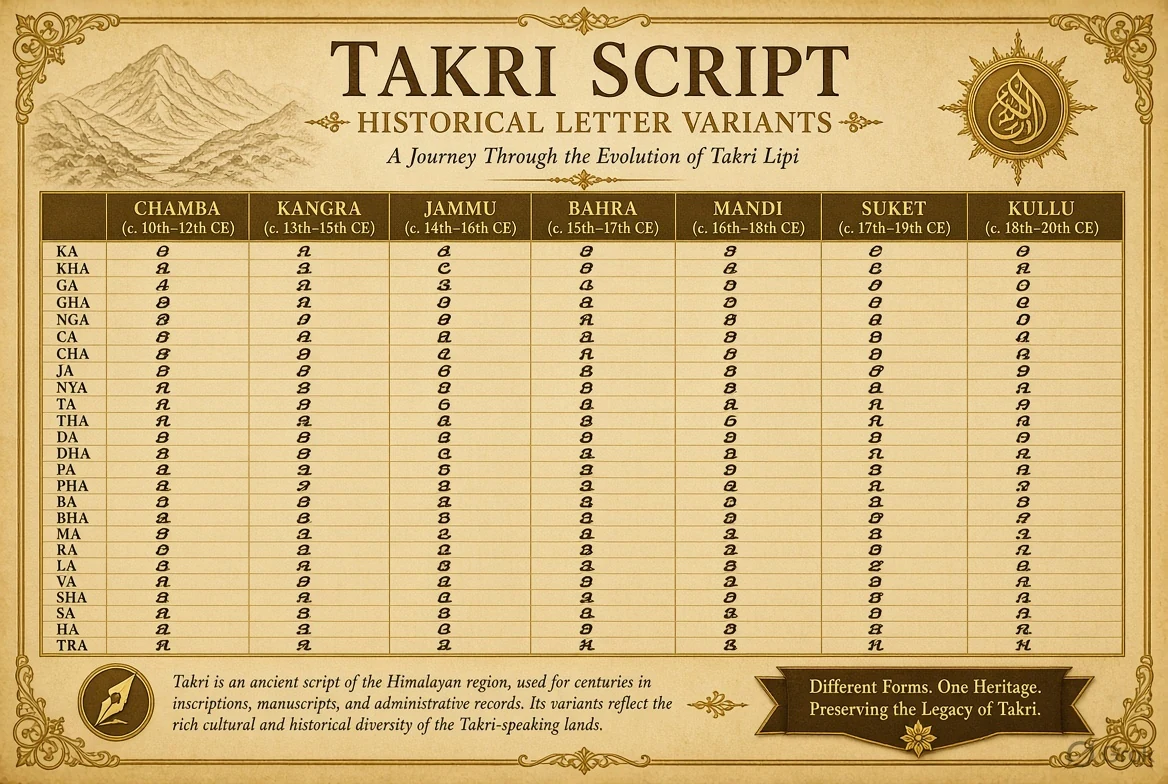

What is Takri and which languages used it?
Takri is a historical writing system rather than a synonym for Dogri or Pahari as a language. The same script family appears in materials associated with Chamba and the western Himalayan region, including local administrations, domestic correspondence and religious writing. Older sources can spell the name Takri, Tankri or Ṭākrī. The Unicode Standard describes its role in several northern and northwestern Indian princely states. When someone asks for a ‘Dogri Takri alphabet PDF’, the first question is whether they want historical Takri, regional Chambeali lettering or the separately encoded modern Dogra form.
Takri’s relationship to Sharada and Dogra
Takri historically developed out of Sharada traditions. Modern Dogra, which has its own Unicode block, is close to Takri but not synonymous with it. The official Dogra standard was developed in the nineteenth century, and old Dogra handwriting and modern printed forms may look different. Converting a Takri document by simply selecting a Dogra font is therefore risky. An educational comparison should label the scripts side by side and give the source of the shapes. This distinction also helps identify the correct archive, historical place names and likely dates associated with a document.
Takri alphabet: consonants, vowels and matras
Like other Indic abugidas, Takri uses consonant letters with an inherent vowel and dependent vowel signs to alter the sound. Independent vowels are used when needed. Consonant clusters and special marks introduce additional complexity, particularly in handwritten sources. A chart that lists only a row of consonants without their possible vowel combinations is incomplete for reading full words. At the same time, printing every regional calligraphic variant as a new letter exaggerates the alphabet. Students can begin with a compact documented inventory, then learn the common alternates found in historic Chamba and surrounding records.
Why old Takri handwriting is not uniform
A manuscript copied by a clerk in a local court and a religious booklet copied by a scholar may differ in line weight, ligatures and spacing. The region, date and intended audience matter. Some traditional Takri writing was optimized for speed, and a stroke lost in a damaged document can change an apparent letter. A modern instructional poster usually shows a normalized form chosen for legibility. That is useful for beginners, but it should not be captioned as an exact facsimile of every historic source. Archival readings need several samples from the same hand.
Takri numerals: the important Unicode distinction
Unlike some related scripts that rely on numerals encoded elsewhere, Takri has decimal digits represented within its own Unicode block. When comparing digits, identify the actual code points rather than drawing modern Hindi numbers and adding a ‘Takri’ heading. Old account books may also include monetary marks and fractions that require additional contextual interpretation. A digit is not a full historical price: the unit may be local, and a date may follow a non-Gregorian calendar. In a classroom numbers chart, show examples from the standard and say clearly when an inscription uses a regional variant.
Takri Unicode U+11680–U+116CF and typing issues
The Unicode range U+11680–U+116CF is reserved for the Takri script block. A block contains letters, signs, digits and some unassigned code points; its size is not the number of letters students must memorize. Typing requires appropriate font coverage and shaping behavior. If copied Takri looks like squares or disconnected signs, switch to a compatible font and check the Unicode sequence before assuming the characters are wrong. A PDF made entirely from outlined images may look correct while losing text searchability, so preserve a text layer for accessible digital archives.
Reading Takri in old records and inscriptions
First photograph the entire page, including seals, dates and margins. Record the region and any indication of the language. Next identify recurring vowel and consonant shapes; match several specimens with documented examples before transcribing. A single letter can vary more within a manuscript than a beginner chart suggests. Preserve uncertain readings with brackets or question marks, and compare related words across pages. If a document might affect property ownership or genealogy, the transcription should be verified by a qualified reader. An attractive alphabet chart alone is not evidence of a legal fact.
Takri vs Gurmukhi, Devanagari and modern Dogri
The same spoken language can have more than one historical writing tradition. Dogri is generally printed in Devanagari today, while Gurmukhi is common for Punjabi; neither fact makes Takri a mere style of those scripts. Related historical letterforms do not share identical Unicode encoding. A comparison table should separate the language, the script, the historical period and a sample word. Mixing all four into a single undifferentiated ‘Pahari alphabet’ graphic deprives the reader of the very context that makes old records understandable.
How to make a Takri letter and numbers chart for students
Choose the target regional form first and put the exact label at the top of the worksheet. Place independent vowels, consonants, dependent signs, numbers and punctuation in different sections. Include Roman transliterations only as a pronunciation aid, not as the encoded identity of each sign. Test a supported Unicode font in the output file; screenshot the result to catch missing marks before printing. A concise note about Takri’s relationship to Sharada and Dogra makes the worksheet much more informative. Never present speculative decorative glyphs as a certified archival alphabet.
Revival work and the limits of a modern chart
Interest in regional scripts is growing through teaching, cultural events and digitization. A revival lesson may choose a convenient contemporary form of a letter even though historic manuscript versions vary. That is normal, provided the page explains the choice. Encoding is only one part of successful revival: keyboard layouts, fonts, teachers and accessible archives are also needed. A picture chart is a gateway to reading, not a promise that every private family document can be interpreted from the sheet. Responsible guides distinguish the facts established by Unicode from living local variants.
Useful searches and problems to avoid
Good follow-up questions include ‘Takri script alphabet chart PDF’, ‘Takri numerals 0 to 9’, ‘Dogri Takri vs Dogra script’, ‘Chambeali letters chart’, ‘Takri keyboard font Android’ and ‘Sharada Takri difference’. These are plausible educational searches, not verified popularity statistics. Avoid two common mistakes: copying a Dogra sample and labeling it simply Takri, or claiming that all historical Pahari-language records have one standard alphabet. Accuracy improves when a chart carries its source, date and intended regional scope.
Frequently asked questions
What is Takri script?
A historical western Himalayan writing system used with Dogri, Chambeali and Pahari languages.
Is Takri the same as the modern Dogra script?
No. The two are closely related but distinct writing systems in Unicode.
What is the Takri Unicode range?
U+11680–U+116CF.
Does Takri have numbers?
Yes. Takri numerals are encoded in its Unicode block.
Is Takri right to left?
No, it is written left to right.
Why do some Takri charts show different letters?
Regional forms, historical period and handwriting styles cause variation.
Source, related reading and conclusion
Character structure, historical use and encoding details were checked against The Unicode Standard, historic South Asian scripts. For a related Indian alphabet resource, read our Kaithi script alphabet reference. Use these illustrations to learn the framework, then verify fine glyph differences against official charts and documentary facsimiles before making a manuscript claim.









Share Your Opinion
Comments are closed on this post.