 Vista

Direct answer: Tirhuta, also known as Mithilakshar or Maithili script, is the traditional writing system associated with Maithili in Bihar and Nepal’s Mithila region. It is a left-to-right Brahmi-derived abugida with independent vowels, consonants, dependent vowel signs and traditional numerical forms. Its Unicode block is U+11480–U+114DF. This visual reference explains what a trustworthy Tirhuta alphabet chart shows, how the signs work, and why the modern Maithili language is not identical to the script used to write it.
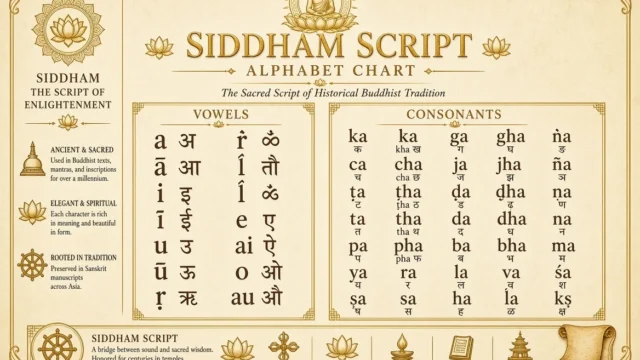
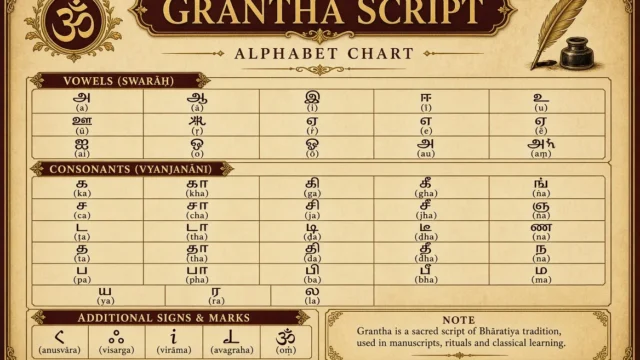
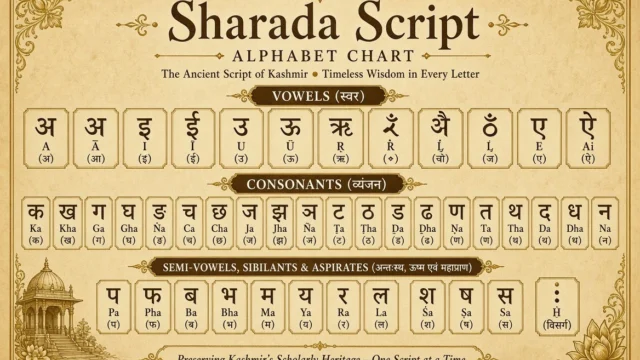
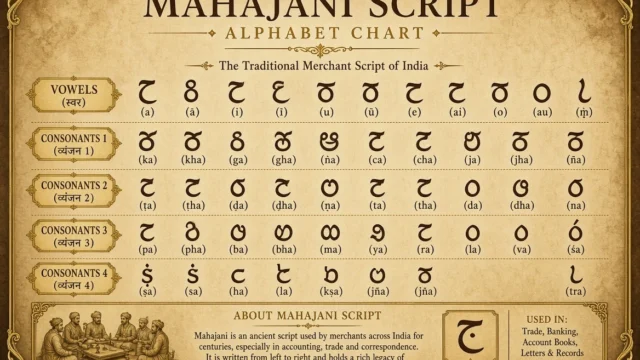
Updated 20 November 2026. Historical script posters here are educational illustrations, not authenticated manuscript facsimiles.
Tirhuta alphabet chart: quick facts
| Other names | Mithilakshar, Maithili script |
|---|---|
| Historical region | Mithila, north Bihar and Nepal |
| Writing direction | Left to right |
| Unicode block | U+11480–U+114DF |
| Common current Maithili script | Devanagari is widely used |
| Special caution | Similar-looking Bengali letters are not interchangeable |
Picture chart and visual references
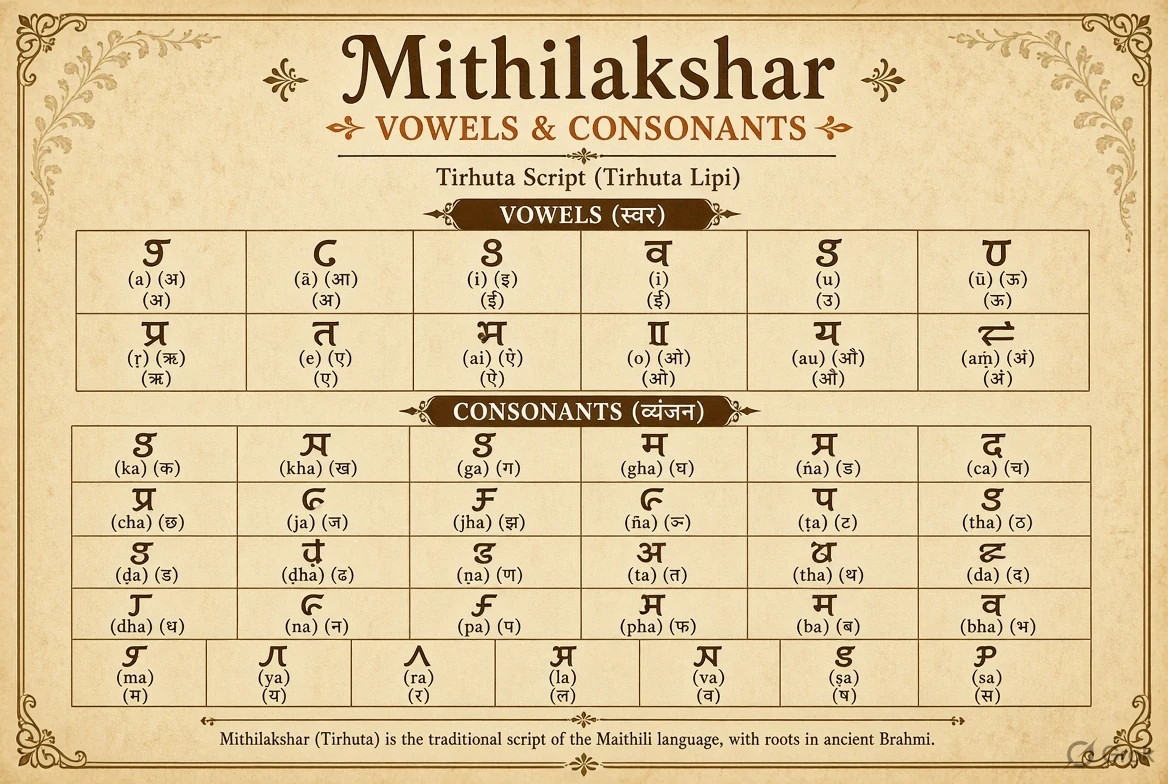
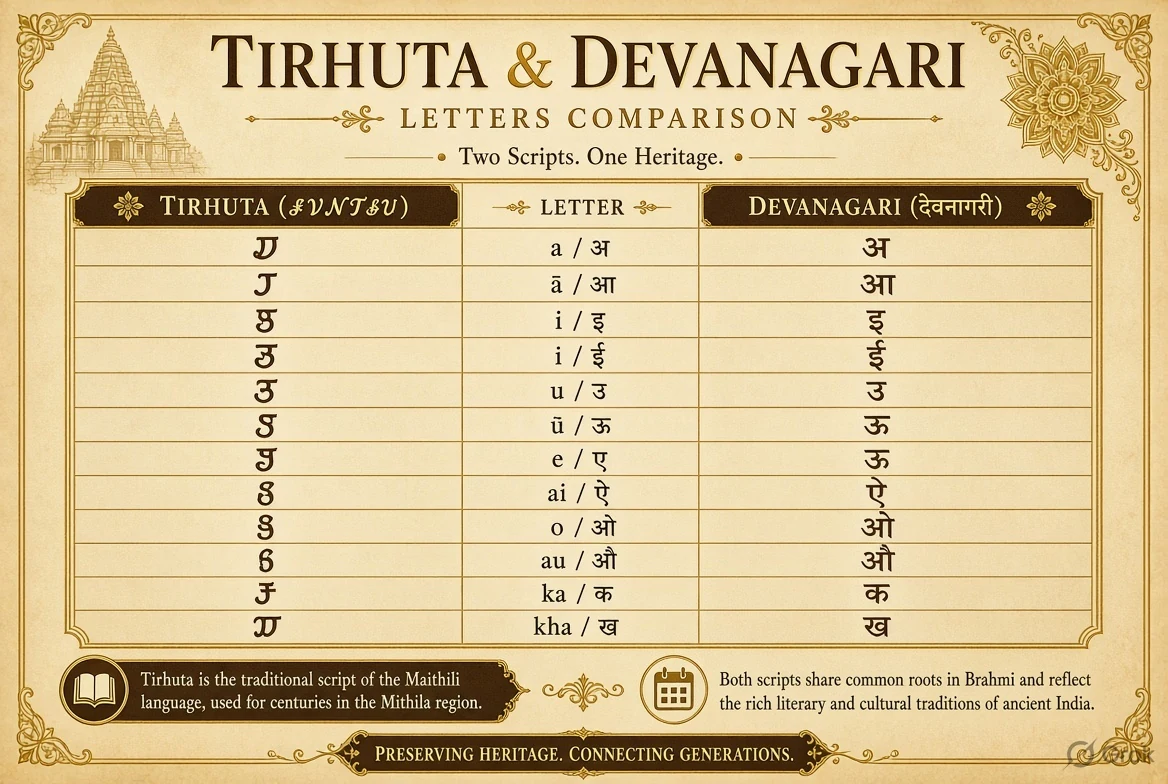
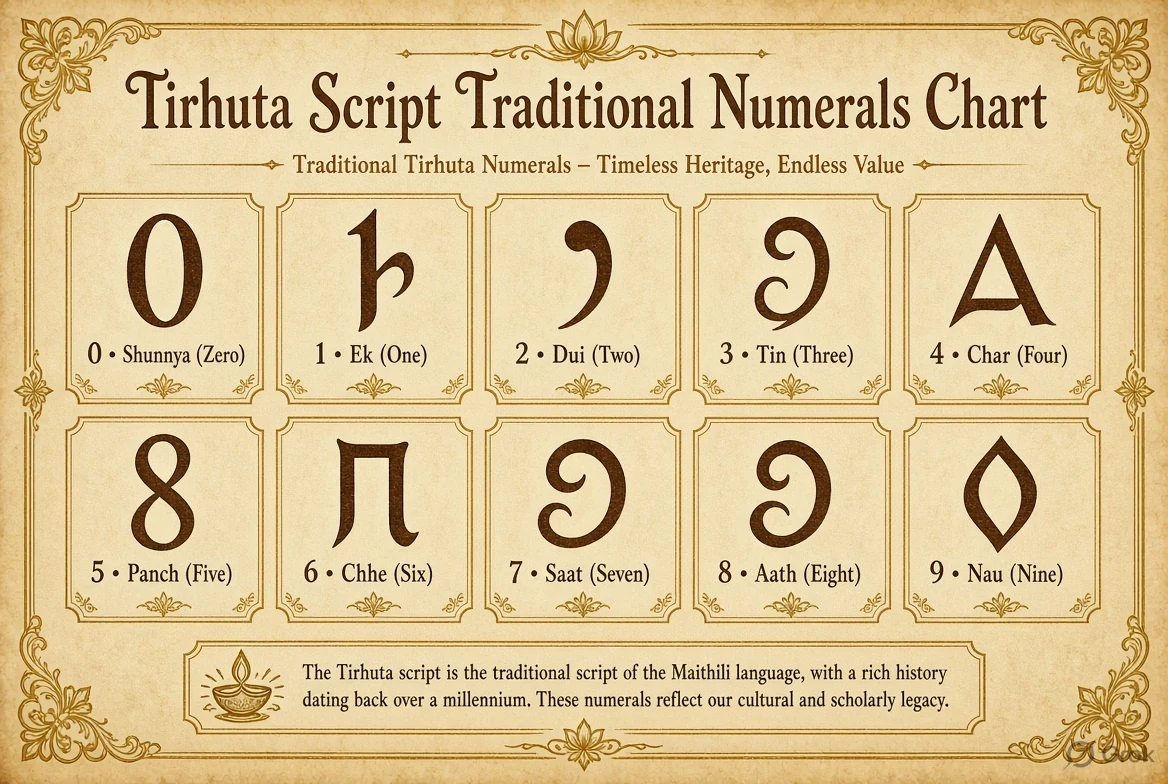
What is Tirhuta, and is it the same as the Maithili language?
A language and its writing system are different things. Maithili can be written in Devanagari, the script widely encountered in contemporary publishing, while Tirhuta is its culturally important historical script. A reader searching for ‘Maithili alphabet’ may receive Devanagari letters, but a reader seeking ‘Mithilakshar alphabet chart’ wants the distinct Tirhuta shapes. Names such as Tirhuta, Mithilakshar and Maithili script often refer to the same writing tradition. Be careful when websites show one script’s characters but label the image with another script’s name.
Why Tirhuta matters in the Mithila region
Tirhuta has strong associations with scholarship, literature, ritual texts, personal letters and the intellectual history of the Mithila region. The Unicode Standard traces its development from the Gaudi or Proto-Bengali branch and discusses a differentiated Tirhuta tradition by the fourteenth century. Surviving manuscripts do not all look exactly like clean modern typefaces: scribes used different hands, strokes and combinations. The script survived through religious and scholarly uses even as Devanagari became more common for modern Maithili. A visual guide should show this continuity without suggesting that every Maithili speaker today learns Tirhuta at school.
Mithilakshar alphabet: independent vowels and vowel signs
Like several Indic abugidas, Tirhuta has independent vowels used when a vowel starts a syllable or appears in contexts requiring a full letter. Dependent vowel signs, often called matras, modify a consonant’s inherent vowel. The chart should therefore separate standalone vowel letters from marks that combine with consonants. A character can be encoded correctly but appear broken if the font lacks the necessary shaping rules. Two special short vowel signs do not have independent vowel-letter counterparts; trying to invent a full separate letter for every printed vowel sign is inaccurate. Learning the distinction is more useful than memorizing a decorative chart without labels.
Consonants, virama and how a syllable is built
In a simple consonant syllable, the consonant may carry an inherent vowel. A dependent sign changes the vowel, while a virama can suppress it in a cluster or final-consonant context. The rendered shape of a cluster depends on font support and historical conventions. This does not mean every visible stroke is a separately encoded Unicode letter. Tirhuta also has signs for sounds such as nasalization and an extra-mark system including the nukta. Students should practise identifying a basic letter first, then add one modifier at a time and compare the resulting cluster with a vetted chart.
Tirhuta vs Bengali and Devanagari: essential differences
Tirhuta has historical relationships with Bengali, Newa and Odia, so a novice may notice round or angular resemblances. A similar contour is not proof that two characters are equivalent. Tirhuta and Bengali have their own Unicode ranges, orthographic conventions and font requirements. Devanagari is a separate encoded script that is commonly used to write modern Maithili. For a useful three-column comparison, display the same sound, the correct character in each writing system and the phonetic label. Do not redraw letters from memory or use Bengali glyphs as placeholders for missing Tirhuta fonts.
How the Tirhuta numbers chart should be read
Numeral charts are useful for understanding old dates, folio numbers, account entries and manuscript references, but they are not a substitute for examining a historical document. First check whether the symbols are independent number characters, written numerals in a local hand or something else such as a punctuation or accounting sign. Modern teaching images often render an idealized glyph, whereas surviving pages contain abbreviated strokes and variation. The best chart labels every numeral consistently and cites the underlying standard. When a digit seems ambiguous, use surrounding dates, repeated entries and the document’s chronology rather than an isolated icon.
Tirhuta Unicode range and mobile font support
Unicode provides the Tirhuta block U+11480 through U+114DF. This is a range reserved for the script, not a claim that every code point is a printable alphabet letter. Text can be perfectly encoded yet display as empty squares on an unsupported device. A modern font and shaping engine must handle combining vowel signs, conjunct behavior and placement. Before publishing a downloadable Tirhuta alphabet PDF, test the document on Android, desktop and at least one second font. For archives and online transcription, preserve actual Unicode text alongside the visual image to make searching and accessibility possible.
How to identify an old Maithili manuscript
Begin with where the manuscript came from, its estimated date, language, material and the name of any collection that holds it. Capture the full page with margins before zooming into individual signs. Compare recurring characters across lines: repeated invocations, dates and surnames give useful clues. A title may be in Sanskrit even when the surrounding material is associated with Maithili. If a photograph was edited, keep the original as well. A chart is a starting point for script recognition; confidently transcribing a fragile or disputed document requires palaeographic training and access to reliable facsimiles.
Typing Mithilakshar and making a classroom chart
For learning, start with a verified Unicode character table and a font that supports Tirhuta, then create a page with separate rows for independent vowels, consonants, dependent signs, numbers and a short sample. Test whether copied text stays searchable. Use readable labels in Maithili, Hindi or English according to the audience and add an English transliteration when helpful. Print large enough that marks remain visible. Avoid image filters that smooth thin strokes into new letters. For students, explaining how to check a code point is a better skill than copying a letter from a random social-media picture.
What revival efforts can and cannot prove
The survival and revival of Tirhuta are meaningful cultural subjects, not evidence for a single unchanged alphabet across centuries. Unicode encoding helps digital preservation, but it does not guarantee that all keyboards, websites, schools or printers support the script. Published teaching materials may follow selected modern conventions; older scribal hands can be different. Claims that Tirhuta is ‘the only true’ way to write Maithili oversimplify language history and current literacy practices. A balanced educational article celebrates Mithilakshar while respecting readers who encounter contemporary Maithili through Devanagari.
Common alphabet-chart mistakes and useful next searches
Frequent errors include labeling Bengali letters as Tirhuta, confusing the modern Devanagari Maithili alphabet with a historic Mithilakshar character chart, misplacing matras and inventing signs absent from the Unicode repertoire. If you are studying for a test, distinguish pronunciation from glyph shape. If you are decoding an archive, record uncertainty rather than forcing a guess. Practical follow-up queries include ‘Mithilakshar varnamala PDF’, ‘Tirhuta Unicode keyboard’, ‘Maithili script vowels consonants’, ‘Tirhuta vs Devanagari chart’ and ‘Mithilakshar numbers chart’. These are search ideas, not measured traffic claims.
Frequently asked questions
What is the Tirhuta script?
It is the traditional script used for Maithili and associated with Mithila’s literary and scholarly heritage.
What is Mithilakshar’s Unicode range?
U+11480–U+114DF.
Is Tirhuta the same as Bengali?
No. They are historically related but separately encoded scripts.
Does Tirhuta write from right to left?
No, its standard writing direction is left to right.
Why does Mithilakshar show blank boxes on my phone?
The device or selected font may not support Tirhuta glyphs or proper shaping.
Is Maithili written only in Tirhuta?
No. Modern Maithili is also widely written in Devanagari.
Source, related reading and conclusion
Character structure, historical use and encoding details were checked against The Unicode Standard, historic South Asian scripts. For a related Indian alphabet resource, read our Kaithi script alphabet reference. Use these illustrations to learn the framework, then verify fine glyph differences against official charts and documentary facsimiles before making a manuscript claim.











Share Your Opinion
Comments are closed on this post.