 Vista
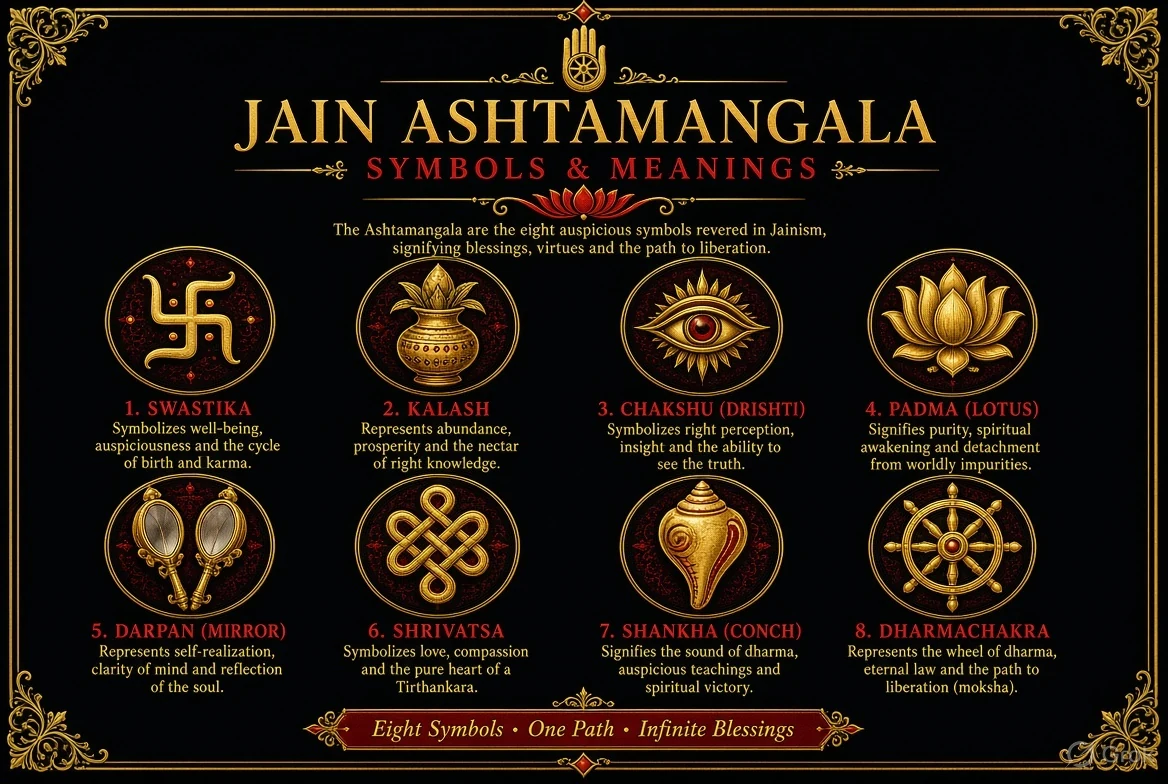
Direct answer: Jain Ashtamangala refers to sets of eight auspicious symbols used in Jain ritual and art. The widely taught Shvetambara set includes svastika, shrivatsa, nandyavarta, vardhamanaka, bhadrasana, kalasha, a pair of fish and darpana. The Digambara set differs: it includes items such as the fly-whisk, banner, fan, canopy, seat and vessels. An accurate picture chart must identify which tradition it illustrates instead of mixing both lists.
Updated 20 November 2026. Drawings are educational illustrations rather than certified historical specimens or ritual templates.
Jain Ashtamangala symbols: quick reference
| Shvetambara set | Typical identification | Digambara counterpart (one documented listing) |
|---|---|---|
| Svastika | Four-armed auspicious sign | Bhringara, water vessel |
| Shrivatsa | Auspicious chest mark | Chamara, fly-whisk |
| Nandyavarta | Complex auspicious motif | Dhvaja, banner |
| Vardhamanaka | Powder box or flask | Vyajana, fan |
| Bhadrasana | Honor seat or throne | Chatra, canopy |
| Kalasha | Full pitcher | Supratishtha, seat of honor |
| Matsya-yugma | Pair of fish | Kalasha, full water jug |
| Darpana | Mirror | Darpana, mirror |
Why Jain Ashtamangala charts can show two different lists
Ashta means eight and mangala indicates auspiciousness. In Jainism, a collection of eight objects appears in ceremonial and artistic settings, including manuscripts, decorative temple objects and ritual imagery. Researchers distinguish a Shvetambara listing from a Digambara one. A chart might show eight valid-looking objects but still mislead viewers if it labels them as a universal list without specifying which community it follows. The art-history reference Jainpedia gives both sets side by side, which is an especially useful starting point for image identification.
The Shvetambara chart contains the swastika, shrivatsa, nandyavarta, vardhamanaka, bhadrasana, kalasha, pair of fish and mirror. A documented Digambara list instead includes a ritual vessel, fly-whisk, victory banner, fan, parasol, seat, full jug and mirror. The translations of specialized object names vary, and different publications arrange the order differently. When a symbol is ambiguously drawn, consult the local tradition and caption rather than force an identification from shape alone. The two lists share some motifs yet should not be silently combined.
Svastika, Shrivatsa and Nandyavarta: three easily confused motifs
The Jain svastika is an ancient Indian auspicious emblem. In Jain explanations its four arms can refer to four kinds of worldly existence or the fourfold Jain community of monks, nuns, lay men and lay women. The three dots and crescent that often accompany the sign have their own symbolic reading involving the Three Jewels and liberation. These religious motifs belong to an ancient South Asian context and must not be conflated with the twentieth-century Nazi appropriation. When displaying a chart, an accurate historical caption helps avoid confusion and sensationalism.
Shrivatsa can appear as a distinctive auspicious mark on images of the Jinas, commonly associated with the chest. Nandyavarta is a more elaborate, maze-like or multi-armed auspicious diagram and should not be reduced to a simple swastika just because the motifs resemble one another. The exact painted shape can vary. The best teaching strategy is to place the three symbols side by side with their names, then note their differences rather than copy a low-resolution image and declare them interchangeable.
Vardhamanaka, Bhadrasana and Kalasha: the objects
Vardhamanaka is rendered in the Shvetambara list as a powder box or flask. Its appearance can be subtle on manuscript covers and may be mistaken for a decorated container. Bhadrasana is a seat of honor or throne, not another type of lotus flower. Kalasha is a filled water vessel or auspicious pot. Each represents a vocabulary of ritual objects and broader themes of auspiciousness, dignity and flourishing. The objects do not all have identical proportions in historic sculptures, and a modern illustration may simplify their outlines.
The three names are often confused when an internet chart has poor typography. A clear educational table should put the Sanskrit-derived word next to an everyday English description and a picture. The pictures should be treated as examples of how an object may look, not as a universal engineering diagram. If a source identifies a vessel as bhringara or jhari in the Digambara list, preserve that source term instead of silently renaming it as a Shvetambara symbol.
Jain Ashtamangala symbols: illustrated gallery
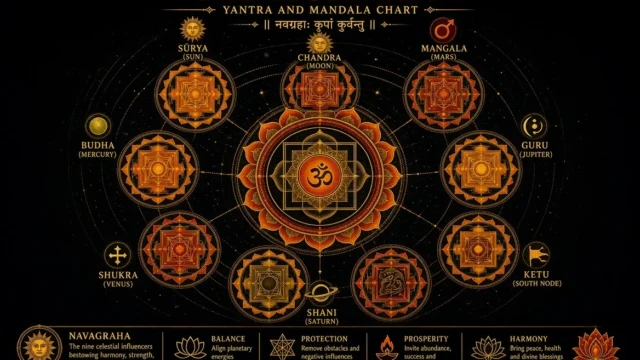
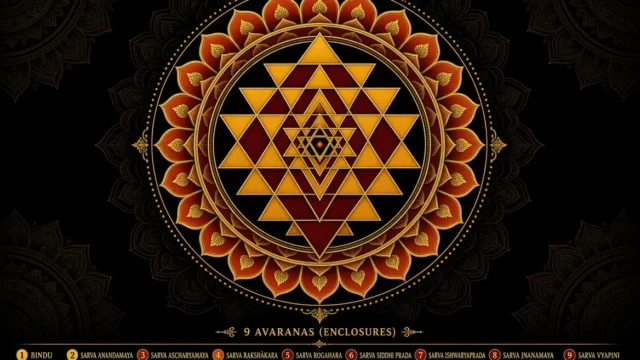
These existing visual references accompany the explanations; verify small labels against the tables and sources.

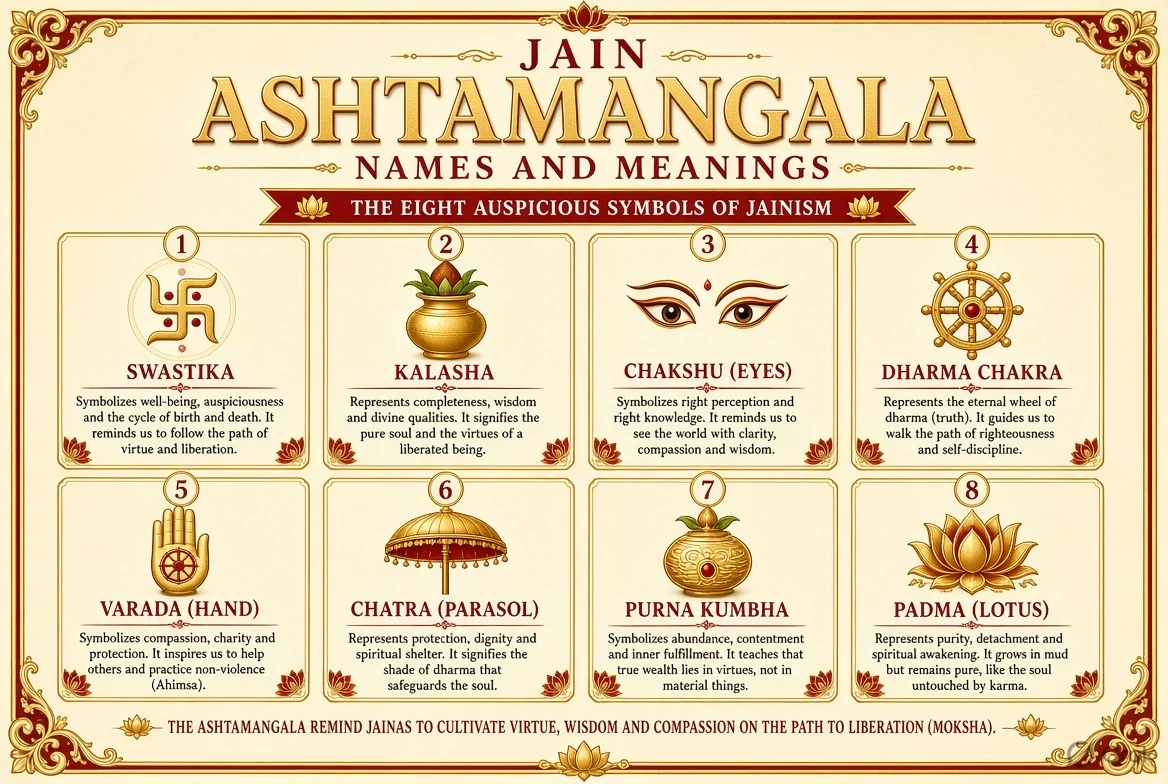

Matsya-yugma and Darpana: paired fish and mirror
Matsya-yugma means a pair of fish, a motif also familiar in other South Asian religions. In a Jain Ashtamangala chart the presence of two fish helps distinguish the conventional Shvetambara entry from a generic single-fish decoration. A mirror, or darpana, is another important motif; it can invite reflection on self-knowledge and recognition. Different historical objects may be mounted, handled or ornamented differently. The mirror’s meaning should be described respectfully as part of Jain religious symbolism rather than as a miraculous device.
The Digambara listing in Jainpedia also includes a mirror, making it a genuinely overlapping element. Meanwhile paired fish are not part of the particular Digambara set that source lists. An online picture labeled simply “Jain 8 symbols” can therefore be ambiguous unless the tradition is made explicit. A museum catalog or documented manuscript cover is stronger evidence than an unattributed collage in which artists have mixed familiar motifs.
Digambara Ashtamangala: banner, fan, whisk, parasol and vessels
The Digambara set described by Jainpedia prominently features objects associated with dignified honor and ceremonial presence: a fly-whisk or chamara, banner or dhvaja, fan or vyajana, parasol or chatra, a seat of honor called supratishtha, a vessel known as bhringara, a full jug or kalasha, and a mirror. Other resources may transliterate these names differently or use closely related object descriptions. The essential point is that the list is not simply the Shvetambara list drawn in a new color scheme.
A parasol, banner and vase also occur in Buddhist auspicious imagery, but this overlap does not make the Buddhist and Jain eight-object groups identical. Historical religious art borrowed and reinterpreted shared South Asian visual languages. The community, context, inscription and object grouping establish how a particular image should be described. Keeping separate lists gives readers a useful way to compare traditions without making one seem like a mistaken copy of the other.
Jain symbolism in manuscripts, temples and modern education
Jain visual culture includes manuscript paintings, temple imagery, portable ritual emblems and the modern Jain community symbol. The Ashtamangala motifs can appear in many of these settings, but they should not be confused with the Jain flag, the Ahimsa hand, the Siddhacakra or the symbols of individual Tirthankaras. Those may be related to Jain devotion while representing distinct iconographic systems. A classroom worksheet benefits from a short explanation of these differences.
If studying an older manuscript, check the institution’s catalog description, approximate date, region and religious affiliation. Some objects have faded paint or missing details that complicate identification. Modern reference images often improve readability by using bright colors and separate shapes; that is useful as long as the graphic is labeled as an illustrative reconstruction, not as a photographed ancient original. Educational accuracy matters more than giving every icon a trendy glowing outline.
Practical checklist: choosing a correct Jain Ashtamangala poster
Start by asking whether it is Shvetambara, Digambara or a specifically documented regional variation. Count eight different motifs. In the Shvetambara list, check for svastika, shrivatsa, nandyavarta, vardhamanaka, bhadrasana, kalasha, fish pair and mirror. In a Digambara set, look for the distinct ceremonial objects listed in the explanation. Watch for missing fish, duplicate vessels and unlabeled generic flowers. Where a symbol’s exact linework is uncertain, consult a specialist source before treating the picture as a printing template.
Potential next-search questions include “what are the eight Jain Ashtamangala,” “Shvetambara versus Digambara symbols,” “what is Nandyavarta,” “what does Shrivatsa mean,” and “difference between Buddhist and Jain auspicious symbols.” These are sensible informational follow-ups rather than measured Google trend data. The aim is to make an image gallery useful for students, visitors and general readers while respecting both the documented tradition and the limits of modern illustrations.
Frequently asked questions
What are the eight Jain Ashtamangala symbols?
In the widely taught Shvetambara list: svastika, shrivatsa, nandyavarta, vardhamanaka, bhadrasana, kalasha, pair of fish and mirror.
Do Shvetambara and Digambara use the same eight?
No. Jainpedia documents distinct lists with a few shared objects.
Is the Jain swastika the same as the Nazi emblem?
No. The Jain symbol has a long-standing religious meaning that predates and differs from Nazi misuse.
Is Nandyavarta an ordinary swastika?
No. It is a distinct more elaborate auspicious diagram.
Are Buddhist and Jain Ashtamangala identical?
No; different sets share some broader South Asian motifs.
Is an online image always a verified ritual template?
No. Check the source, tradition and precise identification before formal use.
Sources and conclusion
The illustrated chart is useful when its labels are checked against the original cultural or mathematical definitions. Do not rely on unsupported guarantees or confusing look-alike motifs. For source-based study, see Jainpedia: Holy Symbols and Two Ashtamangala Lists and Jain Heritage Centres: Ashta Mangala.
















Share Your Opinion
Comments are closed on this post.