 Vista
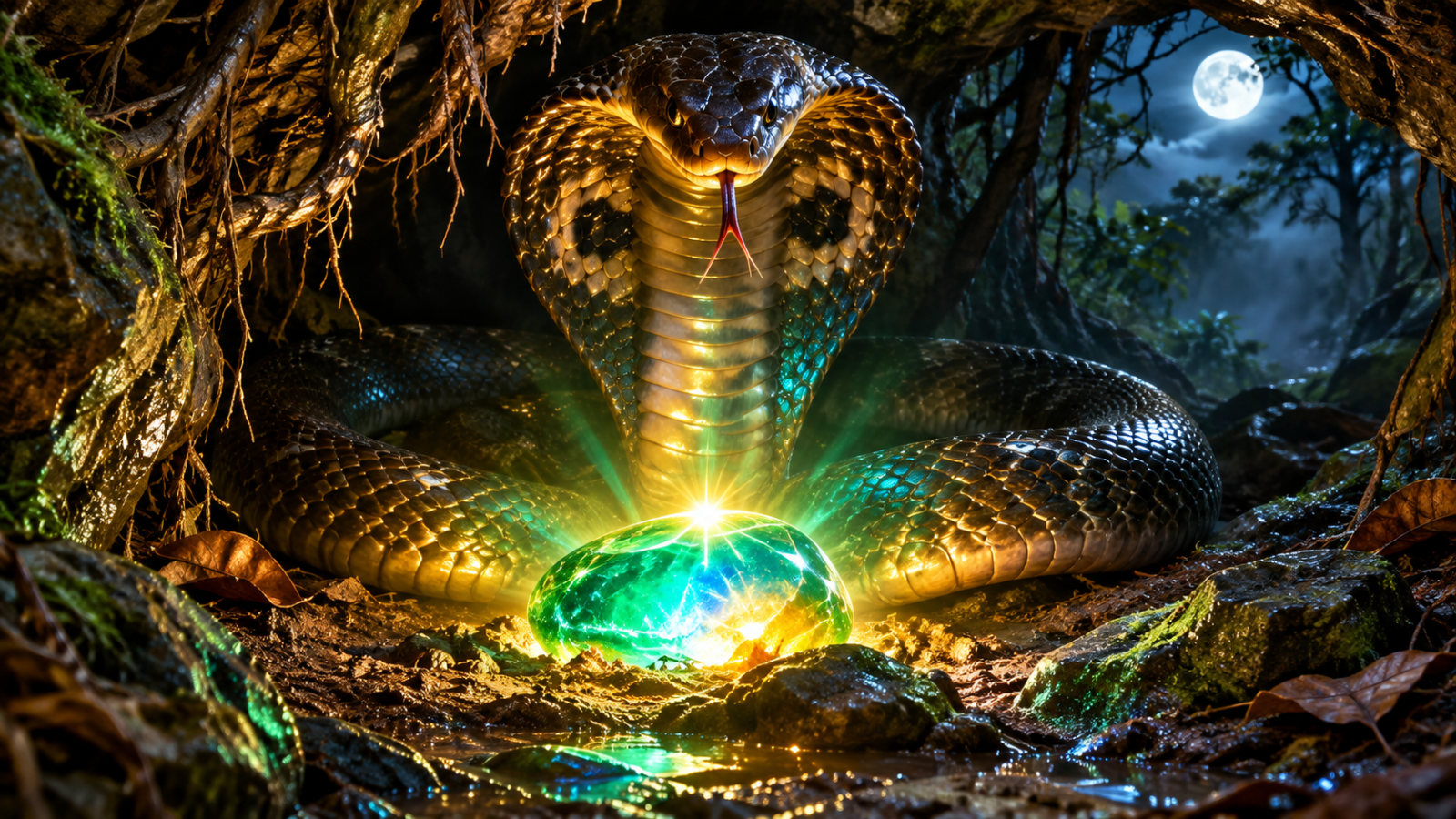
Real Nagmani Photo and Asli Nagmani image searches bring up glowing snake jewels, cobra pictures, and claims about an original stone that creates gold. Here are six beautiful HD fantasy visuals alongside what the Nagmani legend actually says. These are original AI illustrations, not photographs of a biologically proven snake gem. Updated 19 November 2026.
Real Nagmani Photo: what do the pictures show?
People searching real nagmani photo, asli nagmani photo, or original nagmani stone image usually encounter a cobra, a bright blue or green crystal, and an eerily lit cave or temple. Those are familiar images from Indian snake-jewel folklore. They are not the same thing as authenticated photographs of a gemstone produced by a snake. Anyone can place an ordinary mineral near a snake, create a glowing effect with a light, or generate the entire picture digitally.

What is Nagmani in Indian mythology?
In many Indian folktales, a special serpent is believed to possess a precious jewel known as Nagmani, Nagamani, or Naga Mani. Depending on the storyteller, it sits on the cobra’s hood, emerges from its mouth, or shines at night while the snake searches for food. Some tales connect the stone with guardianship of treasure; others describe good fortune, protection, or a miraculous source of light. These stories belong to a rich tradition of imagination, devotion, and storytelling.
Importantly, different legends do not agree on how the jewel forms or what it does. A story being widely told does not establish a newly discovered species or biological structure. Zoologists have studied snake anatomy, skulls, scales, and the expanded hood of cobras. They have not found a documented process that grows a gemstone in a snake’s head. This does not stop the story from being culturally meaningful; it simply separates cultural narrative from what nature has been shown to do.

Can Nagmani touch metal and turn it into gold?
One of the most sensational versions of the Nagmani legend says touching the jewel to iron or another metal will transform it into gold. In related versions the stone supposedly attracts wealth, detects buried treasure, or grants wishes. Those are claims within folklore, not experimentally established powers. Gold is a chemical element. A sparkling green stone resting against a metal object does not change the number of protons in its atoms simply by contact.

Could shining minerals near snake burrows have inspired the legend?
It is possible that people who encountered shining stones in rocky ground also noticed snakes using nearby cracks and sheltered spaces. The two observations might have inspired stories about a jewel protected by a serpent. Some minerals reflect light strongly, while others exhibit optical effects under particular illumination. A flicker of light in a dark environment can seem mysterious. However, this is an interesting hypothesis, not a documented, established origin story for Nagmani.
Snakes seek shelter, food, suitable temperatures, and safe hiding places. They do not need a secret mineral to explain why they might occupy a rocky location. And although quartz, glass, gemstones, and coloured minerals may look impressive in photographs, their appearance does not demonstrate that a snake owns them or created them. Geological samples can be analysed by mineral composition, optical properties, and laboratory methods rather than a folkloric label.

Fake Nagmani claims, edited cobra images and scams
Stories about glowing serpent jewels have also been exploited for money. In 2013, reporting from Madhya Pradesh described a scheme in which people were allegedly deceived into buying a supposed Nagmani, with staged demonstrations used to convince buyers. A separate Karnataka case described doubts about a supposedly luminous Nagmani after a light or battery was reportedly involved. Those incidents show why a purchase offer deserves caution even when the seller gives an elaborate demonstration.
Fact-checkers have examined viral images of snakes apparently bearing precious stones and found edited imagery. Today generative AI can make an equally convincing scene without any real snake or gem being present. Look for original publication dates, credible wildlife expertise, consistent camera footage, and an independent examination of the object. Never harm or capture a snake to investigate a story. Nor should a so-called snake stone be used as treatment for a snakebite; seek urgent medical care instead.

Nagmani stone price: is there a genuine market value?
The question “What is the real Nagmani price?” is popular because the myth promises rare wealth. But there is no authenticated, biologically produced serpent jewel with a scientifically established market category. Therefore an official price cannot responsibly be quoted. Sellers may demand thousands, lakhs, or even far larger amounts; their asking price does not prove authenticity, rarity, or value.
If you possess a pretty stone, a qualified gemologist can test it as an ordinary mineral or manufactured material. That may identify quartz, glass, a synthetic gem, or another substance. Such identification is different from proving a mythological origin or a gold-making ability. Avoid advance payments to strangers who promise a secret Nagmani test, a magic transformation, or exclusive access to an ancient treasure.
How to view and share Nagmani HD images responsibly
When you share one of these pictures, include a simple description such as “AI artwork inspired by the Nagmani legend.” That makes the image useful for storytelling and protects it from being repurposed as a fake scientific announcement. If you would rather learn about real snakes, wildlife educators and natural history institutions are better sources than a viral jewellery advertisement. The story can remain exciting while the source is described honestly.
Real Nagmani image, price and powers: FAQs
Is there a verified real Nagmani photo?
There is no trustworthy authenticated photograph of a jewel naturally produced by a cobra. Many striking online images are art, composites, or staged scenes.
Which snake has Nagmani in its head?
No known snake species is confirmed to grow a gemstone in its head or hood.
Can a Nagmani make gold from iron?
That is a supernatural claim from folklore. No reliable experiment has established this power.
What is the original Nagmani stone price?
There is no authoritative market price for a scientifically verified snake-produced Nagmani.
Is every glowing green stone a Nagmani?
No. Ordinary minerals, glass, LEDs, and digital effects can create bright colours.
Are the six images here real wildlife photographs?
No. They are AI-generated illustrations inspired by popular stories.
Sources and further reading: TIFR snake misconceptions; Nagmani photo fact-check; 2013 Nagmani fraud report. Final takeaway: enjoy the mystery, but treat claims of real serpent gems and gold-making powers as unverified.
























Share Your Opinion
Comments are closed on this post.