 Vista
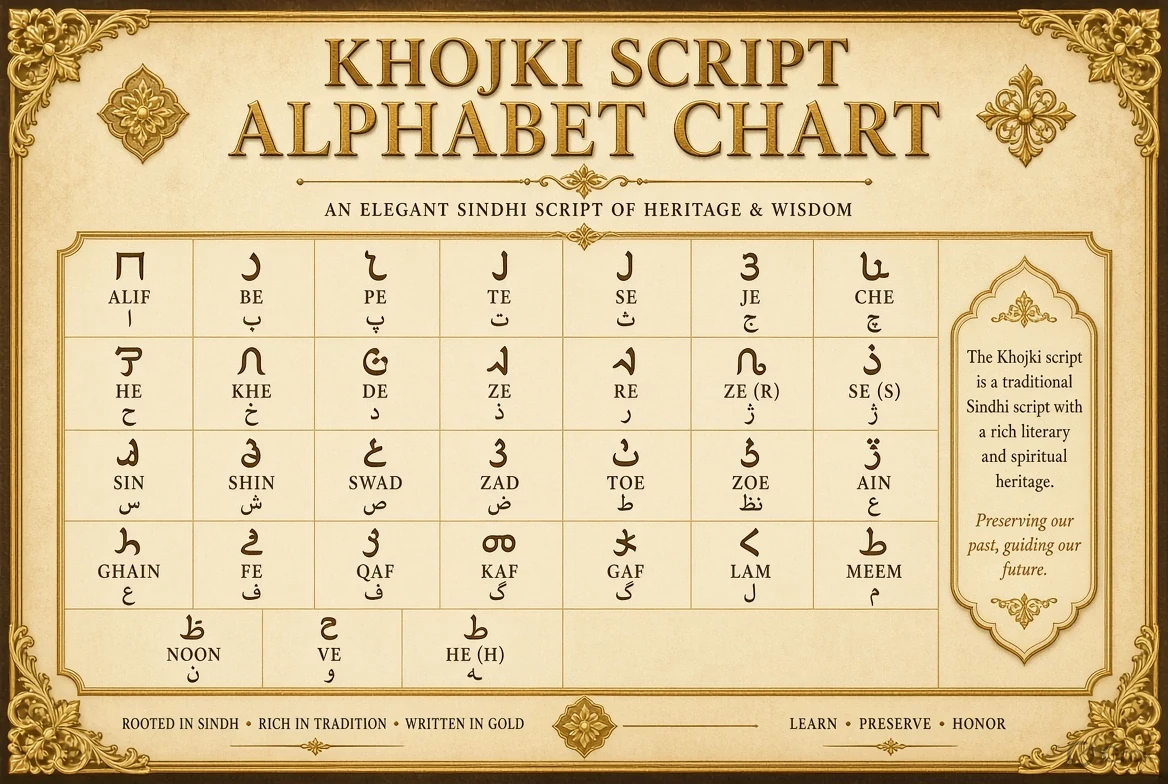
Direct answer: Khojki is a historical script developed in the Sindh region and widely associated with Nizari Ismaili religious writing, including ginan literature. It was used with Sindhi and also with Gujarati and several other regional languages. Khojki has its own Unicode block U+11200–U+1124F, but it uses Gujarati decimal digits rather than a distinct dedicated ten-digit set. This guide explains the letters, combining vowel marks, punctuation and manuscript context in a Khojki alphabet chart, while separating history from legends about the script’s origin.
Updated 20 November 2026. Historical script posters here are educational illustrations, not authenticated manuscript facsimiles.
Khojki alphabet chart: quick facts
| Historical centre | Sindh and surrounding western South Asia |
|---|---|
| Literary association | Nizari Ismaili religious literature and ginans |
| Unicode block | U+11200–U+1124F |
| Digits used | Gujarati digits U+0AE6–U+0AEF |
| Direction | Left to right |
| Important caution | Ginans are texts, Khojki is a writing system |
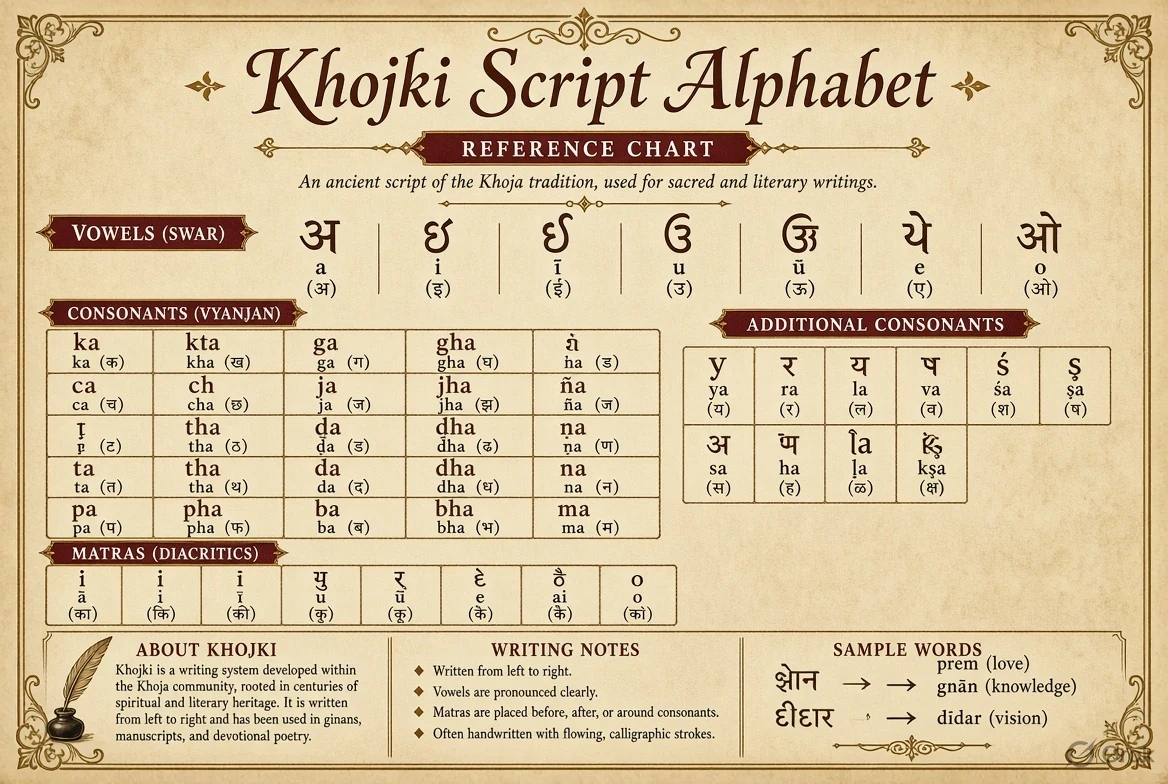
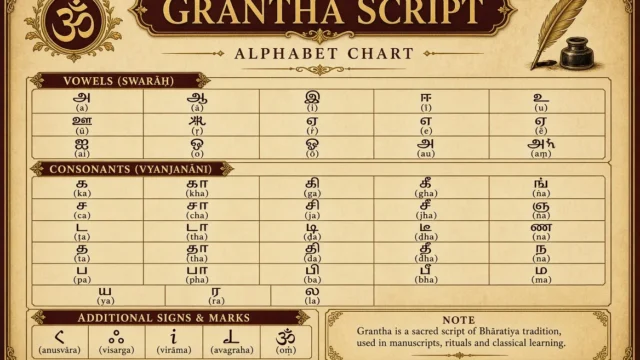
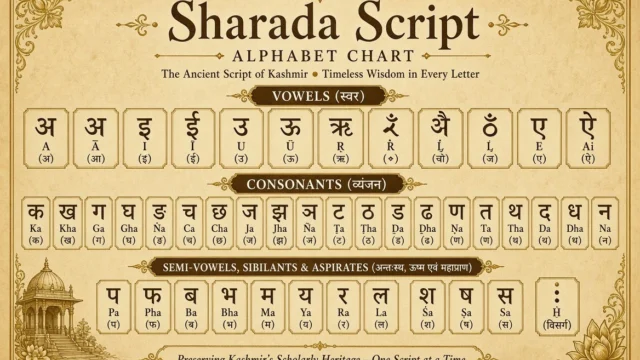
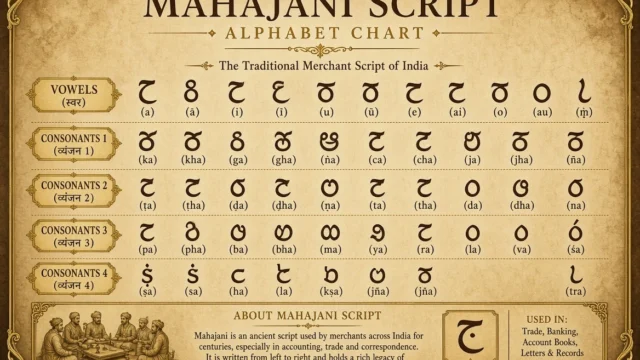
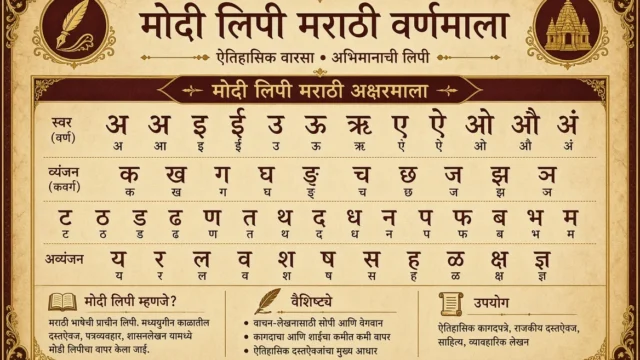
Picture chart and visual references


What is Khojki and how does it relate to ginans?
Khojki is a writing system; a ginan is a type of religious literary composition associated with Satpanth and Nizari Ismaili traditions. They are closely connected historically, but they are not identical things. Khojki material includes religious manuscripts, songs, narrative material and community writing. The Unicode Standard describes the script’s development in Sindh for Sindhi and its later use across neighboring regions. Search results for ‘Khojki ginan PDF’ should therefore distinguish a transliterated modern publication from an original manuscript page actually written in Khojki.
A concise history of the Khojki script
Khojki arose in a linguistic landscape where several writing systems were used for trade, community communication and religious literature. Its formal liturgical use is a distinctive part of South Asian manuscript history. Nizari Ismaili tradition connects the script with Pir Sadruddin, but a historical article should mark such accounts as tradition instead of treating every detail as independently documented fact. Khojki was used for languages including Sindhi and Gujarati, with expansion beyond those contexts. These histories show why a script cannot be assigned exclusively to one modern state or one spoken language.
Khojki alphabet: consonants and vowels
Khojki has independent vowel letters, consonant letters and dependent vowel signs. It behaves like an abugida with combination rules, so a reader needs more than a short unlabelled row of glyphs. The Unicode Standard notes that certain vowel combinations are encoded as single characters even when a modern reader might visually analyze multiple components. Arbitrarily replacing them with several code points can produce incorrect text. For a beginner chart, list the official character name, its vowel or consonant value and a carefully rendered glyph. Keep dependent signs in a separate group.
Why the script’s marks and punctuation matter
Khojki manuscripts use distinctive word separation, dandas and section marks. The Unicode repertoire includes a word separator and signs for verse or section breaks, which are especially relevant when reading religious material. If you copy a line without punctuation, you can lose the distinction between two verses or parts of a recital. A transcription should preserve meaningful boundaries, not just letters. Illustrative poster makers sometimes replace historical separators with ordinary modern commas; that may be acceptable for an explanation but should never be passed off as an exact manuscript reproduction.
Khojki numbers are Gujarati digits in Unicode
One of the most useful corrections to popular ‘Khojki numbers charts’ is that the script uses Gujarati digits U+0AE6–U+0AEF. Those digit characters are not duplicated in the dedicated Khojki block. That does not mean every handwritten number in an old source looks exactly like modern printed Gujarati, but it matters for Unicode and copyable text. If you create a keyboard guide or digit table, do not claim the signs form a distinct Khojki decimal code range. Label the numeric forms and explain when they come from Gujarati digit encoding.
Khojki versus Gujarati, Landa and Khudawadi
These scripts have historical relationships, yet they are not different fonts for the same alphabet. Khojki developed as a formalized script used for community religious writing. Gujarati has its own letter repertoire and conventions, while Khudawadi and Landa-group forms have other histories. The same Gujarati-language word could be transcribed in Gujarati script or found in a Khojki source, but that does not make the letters identical. A reliable comparison distinguishes spoken language, script, period and text type. A simple letter-shape resemblance is an unsafe basis for decoding a manuscript.
Unicode range U+11200–U+1124F and fonts
Khojki is encoded in the Unicode block from U+11200 to U+1124F. The block contains several kinds of characters, including independent vowels, consonants, vowel signs and punctuation. A website may store valid Khojki characters yet display tofu squares when fonts are missing. Proper script-aware shaping is important for combining marks. For digital preservation, save the transcription as Unicode text and also retain a reference photograph. A low-resolution picture that contains only artistic approximations cannot replace an accurate archival scan or a search-friendly encoding.
How to approach an Ismaili manuscript responsibly
Religious and community manuscripts deserve the same care as any historic source. Identify the collection and edition, the manuscript’s date and the language before attempting to translate a line. Confirm that the sample is Khojki and not a romanized or Gujarati-script rendering of the same composition. Preserve stanza breaks, punctuation and variant spellings. If the material concerns living religious traditions, do not assume that one modern publication represents every local performance or reading. A responsible educational chart aids recognition while respecting variations in language, transmission and interpretation.
What a useful Khojki alphabet poster includes
The strongest learning chart shows the script name in Roman letters and appropriate local-language labels, then separates vowels, consonants, combining signs and punctuation. It must explain the use of Gujarati digits and identify any historical sample illustration as a reconstruction. For accessibility, give transliteration and descriptive ALT text. On mobile, tiny diacritics are frequently lost, so use larger glyphs and avoid thick decorative overlays. If a chart is intended for printing, test its font on the final exported PDF and verify that copied characters retain their correct Unicode identities.
Reading variants and avoiding copied mistakes
Two Khojki documents may differ in handwriting, spacing and abbreviation practices. Do not silently standardize every irregularity when transcribing a manuscript. If a rare letter is hard to read, mark the uncertainty and compare neighboring words or parallel versions of the text. Modern charts are helpful but sometimes inherit errors from one another through repeated image copying. A credible website should cite a stable standard or manuscript edition, disclose when images are illustrative and avoid making fictional religious quotations from invented glyph strings. Original-language fidelity matters more than an impressive-looking poster.
Next searches and common misconceptions
Useful follow-up topics include ‘Khojki alphabet chart PDF’, ‘Khojki ginan manuscript’, ‘Khojki vs Gujarati script’, ‘Khojki numbers Gujarati digits’, ‘Khojki font Unicode’, and ‘Ismaili Khojki letters meanings’. Those are anticipated reader questions, not verified traffic numbers. The biggest misconceptions are equating the ginan genre with Khojki itself, treating all Khojki texts as Gujarati, inventing a separate Khojki digit block, and presenting a modern artistic script graphic as a dated manuscript. Keeping evidence, language and visual design separate makes the guide more trustworthy.
Frequently asked questions
What is Khojki script?
A historical South Asian writing system associated especially with Nizari Ismaili religious literature.
What are ginans?
A tradition of devotional and religious compositions, some historically preserved in Khojki.
What is the Khojki Unicode block?
U+11200–U+1124F.
Does Khojki have separate Unicode digits?
No. Unicode prescribes Gujarati digits U+0AE6–U+0AEF.
Where did Khojki develop?
The Sindh region, with later use in neighboring South Asian communities.
Is every Khojki writing sample an original manuscript?
No. Many online visuals are modern reconstructions or teaching examples.
Source, related reading and conclusion
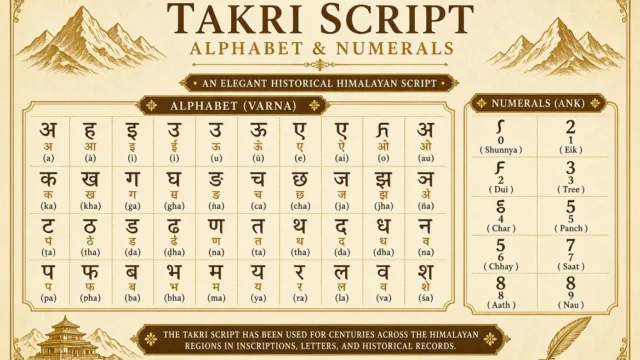
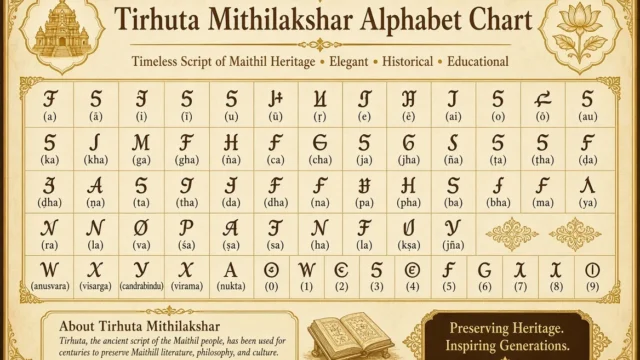
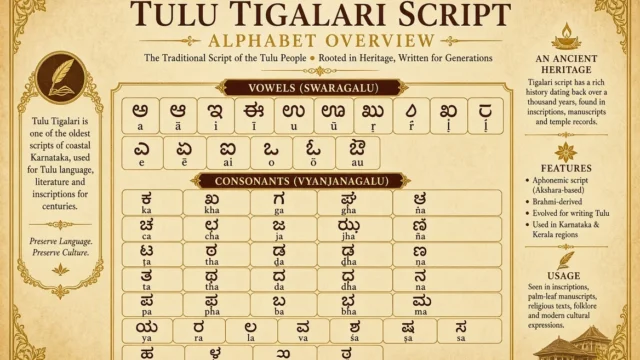
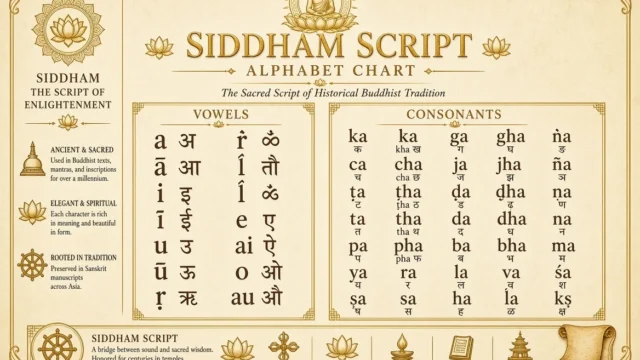
Character structure, historical use and encoding details were checked against The Unicode Standard, historic South Asian scripts. For a related Indian alphabet resource, read our Kaithi script alphabet reference. Use these illustrations to learn the framework, then verify fine glyph differences against official charts and documentary facsimiles before making a manuscript claim.










Share Your Opinion
Comments are closed on this post.