 Vista
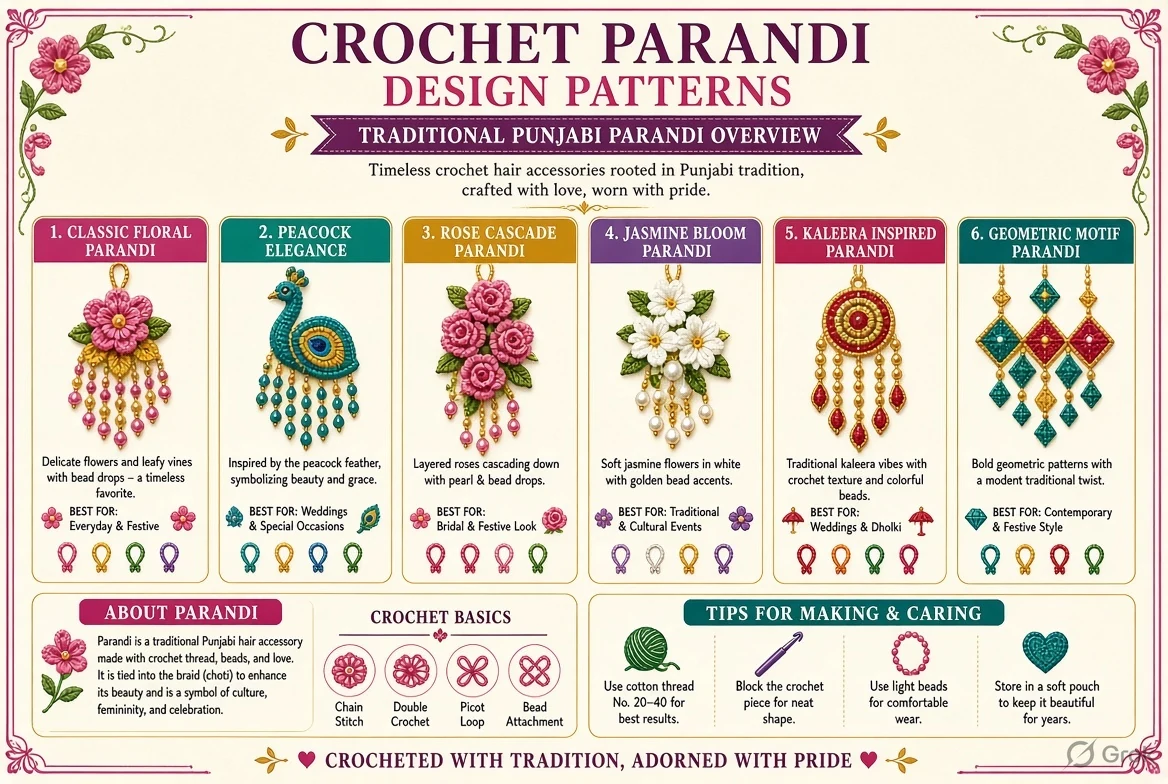
Direct answer: A Punjabi parandi (also spelled paranda or parandah) is a decorative hair-braid ornament, traditionally made with colorful threads and tassels. Crochet parandi designs are modern handmade variations in which crocheted flowers, borders or small motifs are added to a plaited cord or tassel accessory. This article shows four pattern references for Punjabi-style tassels, a crochet braid, a floral design and color combinations. It explains the difference between a traditional parandi and a crochet-decorated interpretation, how to plan the components, and how to keep a hair accessory light, secure and comfortable.
Updated 20 November 2026. Parandi illustrations are educational design references; no additional downloadable PDF or historical-facsimile claim is made.
Crochet Parandi Design Patterns — quick facts
| Traditional item | Punjabi parandi or paranda: decorative braid ornament |
|---|---|
| Modern technique | Crochet motifs combined with braided thread and tassels |
| Main visuals | Tassel, braid chart, floral motif, color layout |
| Useful skills | Chain, slip stitch, single crochet and secure finishing |
| Care point | Avoid sharp fittings, heavy ends and excessive tension |
| Printability | Illustrated references, not separately downloadable tested PDFs |
Four Punjabi parandi tassel, braid and crochet pictures


What is a Punjabi parandi, and what makes a crochet parandi different?
A traditional parandi is a decorative braid or tasselled hair ornament that is woven or plaited into the hair. Punjab’s craft traditions include elaborate thread ends, bright color combinations and specialized braid techniques. Crochet is a separate handcraft in which a hook forms fabric from interlocking yarn loops. A ‘crochet parandi’ may combine crocheted flowers or edging with an ordinary braided parandi base. That is a creative contemporary variation, not evidence that every historical Punjabi parandi was crocheted. The distinction helps readers understand the visual designs without confusing a cultural hair ornament with a particular textile technique.
Parandi history: hair braid versus the related nala drawstring
Punjabi craft references describe both paranda hair ornaments and nala drawstrings used at the waist of garments. They are related parts of a regional thread and braid tradition, but they have different uses. Parandas may be attached to a braid or hair arrangement, while a nala is part of clothing. Historic craftspeople used plaiting, twining, knotting and other skills; modern crochet embellishment is one optional decorative method. If a website presents an elaborate waist-string technique as the universal way to make a hair ornament, it is oversimplifying. This guide focuses on the hair accessory and labels its crochet elements as a design choice.
Punjabi tassel parandi design: planning the ends
The long tassel at the end is one of the most visible parts of a parandi. Before starting, decide the overall length, how much of it will sit inside the hair braid and how far the tassels should hang. Cut multiple equal yarn strands for the fringe, gather them and secure them with a strong wrap or knot. Smooth or trim the ends only after attaching them, because the braid length can shift. A bulky tassel can tug on hair or swing uncomfortably, so choose weight and size according to the wearer. The uploaded tassel pattern image is a visual example rather than a tested one-size-fits-all construction diagram.
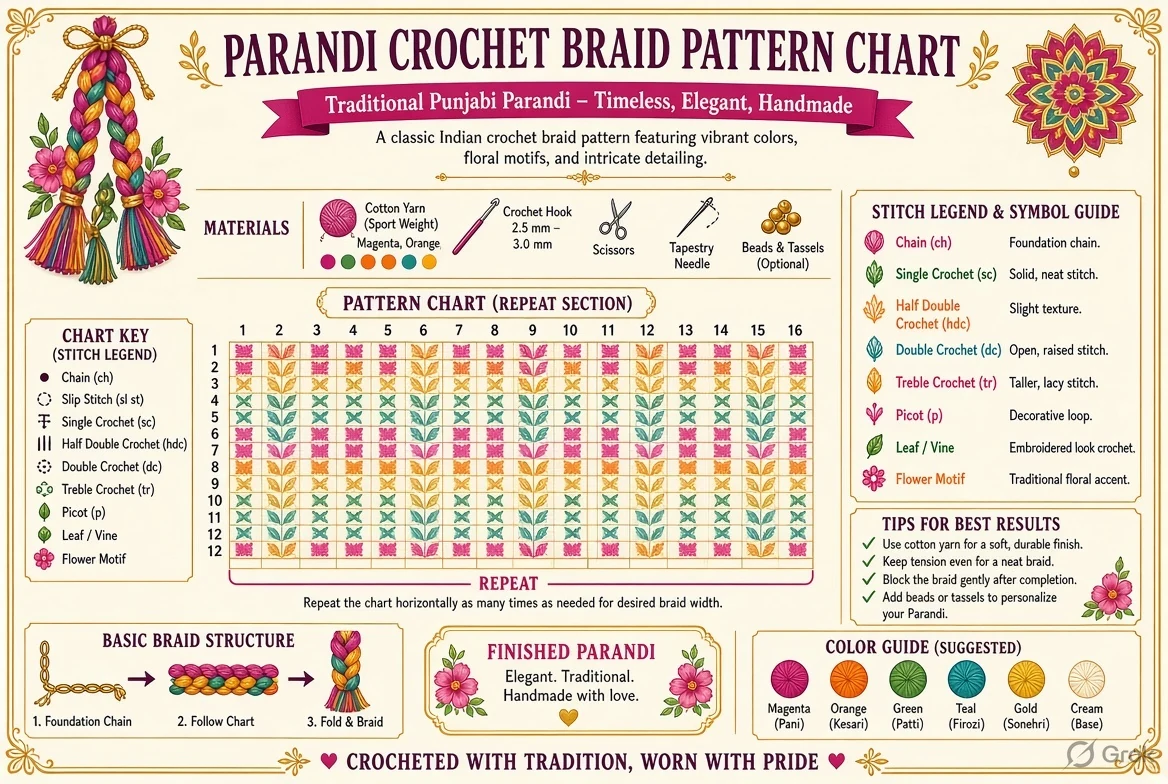
Crochet braid chart: chain, border and attachment logic
A beginner can make a narrow crocheted strip using a foundation chain and simple rows of stitches, but the strip is not automatically the same as a three-strand parandi braid. A practical combination is to create a strong braided core first and add a small crocheted edging to a decorative section. Keep stitch tension consistent so the border does not curl or pull the cord sideways. A slip stitch can help join the end of a motif, while single crochet provides a relatively compact surface. Test how the components move together by bending the finished section gently. A pretty chart is not enough unless the join between the braid and crochet is secure.
Simple crocheted flower motifs for a parandi
Small flowers can be made with a ring or short chain loop, followed by groups of simple stitches for petals. The exact petal count and height are choices rather than historical requirements. To avoid a heavy accessory, start with a lightweight flower using a thin yarn and few layers. Fasten off, weave in the ends and attach the flower at multiple points so it cannot spin or fall off while the braid moves. If the motif contains beads, bells or sharp metal components, check that no edges catch hair. The floral reference image shows possible decorative placement; make a practice motif before committing to a whole set.
Choosing yarn, hook and safe accessories
Select smooth thread or yarn that is comfortable next to hair and strong enough to survive repeated handling. Use a crochet hook matched to that material, plus scissors and a blunt finishing needle. Silk-look threads, cotton blends and synthetic yarns can all give different textures, but no single material is mandatory for every parandi. Avoid coarse yarn that scratches, sharp wire ties, overly heavy beads and loose components that a child could detach. If the design is intended for children, minimize small removable decorations and supervise use. Clean, strong joins matter more than the number of tassels visible in a photo.
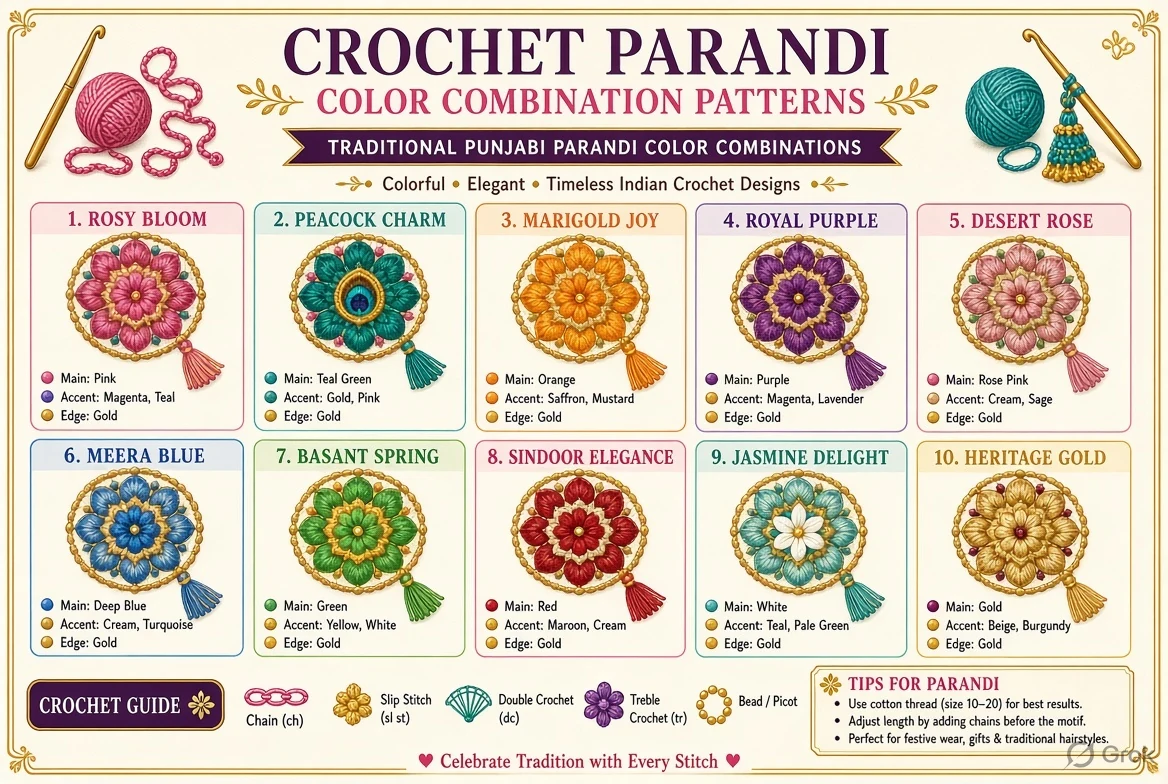
Four-color and contrast ideas without inventing traditional rules
Bright red, gold and silver have historical associations in Punjabi ornament-making, but not every garment or household follows one rigid color code. Modern parandi makers can coordinate thread with a salwar suit, lehenga, festive outfit or everyday clothing. A two-color design is easiest for beginners; three or four colors allow alternating bands and more decorative tassels. Place similar shades side by side only if you want a subtle effect, or select contrasting colors when you want the braid and flower motifs to stand out. Make a small swatch or lay the yarns together in daylight before cutting a full set.
Attaching a crochet parandi to a real hair braid
The accessory should join the hair braid without requiring excessive pulling at the scalp. Position the braided or crocheted base so its attachment remains hidden and the decorative ends hang evenly. Use a soft secure tie rather than a sharp clip or tight knot against the head. If the tassels make the braid swing strongly, shorten or lighten them. For children, choose a short lightweight version and avoid tiny detachable beads. If wearing the parandi causes scalp discomfort, stop and adjust the design; appearance should not come at the expense of hair comfort or safety. The exact attachment method depends on the accessory’s construction and hair style.
Making a beginner prototype: step-by-step workflow
First sketch a simple design with three sections: attachment length, decorative braid and tassel or flower end. Select two yarn colors and create a short braided base. Make one small crocheted motif or border sample, fasten the ends and attach it securely to the base. Add a modest tassel, then hold the accessory upright to see whether the weight pulls the ornament out of shape. Check the front, reverse and knot positions. If the result feels too bulky, reduce the number of strands instead of tightening the hair attachment. Only after the sample works should you repeat the pattern at full length.
Care, washing and storing a handmade parandi
Yarn, thread dyes, beads and attachment materials may require different care. Test colorfastness on an inconspicuous small piece and avoid soaking decorated parts that could rust or loosen. Gently remove lint and dust, then lay the parandi flat to dry instead of twisting tassels while wet. Store it loosely with ends untangled, because strong folds can distort a crocheted border or flatten a thick tassel. A washable cotton version may behave differently from satin-look synthetic thread or a design with metallic ornaments. Document the fiber type if you are gifting or selling handmade pieces so the recipient understands suitable care.
How to use the four visual designs without a misleading PDF promise
The four uploaded images are reference charts covering tassels, a crochet braid, floral decoration and color combinations. Readers can inspect or print the images through normal browser controls, but the page does not assert that a separately hosted, stitch-counted printable PDF download exists. A photograph or illustration of a finished parandi is not enough to reconstruct every stitch or knot. For exact manufacture, label the strand count, yarn size, crochet stitch type and attachment method in your own tested worksheet. If the illustration and your sample disagree, correct the pattern rather than promise that one diagram works for every material.
Beginner mistakes and next search keywords
Common mistakes include making tassels too heavy, leaving crochet yarn tails unsecured, using a stiff decorative strip that cannot move with the braid and confusing a parandi with a nala. People may search next for ‘crochet parandi design patterns’, ‘Punjabi parandi tassel making’, ‘parandi crochet flower pattern’, ‘parandi hair braid accessory’, ‘parandi color combination chart’ and ‘how to attach parandi to hair’. These are helpful follow-up search intents, not claims about measured volume. A useful craft guide respects Punjabi textile history while also giving space to safe modern crochet experimentation.
Frequently asked questions
What is a Punjabi parandi?
A decorative braid or tasselled accessory traditionally worn in or with a hair braid.
Is every traditional parandi crocheted?
No. Crochet decoration is one modern variation; plaiting and other techniques also have long histories.
What stitches can a beginner use for crochet motifs?
Chain, slip stitch and single crochet are simple starting techniques.
Can I add crochet flowers to a parandi?
Yes, if the motifs are lightweight and attached securely.
How do I make a parandi comfortable?
Keep it light, secure, smooth and avoid pulling tightly at the scalp.
Are the pictures downloadable pattern PDFs?
They are visual references; no separate PDF bundle is promised here.
Sources and conclusion
Read Punjabi parandi craft background and Parandi design and patterns field documentation. For related stitch skills, see Crochet patterns for beginners. Use secure, comfortable attachment and keep the distinction between heritage braiding and modern crochet decorations clear.







Share Your Opinion
Comments are closed on this post.