 Vista
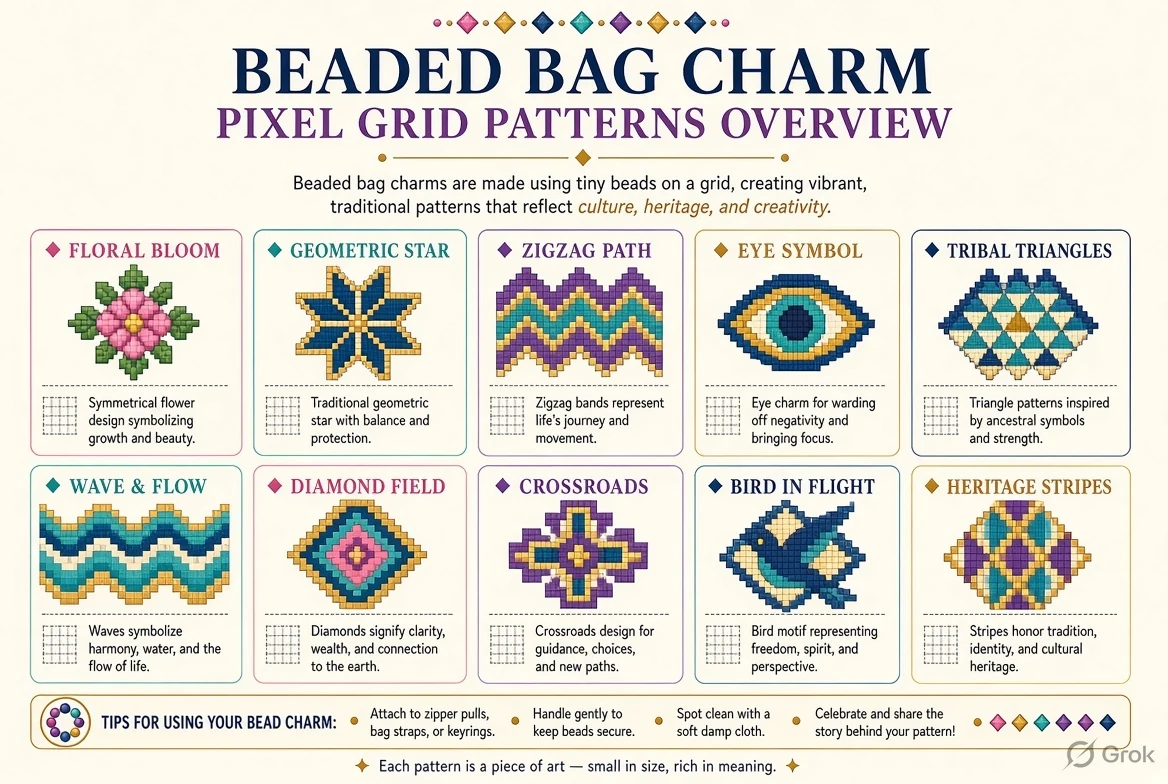
Direct answer: Beaded bag charm pixel grid patterns turn simple colored squares into small heart, flower and star designs that can be attached to a bag or key ring. The chart tells you where each color belongs; it does not automatically tell you whether the charm should be made using square stitch, brick stitch, peyote or a bead loom. This guide explains three illustrated patterns, how to count the rows, how to choose a bead-weaving technique that matches the grid and how to reinforce the hanging loop so a finished charm survives ordinary use.
Updated 20 November 2026. These designs are illustrated references, not tested bead-counted PDF templates.
Beaded Bag Charm Pixel Grid Patterns: quick facts
| Designs | Heart, flower and star pixel motifs |
|---|---|
| Materials | Uniform seed beads, beading needle, suitable thread and clasp |
| Grid logic | One chart cell represents one bead position when specified |
| Stitch choice | Square stitch for straight rows; brick stitch for staggered outlines |
| Attachment | Reinforced loop plus secure bag clasp |
| Limitation | Reference pixel pictures, not separately downloadable tested PDF patterns |
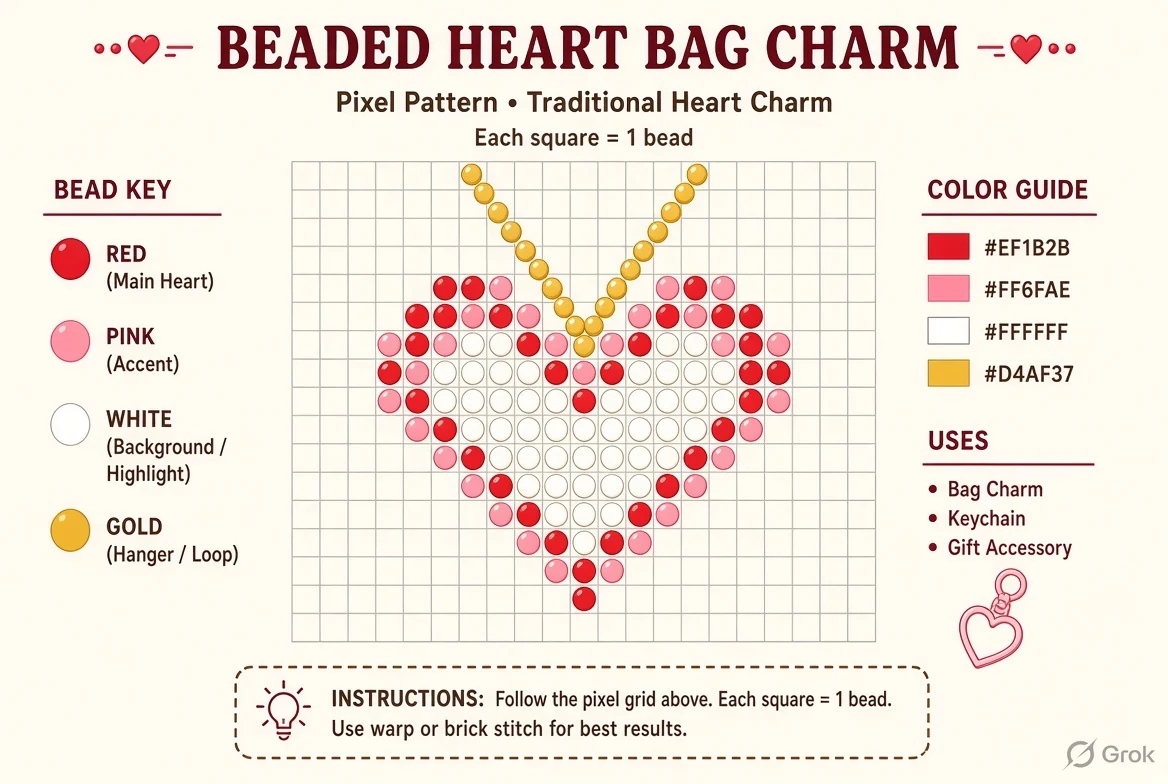
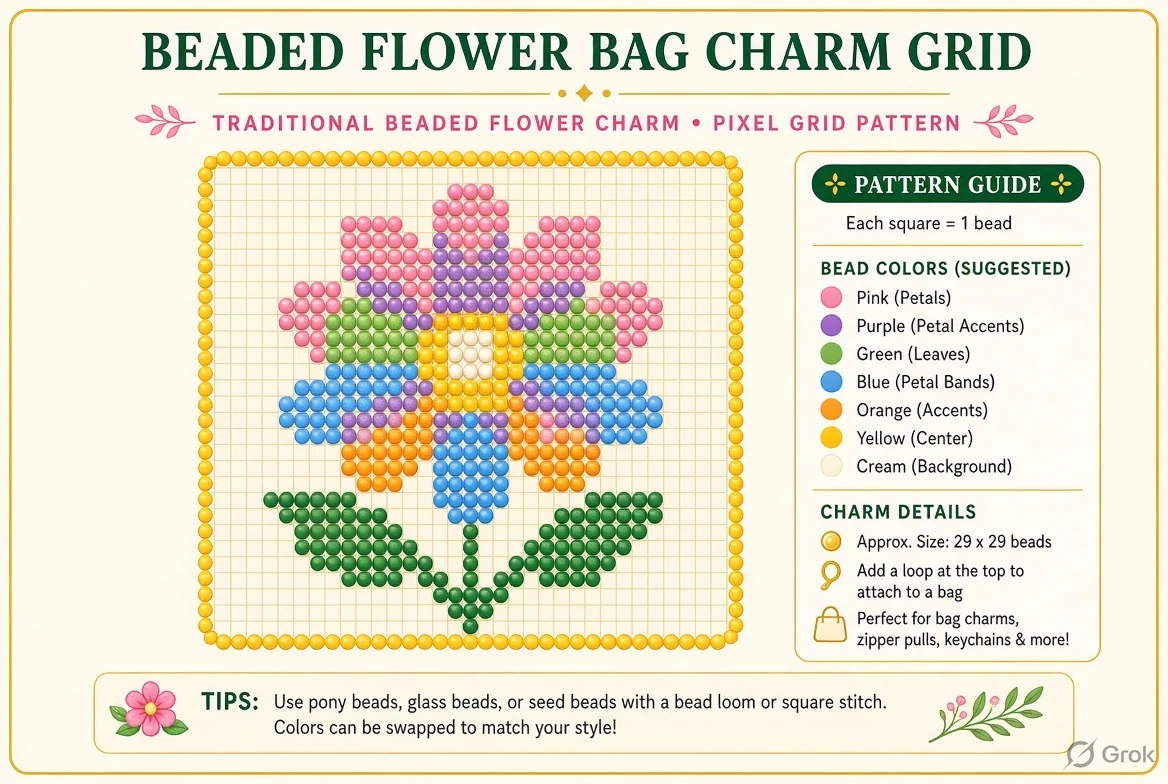
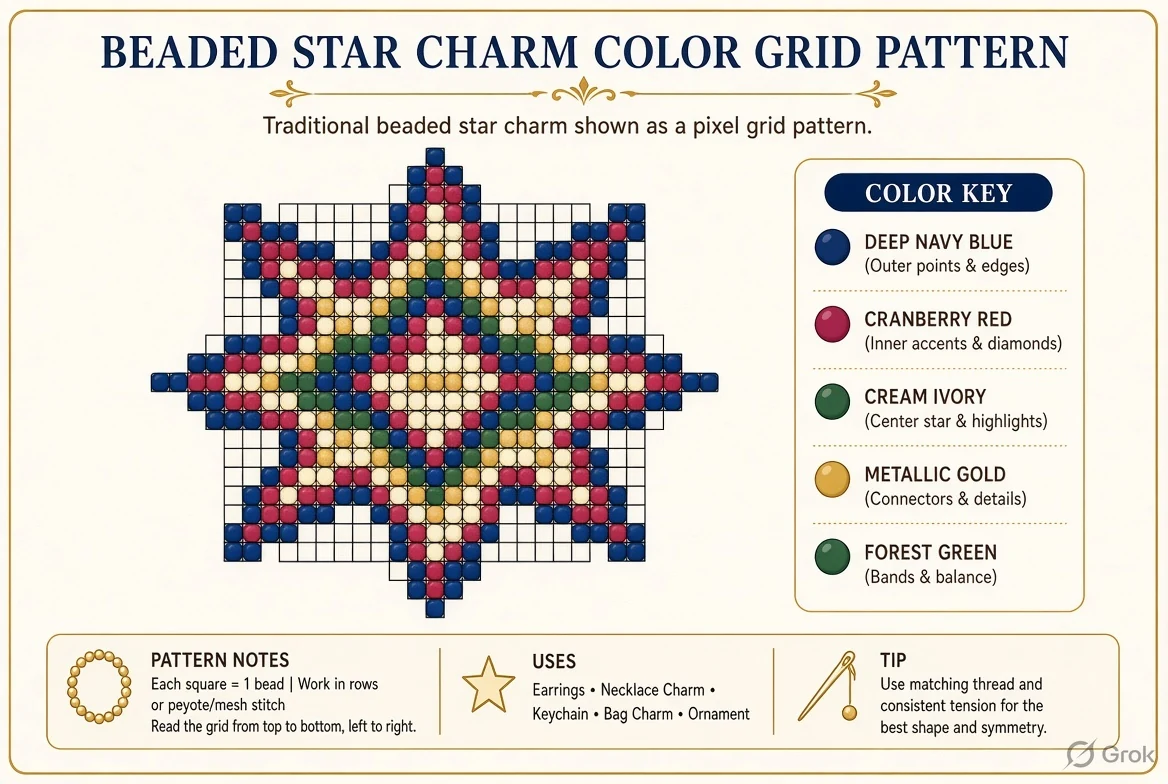
Heart, Flower and Star bead color charts
What is a beaded bag charm pixel grid pattern?
A pixel pattern is a small drawing built from colored squares; for beadwork, those cells can serve as a plan for choosing a bead in each position. If the chart has ten cells across and twelve down, it does not automatically mean there are 120 beads in the finished piece: transparent background cells might represent empty space, and edge decreases can change the count. A well-labeled chart distinguishes colored beads, empty cells and working direction. It should also tell you whether its rows are squared or staggered. Otherwise, the same pixel art may look quite different when woven with brick stitch versus square stitch.
Heart beaded bag charm: choosing a simple first design
A heart is often the easiest motif for beginners because its symmetry makes placement errors visible. Study the center line before preparing colors. If you use a regular rectangular grid, square stitch can keep rows aligned; if you prefer a shaped outline with sloped edges, brick stitch may be appropriate after the decreases are planned. Begin with the widest part and use a small practice section to see how the edges close. Do not count blank background squares as beads if the finished heart is supposed to have an open outline. A compact heart should be light enough not to pull at a bag zipper.
Flower pixel grid: petals, center and repeat
A beaded flower chart separates the contrasting center from its petals and sometimes includes a background or leaf. Decide whether the flower will be a free-standing charm or part of a rectangular panel. Free-standing petals usually need planned reductions and possibly extra thread reinforcement; an all-filled square panel is easier for a first counted project. Mark row numbers on a printed copy to keep track of color changes. If the selected pattern is small, a stronger contrast between flower center and petals helps recognition. A picture is only a color-placement reference until the actual thread path has been verified.
Star bag charm: why pointed edges need care
The sharp points of a star may require adding or decreasing beads across rows. A square-grid drawing may show dramatic diagonal edges that are not naturally reproduced by every bead-weaving technique. Before weaving, translate the desired outline into a documented brick-stitch increase or decrease route, or keep the star motif inside a supported rectangular panel. Concentrated stress at one exposed point can loosen the final thread, so weave the finishing end securely through neighboring beads. Attach the hanger to a reinforced upper section, not a single bead on the delicate tip. Test the star by gently moving it before hanging it on a frequently used bag.
Square stitch, brick stitch and peyote: which one matches the chart?
Square stitch produces rows that visually line up like a rectangular pixel grid, making it an intuitive match for many pixel icons. Brick stitch creates staggered rows with beads sitting in the gaps of the prior row, making pointed or sloped silhouettes possible with planned increases and decreases. Peyote also uses offset beads but follows a different pick-up and turn method. Do not silently substitute one stitch for another based only on the finished appearance. A tutorial should name its intended method and show at least the first few thread passes. An illustrated pixel chart alone cannot guarantee a precise sequence for all techniques.
Beads and thread: simple material checklist
Uniform cylinder or round seed beads help a design line up, but the resulting size and texture depend on the bead type and stitch. For a small charm, buy a few compatible colors from a consistent brand and size, plus a flexible bead-weaving thread, a needle sized for the bead holes, scissors and a finding such as a jump ring and lobster clasp. Avoid mixing beads of very different widths in a tight pixel panel; rows may buckle. A stop bead can help a beginner stabilize the initial row, but it is not a substitute for the correct knot or thread path. Practice on a short strip before making the full icon.
How to read the bead grid row by row
Begin by marking the chart’s intended top, bottom and row numbering. Some instructions work from the bottom upward, and the direction alternates as each row is added. Create a simple color key, especially when similar shades look identical on a phone screen. Work one row, compare it with the diagram, then mark it as complete. If the chart shows a blank cell, check whether the design requires no bead there or a bead colored to match the background. For shaped charms, a blank border is not the same as a transparent cell in a digital picture. Count the actual beads needed for the technique chosen.
A realistic first project workflow from paper to charm
Start with one heart chart and choose square stitch if the pattern is a filled rectangular pixel block. Lay out three or four colors in separate small trays. Work a short swatch so you can see whether the beads sit in neat rows. Then make the body row by row, pausing after every few lines to compare the color sequence. Leave enough thread to secure the last row and weave the tail back through the beadwork without pulling it out of shape. Make or attach a reinforced top loop; then add a suitable clasp. Finally, gently pull the attachment while holding the charm so you can identify an insecure connection before wearing it outside.
Bag attachment: lobster clasp, jump ring and strength
The attachment is often the weakest part of a handmade charm. A tiny open jump ring can separate when caught on a zipper; a flimsy bead loop can rub against hard metal and break. Use a suitably strong, smooth fitting and reinforce the beadwork at the suspension point with several carefully routed thread passes. Avoid piercing a bead with sharp wire or placing the entire charm weight on a single fragile thread. Bag charms may be handled, tugged or scraped more often than earrings, so ordinary jewelry standards are not always enough. If the item is intended for a child, small detachable beads are a choking concern.
Color combinations and making a personal pixel icon
A palette of two or three contrasting colors usually reads better at miniature scale than a complex shaded image. Hearts can use a bright fill and darker outline; flowers benefit from a clearly distinguished center; stars look sharper when the points are consistently highlighted. Before cutting thread, check the actual bead colors under daylight and arrange them next to one another. Screens may display colors differently from physical beads. If your design has words or letters, test whether the chart will read correctly from the front because bead-weaving routes can produce mirrored motifs. For a gift, favor recognizable shape and secure construction over excessive detail.
Printing a pixel grid chart and avoiding false PDF claims
These three uploaded charts are visual references that can be viewed or printed using normal browser tools where supported. This page does not claim an additional stitch-counted PDF file or precise physical print size. Pixel charts are especially sensitive to careless scaling: a printer may shrink the page, but the colors and row counts should remain consistent if the grid is legible. For a serious project, add column numbers and a key, then check that every cell can be distinguished. If a decorative image is not built on a verified bead structure, draw a fresh stitch-specific graph rather than assuming it is already ready to weave.
Common mistakes, repairs and the next searches
Beginners often confuse stitch types, skip a row during color changes, make a hanger from one unsupported bead or use mismatched bead sizes that distort the grid. When a heart looks asymmetric, recount each row rather than pulling all the work apart. If a star tip is fragile, reinforce it or redesign the outline as a rectangular charm. Useful next searches are ‘beaded bag charm pixel pattern’, ‘heart bead charm pattern’, ‘beaded flower grid’, ‘star brick stitch pattern’, ‘seed bead charm tutorial’ and ‘bag charm clasp attachment’. Those are practical intent ideas, not measured trends or promises of exact downloadable templates.
Frequently asked questions
Can I use a pixel art image as a bead pattern?
Yes as a design reference, but confirm the actual stitch type, blank cells and bead counts first.
What bead stitch makes straight rows?
Square stitch is one common method for aligned rows.
What stitch can make pointed star edges?
Brick stitch can make shaped edges with planned increases and decreases.
How do I attach a beaded charm to a bag?
Use a reinforced beadwork loop and a secure metal clasp or ring.
Are these free downloadable PDF patterns?
No separate PDF is promised; the three images are visual reference charts.
What is the easiest motif for beginners?
A simple symmetrical heart in a compact grid is a good starting choice.
Sources and conclusion
For stitch structures and safe beadwork planning see Beadaholique brick stitch patterns and Creativebug beaded badges and charms. Related reading: Crochet patterns for beginners. Use the correct graph type, verify first rows and reinforce any suspended charm.





Share Your Opinion
Comments are closed on this post.