 Vista

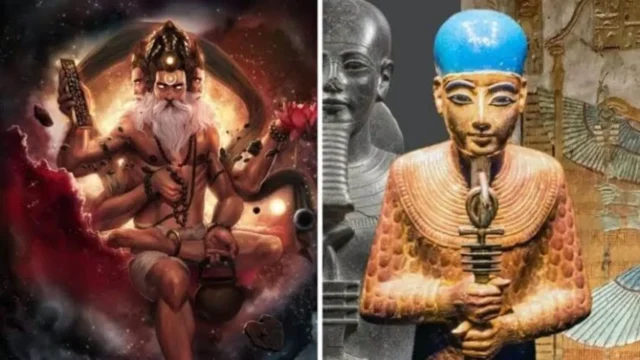
Short answer: Egyptian and Hindu traditions both use the lotus, the serpent, the sun and sacred rivers as powerful symbols. The meanings overlap in places, such as rebirth, protection and life, but each symbol sits inside its own religion. Shared symbols are a reason to compare, not proof that one tradition borrowed from the other.

Quick Facts
| Symbol | Egyptian meaning | Hindu meaning |
|---|---|---|
| Lotus | Creation, sunrise and rebirth | Purity, divine beauty; seat of Lakshmi and Brahma |
| Serpent | Protection (uraeus, Wadjet) and chaos (Apep) | Power and cosmic support (Shesha, Vasuki); also linked to Shiva |
| Sun | Ra and the sun disk | Surya and solar worship |
| River | The Nile, source of life and the yearly flood | The Ganga, a sacred river and goddess |
The lotus
In Egyptian belief, the lotus is tied to creation because it opens at sunrise, and the lotus is linked to the god Nefertem. In Hindu tradition the lotus symbolises purity and is the seat of Lakshmi, and Brahma is shown on a lotus rising from Vishnu. The shared image is a flower rising from water; the stories differ.
The serpent and Sheshnag
Egyptian serpents have two sides: the uraeus cobra protects the pharaoh and the goddess Wadjet guards Egypt, while Apep is the serpent enemy of the sun god. In Hindu tradition, Shesha (Sheshnag) supports Vishnu, Vasuki is used in the churning of the ocean, and serpents appear on Shiva. A serpent can protect or threaten in both, but the myths are separate.
The sun
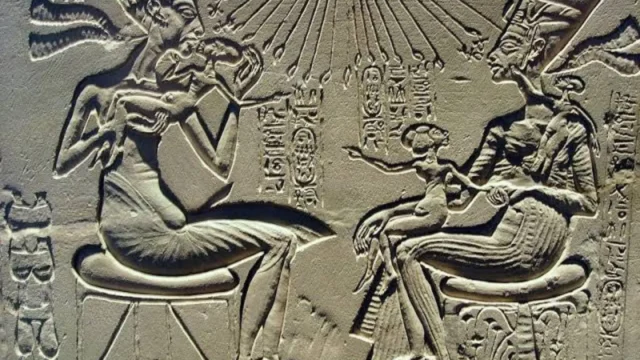
Ra crosses the sky and the underworld in a boat, and Atenism later focused on the sun disk. Surya is worshipped in Hindu tradition with a chariot and a sun-worship practice that continues today. Both traditions honour the sun as a source of life.
The Nile and the Ganga
The Nile’s yearly flood made farming possible, so it was central to Egyptian life and religion. The Ganga is a river and a goddess in Hindu tradition, and bathing and rituals at the river are important. Both rivers sustain life, which explains why both are sacred.
Story box (imagined): A farmer by the Nile and a pilgrim by the Ganga both bow to a river. Each thanks the water for food and life. Their words and gods differ, but the feeling of gratitude is shared.
History, Mythology and Speculation
| Category | Examples |
|---|---|
| History | Lotus, cobra and sun imagery in Egyptian art; temple and river worship in India |
| Mythology | Apep, Wadjet, Shesha, Vasuki, Ganga’s descent |
| Speculation | Claims that Egyptian symbols came from India or the reverse |
Myth vs Fact
| Popular claim | Careful answer |
|---|---|
| The uraeus is Sheshnag | No, different figures |
| Egyptian and Hindu lotus mean the same | Overlap in rebirth and purity, but not identical |
| Similar symbols prove contact | No |
Frequently Asked Questions
Why is the lotus sacred in both?
It grows from water and opens in sunlight, an easy image of life and rebirth.
Who is Apep?
The Egyptian serpent of chaos who opposes the sun god.
Who is Sheshnag?
The serpent who supports Vishnu in Hindu tradition.
What is the uraeus?
The rearing cobra shown on the crowns of pharaohs.
Is the Ganga like the Nile?
Both are sacred life-giving rivers, but their religions differ.
Does the ankh equal any Hindu symbol?
Some compare it with other life symbols, but no equivalence is proven.
Why do many cultures use the sun?
The sun is universal and essential to life.
Where can I see Egyptian symbols explained?
See our guide to ancient Egyptian symbols and their meanings.
Reliable Sources
- World History Encyclopedia: Egyptian Mythology
- Egypt Exploration Society: Gods of Egypt
- The Met: Divine Egypt
Last updated: 25 November 2026. Related reading: Ancient Egyptian symbols and their meanings, Egyptian vs Hindu mythology.
Related guides: Ancient Egyptian Symbols and Their Meanings: 15 Sacred Signs, Amulets and Mythology · Ra: Egyptian Sun God, Creation Myths, Eye of Ra and the Night Journey (Facts and Symbols)











Share Your Opinion
Comments are closed on this post.