 Vista

A pharaoh was the king of ancient Egypt. The word comes from the Egyptian “per-aa”, meaning “great house”, which originally referred to the royal palace and only later became a way to refer to the king himself, especially in the New Kingdom. Egyptians saw the king as a bridge between gods and people: the living embodiment of Horus and the “son of Ra”, responsible for keeping maat (order, balance and justice). That did not mean every king was thought of as an all-powerful god in every way, and modern scholars discuss how divine he really was seen to be.

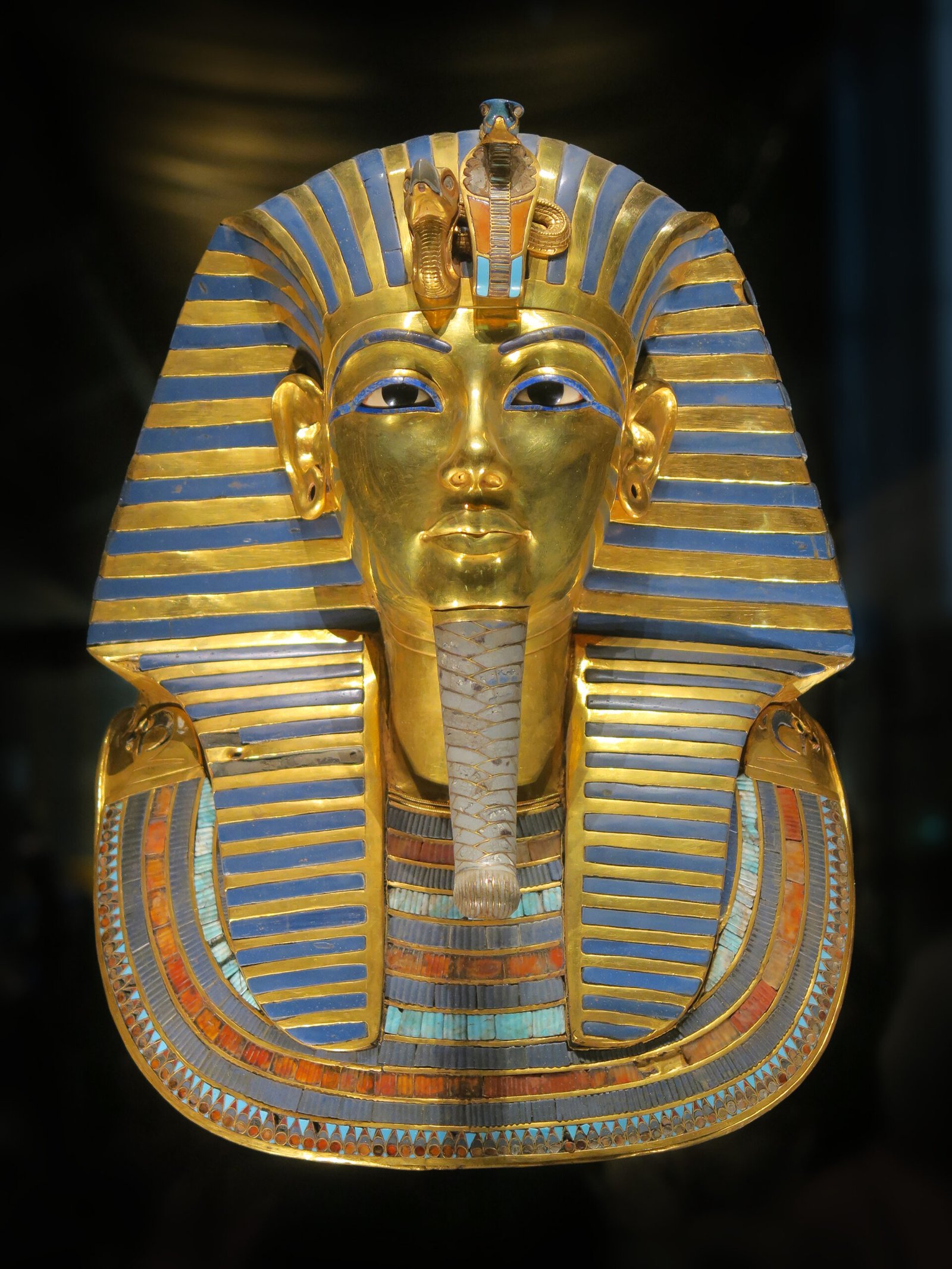

Pharaoh Quick Facts
| Item | Detail |
|---|---|
| Meaning of the word | “Great house” |
| Main titles | Horus name, Two Ladies, King of Upper and Lower Egypt, Son of Ra |
| Main duty | Maintain maat and honour the gods |
| Symbols | Double crown, uraeus cobra, crook and flail |
| First unification | Traditionally around 3100 BCE |
Why Were Kings Seen as Divine?
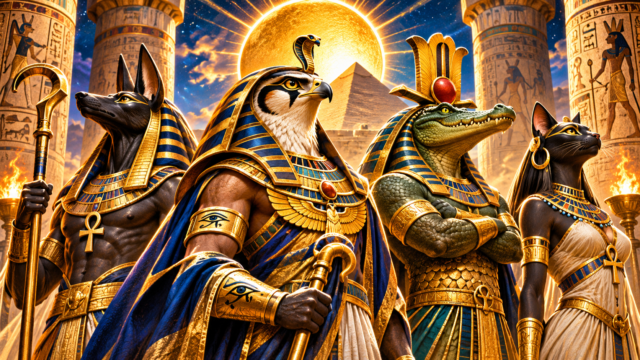
Royal ideology linked the king to the creator order. In life he was the living Horus, and after death he was identified with Osiris. His coronation, temple rituals and monuments showed him as maintaining order against chaos. The cobra on his crown, the uraeus, was a protective symbol linked to the goddess Wadjet. This system supported political stability by presenting the ruler as essential to the world’s balance.
What Powers and Duties Did a Pharaoh Have?
| Area | Role |
|---|---|
| Religion | Chief priest in theory; priests acted for him |
| Government | Head of state with officials such as the vizier |
| Law and justice | Source of law, upholding maat |
| War | Commander of the army |
| Building | Temples, tombs, monuments |
In practice, power depended on officials, priests, the army and local elites. Some kings were very strong, and others were weak or ruled during crises. Female rulers such as Hatshepsut also held the throne.
Story box (reconstruction): A farmer brings grain to the local temple storehouse. A scribe records it in the name of the king. “Is the king really a god?” the farmer’s son whispers. The farmer answers quietly, “He keeps the Nile in its order.” This is an imagined conversation to explain the belief, not a quotation.
Famous Pharaohs
Well-known rulers include Khufu (Great Pyramid), Hatshepsut (female king), Thutmose III (military expansion), Akhenaten (Aten worship), Tutankhamun (famous tomb) and Ramesses II (long reign and monuments). Cleopatra VII was the last active ruler of the Ptolemaic dynasty. Details for each are in separate guides.
What royal crowns and titles tell us
Egyptian kingship preserved the idea of the Two Lands, Upper and Lower Egypt. The white crown and red crown represented these regions, while their combination expressed unified authority. The Metropolitan Museum’s overview of Egyptian kings and queens emphasizes the ruler’s obligation to maintain maat, rather than treating the ruler as an individual with unlimited supernatural powers.
Royal imagery is often idealized. A scene of a king defeating enemies conveys the restoration of order and the exercise of royal authority; it is not automatically an accurate depiction of one particular historical battle. Archaeologists compare titles, dates and inscriptions with material evidence. This distinction helps explain both the religious importance of pharaohs and the very human political problems they faced.
Read the original research or museum reference
History, Mythology and Speculation
| Category | What belongs here |
|---|---|
| History | King lists, inscriptions, administration |
| Mythology | King as Horus and son of Ra; the Osiris myth |
| Speculation | Pharaohs as aliens or gods in a literal sense; lost superpowers |
Myth vs Fact
| Popular claim | Reality |
|---|---|
| All kings were called pharaoh from the start. | The word became common for the king in the New Kingdom. |
| Pharaohs were absolute rulers with no limits. | They relied on officials and had to meet expectations of maat. |
| Only men could rule. | Women such as Hatshepsut ruled as kings. |
| Pharaohs were literally supernatural beings. | Religious ideology, not proof of supernatural powers. |
Frequently Asked Questions About Pharaohs
What does pharaoh mean?
“Great house”, originally the palace.
Was a pharaoh a god?
He was seen as divine in important ways, but scholars debate how literally.
What is maat?
Order, truth and balance, which the king was meant to uphold.
What did the double crown mean?
Rule over Upper and Lower Egypt.
Who was the first pharaoh?
The earliest kings are debated; Narmer or Menes is traditionally linked with unification.
Were there female pharaohs?
Yes, such as Hatshepsut and Sobekneferu.
Why were pharaohs buried in pyramids?
Pyramids were royal tombs linked to beliefs about the king’s afterlife.
When did the pharaohs end?
Roman rule began in 30 BCE after Cleopatra VII.
Reliable Sources
- World History Encyclopedia: Egyptian Mythology
- Egypt Exploration Society: Gods of Egypt
- The Metropolitan Museum of Art: Divine Egypt
Last updated: 25 November 2026. Related reading on Vista Hub: ancient Egyptian civilization, Horus, Ra, Maat, Cleopatra.













Share Your Opinion
Comments are closed on this post.