 Vista
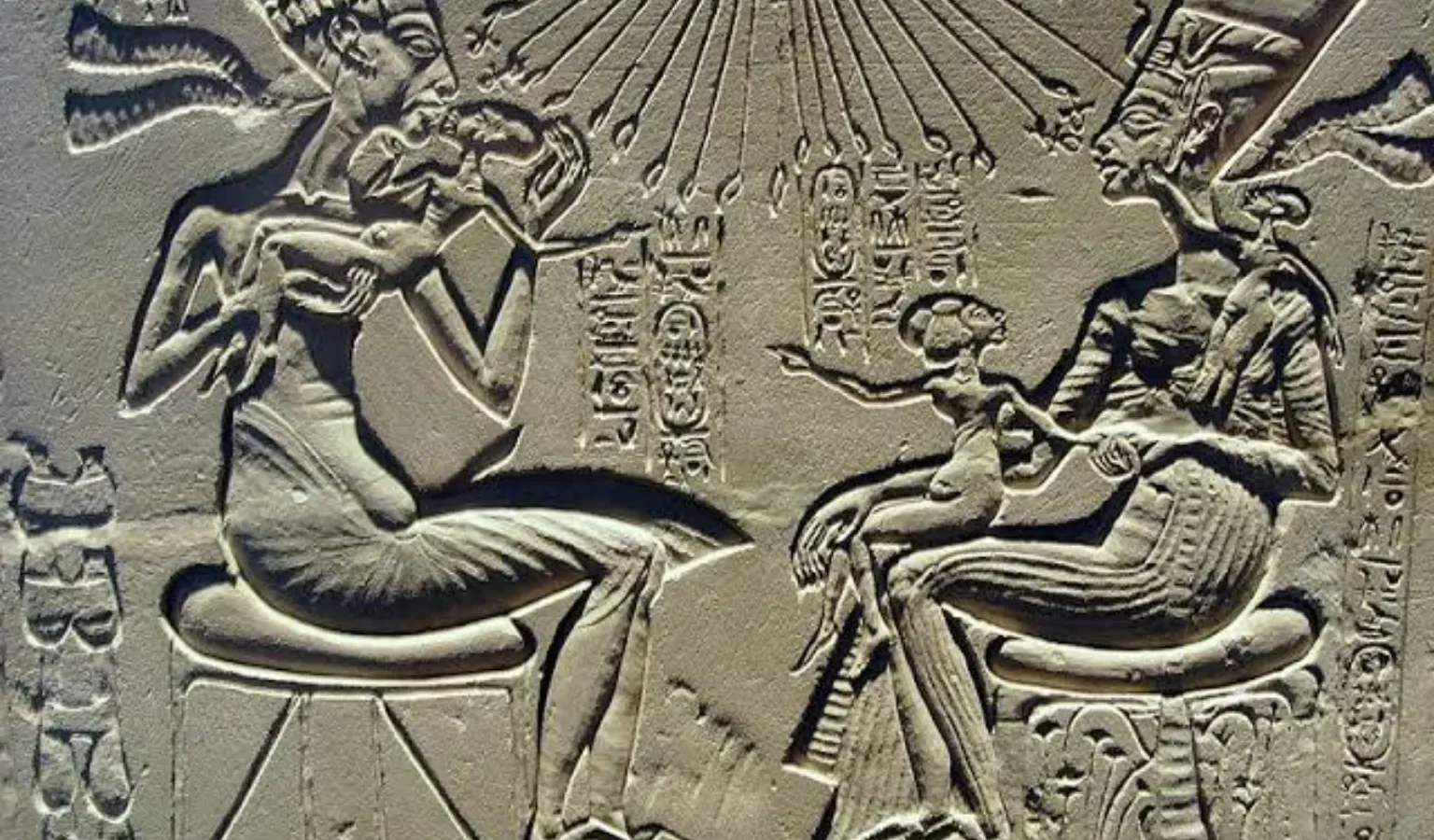
Nefertiti and Tutankhamun belonged to the same royal family of Egypt’s Amarna period. Nefertiti was the chief wife of King Akhenaten. Tutankhamun is widely accepted as Akhenaten’s son, but a 2010 DNA study suggested his mother was not Nefertiti but another royal woman, sometimes described as Akhenaten’s sister. Nefertiti may therefore have been his stepmother and mother-in-law, since Tutankhamun married her daughter. Several parts of this picture are still debated, and the identification of some mummies is not final.
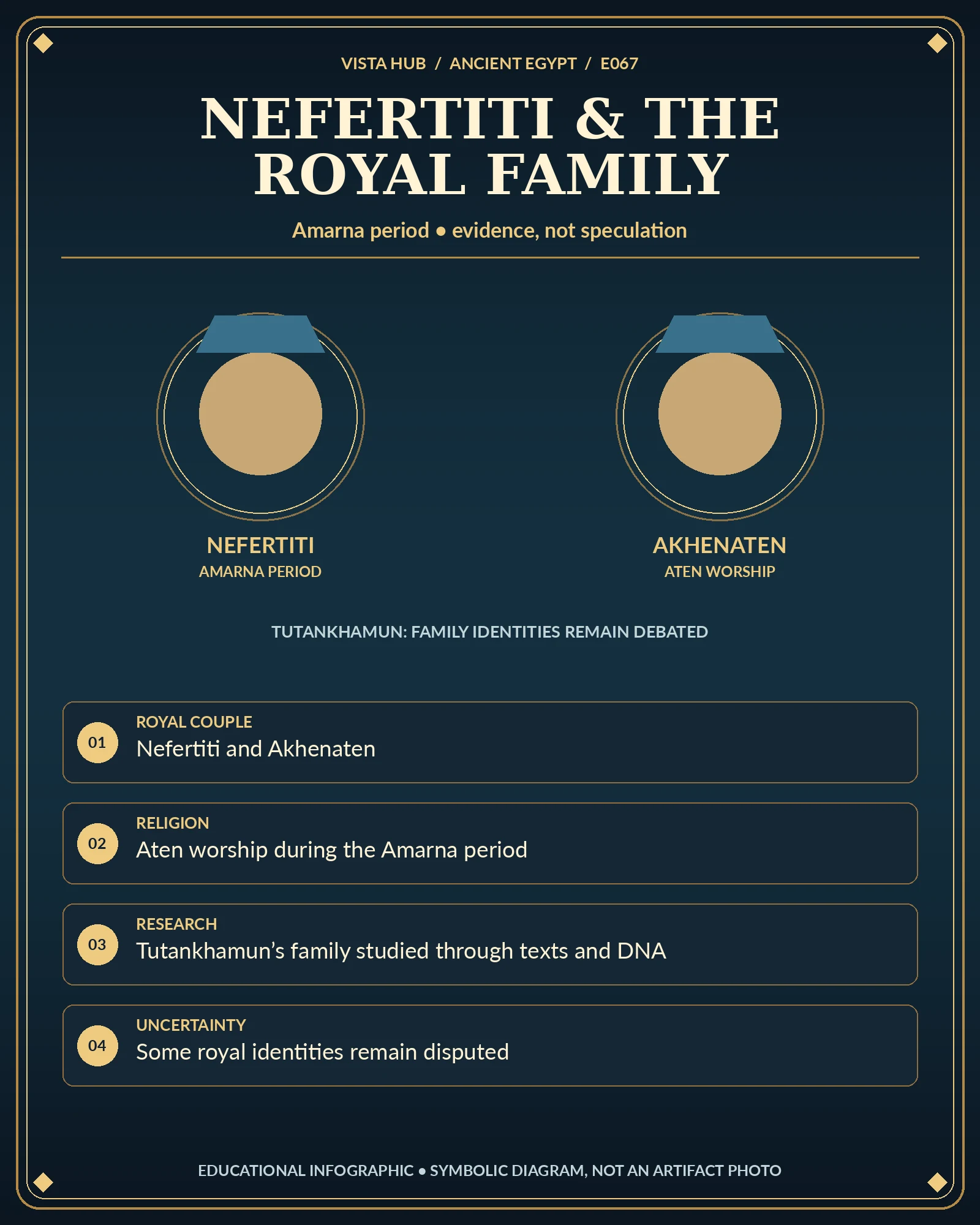
Family Quick Facts
| Person | Role |
|---|---|
| Akhenaten | King who promoted the worship of the Aten |
| Nefertiti | Chief royal wife; powerful and often shown beside the king |
| Tutankhamun | Boy king, probably Akhenaten’s son |
| Ankhesenamun | Daughter of Akhenaten and Nefertiti; married Tutankhamun |
The Amarna Period
Akhenaten moved the capital to a new city, now called Amarna, and gave special place to the sun disc Aten. After his death, the traditional gods were restored, and Tutankhamun, then a child, ruled with advisers. His name was changed from “Tutankhaten” to “Tutankhamun” to show the return to the god Amun. See our guide to Amun-Ra for the older religion.
What Does DNA Research Say?
A 2010 study led by Egyptian scientists examined royal mummies and suggested that a mummy known as KV55 was Tutankhamun’s father (probably Akhenaten) and that another known as the “Younger Lady” was his mother and a full sister of that man. The study’s methods and conclusions have been questioned by some researchers, including the identification of some mummies and the reliability of ancient DNA. So the safest wording is “suggests”, not “proves”.
Story box (reconstruction): A researcher compares two small samples of ancient DNA on a screen. The patterns match in some places and not in others. “We need more evidence,” her colleague says. This scene is a reconstruction of how such work is debated.
Nefertiti’s Missing Tomb and the Hidden Room Idea
Nefertiti’s burial place and mummy have not been identified. In 2015 an archaeologist proposed that hidden doorways in Tutankhamun’s tomb might lead to her burial. Radar surveys gave mixed results and later scans did not support a hidden chamber. The idea remains unproven. The painted limestone bust of Nefertiti, found in 1912 and now in Berlin, is a famous portrait but does not reveal her tomb.
What royal art establishes about Nefertiti
A New Kingdom relief of Nefertiti in the Metropolitan Museum depicts the chief queen in the distinctive artistic language of Amarna. Her prominence in royal religious imagery is direct evidence of her public position. It is not a biological family record, however, and the artistic appearance of a face cannot identify a particular mummy by itself.
Different evidence answers different questions. Inscriptions can establish names and titles, archaeological context can indicate when and where objects were made, and authenticated genetic data may suggest biological kinship. A proposed identification of the remains still needs independent support from the archaeological record. A resemblance to the famous bust or an imagined reconstruction should not be treated as confirmation of the queen’s burial place.
Original references: Source 1
History, Mythology and Speculation
| Category | What belongs here |
|---|---|
| History | Amarna reliefs, letters, name changes, royal tombs |
| Mythology | Aten worship versus the old gods |
| Speculation | Nefertiti as a hidden pharaoh, secret rooms in KV62, murder theories about Tutankhamun |
Myth vs Fact
| Popular claim | Reality |
|---|---|
| Nefertiti was Tutankhamun’s mother. | DNA research suggests otherwise, but it is debated. |
| Nefertiti’s tomb is in Tutankhamun’s tomb. | Unproven; scans were inconclusive or negative. |
| Tutankhamun was murdered. | No proof; CT and other studies suggest illness or injury was involved. |
| Nefertiti ruled alone as pharaoh. | Possible for a short time, but this is debated. |
Frequently Asked Questions
Who was Nefertiti?
Chief wife of Akhenaten and a powerful royal figure.
Was Nefertiti Tutankhamun’s mother?
Probably not, according to a 2010 DNA study, but this is debated.
Who was Tutankhamun’s father?
Most researchers think Akhenaten.
Did Tutankhamun marry his half-sister?
He married Ankhesenamun, a daughter of Akhenaten; sources describe her as his half-sister.
Where is Nefertiti’s tomb?
Unknown.
What was Akhenaten’s religion?
Focused on the Aten, the sun disc; whether it was strictly monotheism is debated.
Where is the Nefertiti bust?
In the Neues Museum in Berlin; Egypt has requested its return.
How did Tutankhamun die?
Unknown; theories include illness, infection and injury.
Reliable Sources
- World History Encyclopedia: Egyptian Mythology
- Egypt Exploration Society: Gods of Egypt
- The Metropolitan Museum of Art: Divine Egypt
Last updated: 25 November 2026. Related reading on Vista Hub: Tutankhamun’s treasure, Tutankhamun’s curse, Amun-Ra, Egyptian pharaohs.
Related guides: Egyptian Mythology · Egyptian Gods and Goddesses













Share Your Opinion
Comments are closed on this post.