 Vista
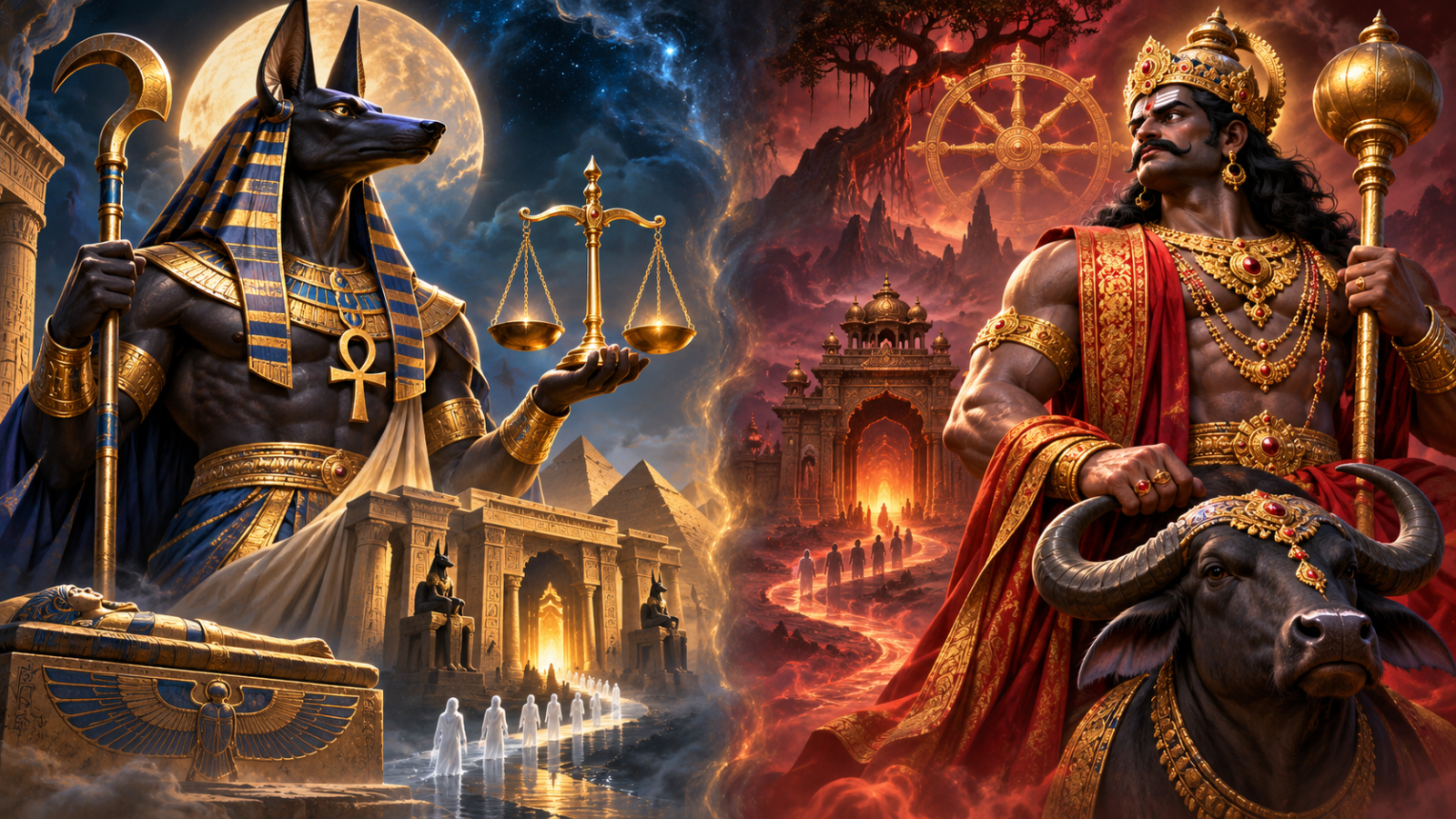
Short answer: Both traditions teach that death is not the end and that a person’s actions matter after death, but they differ in the details. Egyptians pictured a judgment of the heart and a lasting afterlife in the realm of Osiris. Hindu traditions describe karma, rebirth and the goal of moksha, with Yama as lord of the dead. Similar themes do not prove a common source.
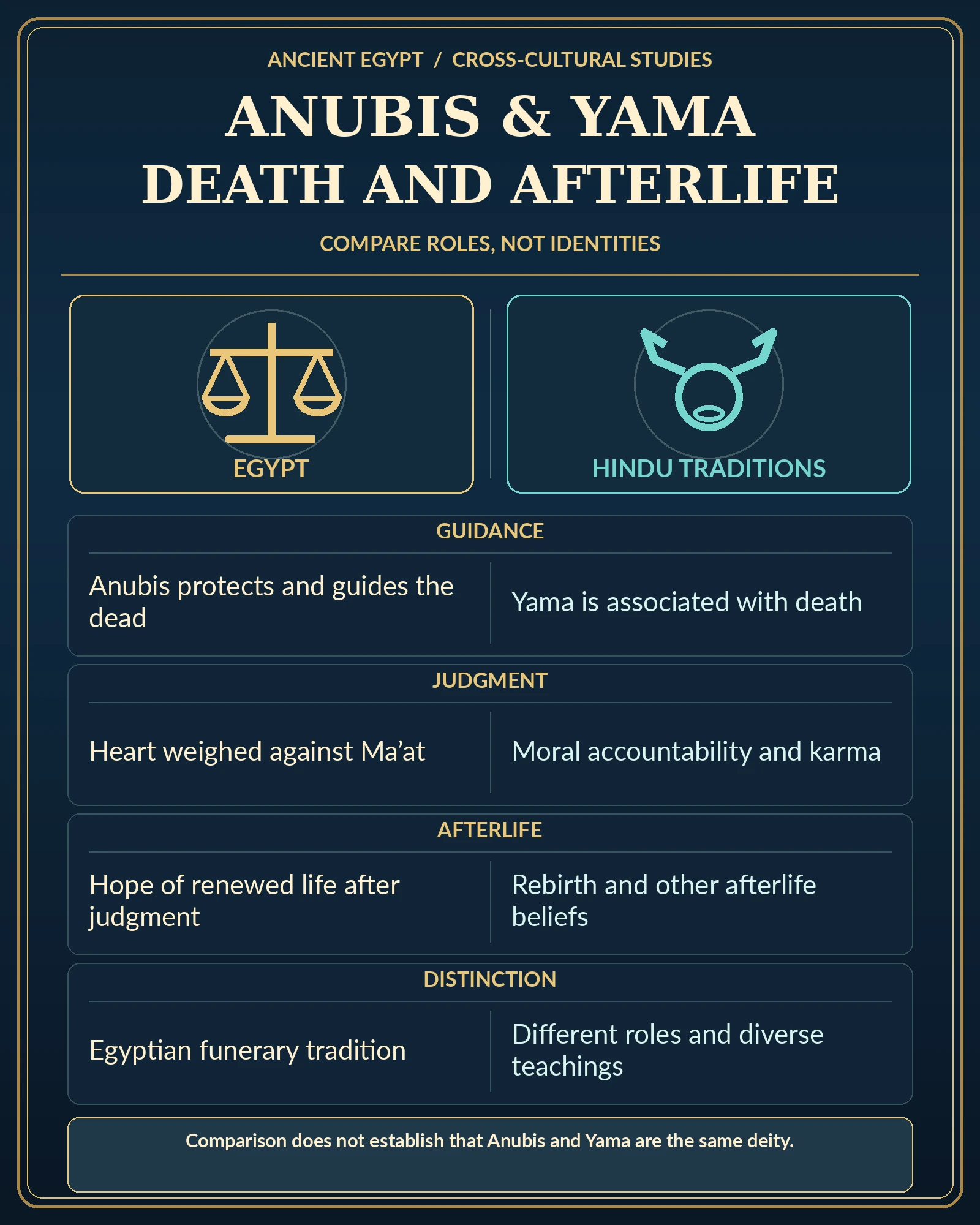
Quick Facts
| Theme | Egyptian | Hindu |
|---|---|---|
| Judge or ruler of the dead | Osiris, with Anubis and Thoth assisting | Yama |
| Moral test | Heart weighed against the feather of Ma’at | Karma shapes the next state |
| Fate after death | Afterlife in the Field of Reeds for the justified | Rebirth, other realms, or moksha |
| Body | Mummification to preserve the body | Cremation is the common practice |
The Egyptian view
Egyptians believed a person had several parts, including the ka and ba. After death, the heart was weighed against the feather of Ma’at. A heart lighter than the feather allowed the person to enter the afterlife, while the monster Ammit waited to devour a heart that failed. Mummification and tomb offerings supported this journey.
The Hindu view
Hindu traditions vary widely. Many teach that the soul (atman) passes through cycles of rebirth shaped by karma, and that liberation (moksha) ends the cycle. Yama appears as the lord of the dead in the Vedas and Puranas, and later texts describe records of deeds being reviewed. Different schools stress different ideas, so no single description fits all.
Anubis and Yama
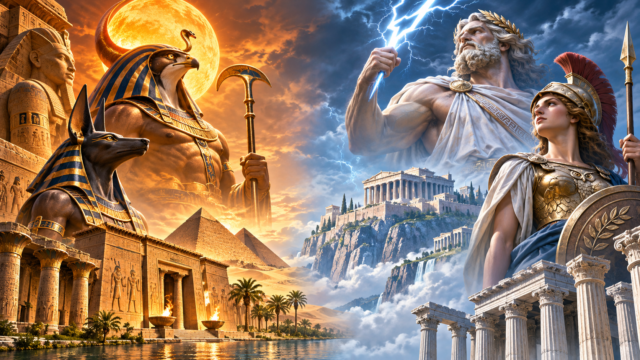
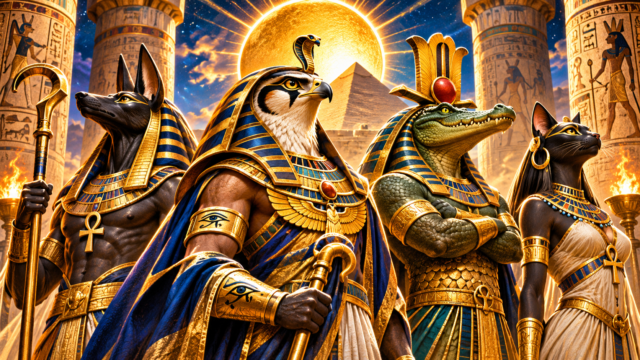
Anubis embalms and guides the dead in the Egyptian scene. Yama rules the realm of the dead in Hindu tradition. Both are death-linked figures, but Yama’s role as ruler and judge differs from Anubis as guide and protector of the dead.
Ma’at and dharma
Ma’at means truth, justice and cosmic order. Dharma means duty, right conduct and order. They are related ideas about living rightly, but they are not the same word or concept, and each sits inside its own system of belief.
Story box (retold, simplified): In the Egyptian scene, a person’s heart is placed on a scale with a feather. In many Hindu retellings, a person’s deeds are reviewed and their karma decides what follows. Both stories teach that how you live matters, which is why they sound alike.
Differences that matter
- Rebirth is central in Hindu thought but not a core Egyptian teaching.
- Egyptian judgment is a single scene; Hindu karma is a continuing process.
- Moksha, liberation from rebirth, has no direct Egyptian equivalent.
History, Mythology and Speculation
| Category | Examples |
|---|---|
| History | Egyptian tombs, mummies and funerary texts |
| Mythology | Weighing of the heart; Yama’s realm |
| Speculation | Claims that karma was copied from Egypt or the reverse |
Myth vs Fact
| Popular claim | Careful answer |
|---|---|
| Egyptians believed in karma and rebirth | Not in the same way; their focus was judgment and afterlife |
| Anubis is Yama | No, similar area but different roles |
| Ma’at equals dharma | Related ideas, not identical |
Frequently Asked Questions
Did Egyptians believe in reincarnation?
Mainstream Egyptology does not describe it as a core belief.
What is the weighing of the heart?
A scene where the heart is weighed against the feather of Ma’at.
Who is Yama?
The Hindu lord of the dead.
What is moksha?
Liberation from the cycle of rebirth in Hindu thought.
Why mummify?
To preserve the body for the afterlife journey.
Is Ammit like a Hindu figure?
No direct equivalent exists.
Do all Hindus believe the same?
No. Beliefs vary between traditions.
Does comparing show a shared origin?
No. It only shows shared human concerns about death.
Reliable Sources
- World History Encyclopedia: Egyptian Mythology
- Egypt Exploration Society: Gods of Egypt
- The Met: Divine Egypt
Last updated: 25 November 2026. Related reading: Egyptian vs Hindu mythology, Ma’at goddess of truth.
Related guides: Osiris: Egyptian God of the Afterlife, Death, Rebirth and Resurrection (Myth, Symbols and Facts) · Weighing of the Heart: Egyptian Judgment of the Dead — Feather of Ma'at, Anubis, Thoth and Ammit














Share Your Opinion
Comments are closed on this post.