 Vista
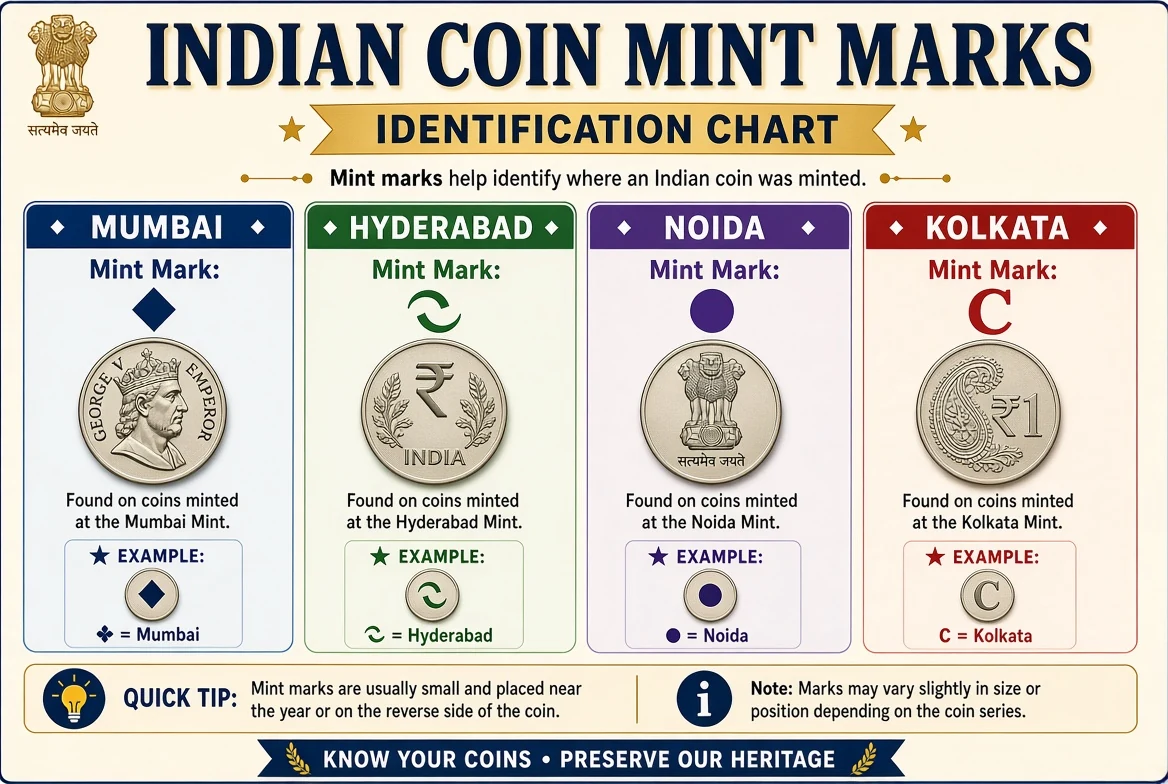
Direct answer: The four familiar Indian coin mint marks are diamond = Mumbai, star = Hyderabad, dot = Noida and no mark = Kolkata on many ordinary modern issues. The mark is often below the date, but historical, foreign-struck and commemorative issues have exceptions. This Indian coin mint marks identification chart shows how to check the sign without falsely claiming every marked coin is rare.
Updated 21 November 2026. Illustrated examples are reference diagrams, not an authenticated coin appraisal.
Indian coin mint marks identification chart: four pictures
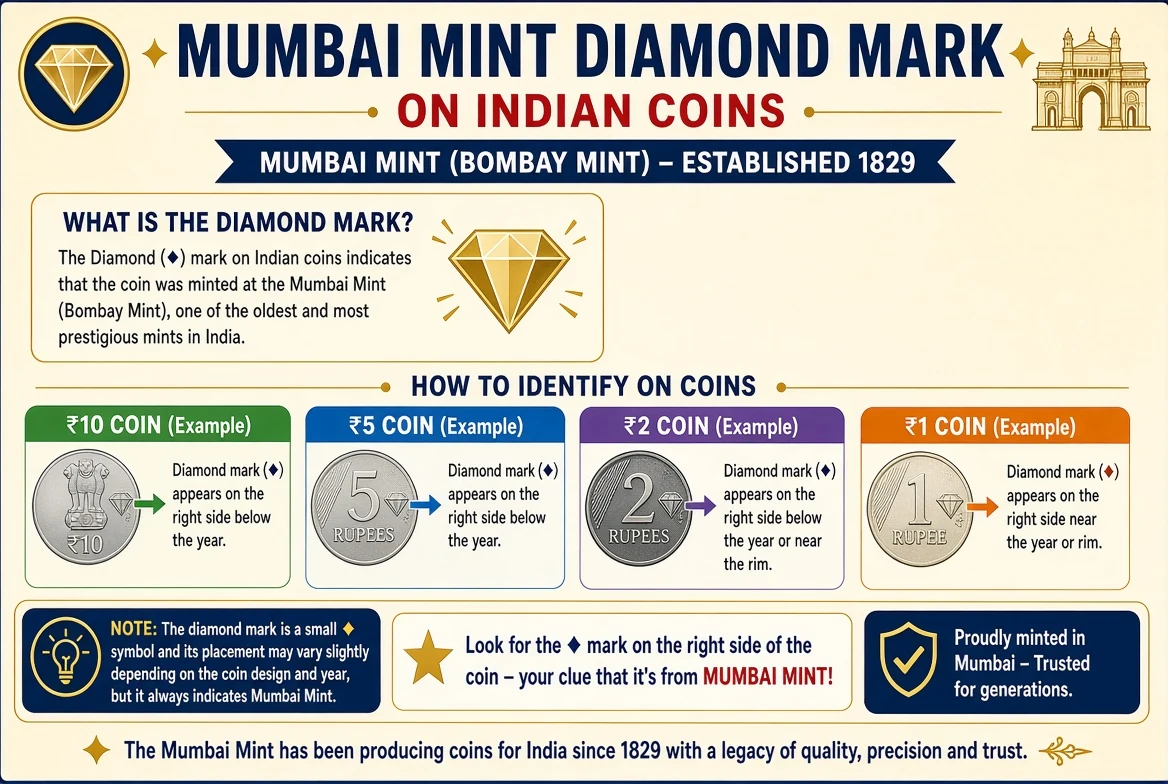

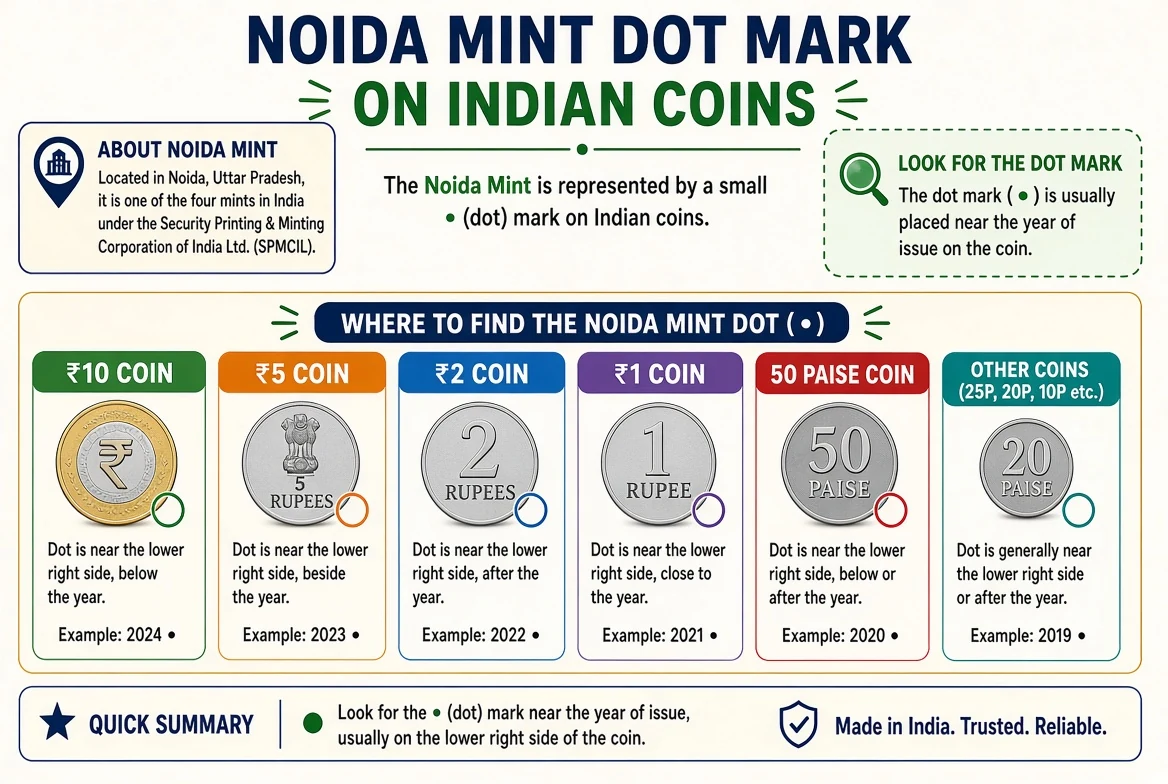
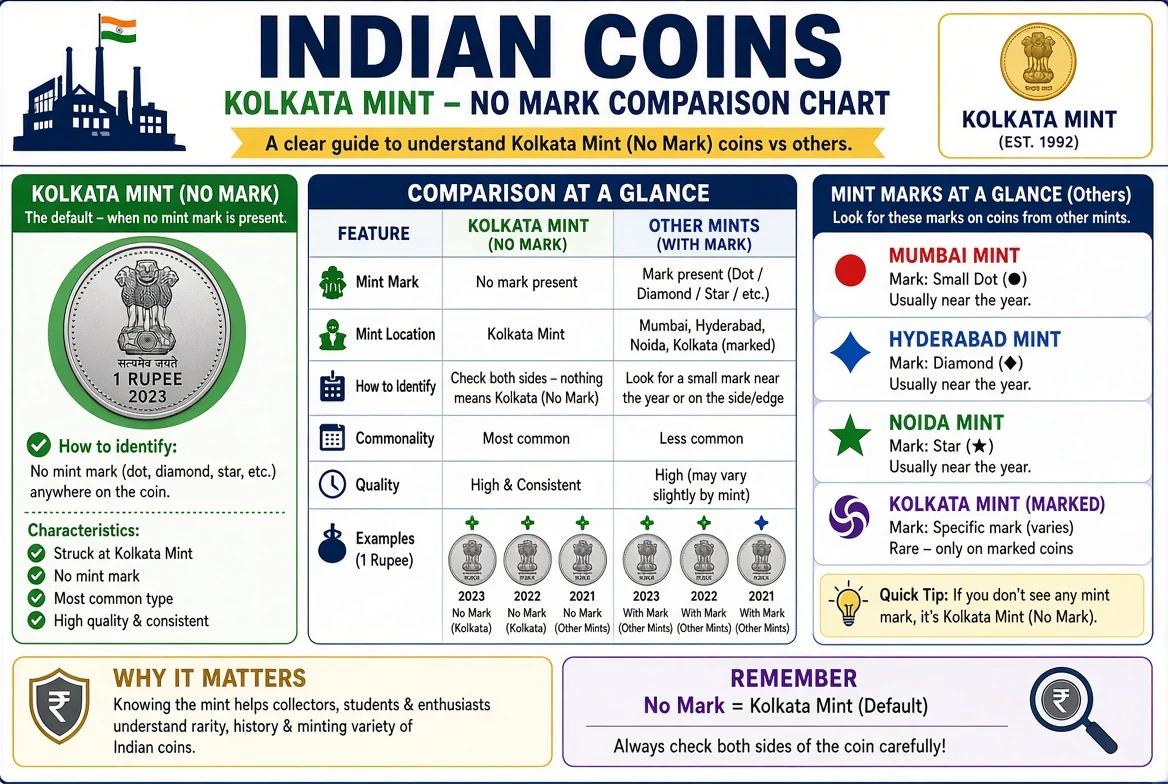
Indian coin mint marks: what the small sign below the year means
Indian coin mint marks are small signs used to distinguish where many coins were manufactured. A collector often checks the area directly beneath the year on the date-bearing face of the coin. The best-known shorthand for regular modern Indian issues is Mumbai—diamond, Hyderabad—star, Noida—round dot, and Kolkata—no mark. That is a useful starting chart, not a guarantee that every Indian coin from every era follows an identical format. Some editions, older series, overseas production and special strikes use other conventions.
A mint mark identifies a production source, not the denomination’s value or an automatic collector price. A one-rupee coin with a diamond is not inherently more valuable than the same year’s no-mark coin. Authenticity, production quantity, year, wear, errors verified by experts and market demand affect collectability. RBI explains that circulation coins are issued by the Reserve Bank but minted by the Government of India at its mints, located in Mumbai, Hyderabad, Kolkata and Noida. That division helps prevent confusion between the mint mark and the RBI’s role.
Mumbai mint diamond mark: how to spot it without guessing
A small diamond-shaped mint mark beneath the date is a familiar identification clue for Mumbai Mint, historically called Bombay Mint. Examine the exact year and denomination before drawing conclusions. The diamond may be tiny, and dirt or wear can make the four corners look like a round dot. Photograph the area with the phone’s macro mode or a magnifying lens in even light; avoid scrubbing the coin to expose the mark.
Historical and special Mumbai issues may not all show the modern plain diamond. Numismatic guides document variations depending on series and date. That does not justify applying the diamond rule to every metallic token or religious souvenir: these may not be government-issued circulation coins. Compare the whole obverse and reverse, the denomination lettering and a trustworthy issue catalogue. If a mark is unusually large or appears in the wrong place, it might be damage, an added impression or a different design element rather than a rare mint variety.
Hyderabad mint star mark: regular issues and historical variations
The star mint mark is commonly associated with the Government of India Mint at Hyderabad. On many coins it appears beneath the year, similar in location to the Mumbai diamond. The star can be faint, especially on heavily circulated small coins. Some historical Hyderabad issues use different symbols or variations, so a reference that simply says “star always means Hyderabad” lacks nuance. Focus the beginner identification on the common modern marks, then verify exceptions with a specialist catalogue.
Do not confuse a star that forms part of a commemorative design with a mint mark. The star’s position and the coin’s overall style matter. When comparing a chart image against a real coin, turn both to the same orientation and check whether the date is legible. If a coin’s year is completely worn, the symbol alone may not be enough to determine the exact issue. A rare-error claim also needs evidence that a variety exists, rather than a seller’s assertion that a slightly distorted star is unique.
Noida mint dot and Kolkata mint no mark: key differences
A small round dot below the date is the widely used Noida Mint identifier. Kolkata, historically Calcutta, is generally associated with coins bearing no mint mark. These two are easy to confuse on a worn specimen: a shallow Noida dot can disappear in a poor photograph, while a stain on a Kolkata coin may imitate a dot. Examine the metal directly under angled light before applying a label.
A coin with no visible symbol is not automatically a Kolkata coin. It might belong to a period that used different marking conventions, have a worn or weakly struck mark, or be a foreign-struck issue. Likewise a dot elsewhere on the coin could be part of a design. When the identification is uncertain, describe the visible evidence: “No clear mark seen under the date,” rather than announcing the mint with certainty. Collectors also look at edge design, weight, diameter and documented examples from the same year.
Foreign mints and commemorative coins: exceptions to the four-sign rule
At different times, Indian coin production has also involved overseas mints. Some Indian coins show special lettering or symbols associated with their foreign manufacture. A familiar four-mint infographic cannot identify all such coins, and a mark that looks vaguely like a star or diamond may have a different origin. Likewise commemorative and proof issues can use different finishes and presentation conventions from ordinary circulation coins. A collector should distinguish mint mark, commemorative theme and manufacturing or die variation.
If you suspect a coin was made abroad, begin with denomination and date, then search an established numismatic catalogue or a documented mint issue. Compare both sides and any packaging or certificate. Don’t pay a premium for an “imported mint mark” just because a seller circles a tiny area in a blurry photo. An independently verifiable reference, credible provenance and condition assessment matter far more than an unsubstantiated viral price screenshot. Regular circulation coins are primarily money and historical artefacts, not assured investments.
How to identify a coin using the four picture charts
First turn the coin until the year reads horizontally. Scan immediately beneath the numerals and note whether there is a diamond, star, dot or no clear mark. Second compare the sign against the four photographs in this article, keeping in mind that these are instructional renderings. Third record the year, value, broad design series and condition. Fourth check the expected mark for that particular issue using a reputable catalogue, not just the icon’s shape.
If you’re using a magnifier, inspect the outer rim and denomination as well to rule out damage or a non-circulation token. Do not clean old coins with acids, abrasive powder or a hard brush—collectors may value original surfaces and cleaning can destroy evidence. Photograph both sides, including a close-up of the date, at consistent lighting. Save your observations before looking for selling prices. This method separates visual identification from market speculation and gives a specialist useful information if you later ask for a second opinion.
Is a coin with a star or diamond mark rare or valuable?
A mint mark is one variable among many. A star or diamond is a routine production identifier on countless coins and is not, by itself, proof of rarity. Online advertisements promising lakhs of rupees for an ordinary used coin often exploit confusion about mint symbols. A seller can ask any amount; that does not mean authenticated buyers have paid it. Real collector prices are typically assessed through the specific issue, condition, verified scarcity and recorded transactions.
For security, avoid paying “registration fees”, taxes or courier advances to a stranger who promises to buy your small coin at an extraordinary sum. Do not share banking OTPs, identity photos or screen-sharing access with unknown collectors. The site has a separate practical guide about selling old coins, but the first task here is correctly identifying the object. A trustworthy coin expert will want clear photographs and details instead of deciding value solely from an emoji-like star in a screenshot.
Mint marks vs counterfeit signs and printing errors
Coins are minted rather than printed like banknotes, so the relevant production terms include dies, striking, blank preparation and metal composition. A scratched surface or a shifted image is not automatically a recognised mint error. Similarly a counterfeit coin could imitate a real mint mark. One symbol alone cannot authenticate the metal, weight, dimensions or historical design. Compare the coin with published specifications and consult a professional for valuable specimens.
The RBI and Government of India provide authoritative background on denominations and coinage. If a purported 2026 circulation issue has a logo that looks like an advertising symbol or claims a denomination not officially issued, treat the listing cautiously. Collectable medals, private commemoratives and temple tokens may be legitimate objects but are not necessarily legal-tender coins. The most useful identification guide is explicit about that difference and avoids promising an instant valuation from one tiny mark.
FAQs: mint marks on Indian coins
Which mint uses a diamond mark?
Mumbai is commonly associated with the diamond mark on many modern Indian coins.
Which Indian mint uses a star?
Hyderabad is widely associated with a star, though historical variants should be checked.
What does a dot below the date mean?
On relevant modern issues it commonly indicates Noida Mint.
What does no mint mark mean?
Kolkata usually uses no mint mark, but absent or worn marks can also have other explanations.
Does a star or diamond make a coin expensive?
No. The mint mark alone cannot establish rarity, authenticity or market value.
Conclusion: compare mark, date and issue before assigning a mint
Diamond, star, dot and no mark are valuable first clues, but a reliable determination uses the entire coin. The four diagrams are a fast identification starting point; they do not establish authenticity, rarity or an extraordinary sale price. Record denomination and year, verify exceptions and avoid advance-fee buying scams.
Official sources and related reading
Reserve Bank of India: Republic coinage museum; RBI: Currency FAQs and mint locations; Union Bank of India: Indian coin mint mark reference; Vista Hub: How to sell old coins.



















Share Your Opinion
Comments are closed on this post.