Information available on 29 October 2026
Will it rain tomorrow, and when will the weather improve? For October 30 to November 1, 2026, the answer depends on your district. There is no single rain-ending date for India. IMD information available on October 29 described a weakening system associated with Arnab and a separate low-pressure area near the south Andaman Sea. These are different systems; neither a national headline nor a storm image provides your local forecast.
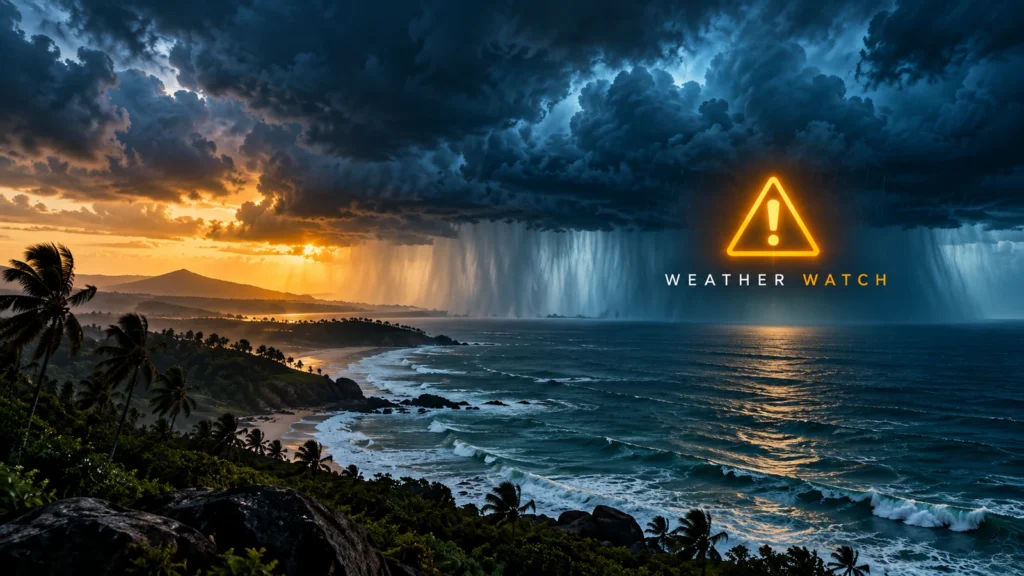
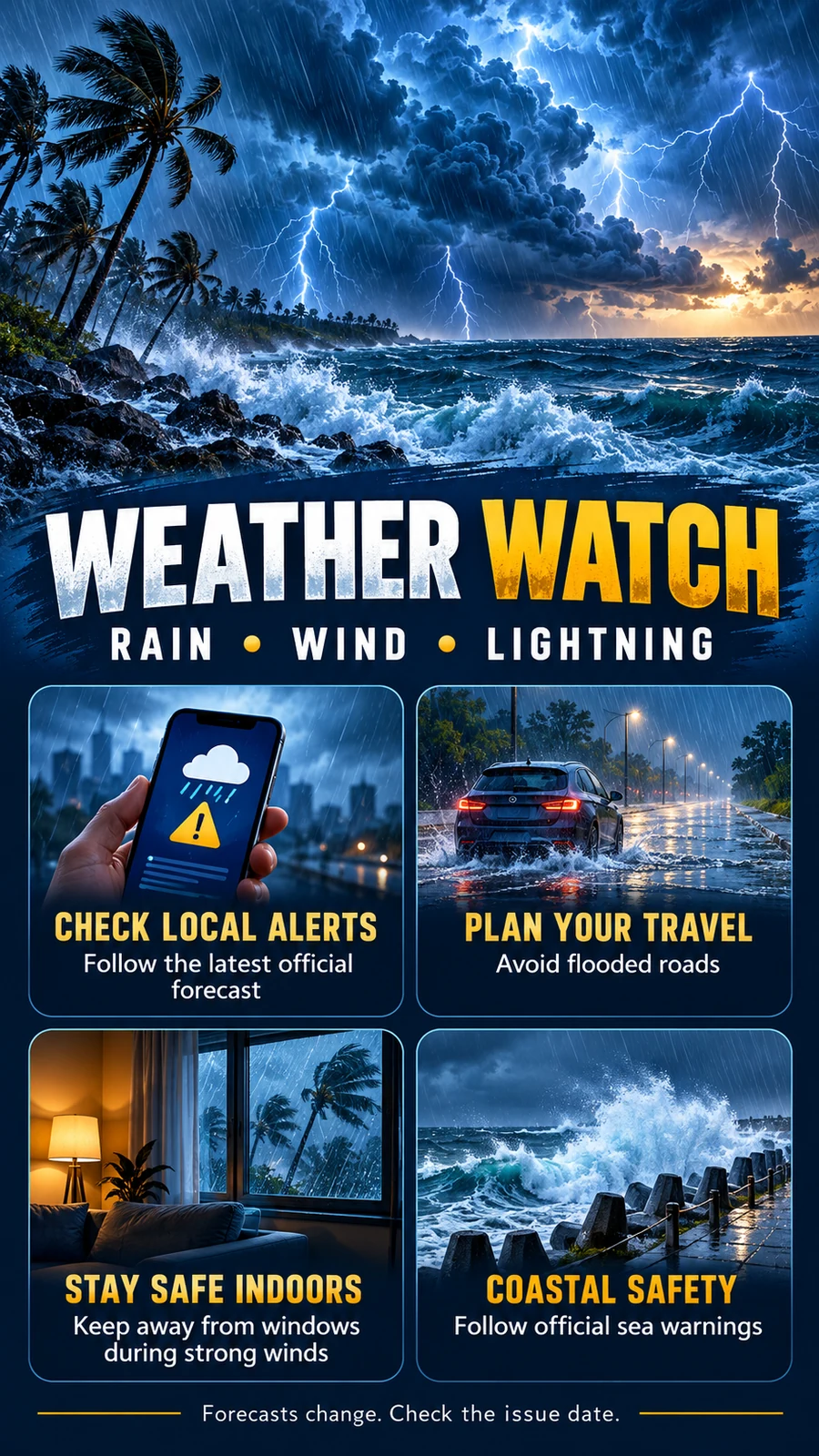
This guide uses information available on October 29. It is not a live weather feed. Before making plans, check the issue time and validity of your latest local forecast. The accompanying English poster is a general safety illustration, not an official red alert or a map of places expecting severe weather.
Why can rain continue after a cyclone weakens?
A storm’s classification describes its current organisation and strength. A weaker classification does not mean that all associated clouds disappear immediately. Rain, poor visibility and accumulated water can remain important locally. Equally, the presence of a former cyclone does not mean that every state will experience dangerous weather.
IMD’s October 29 evening description placed the remnant well-marked low-pressure area over central Chhattisgarh and adjoining Odisha. That is a dated observation, not a guaranteed position for the following weekend. Use a subsequent bulletin for later movement rather than treating an old location as a live tracker.
What to check on October 30, October 31 and November 1
October 30: Start with the district forecast and any short-range nowcast before leaving. Check your destination as well as your home. A journey may pass through a different warning area even when neither endpoint looks particularly concerning.
October 31: If the forecast suggests improving conditions, separately check road access and local waterlogging. Reduced rainfall does not prove that an already flooded crossing is safe. For an outdoor event, decide how people can leave early if conditions change.
November 1: Replace yesterday’s screenshot with the newly issued forecast. Improving weather and an official decision to reopen a school, road or boat service are separate matters. This guide does not predict the same weather across the country on any of these dates.
Does the new low pressure mean another cyclone?
The south Andaman Sea low pressure is separate from Arnab’s remnant circulation. A low-pressure area is not automatically a named cyclone. Its future development, movement and possible coastal effects need to be assessed from official bulletins as they become available.
Model maps shared online can show different scenarios and forecast times. They should not be presented as a confirmed landfall track. If a message gives an exact landfall location or dramatic wind speed, look for the corresponding official issue time. Avoid adding an unconfirmed storm name to the message.
How to find a useful local weather forecast
Open the IMD website and use the relevant regional centre, city forecast or district warning. Select the date you need. Today’s observed temperature is not tomorrow’s rain prediction, and the nearest available city may not represent conditions at your exact location.
Next, read the warning’s valid period. A nowcast usually addresses a shorter period than a multi-day forecast. If two apps disagree, compare their locations and update times before assuming that one screenshot settles the question. Recheck close to departure when the decision concerns travel.
Read the hazard, not just the alert colour
A warning may concern rainfall, lightning, strong winds or marine conditions. Read the accompanying text and affected area. A colour applied to part of a state should not be turned into a claim that the entire state faces identical conditions.
Advice: Keep your phone charged and essential medicines accessible. Avoid entering flooded roads. In strong winds, stay away from unstable structures, loose signs and exposed trees. For fishing or coastal boat trips, consult the current marine advisory rather than relying on a generic rain icon.
A useful check for families and outdoor plans
Choose a decision time before your trip rather than relying on a forecast saved several days earlier. Share the original official link with family members so they can see its date and affected area themselves.
Frequently asked questions
Will it rain tomorrow at my location?
A useful answer needs a location and date. Check the October 30 forecast for your district and any more recent short-range warning before travelling.
When will the rain stop?
There is no nationwide answer. A local three-day forecast can indicate improvement, but an exact stopping hour cannot be guaranteed for every neighbourhood.
Is another cyclone confirmed?
The existence of low pressure alone does not establish that. Wait for an official classification and bulletin before treating a new cyclone or landfall as confirmed.
Does a weather warning mean schools are closed?
No. Follow the school or district administration’s dated announcement. A warning and a closure order serve different purposes.
Takeaway: Ask which hazard matters in your district and during which period. Use national weather news for context and the latest local advisory for decisions. This article offers general information and does not replace official warnings or emergency instructions.