 Vista
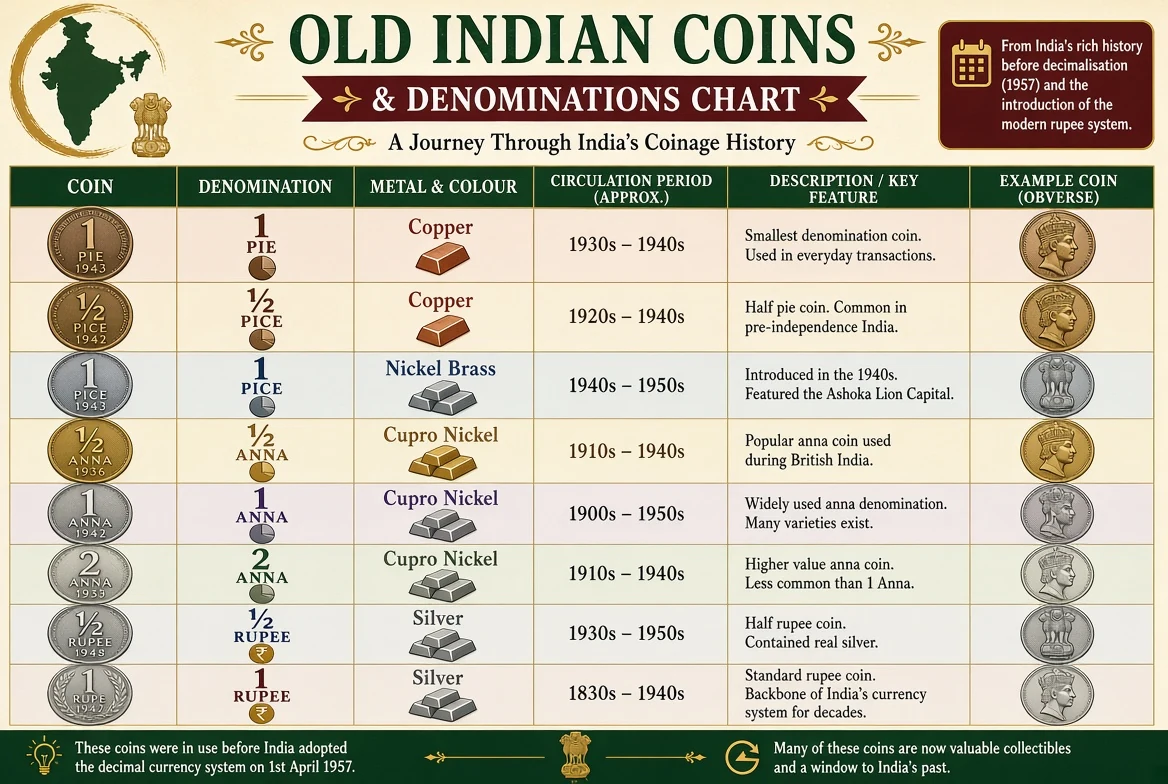
Direct answer: Old Indian coins and denominations changed from a rupee divided into 16 annas or 64 pice to a rupee divided into 100 paisa in 1957. The first Republic Anna Series began on 15 August 1950, and the term “Naya Paisa” was dropped on 1 June 1964. Four illustrated charts explain this timeline, common designs and how to identify both sides of an old coin.
Updated 21 November 2026. Identification guide, not a certified coin appraisal or a promise of resale value.
Old Indian coins chart: four visual references

Old Indian coins chart: the most useful identification timeline
Old Indian coins and denominations span several eras, from pre-Republic issues through the 1950 Anna coinage and the decimal transition that began in 1957. For most everyday identification searches, the first task is to decide which money system the coin belongs to. A coin marked “one anna,” a “two naya paise” piece and a later “two rupees” coin represent different stages of India’s currency history. Their value cannot be compared by simply reading the largest numeral on the face.
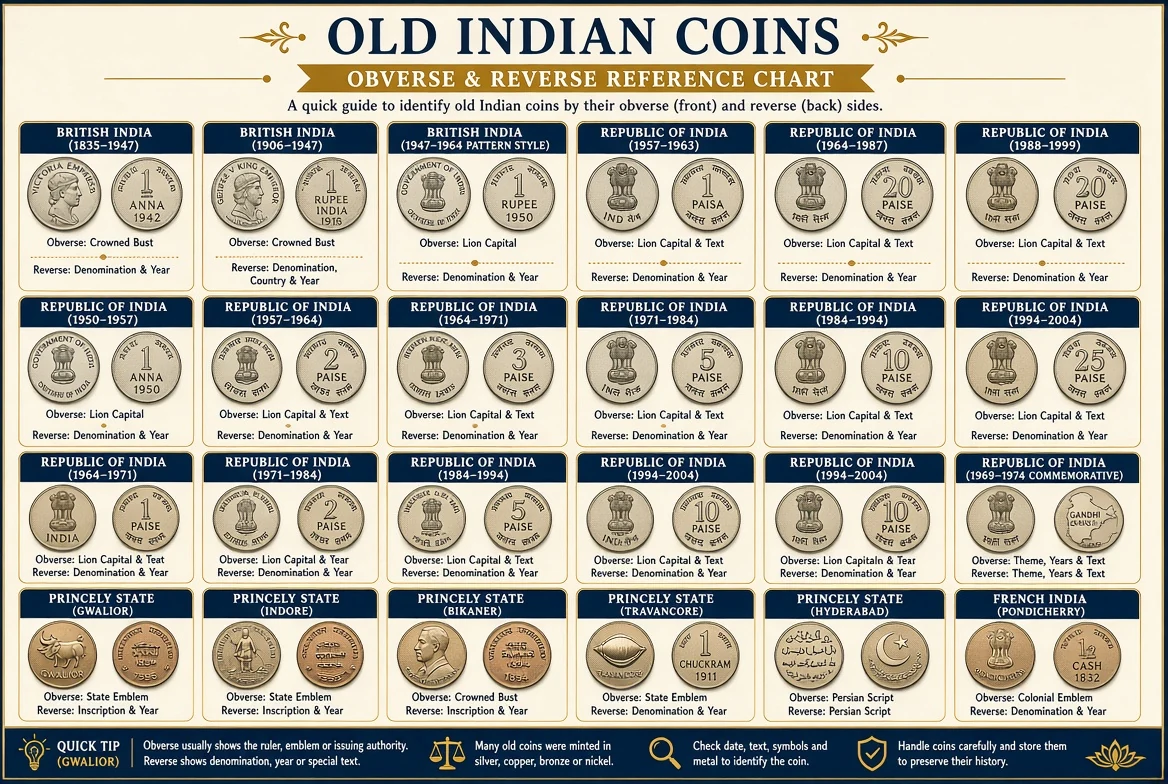
The Reserve Bank of India’s currency museum describes the sequence of Republic coinage and provides images by historical series. This is a better foundation than viral price lists claiming every coin made before 1970 is rare. The images in this article are identification charts, not photographs of a particular collector’s specimen. They explain how denominations and visual styles changed, where to look for the date and why a clear image of both faces is important before discussing any collection or valuation.
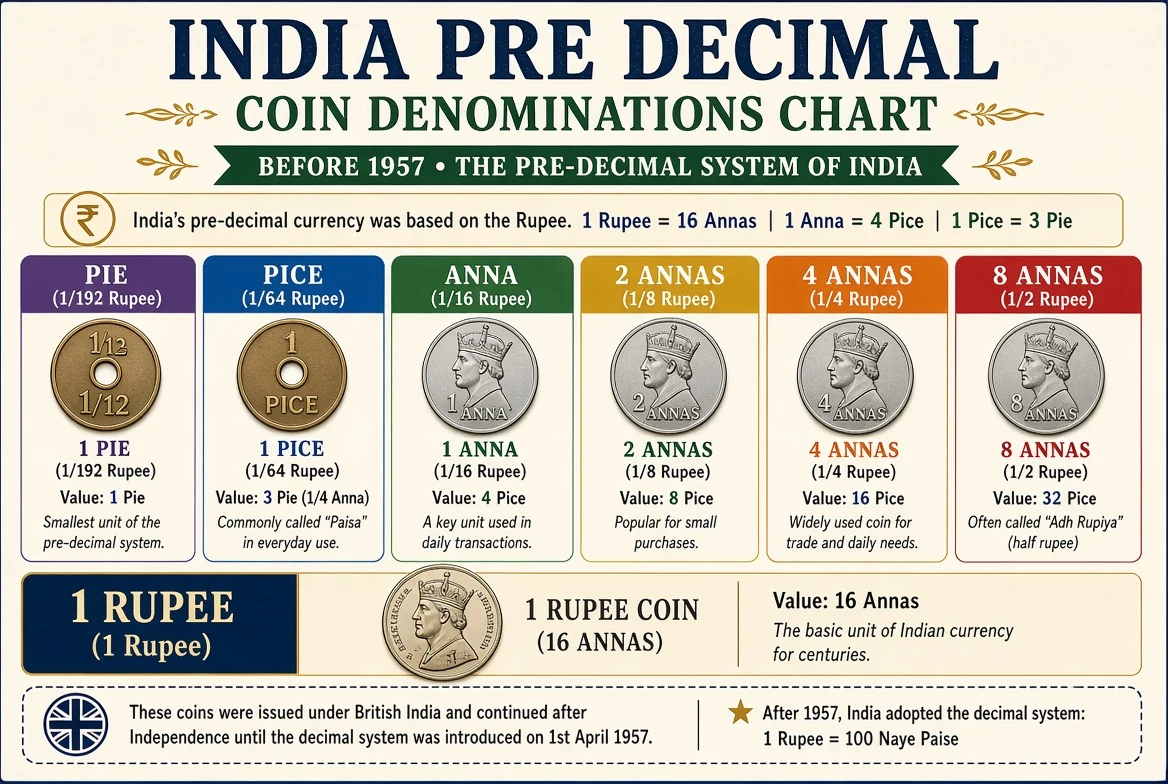
Pre-decimal Indian rupee: 16 annas, 64 pice and 192 pies
Before decimalisation, one rupee was divided into 16 annas. Each anna comprised four pice, and each pice comprised three pies. Therefore one rupee equalled 64 pice or 192 pies. Those names and their conversion are crucial when interpreting coinage described in family histories, older accounts or period fiction. The word “pice” is not the same denomination as the later decimal “paisa” even though English-language conversations sometimes blur the terms.
If someone finds an 8-anna coin, the label means half of a rupee under that earlier system. A 4-anna denomination meant a quarter. Do not incorrectly calculate a one-anna coin as one paisa in the modern hundred-paisa rupee; their fractions differ. The pre-decimal chart shows the relationships and makes historical prices easier to understand. Metal, year and issue details still matter for identifying a particular coin, but the denomination conversion can be established without making a guess about the coin’s current collector-market price.
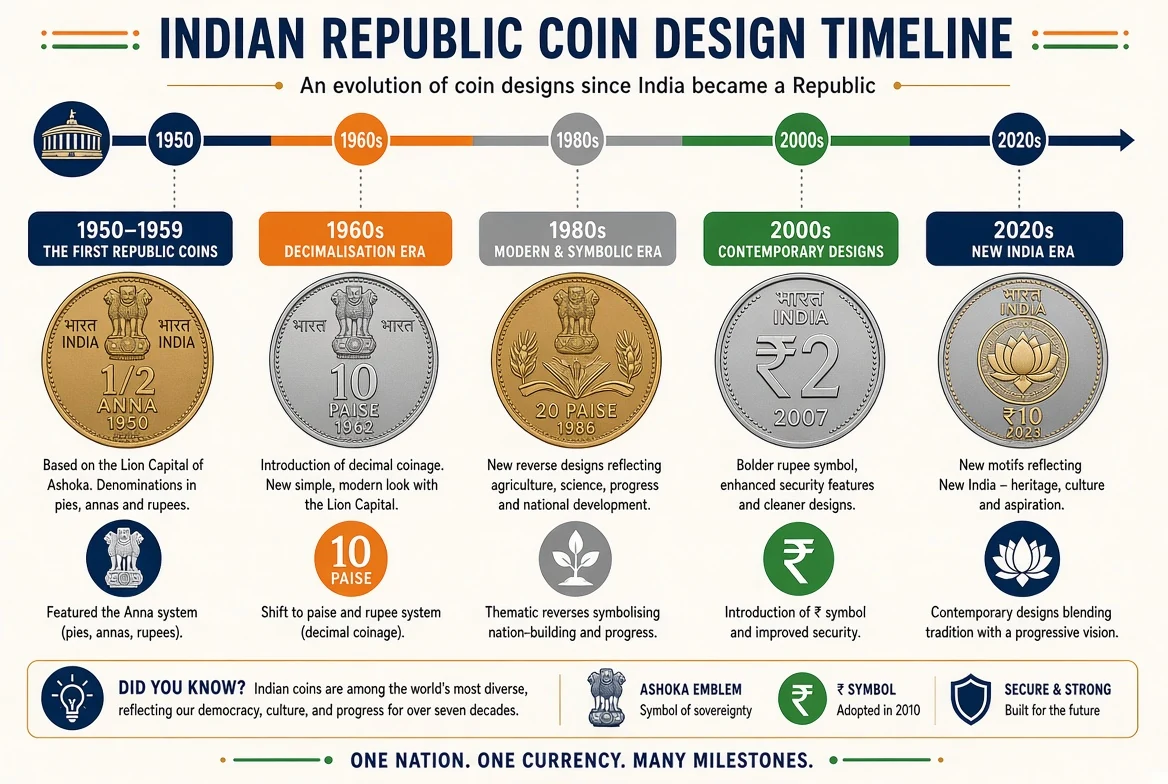
1950 Anna Series: the first coins of the Republic
Republic India introduced its Anna Series on 15 August 1950, according to the RBI’s museum. The design shift reflected the country’s new republican identity while retaining the older rupee-and-anna subdivision. These early Republic coins are a useful historical bridge: their dates and emblems belong to independent India, but their denomination labels still use the pre-decimal system. That is why a search for “1950 one anna coin” should not be answered with a description of a 1957 one naya paisa piece.
When identifying a Republic coin, compare both the Ashoka Lion Capital or other official emblems as depicted on the relevant series and the reverse side bearing the denomination. The appearance, material and size can change by issue, so a random internet photo is not enough for authentication. The Republic coin timeline chart distinguishes the older Anna system from later decimal coins. A coin carrying a 1950 date is a historic object, but the year alone does not determine scarcity or guarantee a valuable sale.
1957 Naya Paisa Series: what changed in Indian money
India switched to a decimal rupee divided into 100 paisa in 1957. For public recognition, the new unit was initially called Naya Paisa, meaning “new paisa,” and coin designs carried this wording. It signalled that the new hundred-part subdivision was not the older sixty-four-pice system. A 1 naya paisa was one-hundredth of a rupee, not the same as an old one pice. This monetary reform made arithmetic and price calculation simpler in everyday transactions.
For a collector, spotting the words “Naya Paisa” or “Naye Paise” can help narrow the coin to the transitional series. It is not, however, a universal exact-year identifier because the label continued for several years. Check the actual stamped date and design. The RBI’s museum groups the Naya Paisa series as 1957–1964. Different denominations had their own shapes, metals and designs, making a side-by-side chart especially useful for people who discover several old coins in a drawer and assume they all belong to the same year.
1964 onwards: why the word Naya disappeared
With the public accustomed to decimal money, the word “Naya” was removed from the name of the paisa from 1 June 1964. The underlying decimal structure did not change: a rupee still equalled 100 paisa. That means a coin marked “5 Paise” from a later series belongs to the same hundred-part denomination framework as “5 Naye Paise” from the earlier transition, despite the different wording. A coin with “Naya” is not automatically worth more; it represents an earlier naming convention.
Later issues underwent material and design changes as production and economics evolved. Some small denominations were struck in lighter aluminium, while other issues used stainless steel or different alloys. This makes appearance alone a weak basis for identifying date or metal. The RBI’s historical images are valuable because they group coins by design series and period. Keep the decade, denomination and mint mark together when making a collection record, rather than treating a single material or shape as sufficient evidence.
How to identify an old Indian coin from both sides
Begin with the denomination. Note whether it reads anna, pice, pie, naya paisa, paisa or rupee. Then record the full year, the official emblems and any mint mark below the date. Photograph both the obverse and reverse, ideally next to a ruler so that approximate diameter is visible. Check whether the design is a Government of India coin, a princely-state issue, a colonial-era issue or a private token. Distinctions between these categories are important, because not everything round and metallic is legal-tender coinage.
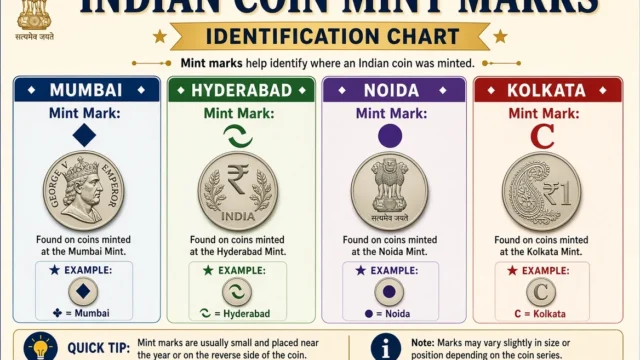
Do not polish a coin to make it photograph better. Abrasive cleaning can remove surface detail or alter collector value. A clear image under diffuse light is usually enough for preliminary identification. If the coin seems exceptional, seek a reputable numismatist or museum reference for confirmation. An online “rare old Indian coin” label without issue details should not replace this process. For mint identification, our separate guide explains the common modern Mumbai diamond, Hyderabad star, Noida dot and Kolkata no-mark clues, with qualifications for exceptions.
Old Indian coins value: why viral prices are unreliable
A coin’s face denomination is not the same thing as its collector-market price. The latter depends on issue, mint, survival, demand, condition, provenance and verified transactions. Online listings that ask enormous sums are not proof that anybody bought the coins at that price. An old one-anna coin in ordinary circulated condition may be historically interesting without being scarce. Conversely a genuinely uncommon error or documented scarce issue needs independent verification rather than a screenshot of a marketplace demand.
Fraudsters also use old-coin interest to request deposits, registration charges, courier payments or bank credentials. Never disclose OTPs or approve payment requests to strangers promising a huge purchase. Avoid sending identification documents unless a legitimate regulated process actually requires them. If you want to sell a collection, compare reliable numismatic dealers, auction records and expert opinions. This guide’s main purpose is historical identification, so it does not invent sale prices or pretend to appraise a coin without examining it.
What does a coin design change tell us about Indian history?
Coinage reflects political transitions, manufacturing technologies, public-facing design and changing material costs. The 1950 Republic Anna Series signalled a new national period while preserving familiar denominations; the 1957 Naya Paisa reform changed the arithmetic of the rupee; and the 1964 naming change removed a temporary word once decimal money became familiar. Later coins document further changes in motifs, alloys and production. A basic visual timeline helps readers place an object in that broader story rather than only asking its resale price.
For school projects or museum-style posters, arrange images chronologically and label each step with its monetary system. Do not place an Anna coin under a modern “paise” conversion without explaining the difference. When discussing princely states, colonial administrations or special commemorative issues, give them separate sections rather than forcing every object into the Republic series. A good coin chart teaches historical context and is clear about the limits of a few selected examples.
FAQs about old Indian coins
How many annas were in one Indian rupee?
Under the pre-decimal system, one rupee equalled 16 annas, 64 pice or 192 pies.
When did India introduce Naya Paisa?
The decimal coinage transition began in 1957, making one rupee equal to 100 new paisa.
When was “Naya” removed from Paisa?
From 1 June 1964 the temporary “Naya” wording was dropped.
What is the first Republic India coin series?
The 1950 Anna Series, introduced on 15 August 1950, is the RBI museum’s starting point for Republic coinage.
Are all old coins worth large amounts of money?
No. Age alone does not determine scarcity or sale price. Check actual issue and authenticated transactions.
Conclusion: read coin history before estimating value
An Anna coin, a Naya Paisa coin and a later rupee belong to different chapters in India’s monetary story. Get the denomination and year right, then use official historical catalogues to compare both sides. Old does not automatically mean expensive, and a visual chart cannot certify an investment.
Sources and useful guides
RBI: Historical Indian Coins; PIB: Decimal Coinage History; RBI Museum: Republic Coinage; Vista Hub: How to sell old coins safely.














Share Your Opinion
Comments are closed on this post.