 Vista
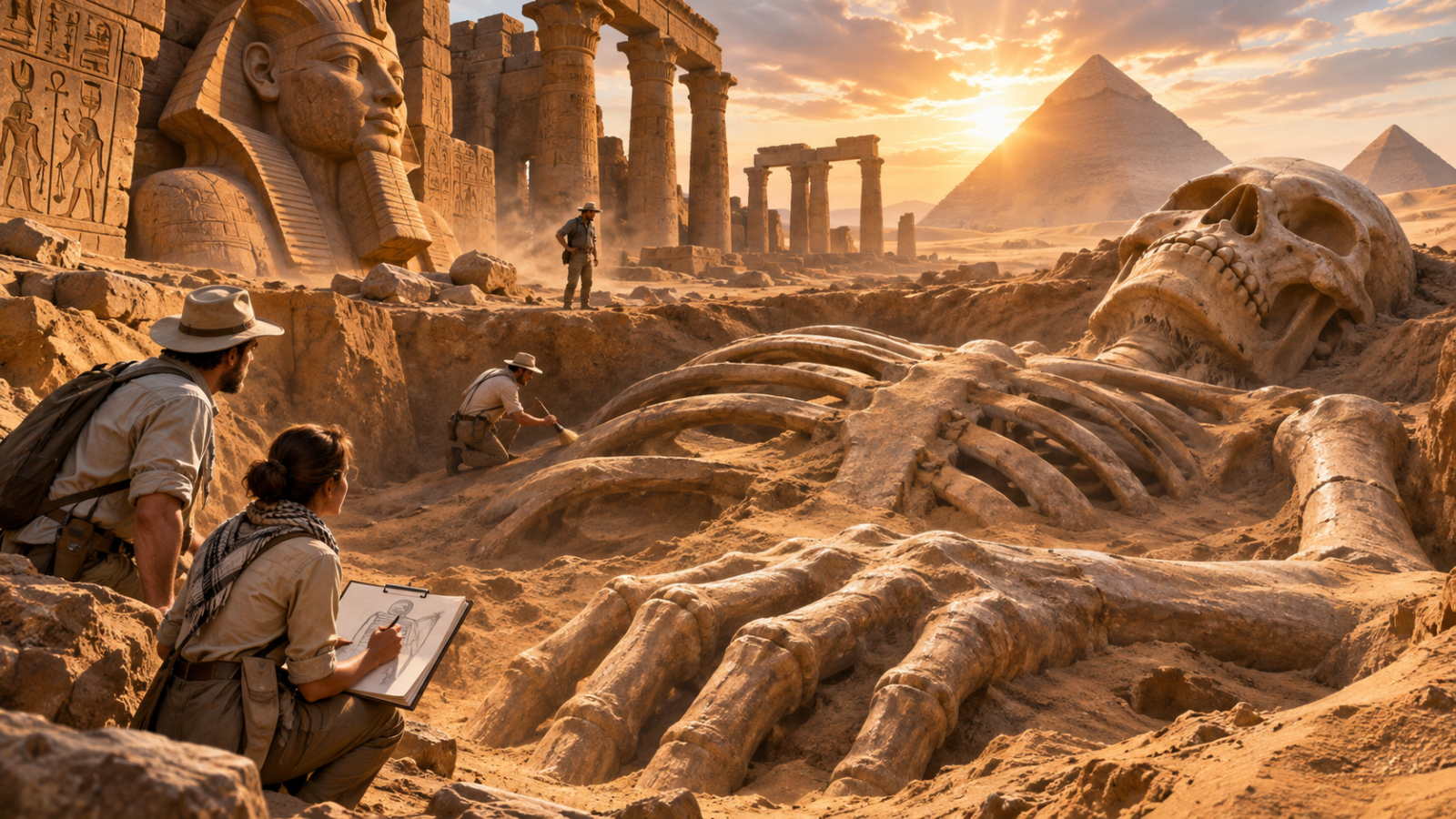
Short answer: No evidence shows that giant humans lived in ancient Egypt. Measured Egyptian mummies and skeletons fall within normal human ranges, and the famous “giant skeleton” photos online are edited images from design contests or hoaxes. The giant-like figures seen in Egyptian art are symbols of royal power, not real heights.
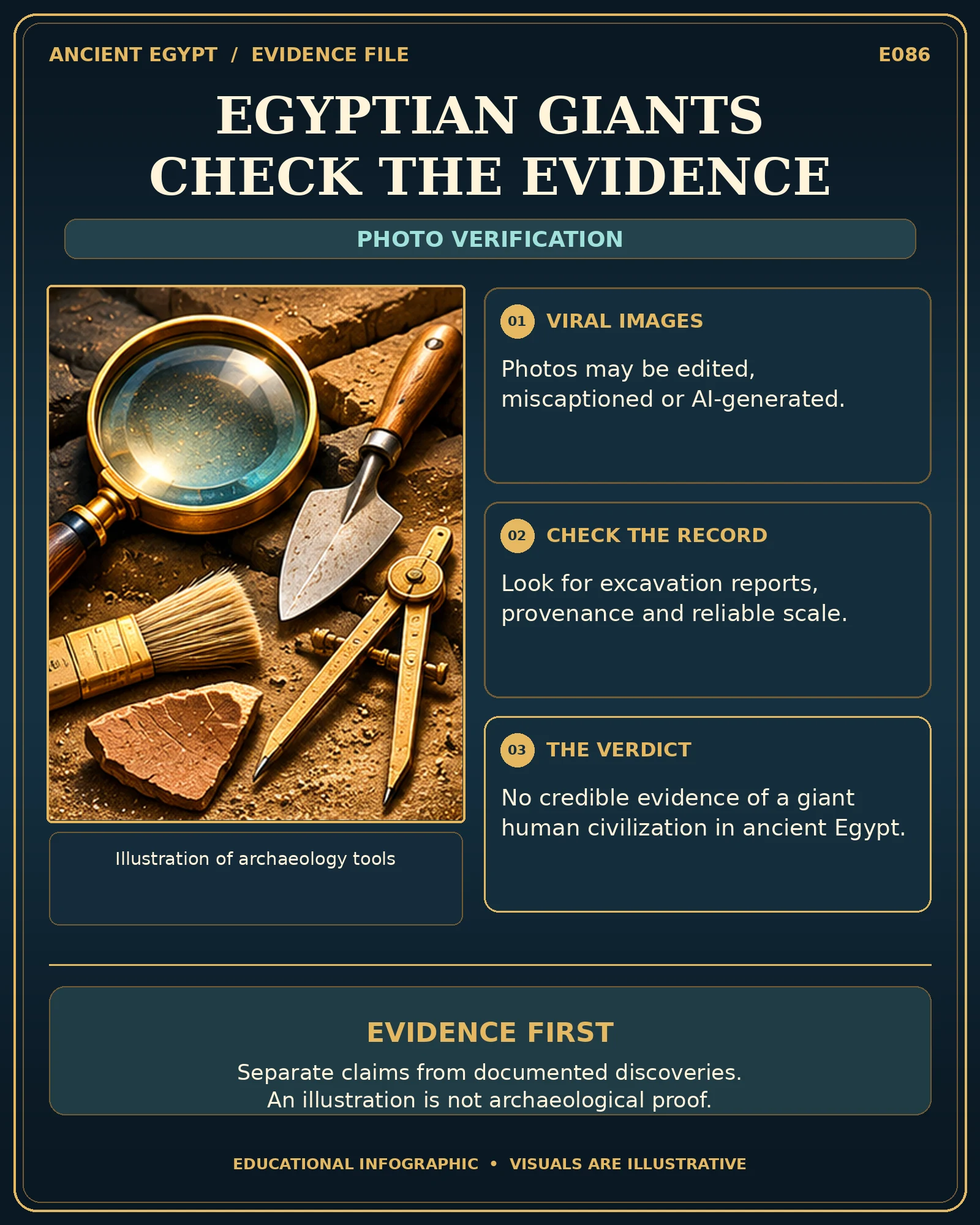
Quick Facts
| Point | Detail |
|---|---|
| Claim | Giant skeletons and giant pharaohs |
| Measured evidence | Mummies and skeletons show ordinary heights |
| Viral photos | Many are digitally edited or staged |
| Art convention | Kings drawn larger to show importance |
The viral giant skeleton photos
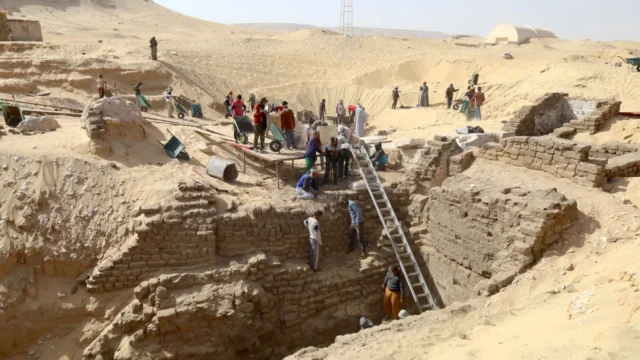
A widely shared photo shows workers beside a huge skeleton. It has been traced to a digital art contest, where entrants edited images to look realistic. Always search the origin of a “discovery” photo before trusting it, since edited images spread faster than corrections.
Were pharaohs giants?
The preserved mummy of Ramesses II suggests a man of about 1.7 metres. Studies of royal mummies show normal stature, with some reports of unusually tall individuals still within human range. Medical conditions can cause tallness, but that is far from giants of several metres.
Why do statues look huge?
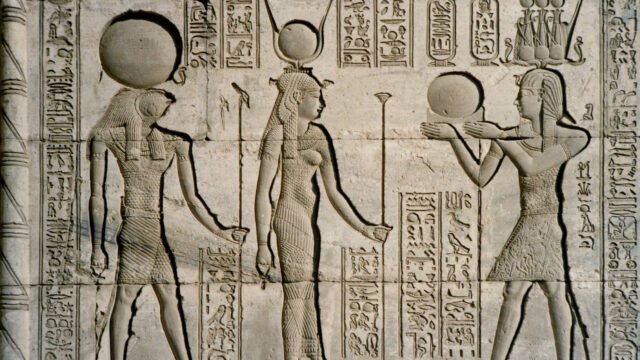
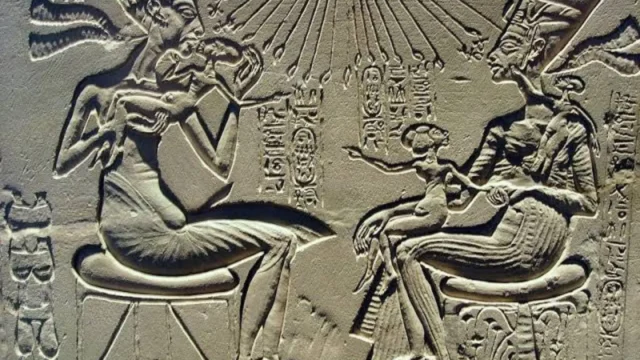
Egyptian art used size to show rank. A king might be drawn far taller than workers or enemies in the same scene, and colossal statues showed divine kingship. This was a visual rule, not a measurement of real bodies.
Story box (imagined): A child draws their father as the biggest figure in the family picture. Nobody thinks he is ten metres tall. Egyptian art worked the same way, with the king as the biggest figure in the scene.
How to check a giant photo
- Run a reverse image search to find its first appearance.
- Check whether a museum or excavation report mentions it.
- Look for lighting and edge mismatches typical of editing.
History, Mythology and Speculation
| Category | Examples |
|---|---|
| History | Royal mummies, measured skeletons, colossal statues |
| Mythology | Gods and heroes shown as larger than life |
| Speculation | Giant races, hidden giant bones |
Myth vs Fact
| Popular claim | Careful answer |
|---|---|
| Giant skeletons were found in Egypt | The famous photos are edited |
| Pharaohs were giants | Mummies show normal heights |
| Big statues show big bodies | They show status |
Frequently Asked Questions
Did giants live in Egypt?
No evidence supports it.
Are giant skeleton photos real?
The famous ones are edited images.
How tall was Ramesses II?
His mummy suggests roughly 1.7 metres.
Why were kings drawn large?
To show rank and divine status.
Can people be very tall naturally?
Yes, but within human limits of about 2 to 2.7 metres in rare cases.
Are there giant statues?
Yes, colossal statues of kings exist, but they are statues.
What about giant legends elsewhere?
Many cultures have giant stories, often from large fossils.
How do I avoid fake images?
Reverse-search and look for the original source.
Reliable Sources
- World History Encyclopedia: Egyptian Mythology
- Egypt Exploration Society: Gods of Egypt
- The Met: Divine Egypt
Last updated: 25 November 2026. Related reading: Egyptian pharaohs, Did aliens build the pyramids?
Related guides: Did Ancient Egypt Exist During the Ramayana and Mahabharata? Timeline and Claims Explained · Ancient India and Egypt: Trade, History and Archaeological Evidence












Share Your Opinion
Comments are closed on this post.