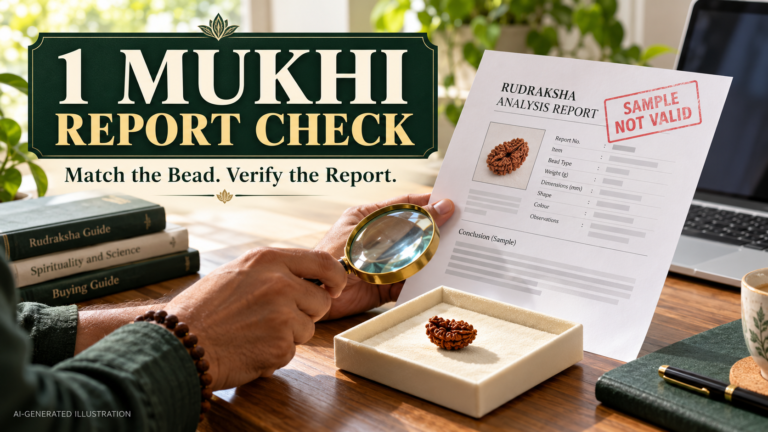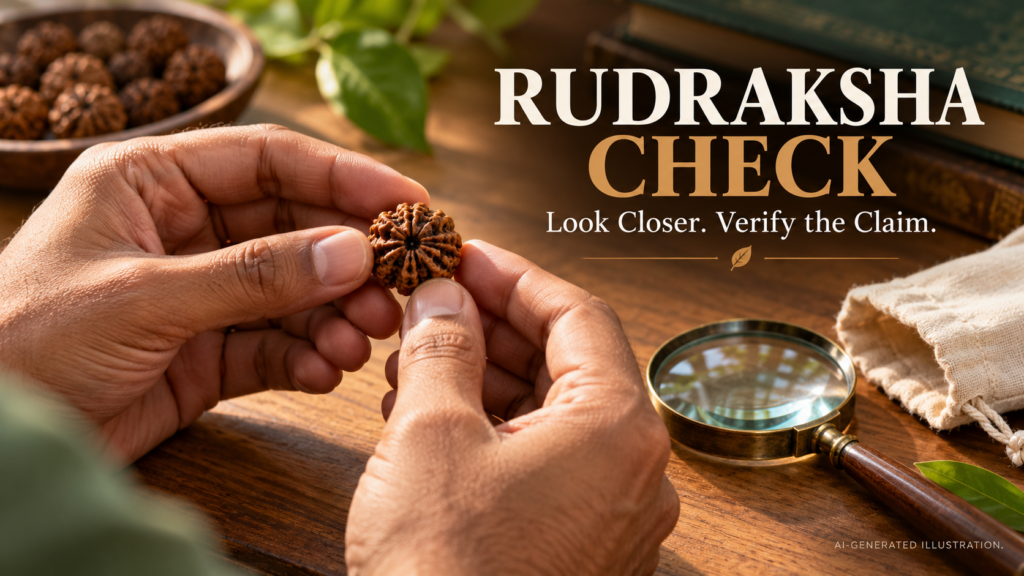
Real vs fake Rudraksha: a photo is only a starting point
Two beads in an online listing can look similar while carrying very different price and mukhi claims. For real vs fake Rudraksha checks, brown colour, weight or an attractive photograph is not enough. First identify what the seller is promising and how the evidence relates to the exact bead being offered.
This guide explains initial photo checks and useful questions about reports. It does not certify an unseen specimen. All images below are AI-generated illustrations; their appearance is not a standard against which a real bead can be authenticated.
What to examine in grooves and surface photographs
Botanical references and listings may use names such as Elaeocarpus ganitrus, and taxonomic synonyms exist. A botanical name printed on a listing does not identify the actual item or establish its mukhi count or provenance.
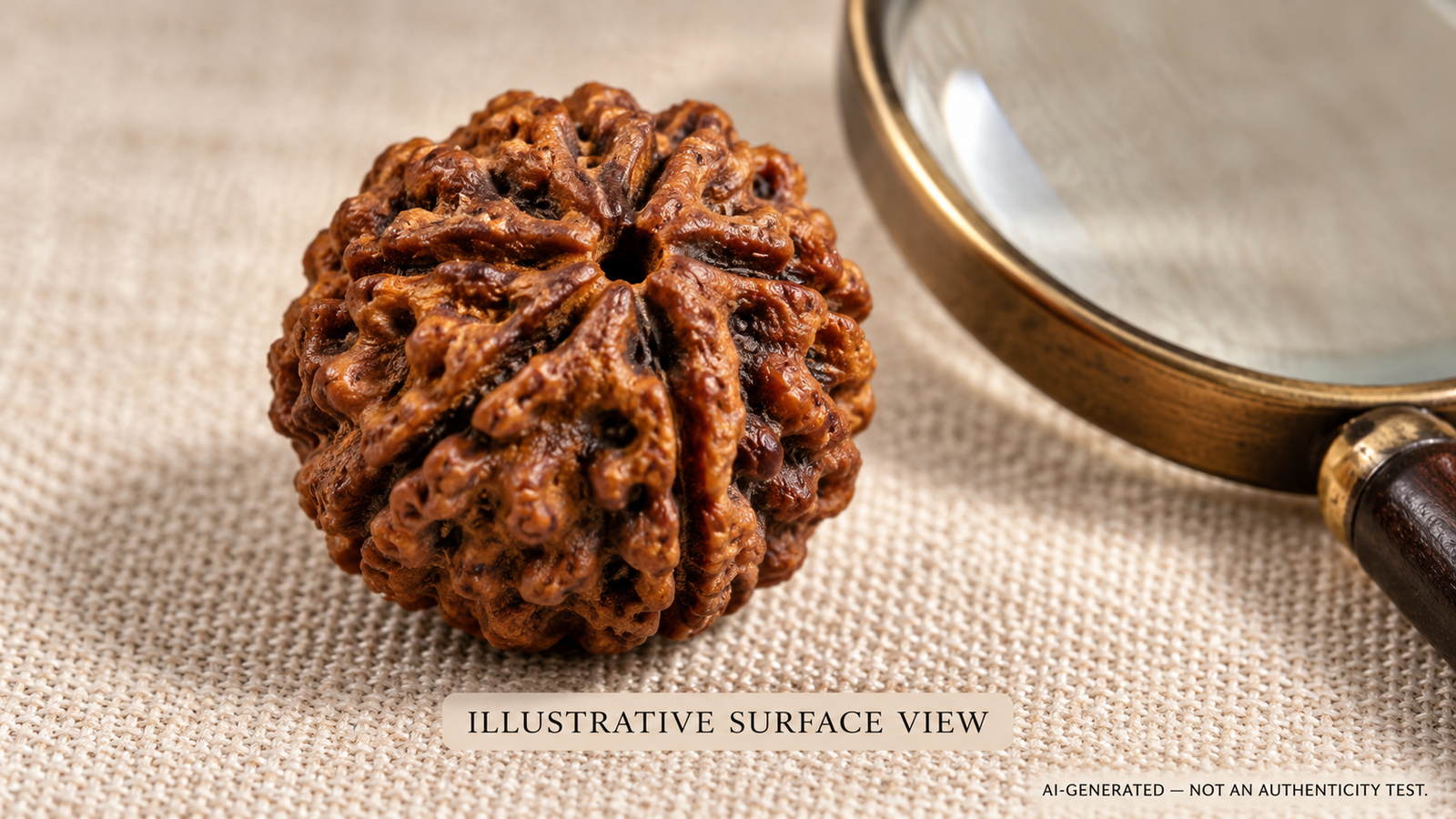
Do not count every small surface wrinkle as a separate mukhi. Examine the main grooves from different angles, including both ends. Lighting and shadows can make a feature appear more continuous or more interrupted than it is. Avoid a confident count from one side photograph.
Request close-ups of the top, bottom and full circumference under consistent light, plus a slow rotation video. Ask about apparent joins, unusual cutting or areas around the drilled hole. A crack or glossy area raises a question; it does not, by itself, settle authenticity.
The macro-style image below is illustrative. It does not establish a particular mukhi count, natural origin or internal anatomy. Matching your purchase to an AI picture is not a substitute for examining the actual specimen.
Limits of water, coin and colour tests
A bead sinking or floating is not a complete authenticity test. That behaviour concerns density and test conditions; it does not independently establish botanical identity, absence of alteration or a rare mukhi claim.
Likewise, rotation between coins or colour transfer should not be treated as a final verdict. Coating, cleaning and test conditions can raise separate questions. Record concerns and ask for an explanation instead of treating a home demonstration as laboratory identification.
Avoid destructive experiments such as cutting, boiling, scraping with a needle or applying chemicals merely to check a purchase. They can damage the item and complicate a return. Prefer non-destructive examination and an appropriate professional process.
FACT: Observing a result in a home experiment is different from having the exact bead identified through a documented assessment. A single household test is not a 100% authenticity certificate.
How to check laboratory and X-ray claims
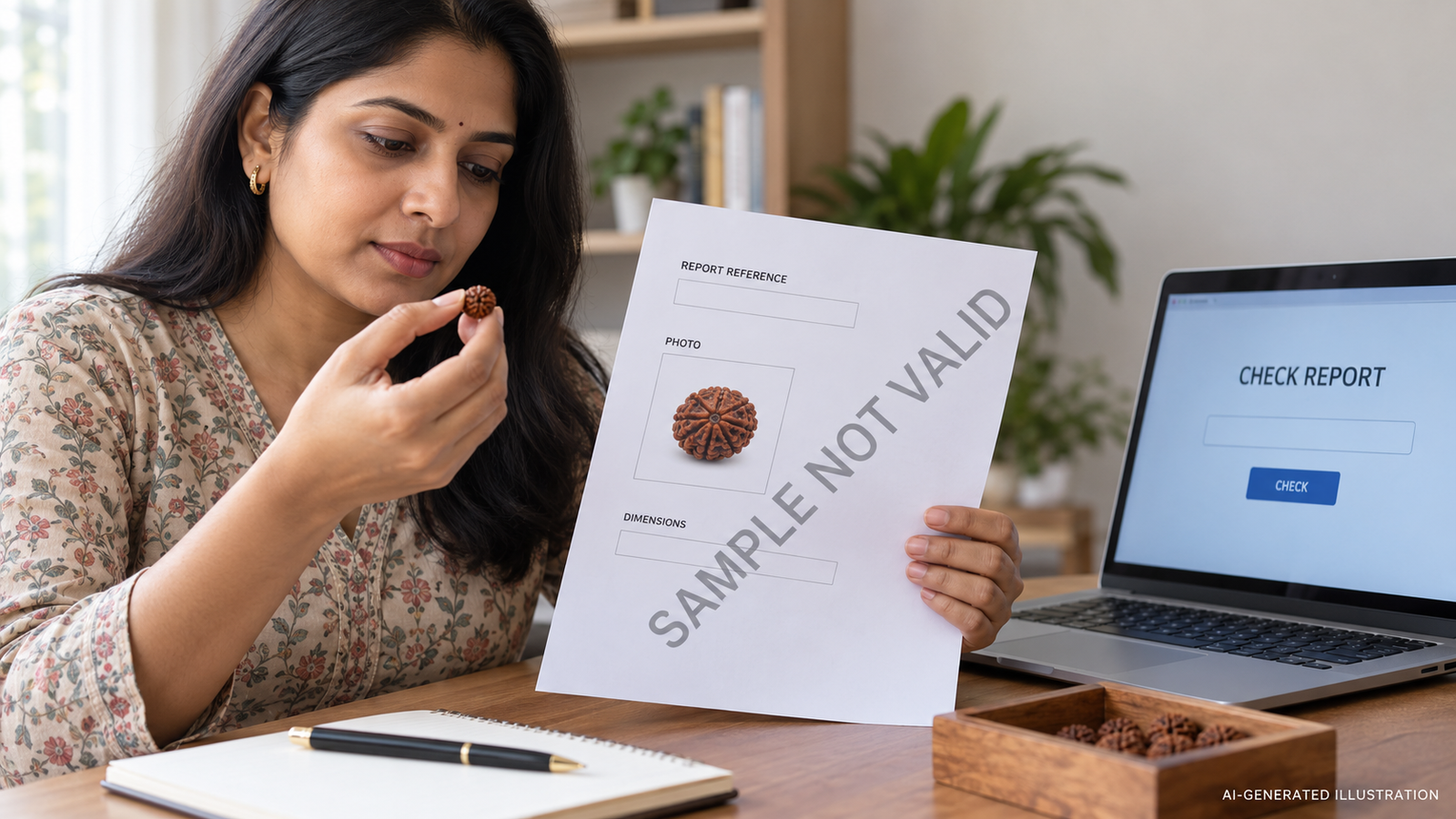
Some private testing providers issue Rudraksha identification reports. Published examples can include a photograph, reference number, measurements and details of an examination. These illustrate the issuer’s service; they are not our independent assurance of its competence or every conclusion.
Do not stop at a paper certificate or QR code. Locate the issuer independently and check the reference, date and available record. The pictured bead, dimensions and other identifying details should correspond to the item you are buying.
If X-ray or CT is claimed, ask which examination was performed, on which item, what conclusion was recorded and with what limits. Do not interpret a blurred internal image supplied by a seller as an expert anatomical finding. A test name alone does not establish every claim about faces, origin, price or spiritual effects.
For an expensive one-mukhi or another claimed rarity, obtain clear written identity and treatment findings. Understand what the report actually covers. This article does not present a genuine X-ray or a photograph of a cut bead.
What to request before buying online
Ask for pictures of the actual bead to be dispatched rather than a representative listing sample. Request dimensions, weight, quantity, the claimed mukhi count, stated provenance and disclosure of treatment or repair. Ask directly about anything unclear.
Read the invoice details, seller contact, return period and procedure for a report mismatch. Clarify who bears testing, shipping and return costs before purchase. A limited-time offer or promise of guaranteed results is not a reason to skip checking.
A simple enquiry can say: “Please provide all angles of this exact bead, its dimensions, mukhi claim, treatment information and report-verification process. Please distinguish sample photos from the item being sent.” This is a suggested purchase enquiry, not an official industry form.
Advice: separate faith from product verification
Rudraksha’s religious significance belongs to faith. Botanical identity, a seller’s geographical claim and a laboratory finding are different questions. A physical identification report does not guarantee worship outcomes, fortune or a specific personal transformation.
Buying an ordinary prayer bead and spending substantially on a claimed rare mukhi involve different decisions. Understand the evidence and terms before committing your budget. Size, colour, a country name or a high price alone is not independent verification.
Keep an unboxing video and clear arrival photographs for your records. If something does not match, seek written clarification from the seller and report issuer. Establish facts and the available resolution process before making public accusations.
Rudraksha identification questions answered
Can a photo confirm genuine Rudraksha? It can support initial questions, but understand its limits.
Does sinking prove authenticity? No. That result alone does not establish identity, mukhi count or lack of alteration.
Is every certified bead trustworthy? Check the issuer, report record and match to the actual item.
Does an X-ray establish spiritual benefits? No. Physical examination and faith claims are separate.
Can these images teach an exact mukhi count? They are illustrations, not verified specimen references.
Sources and image clarification
This is general buying and identification information, not laboratory certification or personal spiritual advice. Sources include botanical databases and published examples from a private report issuer. No seller endorsement or government recognition is claimed. All three images are AI-generated illustrations. Checked on 24 October 2026.
- Kew POWO: Elaeocarpus ganitrus nomenclature
- IISc India Flora Online: Elaeocarpus botanical reference
- Private issuer example: GJSPC identification report scope; not an endorsement
- Private issuer example: published report fields and examination entry
More articles on faith and worship · Om Namah Shivaya wallpapers (Hindi)