 Vista

The Greek mythology family tree becomes much easier to understand when we separate three broad generations: the earliest cosmic beings, the Titans, and the better-known Olympian gods. In Hesiod’s Theogony, Zeus does not simply appear as the first god or create every other deity. A sequence of older beings and family conflicts precedes his rule. This guide offers a readable chart based principally on Hesiod, then points out the cases where Homer or later writers provide different parentage. It is a family-tree explanation, not a claim that every ancient Greek believed one identical version.
How to read a Greek gods family tree correctly
A common mistake is to use arrows without explaining what they mean. Hesiod describes Chaos first and then Gaia (Earth), Tartarus and Eros, but the succession of these early beings does not establish a straightforward biological descent from Chaos to Gaia. From Gaia the genealogy becomes more recognizably familial: she gives rise to Ouranos (Sky), and together Gaia and Ouranos produce several generations. “Primordial,” “Titan” and “Olympian” are convenient labels for understanding their order, not three biological species with perfectly fixed membership. Different poems also place familiar figures in different relationships.
Read a family tree by asking three questions: who is explicitly described as a parent; whether the source is Hesiod, Homer or a later retelling; and whether the individual is the same figure as a similarly spelled name. Cronus or Kronos, the Titan father of Zeus, should not automatically be equated with Chronos, a personification of Time in other traditions. Without that distinction, readers can accidentally turn a visual family tree into a misleading claim about early Greek religion.
Generation 1: Chaos, Gaia, Ouranos and the first beings
Hesiod’s Theogony begins with Chaos, followed by Gaia, Tartarus and Eros. Gaia is the personification of Earth; Ouranos is the Sky that Gaia brings forth. Their union produces the twelve Titans, along with other powerful beings. The Cyclopes include Brontes, Steropes and Arges in Hesiod’s telling, and the Hundred-Handers include Cottus, Briareos and Gyges. These families matter because the later war against the Titans cannot be understood without the gods’ earlier struggles and the assistance some older beings give to Zeus.
The names of the first beings can feel abstract because they embody regions or conditions of the cosmos as well as persons in narratives. Gaia is not just a mortal mother with a modern family history; she is Earth and a source of divine descendants. Ouranos is Sky, and Tartarus represents a vast depth later associated with imprisonment. That is why the first part of the chart must be read as mythic cosmology rather than as a modern scientific diagram. Other cosmogonies, including Orphic accounts, have different starting points and should not be silently merged into Hesiod.
Generation 2: the Titans and the children of Gaia and Ouranos
Hesiod lists twelve Titans born to Gaia and Ouranos: Oceanus, Coeus, Crius, Hyperion, Iapetus, Cronus, Theia, Rhea, Themis, Mnemosyne, Phoebe and Tethys. Cronus is crucial because he overthrows Ouranos and later fears a similar challenge from his own descendants. But several other Titans explain the next generation’s relationships. Hyperion and Theia are linked with Helios (Sun), Selene (Moon) and Eos (Dawn); Iapetus is ancestor of figures such as Prometheus and Atlas. Oceanus and Tethys are connected with many rivers and Oceanids.
The Titans are not all simply “evil monsters” and they do not all participate in one battle on one side. Some are cosmic ancestors, and others have specific mythic roles. Confusing Titans with the Giants of later stories also creates problems. Titanomachy names the struggle between Zeus’s alliance and the opposing Titans, whereas Gigantomachy refers to a different conflict involving Giants. A useful family tree keeps these generations and events distinct.
Generation 3: Cronus and Rhea have six famous children
Cronus and Rhea are the parents of six major deities in the familiar Hesiodic genealogy: Hestia, Demeter, Hera, Hades, Poseidon and Zeus. Cronus swallows several of them because he fears a prophecy that a child will overthrow him. Rhea saves Zeus by hiding the baby and presenting Cronus with a stone instead. When Zeus is grown, Cronus is forced to release the swallowed children. Together with allies, this new generation challenges the earlier order.
Hades, Poseidon and Zeus are therefore brothers; Hera, Demeter and Hestia are their sisters. Following the succession struggle, a famous Homeric passage describes the three brothers’ allotment of major domains: Zeus holds the sky, Poseidon the sea and Hades the underworld. They should not be simplified into three identical rulers of three equal moral categories. The earth and Olympus are presented differently from those allotted realms. Hades belongs to the family, but residence in the underworld helps explain why he is not ordinarily counted among the twelve gods dwelling on Olympus.
Generation 4: Zeus’s children and the younger Olympians
Zeus has children with several divine partners and mortal women in different myths. Their names help explain the many heroes and Olympians connected to him. Athena is associated with Metis; in Hesiod’s account Zeus swallows Metis and Athena subsequently emerges from his head. Apollo and Artemis are children of Zeus and Leto. Hermes is born to Zeus and Maia. Dionysus is associated with Zeus and the mortal Semele. Persephone is daughter of Zeus and Demeter in a prominent tradition, a relationship central to her story with Hades.
Zeus and Hera are associated with children including Ares, Hebe and Eileithyia. Hephaestus requires care: Hesiod gives a version in which Hera gives birth to him without Zeus, whereas parentage can differ elsewhere. Among hero genealogies, Heracles is born to Zeus and the mortal Alcmene, and Perseus to Zeus and Danaë. These heroes are not simply counted among the original twelve Olympians because one parent is mortal and their narrative status differs. Family trees can record their relationship while keeping the major generations clear.
Greek mythology family tree: a source-labelled reference chart
The following is a compact, text-accessible genealogy. Its purpose is to state the most useful relationships without inventing missing parents. It is based mainly on Theogony; additional variant relationships are explained separately below.
| Generation / family | Parentage or origin | Important descendants and relationships |
|---|---|---|
| Primordial beings | Chaos; Gaia; Tartarus; Eros appear early in Hesiod | Not all are described as children of Chaos |
| Gaia → Ouranos | Ouranos brought forth by Gaia | Gaia and Ouranos later produce Titans, Cyclopes and Hundred-Handers |
| Titans | Gaia + Ouranos | Oceanus, Coeus, Crius, Hyperion, Iapetus, Cronus, Theia, Rhea, Themis, Mnemosyne, Phoebe, Tethys |
| Chronology of rulers | Ouranos → Cronus → Zeus | Arrows show succession of power, not direct fatherhood in all cases |
| Six siblings | Cronus + Rhea | Hestia, Demeter, Hera, Hades, Poseidon, Zeus |
| Athena | Zeus + Metis | Athena emerges from Zeus’s head in Hesiod |
| Apollo and Artemis | Zeus + Leto | Twins; prophecy/music and hunting/wilderness respectively |
| Hermes | Zeus + Maia | Messenger, traveler and guide |
| Dionysus | Zeus + Semele | God associated with wine and theatre |
| Ares, Hebe, Eileithyia | Zeus + Hera | Divine children in familiar genealogy |
| Persephone | Zeus + Demeter | Queen of the underworld in the Hades narrative |
| Heracles and Perseus | Zeus + Alcmene; Zeus + Danaë | Heroes with mortal mothers |
The chart intentionally distinguishes a succession of rulers from a parent-child relationship. Ouranos is father of Cronus, and Cronus father of Zeus in this genealogy, but a broad cosmic progression such as Chaos → Gaia → Titans should never be presented as though every step is direct parentage. That is the most important detail for a genuinely accurate family-tree page.
Where do Aphrodite, Hestia and Hades fit?
Aphrodite has one of the clearest competing origin stories. In Hesiod she arises from sea foam connected with the severed body of Ouranos, whereas in Homer’s Iliad she appears as a daughter of Zeus and Dione. A chart based on Hesiod should give the first origin as its main entry and label the second as a variant, not quietly select one without explanation. Hestia is a child of Cronus and Rhea and an important goddess of the hearth, although she has fewer dramatic stories than Zeus or Athena. Some lists of twelve include her where others include Dionysus.
Hades is also a sibling of Zeus and rules the dead, not a villain from another mythology. His partner Persephone is both a younger divine figure and, in an important tradition, a daughter of Zeus and Demeter. This relationship can surprise readers when they expect modern ideas of family structure to map neatly onto ancient divine narratives. The role of myth is to describe a traditional symbolic world, not to provide advice about modern family relationships or historical evidence for those unions.
Other notable branches: Helios, Prometheus and the Fates
Other genealogical branches matter even though they are not the twelve Olympians. Helios, associated with the Sun, and Selene, associated with the Moon, connect through the Titans Hyperion and Theia in Hesiod. Prometheus belongs to the Titan-related family of Iapetus and is important in myths about fire and humanity; Atlas is another figure in this branch. Later Greek traditions describe the Fates or Moirai with varying parentage, sometimes as daughters of Night and in another genealogy linked with Zeus and Themis. A single immutable chart would hide these differences.
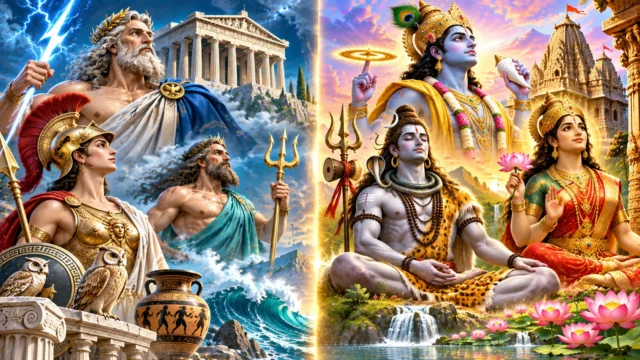
We can also compare Greek and Indian mythologies carefully through family and succession themes, but the existence of divine genealogies in both does not establish that the deities are historically the same. Our existing Greek vs Hindu mythology article explores thematic links with the necessary qualifications. For Greek family relationships, it is better to begin with Hesiod before drawing distant comparisons.
Family tree mistakes readers should avoid
Do not assume every character called a god lived on Mount Olympus, every great opponent of Zeus was a monster, or all children of Zeus shared the same mother. Do not treat the Titan Cronus as identical to every later image of Chronos or Father Time. Do not copy a polished graphic that makes Chaos the proven biological father of Gaia or gives Aphrodite only one uncontested genealogy. And do not infer the entire ancient religion from a film. A family tree is reliable only to the extent that the relationships have been sourced and variants labelled.
Greek gods family tree FAQs
Who are Zeus’s parents?
In Hesiod’s main genealogy, Zeus is the child of the Titans Cronus and Rhea.
Are Zeus, Poseidon and Hades brothers?
Yes. They are three of the six famous children of Cronus and Rhea in the standard succession myth.
Who is Athena’s mother?
Metis is linked with Athena’s parentage in Hesiod. Athena’s celebrated birth from Zeus’s head follows Zeus swallowing Metis.
Is Aphrodite a daughter of Zeus?
In one prominent Homeric tradition yes, through Dione; Hesiod gives a different origin from sea foam. State the source when presenting her family line.
Is the Greek mythology family tree the same in every book?
No. Homer, Hesiod, local traditions and later mythographers preserve differences. A responsible diagram identifies its primary text.
References and conclusion
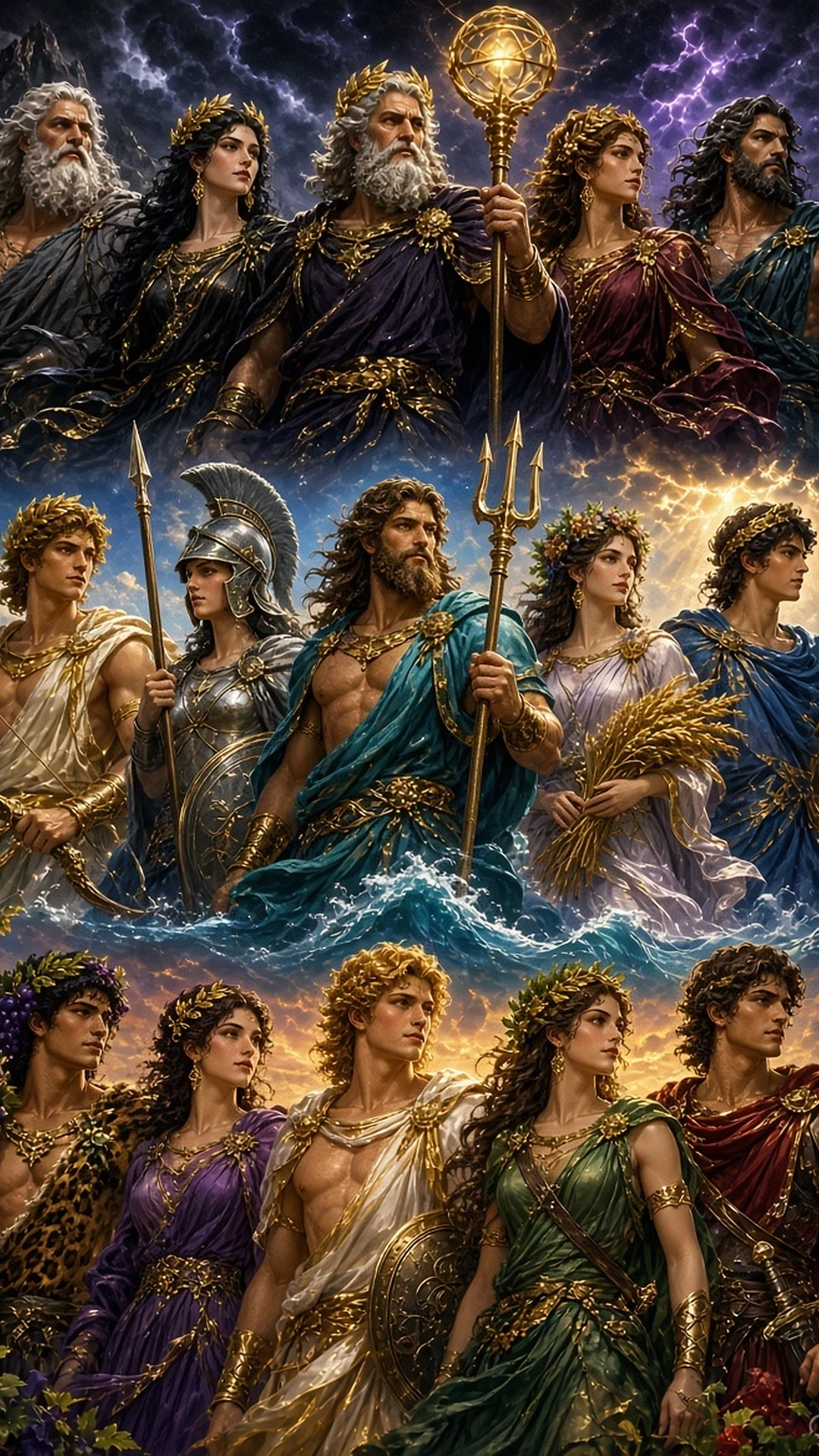
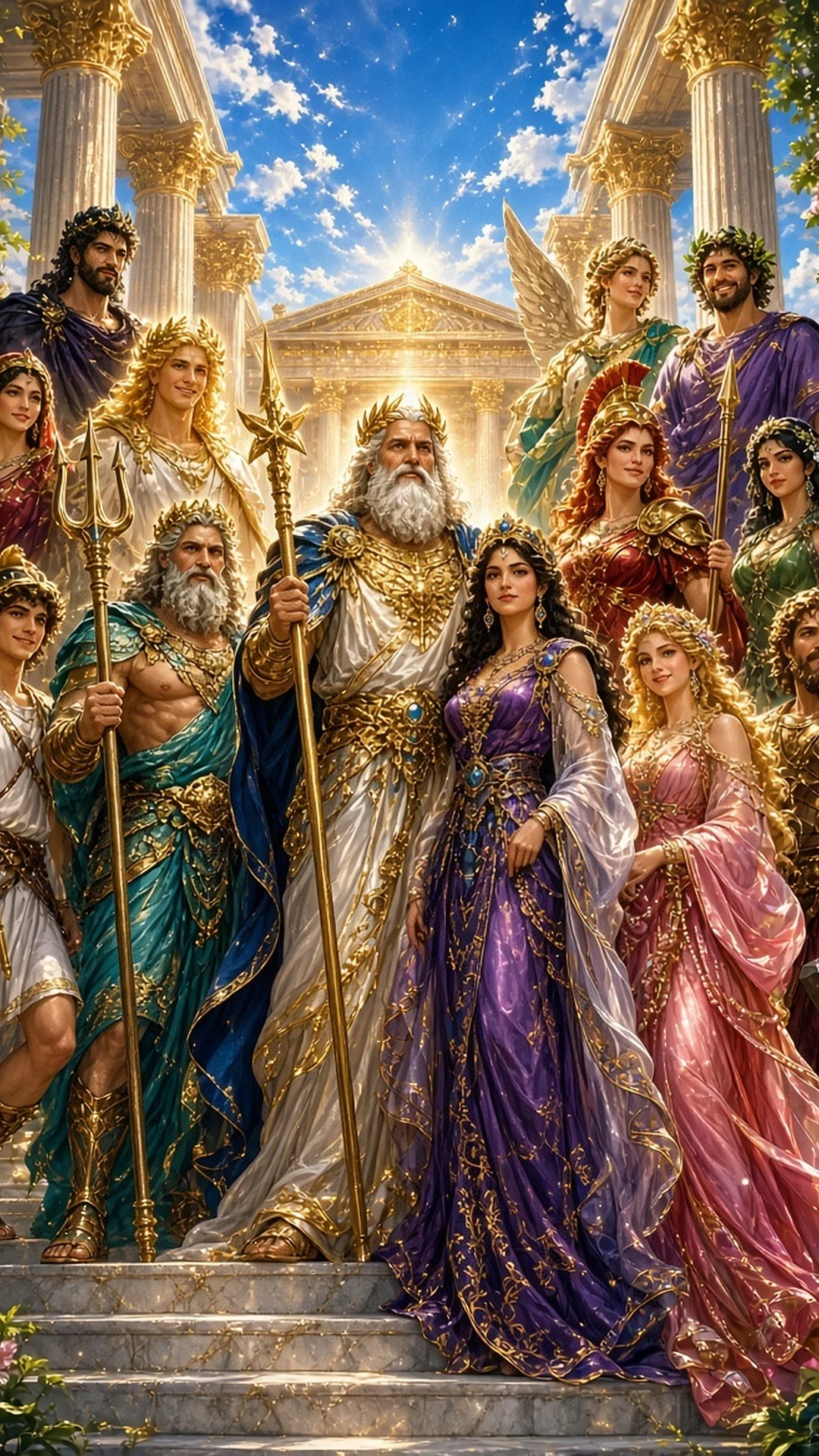
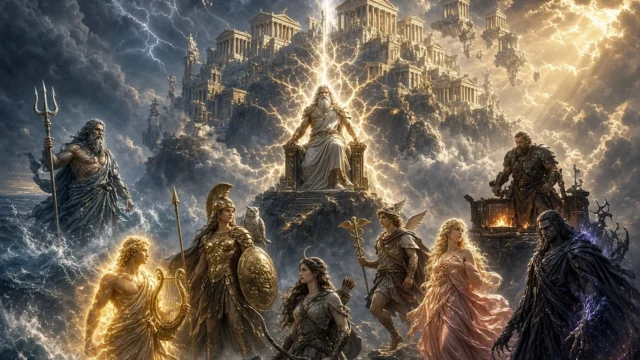
Use Hesiod’s Theogony for the foundational genealogy, Theoi’s Olympian family-tree reference to compare relationships, and Perseus Digital Library for ancient literary versions. Conclusion: the simplest trustworthy family tree separates first beings, Titans and Olympians, includes key relationships and labels disputed origins. Updated 14 November 2026; posters are creative illustrations, not ancient documentary charts.





Share Your Opinion
Comments are closed on this post.