 Vista

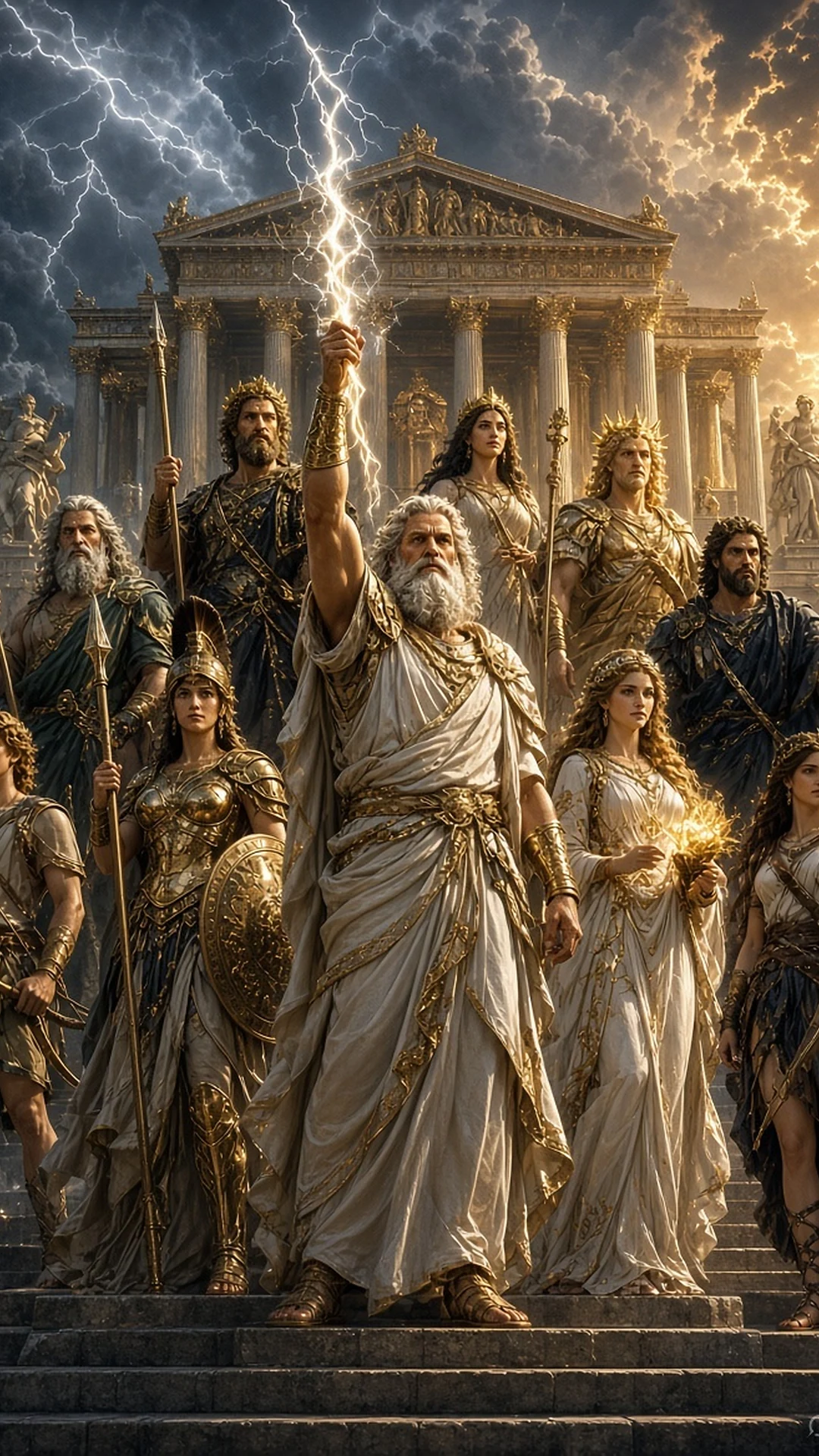
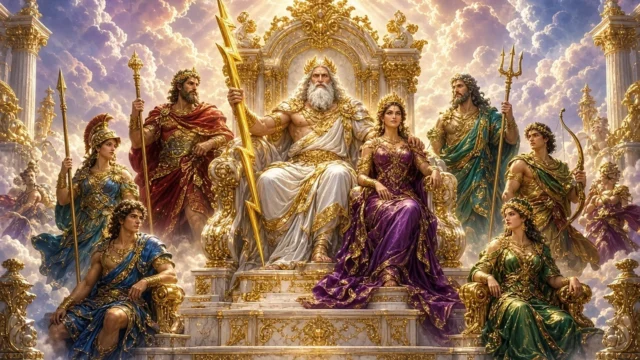
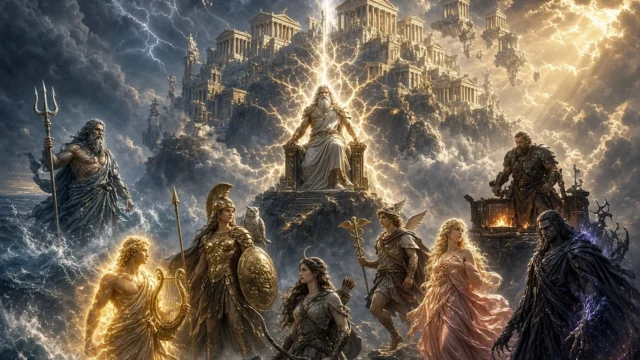
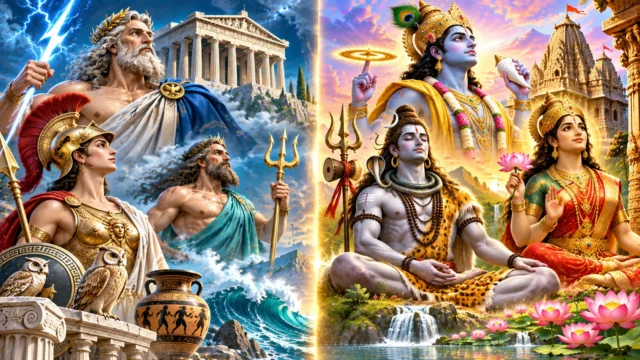
Greek gods are the divine figures of ancient Greek traditions, known through myths, religious practice, literature and art. The best-known group is called the Olympians, associated with Mount Olympus and the rule of Zeus. Their familiar names include Hera, Poseidon, Athena, Apollo, Artemis, Ares, Aphrodite, Hermes, Hephaestus, Demeter and Dionysus. But there is an important qualification: the list of “twelve Olympians” was not identical in every ancient period or local tradition, and Hestia is often included where Dionysus appears in another list. The word “god” also includes many figures beyond this celebrated group, from the earlier Titans to the underworld ruler Hades.
Who are the twelve Olympian gods and goddesses?
The Olympians are a convenient way to begin learning Greek mythology, but they should not be treated like twelve characters with fixed superhero statistics. Each deity has a complex set of epithets, symbols, duties and stories. Zeus has authority over the Olympian order, yet his brothers rule major domains. Athena and Ares both relate to warfare but are not interchangeable, while Apollo and Artemis are twins with different emphases. Ancient cities also honored distinctive local forms of these deities. Here is a practical guide based on commonly encountered names and classical literary and artistic traditions.
1. Zeus — sky, thunder and kingship
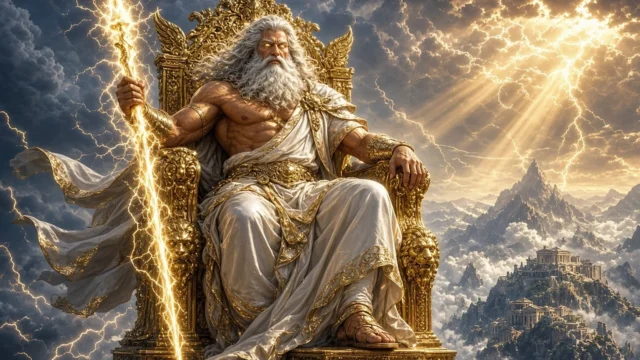
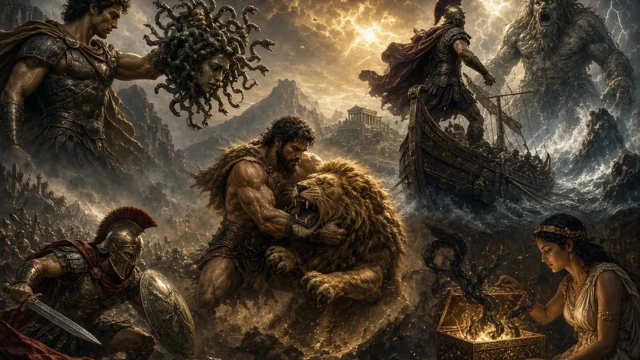
Zeus, son of Cronus and Rhea, becomes king after the divine succession struggles described in Hesiod’s Theogony. His most recognizable symbol is the thunderbolt; the eagle and sceptre also express kingship. His decisions affect both gods and mortals, but literary myths also describe quarrels and morally complicated behavior. Zeus’s Roman counterpart is Jupiter. He is central to the family history of Olympus and to many stories involving heroes, including Heracles and Perseus.
2. Hera — marriage and queen of Olympus
Hera is both Zeus’s sister and wife in the mythological genealogy. She is honored in relation to marriage, women and royal authority. Popular retellings sometimes reduce her to jealousy because myths describe conflict over Zeus’s relationships and children, particularly Heracles. That misses her broader religious significance and her importance in major sanctuaries. Traditional symbols include the sceptre and, especially in later art, the peacock. The Roman name commonly paired with Hera is Juno.
3. Poseidon — the sea, earthquakes and horses
Poseidon is a brother of Zeus and Hades. Homer describes the divine brothers’ division of domains, with Poseidon receiving the sea. His trident is the clearest visual sign of his power; horses and earthquakes are also closely associated with him. He clashes with Athena in a story about patronage of Athens and becomes an important antagonist of Odysseus after the hero blinds the Cyclops Polyphemus. Neptune is the corresponding Roman deity, though Greek and Roman religious roles were not perfectly identical.
4. Demeter — grain and agricultural fertility
Demeter, sister of Zeus in the familiar genealogy, is tied to cultivation, grain and the productivity of the earth. The Homeric Hymn to Demeter connects her grief at the disappearance of her daughter Persephone with a crisis in agricultural growth and a negotiated return. Grain, sheaves and torches can identify her in art. Roman tradition associates her with Ceres. Demeter is a reminder that Greek mythology is not only about war, but also about food, seasons and family bonds.
5. Athena — wisdom, crafts and strategic warfare
Athena’s best-known origin story describes her emerging armed from Zeus’s head after Zeus swallowed Metis. She protects cities, crafts and intelligent planning, especially in military decisions. An owl, an olive tree and the aegis are among her symbols. In mythology she supports figures such as Odysseus and Perseus; she is particularly linked with the city of Athens. Her Roman counterpart is Minerva. Unlike Ares, she often represents strategy, restraint and disciplined skill rather than raw battle frenzy.
6. Apollo — music, prophecy, healing and archery
Apollo is a child of Zeus and Leto and the twin brother of Artemis. His lyre connects him with music, poetry and harmonious order, while the bow belongs to his role as an archer. The sanctuary and oracle of Delphi are especially important to his worship. He is linked with healing as well as divine punishment in some narratives. Later traditions often connect Apollo with sunlight, but the earlier Greek solar deity Helios remains a distinct figure in many sources. Roman tradition retains Apollo’s name.
7. Artemis — hunting and the wilderness
Artemis, Apollo’s twin, is often pictured with a bow, quiver and deer. She belongs to the world of forests, animals, hunting and the protection of the young; some cult traditions also involve childbirth. Her later association with the moon should not erase the separate figure of Selene in Greek myth. Several stories show her protecting boundaries and reacting strongly when a mortal violates them, though details vary by author. Her Roman counterpart is Diana. She is not simply the female version of Apollo.
8. Ares — the destructive force of battle
Ares is a son of Zeus and Hera, known primarily for war and violent combat. In the Iliad and other literature, his behavior often contrasts with Athena’s military judgment. Helmet, spear and shield are common visual attributes; he also appears in stories involving Aphrodite. His Roman counterpart is Mars, but Roman culture gave Mars additional protective and civic importance. Treating Ares and Mars as identical in every respect makes the comparison too shallow.
9. Aphrodite — love, beauty and desire
Aphrodite influences longing, relationships and beauty. In Hesiod’s account she rises from sea foam, whereas another major tradition describes her as the daughter of Zeus and Dione. This is a useful example of how Greek myths can preserve different origins for the same goddess. Doves, myrtle and other motifs appear with her in art. Aphrodite is deeply involved in stories connected with Paris and the Trojan War. The Romans associated her with Venus; the names are useful equivalents but not proof of identical cult histories.
10. Hermes — divine messenger and guide
Hermes is a son of Zeus and Maia, celebrated in the Homeric Hymn to Hermes for his extraordinary cleverness, including the story of Apollo’s cattle. Beyond delivering messages, he is associated with travelers, trade, boundaries, trickery and guiding souls. His caduceus, winged footwear and traveling hat are frequent identifiers in art. Hermes helps heroes including Perseus and Odysseus in several mythological traditions. Mercury is his common Roman equivalent.
11. Hephaestus — craftsmanship and metalworking
Hephaestus is the divine craftsman, associated with the forge, metalworking and ingenious manufactured objects. Stories about his parentage and his physical disability differ: in some accounts Hera gives birth to him without Zeus, while other narratives have different details. The hammer, tongs and anvil help identify him. His technical abilities produce wondrous weapons and objects for gods and heroes. The Roman deity Vulcan is commonly paired with Hephaestus, although the character of their worship is not exactly the same.
12. Dionysus — wine, theatre and ecstatic celebration
Dionysus is associated with wine, vines, transformation, theatre and religious ecstasy. Stories of his birth and adventures include dramatic encounters with people who reject his divine presence. A vine, drinking vessel, ivy and thyrsus staff appear in his iconography. Some conventional lists place Dionysus among the twelve Olympians, while others feature Hestia instead. His Roman equivalents include Bacchus and Liber, depending on context. His importance to Greek cultural life shows why the Olympian picture cannot be reduced to battles and royal feuds.
Hestia, Hades and other important deities outside a fixed list
Hestia is the goddess of the household hearth and the shared fire of a community. Her relative absence from dramatic adventure stories does not imply that she was unimportant in religious practice. She appears in versions of the twelve where Dionysus is absent. Hades, also a child of Cronus and Rhea, rules the realm of the dead after the division among the divine brothers. He is part of the same family but generally not one of the twelve resident Olympians. His realm is not equivalent to the Christian Hell, and he is not a devil figure. Other crucial gods include Persephone, Eros, Helios, Selene and the primordial or Titan figures who precede Olympian rule.
Greek gods: symbols and Roman names at a glance
| Greek god | Major association | Well-known symbol | Roman name |
|---|---|---|---|
| Zeus | Sky, kingship | Thunderbolt, eagle | Jupiter |
| Hera | Marriage, queenship | Sceptre, peacock | Juno |
| Poseidon | Sea, earthquakes | Trident, horse | Neptune |
| Demeter | Grain, agriculture | Grain, torch | Ceres |
| Athena | Wisdom, strategy | Owl, aegis | Minerva |
| Apollo | Music, prophecy | Lyre, bow | Apollo |
| Artemis | Hunt, wilderness | Bow, deer | Diana |
| Ares | War | Helmet, spear | Mars |
| Aphrodite | Love, beauty | Dove, myrtle | Venus |
| Hermes | Travel, messages | Caduceus | Mercury |
| Hephaestus | Craft, forge | Hammer, tongs | Vulcan |
| Dionysus | Wine, theatre | Vine, thyrsus | Bacchus |
This reference table summarizes common associations; it is not a complete list of divine titles or local practices. Ancient Greek religion had a large number of gods, goddesses, nymphs, river deities and heroes whose importance varied from place to place. The differences matter whenever readers encounter a conflicting name or symbol in a museum, ancient text or modern retelling.
How do the Greek gods relate to one another?
Many leading Olympians belong to a family descended from earlier generations. In Hesiod’s Theogony, Gaia and Ouranos are ancestors of the Titans, including Cronus and Rhea. Their children include Zeus, Hera, Poseidon, Demeter, Hestia and Hades. Several major Olympians—including Athena, Apollo, Artemis, Hermes and Dionysus—belong to the next generation of Zeus’s children. But no single chart captures every literary variant. Aphrodite is a particularly clear case: Hesiod’s foam birth differs from a Zeus-and-Dione genealogy mentioned elsewhere.
For readers interested in Hindu traditions, superficial equivalences can be misleading. Poseidon and Varuna invite a limited comparison around water, while Zeus and Indra share thunder-related themes, but these are not one-to-one identities. Read our existing Greek vs Hindu mythology comparison for the scope and limitations of those parallels.
FAQ: Greek gods and goddesses
How many Greek gods were there?
There were far more than twelve. The celebrated twelve Olympians were only a selection among many gods, lesser deities, local spirits and divine personifications.
Who is the strongest Greek god?
Zeus is usually portrayed as the ruler with supreme Olympian authority, but an all-purpose numerical power ranking is not provided by ancient sources.
Why does the list of twelve sometimes change?
Different traditions include Dionysus or Hestia and do not always treat the same figures as members of the twelve. Hades is a major god but rules below the earth.
Is Apollo the same as Helios?
Not in all sources. Apollo gains solar associations over time, while Helios remains a distinct personification of the sun in important Greek texts.
What is Athena’s main symbol?
Her owl and aegis are famous, together with the olive tree and military equipment. The precise depiction depends on the context and period.
Primary texts and reference sources
For family relationships use Hesiod, Theogony; for gods acting in war read Homer’s Iliad and Odyssey in the Perseus collection; for a visual reference see the National Gallery of Art mythology teaching resource. Updated 14 November 2026. The illustrations are interpretive and do not document an actual ancient event.




Share Your Opinion
Comments are closed on this post.