 Vista
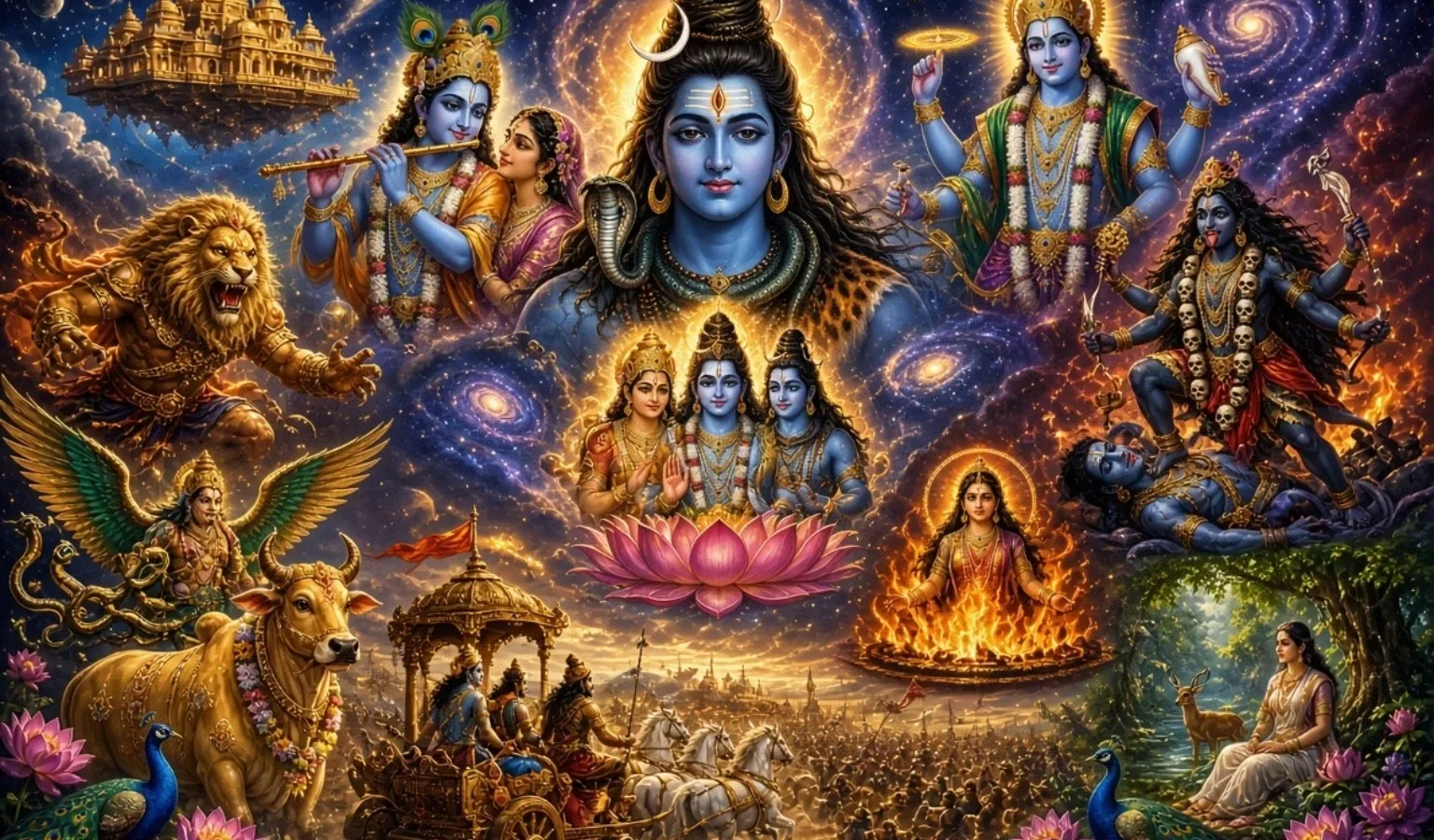
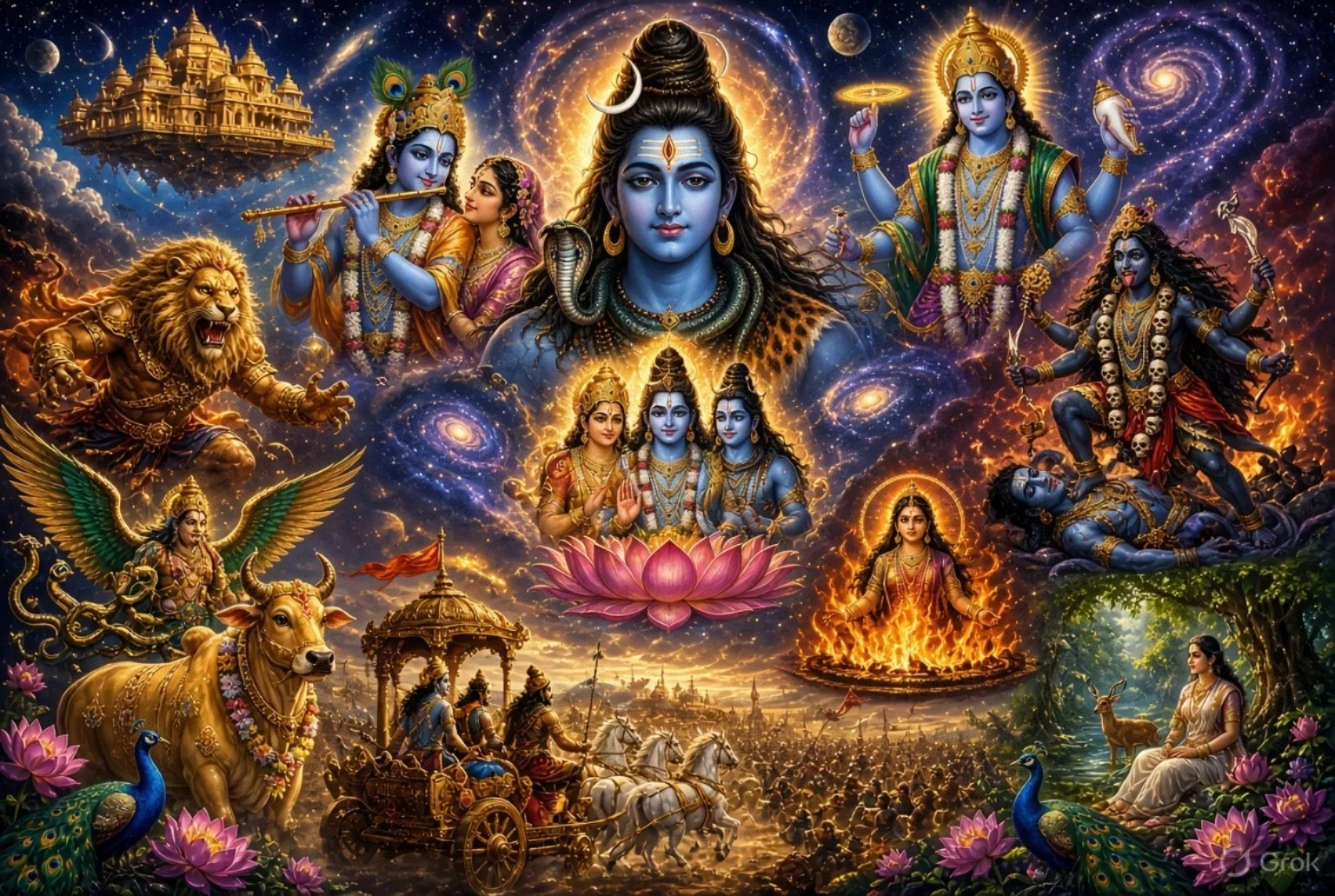
Travel from the Four Yugas and the cosmic forms of Shiva and Vishnu to the Ramayana, the moral dilemmas of the Mahabharata, mythical creatures and the Sudarshana Chakra. This image-led guide combines distinctive artwork with short, carefully framed explanations and links to detailed stories already published on Vista Hub. The images are modern interpretations of traditional narratives—not photographs or scientific evidence of ancient events.
Cosmos, Time and the Four Yugas
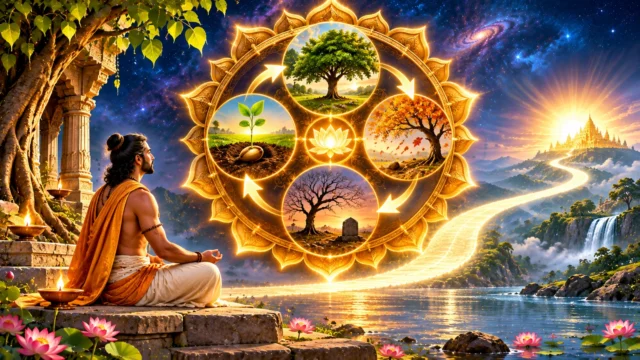
Time is not always a straight line in Hindu storytelling. The recurring sequence of Satya (Krita), Treta, Dvapara and Kali Yuga expresses changing moral and spiritual conditions as well as the idea of a cyclical cosmos. A useful picture of the four ages should tell visitors what the names mean before presenting a chart of durations. Interpretations and calculations can differ across texts and traditions, so any exact timeline needs its source and context.
The cosmic illustrations in this chapter are invitations into the stories, not astronomical maps or verified diagrams of ancient geography. Galaxies, luminous realms and celestial figures are artistic devices. Our journey moves from that imaginative setting toward the deities who represent creation, preservation and transformation. Rather than making every myth fit a single historical date, we will follow the connections between stories and clearly distinguish devotional belief, literary narrative and artistic interpretation.
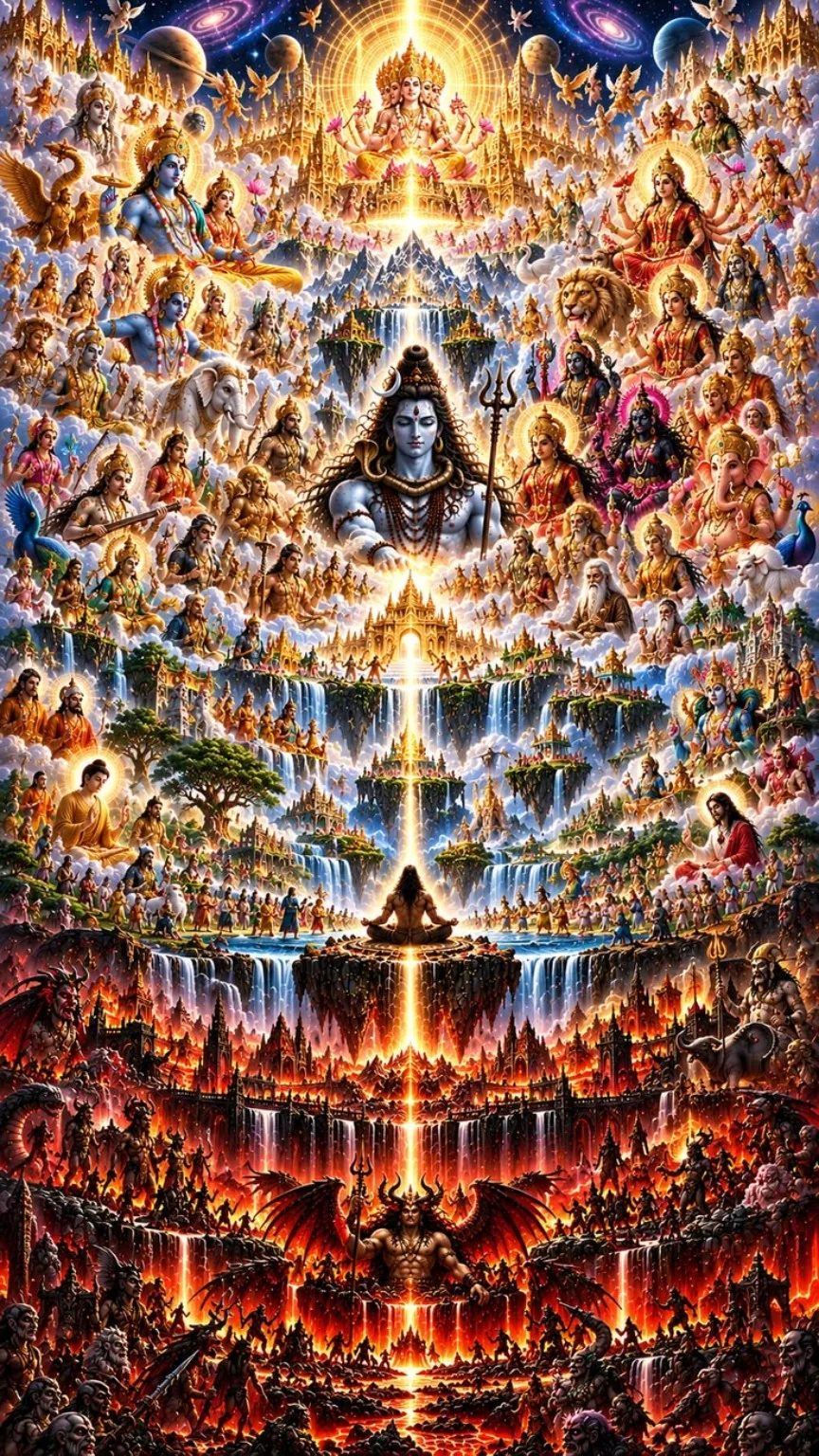
Hindu Mythology Cosmic Universe Artwork — An imagined journey through many celestial realms and mythic worlds.
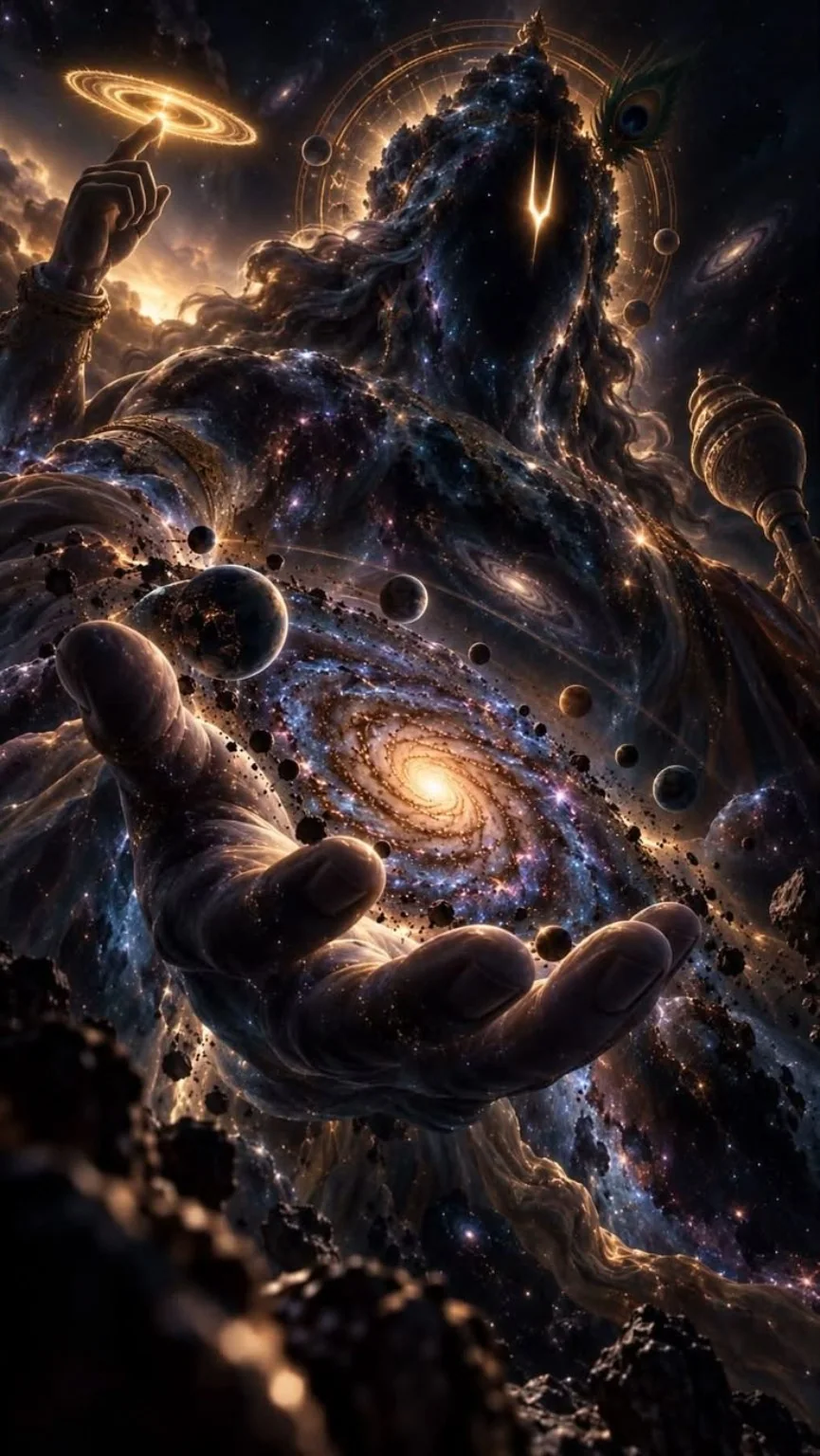
Hindu Cosmic Deity Holding Galaxy Art — A symbolic deity holds a tiny galaxy, visualizing the idea of cosmic creation.
Brahma, Vishnu and Shiva: Three Forms, Many Traditions
The familiar Trimurti illustration associates Brahma with creation, Vishnu with preservation, and Shiva with dissolution or transformation. This is a useful introduction, not a complete or universally accepted definition of every Hindu tradition. Vaishnava, Shaiva, Shakta and other communities explain divine supremacy and the relationships between deities in different ways. A respectful visual guide makes room for those differences rather than forcing one hierarchy onto every story.
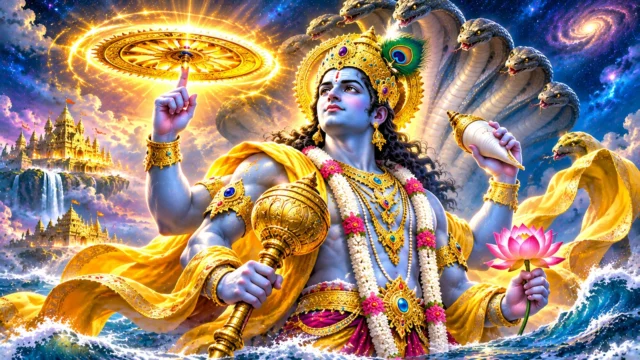
Vishnu’s four commonly depicted emblems—conch, discus, mace and lotus—form a bridge to later chapters. They are often understood as symbols of divine sound, protection and cosmic order, strength, and purity. The meanings vary by tradition and commentary. Our illustrations show the triad of Brahma, Vishnu and Shiva, a wider devotional group, and the four attributes of Vishnu. They are interpretations of religious iconography; none should be presented as a photograph of a deity or as a definitive chart of all schools of Hindu thought.
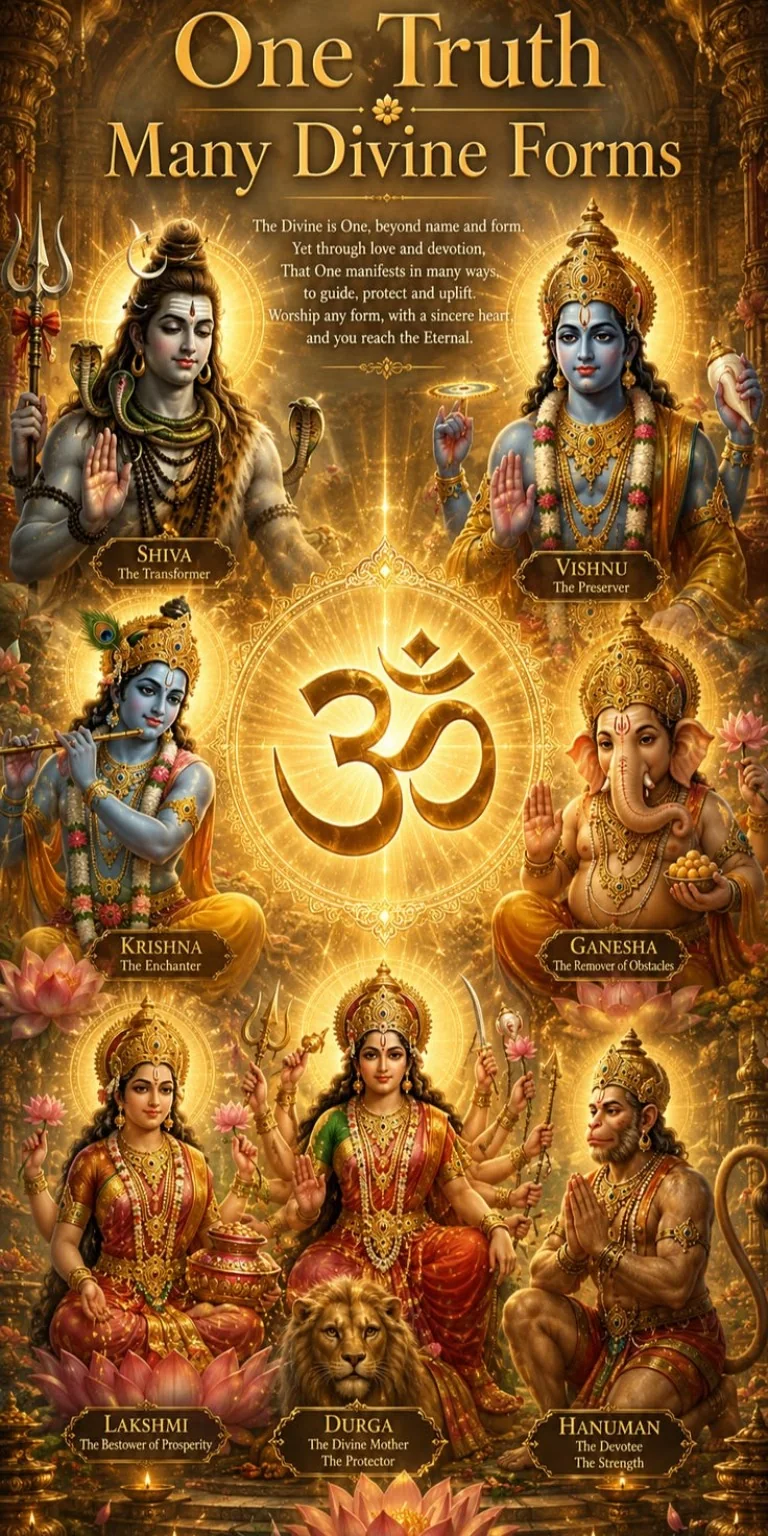
Shiva Vishnu Krishna Ganesha Devotional Poster — Multiple beloved deities shown together around the sacred sound Om.
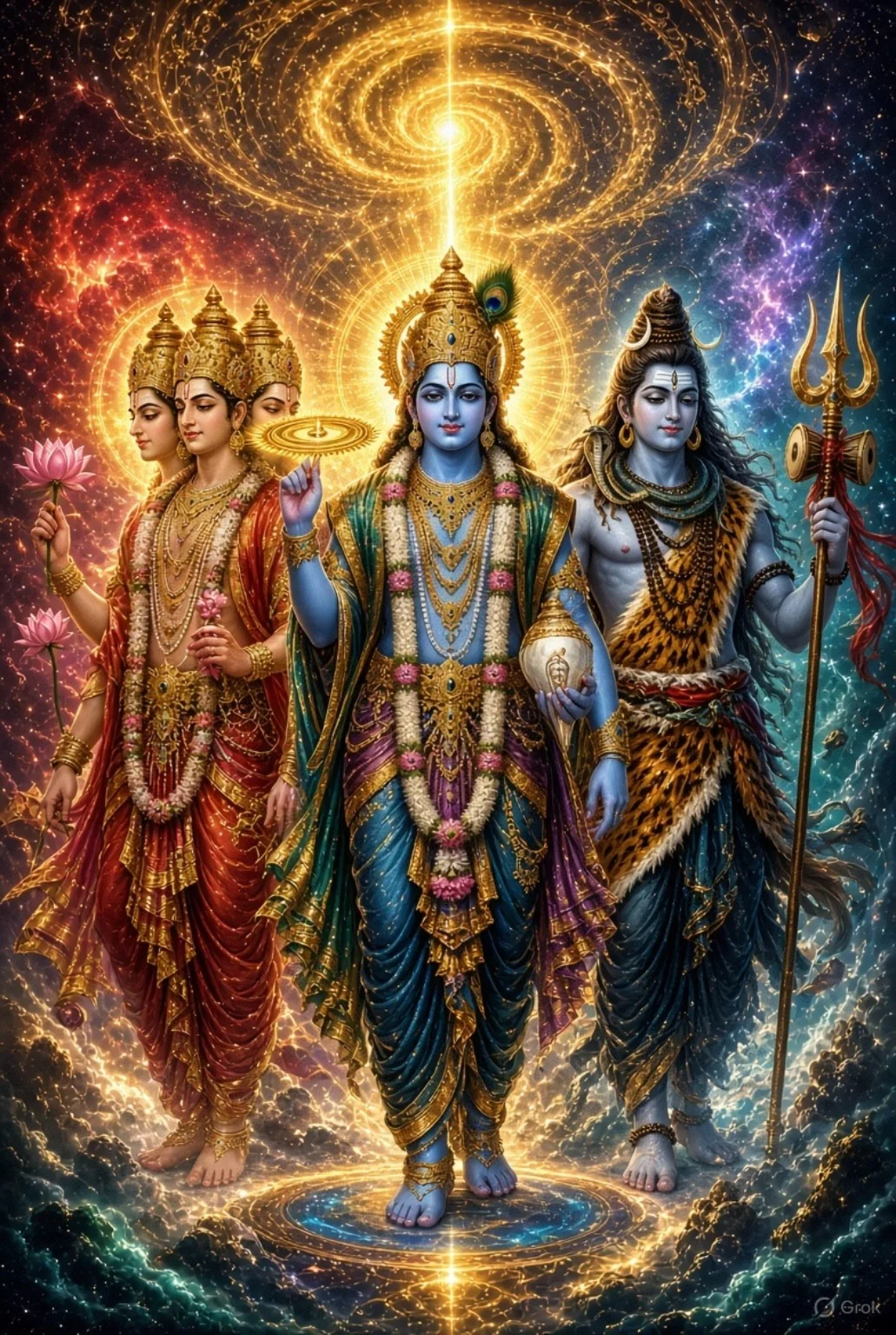
Brahma Vishnu Shiva Trimurti Wallpaper — Trimurti-themed artwork featuring Brahma, Vishnu and Shiva together.
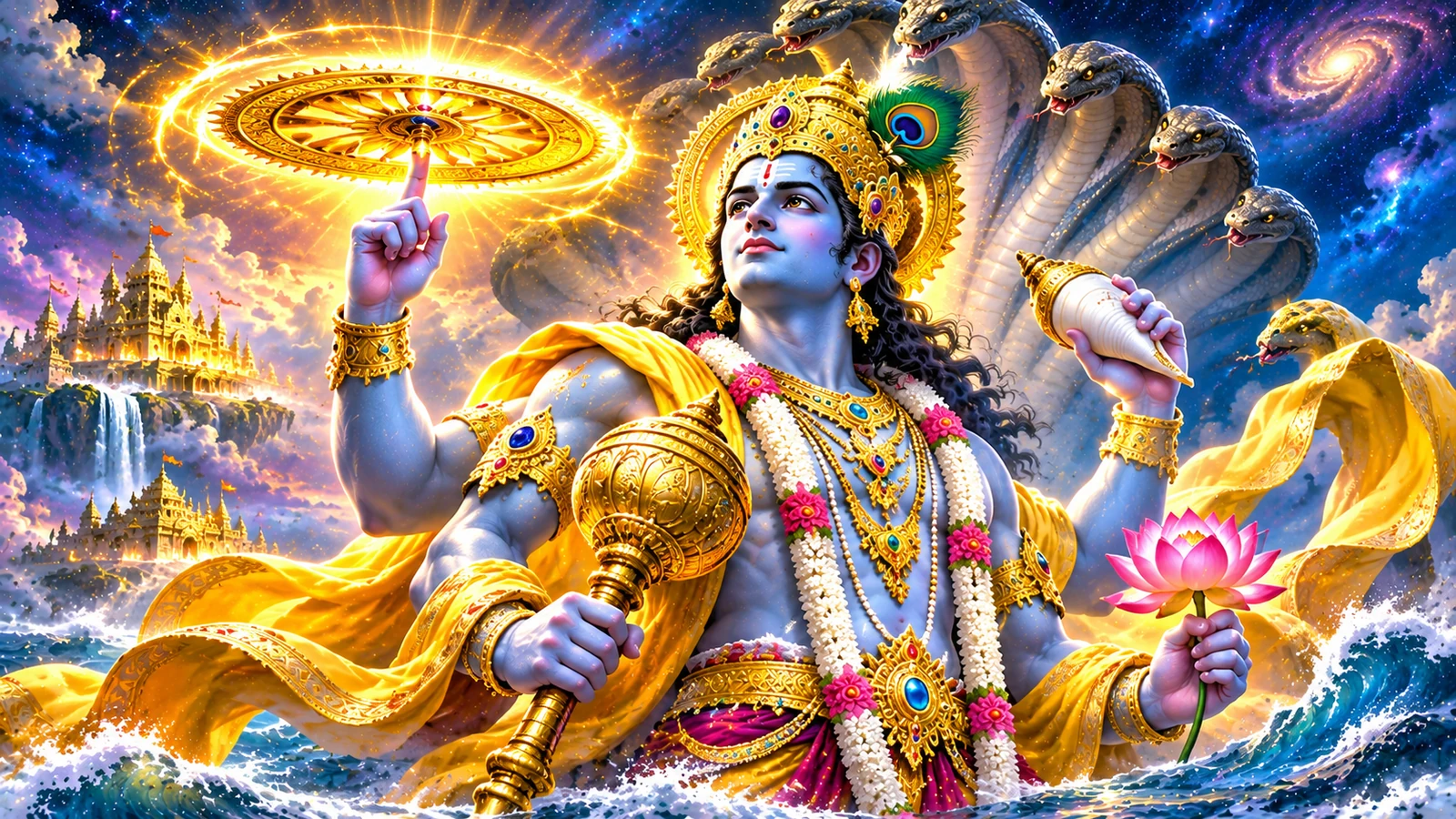
Vishnu’s Four Emblems — An illustration of Vishnu holding his four familiar emblems.
Shiva: From the Third Eye to Neelkanth
The third eye is among Shiva’s most recognizable visual motifs. Calling it only an instrument of anger misses important layers of symbolism: in many interpretations it also represents insight, knowledge and the destruction of ignorance. The trident, damru, serpents, crescent moon and matted hair likewise carry different meanings in different traditions. One modern illustration cannot stand in for all textual or devotional readings of Shiva.
In the churning-of-the-ocean story, a deadly poison threatens the worlds, and Shiva consumes it. His blue throat gives him the name Neelkanth. Several of our new images dramatize this moment with ocean waves, luminous blue light and a vessel. These details are artistic choices, not documentary evidence of how the event looked. The image of Shiva and Parvati provides a quieter transition from cosmic danger to companionship and balance. In the next chapter about Shakti, their relationship appears again through a striking form of goddess imagery.
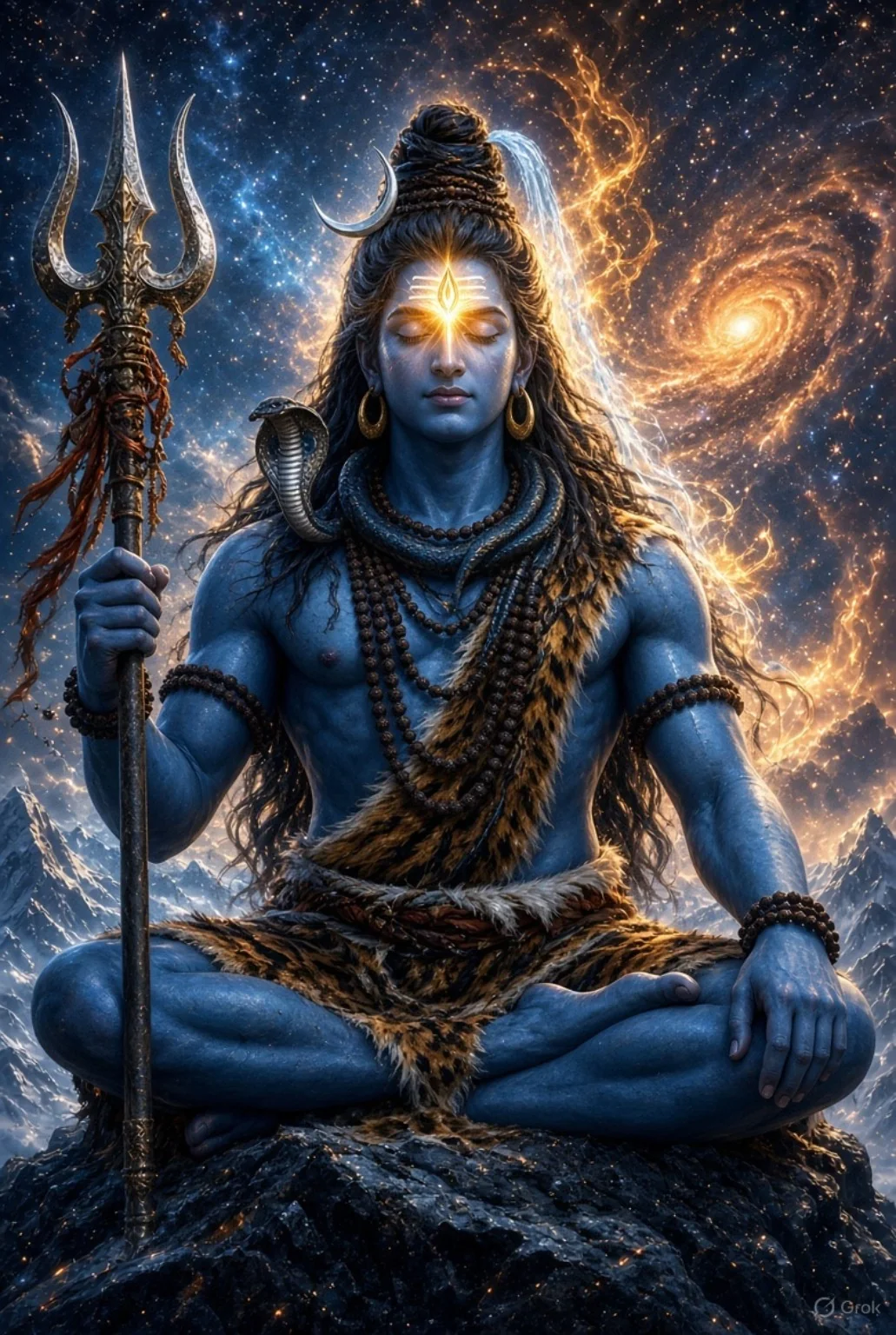
Lord Shiva Meditation Third Eye Wallpaper — Shiva meditating beside his trident with a radiant third eye.
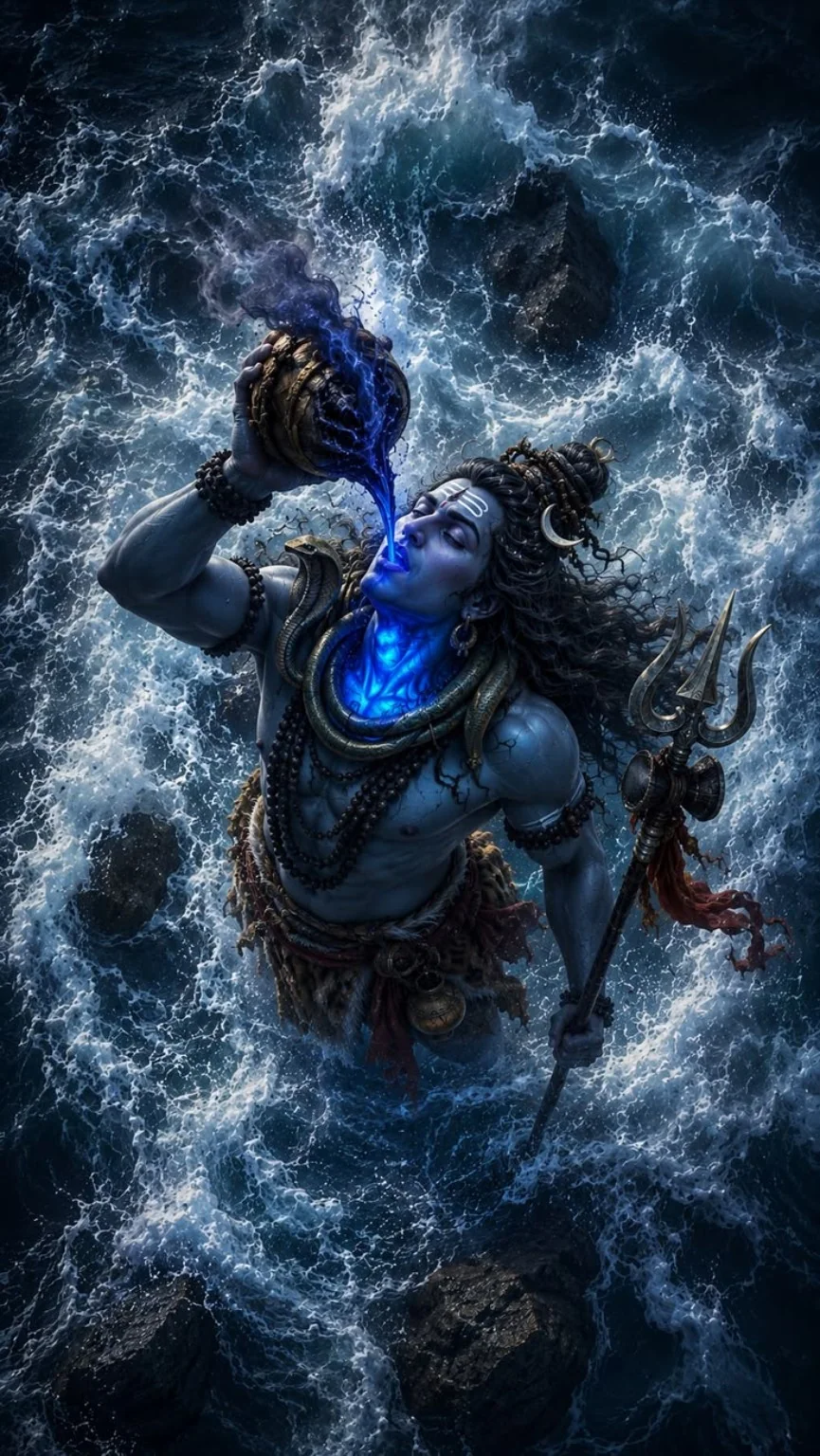
Neelkanth Shiva Drinking Poison Storm Image — Neelkanth Shiva drinking poison as towering sea waves surround him.
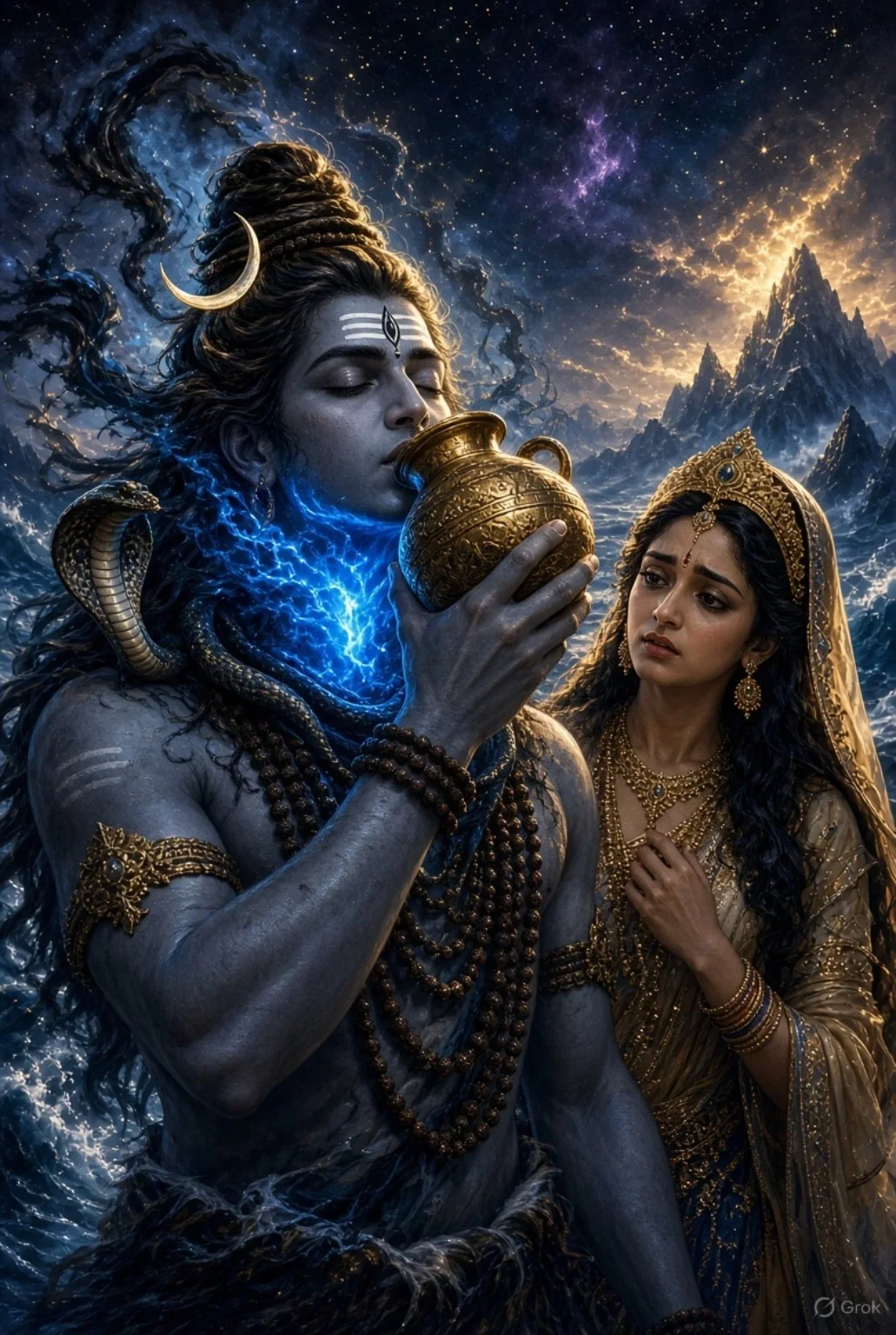
Neelkanth Shiva Parvati Poison Painting — Parvati watches as Neelkanth Shiva drinks poison in this imagined scene.
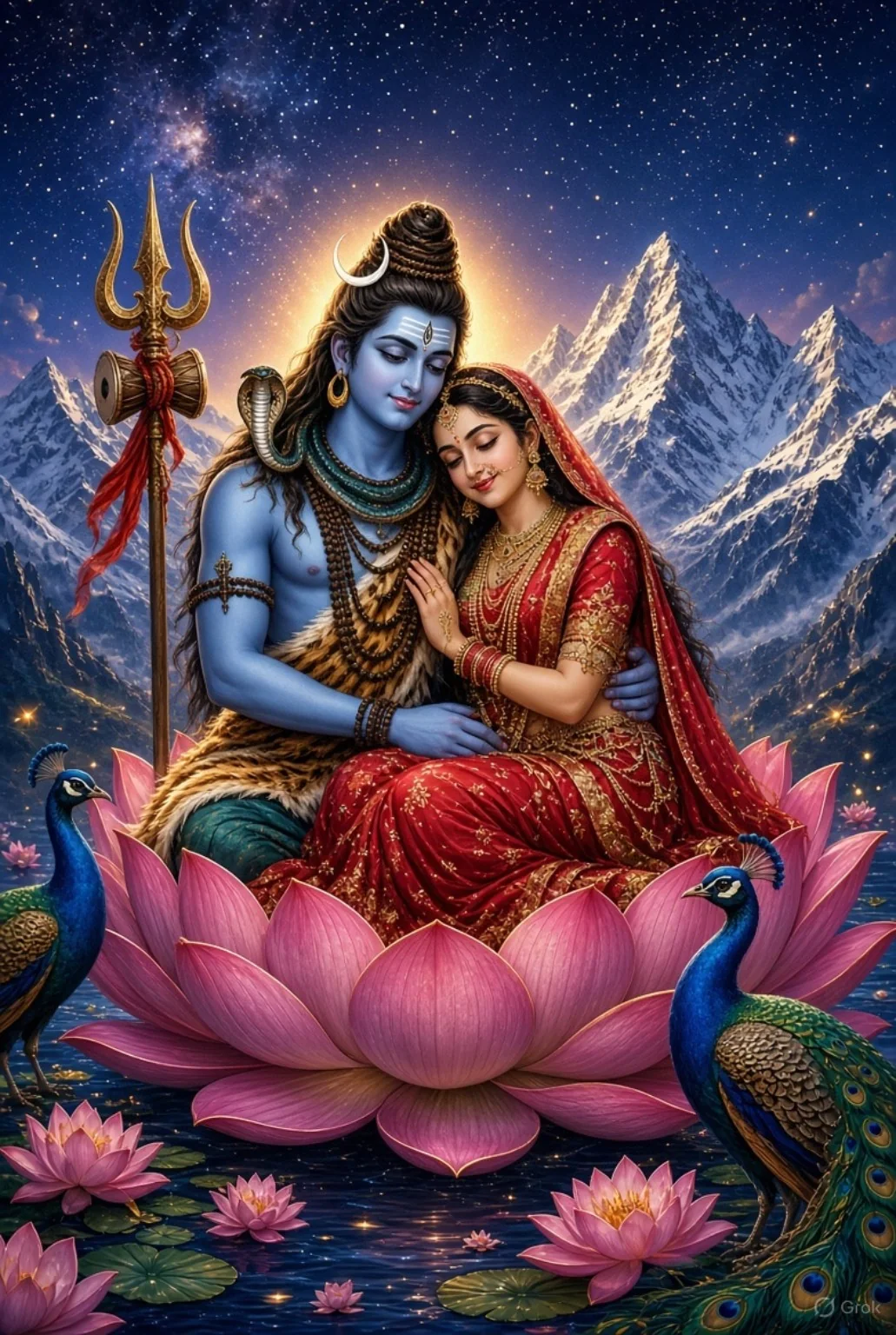
Shiva Parvati Lotus Couple Wallpaper — Shiva and Parvati shown in an affectionate pose amid Himalayan mountains.
Vishnu’s Avatars: Stories of Protection
A widely taught Dashavatara sequence connects Vishnu with Matsya, Kurma, Varaha, Narasimha, Vamana, Parashurama, Rama, Krishna, a ninth form that varies in some traditions (Buddha or Balarama), and Kalki. Different traditions preserve different lists and interpretations. The central storytelling idea is that a divine form appears when the protection of dharma or restoration of order is needed. An image becomes more useful when it explains a form’s narrative purpose instead of merely counting ten figures.
This collection brings together four-armed Vishnu, imaginative Narasimha-inspired artwork, a collage of avatar motifs, and Vishnu reclining on Ananta Shesha. Some AI-generated details depart from traditional iconography. Those illustrations belong in an art-led journey, not in an authoritative identification chart. We also have a separate poster labelled ‘24 avatars’, but its individual names and identities require checking; it is deliberately excluded from the factual image sequence until that review is complete.
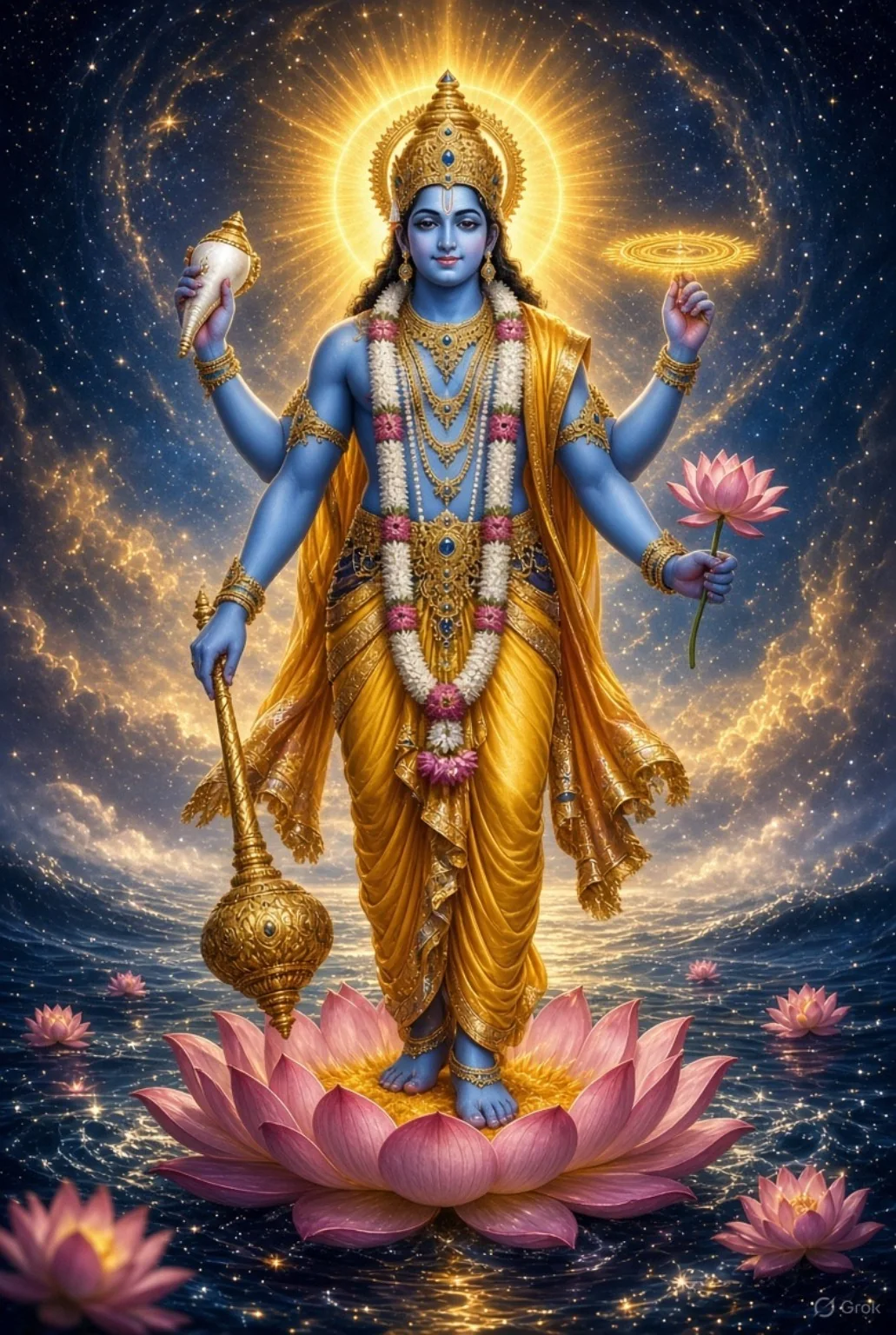
Four Armed Lord Vishnu Lotus Wallpaper — Four-armed Vishnu on a lotus, carrying conch, chakra, mace and flower.
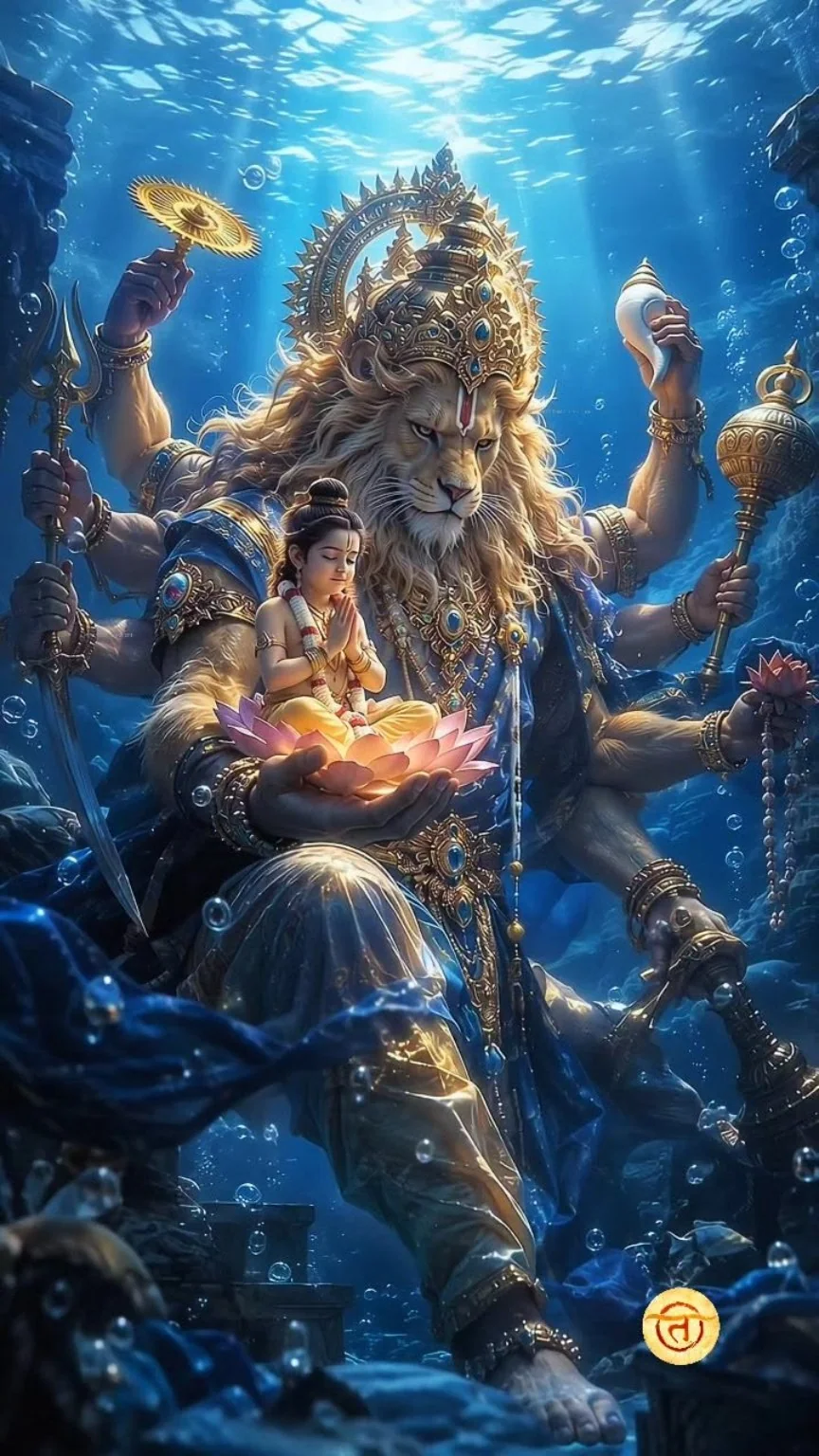
Narasimha Avatar Fantasy Illustration — Narasimha-inspired fantasy artwork with a lion-headed figure and a lotus.
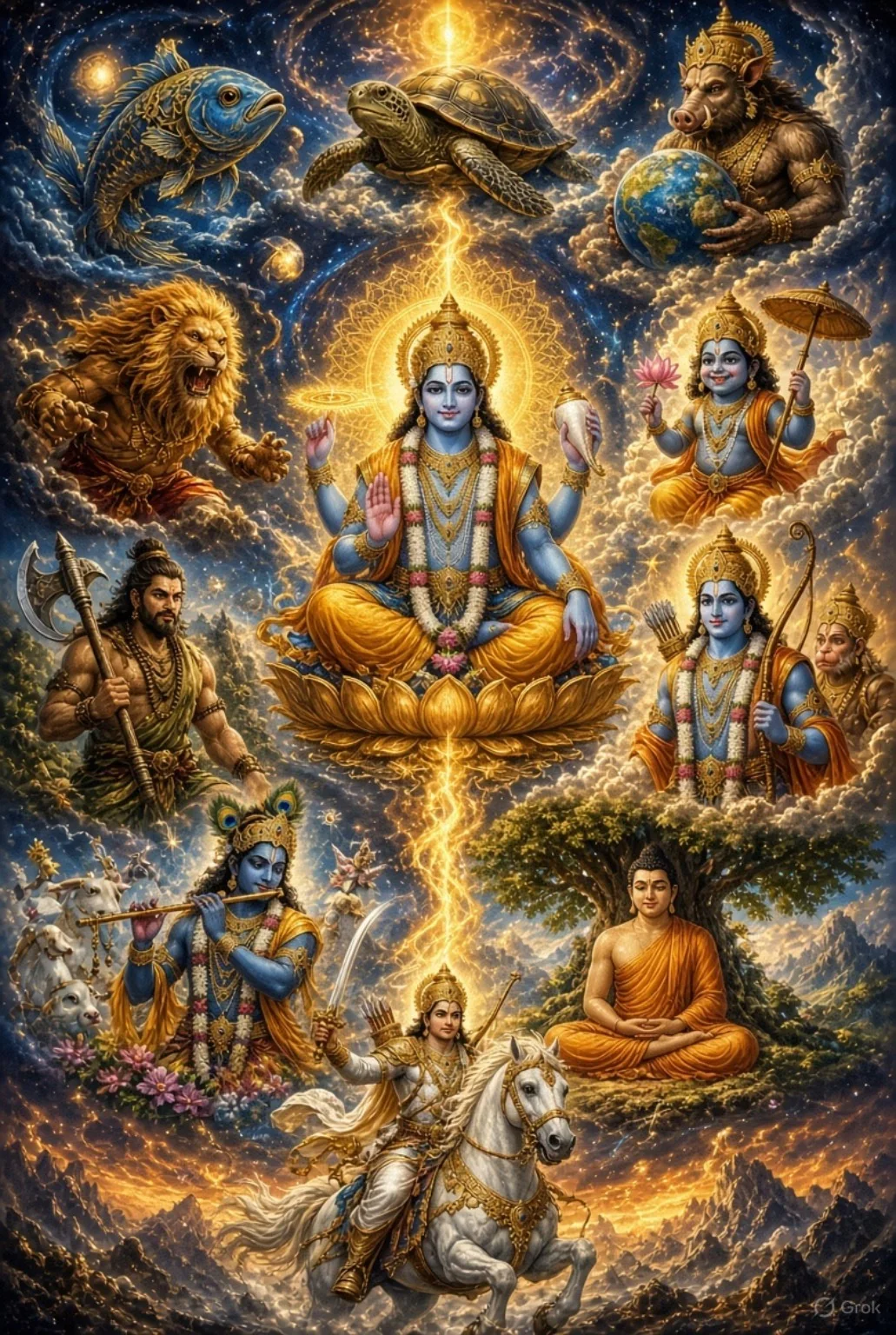
Vishnu Dashavatar Illustrated Collage — A collage of avatar motifs associated with Vishnu, not a verified ten-name chart.
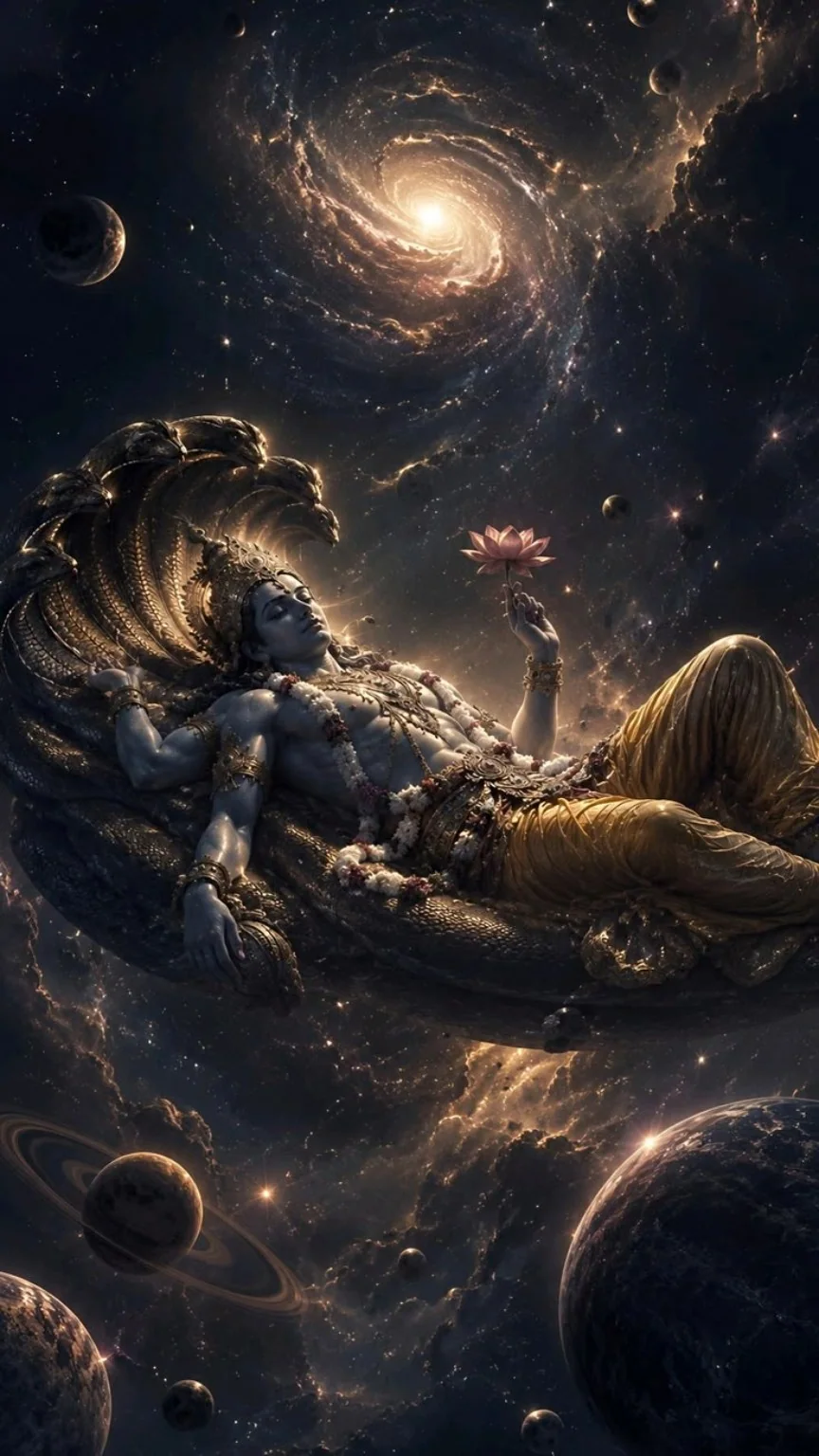
Sheshashayi Vishnu Cosmic Wallpaper — Vishnu resting on Ananta Shesha beneath an imagined celestial sky.
Goddess Shakti, Mahakali and Shiva
Hindu goddess traditions portray both gentle and fierce divine forms. Kali’s extended tongue, sword, garland of heads and presence above Shiva are charged with symbolism. In a popular narrative, her fierce movement subsides when she steps on Shiva. Other interpretations emphasize the relationship between consciousness and power. Calling the image simply a frightening scene would strip away the religious and philosophical context that makes it meaningful to devotees.
Here we use three distinct artistic treatments of Mahakali: one evoking an aged painting, one set within a sweeping battlefield, and one designed as a dramatic red-and-black devotional wallpaper. They illustrate varying moods of a symbolic tradition, not three separately documented historical events. A new Das Mahavidya infographic has been held out of the published sequence because its names and iconographic labels need a careful correction. Accurate devotional art serves readers better than visually striking but erroneous lists.
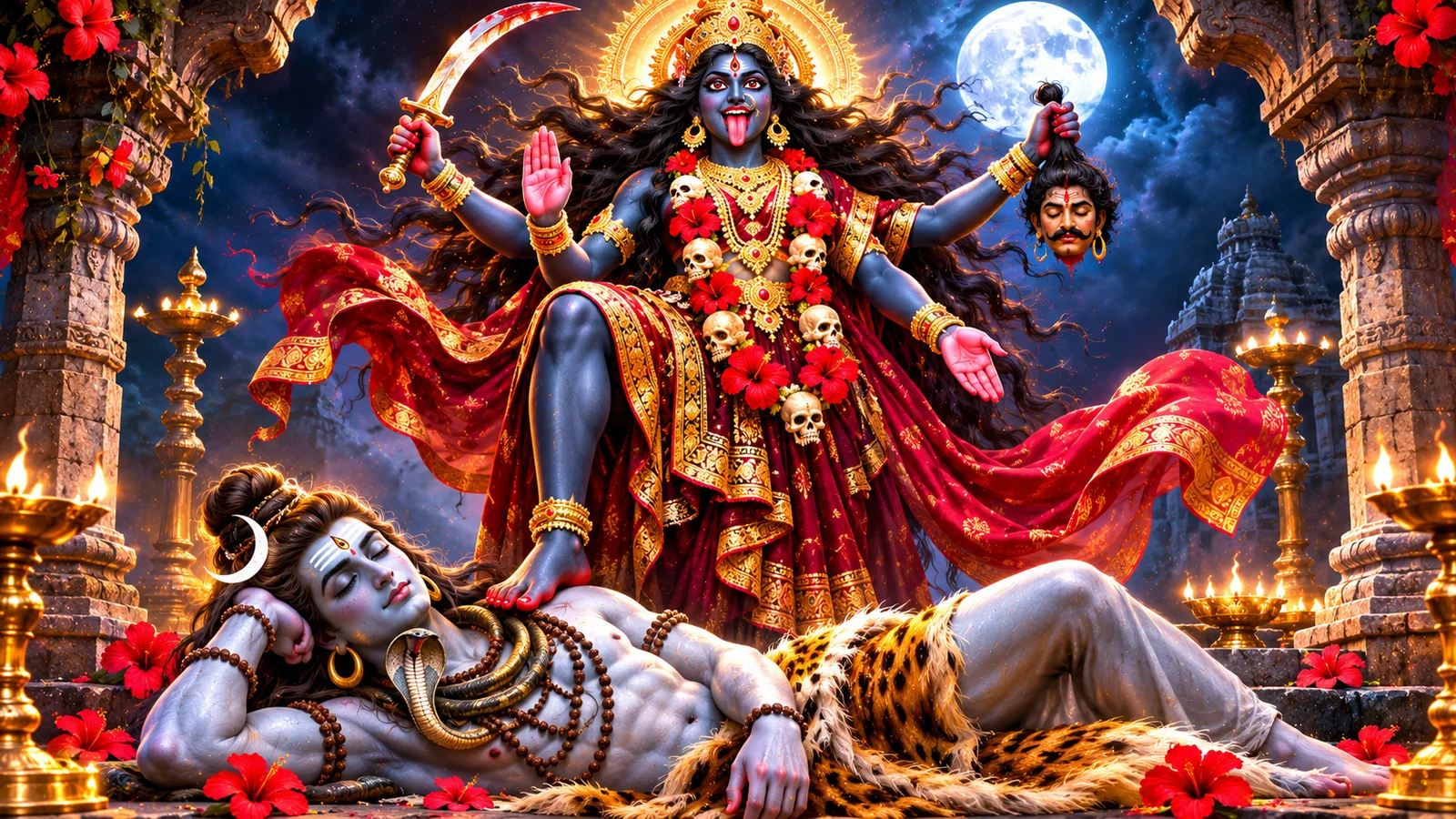
Mahakali and Shiva — A symbolic illustration of Kali standing above Shiva.
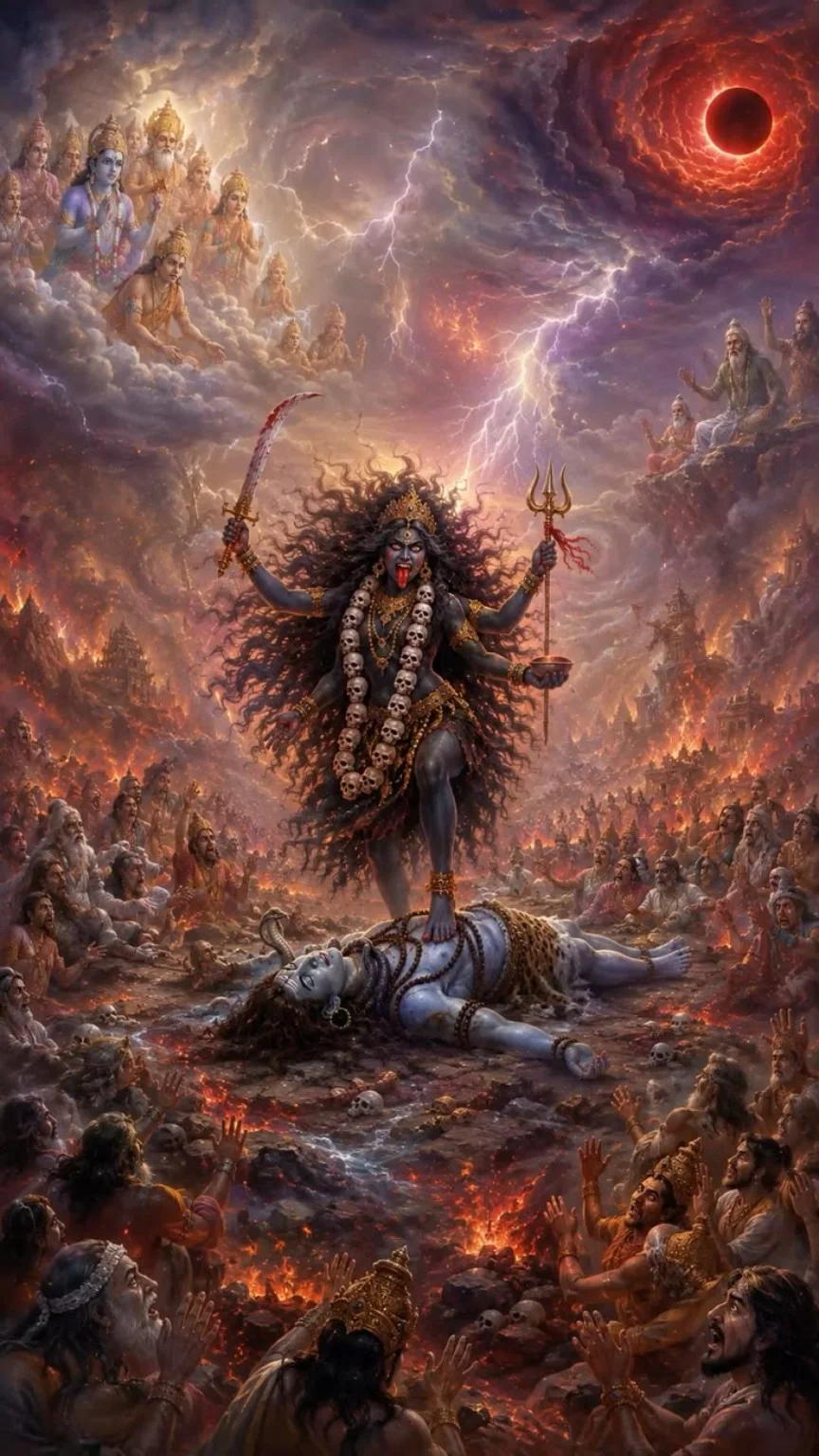
Kali Standing On Shiva Battlefield Artwork — Kali and Shiva depicted amid a turbulent battlefield and fiery skies.
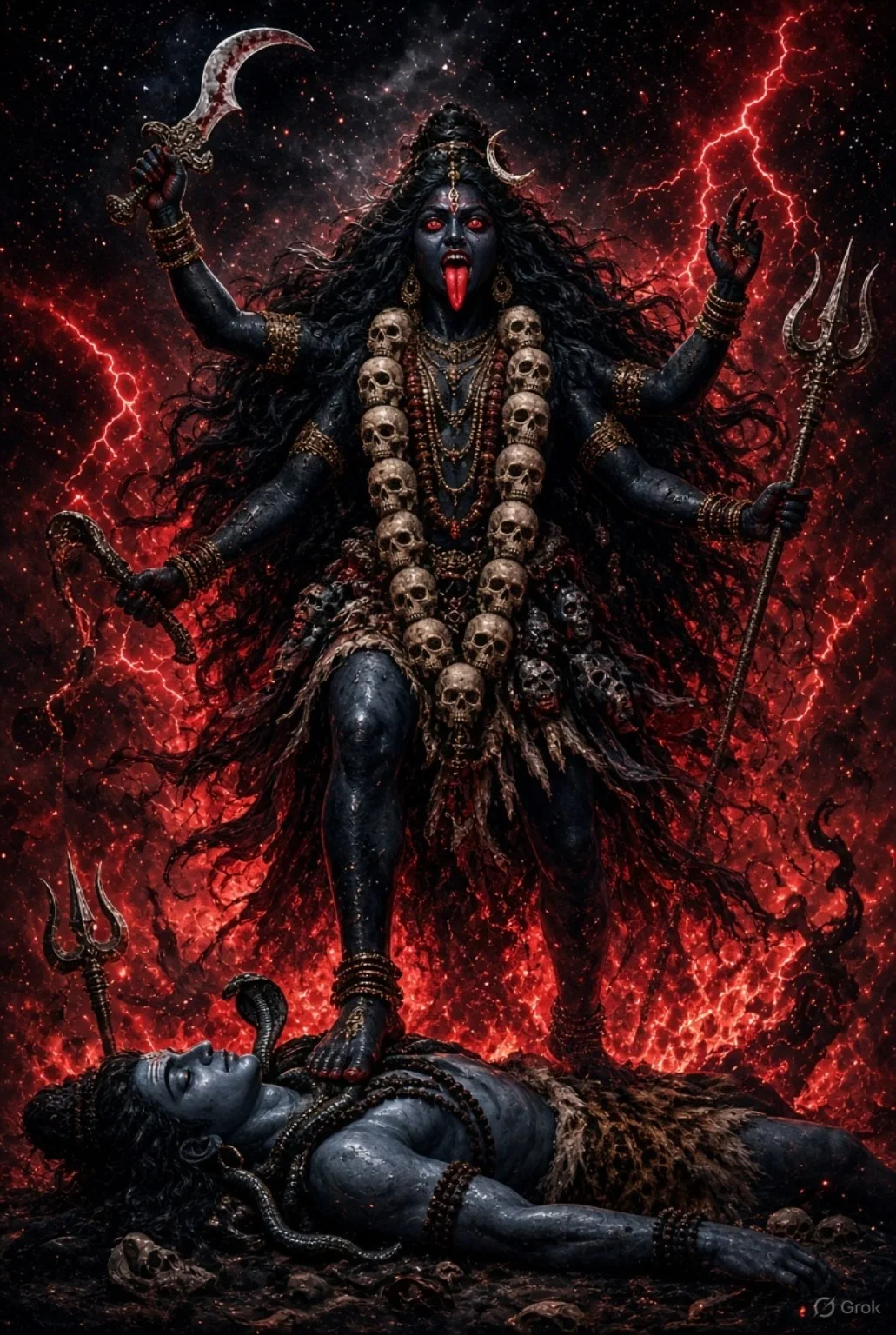
Kali Maa Angry Wallpaper Red Lightning — Kali’s fierce symbolic form with red lightning and Shiva beneath her feet.
Ramayana: Exile, Hanuman and Pushpaka Vimana
The Ramayana is more than a sequence of battles. It is also an epic of relationships, choices, loyalty and separation. A quiet woodland scene inspired by Sita’s exile evokes loss and resilience, while Hanuman carrying a mountain suggests courage, service and the search for a remedy in a moment of danger. Regional Ramayana traditions may vary in their telling of particular episodes. Our illustrations therefore introduce stories; they cannot serve as visual proof that every detail unfolded in exactly one way.
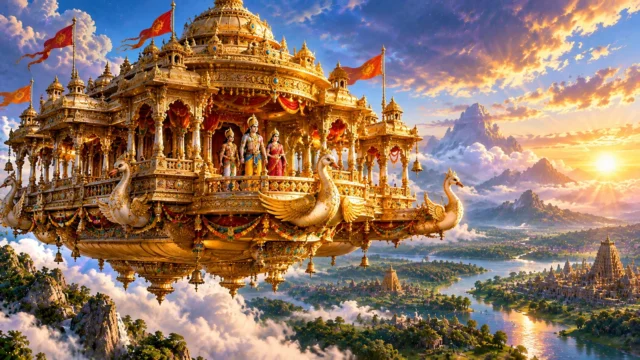
The ornate flying palace labelled Pushpaka Vimana is especially eye-catching. It is an imaginative representation of a vehicle described in epic literature, not evidence of a functioning ancient aircraft. Likewise, the forest setting around Sita is a contemporary visual interpretation rather than a historical photograph. Separating mythic narrative, devotional meaning and technological history allows the artwork to remain exciting without misleading the reader.
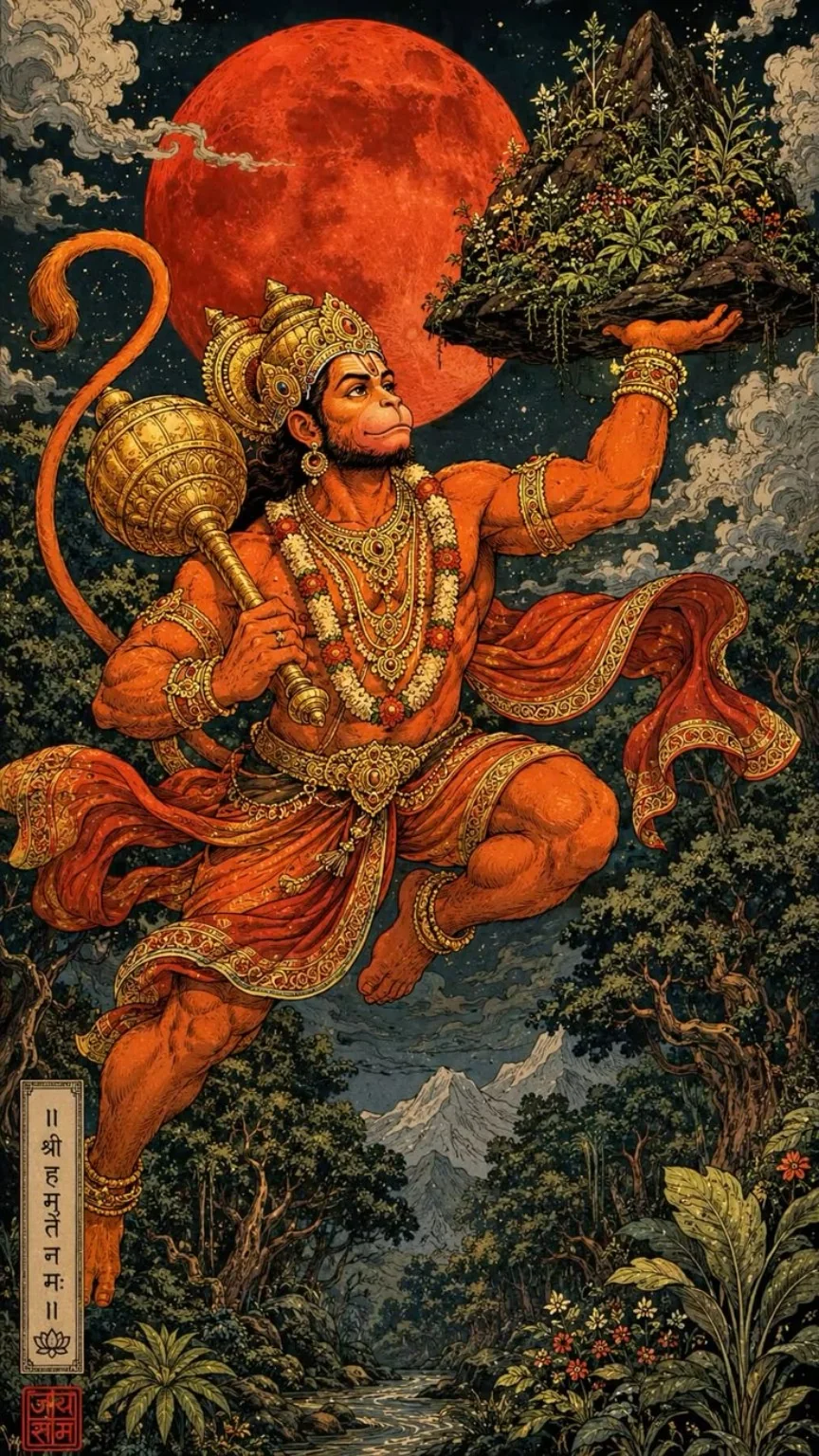
Hanuman Carrying Sanjeevani Mountain Art — Hanuman carrying a mountain, inspired by the Ramayana’s healing-herb episode.
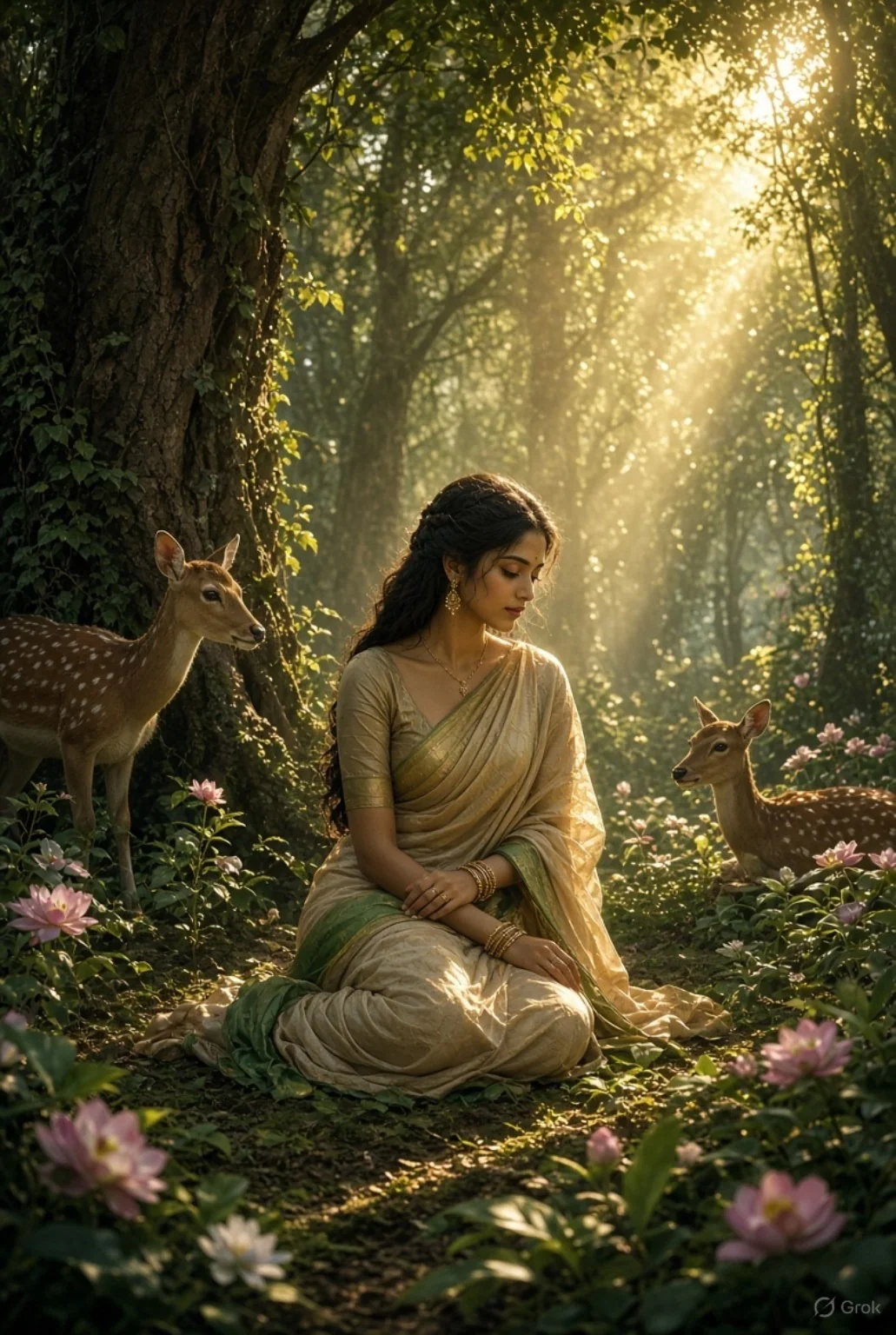
Sita Exile Forest Painting Deer — A quiet forest image inspired by Sita’s exile and separation.
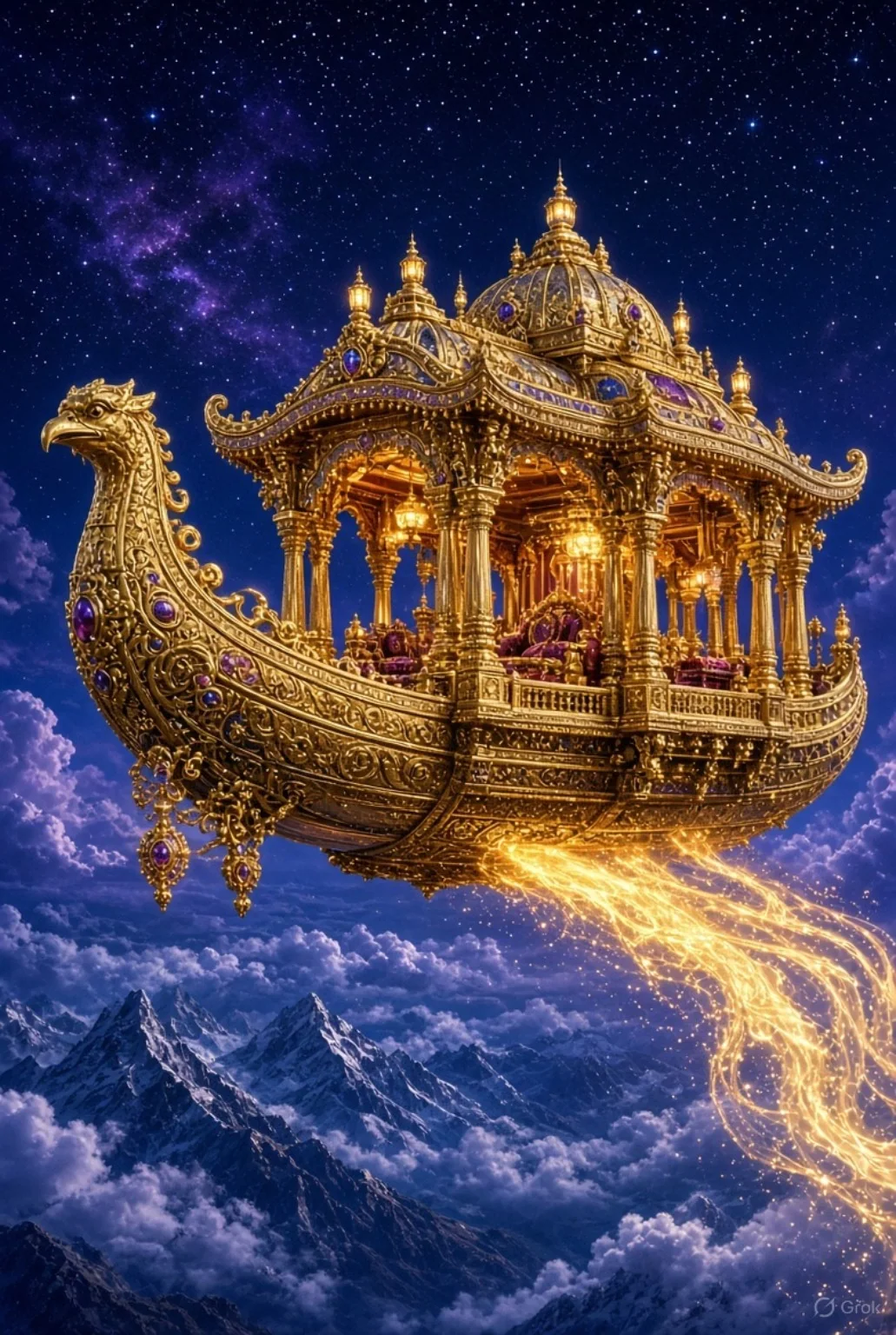
Pushpaka Vimana Flying Palace Illustration — A flying palace inspired by the literary description of Pushpaka Vimana.
Mahabharata: Draupadi, Karna, Krishna and Arjuna
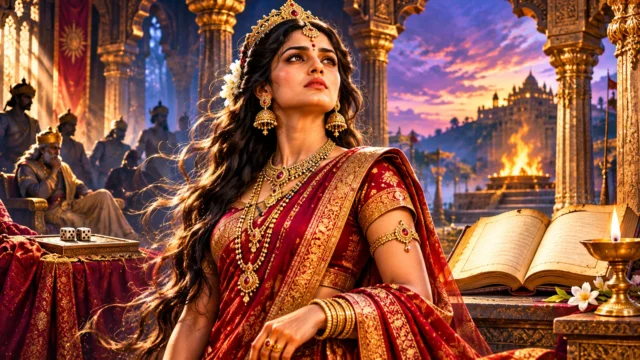
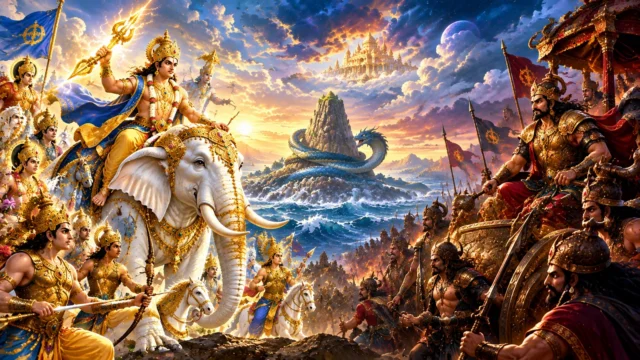
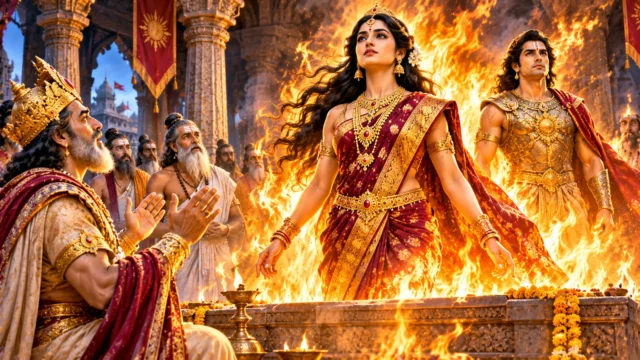
The Mahabharata is filled with hard choices rather than uncomplicated heroes and villains. Draupadi’s appearance from a sacrificial fire belongs to the epic narrative of the Adi Parva. A golden-armored portrait of Karna can suggest courage, but his story also asks difficult questions about generosity, loyalty and responsibility. The sweeping Kurukshetra battlefield illustration conveys scale and conflict; it is not a verified reconstruction of a particular day of an eighteen-day war.
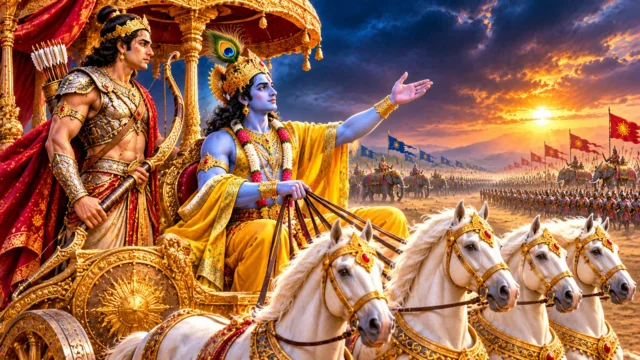
The chariot scene of Krishna and Arjuna is perhaps the epic’s best-known visual doorway. In the Bhagavad Gita, Arjuna faces a moral crisis before battle and Krishna speaks to him as both charioteer and guide. Questions about duty, action, suffering, power and justice emerge from this setting. Each image in the chapter therefore has a short interpretation and a link to a more complete article already available on Vista Hub. The reader can follow the moment that catches their eye rather than being forced through a long summary first.
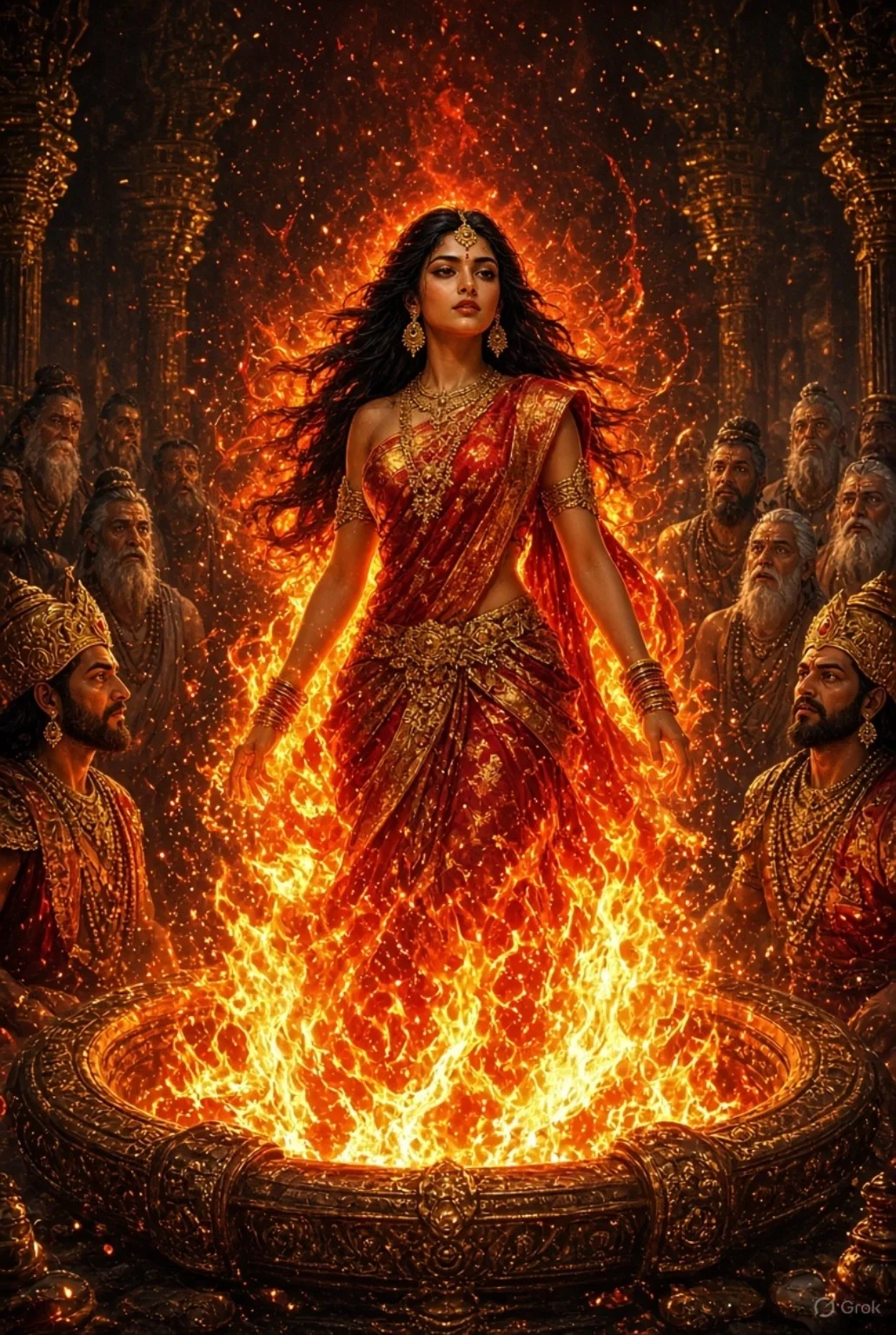
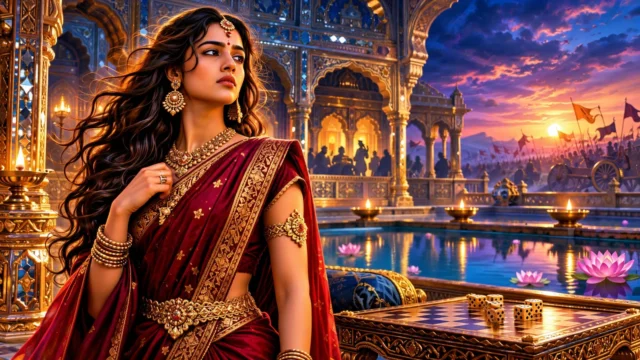
Draupadi Born From Fire Illustration — Draupadi’s extraordinary fire-birth imagined as a dramatic ceremonial scene.
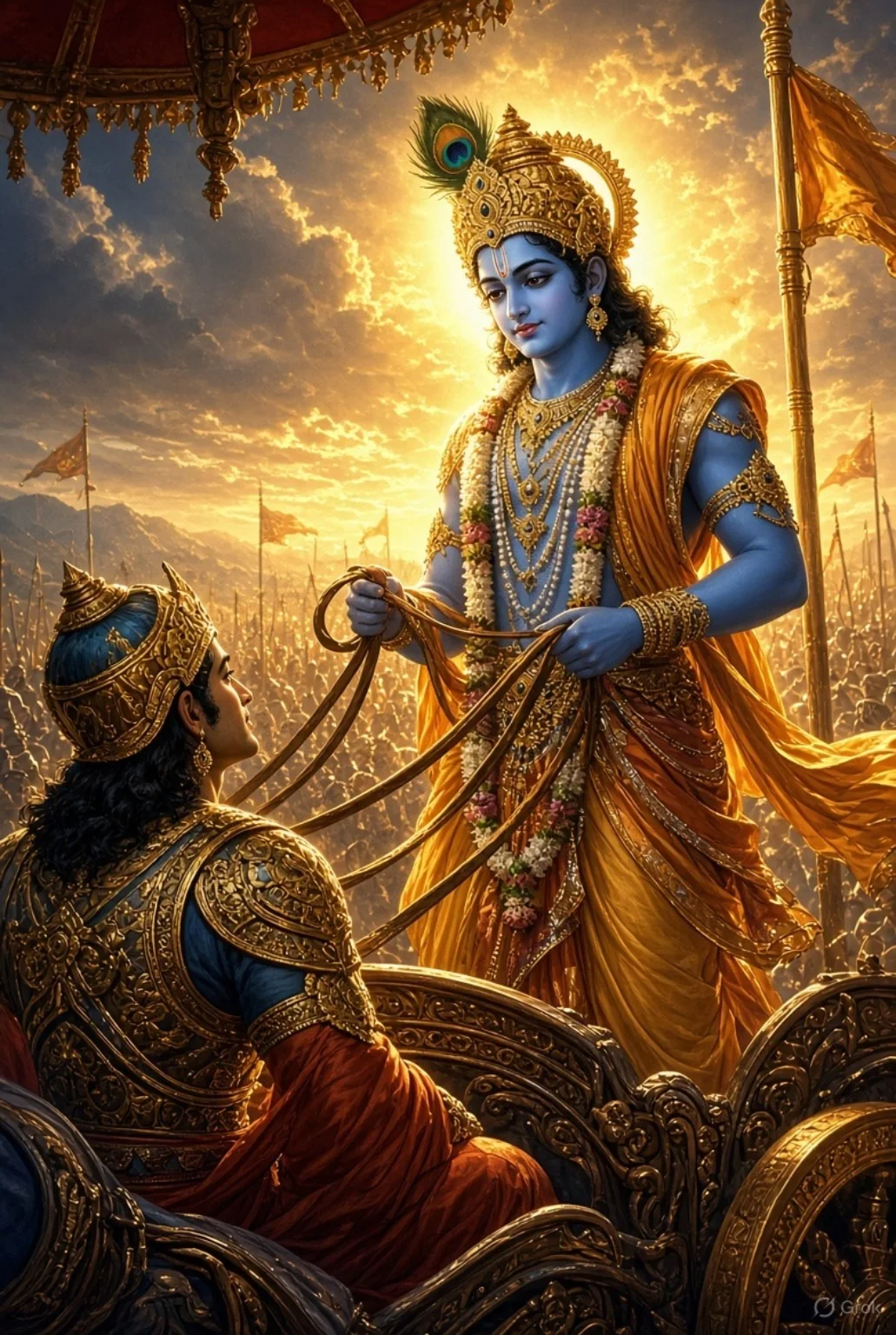
Krishna Arjuna Bhagavad Gita Chariot Art — Krishna speaks with Arjuna beside their ornate chariot before Kurukshetra.
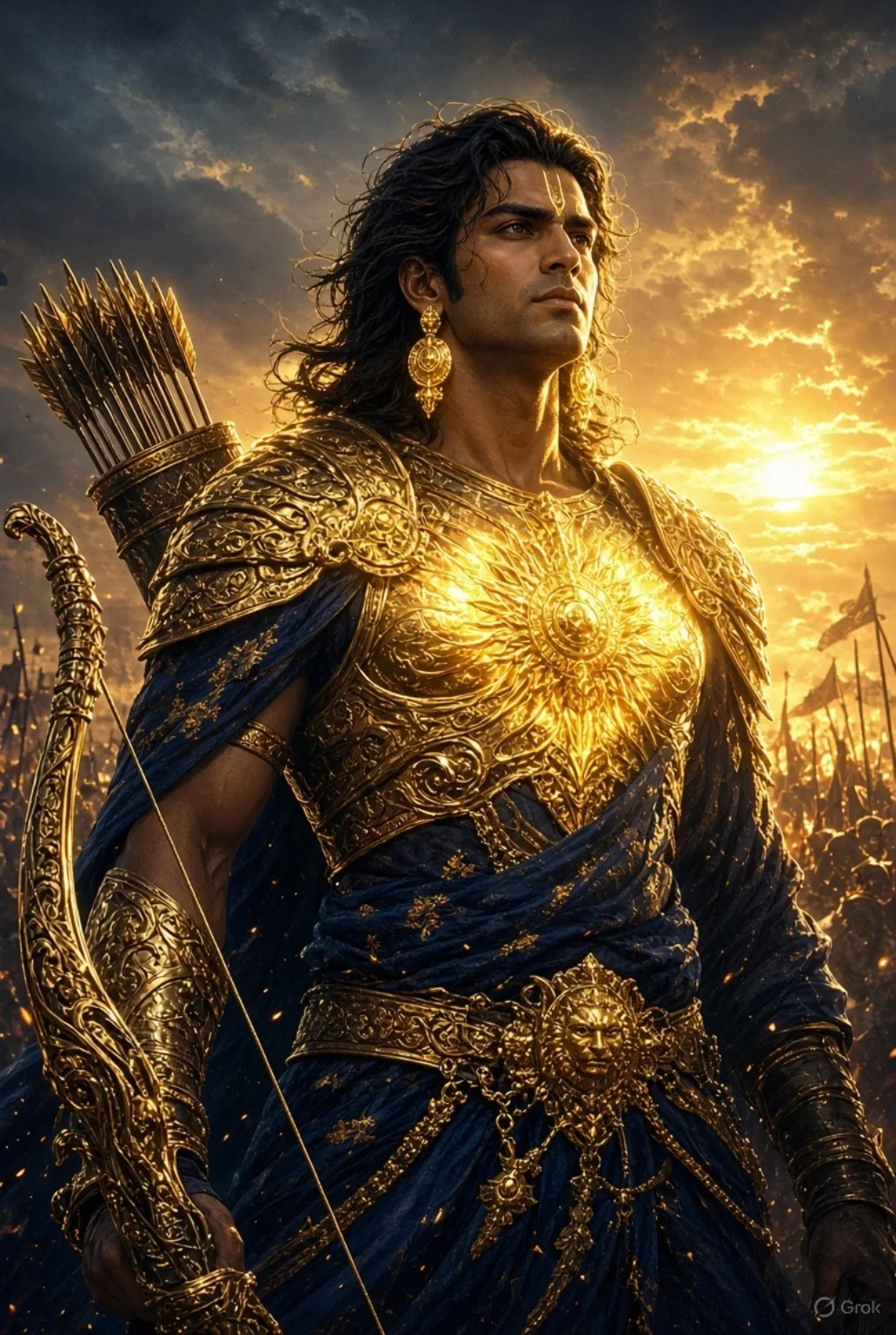
Karna Mahabharata Golden Armor Wallpaper — Karna-inspired portrait of an archer in gleaming golden armor.
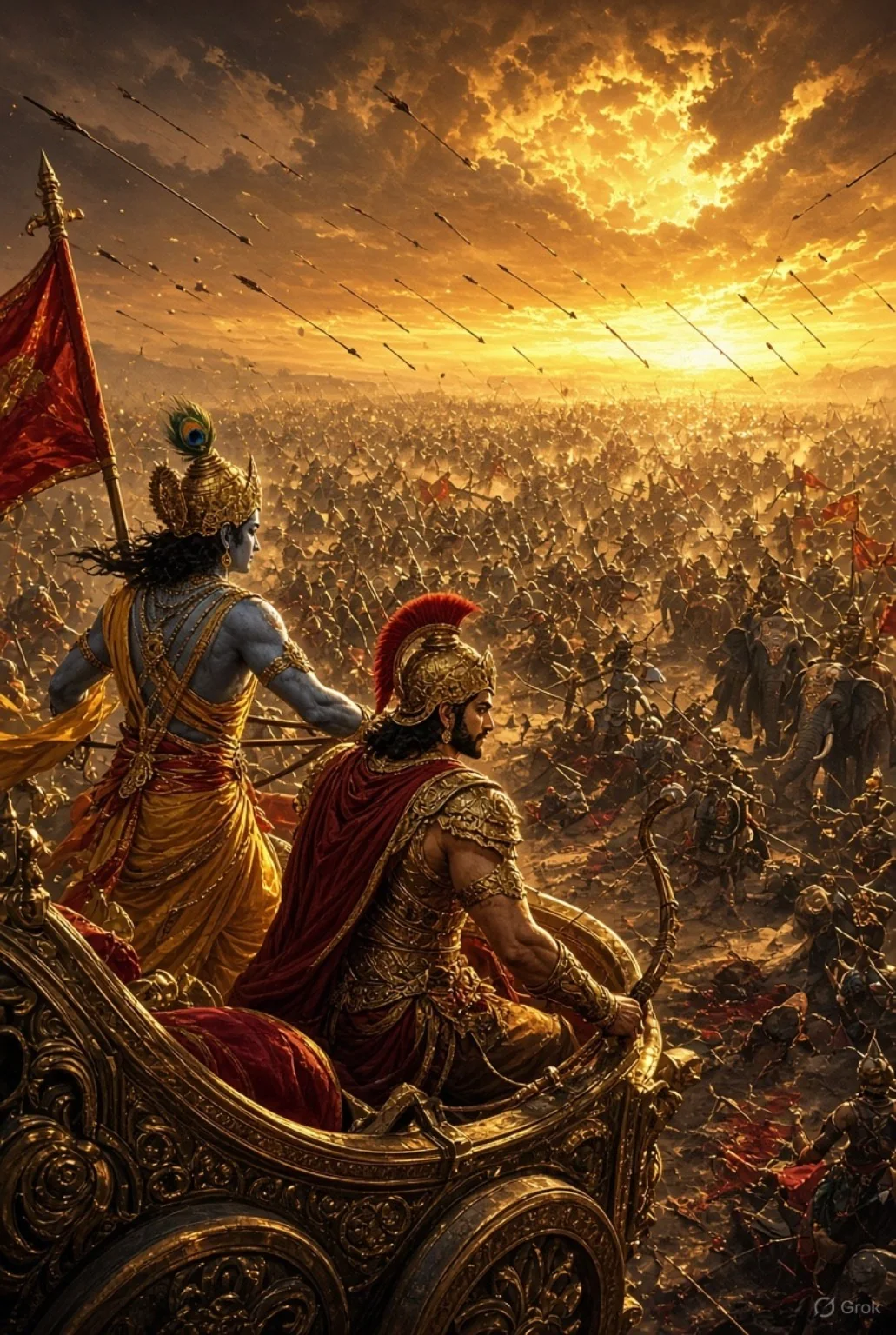
Kurukshetra Battle Krishna Arjuna Image — Krishna and Arjuna look across the immense Kurukshetra battlefield.
Garuda, Nagas, Kamadhenu and Yama
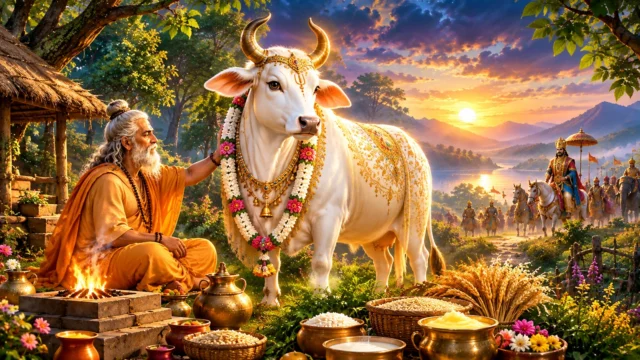
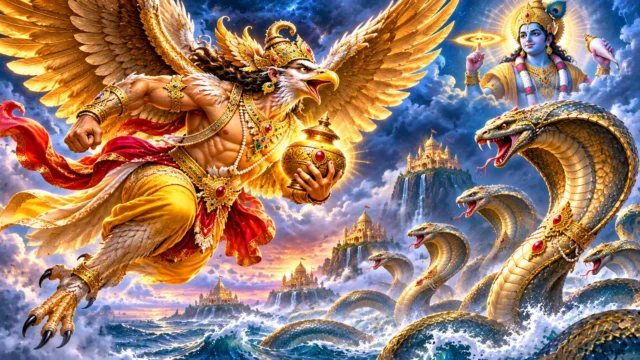
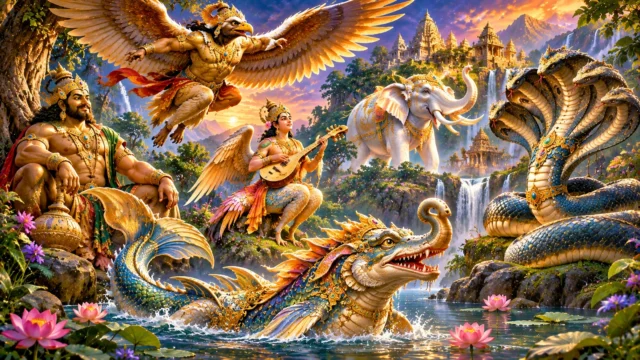
The mythic world extends far beyond gods and human heroes. Garuda, Nagas, Kamadhenu, Surabhi and Yama appear in stories concerned with kinship, freedom, justice, giving and cosmic order. The rivalry between Garuda and serpents is particularly rich in narrative detail. The wish-granting cow appears in traditions of abundance and generosity, while Yama is often pictured with a buffalo as a figure associated with death and moral consequence.
Our golden-winged Garuda facing green serpents is a fantasy depiction, not a biological reconstruction of a real hybrid creature. The ornamented white cow is a visual homage to Kamadhenu, and the shadowed buffalo-rider is an artistic rendering of Yama. Labelling the images clearly matters: an exciting picture should support a story without asking readers to mistake mythology for zoology, archaeology or a documented photograph. Readers who want fuller details can follow the linked stories instead of relying on the artwork alone.
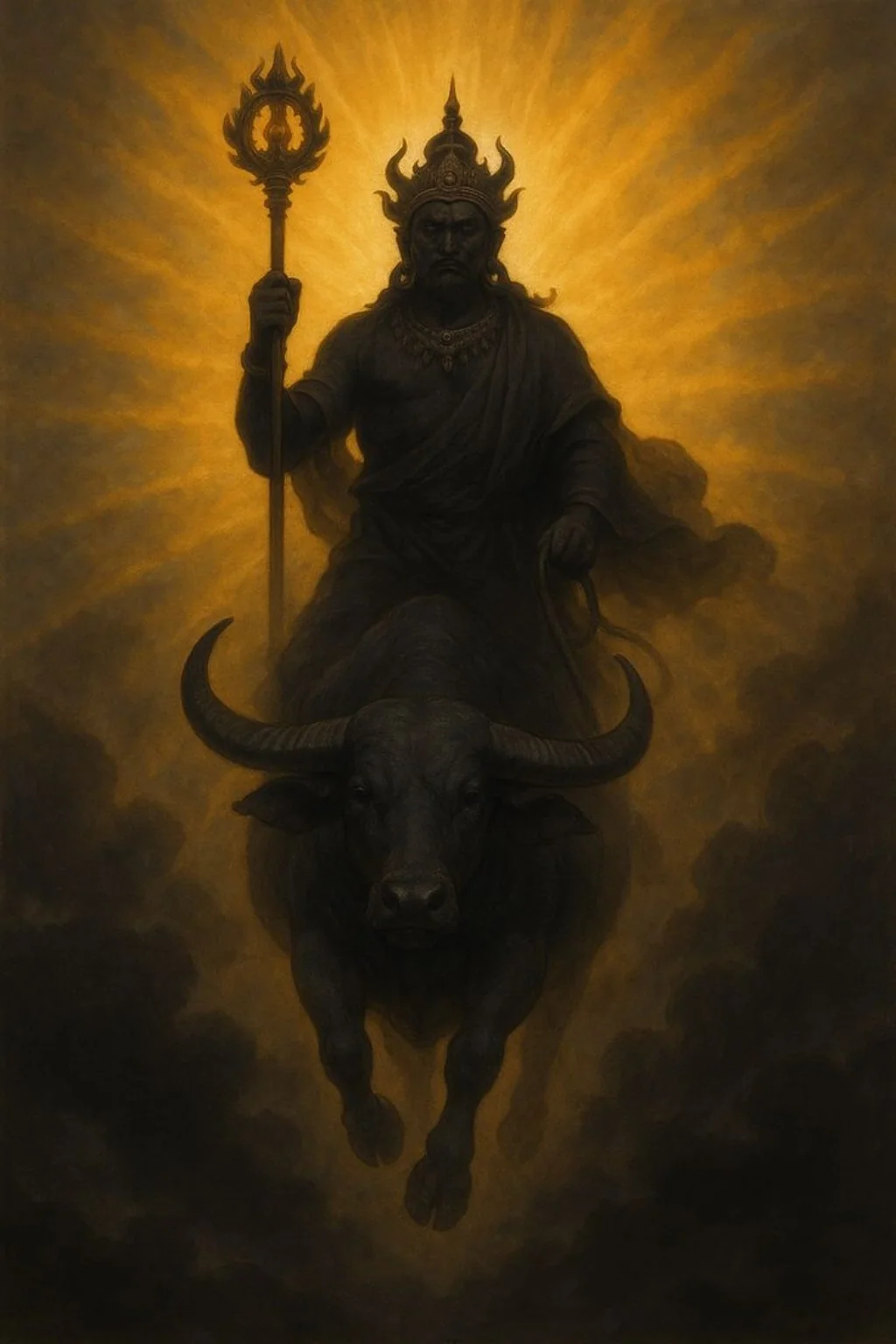
Yamraj On Buffalo Painting — An atmospheric illustration of Yama riding a buffalo through golden clouds.
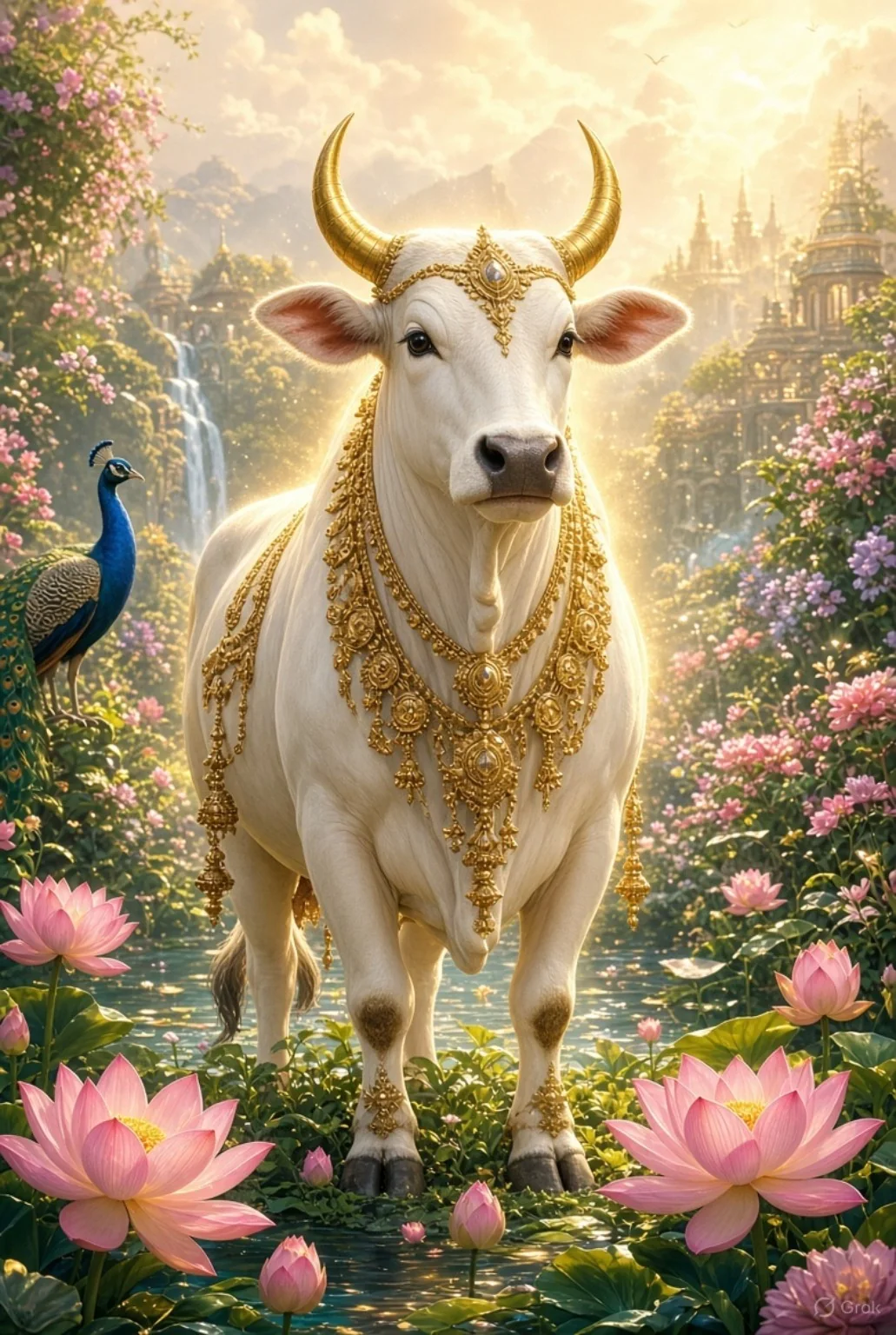
Kamadhenu White Cow Lotus Garden Picture — A sacred white cow in a lotus garden, inspired by Kamadhenu traditions.
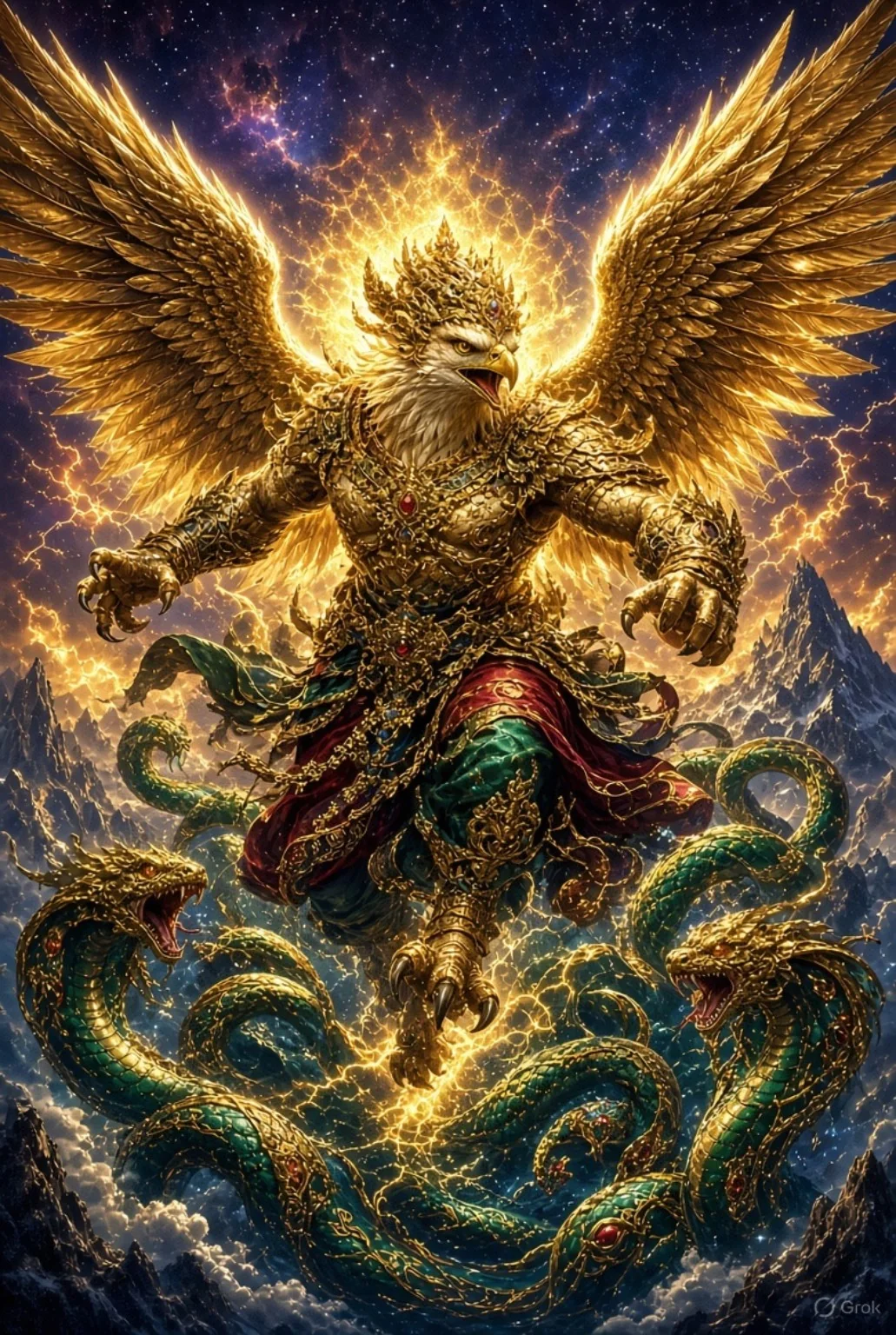
Garuda Fighting Serpents Fantasy Art — Garuda and serpents facing one another in a high-fantasy interpretation.
What Om, Trishul, Damru and Chakra Symbolize
A small object in a mythological image can carry an entire story. Om is associated with sacred sound and a wide range of spiritual interpretations. The trident is a defining attribute of Shiva, and the damru often evokes rhythm, sound and cosmic movement. Vishnu’s chakra functions as a divine weapon but is also discussed in the language of protection and the maintenance of order. These meanings have layers and should not be reduced to one claim that speaks for every Hindu tradition.
Our symbol images include an English introductory poster, a stylized third eye behind Shiva’s trident and damru, and a glowing golden disc above a lotus lake. The final artwork is not a photograph of an excavated ancient object; it visualizes a religious concept. A concise title, accurate alternative text and nearby explanation will help both the visitor looking for symbolism and the visitor looking for a distinctive devotional image. The deeper articles remain only a click away.
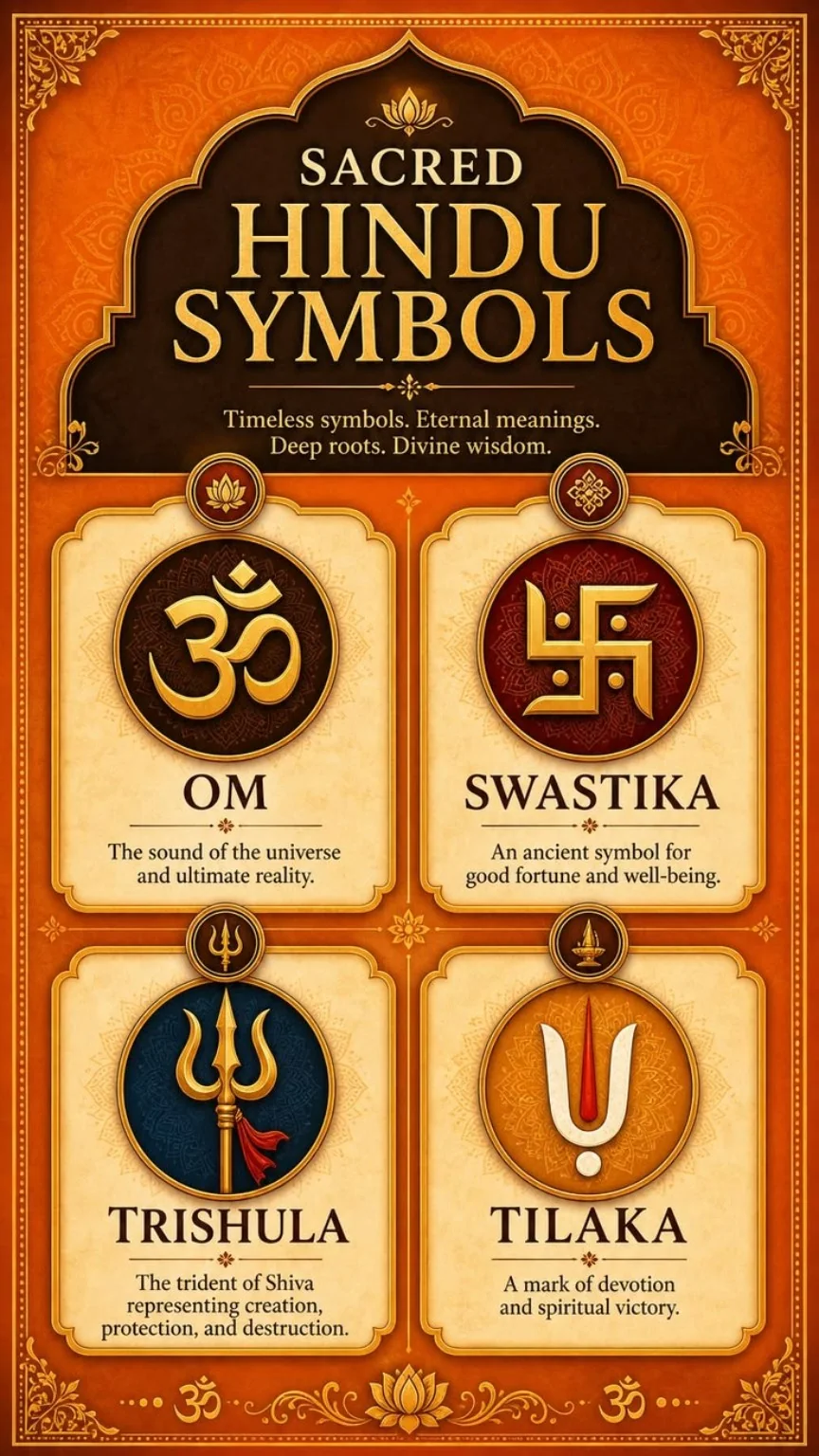
Hindu Symbols Om Swastika Trishul Tilak Poster — An introduction to Om, the swastika, trident and tilaka in Hindu traditions.
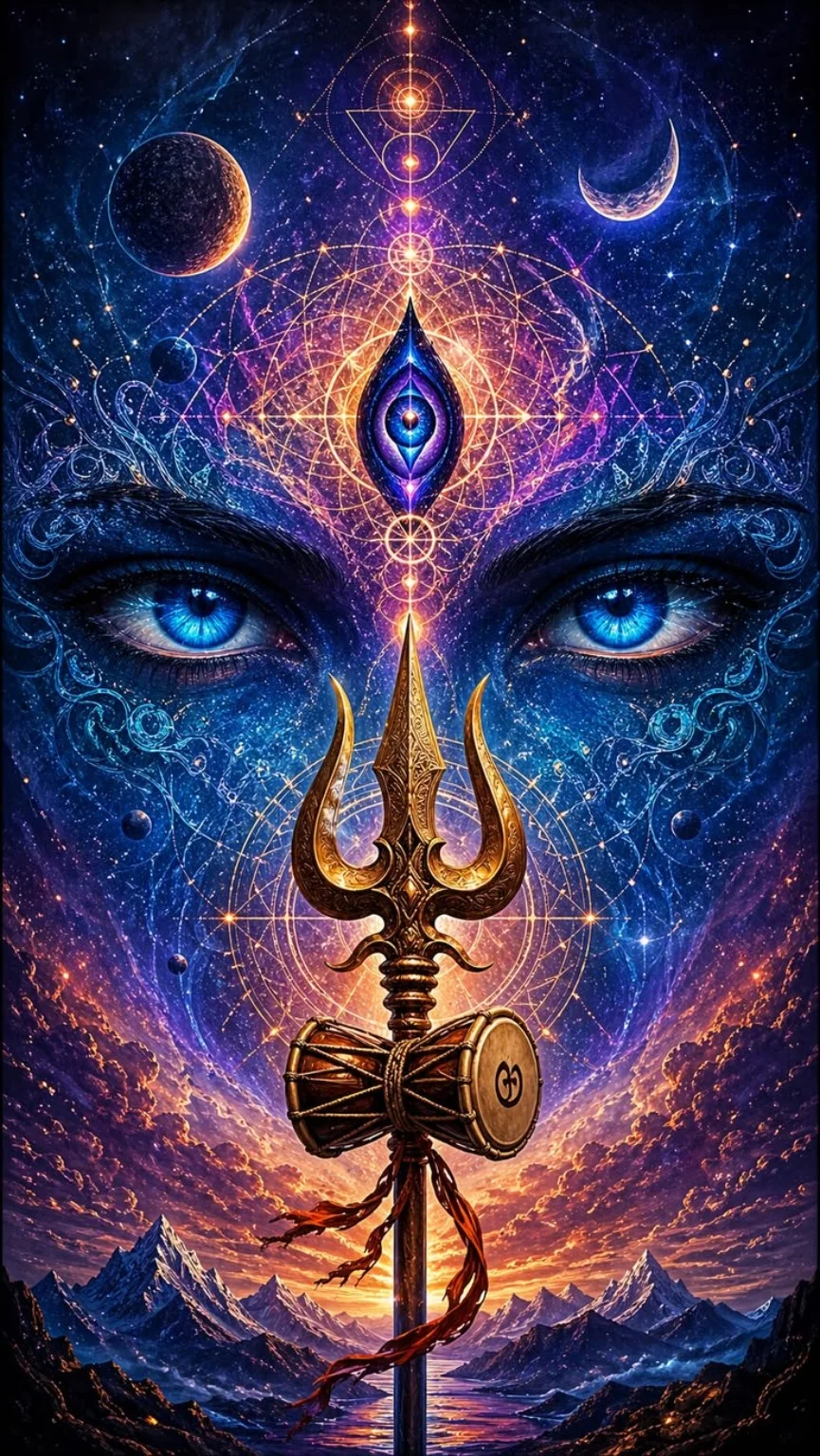
Shiva Third Eye Trishul Damru Wallpaper — The trident, damru and third-eye motifs of Shiva against a night sky.
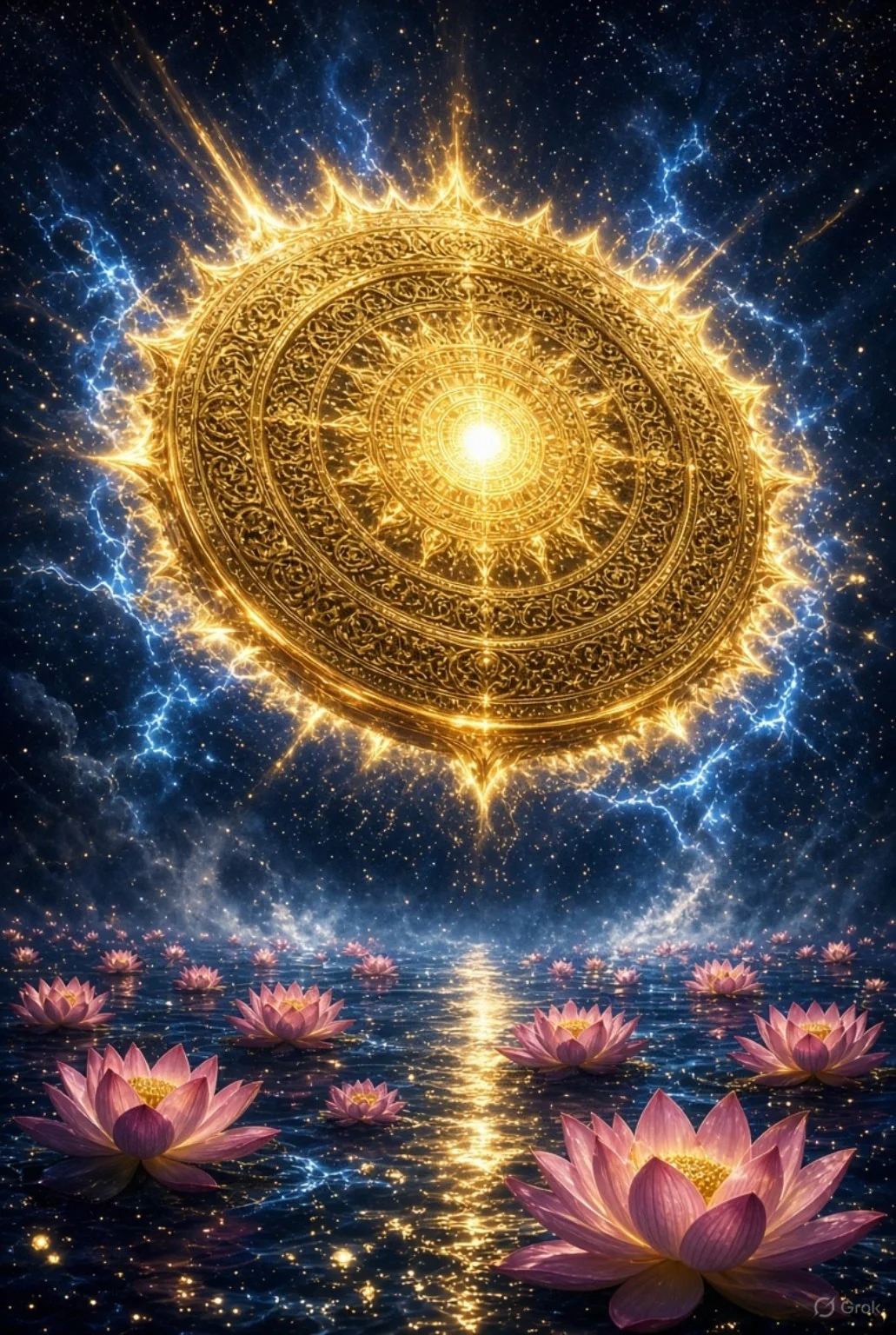
Golden Sudarshan Chakra Glowing Disc Image — A glowing golden disc above a lake, evoking the Sudarshana Chakra.
From Brahmastra to Sudarshana Chakra
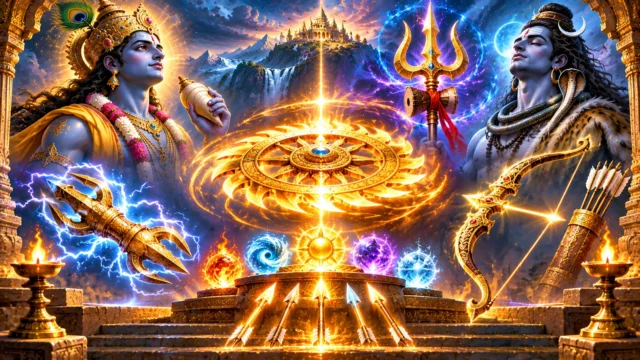
Our journey ends with divine weapons, where visual drama can easily be confused with historical or scientific evidence. The Brahmastra, Pashupatastra, Narayanastra and Sudarshana Chakra appear in epic and Puranic storytelling, but they should not be described as verified modern missiles, nuclear devices or engineering blueprints. Their narrative settings, purposes and ethical consequences are more valuable than claims about a supposed technology that has never been demonstrated by the images.
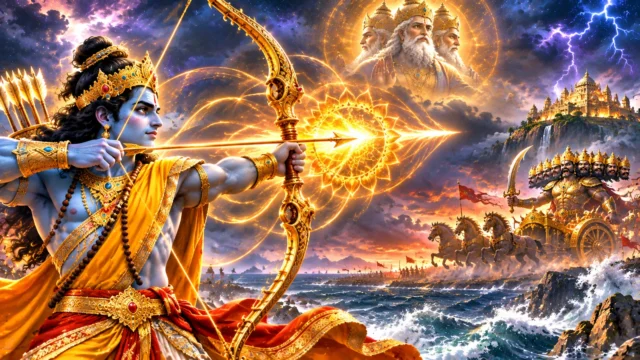
The final compositions show an armored archer releasing a luminous cosmic arrow and a deity lifting a brilliant discus into the sky. They are fantasy interpretations inspired by the literature, not photographs or technical reconstructions. Visitors can continue into existing articles about the weapons’ origins, varying traditions and popular misconceptions. The ending also points back to the beginning: divine power in these stories is inseparable from questions about time, duty, protection and what happens when extraordinary force is used without wisdom.
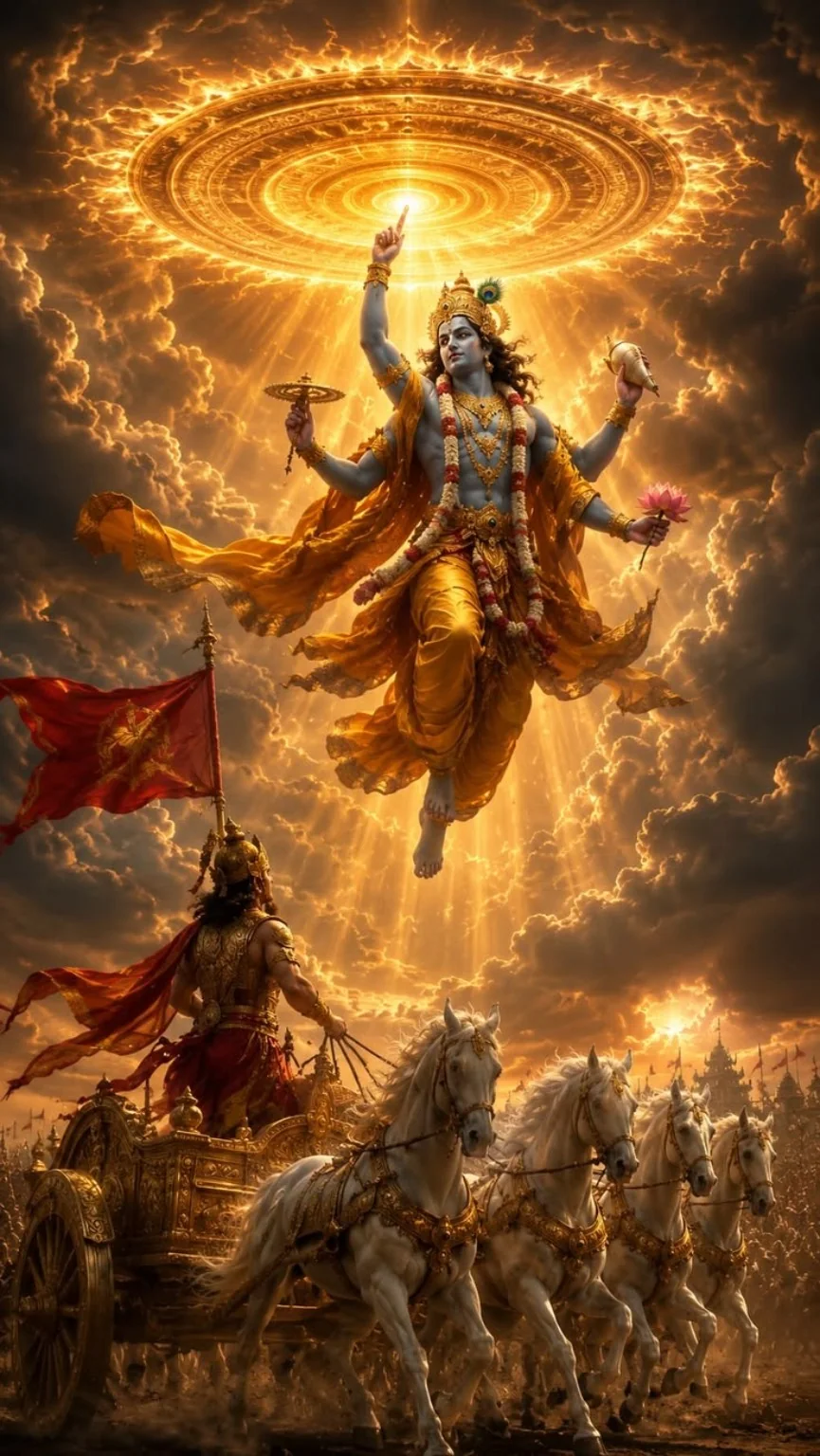
Vishnu Sudarshan Chakra Epic Battle Artwork — An epic-style vision of a luminous divine disc above an ancient battlefield.
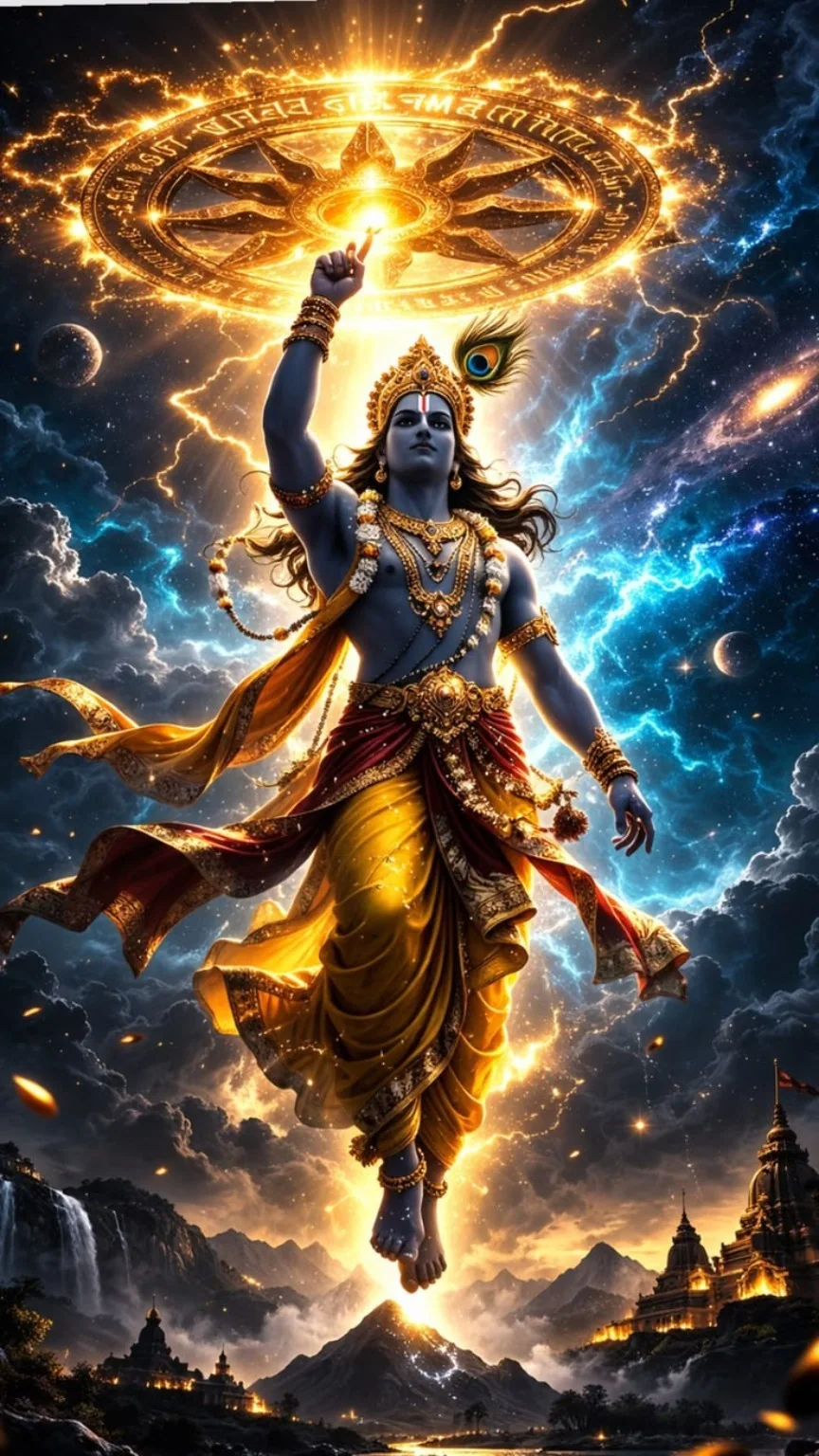
Vishnu Holding Sudarshan Chakra Wallpaper — Vishnu-inspired art with a radiant circular disc above mountains and temples.
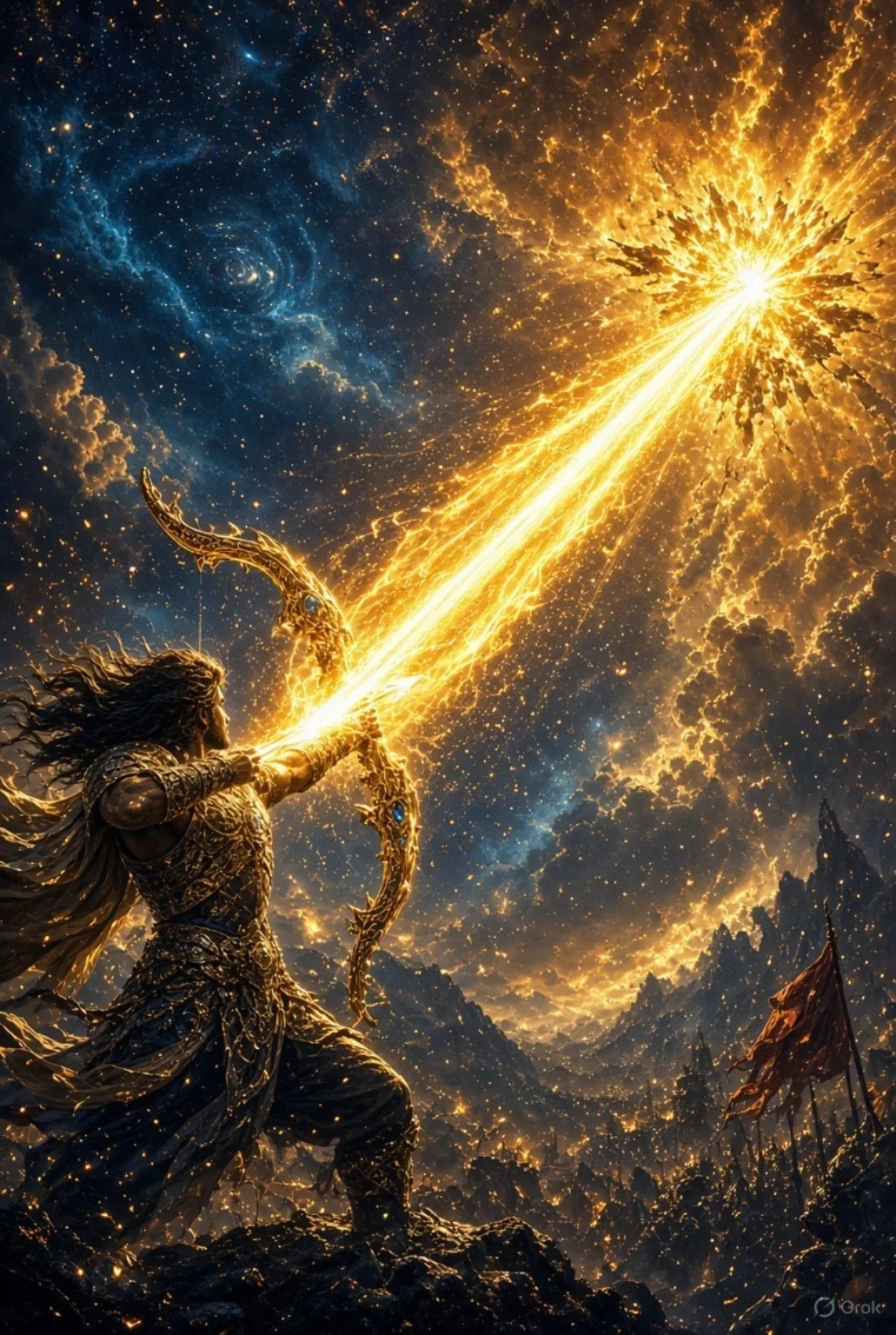
Brahmastra Cosmic Arrow Artwork — A fantasy depiction of a powerful divine arrow resembling the Brahmastra.
Frequently asked questions
Are these genuine photographs of mythological events?
No. These are modern illustrations and digital artworks. They are not presented as photographs of ancient events or scientific evidence.
Do all Hindu texts give one identical timeline of the four yugas?
Widely known calculations exist, but details and interpretations can vary among texts and traditions. Always read a duration together with its source and context.
Why do some Dashavatara lists use Buddha and others Balarama?
Different traditions preserve different lists. Buddha and Balarama are both associated with the ninth position in various tellings, so one chart should not be treated as universally definitive.
Can I use these images as phone wallpapers?
Where image rights allow, the finished page can offer an enlarged view and suitable save/share options. Check the original image dimensions; do not assume every picture is 4K.
Where can I read each full story?
Each chapter links directly to existing, relevant English-language Vista Hub articles covering the story in greater depth.
The end is another beginning
Follow the story from the Sudarshana Chakra back to the Four Yugas. Use the chapter navigation and linked published articles to explore the next layer of each symbol, character and epic.
↑ Back to the beginning




Share Your Opinion
Comments are closed on this post.