 Vista
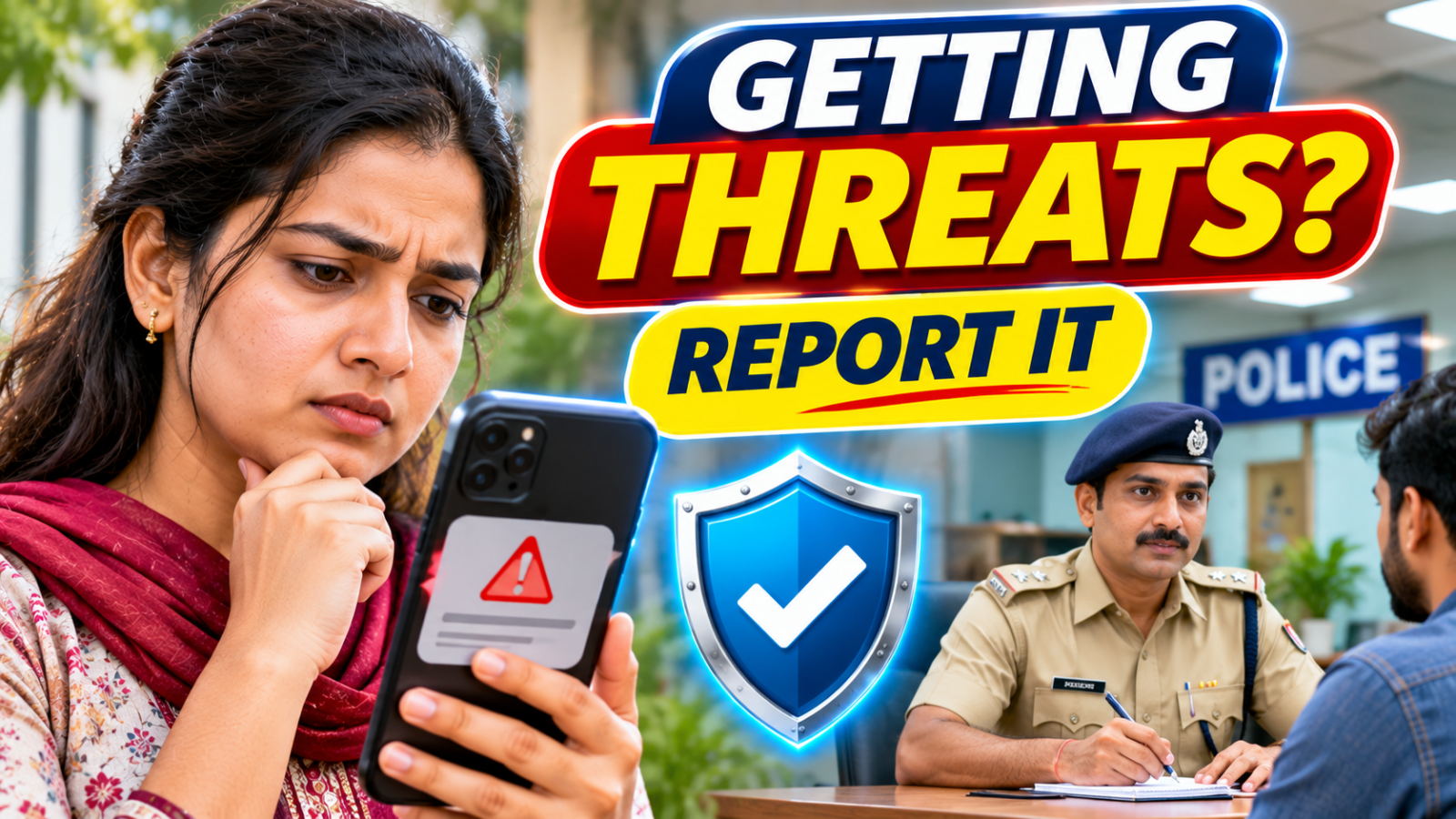
If someone threatens to kill you, repeatedly follows you or physically assaults you in India, prioritise immediate safety. Move to a secure place and call 112 if there is an immediate threat or a medical emergency. Do not arrange a private meeting with the person threatening you or retaliate. Once safe, preserve relevant messages and incident details, inform trusted people and approach the police. Death threats, stalking and physical assault are distinct legal issues under the Bharatiya Nyaya Sanhita (BNS), and the procedure depends on the facts and applicable law.
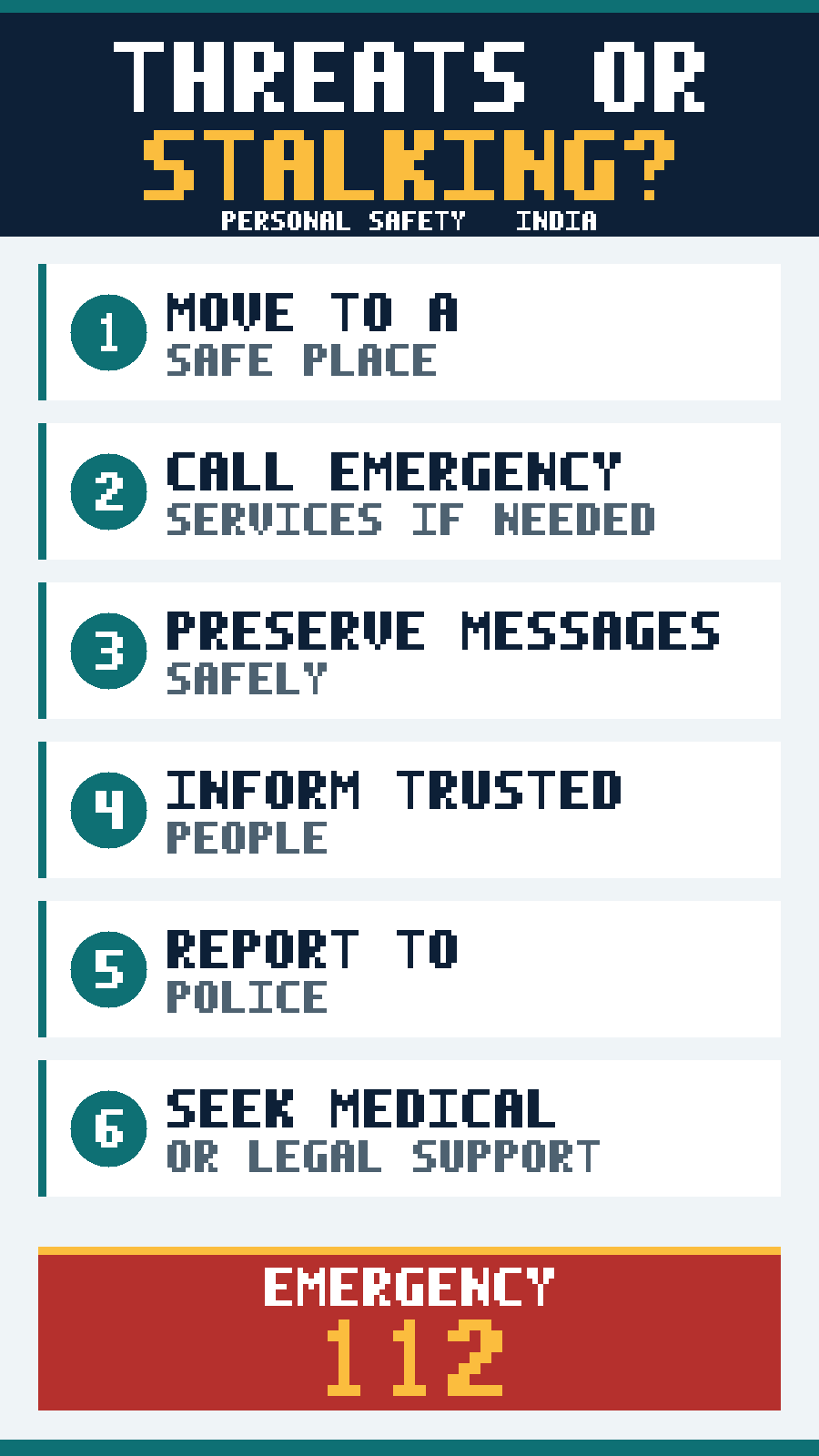
Legal references reviewed: 24 November 2026 | India
1. Immediate safety: what to do when you receive a death threat
Do not wait to collect evidence if someone is approaching you aggressively, has previously attacked you or appears to pose an immediate danger. Call 112 from a safe location and explain where you are, what has happened and what assistance you need. The Ministry of Home Affairs’ Emergency Response Support System connects people in distress with appropriate emergency services, including police and medical assistance.
Tell a trusted friend, relative or colleague about the situation and ask for practical support. If you suspect your phone or accounts are being monitored, consider seeking help using a trusted device. Avoid publishing your current location or plans online. Do not agree to meet the threatening person to settle the dispute if doing so may put you at risk. You do not need a complete collection of evidence before asking for emergency help. If you are already injured, seek medical treatment promptly.
2. Criminal intimidation under BNS section 351
The Bharatiya Nyaya Sanhita came into force on 1 July 2024. Section 351 addresses criminal intimidation, which can involve threats of harm to a person’s body, reputation or property, or harm to certain other people, with the requisite intention to cause alarm or compel conduct that the victim is not legally required to undertake. It also covers threats intended to make someone give up an act they are legally entitled to perform. The words, circumstances, intention and surrounding conduct matter.
Section 351(2) provides for imprisonment of up to two years, a fine or both for ordinary criminal intimidation. Section 351(3) provides for up to seven years, a fine or both for specified aggravated threats, including threats of death or grievous hurt. Section 351(4) addresses anonymous threats or concealment of the source. Insults are not automatically criminal intimidation: section 352 has its own requirements relating to intentional insult and provocation of a breach of peace or an offence.
Under the central First Schedule to the Bharatiya Nagarik Suraksha Sanhita (BNSS), section 351 offences are classified as non-cognizable and bailable. Applicable state amendments and additional offences may affect the procedure. This classification does not make a threat harmless or prevent you from reporting a credible danger and requesting protection.
3. Stalking, repeated unwanted contact and online harassment
BNS section 78 addresses specified conduct by a man towards a woman, including repeatedly pursuing personal contact despite a clear indication of disinterest, or monitoring her electronic communications, subject to statutory exceptions. A first conviction carries imprisonment of up to three years and a fine; a second or subsequent conviction carries up to five years and a fine. The central schedule classifies stalking under this section as cognizable.
The wording of section 78 is gender-specific. Men and other people experiencing persistent harassment can still seek police assistance and may have remedies under other provisions concerning threats, unlawful entry, assault or other relevant conduct. Do not confront the person following you or arrange an encounter to obtain proof. For online stalking and threatening social media communications, the National Cyber Crime Reporting Portal is an additional reporting route. Online submissions do not replace emergency assistance. If you face an immediate physical threat, call 112.
4. Physical assault: medical treatment and medico-legal records
After an assault, seek medical attention. Serious bleeding, breathing difficulty, loss of consciousness or suspected head or neck injuries require urgent medical assessment. Tell the treating clinician what happened and when. Depending on the circumstances, the hospital may document the incident as a medico-legal case (MLC). Do not delay treatment while waiting for police paperwork. Keep the discharge summary, prescriptions, diagnostic reports, bills and available MLC reference.
Depending on the injuries and the circumstances, provisions concerning voluntarily causing hurt under BNS section 115, grievous hurt under section 117 or hurt involving dangerous means under section 118 may be relevant. Other provisions may apply to an assault even when there is no visible injury. A medical record can support a complaint, but the existence of an injury alone does not determine criminal responsibility. Give the authorities an accurate account rather than selecting charges based solely on an online list.
5. How to file a police complaint or FIR under the BNSS
Provide the actual dates, locations, communication details and previous relevant incidents. Under BNSS section 173, information disclosing a cognizable offence can be given to a police station irrespective of the area in which it occurred. Electronic information must be signed within the prescribed three-day period. The recorded information must be supplied free of charge to the informant or victim. For specified offences against women, including stalking under BNS section 78, the law provides for information to be recorded by a woman police officer or woman officer.
For information concerning only a non-cognizable offence, section 174 requires the police to record the substance of the information and refer the informant to the Magistrate. Police ordinarily need a Magistrate’s order to investigate such a case. When a case involves multiple offences and at least one is cognizable, it is treated as cognizable under section 174(4). If a police station refuses to record information disclosing a cognizable offence, section 173(4) provides for sending the information in writing by post to the concerned Superintendent of Police. If necessary, approach the competent Magistrate. Keep copies and delivery proof.
6. Sample police complaint for threats or stalking
To: The Station House Officer, Police Station ___, District ___. Subject: Complaint regarding threats/stalking and request for protection. Sir/Madam, I am ___ and wish to report an incident on ___ at ___, at location/through communication medium ___. The person involved, if known, is ___. The actual details of the incident are ___. Previous relevant incidents are ___. Available supporting evidence is attached. I am concerned about my safety. Please record this complaint, take appropriate action under applicable law, assess the threat and consider necessary protective measures. Name, safe contact number, date and signature.
Adapt the application to your actual circumstances. Do not invent statements or identify a suspect without a basis. Ask for the complaint acknowledgement, diary entry or FIR reference as applicable. If disclosure of your current address may endanger you, explain this concern and request a safe method of contact.
7. Preserve evidence safely and request police protection
Keep original messages, call logs, account identifiers, dated screenshots and witness information. Preserve unaltered copies in a secure location, and avoid provoking further threats just to obtain a recording. Sections 168–170 of the BNSS establish preventive police responsibilities concerning cognizable offences. Request a threat assessment and appropriate safety measures; a personal police guard is not automatically granted. Domestic violence may involve additional protection remedies. See our domestic violence protection guide. Contact NALSA at 15100 for legal aid guidance.
Frequently asked questions
Can I complain about a threat received over the phone?
Yes. Provide the available number, date, time and actual details.
Do I need a recording to report a threat?
No. Report accurately and provide whatever supporting evidence you safely have.
Does every threat lead to immediate arrest?
No. The applicable offence classification and legal conditions determine the procedure.
How do I ask for police protection?
Explain the specific danger in writing and request an assessment and appropriate measures.
What number should I call in an emergency?
Call 112 for emergency assistance in India.
Conclusion and official references
Safety comes before evidence collection. Report threats promptly and choose the lawful complaint route applicable to the incident. Official references: BNS provisions, BNSS provisions, BNSS First Schedule, Emergency response 112 and NALSA.
General legal and safety information, not individual legal advice. State amendments and case circumstances may affect the procedure.
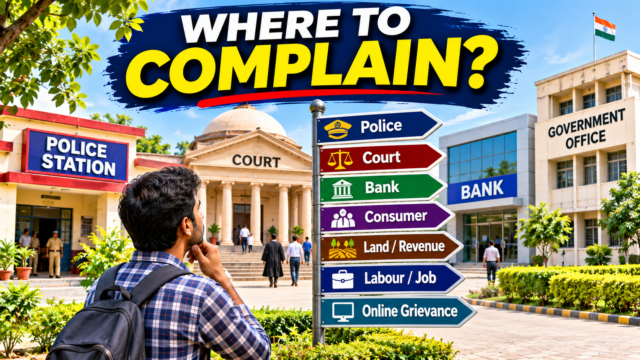
For all topics: Where to Complain in India: Police, Courts, Consumer, Banking and Government Legal Help




















Share Your Opinion
Comments are closed on this post.