 Vista
Updated: 24 November 2026
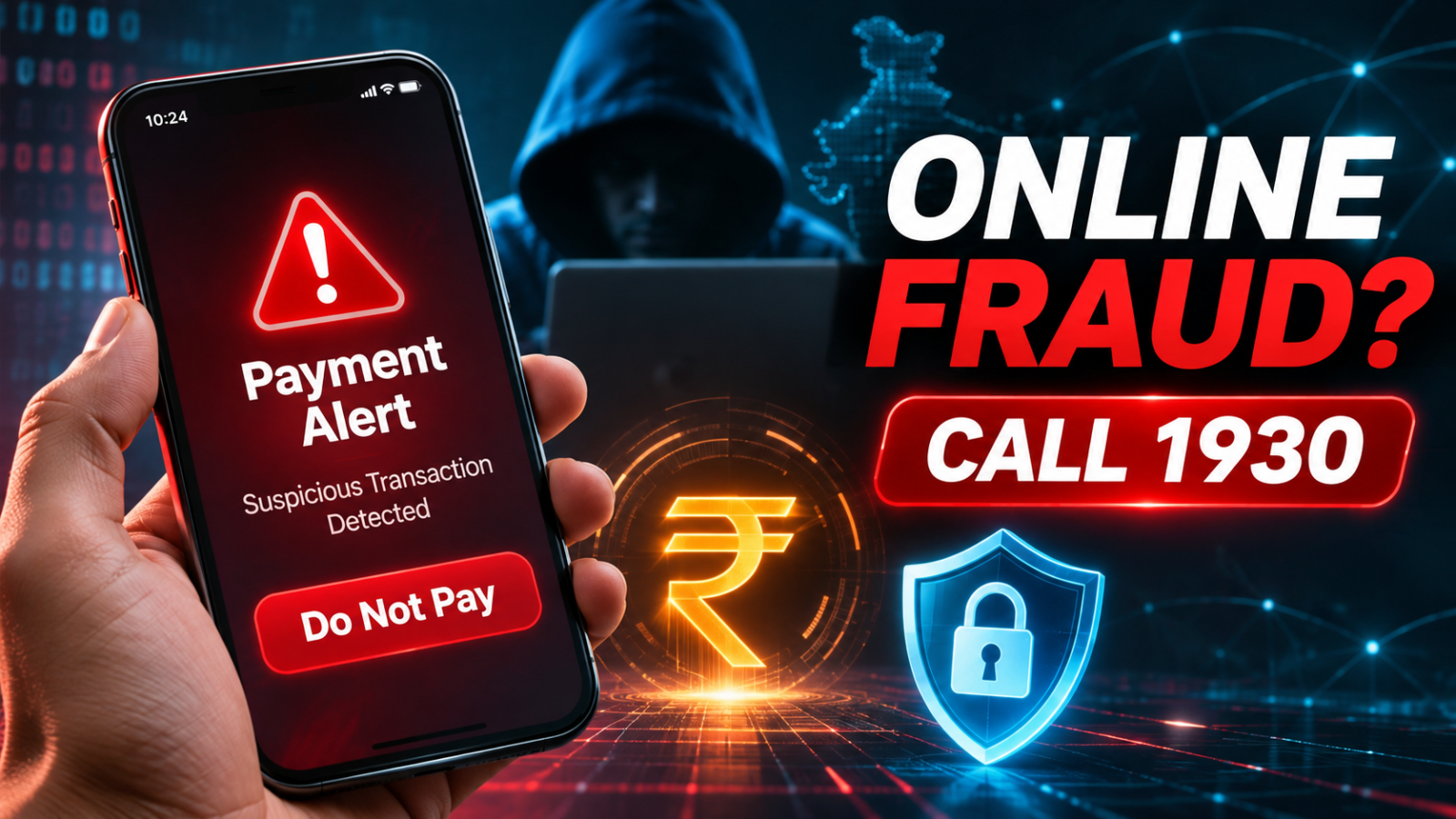
If you have lost money to an online fraud in India, immediately notify your bank, call the national financial cybercrime helpline 1930 and complete your complaint at cybercrime.gov.in. Quick reporting gives banks and investigators a better opportunity to prevent additional losses and trace the stolen funds. However, a complaint does not guarantee a refund. Recovery depends on the circumstances of the transaction, applicable customer protection rules, the availability of funds and the outcome of the investigation.
This guide focuses on what to do after a UPI scam, OTP fraud, fake investment app, online job scam or other financial cybercrime. An accidental transfer to the wrong UPI recipient is a different payment dispute and should not automatically be reported as a criminal fraud.
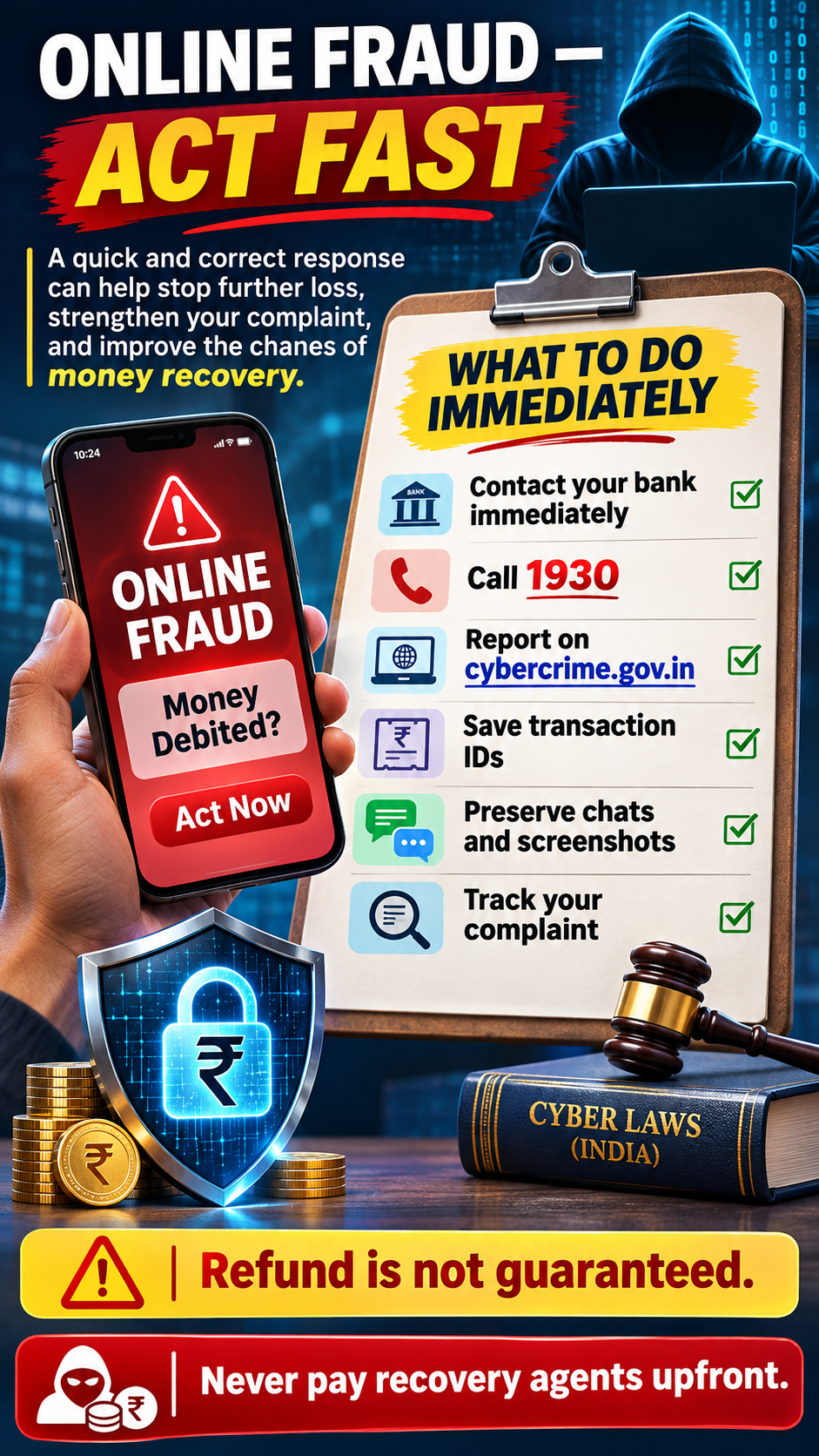
What to do immediately after online financial fraud
- Contact your bank through its official fraud reporting channel. Ask it to secure the account and block affected cards, UPI or online banking facilities as appropriate.
- Call 1930 and report the financial cybercrime without delay.
- Complete the complaint on the national cybercrime portal and retain the acknowledgement number.
- Save transaction records, messages, suspicious links and screenshots.
- If you suspect that a remote access or screen-sharing app has compromised your phone, disconnect it from the internet and use a different trusted device to contact your bank.
Find the bank’s contact number in its official app, website or on your card, rather than relying on an unverified customer service number found through a search engine. Do not tell a caller your OTP, UPI PIN, card security code or banking password. If you suspect that your email or banking credentials have been compromised, change them from a trusted device after securing the affected payment channels. Do not make another payment to unlock an alleged refund.
How to report a financial cybercrime on 1930
The 1930 helpline is designed for urgent financial cybercrime reporting. Have your contact information, bank or wallet name, transaction amount, date, time and reference numbers ready. Explain whether money left your account without authorisation or whether you personally approved a payment after being deceived. That distinction matters when investigators and banks assess the complaint.
The reporting system connects law enforcement with financial institutions to facilitate action on suspected fraud proceeds. Keep the acknowledgement number you receive and follow the official instructions to complete the complaint on the portal as soon as possible. Where the acknowledgement instructs you to complete registration within 24 hours, follow that deadline. If the helpline is busy, do not postpone reporting to your bank or through the portal.
Calling 1930 is an emergency reporting step, not a refund order. Funds might already have moved beyond the first recipient. Investigators and participating financial institutions can use the available transaction details to trace the money and attempt to restrict further movement where appropriate.
How to file a complaint on cybercrime.gov.in
Open the National Cyber Crime Reporting Portal directly. Select the relevant financial fraud reporting option. Register or sign in with your mobile number and enter the verification code yourself on the official website. If you have already reported the incident by phone, follow the instructions associated with your acknowledgement number to complete the existing report.
Provide the incident date and time, transaction references, amount lost, bank or wallet details and a factual description of what happened. Upload identification and relevant evidence as requested by the portal. If known, include suspicious telephone numbers, websites, email addresses and social media profiles. Check the amounts and transaction numbers before submitting. Save the acknowledgement and any downloadable confirmation.
For example, a victim might explain that an individual impersonated a bank employee on a particular morning and two fraudulent payments totalling ₹12,000 followed. The victim would attach the transaction references and messages supporting that account. This is a fictional illustration; your report should describe only what actually happened.
A portal acknowledgement is not automatically a First Information Report (FIR). The relevant state or union territory police assess complaints and take further action under applicable law. Contact the local cybercrime police or police station if additional assistance or formal investigation is required.
Evidence to preserve and a sample bank complaint
Keep the original bank statement, transaction alerts, UPI transaction ID or UTR, recipient details and relevant communication. Save screenshots of suspicious websites, investment dashboards, job advertisements or payment demands. Where the scam involved several transfers, record each payment individually. Preserve original files and avoid altering messages. Share sensitive documents only through appropriate official channels, not in public comments or social media posts.
Sample bank complaint: My account/card ending in ______ was involved in a suspected fraudulent transaction of ₹______ on ______, reference number ______. The circumstances were ______. Please secure the affected banking facilities, investigate the transaction and initiate the applicable dispute or reversal process. Kindly provide a complaint reference and written decision. My cybercrime acknowledgement number is ______. Name and contact details: ______.
Adapt the description to the actual facts. Do not claim a payment was unauthorised if you approved it after being deceived. A transparent report helps establish which remedy applies. Save the time of notification, complaint number and written replies. For UPI payments, you can also raise a transaction dispute through the relevant app, but do not delay notifying your bank.
RBI rules: when can a bank refund an unauthorised transaction?
As of November 2026, the applicable RBI Commercial Banks Responsible Business Conduct Directions distinguish between different sources of responsibility for unauthorised electronic banking transactions.
- Where the bank’s own fraud, negligence or deficiency contributed to the unauthorised transaction, the customer is entitled to zero liability under the applicable framework, irrespective of reporting delay.
- Where a third-party system breach is attributable to neither the bank nor the customer, reporting within three working days of receiving the bank’s transaction communication qualifies for zero liability. Reporting within four to seven working days attracts the prescribed limited liability; later reporting is governed by the bank’s policy.
- Where customer negligence caused the loss, such as sharing payment credentials, the customer can bear losses occurring before notifying the bank. Subsequent unauthorised losses are borne by the bank under the applicable directions.
For covered unauthorised transactions, the current commercial bank framework provides for a provisional credit, known as shadow reversal, within ten working days of notification and determination of liability within a maximum of 90 days. These are not guaranteed refund timelines for every online scam. Payments personally approved under deception may require a different assessment. Check the directions and complaint policy applicable to your institution and transaction.
Upcoming rule change: The RBI issued revised fraudulent electronic banking transaction directions on 24 June 2026, applicable to transactions from 1 January 2027. These introduce a conditional compensation mechanism for qualifying small-value fraud losses. They do not automatically apply to a loss incurred in November 2026. See the official amendment for eligibility and commencement details.
How long does online fraud money recovery take?
Freezing suspected proceeds, receiving a provisional bank credit and obtaining final restitution are different outcomes. Funds may be available in a recipient account or may already have been transferred or withdrawn. Release of restrained money can require further investigation, verification or an appropriate legal order. There is no universal deadline by which every cybercrime complaint must result in a refund.
Track your complaint through the portal’s reporting and tracking service. Ask the bank for a written explanation of its decision and follow its grievance escalation process. If the regulated institution’s response is unsatisfactory, or if the applicable response period expires without a reply, eligible service complaints can be submitted through the free RBI Complaint Management System. Under the Ombudsman Scheme effective 1 July 2026, the no-reply waiting period is 30 days or a longer applicable RBI, NPCI or card-network timeline. The Ombudsman is not a substitute for criminal investigation.
Frequently asked questions
Does calling 1930 guarantee a full refund?
No. The speed of reporting, available proceeds, bank liability and investigation all affect recovery.
Can I report an OTP scam if I shared the OTP?
Yes. Report immediately and explain the facts accurately. Customer liability is assessed separately.
A fake investment app asks for a tax to release my balance. Should I pay?
Do not send additional money to an unverified recipient. Preserve the demand and previous payments as evidence and report the suspected fraud.
Can I complain if the fraud happened several days ago?
Yes. Report it now, although delay may affect the prospects of restraining funds and the applicable bank liability assessment.
Should I hire a recovery agent who promises a guaranteed refund?
Avoid strangers demanding advance payments or access to your banking account. Use official bank, police and regulatory channels.
Conclusion: Contact your bank immediately, call 1930, complete the portal complaint and preserve the evidence. Track both the bank dispute and the cybercrime investigation rather than relying on promises of guaranteed recovery.
Official references: Cybercrime complaint checklist; Current RBI directions; Amendment applicable from January 2027; RBI Ombudsman FAQ 2026. General information for India; individual outcomes are not guaranteed.






















Share Your Opinion
Comments are closed on this post.