 Vista
Updated: 24 November 2026
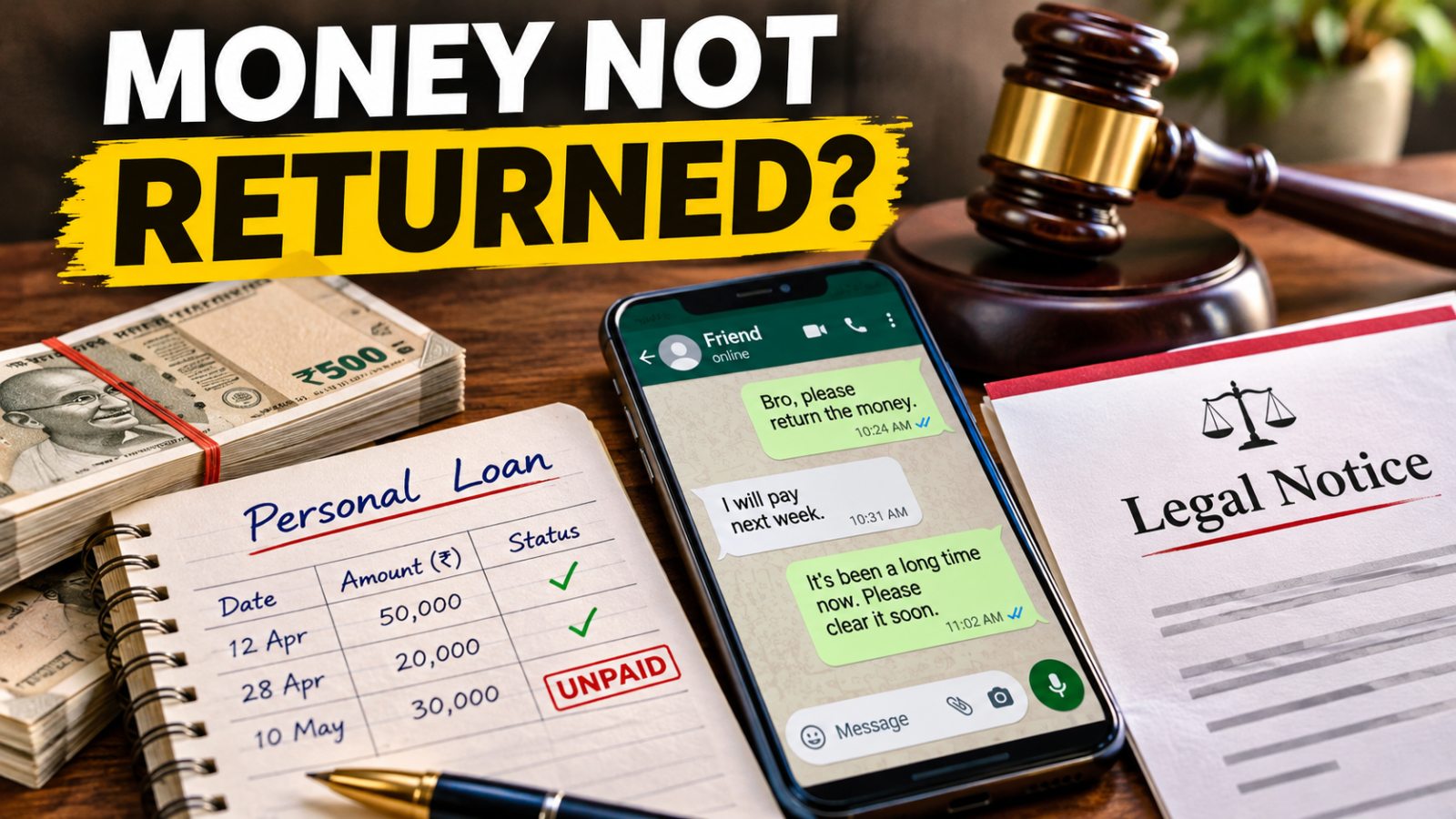
If a friend or relative is not returning borrowed money in India, first preserve evidence of the payment and agreement, send a clear written demand, and consider a realistic repayment plan or mediation. If these steps fail, seek legal advice about a formal notice and a civil money recovery suit. Failure to repay alone is not necessarily cheating, and the police are not a general debt collection service. Pay close attention to the legal deadline for filing a claim, even while negotiations continue.
A personal loan may have been transferred through UPI, paid in cash or advanced over several months. In each case, it is important to distinguish a repayable loan from a gift, shared expenditure, business investment or payment for goods. Your evidence must support not only that money moved from one person to another, but also the basis on which the borrower was expected to return it.
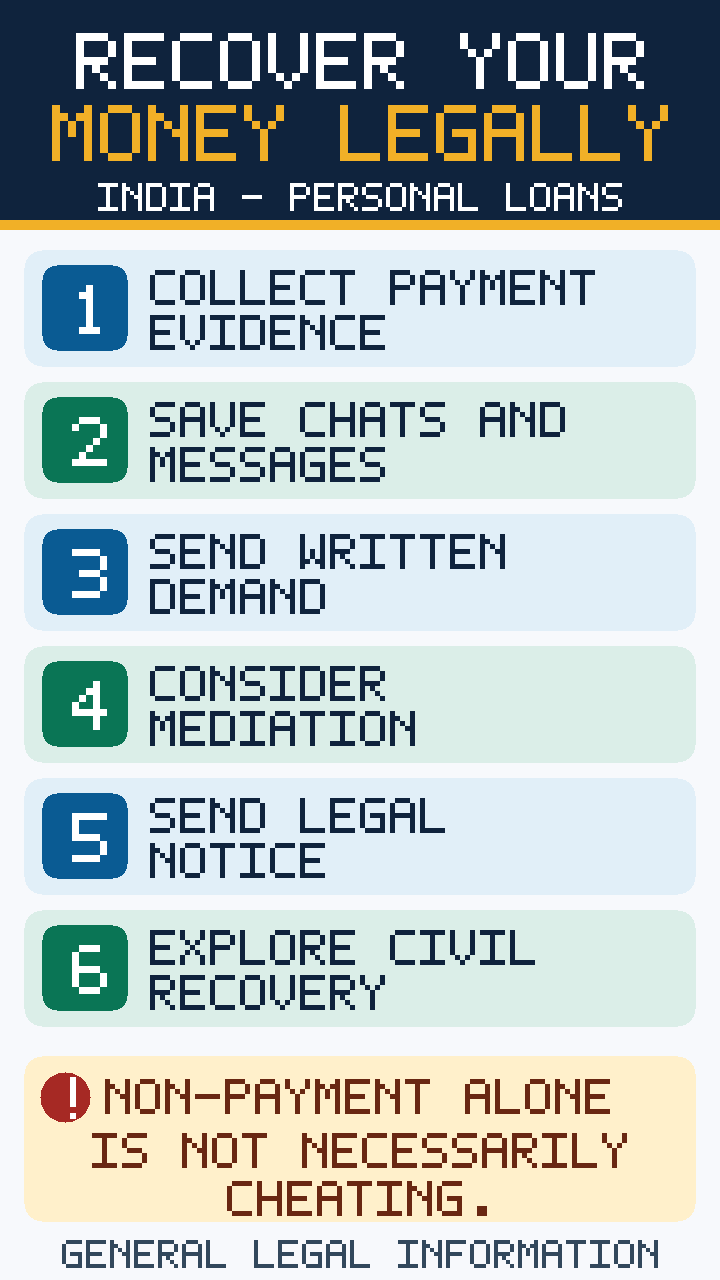
What to do first when a friend refuses to repay a loan
Prepare a dated record of the amount lent, the method of payment, the reason given for borrowing, the agreed repayment date if any, and all amounts already returned. Where several payments were made, list each transfer separately. Identify the remaining principal accurately rather than adding an arbitrary penalty or interest that was never agreed. If an interest claim is contemplated, ask a lawyer to check its contractual and legal basis.
Contact the borrower privately and calmly in writing. If the difficulty is temporary, a realistic instalment plan may be more useful than insisting on an immediate lump sum that the borrower cannot pay. Record the dates and amounts of instalments, how payments are to be made, and the balance after each payment. Obtain written acceptance and retain receipts. Do not wait indefinitely on repeated oral promises, especially if the legal deadline is approaching.
Avoid threats, public accusations, harassment of family members, seizure of belongings or unauthorised access to accounts. These actions can create new civil or criminal problems and do not establish your right to recover the loan. Keep the discussion factual and do not disclose sensitive information publicly.
Can WhatsApp chats, UPI records and cash payments prove a loan?
Save the UPI transaction reference, bank statement, recipient details, payment date and transaction narration. An app screenshot may help, but obtain the underlying bank record as well. A transfer shows that money was sent; it does not automatically establish the purpose or repayment terms. Messages in which the recipient acknowledges the loan, agrees to repay it or discusses instalments may help connect the transfer to the debt.
Export relevant WhatsApp conversations, preserve the complete context and keep the original device and backups. Screenshots should show dates and identifying information where available. Do not edit messages or fabricate evidence. Sections 61 to 63 of the Bharatiya Sakshya Adhiniyam, 2023 (BSA) address electronic records. Where copies or computer outputs are relied upon, the conditions and prescribed certificate under section 63 may apply. Ask a lawyer how to produce the material properly. Admissibility and the weight a court gives a document are different questions.
If the loan was made in cash without a written agreement, a receipt, contemporaneous messages, independent witnesses and later acknowledgments may support the claim. A cash withdrawal on the same day can corroborate the circumstances, but does not itself establish delivery to the borrower. Oral agreements can sometimes be enforceable, subject to proof and applicable formalities. Large cash loans may raise separate tax-law restrictions. Never backdate a document or invent a witness to improve the case.
How to send a written demand and legal notice for money recovery
Start with a short, factual written request that identifies the original loan, payments received and balance outstanding. Set a reasonable response date. Seven or fifteen days may be practical in some situations, but neither is a universal statutory notice period for private loans. If the borrower disputes the balance, invite a written explanation and reconcile the records.
Sample written demand for repayment
Dear ______, on ______ I lent you ₹______ under our agreement that the amount would be repaid by/on ______. I have received ₹______ so far, leaving ₹______ outstanding. Please repay the outstanding amount by ______ through the agreed bank or UPI method, or provide a realistic written instalment proposal. I would prefer to resolve this matter amicably. If it remains unresolved, I may seek legal advice and pursue the remedies available under law. Regards, ______. Date: ______.
Use only accurate facts and adapt the template to your agreement. Keep the message and any reply. If an informal demand fails, a lawyer can prepare a formal legal notice describing the claim, evidence, outstanding amount and requested remedy. Retain proof of dispatch and delivery through appropriate postal or electronic channels. A lawyer’s notice is not universally mandatory for an ordinary private recovery suit, although contractual or special statutory requirements may apply. Sending a demand or notice does not by itself stop the limitation clock.
Police complaint versus civil recovery: when is non-payment cheating?
A borrower who honestly intended to repay but later experienced financial difficulty may have breached a contractual obligation without committing cheating. Section 318 of the Bharatiya Nyaya Sanhita, 2023 (BNS) concerns deception and the dishonest or fraudulent inducement specified by the provision. Evidence of a false identity, fabricated documents or dishonest intention at the time the money was obtained can be relevant. Later non-payment alone does not conclusively establish that intention.
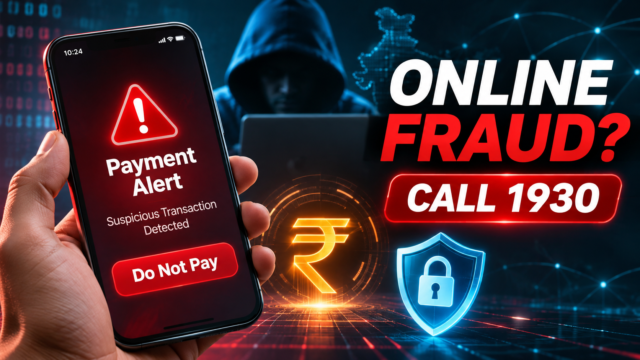
Where there is credible evidence of an actual criminal offence, provide the police with an accurate chronology, records of payment and evidence of the deception. If information disclosing a cognizable offence is refused registration, section 173(4) of the Bharatiya Nagarik Suraksha Sanhita provides a route through the Superintendent of Police and, where appropriate, a Magistrate. Do not use a criminal complaint merely to frighten someone into repaying an ordinary civil debt. Genuine online financial fraud should be reported promptly to the bank and the national cybercrime helpline 1930 or cybercrime.gov.in; this is not a routine personal loan recovery service.
Mediation, Lok Adalat and the civil money recovery suit
A neutral mediator can help parties reach a practical written repayment agreement. A person may also contact the District Legal Services Authority (DLSA) about pre-litigation Lok Adalat proceedings. An ordinary Lok Adalat facilitates voluntary settlement; it cannot impose a decision on an ordinary private debt dispute when the parties do not agree. A valid settlement award has legal effect and may be enforced as provided by law.
If settlement is not possible, consider filing a recovery suit before the competent civil court. The appropriate court depends on the amount, territorial jurisdiction and applicable local rules. A lawyer can assess court fees, documents, interest and the likely cost of proceedings. Order XXXVII of the Code of Civil Procedure, 1908 provides a summary procedure for specified claims, such as certain liquidated monetary demands arising from written contracts. A UPI transfer or a chat does not automatically make every debt eligible for this route.
Even a successful judgment does not necessarily result in immediate payment. If the debtor fails to comply, execution under the CPC may be necessary. The court’s powers, the debtor’s available assets and legal exemptions affect recovery. For a relatively small loan, compare the expense of litigation with the likely amount recovered and consider settlement where practical.
What is the three-year limitation period for money recovery?
Articles 19 and 21 of the Schedule to the Limitation Act, 1963 generally prescribe three years from the date the loan was made for ordinary money lent and loans payable on demand, respectively. A fixed future repayment date, instalment agreement or other instrument can require a different analysis. Do not assume that three years always starts when you first ask for repayment, send a notice or receive the most recent message.
Under section 18, a qualifying acknowledgment in writing and signed by the liable person or authorised agent before expiry can start a fresh limitation period. Section 19 addresses qualifying part payment before expiry, with its own written acknowledgment requirements. A verbal promise, unanswered message or every electronic payment does not automatically extend limitation. In certain circumstances, section 25(3) of the Indian Contract Act may make a qualifying written and signed promise to pay a time-barred debt enforceable. Get advice about the precise documents and dates rather than relying on a general rule.
Frequently asked questions
Can I recover money without a signed loan agreement?
Possibly. You still need credible evidence of the loan and repayment obligation. Payment records, messages, acknowledgments and witnesses may help.
Can I file a police complaint if my friend refuses to pay?
Report genuine criminal conduct, but an ordinary unpaid personal loan generally requires civil remedies.
Are WhatsApp screenshots sufficient evidence?
Not automatically. Authenticity, context, identity, statutory electronic evidence requirements and other proof all matter.
Does a legal notice restart the three-year deadline?
No. A notice alone does not restart limitation. Qualifying acknowledgments or part payments must be assessed under the applicable rules.
Where can I get free legal advice?
Contact the District Legal Services Authority or NALSA’s toll-free helpline 15100. Eligible people may receive free legal assistance.
Conclusion: Preserve payment records, make a reasonable written demand and use lawful dispute resolution. Seek timely legal advice before a limitation deadline expires. Avoid threats or coercion and distinguish a genuine criminal offence from a civil repayment dispute.
Official references: India Code (Limitation Act, BSA, BNS, CPC and Indian Contract Act); NALSA Lok Adalats; National Cyber Crime Reporting Portal. This article provides general Indian legal information, not individual legal advice.
















Share Your Opinion
Comments are closed on this post.