 Vista
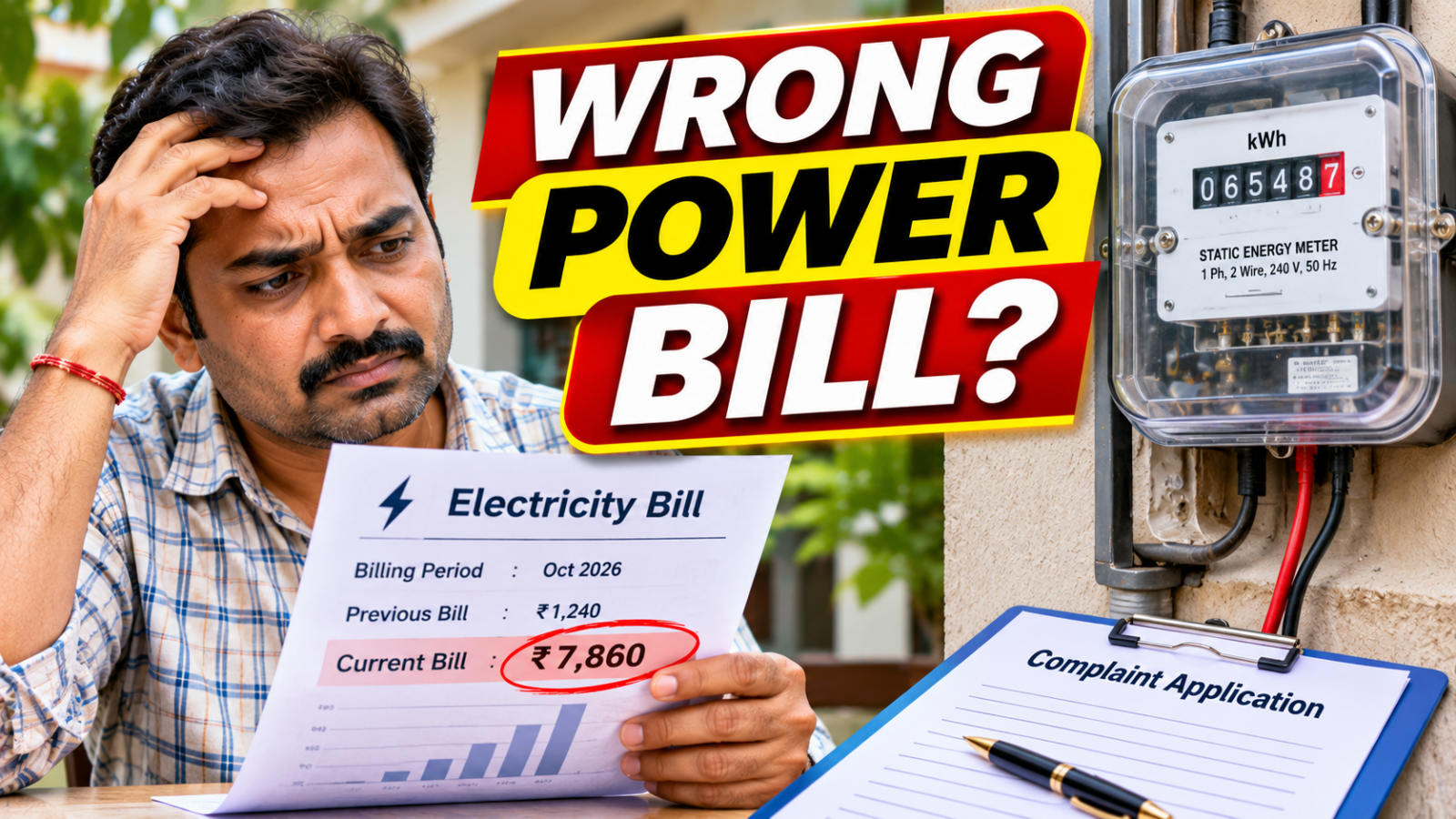
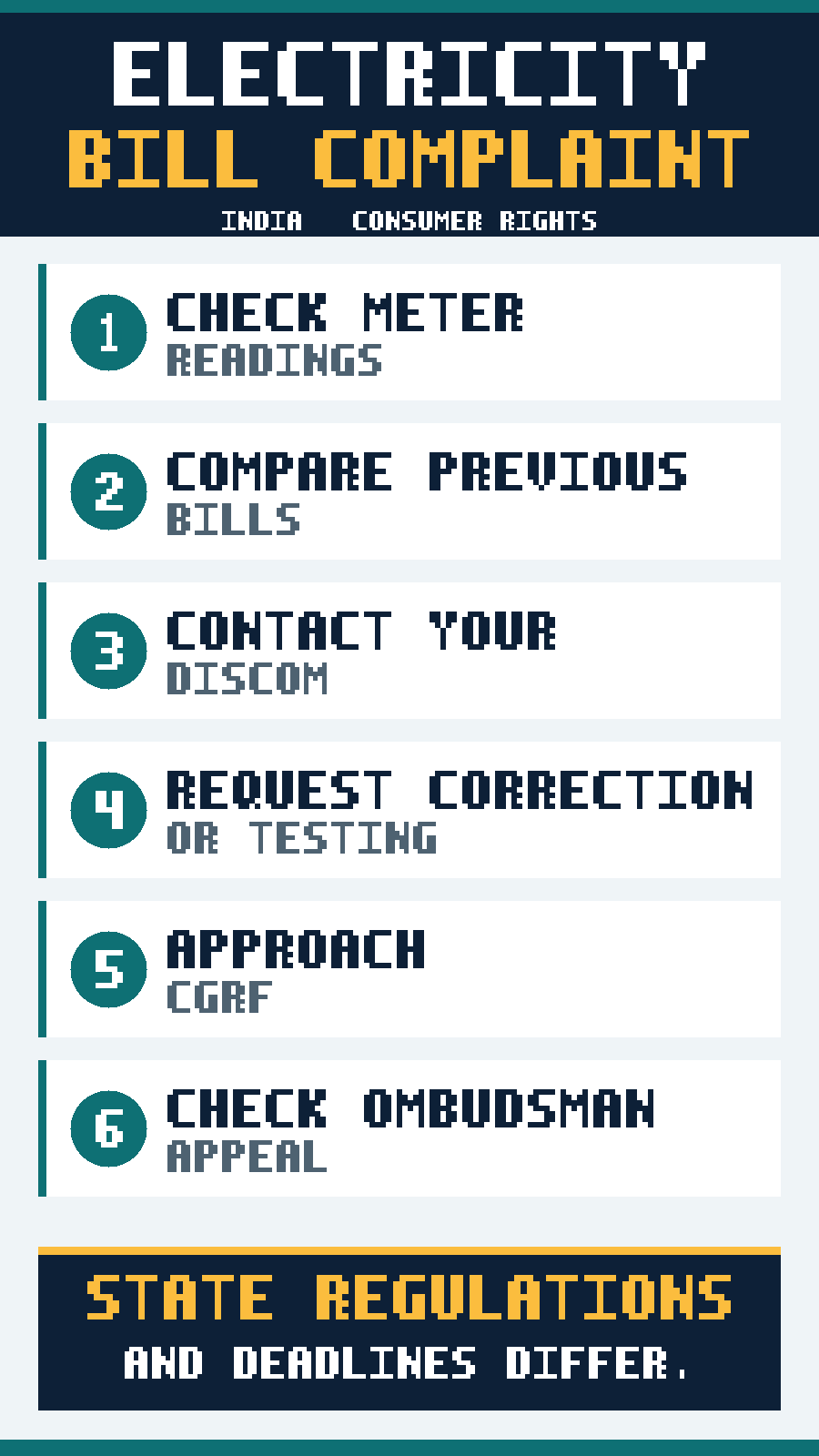
If your electricity bill suddenly increases, contains an incorrect meter reading or results in a disputed disconnection, contact your electricity distribution company (DISCOM) in writing. Compare the bill with previous readings and payment receipts, request a correction or meter test where necessary, and retain the complaint reference. If the problem remains unresolved, the Consumer Grievance Redressal Forum (CGRF) and Electricity Ombudsman provide statutory complaint routes. Ordinary billing errors, unauthorised electricity use and allegations of electricity theft require different procedures. This guide explains how to identify the appropriate route.
Legal references reviewed: 24 November 2026 | India
1. Why has your electricity bill suddenly increased?
Check the consumer account number, meter serial number, billing dates, previous and current readings, units consumed, tariff category and payment deadline. Compare at least a few previous bills. A higher amount does not necessarily indicate an incorrect meter. Increased appliance use, a longer billing period, revised tariffs, fixed charges, fuel adjustments, old arrears or a change in subsidy eligibility can increase the total even when the meter works correctly.
For example, if a standard meter with a multiplying factor of one recorded 2450 units previously and 2600 units at the next reading, the difference is 150 units. If the bill instead records 2900 units for that same reading date, a reliable dated record showing 2600 suggests a discrepancy worth investigating. A photograph taken on a different date cannot automatically establish the error. Check meter replacements, multiplying factors and adjustments for previously estimated consumption before drawing conclusions.
Photograph the display only where it is safe to do so without touching the meter, opening its enclosure or interfering with seals. Contact the distribution company if there are signs of overheating, sparking or damaged electrical equipment. Ask a qualified electrician to investigate suspected internal wiring faults safely. Do not attempt to test a live meter yourself.
2. How to request electricity meter testing or a check meter
Under rule 5(7) of the Electricity (Rights of Consumers) Rules, 2020, as amended in February 2024, the distribution licensee must test meters within 30 days of receiving qualifying complaints, including readings inconsistent with consumption or a malfunctioning meter. Where a consumer specifically complains that meter readings do not correspond to actual consumption, the amended rule also requires installation of an additional meter within five days to verify consumption for at least three months. This is a verification mechanism, not an automatic cancellation of the disputed bill.
Request the testing date, applicable charges, written results and the basis for any revised billing calculation. Where the result is disputed, ask about testing by an approved independent facility under the applicable rules. Responsibility for testing costs can depend on the outcome and governing provisions. If a meter is found defective, the relevant state supply code determines how affected consumption and bills should be assessed. For smart prepaid meters, review available consumption data, recharge history and deductions before raising the dispute.
3. File a wrong electricity bill complaint with your DISCOM
Use the official customer portal, application, helpline or local office identified on your bill. Explain the specific issue, such as an incorrect reading, wrongly applied tariff, missing payment credit, duplicate arrears or a suspected defective meter. Provide copies of the disputed bill, previous bills, payment receipts and safely obtained meter photographs. Ask for a complaint number and the applicable service resolution deadline.
Request a written calculation and corrected invoice rather than simply asking for a lower bill. Where an error is established, ask about adjustment of excess charges and any associated late fees. Keep a record of every follow-up. Filing a complaint alone does not automatically suspend payment deadlines or disconnection proceedings. Ask the company about interim protection and applicable payment requirements, especially if a disconnection notice has already arrived.
Beware of messages claiming that your electricity will be disconnected unless you transfer money immediately to a personal account or install an unfamiliar application. Verify the demand through the distribution company’s official channels. Do not share banking passwords or OTPs.
4. Electricity disconnection without notice: section 56 protections
Section 56(1) of the Electricity Act, 2003 requires at least fifteen clear days of written notice before disconnection for ordinary non-payment of the relevant dues. Check whether a valid notice was included with the bill or separately served. Other circumstances, such as immediate safety risks, theft-related disconnection or applicable prepaid arrangements, may involve different rules.
The proviso to section 56(1) protects supply pending resolution of a dispute when the consumer deposits the prescribed amount under protest. The statutory comparison is between the amount claimed and the monthly electricity charges calculated using the average charges paid during the preceding six months, with the lower applicable amount being deposited. Obtain the proper calculation for your billing periods, record that payment is under protest and retain the receipt. This protection is not a waiver of the underlying debt.
If supply has already been disconnected, request the written reason, a copy of the notice and urgent restoration where justified. Seek interim relief through the appropriate grievance route. Do not reconnect the supply yourself or ask an unauthorised person to do so.
5. CGRF complaint and representation to the Electricity Ombudsman
Section 42(5) requires distribution licensees to establish consumer grievance redressal forums. If the initial complaint remains unresolved, identify the correct CGRF level under your state electricity regulatory commission’s rules. Submit the relevant bills, complaint history, payment evidence, company response and specific relief requested. The central consumer rights rules envisage disposal normally within thirty days and no later than forty-five days after receipt of the grievance. Follow the applicable local filing and escalation requirements.
Under section 42(6), a consumer whose grievance remains unredressed may make a representation to the Electricity Ombudsman appointed by the state commission. Complete the required forum stages first and check the prescribed filing deadline, form, documents and any applicable deposit requirement. For example, the Madhya Pradesh Electricity Regulatory Commission provides a DISCOM-wise forum directory and current regulations, including its July 2026 amendment. Consumers elsewhere should consult their own state commission. Do not assume every state has the same Ombudsman deadline.
6. Sample electricity bill complaint application
To: The concerned officer, Electricity Distribution Company ___. Subject: Request for correction of electricity bill/meter testing/restoration of supply. My consumer number is ___ and meter number is ___. The bill for ___ shows an amount of ₹___. I dispute the following entry or action: ___. Copies of the relevant readings, earlier bills and payment records are attached. Please investigate, issue a corrected bill where appropriate, arrange the necessary meter test and consider applicable interim protection or restoration. Kindly provide a complaint reference and a written decision. Name, address, contact details, date and signature.
Adapt this example to the actual problem. If you have received a statutory assessment or disconnection notice, identify its reference and date, and use the appropriate procedure rather than relying on this general application alone.
7. Unauthorised use and electricity theft are different from billing errors
An assessment under section 126 concerns unauthorised use of electricity and has its own objection and hearing mechanism. Section 127 generally permits an appeal against the final assessment within thirty days, subject to deposit of half the assessed amount and other applicable filing requirements. Section 135 concerns theft and involves separate criminal and disconnection provisions. Do not substitute an ordinary CGRF complaint for the required statutory procedure. See our separate guide: False electricity theft allegations and statutory appeals.
Frequently asked questions
Can I stop paying as soon as I dispute my bill?
No. Check the applicable payment requirements and request interim protection.
Will replacing the meter cancel previous bills?
No. Earlier bills must be reviewed and adjusted under the applicable rules.
Where do I complain if my DISCOM does not respond?
Use the competent CGRF and, where eligible, the Electricity Ombudsman.
Can excess payments be recovered?
Verified excess charges may be refunded or adjusted under applicable regulations.
Are all state Ombudsman deadlines identical?
No. Consult the current regulations for your distribution area.
Conclusion and official references
Preserve evidence and request a written resolution through the proper authority. Official references: Electricity Act, 2003, Consumer Rights Rules 2020, 2024 amendment and MPERC regulations. The proposed central 2026 amendments should not be treated as enacted rules.
General legal information, not individual legal advice. State regulations and case circumstances may affect the remedy.
For all topics: Where to Complain in India: Police, Courts, Consumer, Banking and Government Legal Help
















Share Your Opinion
Comments are closed on this post.