False electricity-theft allegation: what to do first
A meter inspection has led to a large demand, VCR or theft notice. Read the section, order stage and response deadline first. Section 126 assessment and section 135 criminal allegations follow different processes. Obtain records, object promptly and choose the correct forum. A general grievance does not stop the statutory appeal clock.
The direct answer is not simply to file with CGRF. Provisional section 126 assessment calls for objections/hearing before the assessing officer; a final order has the section 127 appeal route. Section 135 prosecution requires the competent Special Court and appropriate criminal remedies. Ordinary billing/service grievances may have a separate CGRF route.
- Keep the consumer number, meter details, VCR and notices/orders.
- Identify provisional/final status and the invoked sections.
- Record service, objection and appeal dates separately.
- Request inspection, testing and calculation records.
- Review assessment, supply and criminal relief separately with a lawyer.
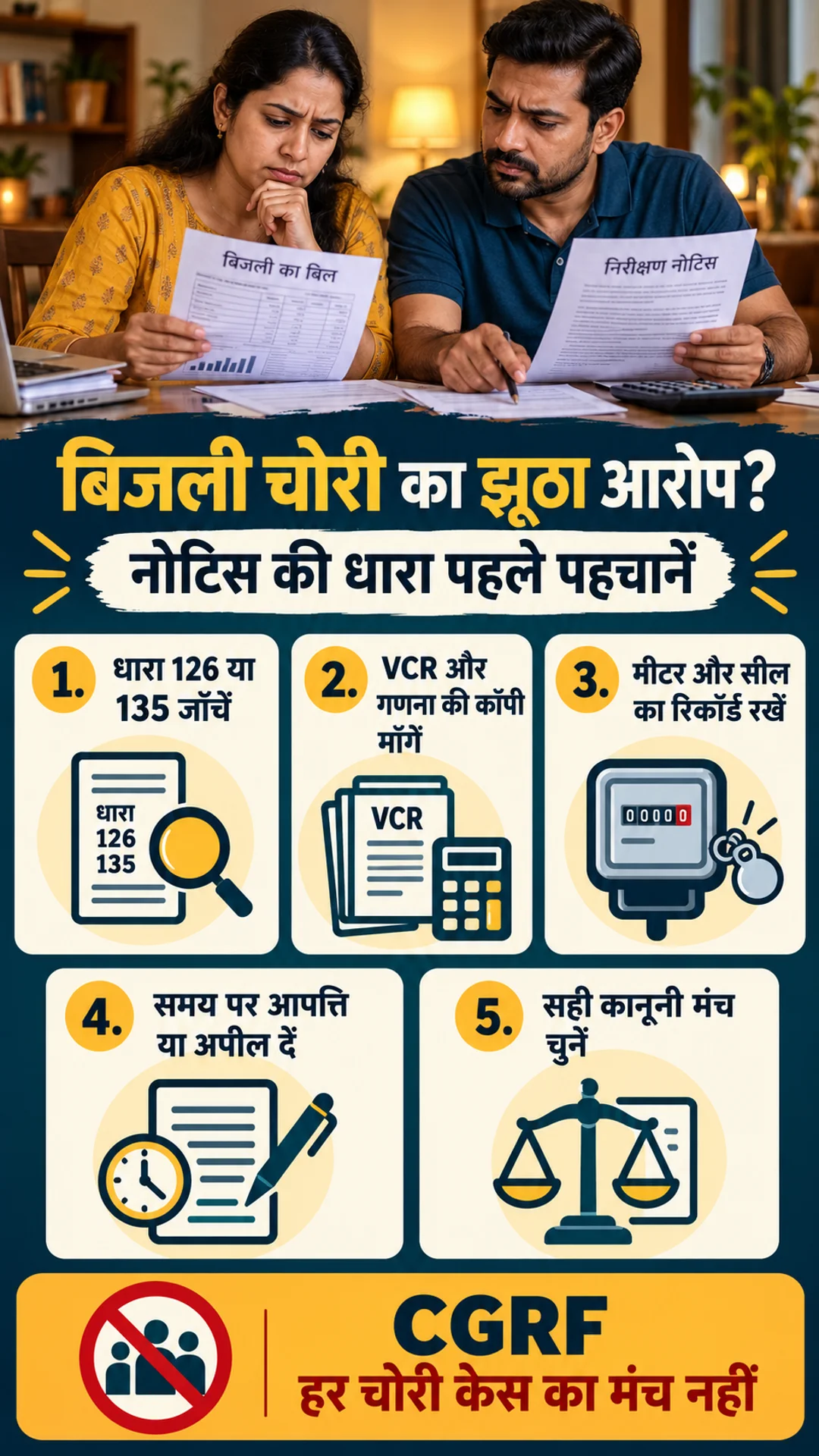
Section 126 and section 135 are different
Section 126 concerns assessment for unauthorised use, including statutory situations involving unauthorised/artificial means, a tampered meter, purpose or premises. It is a quasi-judicial assessment process. Objections and a reasonable hearing before the final decision matter; a verbal inspection allegation is not equivalent to a final order.
Section 135 is a theft offence involving dishonesty and the specified acts. Criminal liability, disconnection and a monetary demand may arise. Do not determine the category solely from a reference to load, tariff or reading. Read the allegations and the actual proceeding rather than assuming every irregularity is theft.
Assessment and criminal proceedings can arise together. An application or payment in one does not automatically acquit a person in the other. A section 126 order is not itself a criminal conviction, and payment of a section 135-related bill does not automatically end an FIR. Compounding, civil liability and reconnection require separate examination.
Objections under section 126 and appeal under section 127
Object to the provisional assessment before the assessing officer with specific facts and records. Ask what the inspection established and how the amount was calculated. Section 126(3) provides for a final order within thirty days of service of the provisional order after a reasonable hearing. This is not a universal thirty-day period for you to ignore an earlier objection deadline; read the notice and applicable procedure promptly.
Where the unauthorised-use period is ascertainable, section 126 uses that period; otherwise the statutory rule limits it to twelve months preceding inspection. The rate is twice the relevant tariff. Check load, period, category, previous credits and the applied formula. A large total alone does not identify the calculation error.
A final section 126 order can be appealed under section 127 within thirty days of the order to the prescribed appellate authority. Half of the assessed amount and proof of deposit are required for the appeal to be entertained. Do not confuse this with a universal fifty-percent condition for provisional objections. Check the current state form, fee and deposit procedure.
If the deposit is unaffordable or a serious jurisdiction/hearing defect exists, obtain advice on the available remedy. A hardship grievance does not itself remove the pre-deposit rule. Filing an appeal is not automatically a stay: seek appropriate interim protection. Section 145’s civil-court jurisdiction bar makes an ordinary suit an unsuitable assumed shortcut around statutory assessment remedies.
Section 135: complaint, disconnection and Special Court
Section 135(1A) provides for immediate disconnection by an authorised officer upon detection of theft. It also requires the related police complaint within twenty-four hours of disconnection, and restoration within forty-eight hours of payment/deposit of applicable assessed charges under the Act. Restoration does not dispense with the complaint obligation or automatically end prosecution.
Obtain criminal-law assistance promptly for a complaint/FIR, summons or arrest concern. Attendance and bail remedies depend on facts and applicable law. Section 154 gives the Special Court a role in theft trial and civil liability. Identify the utility demand, criminal fine/sentence and civil liability separately; calling them all a challan hides important differences.
Compounding under section 152 is a separate statutory mechanism with its own authority, eligibility, amount and effect. An ordinary bill receipt is not necessarily a compounding order. If the allegation is false, clarify inspection facts, occupation/ownership and the alleged role. Never destroy evidence, open seals yourself or reconnect supply unlawfully.
VCR, meter testing, laboratory and video evidence
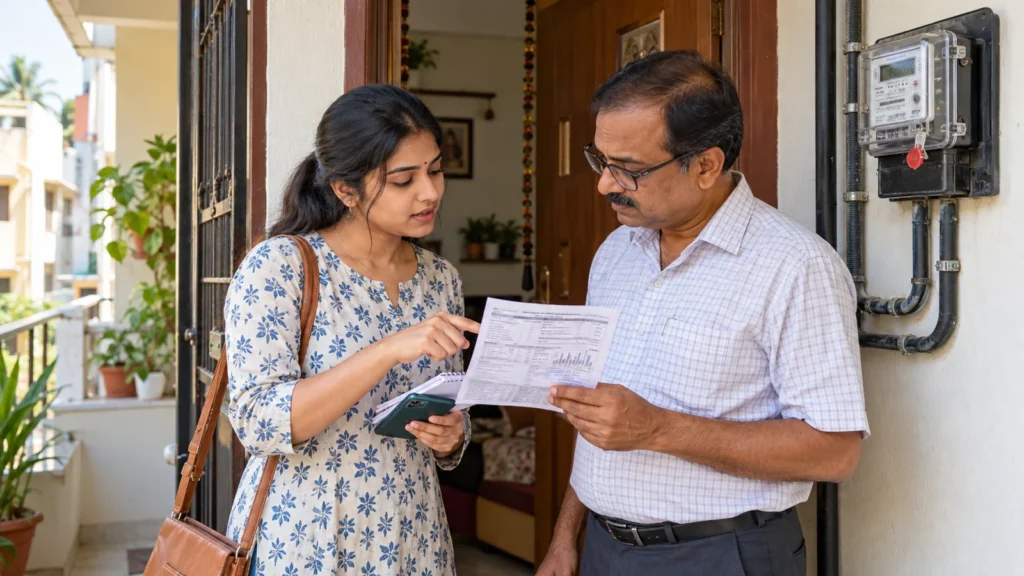
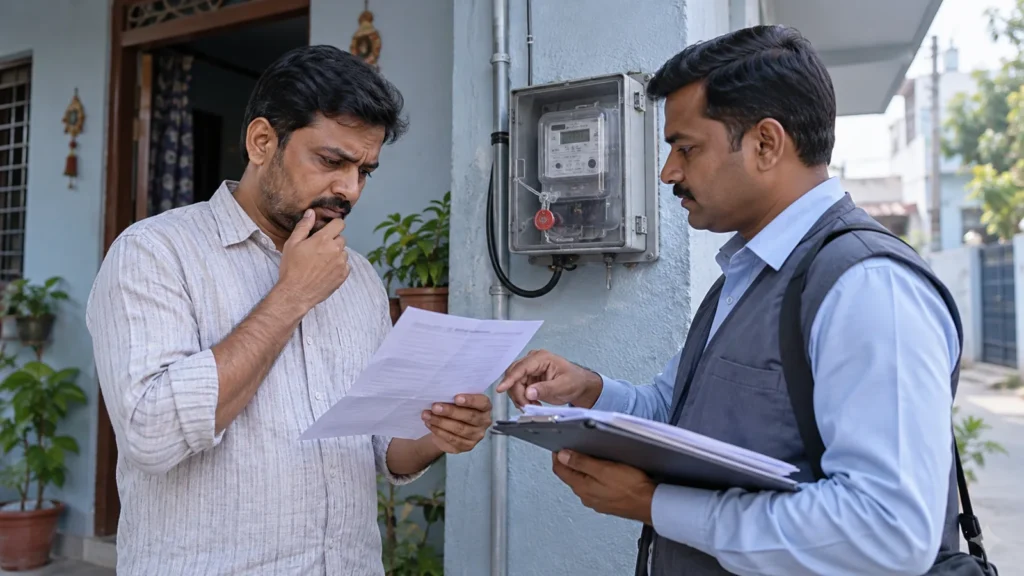
The checking report’s name varies by state/utility. Review premises, serial number, date/time, officers, observations, load inventory, alleged method, representative and signatures. Ask for seizure/removal records, seal numbers, replacement details and photographs/video. Record exact discrepancies and do not sign blank papers.
- Meter/serial/seal records through the authorised process.
- Removal, sealed packaging and laboratory receipt chain.
- Testing notice, opportunity to attend and the report.
- Required laboratory approval/accreditation and test method.
- Billing, authorised load/category and earlier inspection history.
For an accuracy dispute, consumer rules/supply code may provide testing and a Commission-approved third-party facility. A seized meter in a theft proceeding has a distinct evidence procedure. Do not send it to any NABL lab of your choice outside that process. Check approval, sealing, custody, notice and necessary permission, and make a reasoned testing request.
FACT: a utility laboratory report is not automatically worthless merely because it is internal. Challenge specific credibility, approval/accreditation, method, seals and custody issues. Likewise, missing videography does not universally invalidate every inspection. Where a mandatory requirement applies, raise its breach and effect before the appropriate forum.
Low consumption alone should not be treated as a complete theft finding. Keep relevant occupancy, closed-premises, seasonal-use or equipment evidence. A statutory presumption may nevertheless arise on the facts. Have the offence, evidentiary burden and rebuttal materials reviewed rather than asserting that the utility always bears every burden without qualification.
When CGRF, Ombudsman or Consumer Commission can help
CGRF is a service-grievance forum under section 42 and state regulations, often with exclusions for assessment/theft. The Madhya Pradesh High Court’s Gawar Construction decision of 6 January 2025 reproduces MPERC clause 2.4(m), excluding section 126 and offences under sections 135–139. That case’s own ordinary demand/security-adjustment dispute was suitable for CGRF; it is not a theft-cancellation precedent.
In U.P. Power Corporation Ltd. v. Anis Ahmad, 1 July 2013, the Supreme Court rejected Consumer Forum maintainability for section 126 assessment and sections 135–140 offences. A Consumer Commission and CGRF are different forums. Ordinary billing/service deficiencies require separate examination; changing the label to “wrong billing” cannot manufacture jurisdiction over an excluded assessment.
For ordinary reading, service or adjustment disputes, examine the utility grievance process and applicable CGRF rules. Non-redressal may permit an Ombudsman representation under state procedure. A High Court writ requires examination of alternatives, urgency and the specific defect; filing alone does not grant a stay. Choose the relief and forum according to the actual notice.
Adaptable records request and provisional objection
These requests are not substitutes for prescribed appeal, bail or court pleadings. Send them within the notice deadline. Do not wait for all records and lose limitation: object using available papers and request documents/additional time appropriately. Keep receiving or official email acknowledgment.
1. Inspection/testing and calculation records
To: [Assessing Officer / authorised utility office]
Subject: Consumer [ ], meter [ ], notice/VCR dated [ ] — records request
Please supply inspection/VCR, officer authorisation, photographs/video, load inventory, seizure/removal memo, seal/packaging record, lab dispatch/receipt, testing notice and report.
Provide units, load, period, tariff, multiplier and payment credits used in the assessment. Clarify statutory section and provisional/final status.
These records are requested to examine the disputed allegation. Please supply them before [notice deadline]. This request does not automatically extend objection or appeal deadlines.
Name/contact/date; copy of notice.
2. Objection to provisional section 126 assessment
To: Assessing Officer, [utility]
Subject: Provisional assessment dated [ ], served on [ ]
I dispute [facts/amount/period] for the following reasons:
1. Premises/meter/load stated and actual position: [specific discrepancy].
2. Alleged unauthorised use: [truthful response and evidence].
3. Calculation error: [tariff/period/load/credits].
4. Missing record/procedure: [documents/hearing/testing issue].
Please provide relied-on records, allow a reasonable hearing and pass a reasoned final order on these objections. Appropriate interim protection/additional time is requested on [reasons, if relevant].
Name/signature/date; indexed attachments.
Do not treat this section 126 sample as a complete defence to a section 135 criminal matter. Adapt the authority and prayer to the actual process. Avoid private cash settlements with inspection staff; pay through official channels under the correct head with receipts. “Under protest” alone does not stop prosecution, liability or recovery.
Advice, related reading and five FAQs
Advice
Create a one-page chronology of inspection, service, objection, hearing, final order, disconnection and appeal. Separate factual, calculation and procedural objections. Keep receipts and payment records. The correct forum is essential; do not rely on guaranteed cancellation because a video or a single lab document is missing.
Police station calls: written notices and your role
Are sections 126 and 135 the same?
No. Assessment and theft prosecution are distinct, although facts can overlap.
Is fifty-percent deposit needed for every initial complaint?
Section 127’s final-assessment appeal requirement should not be confused with provisional objections.
Can CGRF always cancel a theft case?
No. Check exclusions and the proper statutory/criminal forum.
Does no video or an internal lab automatically end the case?
No. The applicable requirement and specific evidentiary defect must be examined.
Does paying the demand end an FIR?
Ordinary payment, restoration, compounding and criminal outcome differ.
- Electricity Act, 2003: statutory text
- Supreme Court: U.P. Power Corporation v. Anis Ahmad
- MP High Court: Gawar Construction, CGRF exclusions
- MPERC: current regulations directory
- MERC: official Consumer Rights Rules and amendments listing
Disclaimer: General legal information for India. State supply code, notices, facts and court orders determine individual remedies. Fact-checked: 13 October 2026.