 Vista
Updated: 24 November 2026
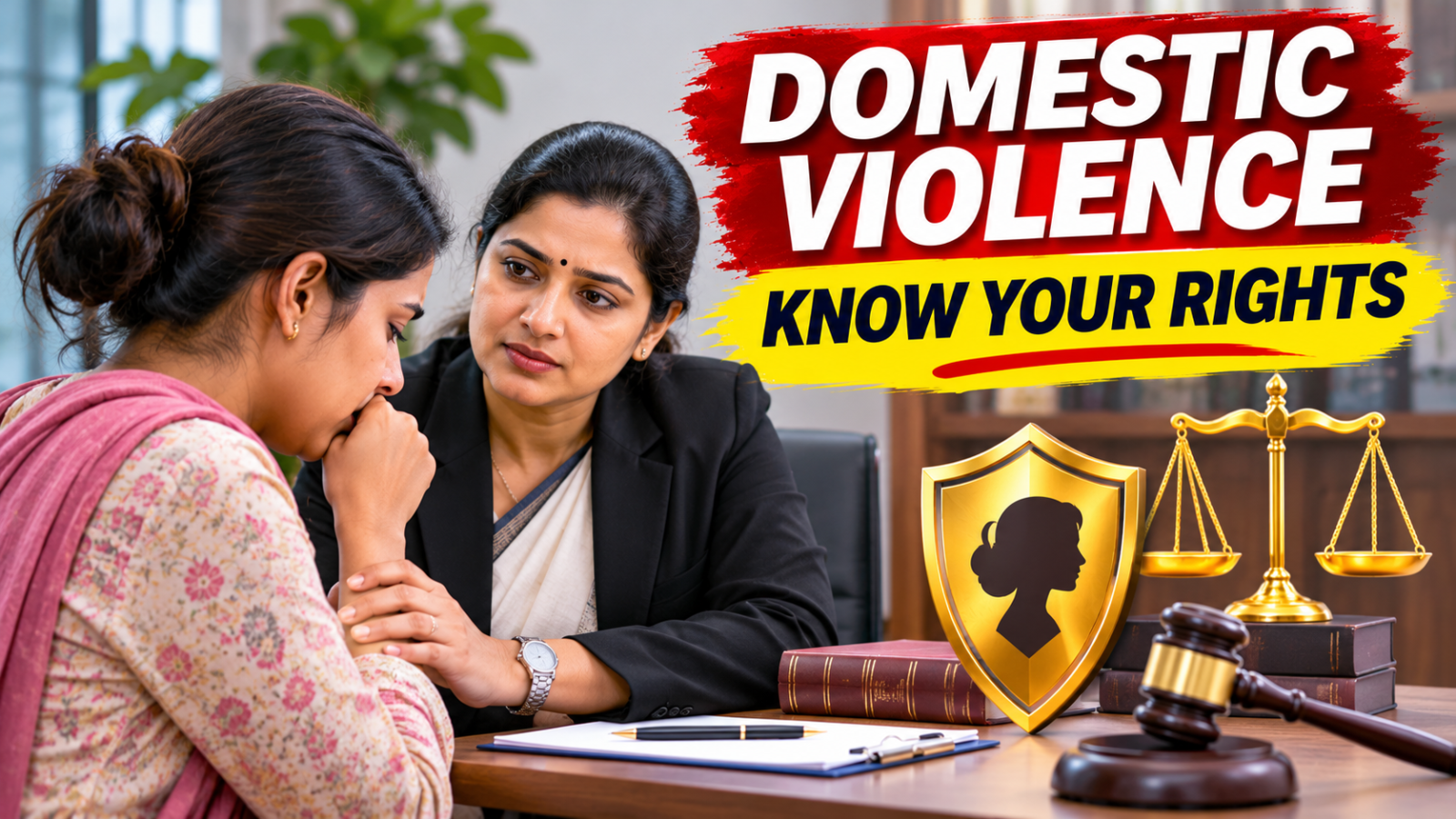
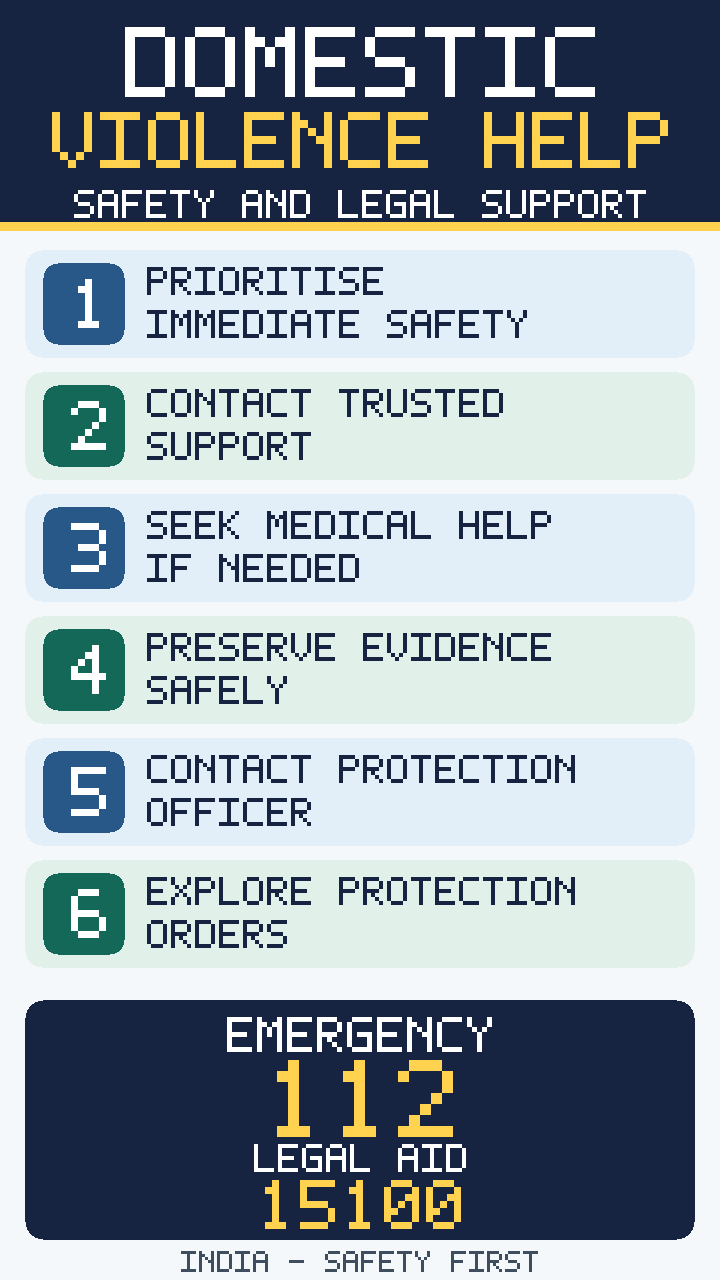
If a woman is experiencing domestic violence, threats, dowry-related harassment or controlling behaviour at home, her immediate safety and that of her children come first. Call 112 if there is an immediate danger. From a safe place, contact the women’s helpline 181 where available, a district Protection Officer or a One Stop Centre. Free legal assistance is available through 15100. The Protection of Women from Domestic Violence Act, 2005 provides routes to seek protection, residence arrangements, financial relief and other appropriate orders.
Domestic violence is not limited to physical assault. Emotional abuse, sexual abuse and deprivation of essential financial resources may also fall within the law. Seeking protection does not require a woman to decide immediately whether to end her marriage or relationship.
What to do immediately if violence is happening at home
If an assault is occurring or serious injury is threatened, move to a safer location if possible and contact emergency services. If leaving immediately would create additional danger, identify a safer place near an available exit and a way to summon help. Do not ask children to intervene physically. You do not need to confront the person responsible, announce your plans or remain in danger to gather evidence.
Seek medical attention for injuries. Strangulation, breathing difficulties, loss of consciousness and head injuries require urgent medical assessment even when visible injuries appear minor or absent. Explain the incident to the medical professional and request copies of relevant medical records when safe. Do not delay necessary treatment while waiting to file a police complaint.
If possible, identify a trusted person who can help you with transport, accommodation or contacting services. Keep essential medicines, identification documents and children’s necessities accessible if doing so is safe. If your phone or online activity is monitored, consider using a trusted person’s device. Avoid sudden changes to shared accounts or location settings if they could trigger further danger. A support worker can help develop an individual safety plan.
Who is protected under India’s Domestic Violence Act?
The Protection of Women from Domestic Violence Act, 2005, commonly called the DV Act or PWDVA, provides relief to women who are or have been in a domestic relationship and allege domestic violence. Section 2 covers qualifying relationships involving marriage, family ties, adoption, joint family arrangements and relationships in the nature of marriage. Not every dating relationship automatically meets the statutory definition.
Section 3 recognises physical, sexual, verbal, emotional and economic abuse. Examples can include physical injury, serious humiliation, threats, withholding essential financial resources, interference with personal property or harassment connected with unlawful demands. The law requires assessment of the facts and circumstances; ordinary disagreements are not necessarily domestic violence, but patterns of intimidation and coercive control should be taken seriously.
The DV Act specifically protects women. People of other genders experiencing violence can also seek emergency assistance, medical treatment and protection under applicable general laws, although the statutory remedies may differ.
Where to report domestic violence: helplines and Protection Officers
| Number | Purpose |
|---|---|
| 112 | Immediate emergency assistance, including police |
| 181 | Women’s helpline and referrals where operational |
| 15100 | NALSA free legal assistance |
| 1098 | Assistance for children in distress |
The Ministry of Women and Child Development describes 181 as a round-the-clock support service. A government response dated 13 March 2026 reported that the dedicated helpline was operational in 35 states and Union Territories, excluding West Bengal. If 181 is unavailable, contact 112 for emergencies or your local women and child development department for appropriate support.
Protection Officers are appointed by state governments under the DV Act. They can assist with recording a Domestic Incident Report (DIR), accessing medical care or shelter, and preparing an application for the Magistrate. Contact the district women and child development office or consult the official Mission Shakti portal for local service information.
One Stop Centres, also known as Sakhi centres, can coordinate legal assistance, police support, medical care, psychosocial counselling and temporary shelter, subject to local arrangements. Ask about safe contact methods and confidentiality before sharing sensitive personal information.
How to apply for protection orders and other legal relief
Under section 12, an affected woman, a Protection Officer or another person acting on her behalf may apply to the competent Magistrate. A prior FIR or Domestic Incident Report is not an indispensable prerequisite to every application. Section 27 allows proceedings in a qualifying jurisdiction including the place where the woman temporarily resides. The Act provides for an ordinarily prompt first hearing within three days and an endeavour to dispose of the application within sixty days from the first hearing. These are statutory procedural expectations, not guaranteed completion dates.
| Section | Possible relief |
|---|---|
| 18 | Protection orders restricting violence, communication and specified conduct |
| 19 | Residence orders, protection against dispossession or alternative accommodation |
| 20 | Monetary relief for medical expenses, loss of earnings, maintenance and other losses |
| 21 | Temporary custody and appropriate visitation arrangements |
| 22 | Compensation for injuries, including emotional suffering |
| 23 | Interim and, in appropriate circumstances, ex parte orders |
Explain the specific protection you need, including any urgent circumstances requiring an interim order. A breach of a protection order or interim protection order can constitute an offence under section 31. Report suspected breaches to the police and seek assistance from your lawyer or Protection Officer. An order cannot guarantee physical safety, so maintain an appropriate safety plan.
Residence rights when a woman is forced out of the marital home
Section 17 recognises a woman’s right to reside in a shared household even if she does not own it. Eviction must follow lawful procedure. Section 19 enables a Magistrate to consider appropriate residence arrangements, including restrictions on dispossession or alternative accommodation and rent where justified.
A residence right is not equivalent to automatic ownership of property belonging to a spouse or in-laws. The statutory meaning of a shared household, the facts of residence and the rights of other parties need consideration. If returning would be unsafe, do not attempt to enter alone simply because you believe you have a legal right to reside there. Discuss a safe arrangement with the Protection Officer or legal adviser. Temporarily moving to a relative’s home or shelter does not automatically extinguish the right to seek relief under the DV Act.
Dowry harassment, cruelty and criminal complaints under the BNS
The Bharatiya Nyaya Sanhita, 2023, effective from 1 July 2024, addresses cruelty by a woman’s husband or his relatives in section 85. Section 86 defines the relevant conduct, including deliberate behaviour likely to cause serious harm and harassment connected with unlawful property or valuable security demands. Section 4 of the Dowry Prohibition Act, 1961 separately addresses demands for dowry. The date of an alleged offence may affect whether older IPC provisions and transitional rules apply.
For suspected cognizable offences, section 173 of the Bharatiya Nagarik Suraksha Sanhita permits information to be provided regardless of the territorial area where the offence occurred. If the police refuse to record qualifying information, section 173(4) provides an escalation route through the Superintendent of Police and, where appropriate, the Magistrate. Criminal investigation and applications for relief under the DV Act are distinct proceedings that can coexist.
When safe, retain relevant medical records, dates of incidents, threatening messages and financial records. Lack of documentary evidence should not deter someone from seeking immediate assistance. Do not publish sensitive details, children’s information or the address of a safe location on social media.
Free legal aid for women and a sample request for assistance
Women qualify as an eligible category under section 12(c) of the Legal Services Authorities Act, 1987 regardless of income. Contact NALSA on 15100 or your District Legal Services Authority at the district court. The statutory assessment of the application still applies.
To: Protection Officer / competent authority, District ______. I am seeking assistance regarding domestic violence. The incidents and approximate dates are ______. My immediate safety concerns are ______. Please assist with appropriate protection, medical care, residence arrangements and legal support. My safe contact method is ______. Available supporting records: ______. Date: ______.
This is an initial request for assistance, not a substitute for a prescribed DIR or court application. Provide sensitive contact information privately through an appropriate official channel.
Frequently asked questions
Can emotional abuse be reported without physical injury?
Yes. The DV Act recognises emotional and economic abuse where its requirements are met.
Do I need to file for divorce to obtain protection?
No. Domestic violence relief can be sought independently of divorce proceedings.
Do I need a lawyer before contacting the police?
No. You can approach emergency services and police directly.
Can I apply while staying temporarily with my parents?
Temporary residence may establish jurisdiction under section 27.
Must I agree to reconciliation?
No. Seek independent advice and do not accept an unsafe or coerced settlement.
Conclusion: Put safety and medical care first. Seek trusted assistance and choose appropriate protection and reporting channels.
Official references: Domestic Violence Act; BNS; Women helpline coverage; Ministry support services; NALSA assistance for women. General safety and legal information, not individual legal advice.




















Share Your Opinion
Comments are closed on this post.