 Vista
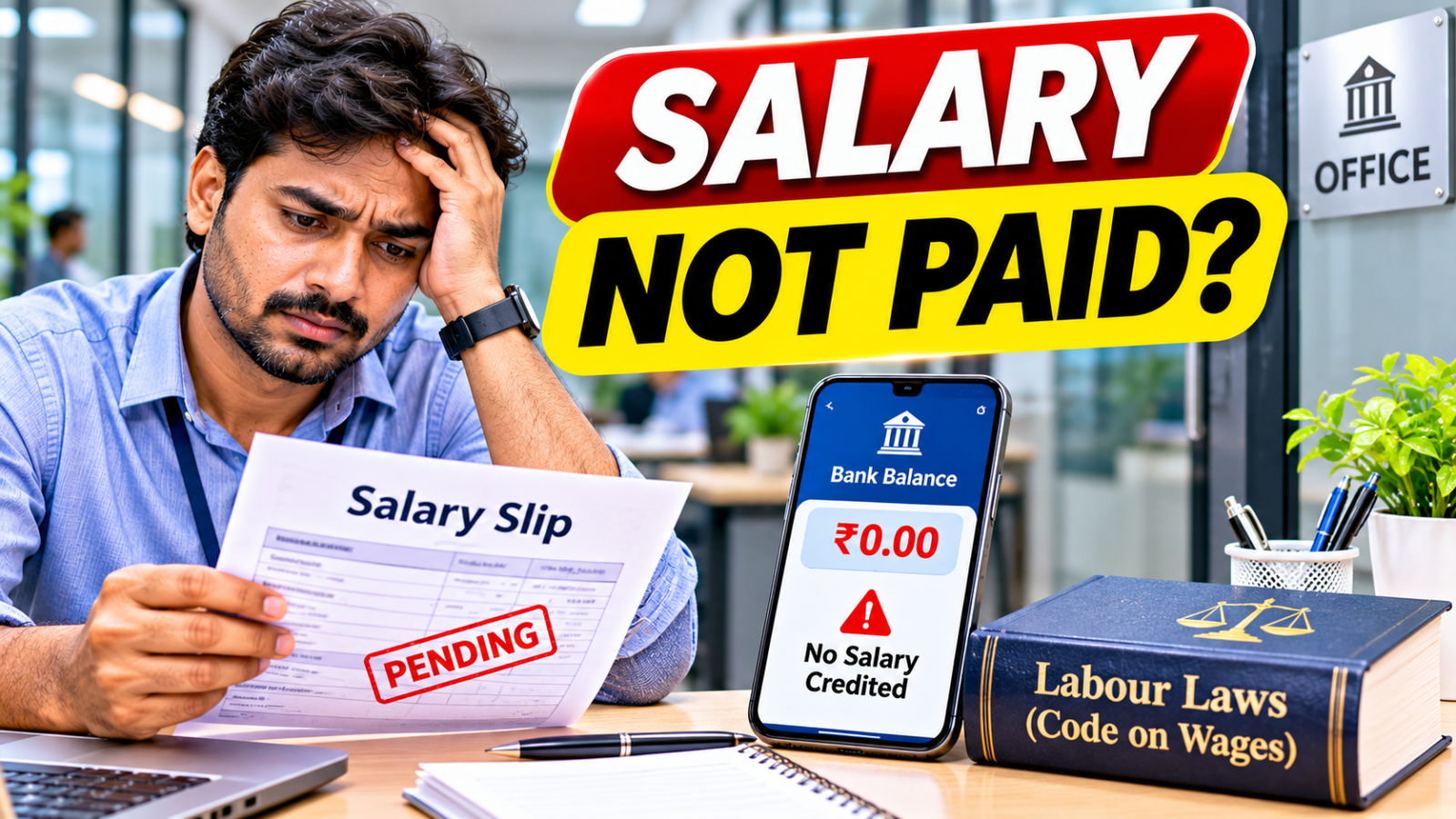
If your company is not paying your salary even though you continue to work, calculate the outstanding amount month by month, send a written demand to HR or payroll, and approach the competent labour authority if payment remains unresolved. Under the Code on Wages, 2019, implemented from 21 November 2025, monthly wages are ordinarily payable by the end of the seventh day of the following month. You do not necessarily have to resign to claim earned wages. This guide deals with salary withheld during ongoing employment, rather than the separate full and final settlement process after leaving a job.
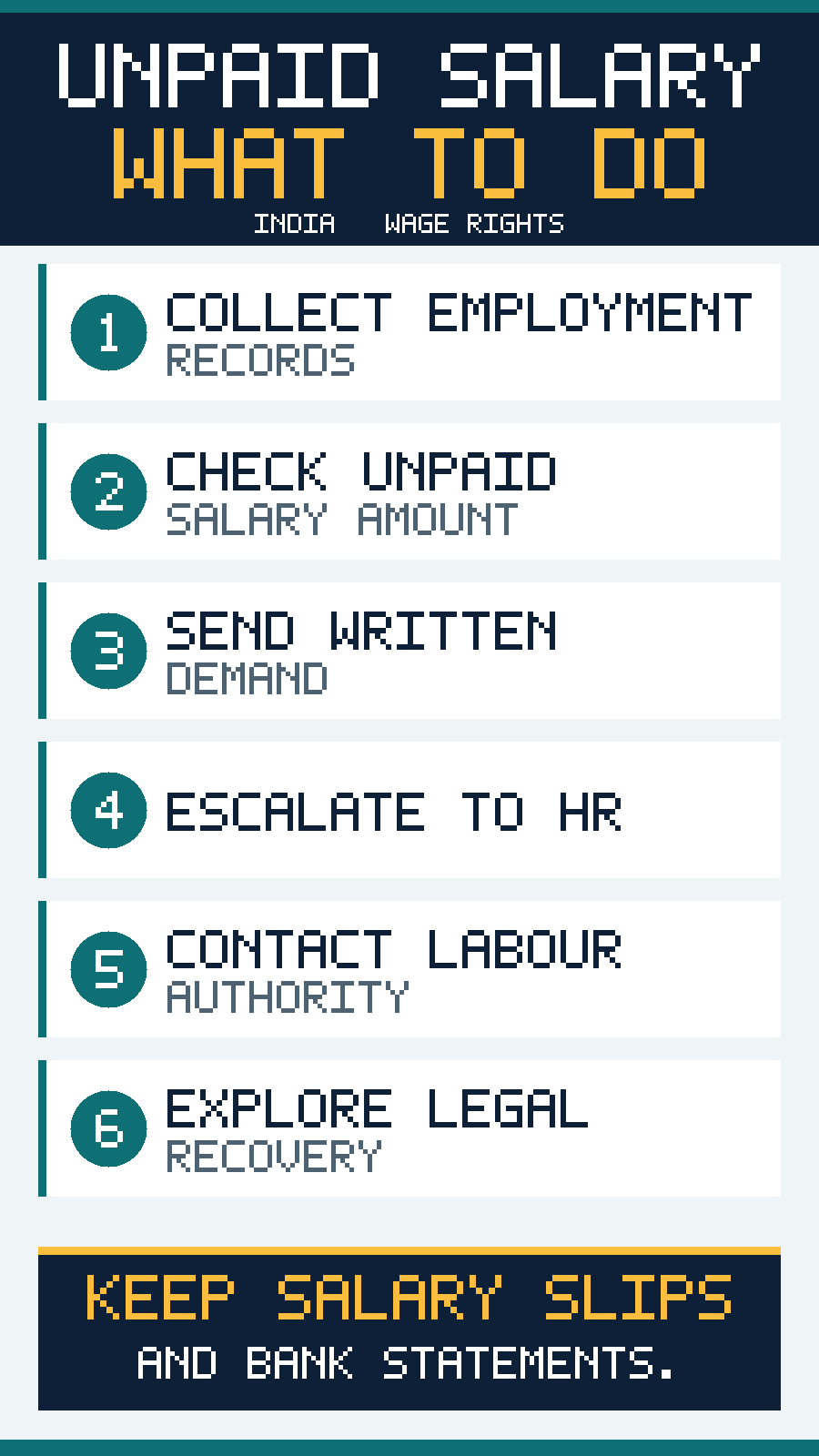
Legal information reviewed: 24 November 2026 | India
1. When must a company pay salary under the new labour codes?
Section 16 of the Code on Wages limits an employee’s wage period to one month. Section 17 specifies ordinary payment deadlines according to the wage period. Daily wages are payable at the end of the shift, weekly wages on the last working day of the week, fortnightly wages within two days after that period, and monthly wages before the seventh day of the succeeding month expires. The appropriate government can prescribe a different time limit under section 17(3), and other applicable statutory deadlines must also be considered.
For example, monthly wages for October 2026 would ordinarily fall due by 7 November 2026. An employer’s internal payroll schedule cannot, by itself, override an applicable statutory deadline. Ministry of Labour and Employment FAQs published in March 2026 and its October 2026 compilation clarify that timely payment protections apply to employees generally, including eligible white-collar employees. Do not assume that an office job, managerial designation or higher salary automatically excludes you. Genuine independent contractors and freelancers may need to establish their employment status or pursue contractual remedies instead.
2. How to calculate three months of unpaid salary
Create a record showing each wage period, gross amount due, lawful deductions, actual payments and remaining balance. Your advertised cost to company (CTC) is not necessarily the same as monthly take-home salary or the statutory definition of wages. For example, if your regular net salary is ₹25,000 per month and you receive only ₹10,000 across three fully worked months, your illustrative net shortfall is ₹65,000. The formal claim should also account for the relevant gross amounts, deductions and statutory wage definition under section 2(y).
Separate expense reimbursements, conditional incentives, provident fund contributions and gratuity from ordinary unpaid wages. Their entitlement and recovery procedures may differ. If the company cites poor performance, absence or losses to justify withholding salary, ask for an itemised explanation and the legal basis for each deduction. Section 18 permits only authorised deductions and generally caps total deductions in a wage period at 50 percent of wages. This does not mean that every disputed deduction is lawful merely because it falls below that percentage.
3. What evidence do you need without an appointment letter?
A signed employment contract is helpful, but its absence does not necessarily prevent a wage claim. Evidence of actual employment, agreed remuneration and work performed can be important. Preserve documents that you can lawfully access, including:
- Offer letters, joining emails, employee identification and employment terms.
- Salary slips, previous salary credits and bank statements covering the unpaid period.
- Attendance records, work schedules and records showing assigned and completed work.
- Messages from HR or payroll acknowledging outstanding salary and promising payment.
- The employer’s correct legal name, workplace address and relevant employment dates.
Keep original messages and reliable copies. Do not access another employee’s private records, restricted corporate systems or confidential customer data without authority. Section 50 establishes employer recordkeeping and wage-slip obligations. The Code on Wages (Central) Rules, 2026 provide for wage slips to be issued on or before payment, electronically or in physical form, within their applicable jurisdiction. Ask for missing slips and payroll calculations in writing.
4. Send a written salary payment demand to HR
First confirm that the payment was not delayed by an incorrect bank account number or a failed transfer. If salary is genuinely outstanding, send a concise written request to HR, payroll or the authorised manager. Identify the months and amount rather than relying on repeated verbal reminders. The following example can be adapted to your situation:
Subject: Request for payment of outstanding monthly salary. Dear HR/Payroll Team, I am employed as ___, employee ID ___. My salary for the period ___ to ___ amounts to ₹___. I have received ₹___, leaving ₹___ outstanding. Please provide an itemised statement of the amounts due, payments and deductions, and arrange payment of the outstanding salary. Kindly confirm the payment date and your response in writing. Relevant supporting records are attached. Name, date and contact details.
Save the email and any acknowledgement. Escalate unanswered requests to the appropriate senior officer. A lawyer’s demand notice may be useful in some disputes, but it is not automatically a prerequisite for every statutory wage claim. If the company proposes instalments, request a clear written schedule and acknowledgement of the outstanding balance. Read any settlement carefully before signing, particularly where it may waive remaining claims.
5. Where to file an unpaid salary complaint: labour department and SAMADHAN
Identify the appropriate government under the Code. Ordinary private shops, offices and local establishments generally fall within the relevant state labour administration, while specified sectors such as banking, railways and mines can fall under central jurisdiction. Operating in several states does not, on its own, make every company a central-sphere establishment. Contact the competent district or regional labour office and ask which notified authority handles claims under section 45.
The Ministry of Labour and Employment’s SAMADHAN States portal provides wage-related claim and grievance options for participating jurisdictions. Check the applicable central or state filing system and required form. Provide your employment information, the amount outstanding, supporting documents and previous correspondence. A general grievance and a formal statutory wage claim may be different procedures. Confirm that the claim has reached the competent authority and retain the acknowledgement, reference number and hearing details.
6. Wage recovery and compensation under section 45
Section 45 authorises the notified claims authority to hear and determine claims arising under the Code. The employee, an eligible registered trade union of which the employee is a member, or the Inspector-cum-Facilitator may file the application. Subject to the applicable rules, multiple employees may also submit a joint claim. The ordinary filing period is three years from the date the claim arises, with delayed applications potentially admissible where sufficient cause is established. Record the due date for each unpaid wage period. Older arrears may require analysis of transitional provisions.
The authority can determine the outstanding claim and award additional compensation, depending on the circumstances, up to ten times the determined claim. The maximum is not an automatic entitlement. The provision seeks resolution within three months, but it does not guarantee payment within that period. Where an employer fails to pay an ordered amount, the authority can issue a recovery certificate to the Collector or District Magistrate for recovery as arrears of land revenue. Check the applicable appeal procedure and deadlines if an order is disputed.
7. What if the company is closing or threatens your job?
Financial difficulties do not automatically extinguish earned wages. If formal insolvency proceedings begin, employees may need to submit claims through the relevant insolvency process within its deadlines. Preserve lawful evidence of any threats and obtain advice about the protections applicable to your employment category. Ordinary non-payment is not automatically a criminal offence. Before resigning, consider your contractual obligations and financial situation. See our separate guides on unpaid full and final settlement and missing PF contributions and contractor wages.
Frequently asked questions
Can I claim salary while still employed?
Yes. Resignation is not generally required to claim earned wages.
Does the wage payment protection cover office employees?
Yes, the ministry clarifies that timely wage protections apply to employees generally, including white-collar employees.
Is ten times the unpaid salary guaranteed?
No. Additional compensation depends on the authority’s assessment.
Can I obtain free legal assistance?
Eligible applicants can contact their District Legal Services Authority or NALSA at 15100.
Conclusion and official references
Document each unpaid month, submit a written demand and approach the competent authority before the applicable limitation period expires. Official sources: Code on Wages, 2019, implementation update, 2026 ministry FAQs and Central Rules 2026. General legal information, not individual legal advice. Employment status and applicable jurisdiction may affect the remedy.
For all topics: Where to Complain in India: Police, Courts, Consumer, Banking and Government Legal Help


























Share Your Opinion
Comments are closed on this post.