 Vista

Did Zeus die in Greek mythology? The short answer is no in the mainstream Homeric and Hesiodic Olympian tradition. Zeus is an immortal god and the ruler of Olympus after the legendary defeat of the Titans. There is, however, an intriguing complication: a Cretan tradition of a tomb of Zeus was known to ancient writers. The Hellenistic poet Callimachus refers to that claim in his Hymn to Zeus and rejects it, explicitly affirming the god’s enduring life. The tomb tradition should therefore not be hidden, but neither should it be presented as proof that Zeus died in the standard Greek mythological story.
Is Zeus immortal in the main Greek mythological texts?
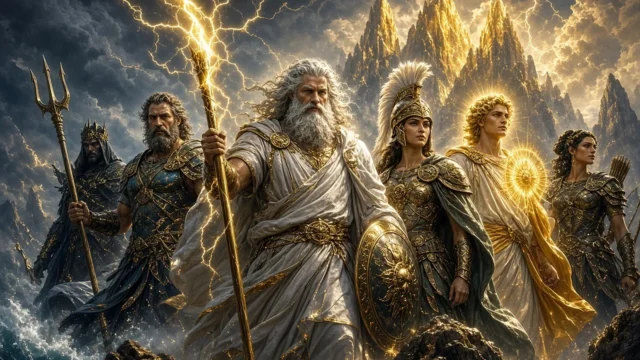
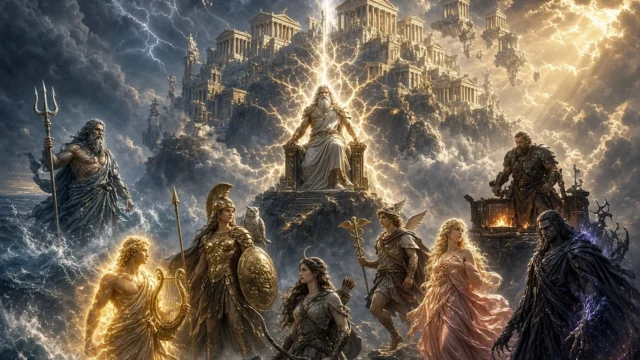
In the familiar Olympian tradition, Zeus is one of the immortal gods. He is not a human king with an ordinary life span, a funeral and a successor who takes over Olympus after his death. In Hesiod’s Theogony, the divine generations include primordial beings, the Titans and the children of Cronus and Rhea. Zeus eventually emerges as ruler after the struggle against the opposing Titans. His kingship is contested during mythic conflict but the text does not end with an episode in which he grows old and dies.
Homer’s Iliad portrays Zeus as a commanding and sometimes difficult ruler who influences events during the Trojan War. Other gods argue with him, and heroic warriors eventually die, but the poem does not narrate Zeus’s own mortal death. Ancient Greek divine immortality is also not the same as an assertion that Zeus never faces danger, a rival or a restriction. Myths show gods in opposition, injured in battle or emotionally distressed. Immortality is a question of their divine status, not a modern superhero claim that every conflict must be effortless.
How was Zeus born if he was immortal?
The fact that Zeus is described as having a birth creates a common modern confusion. People reason that if a being was born, it must eventually die. That expectation fits mortal human biology, but the stories operate with a mythic divine world that does not follow ordinary human aging. In Hesiod, Rhea gives birth to Zeus after Cronus has swallowed several older children. Fearing that Cronus will swallow the newborn too, Rhea and her allies hide Zeus and present a wrapped stone to his father instead.
In the famous succession myth, Zeus grows strong, frees his siblings and leads the opposition to the Titans. He ultimately becomes the king of the Olympians. The story describes an origin and a rise to power, not a prophecy that his lifespan will end at a fixed age. Similar reasoning applies to other divine figures with named parents: birth in a mythological genealogy does not by itself prove mortality. Heroes such as Achilles and Heracles belong to other categories, including those with mortal parents and distinctive end-of-life stories.
What happened when Zeus fought the Titans and Typhon?
Zeus fights powerful enemies in the stories that establish his rule. In the Titanomachy he and allied gods struggle against the opposing Titans for ten years in Hesiod’s narrative. The Hundred-Handers and Cyclopes assist the eventual victory. The Titans are defeated and imprisoned in Tartarus in the core account, but defeated is not the same word as dead. The conflict is a struggle over cosmic power rather than a description of all the older deities being killed like mortal soldiers.
Hesiod also relates a fearful confrontation with Typhon or Typhoeus, a colossal threat associated with monstrous power. Zeus uses thunder and lightning and prevails in the familiar account. The fact that the conflict can be dangerous does not mean the poet describes Zeus dying during it. Some later texts alter the details of divine conflicts and the temporary vulnerability of gods, but they should be cited separately. One cannot infer a standard Zeus death scene merely because an enemy threatened his throne.
What is the legend of Zeus’s tomb in Crete?
Crete is important in accounts of Zeus’s infancy, his concealment from Cronus and the local cult traditions around the god. Alongside these narratives, some ancient authors knew of a tomb attributed to Zeus on Crete. A tomb-like site or a reported local burial belief can be part of a community’s mythic landscape without serving as historical proof that an immortal deity lived and died as a human. Scholarship discusses the relationship of the tradition with ancient tomb cults, local ritual and explanations that treat gods as former extraordinary rulers.
The Hellenistic poet Callimachus, writing in the third century BCE, gives a particularly clear surviving reference. In the opening of his Hymn to Zeus, he contrasts stories placing Zeus’s birth on Mount Ida or in Arcadia. He notes that the Cretans have built a tomb for Zeus, then denies that Zeus died and insists on his enduring existence. This is an unusually valuable source because it demonstrates both the presence of the tomb claim and an ancient author’s opposition to it, within the same short passage.
Callimachus’s poem does not give researchers a modern death certificate, verified skeleton or universally agreed archaeological identification. The apparent contradiction is an important piece of ancient religious debate, not an invitation to claim that science has discovered a god’s remains. When a website says “archaeologists found Zeus’s grave, confirming Greek gods were mortal,” that conclusion far exceeds what the literary evidence establishes.
What does Callimachus actually say about Zeus’s death?
The relevant text is the opening of Callimachus, Hymn to Zeus, lines 4–9. The poet first expresses uncertainty about the rival places of Zeus’s birth. He then mentions the Cretan tomb claim and responds that Zeus did not die because he endures forever. The passage establishes that the claim was known, but the speaker is emphatically rejecting it. A search result that quotes only the mention of the tomb while omitting the denial reverses the author’s meaning.
Later writers and commentators discuss the story further. For example, Origen’s discussion in Against Celsus refers to the tomb and to Callimachus’s response within a debate shaped by his own religious aims. Such testimony can document the circulation and reception of the Cretan tradition, but it is not the same as an independent ancient account that all Olympian worshippers accepted Zeus’s death. Each author has a different agenda and historical setting, and the distinction is central to source-critical interpretation.
Did Cretans believe Zeus was a mortal king?
Some local or later historicizing accounts can treat figures called gods as extraordinary rulers or ancestors whose life and burial could be described in human terms. The modern scholarly label euhemerism refers broadly to interpretations that explain gods as exceptional humans later honored as divine, associated with the ancient thinker Euhemerus. The Cretan Zeus tomb tradition can be discussed against this background, although it would be careless to conclude that every Cretan believed exactly the same story or that the tradition originated solely from one philosophical theory.
Not every account of Zeus’s early life begins in the same location. Crete’s Mount Ida, another Cretan setting around Dicte, and Arcadia all appear in different ancient narratives. Arguments over which birthplace is the true one do not directly decide whether Zeus is mortal. A birthplace myth, a revered cave and an attributed tomb are three different categories of claim. Historical study can examine their connection with local cult and landscape, while literary interpretation focuses on what the surviving poet actually says.

Can Zeus be defeated or injured without dying?
Yes, the distinction is important in Greek myth. Deities may argue, lose influence over a particular episode, face powerful adversaries or sustain injuries in the larger mythological tradition. In the Iliad, Ares and Aphrodite suffer wounds in combat even though they are not subsequently treated as ordinary mortal casualties. Zeus himself faces threats to the order he rules. Such episodes show that divine beings are characters in dramatic stories, not abstract equations whose every possible power must be identical.
The defeat of Cronus, Zeus’s father, is another instructive parallel. In the well-known succession narrative he loses authority; that does not require the text to present an ordinary funeral for him. A modern fantasy film may kill a god for dramatic effect, but it is creating or adapting a story. A useful fact-check asks “In which specific ancient poem does this happen?” rather than assuming every fictional screen adaptation is part of the traditional Homeric narrative.
Did Zeus die in films, games or later retellings?
Movies, video games, graphic novels and modern fantasy stories frequently change Greek mythology. Their Zeus might be killed, imprisoned, weakened or replaced because the fictional plot needs a particular dramatic outcome. That can work perfectly well as entertainment, but the continuity of a modern franchise is not the same as a passage in Homer, Hesiod or Callimachus. Even modern stories that borrow the names of Zeus, Hades and Athena may change their relationships and moral roles.
When someone asks “How did Zeus die?” they may be asking about a specific game character rather than ancient mythology. The first step is to identify the medium. For the classical mythological tradition, the answer remains that Zeus does not undergo an accepted ordinary death; the Cretan tomb tradition is a notable local complication. For a game or novel, the answer must come from that work rather than being copied into an article about Greek religious literature.
Is Zeus immortal like all Greek gods? What about heroes?
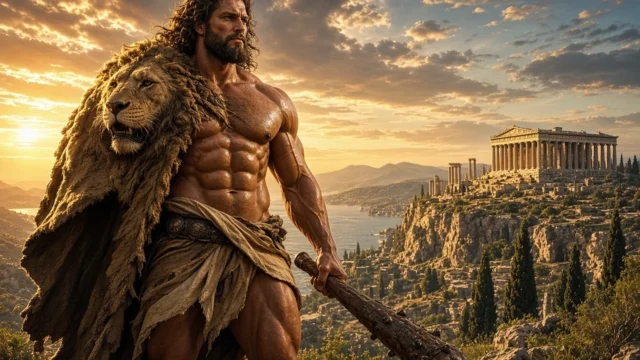
Many major Olympian gods are described as immortal, while figures such as Achilles, Hector, Odysseus and Perseus are mortal heroic characters despite their extraordinary ancestry or divine help. Heracles has a particularly complex story: born with a mortal mother, he performs major labours and undergoes apotheosis—elevation to divine status—in important later traditions. That is not equivalent to saying Zeus underwent the same mortal path and eventually died.
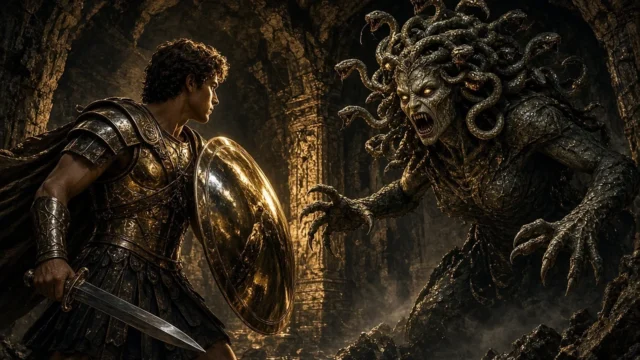
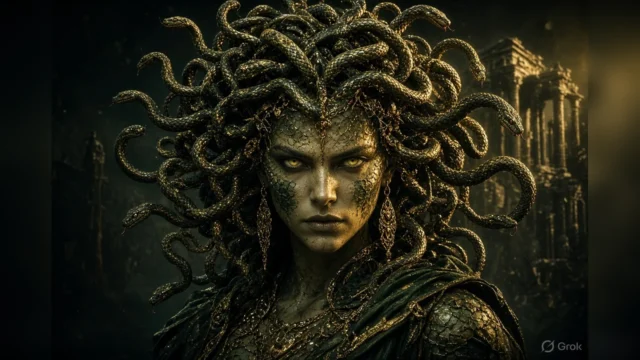
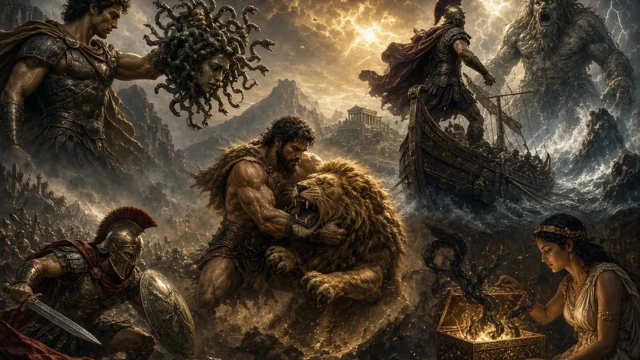
Another useful comparison is Medusa: Hesiod calls her the mortal one among three Gorgon sisters. The text deliberately distinguishes her from her immortal siblings. This makes the hero Perseus’s victory possible in a way that does not apply universally to Olympian gods. Thus the terms god, immortal, Titan, monster and hero should never be treated as interchangeable. They express different positions in a mythic world where power and mortality do not always match.

Evidence table: claim versus what ancient sources say
| Popular claim | What the evidence supports |
|---|---|
| Zeus died in the standard Greek myths | Not supported by the mainstream Homeric and Hesiodic Olympian narratives |
| A Cretan Zeus tomb tradition existed | Yes; Callimachus explicitly mentions it and denies Zeus’s death |
| Callimachus confirms Zeus was mortal | No; the poet explicitly affirms Zeus’s continuing life |
| Zeus was born, so he must have died | Mythic divine birth does not entail mortal aging |
| Typhon killed Zeus | Not the outcome of Hesiod’s account of their conflict |
| A video game’s Zeus dies | Possible within that fiction; not proof about ancient myth |
Did Zeus die? Five FAQs
Did Zeus die in Greek mythology?
Not in the standard Homeric and Hesiodic Olympian tradition. Zeus is treated as an immortal god.
Why is there a tomb of Zeus in Crete?
A local tomb tradition was known to ancient writers. Callimachus mentions it but rejects the claim that Zeus died.
What did Callimachus say about Zeus’s death?
In Hymn to Zeus 4–9, he mentions the Cretan tomb and insists that Zeus remains alive forever.
Was Zeus killed in the Titanomachy?
No. In Hesiod he leads the victorious alliance against opposing Titans and becomes the ruling Olympian king.
Can gods die in modern Greek-myth-inspired stories?
Writers can invent such outcomes in fiction, but they should not be presented as standard ancient Greek evidence.
Primary sources and conclusion
Start with Callimachus, Hymn to Zeus 4–9, which records and rejects the tomb claim. Compare Hesiod, Theogony on the succession of divine rulers, and the scholarly discussion “On Zeus’ Grave in Crete Once More” on the local tomb tradition. Conclusion: Zeus is immortal in the familiar Olympian tradition; the Cretan tomb is evidence of a different ancient tradition and debate, not proof of an ordinary universally accepted death. Updated 14 November 2026. Images are conceptual artwork.






Share Your Opinion
Comments are closed on this post.