 Vista

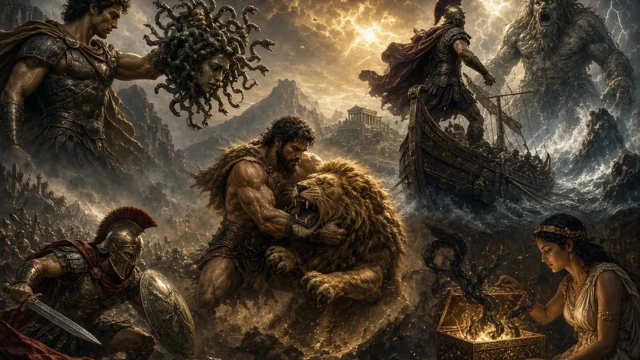
Perseus and Medusa is one of ancient Greek mythology’s most famous heroic quests. Sent to bring back the head of a deadly Gorgon, Perseus survives not by staring down his enemy but by turning away, looking into a reflective bronze shield and relying on help from Athena, Hermes and other figures. After Medusa is beheaded, Pegasus and Chrysaor emerge from her body in the myth. The hero later rescues Andromeda, returns to punish the ruler who threatened his mother and ultimately fulfills a disturbing prophecy involving his grandfather. This is the full story of Perseus, with the continuous account in the Library traditionally attributed to Apollodorus as its primary guide.
Who was Perseus, and what was the prophecy about his birth?
Perseus was a legendary hero and the son of Zeus and Danaë. Danaë’s father, King Acrisius of Argos, had heard a prediction that he would one day be killed by his daughter’s son. Trying to prevent that outcome, Acrisius confines Danaë in a secure chamber. Zeus nonetheless reaches her in a famous version as a shower of gold. The resulting pregnancy forces the king to confront the prediction he feared. These supernatural episodes belong to myth, not a medical or historical record of a miraculous human birth.
Rather than directly murder his own daughter and grandson, Acrisius places Danaë and infant Perseus inside a chest and sets it afloat at sea. The container reaches the island of Seriphos, where a fisherman named Dictys finds them and gives shelter. The floating chest is part of Perseus’s birth-and-exile story; it should not be confused with Pandora’s storage jar, an entirely different myth. Perseus grows up on the island, protected by Dictys but eventually exposed to the ambitions of the island’s ruler.
Why did King Polydectes send Perseus after Medusa?
Polydectes, ruler of Seriphos, wishes to approach or marry Danaë. Her son Perseus stands in his way. In Apollodorus’s narrative, Polydectes contrives an occasion on which Perseus boastfully promises an extraordinary gift. The king demands the head of Medusa, apparently expecting the dangerous mission to remove the young hero. The quest therefore begins as an abuse of power directed at a vulnerable family, not as a casual monster hunt chosen solely for fame.
The situation makes Perseus distinct from the other Greek heroes. Heracles performs labours under Eurystheus, Theseus confronts a Cretan labyrinth and Achilles becomes entangled in a major war. Perseus’s immediate challenge is to save his mother from Polydectes’s influence while bringing an object thought nearly impossible to obtain. The motivations provide context for the fantastic equipment and unusual precautions in the story that follows.
Who were the Graeae, and how did Perseus find the Gorgons?
Perseus seeks guidance and help associated with Athena and Hermes. He must locate the distant Gorgons, and the route involves the Graeae, also called the Phorcides in some ancient passages. They are extraordinary sisters who possess one eye and one tooth between them. Perseus takes the shared objects while they are passing them from one sister to another, compelling them to reveal the way to the nymphs who have the equipment he needs. In the account of Apollodorus, he gives back the eye and tooth after gaining the information.
The Graeae episode matters because Perseus cannot reach Medusa simply by walking into a local cave. His journey requires information and cunning before battle begins. It is also easy to mix up the groups: the Graeae, the Gorgons and the nymphs are not three names for the same sisters. The Gorgons include Medusa, Stheno and Euryale, while the Graeae are a different set of extraordinary figures who assist indirectly under pressure.
What magical weapons and gifts helped Perseus?
The nymphs provide winged sandals, a kibisis or special carrying bag and a cap associated with Hades that renders the wearer invisible. Hermes supplies an extraordinary sharp sickle or curved blade. Athena provides crucial direction in the confrontation with Medusa. Different art and later retellings move individual gifts between gods or adjust their sequence, so details should be labeled with the exact version when possible.
The equipment solves different practical problems. Sandals allow Perseus to travel through the air and escape danger. The kibisis holds the head safely after the encounter. The cap prevents pursuit by unseen enemies. The blade makes it possible to sever the Gorgon’s head, while the reflective shield allows the hero to avoid her gaze. The most memorable point is that bravery alone would not solve the quest: preparation, information and divine aid are as important as the moment of attack.
How did Perseus kill Medusa without looking at her?
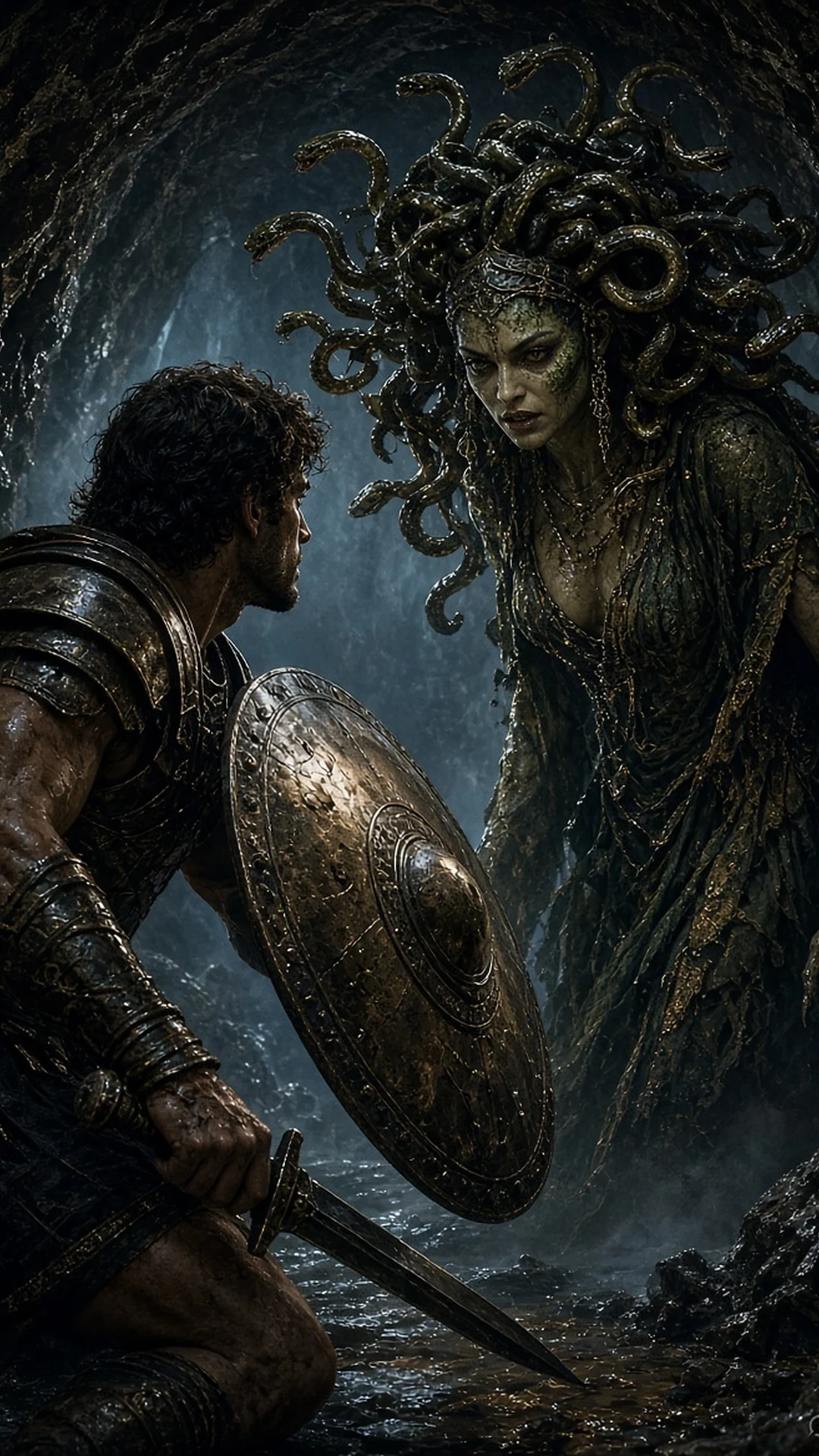
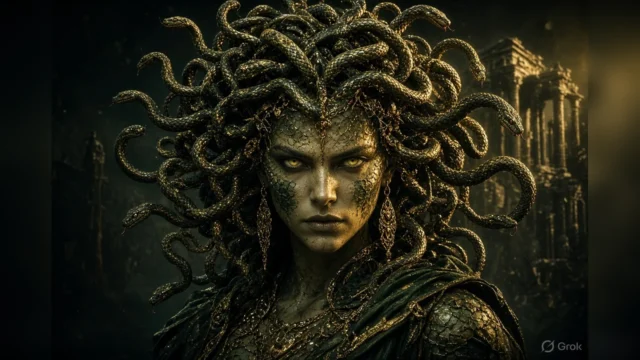
In Apollodorus, Library 2.4.2, Perseus finds the three Gorgons asleep. Their identities are Stheno, Euryale and Medusa; the first two are immortal, whereas Medusa is mortal. Apollodorus describes frightening bodies with serpent-like scales, tusks and other monstrous features, and the power to turn those who look at them into stone. Perseus cannot fight normally because direct sight would place him in fatal danger. This is why the reflective shield is so important.
With his gaze turned away and Athena guiding his hand, Perseus watches Medusa’s image in the bronze shield and strikes with the sickle. He beheads the sleeping Gorgon. The scene is a mythic narrative of violence, not an archaeological record. It is also distinct from the question of why Medusa had snake hair. In Hesiod she is already identified as a Gorgon, while Ovid, a later Roman poet, tells a transformation story involving Minerva and Neptune. A full Perseus article should emphasize the hero’s quest and its stages while carefully distinguishing that separate origin tradition.
What happened after Medusa died: Pegasus and the pursuit?
Hesiod’s Theogony and later narratives describe the appearance of Pegasus, the winged horse, and Chrysaor from Medusa after Perseus cuts off her head. Their father in Hesiod’s genealogy is Poseidon. The image is fantastical and should not be confused with a biological claim about real animal births. Pegasus later becomes famous in the unrelated adventures of the hero Bellerophon; that later association should not be rewritten so that Perseus rode Pegasus during his own escape unless a particular later tradition is identified.
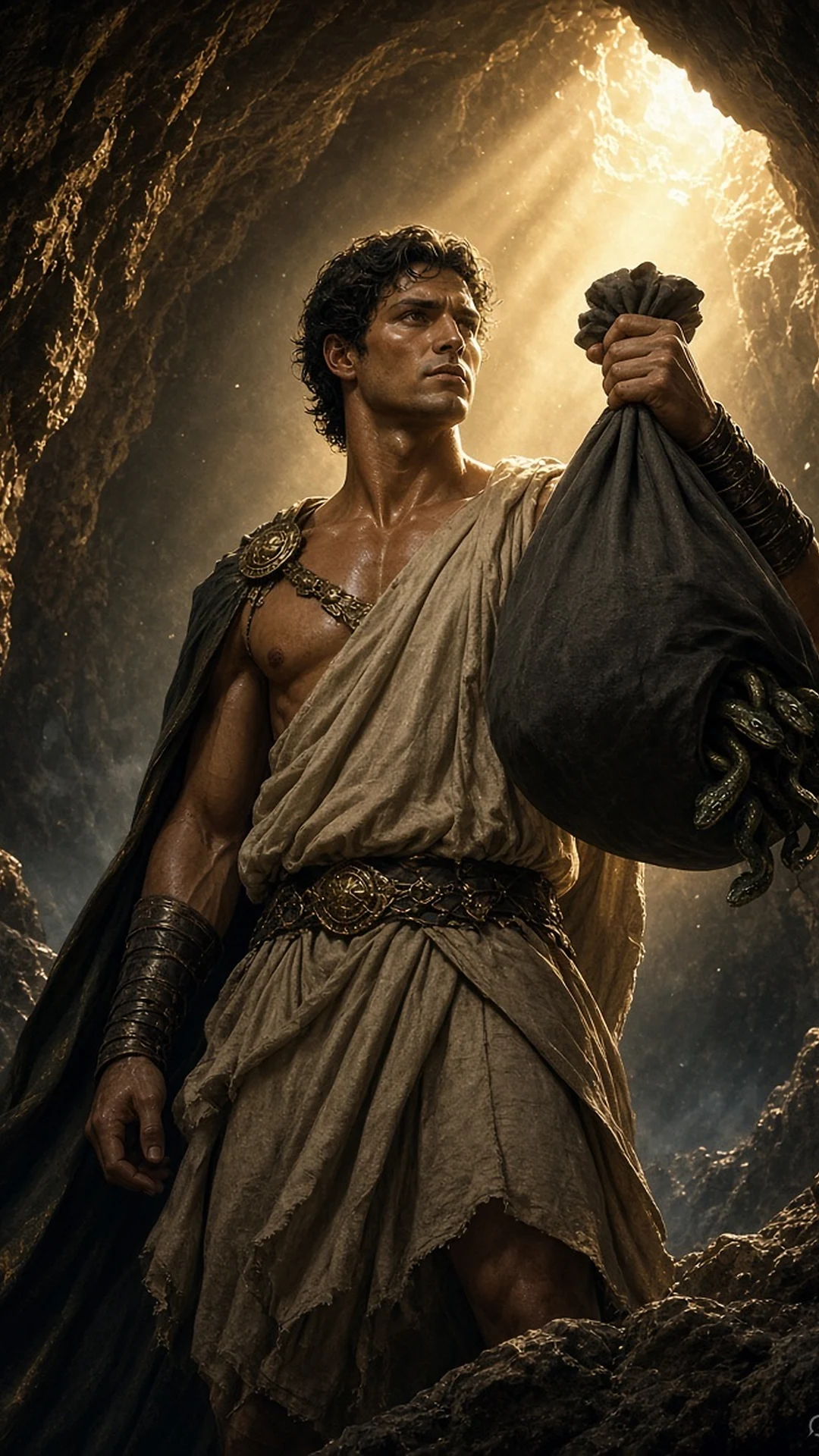
In Apollodorus, Perseus places the head in the kibisis. Medusa’s immortal sisters rise and pursue him, but the cap of invisibility stops them from seeing the hero. He flies away. The head retains its petrifying effect in later episodes, making it a dangerous object rather than a trophy with no further role. This is why its eventual transfer to Athena is important within the wider cycle.
How did Perseus rescue Andromeda from a sea monster?
During his journey back, Perseus comes to the kingdom of Cepheus, traditionally placed in a mythic Ethiopia. The king’s wife Cassiopeia has boasted of her beauty against the Nereids, divine sea nymphs. In the myth, Poseidon responds with a flood and a sea monster. A divine consultation says that the crisis can end if their daughter Andromeda is offered as a victim. The young woman is fastened to a rock, where Perseus sees her in danger.
Perseus offers to defeat the monster if Andromeda is given to him in marriage. He then confronts and kills it, securing her release. A rival suitor named Phineus later becomes involved in violent conflict; Perseus can turn attackers to stone with Medusa’s head. The story should not be marketed as a documented rescue in modern Ethiopia—the ancient place-name and mythological geography do not by themselves establish a precise modern historical location. It is an example of a heroic cycle that combines family claims, divine punishment and romantic conventions that modern readers may critically examine.
What happened to Polydectes when Perseus returned?
On returning to Seriphos, Perseus discovers that his mother Danaë and the fisherman Dictys have sought refuge from Polydectes’s aggression. The king gathers others in his palace, and Perseus enters carrying the Gorgon’s head. Turning his own face away, Perseus displays the head and transforms Polydectes and the men who look at it into stone. He places Dictys in charge of the island, repaying the man who protected his family.
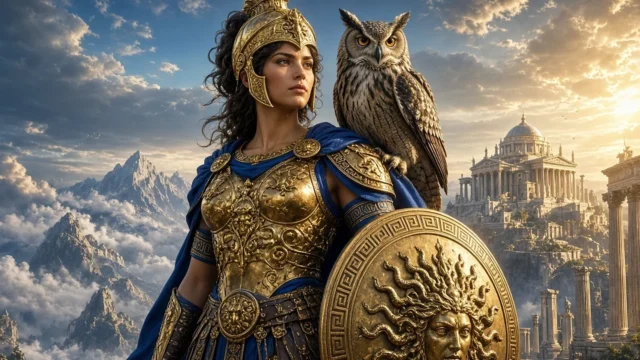
After the quest, Perseus returns the borrowed equipment to Hermes, who gives it back to its owners. He presents the head of Medusa to Athena, who displays it on her protective equipment. That image is often called the Gorgoneion. A modern viewer may see it as a frightening emblem, while its use in ancient art can also be protective. The ending of the Seriphos adventure links Perseus’s initial mission, his mother’s safety and the use of Medusa’s power into one complete story.
Did Perseus accidentally kill his grandfather Acrisius?
The prophecy from Perseus’s birth has not disappeared. Later in Apollodorus’s account, Acrisius flees to avoid the grandson whom the oracle said would kill him. At athletic games in Larissa, Perseus throws a discus that accidentally strikes Acrisius and causes his death. He did not set out to murder his grandfather in this version. The irony is that the king’s attempts to avoid the prophecy, including casting Danaë and Perseus into the sea, do not prevent its fulfillment.
After the accident Perseus avoids taking the Argive throne in the expected way and exchanges territories with Megapenthes, becoming associated with Tiryns and Mycenae in later genealogical history. These endings are crucial if someone asks for the full Perseus story rather than only the beheading. They also distinguish him from Achilles and Heracles, whose major narrative arcs are connected with different prophecies, labours and wars.
Perseus and Medusa: five FAQs
Who were Perseus’s parents?
Zeus and the mortal princess Danaë in the familiar Greek mythological genealogy.
Why did Perseus kill Medusa?
King Polydectes demanded her head as a nearly impossible gift, hoping to remove Perseus as an obstacle to his plans involving Danaë.
How did Perseus avoid Medusa’s gaze?
Apollodorus describes him looking away and using the reflection in a bronze shield, with Athena guiding his hand.
Was Pegasus born from Medusa?
Yes, in Hesiod and Apollodorus, Pegasus and Chrysaor emerge after Medusa is beheaded.
Who did Perseus marry?
Andromeda, whom he rescued from a sea monster in the full heroic narrative.
Primary sources and conclusion
The principal continuous account is Apollodorus, Library 2.4.1–4. Compare Hesiod, Theogony 270–283 for the early Gorgon genealogy and Ovid, Metamorphoses Book 4 for a later Roman Medusa tradition. Conclusion: Perseus’s myth is a long journey from an endangered infant to the hero who defeats Medusa, protects his mother, rescues Andromeda and fulfills a prophecy despite his grandfather’s efforts to escape it. Updated 14 November 2026. Images are illustrations.






Share Your Opinion
Comments are closed on this post.