 Vista
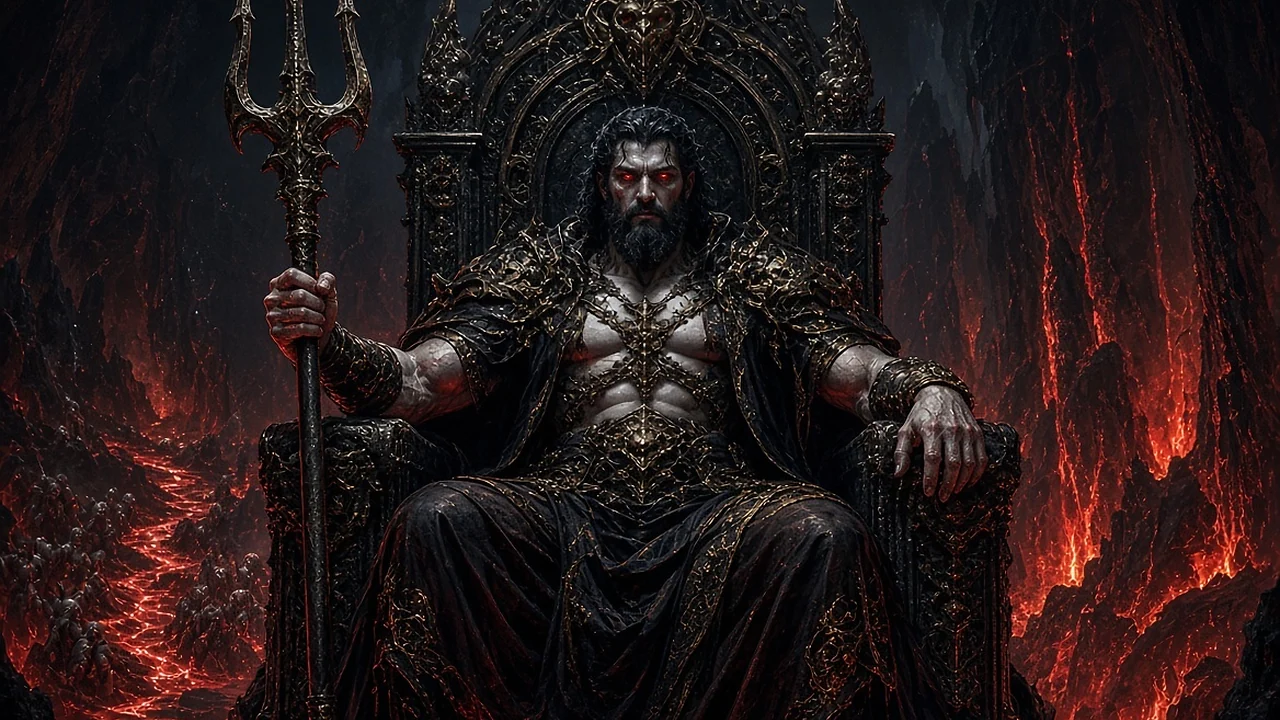
Hades in Greek mythology is the ruler of the underworld, the realm of the dead. He is a brother of Zeus and Poseidon and a child of the Titans Cronus and Rhea. Contrary to many movies, Hades is not the Greek equivalent of the Christian Devil: his principal responsibility is to rule a domain allocated in the divine order, not to tempt all humanity into evil. His most famous story concerns Persephone, daughter of Demeter, who is abducted into his realm. To understand Hades, we must distinguish the god, the place that sometimes shares his name, and the variety of Greek descriptions of the afterlife.
Who was Hades, god of the Greek underworld?
In Hesiod’s divine genealogy, Cronus and Rhea have six important children: Hestia, Demeter, Hera, Hades, Poseidon and Zeus. Cronus swallows several of his children, fearing that one will take his throne. Zeus escapes, and after the family’s release and the struggle against the Titans the younger divine order becomes dominant. Hades receives a substantial domain in the resulting mythical cosmos. Ancient writers sometimes use his name for both the ruler and the underworld itself, which can confuse readers trying to distinguish the character from the location.
Hades is often described as a stern, remote ruler rather than a god who appears on Mount Olympus at every feast. This helps explain why he is usually not on the familiar list of twelve resident Olympians, even though he is Zeus’s own brother and a major deity. The absence from a list does not make him unimportant or a lesser god. His sphere represents a necessary boundary of mortal existence in the mythic worldview: human life ends, and the dead belong to a different realm.
How did Hades become ruler of the dead?
In Homer’s Iliad Book 15, Poseidon explains the division of regions between the brothers. Zeus wins the broad sky, Poseidon the sea and Hades the dark realm below. The earth and Olympus, he adds, remain common. The passage matters because it shows that the underworld is not a prison assigned to Hades because he committed a crime. He is a recognized ruler of one of the great cosmic portions. The myth does not simply portray Zeus as a landlord and his brothers as servants.
Some retellings describe this allotment as drawing lots after the defeat of the Titans. The general distribution is well attested, but details vary between writers. A clear account distinguishes the rule of the dead from the task of judging individual souls: various figures are described as judges in later traditions. Hades is the realm’s king; that does not mean every later depiction of judgment, reward and punishment originates in a single earliest epic passage.
What is the Greek underworld: Hades, Tartarus and Elysium?
The underworld is not identical to the later Christian concept of Hell. Greek texts describe a complex landscape of rivers, shades, gates and regions whose arrangement changes across works and periods. In Homer’s Odyssey, Odysseus encounters the shades of the dead, among them his mother and great heroes. Their existence is often shadowy and sorrowful rather than organized into a straightforward system in which every person receives the exact reward or penalty later readers might expect.
Tartarus is a profound region associated with confinement and punishment, including the defeated Titans in Hesiod’s Theogony. Elysium or the Elysian Plain appears in important traditions as a special destination connected with blessed or favored figures. Other authors develop more elaborate judgments of the dead, including the roles of Minos, Rhadamanthys and Aeacus. Combining every period’s features into one standardized map can make an attractive infographic but not an accurate historical description of one ancient author.
Popular references to the five underworld rivers—Styx, Acheron, Cocytus, Phlegethon and Lethe—also require context. Their roles and locations vary by author. Charon is associated in later literature and art with ferrying the dead, while Hermes has roles guiding souls. One should not assume that every soul in Homer paid a coin to Charon in exactly the way later funerary customs and stories describe. The richer the imagined geography, the more important the source label becomes.
Hades and Persephone: abduction, pomegranate and seasons
The most influential early connected account is the Homeric Hymn to Demeter. Persephone, daughter of Zeus and Demeter, is gathering flowers when Hades emerges and seizes her against her will. Zeus has consented to the arrangement without Demeter’s knowledge. Demeter searches desperately for her daughter; the goddess Hecate and the sun god Helios help reveal what happened. The loss becomes a crisis for agricultural growth as Demeter refuses to let the earth produce crops.
Zeus sends Hermes to bring Persephone back, but Hades has given her pomegranate seeds, so her return cannot be permanent. In the hymn, Persephone spends one third of the year in the underworld and the other two thirds with her mother. Other retellings vary in the number of seeds or the seasonal division. The story explains the cycle of absence and return through divine family conflict. It should not be softened into a universally consensual romance in its earliest surviving major account: abduction, Demeter’s grief and Zeus’s role are fundamental to the plot.
This narrative belongs to a distinct search intent from a general Hades explainer. A separate article on Hades and Persephone can follow the Homeric Hymn line by line, examine Hecate and Helios, and discuss the relationship with the Eleusinian Mysteries. Here its purpose is to explain why Persephone becomes queen of the underworld and how Hades fits within the wider divine family.
What are Hades’ symbols and powers?
Hades can appear with a sceptre, a key or an association with the helmet or cap of invisibility, which is used by figures such as Perseus in some narratives. A dark throne and the presence of the underworld hound Cerberus are common modern visual shorthand. However, a black horned demon carrying a red pitchfork is largely a borrowing from different religious and popular fantasy traditions, not a reliable identification of the Greek Hades. Some ancient depictions show him as a mature bearded king, visually similar to other major gods, with context and accompanying figures making the identification clearer.
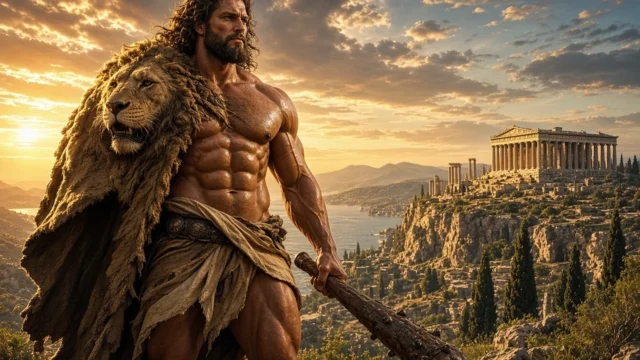
His powers concern rulership of the dead and the boundary preventing easy return to life. Heracles’s quest to bring Cerberus out of the underworld and Orpheus’s effort to retrieve Eurydice dramatize how unusual it is to cross this threshold. These stories do not portray Hades as omnipotent in every domain. Zeus remains the principal Olympian king, Poseidon rules the sea, and Hades’s authority operates within his own realm. Ancient mythological relationships do not fit a modern hierarchy of video-game boss levels.
Why is Hades not Satan or an evil god?
The terms underworld, hell and devil carry very different histories. Hades rules the place where the dead go in Greek stories; he is not described as the rebellious enemy of one universal creator in the Christian sense. He may act harshly, and the abduction of Persephone is a serious wrong in the early hymn’s plot, but such actions should be discussed in context rather than erasing the basic theological difference. His rule is part of the Greek cosmos, not simply an embodiment of evil.
The common Roman equivalent is Pluto or Dis, and Greek traditions also connect Plouton with wealth drawn from below the earth. The naming sometimes emphasizes the earth’s hidden riches rather than only death. The Roman names and literary interpretations changed across time; one-to-one translations make a helpful entry point but are not adequate substitutes for understanding distinct religious traditions.
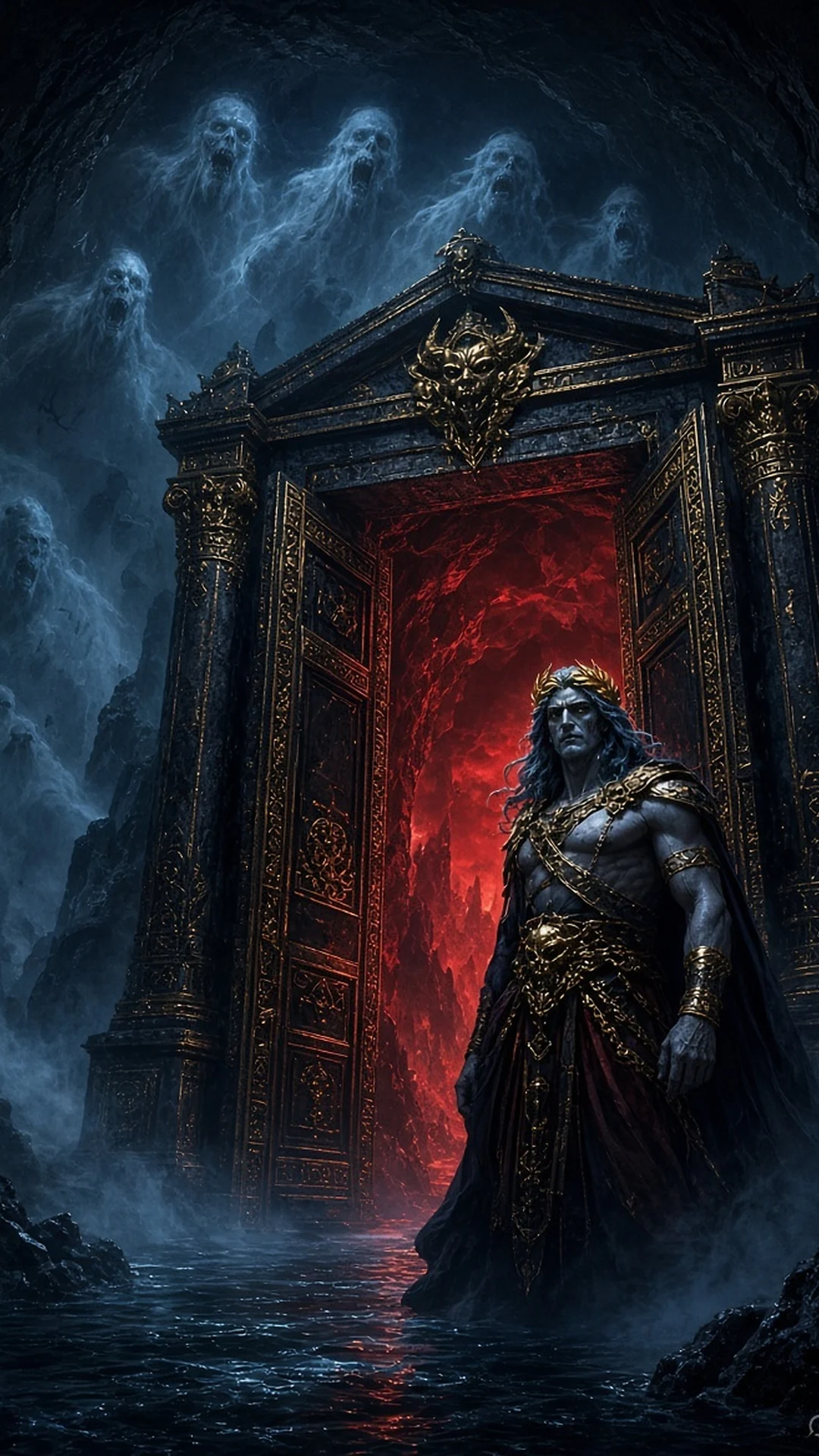
Hades in Heracles, Orpheus and Odysseus stories
Hades’s realm provides a setting for several major heroic narratives. In the last of Heracles’s twelve labours, the hero is ordered to fetch Cerberus. In accounts collected by Apollodorus, he enters the underworld and comes back with the guardian dog before returning it. Orpheus, the legendary musician, also descends seeking Eurydice. His music persuades the rulers below, but a condition attached to the return fails when he looks back. The best-known literary versions of that story appear in Virgil and Ovid.
In Homer’s Odyssey, Odysseus performs a rite to consult the dead and encounters figures who illuminate the costs of mortality and war. This is not the same plot as Heracles carrying Cerberus or Orpheus trying to rescue a beloved person. Grouping them as “a hero visits the underworld” can be useful, but a good article explains why the motive and source differ. Underworld narratives allow poets to revisit characters who are physically absent from the living world and explore the meaning of memory.
What can Indian readers compare with the idea of Yama?
It is tempting to equate Hades with Yama because both are associated in different traditions with death or the departed. That is only a broad comparison of themes. Their genealogies, afterlife systems, powers and religious settings are not identical. Calling Hades the devil and then using that claim to interpret another religion would compound two errors. A careful comparison uses the actual texts rather than surface similarities.
Our existing Greek vs Hindu mythology comparison explains selected parallels and differences without declaring their divine figures historically the same. For Hades himself, the clearest starting points are Homer and the Homeric Hymn to Demeter rather than movies or unsourced ranking charts.
Hades Greek mythology: 5 FAQs
Is Hades Zeus’s brother?
Yes. In the familiar genealogy, Hades, Poseidon and Zeus are children of Cronus and Rhea.
Is Hades the god of death or the ruler of the dead?
He is primarily the ruler of the underworld. The personification of death, Thanatos, is a distinct figure in Greek tradition.
Was Hades considered evil?
He can act sternly or cruelly in myth, but he is not the direct equivalent of Satan and is not simply the embodiment of evil.
Who is Hades’s wife?
Persephone, the daughter of Demeter and Zeus in a prominent tradition. The early Homeric Hymn describes her abduction.
What guarded the entrance to Hades?
Cerberus, the monstrous hound, is an iconic guardian in numerous underworld narratives.
Sources and conclusion
Read Homer, Iliad 15 on the division of domains; Homeric Hymn to Demeter on Persephone; and Theoi’s Hades testimonies for additional source-based descriptions. Conclusion: Hades belongs to the leading Greek divine family and governs a complex underworld; he is neither a Christian devil nor a one-dimensional villain. Updated 14 November 2026. Images are symbolic illustrations.














Share Your Opinion
Comments are closed on this post.