 Vista
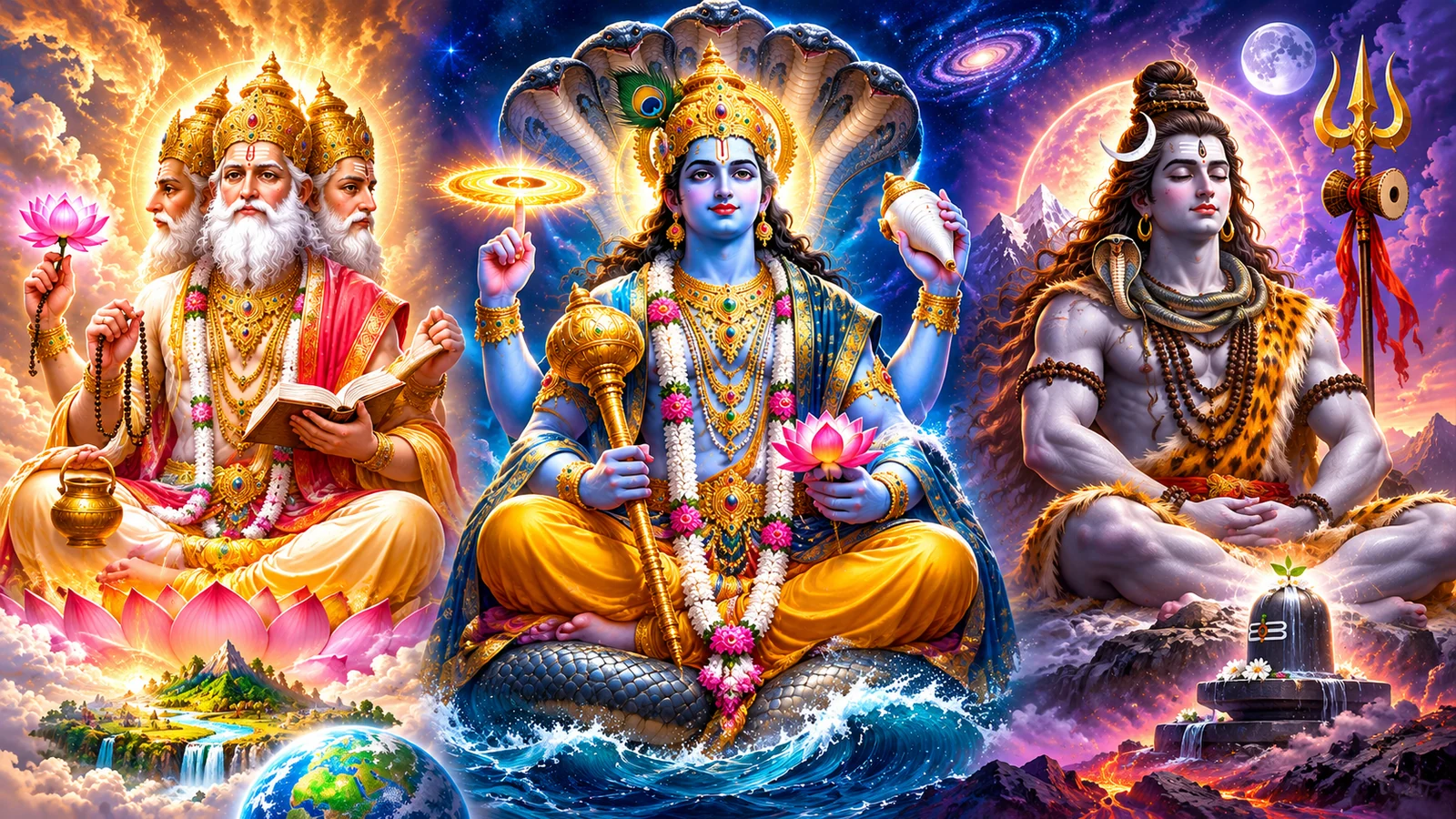
Quick answer: In the familiar Trimurti model of Hindu traditions, Brahma is associated with creation, Vishnu with preservation, and Shiva with dissolution or transformation. This is a useful introduction, but it is not a universal theological ranking. Vaishnava traditions may worship Vishnu or Krishna as supreme; Shaiva traditions revere Shiva as supreme; Shakta traditions place the Goddess at the center; and some nondual approaches interpret several divine forms through one ultimate reality. Asking which of the three is most powerful therefore requires a second question: according to which text, philosophical school, or devotional community?
These three deities appear in countless paintings, sculptures, stories and temple traditions. Their symbolic attributes are easy to recognize once you know what to look for: Brahma’s four faces, Vishnu’s conch and discus, and Shiva’s trident and third eye. Yet the familiar phrase “creator, preserver, destroyer” does not exhaust the meaning of any of them. This guide explains the distinctions, the stories behind the images, and the different answers to the question of divine supremacy without setting one community’s beliefs against another.
Brahma, Vishnu and Shiva: The Trimurti at a Glance
| Question | Brahma | Vishnu | Shiva |
|---|---|---|---|
| Familiar Trimurti role | Creation | Preservation and protection | Dissolution and transformation |
| Frequently shown symbols | Four faces, lotus, book, water pot | Conch, Sudarshana Chakra, mace, lotus | Third eye, trident, damaru drum, crescent moon |
| Common associated figure | Saraswati, in many traditions | Lakshmi | Parvati or Shakti |
| Frequent divine vehicle | Hamsa, a goose or swan | Garuda | Nandi, the bull |
| Typical theme in stories | Knowledge and bringing forth worlds | Protecting dharma and restoring balance | Transformation, austerity, liberation and renewal |
| Important qualification | Not the same as philosophical Brahman | May be regarded as supreme in Vaishnava schools | May be regarded as supreme in Shaiva schools |
Important: The chart describes widely recognized associations, not exclusive responsibilities agreed upon by every Hindu community. The poster below uses the same beginner-friendly framework and includes this limitation.
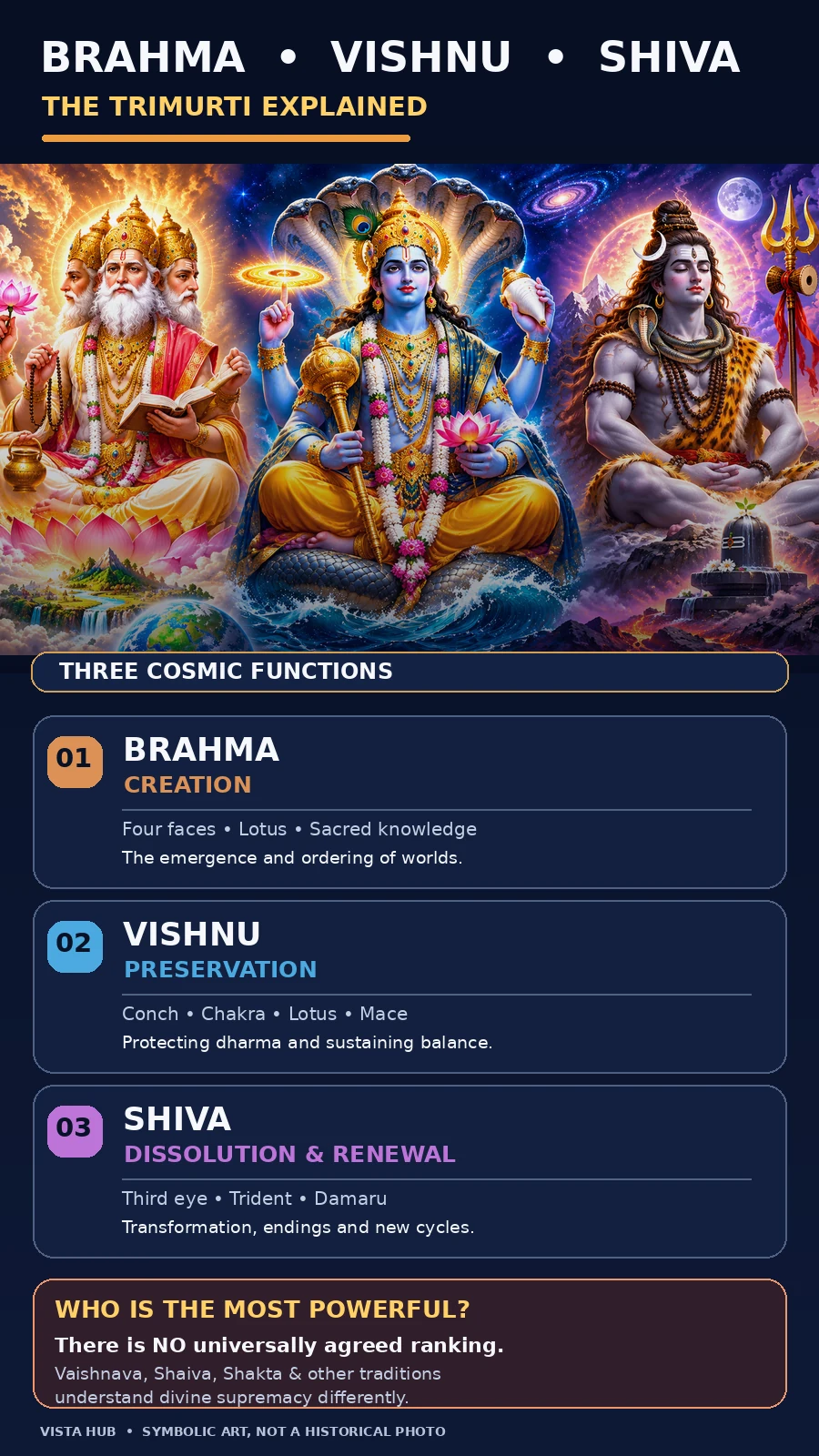
What Does Trimurti Mean in Hinduism?
The Sanskrit expression trimūrti means “three forms.” In a widely taught presentation, the three deities embody three interconnected functions of a changing cosmos: something comes into existence, it is sustained for a time, and eventually its current form ends. In traditions that describe recurring cycles of the universe, an ending may also make room for a new beginning. This is why “destroyer” is sometimes translated or explained as “transformer.” Neither translation, on its own, summarizes the whole of Shiva’s theology.
The Oxford Bibliographies introduction to the Trimurti describes it as a theological synthesis within Sanskrit literature, rather than a timeless formula universally dominant in every historical period. That matters because Hinduism contains many scriptures and devotional paths. Temple life and philosophical debate do not always place Brahma, Vishnu and Shiva on an identical footing. For some devotees, the Trimurti is a useful set of symbols; for others, the supreme reality is Vishnu, Shiva, the Goddess or the transcendent Brahman.
Another important point is that the three are not generally worshipped together in exactly the same way as a single combined deity in every community. Images showing all three can communicate unity, but they do not erase distinct temple traditions. It is better to describe the Trimurti as one influential way of organizing cosmic processes, not as a rulebook that settles every disagreement between scriptures.
Who Is Brahma? The Creator, His Four Faces and His Symbols
Brahma is the deity traditionally associated with creation in the Trimurti framework. He is often depicted with four faces, suggesting awareness in the four directions and an association with knowledge. His hands may hold a manuscript or the Vedas, a rosary, a water vessel or a lotus. A hamsa—often identified in English as a goose or swan—appears as his vehicle. Iconographic details vary across time and place; a sculpture does not have to show every object to be recognizable as Brahma.
In one famous Puranic setting, Brahma appears from a lotus connected with Vishnu, who rests upon the cosmic waters. Other accounts organize the beginning of the world differently. A useful lesson for readers is that the role of creator does not mean every Hindu scripture offers the same story about Brahma’s own origin. Some texts tell stories in which another deity is the source of all creation. Such differences reflect theological traditions, not necessarily errors that must be “corrected” by picking a viral video.
Brahma versus Brahman is an especially important distinction. Brahma is a named deity in myths and iconography. Brahman, by contrast, is a philosophical term for ultimate reality in several schools of Hindu thought. The resemblance in spelling causes confusion in English articles. Also, Brahmin refers to a social or priestly identity and is not simply another name for either Brahma or Brahman. These three terms should not be swapped in translations.
Why Are There Fewer Prominent Temples Dedicated to Brahma?
Visitors often hear about the Brahma temple at Pushkar in Rajasthan and ask why Brahma is not worshipped in as many prominent temples as Vishnu or Shiva. Several traditional stories offer explanations, including accounts involving curses or a dispute over truthfulness. Those are religious narratives, not a single historically proven explanation for temple patronage across South Asia. Worship practices develop through royal support, institutions, local communities and changing devotional preferences over long periods. Brahma remains significant in sacred narratives and art even where he is not the principal recipient of temple worship.
Who Is Vishnu? The Preserver, His Four Symbols and the Avatars
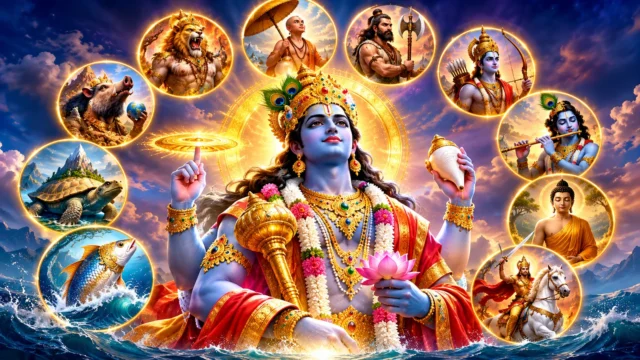
Vishnu is commonly associated with maintaining cosmic order and safeguarding dharma—a word that can refer, depending on context, to duty, righteous conduct and the order that sustains life. Vishnu is often depicted as blue-skinned, crowned and bearing four attributes: the shankha (conch), chakra (discus), gada (mace) and padma (lotus). The discus is especially famous as the Sudarshana Chakra. His divine vehicle is Garuda, and Lakshmi is closely associated with him in numerous traditions.
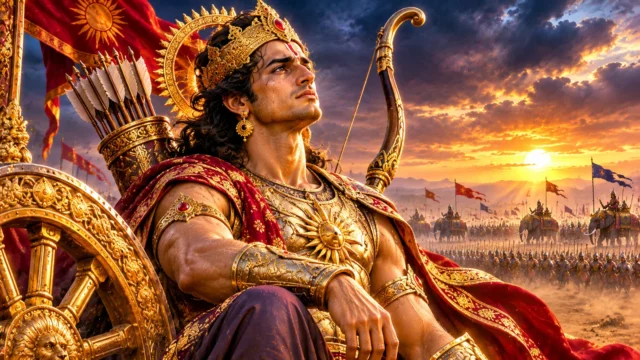
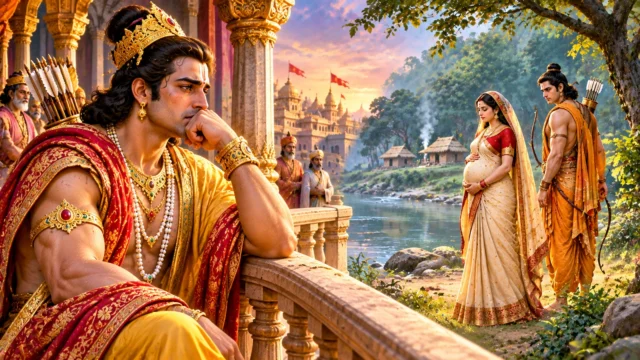
The stories of Vishnu’s avatars, especially Rama and Krishna, help explain what preservation means in practice. Protecting a world does not mean freezing it in place. In the Ramayana, Rama faces duties that can involve painful choices; in the Mahabharata and Bhagavad Gita, Krishna addresses the moral confusion of Arjuna and the importance of thoughtful action. The broader Dashavatara traditions include forms such as Matsya, Kurma and Narasimha. Their narratives concern different crises rather than an identical adventure repeated with new costumes.
For many Vaishnavas, Vishnu, Narayana or Krishna is not merely the middle member of a cosmic team. He is understood as supreme, and the roles attributed to other deities may be interpreted in relation to his divine authority. Other Hindu paths understand this differently. An unbiased introduction should say “in many Vaishnava traditions” rather than claim every Hindu school accepts the same hierarchy.
Who Is Shiva? Destroyer, Transformer, Yogi and Nataraja
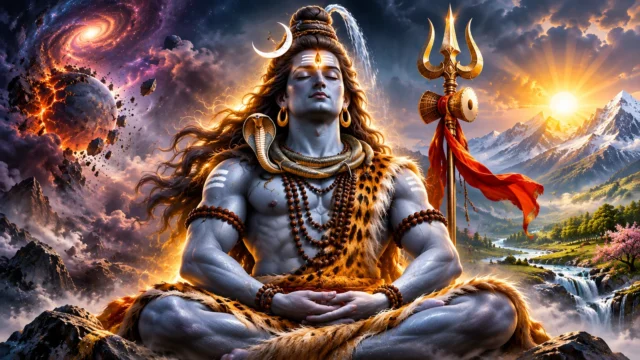
Shiva is described in popular English introductions as the destroyer, but the religious meaning of dissolution is much richer than the everyday meaning of damaging things. Hindu narratives often portray worlds as subject to change and recurring cosmic cycles. Ending one form can open the possibility of another. In many Shaiva traditions Shiva is revered as the supreme Lord, whose nature cannot be reduced to one job in the Trimurti arrangement.
Shiva’s visual identity is distinctive: matted hair, the crescent moon, a third eye, the trishula or trident, the damaru drum, serpents and the sacred river Ganga associated with his hair. His bull Nandi is a familiar companion and vehicle. He can appear as an ascetic absorbed in meditation on Mount Kailash, as a householder connected with Parvati and their children, or as Nataraja, the cosmic dancer. The dance image brings together rhythm, creativity, dissolution and liberation; its meaning cannot be captured merely by saying “destruction.”
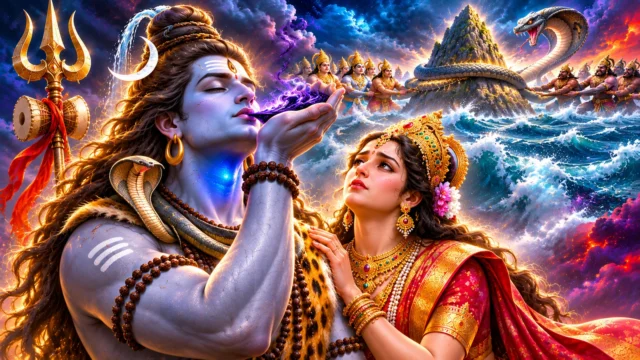
Stories of Shiva also include protection and compassion. In a celebrated version of Samudra Manthan, Shiva contains the dangerous poison Halahala when it threatens the world and becomes known as Neelkanth, the blue-throated one. This story complicates any simplistic attempt to label him a negative or evil deity. Describing a symbol of destruction in a religious context does not mean promoting violence or claiming mythological events are scientifically verified.
Brahma vs Vishnu vs Shiva: Who Is the Most Powerful God?
There is no single power ranking accepted by all Hindu traditions. The answer depends on what a person means by “supreme” and which philosophical or devotional perspective they are studying. A short social-media comparison that counts weapons or victorious battles misses the fact that these are religious ideas about ultimate reality, not characters with standardized video-game statistics.
The Vaishnava Perspective
Many Vaishnava communities regard Vishnu or Krishna as the Supreme Being. In this framework, stories of other deities may be explained through Vishnu’s larger cosmic authority. Some Puranas and devotional works are especially influential in supporting this understanding. Different Vaishnava lineages are not completely identical, so it is still important to identify a particular school or source.
The Shaiva Perspective
Shaiva traditions often regard Shiva as supreme, the ground of the universe and of its processes. An image portraying Shiva as the cosmic dancer may imply that creation, preservation and dissolution are all encompassed within his divine activity. Such a perspective cannot be reduced to the claim that Shiva only performs destruction while someone else performs everything else.
Shakta, Smarta and Nondual Perspectives
In many Shakta traditions, the Goddess (Devi or Shakti) is understood as ultimate power. Some Smarta approaches support worship of several deities while emphasizing a larger unity. Nondual schools, including influential interpretations of Advaita Vedanta, investigate the relation between divine forms and Brahman, ultimate reality. These are not interchangeable teachings; they are examples of why any universal ranking would misrepresent the tradition’s diversity.
The responsible answer to “Who is strongest?” is therefore: state the tradition before stating its theology. A Vaishnava text, a Shaiva hymn and a Shakta narrative may each speak with conviction about its central deity. Reporting those viewpoints fairly is more informative than pretending one story has settled the subject for everyone.
Famous Stories That People Often Misinterpret
A popular story describes Brahma and Vishnu attempting to find the beginning and end of a vast pillar of light associated with Shiva. Some retellings use the episode to emphasize truthfulness, humility and Shiva’s transcendence. It would be inaccurate to turn it into a universally binding historical scoreboard. It belongs to a particular devotional narrative setting, and its meaning changes when it is taken out of context.
In another familiar account, Brahma emerges from a lotus linked with Vishnu. Vaishnava readers may interpret that imagery through Vishnu’s ultimate sovereignty, while other scholars may study it as part of an evolving cosmological narrative. Shiva’s dance and the stories of Vishnu’s avatars likewise reflect meanings larger than a contest between divine opponents. The best question is not “Which god defeated which?” but “What is this story trying to teach its audience?”
Ancient Indian art offers a further reminder of variation. A Kashmiri sculpture of the Brahmanical Triad dated to the eighth or ninth century, held by New York’s Metropolitan Museum of Art, combines the three figures in a regionally distinctive style. Such objects are genuine historical artifacts; their iconography is evidence for artistic and devotional history, not photographic proof that the mythological events literally occurred.
Trimurti, Trinity and the Three Gunas: Three Things Not to Confuse
Writers sometimes call the Trimurti the “Hindu Trinity.” That nickname can help a beginner remember three names, but it risks suggesting that the Trimurti has the same meaning or doctrinal structure as the Christian Trinity. The comparison is not exact, and Hindu theological traditions themselves are diverse. It is more precise to say Trimurti, the grouping of three divine forms, and explain its particular context.
Another common chart links Brahma with rajas, Vishnu with sattva, and Shiva with tamas, the three gunas or qualities discussed in various Hindu frameworks. These associations appear in some teachings, but a chart that translates tamas as “evil” and then calls Shiva evil badly distorts the discussion. The gunas are concepts requiring context, not labels for praising one community and insulting another. The Trimurti functions and the gunas can be discussed together where a source does so, but neither arrangement should be treated as a universal answer to Hindu philosophy.
How to Recognize Brahma, Vishnu and Shiva in a Picture
For art lovers and international readers, visual identification is often the easiest starting point. Look for Brahma’s multiple faces and lotus, Vishnu’s chakra and conch, and Shiva’s third eye or trident. These details are not always present in every depiction. Religious artists work within regional conventions, and representations can change across centuries. A temple statue may be less brightly colored than a modern devotional illustration, yet convey the same recognizable symbols.
The Metropolitan Museum of Art’s guide to recognizing Hindu deities explains how attributes and vahanas, or vehicles, help identify figures. A picture labelled “Trimurti” should therefore depict recognizable Brahma, Vishnu and Shiva rather than three generic royal figures. The feature illustration in this article is symbolic contemporary artwork, not an attempt to reproduce an ancient painting or an actual event.
What Can We Learn from the Three Cosmic Roles Today?
A thoughtful modern reading sees the three roles as a reminder that beginning, maintaining and ending are all part of responsible action. Starting a project requires imagination, sustaining it requires care, and changing what no longer works requires judgment. That analogy can make the Trimurti memorable, but it is a contemporary interpretation, not a quotation attributed to scripture. Religious teachings should not be reduced to business-management slogans.
People who practice Hindu traditions may relate to the deities through devotion, ritual and philosophy in ways that cannot be summarized by an analogy. A curious reader can respect those practices while asking careful questions about sources, iconography and historical change. Different answers need not be flattened into one vague statement, but they can be presented without disrespect.
Frequently Asked Questions
Are Brahma, Vishnu and Shiva the same god?
The Trimurti joins them in one conceptual framework, but Hindu schools explain their relationship differently. Some traditions emphasize a shared ultimate reality; others give one deity a specifically supreme position.
Who is more powerful, Shiva or Vishnu?
There is no universal ranking. Shaiva and Vaishnava traditions offer distinct theological answers, and the appropriate explanation depends on the tradition being discussed.
Why is Brahma called the creator if Vishnu is sometimes described as the source of Brahma?
The Trimurti function and the story of cosmic origin are not identical questions. Certain Puranic narratives portray Brahma emerging from Vishnu; other texts frame creation differently.
Why does Brahma have four heads?
Common symbolic explanations associate the faces with the four directions or sacred knowledge. Artistic representations vary.
Is Brahma the same as Brahman?
No. Brahma is a deity; Brahman is the philosophical concept of ultimate reality in several Hindu schools. A Brahmin is a different term again.
Is Shiva evil because he is the destroyer?
No. In Hindu religious contexts dissolution can signify transformation and renewal, and Shiva is widely revered as compassionate, protective and liberating.
Conclusion
Brahma creates, Vishnu preserves, and Shiva transforms is a helpful first sentence, not the last word. The three figures carry different stories, symbols and devotional meanings, and Hindu communities disagree about whether one of them—or the Goddess, or nondual Brahman—is ultimate. The most rewarding way to study Indian mythology is to ask which source, which community and which interpretation is being presented. That approach explains the Trimurti clearly without reducing a living religious tradition to a contest of supernatural strength.
References and further reading: Oxford Bibliographies: Trimūrti; The Metropolitan Museum of Art: Recognizing the Gods; The Met: The Brahmanical Triad. These are background references; the devotional narratives are described as religious traditions, not independently verified historical incidents. Editorial review: 12 November 2026.













Share Your Opinion
Comments are closed on this post.