Riding a Motorcycle in the Rain: Avoid These 6 Common Mistakes
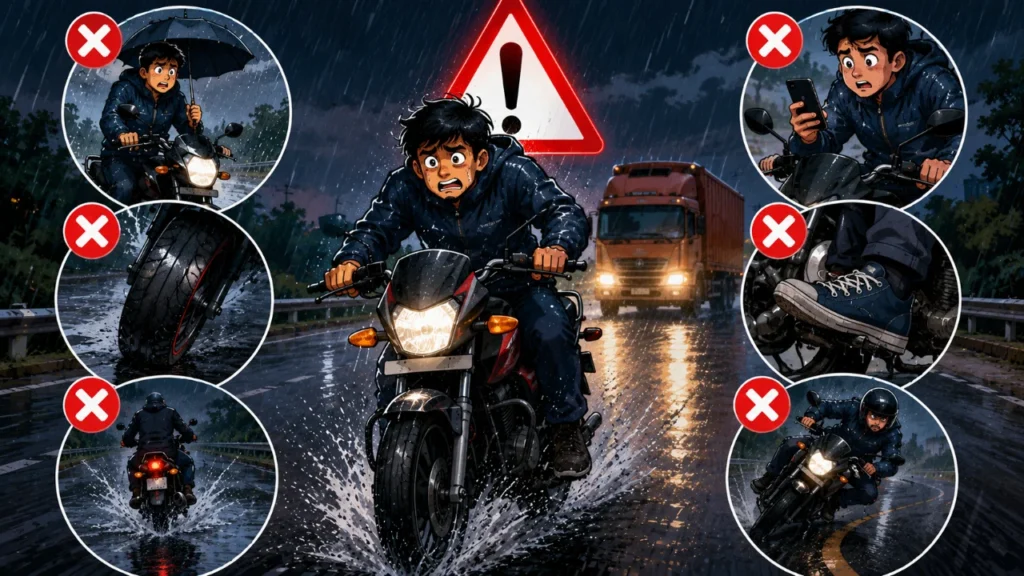
A sudden downpour, a slippery road, and a bike speeding at 60 km/h. Suddenly, a pothole appears, and the rider is on the ground. In the rain, thousands of people suffer fractures daily due to such small mistakes. It’s time to be cautious, as there’s no glory in ending up on a hospital bed.
Mistake 1: Underestimating Potholes and Not Reducing Speed
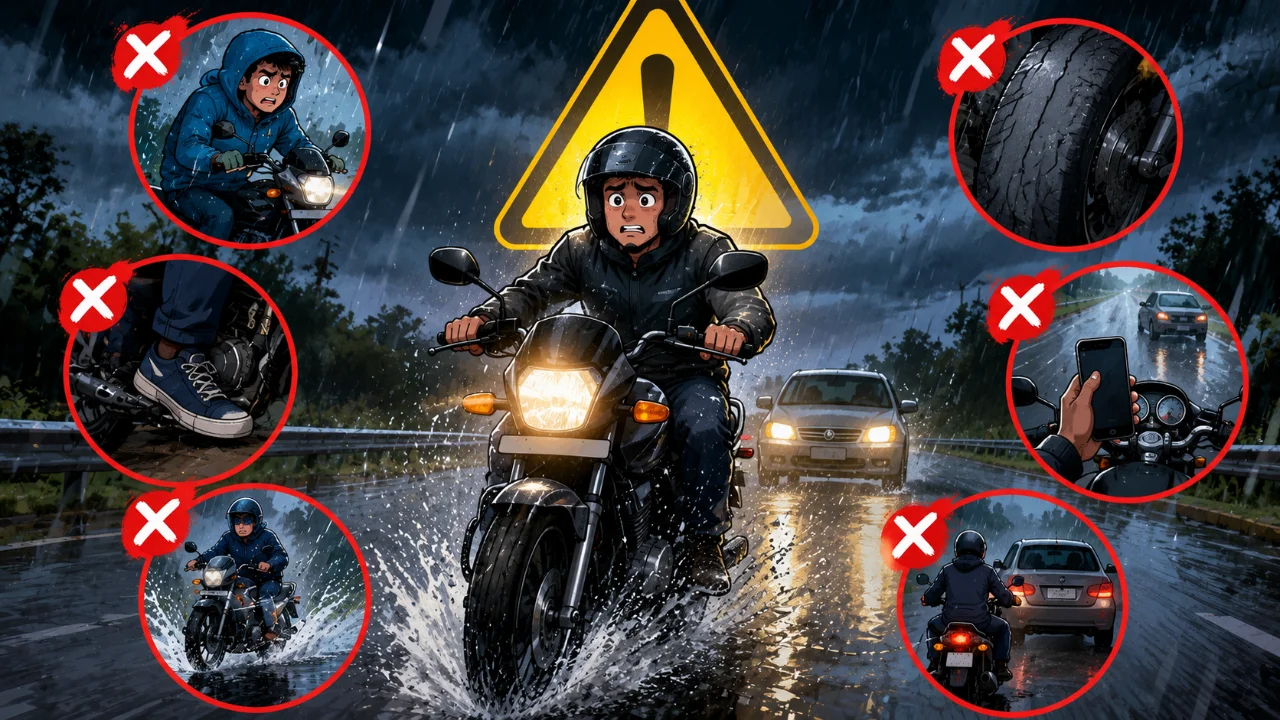
The biggest danger during the rainy season is water-filled potholes that appear calm and normal from the surface. Riders often assume the water is only an inch or two deep, but a dangerous pit may be hidden beneath. As a fast-moving bike hits it, the rim can bend, and the bike can lose balance entirely.
If potholes are filled with water, immediately reduce your speed to 20-30 km/h. Do not attempt to ride through them until you are sure of their depth. Often, the strong flow of water erodes the soil beneath, causing a large section of the road to collapse.
Remember, there’s no benefit to being reckless in waterlogged areas. If a vehicle is approaching from behind, let it pass, and navigate the water slowly yourself. A moment’s haste can lead to lifelong disability.
Mistake 2: Sudden Braking on Muddy Turns
Mud and wet soil create a grip on the road that is more dangerous than oil during the monsoon. Many riders mistakenly apply the front brake suddenly while turning. On a wet surface, the front wheel can lock up instantly upon braking, causing the bike to slip severely to one side.
If you need to stop at a turn, always use both brakes simultaneously and very gently. Engine braking is considered the safest method during rain. This means controlling the bike’s speed by downshifting gears, rather than solely relying on the brake levers.
What to Do on Slippery Surfaces:
- Slow down well before reaching a turn.
- Never apply brakes in the middle of a turn.
- Avoid leaning the bike excessively.
Mistake 3: Ignoring Visibility in Nighttime Rain
Riding a motorcycle at night during the rain is extremely risky. Water droplets accumulate on the helmet visor, and the high beams of oncoming vehicles can cause temporary blindness. This makes it difficult to spot roadside vehicles or open drains.
If your helmet visor is dirty or scratched, your visibility can drop by up to 80% in rainy nights. Some riders lift their visors, increasing the risk of dirty water or insects entering their eyes, leading to accidents.
Always use a helmet visor with a water-repellent coating. Wearing a reflective jacket at night is crucial so that vehicles approaching from behind and in front can see you clearly from a distance.
Mistake 4: Riding with Worn-Out Tires
If your motorcycle’s tire treads are completely worn out, riding in the rain is akin to inviting danger. The grooves in tires are designed to channel water away from the road, maintaining direct contact between the tire and the surface. When these grooves wear down, the tire begins to float on the water’s surface.
This phenomenon is known as aquaplaning. In this situation, control over the handlebars is completely lost, and even braking will not stop the bike but cause it to skid.
Before the monsoon begins, check the grip of your motorcycle tires. If they are worn out, don’t risk your life to save a little money; get them replaced immediately.
FACT: Roads are most slippery during the first showers of rain. This is due to a chemical mixture formed when old grease, oil, and dirt on the road mix with rainwater.
Mistake 5: Using Loose Clothing or an Umbrella Instead of a Waterproof Raincoat
It’s common to see people foolishly riding with an umbrella in one hand during light rain. In strong winds, the umbrella can flip over, or control can be lost from the handlebars. Similarly, very loose clothing or ponchos can get caught in the wheels or chain, causing serious accidents.
Always opt for a proper two-piece waterproof riding suit that fits your body well. Wearing such a suit keeps your hands completely free on the handlebars, allowing for better balance.
Remember, staying dry in the rain isn’t just about comfort; it also maintains your reaction time and body control. Cold hands and feet can make it difficult to brake effectively when needed.
Mistake 6: The Harsh Reality After an Accident – No One Cares When You’re Disabled
The adrenaline rush from speeding on the road can prove very costly. Once a hand or leg is broken, or a person is permanently bedridden, the folly of showing off stunts on the road becomes apparent. That ‘heroism’ vanishes amidst hospital visits and medical bills.
Initially, a few friends might inquire about your well-being after an accident, but after a few weeks, no one will look back. The lifelong pain is borne only by you and your innocent family. Your small negligence can financially and mentally devastate your entire family.
Therefore, whenever you start your motorcycle in the rain, remember the faces of your parents, spouse, or children waiting for you at home. Reaching home safely is more important than speed.
Vivek Bhai’s Advice
Riding a motorcycle in the monsoon is not an adventure sport; the sooner you understand this, the better. The accumulated water and mud on the roads are just waiting to make you fall. Overconfidence becomes the biggest villain, leading you straight to the hospital emergency ward.
Technically speaking, the stopping distance of a vehicle on a wet road doubles compared to a dry one. When you brake at 50 km/h, the bike will skid much further in the rain than on a dry road. Therefore, maintaining at least double the distance from the vehicle ahead is wise.
💡 There’s no medal for being a hero on the road, but the smiles of your family upon your safe return are priceless. Look, it’s simple – it’s better to arrive 5 minutes late than to lie on a bed with broken bones. In the rain, halve your speed and double your caution; that’s the real riding attitude.
Frequently Asked Questions
What should you do if your motorcycle tire slips in the rain?
If your tire slips, don’t panic and slam on the brakes suddenly. Immediately release the accelerator, try to keep the handlebars straight, and use engine braking to regain balance.
Can water entering the brake oil or gear damage the motorcycle in the rain?
Yes, if water enters the chain, brake drum, or engine oil, braking power can be reduced. After the rain, it’s essential to lubricate the chain and clean the brakes.
What should be the speed of a motorcycle in rainy weather?
During rain, your speed should be at least 30-40% lower than on normal days. Generally, a speed of 30 to 40 km/h is controllable on waterlogged roads.
What is the correct way to ride a motorcycle through waterlogged paths?
Keep the bike in first or second gear and maintain a slight, consistent acceleration so that water does not enter the engine through the exhaust. Never change gears in the middle of the waterlogged path.
Disclaimer: The information provided in this article is for general awareness only.