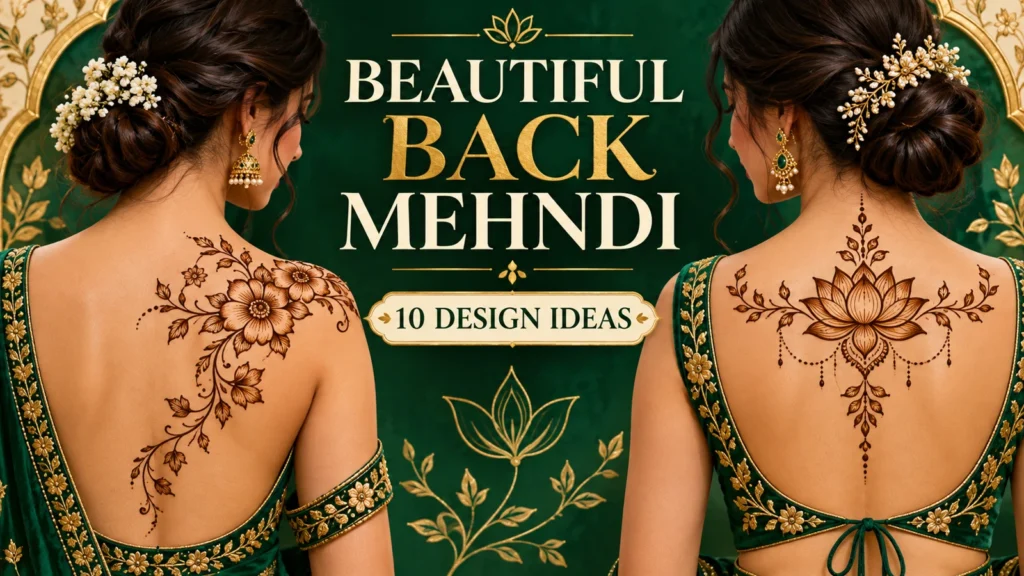
Looking for a backless mehndi design that works with your blouse or dress? Start with the area your outfit actually reveals: a small shoulder opening suits a compact floral motif, while a wider back neckline can frame a central flower or a flowing vine. This gallery brings together 10 supplied design images, with practical notes to help you compare their placement, linework and overall shape.
These are body-art ideas for the back and shoulder, rather than mehndi on the back of the hand. The collection includes floral clusters, a lotus-inspired vertical composition, a butterfly, a heart and broad upper-back arrangements. Image 10 continues over the shoulder toward the front, so it is included as a shoulder-wrapping option rather than a centred back design.
10 backless mehndi design images
1. Compact floral shoulder-blade design
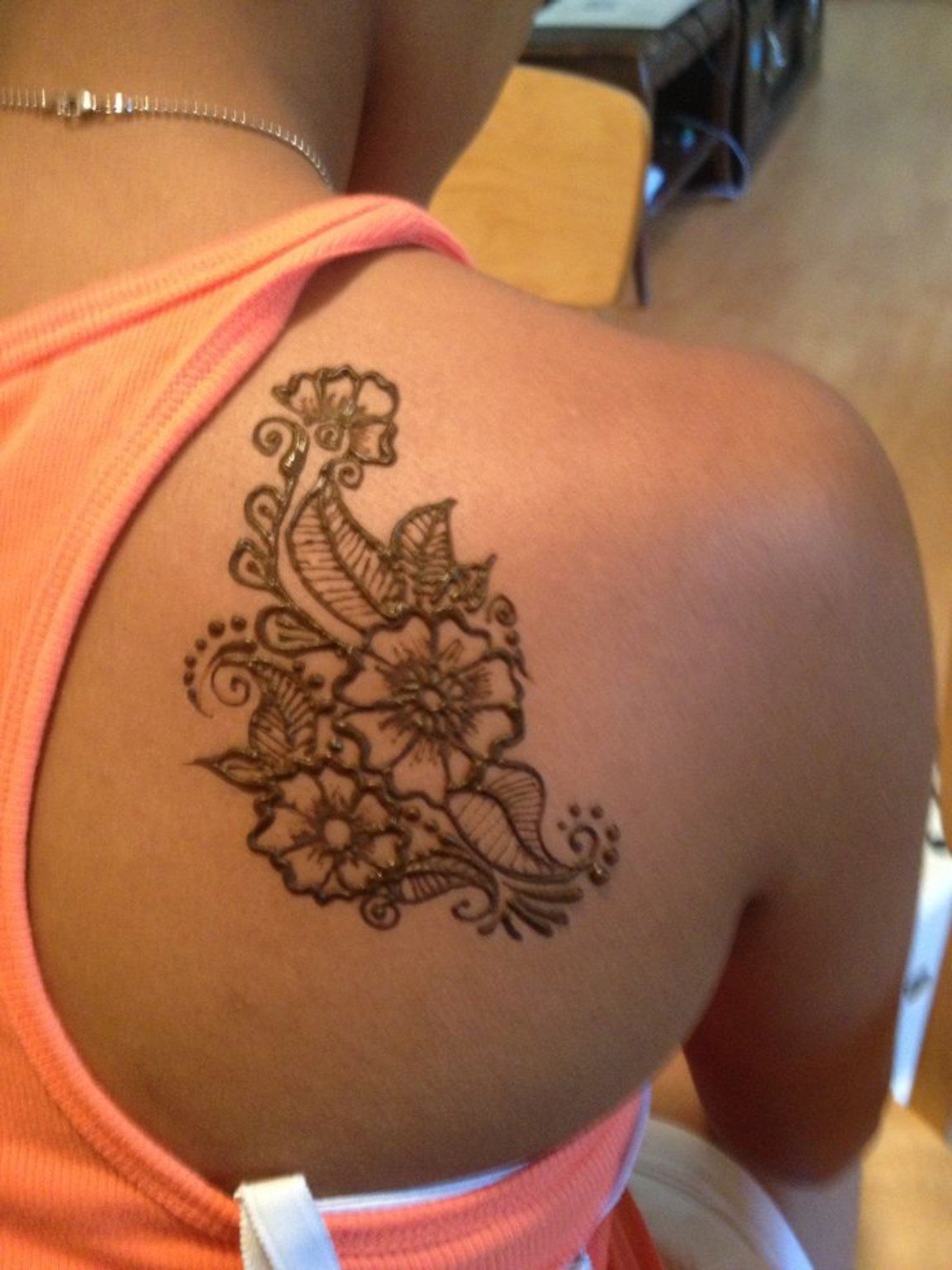
This compact arrangement sits on one shoulder blade rather than filling the whole back. A larger flower anchors the middle, with smaller flowers, shaded leaves and curls extending around it. Notice how the outer edge follows a loose diagonal instead of a hard rectangle. It is a useful reference when a blouse strap leaves only one section visible. Before copying its size, mark the strap position so the main flower remains clear of the fabric.
2. Vertical floral cluster for the upper back
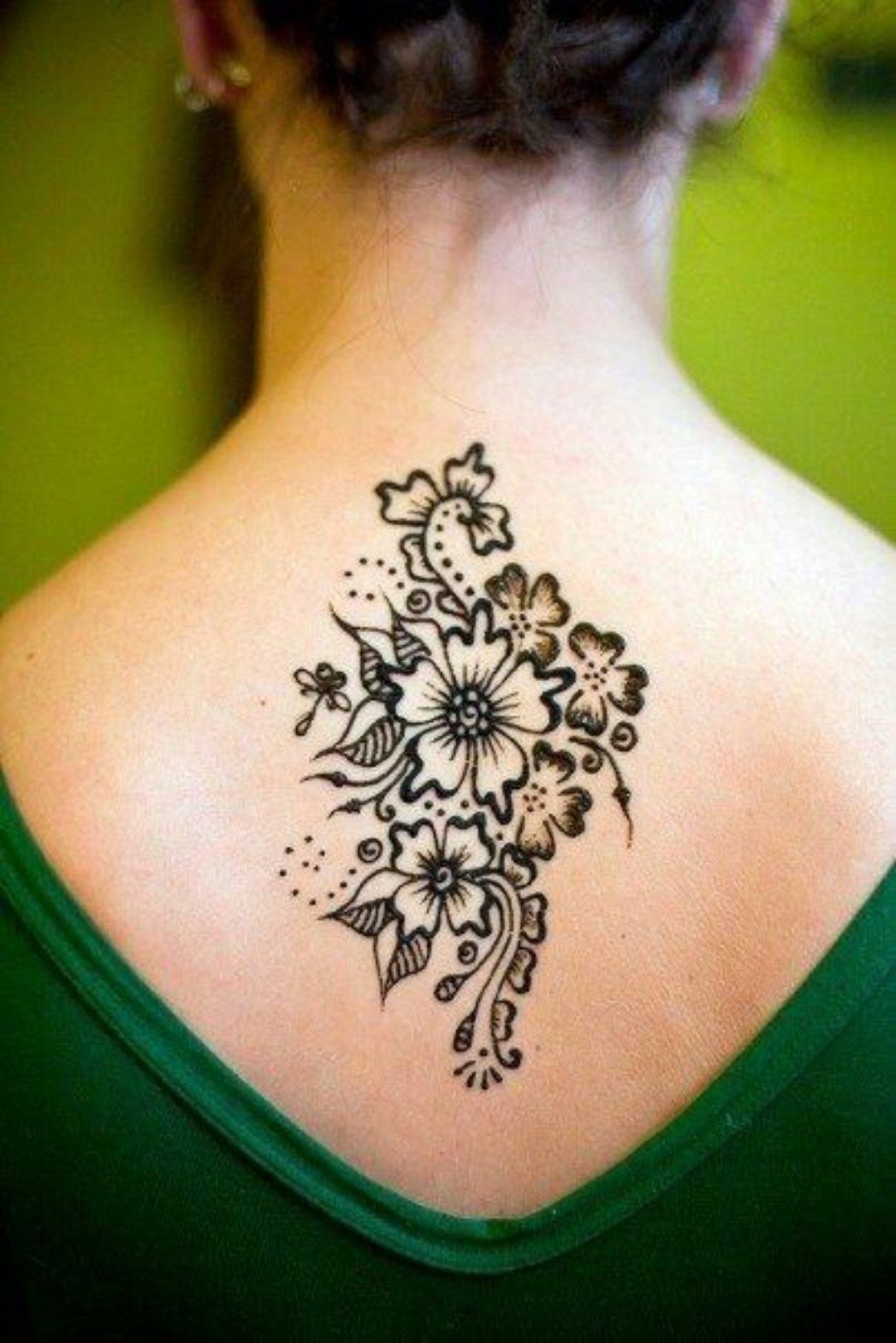
The second image gathers several flowers into a vertical cluster below the nape. Outlined petals, small leaves and dotted curls create movement without extending across both shoulders. A rounded or deep U-shaped back opening can frame this type of upper back mehndi design. Keep the top flower below any necklace clasp, and check where the lower edge meets your blouse. The composition needs a visible central area rather than simply a very low neckline.
3. Lotus-inspired centre-back design
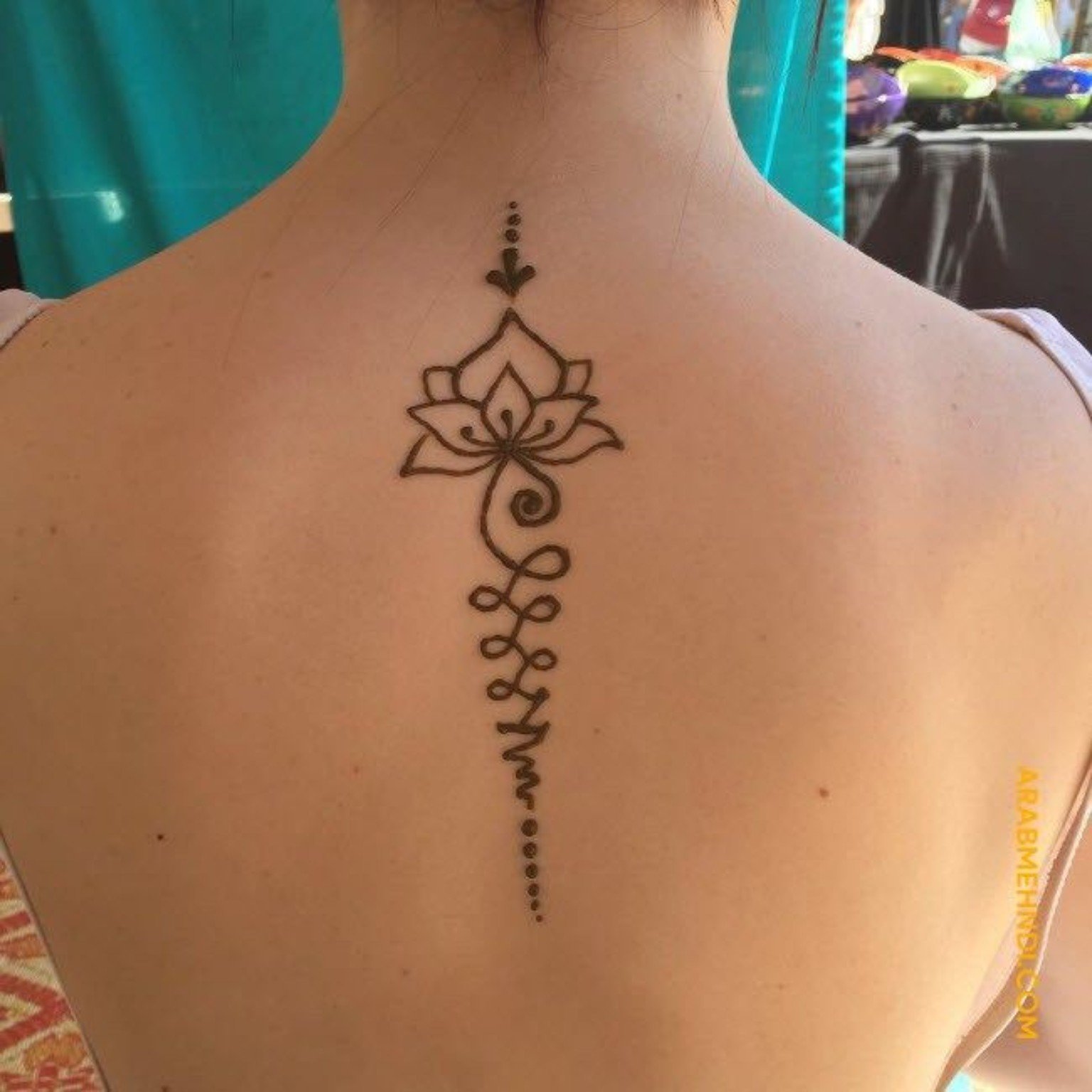
A lotus-inspired flower forms the focus of this centre-back design, with small marks above and a looping vertical line underneath. The open petals make it look different from the dense floral clusters elsewhere in the gallery. Treat the lower strokes as part of the visible composition; do not assume they form readable lettering. If you prefer a cleaner version, ask the artist for an original lotus-and-curl arrangement sized to the opening of your outfit.
4. Butterfly with flowing curls
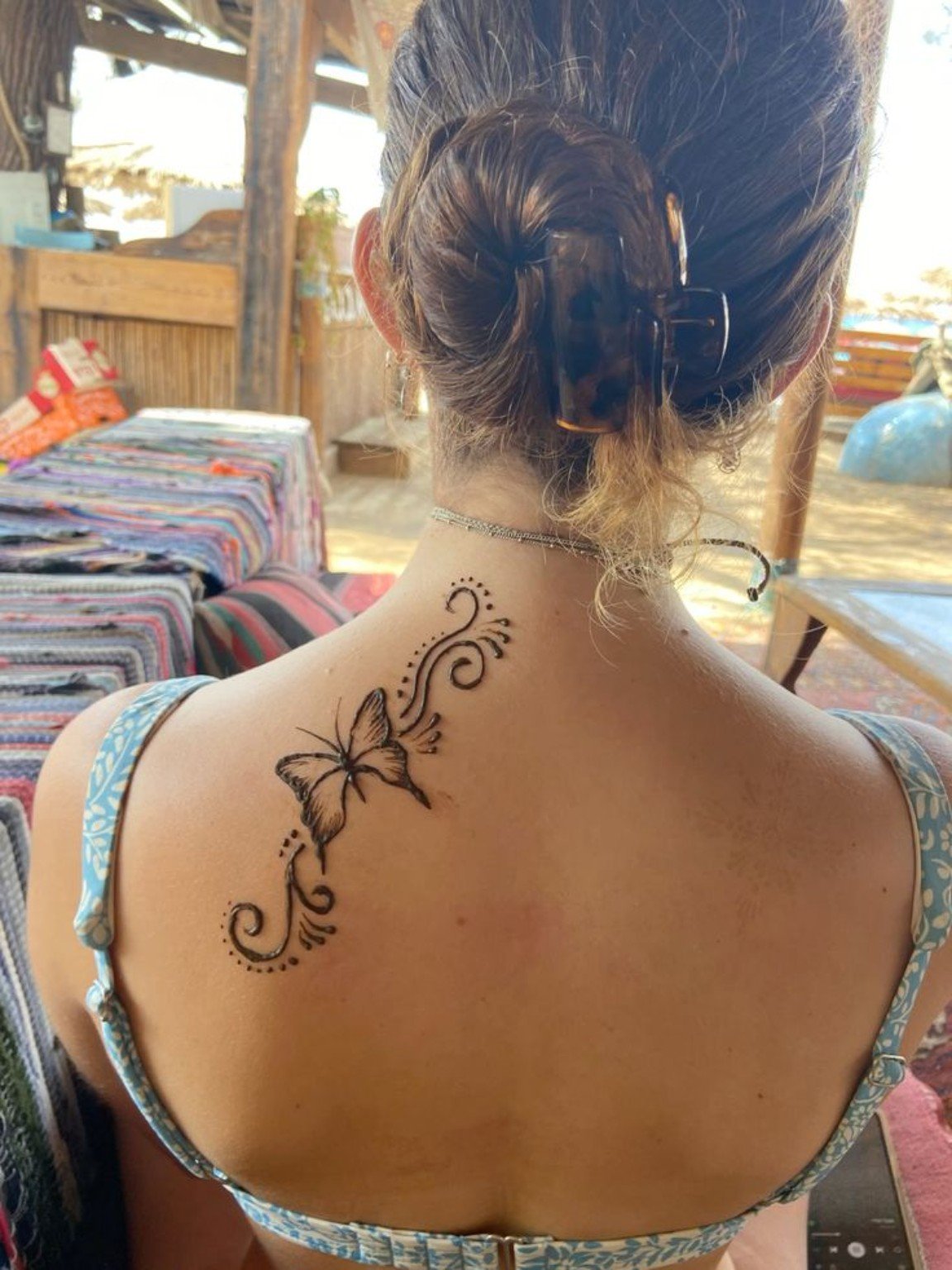
The butterfly sits slightly off centre and is linked to long decorative curls. This gives the design a lighter, more asymmetrical outline than a broad floral band. It is an option for someone who wants a recognisable motif without covering the entire upper back. Pay attention to how much empty space surrounds the wings: adding too many extra flowers could change the character. A hairstyle swept away from this shoulder would make the arrangement easier to see.
5. Diagonal floral vine on one shoulder
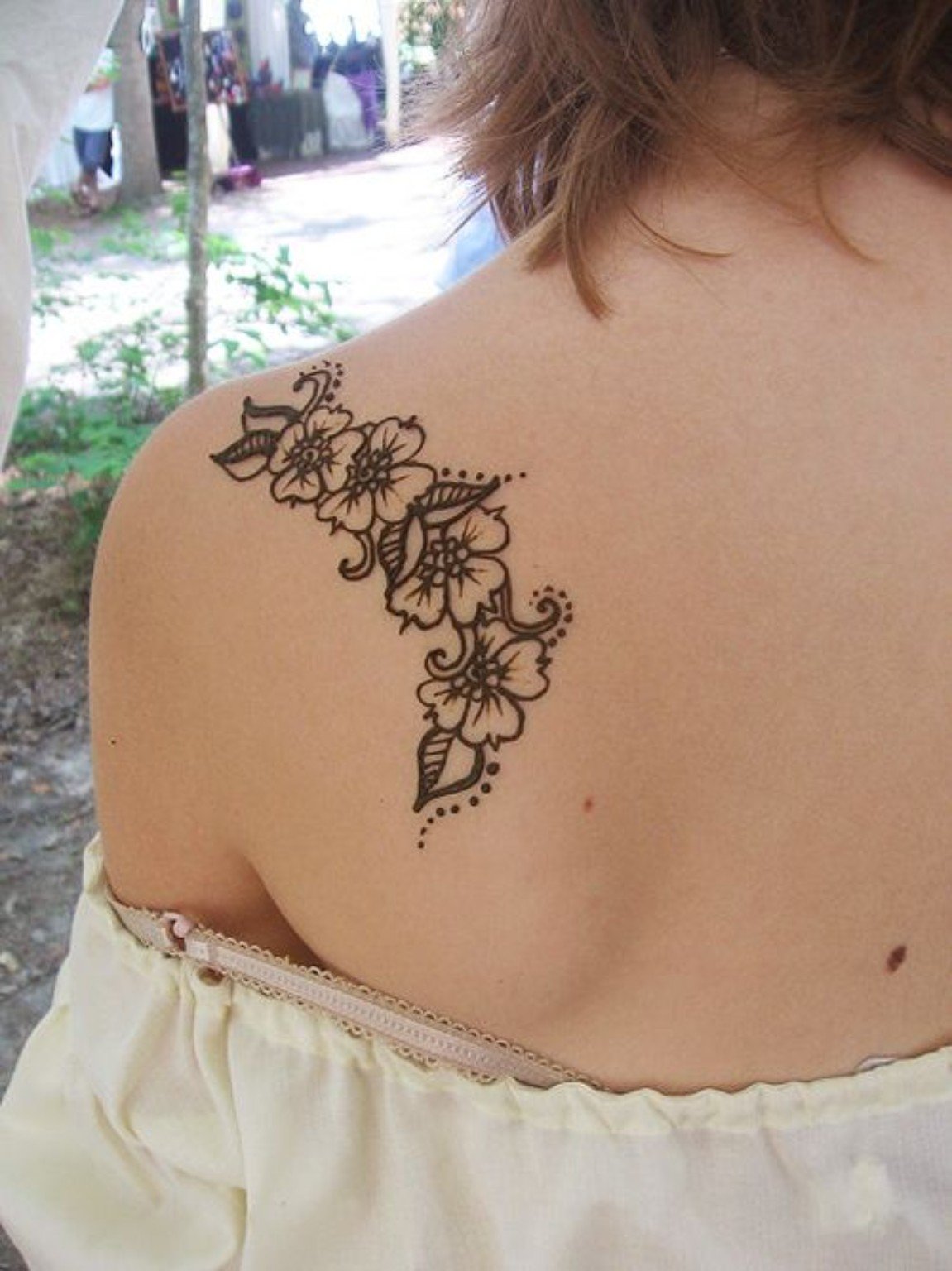
Here, a chain of flowers travels diagonally down one shoulder blade. Leaves and short curls connect the blossoms, while the other side remains mostly open. That uneven balance is the main feature of the design. It can suit an asymmetrical blouse opening, provided the fabric does not cut through the flower centres. For a smaller interpretation, reduce the number of flowers instead of squeezing every petal into a tiny patch of skin.
6. Bold flower and paisley shoulder motif
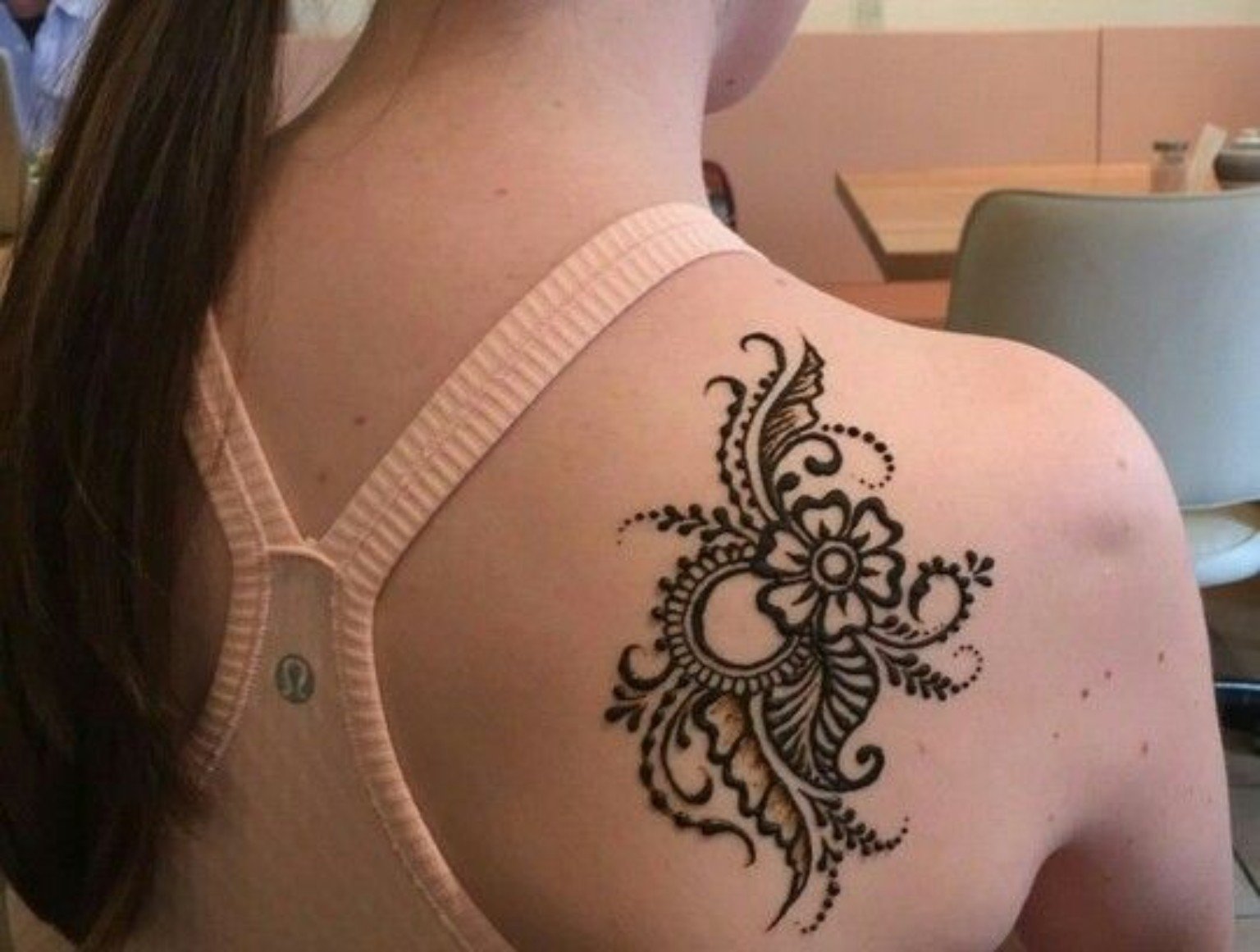
This shoulder motif uses stronger outlines, a central flower, a curved paisley-like shape and long shaded leaves. Its compact width makes it different from the wide arrangements shown later. The larger outlines are easy to identify in the reference photograph, but the smaller border details still need care. Show the artist the outfit from the back so the design can sit alongside the strap rather than disappear underneath it. Avoid choosing placement from a front-facing mirror alone.
7. Heart-and-flower back henna
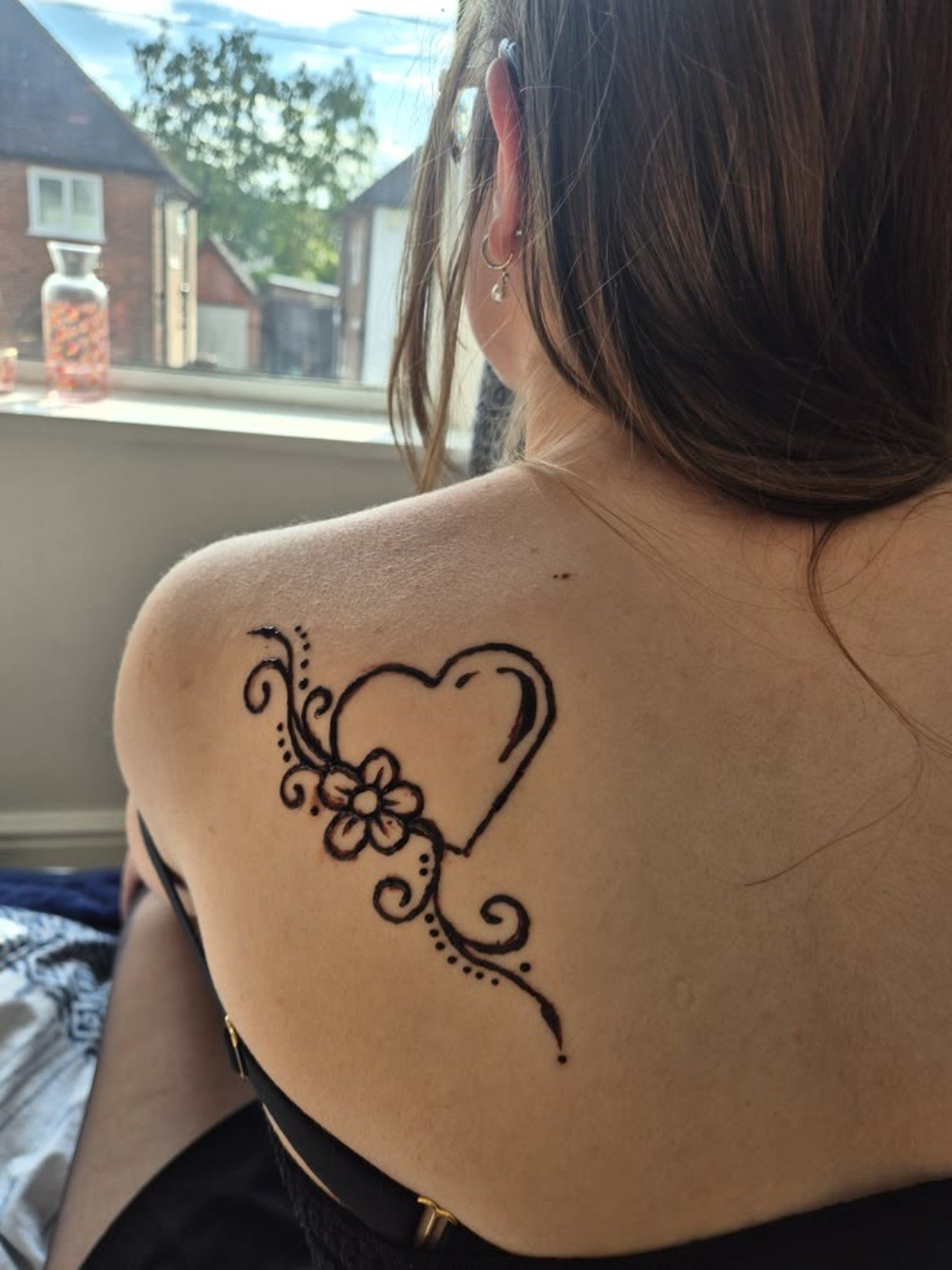
A heart outline and a small flower form the focus of this simple back henna idea. Curled stems and dots extend below and beside the heart, leaving the interior mostly open. It is a motif-led option rather than an elaborate bridal back composition. You could discuss a smaller or larger heart with your artist while keeping the flower off centre. Check the finished outline with relaxed shoulders, because a twisted pose can make a balanced heart look uneven.
8. Wide floral centrepiece across the upper back
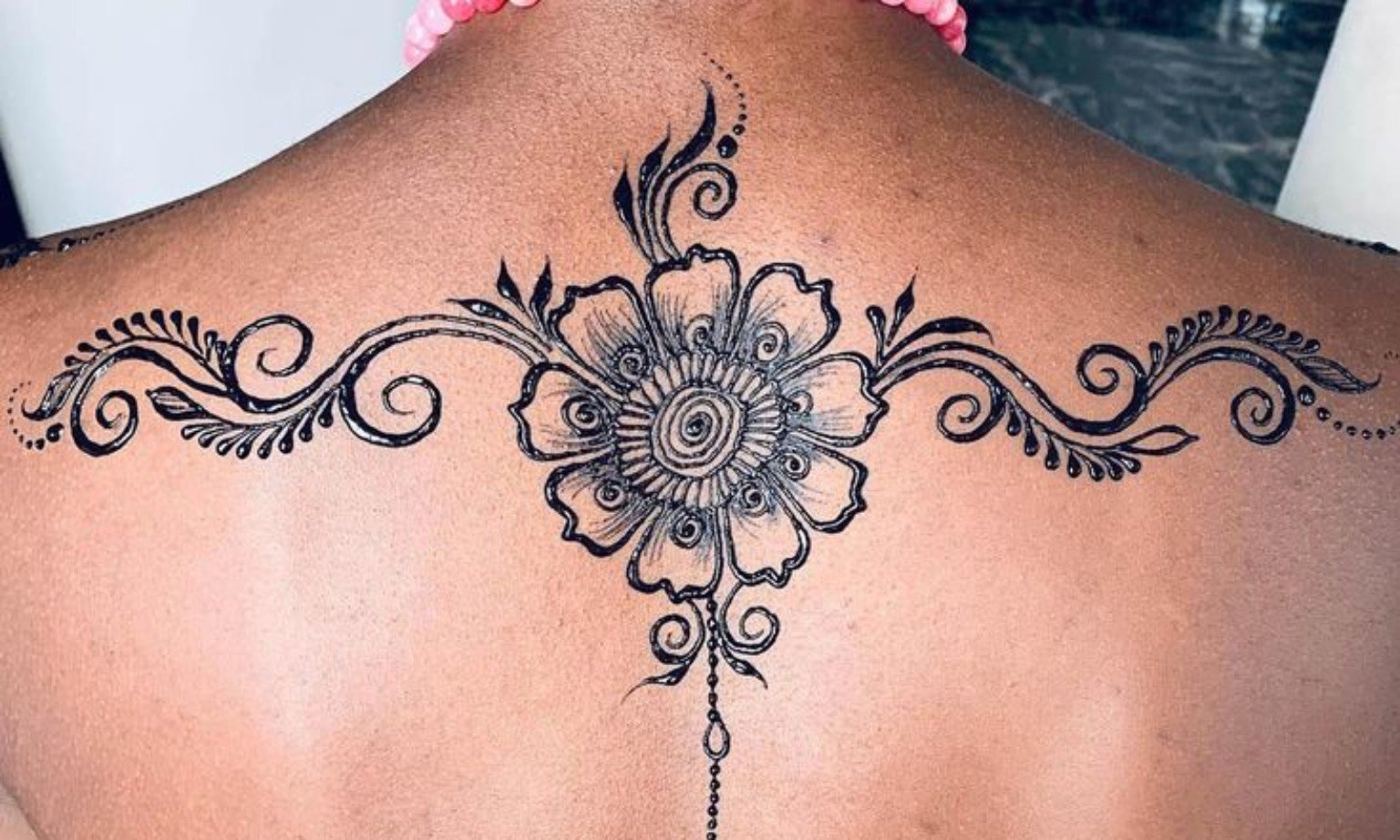
A large central flower spreads into long vines across the upper back. This is the broadest horizontal arrangement in the gallery and needs a wider visible area to read as a complete design. Its central hanging detail also adds a vertical direction. A narrow keyhole blouse may hide much of the pattern, so compare the full width with your actual neckline. Keep jewellery and tie strings in mind before deciding where the centre flower should sit.
9. Airy flower with curling vines
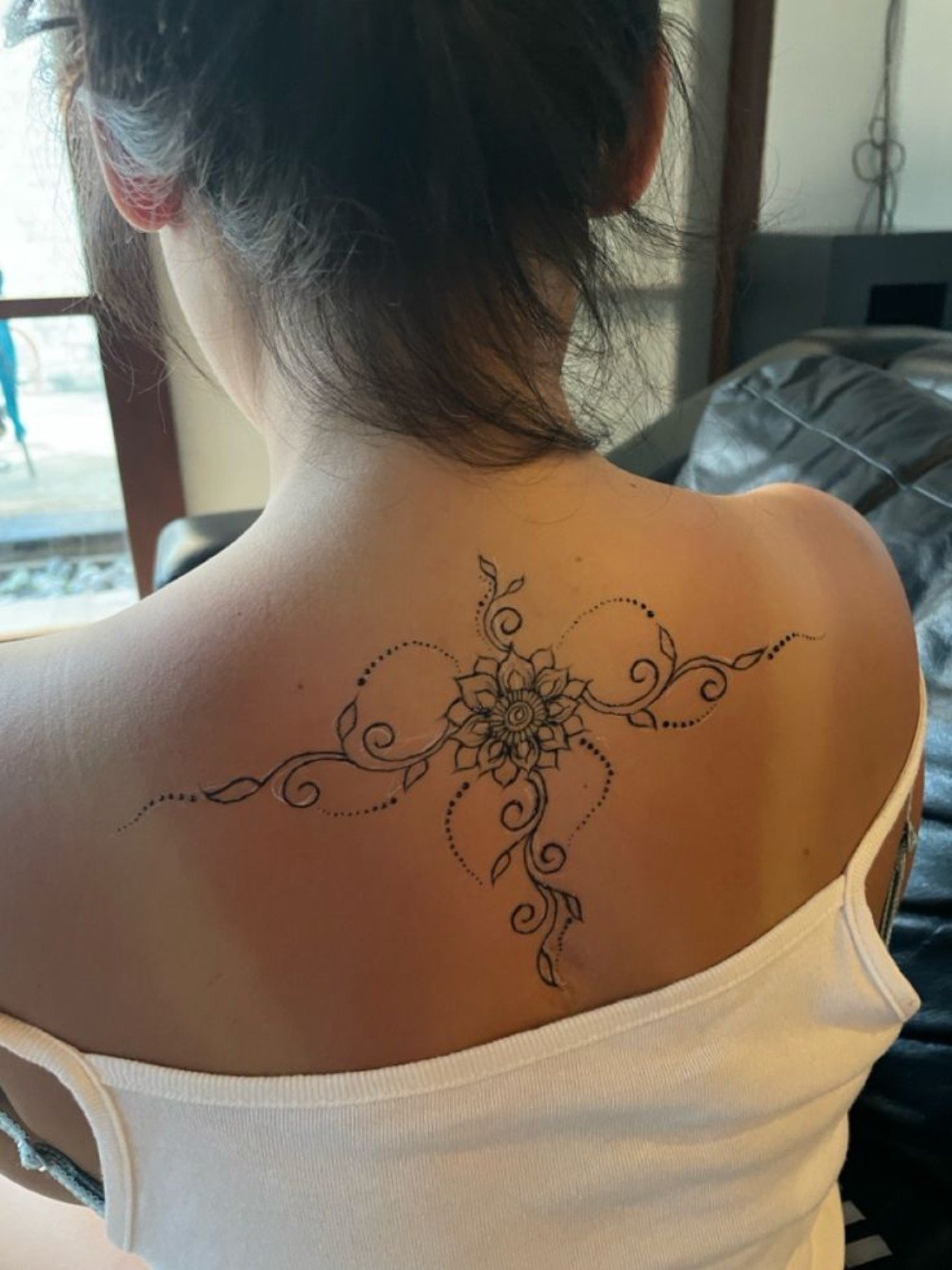
This arrangement combines a central flower with fine curling stems and dotted loops. Compared with the previous image, more bare space separates the lines, creating an airy outline. It is worth considering if you like a wide design but do not want dense filling everywhere. The side vines can be shortened to match the exposed area without losing the central flower. Ask for a balanced outline first, then decide together how many small dots and leaves to add.
10. Shoulder-wrap flower and leaf design
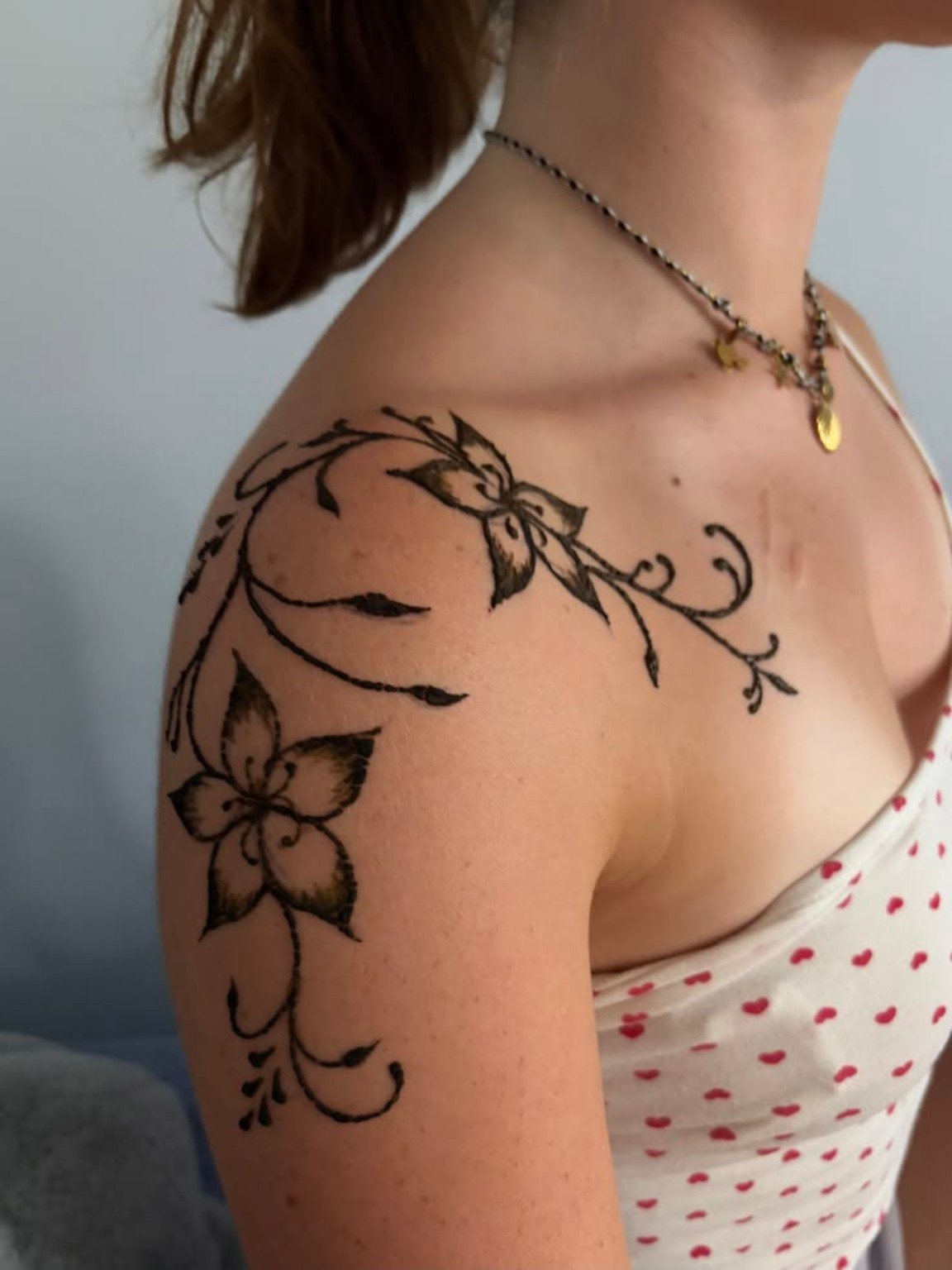
The final photograph shows flowers and leaves wrapping over a shoulder and toward the front collarbone area. It is not a straight-on back photograph, so use it specifically as a shoulder-continuation reference. This kind of placement works best when you plan the front and back neckline together. A sleeve or strap can interrupt the connection between the flowers. Check the design from both angles before application, rather than assuming that one cropped view shows the whole arrangement.
Choose the placement before the pattern
A backless blouse mehndi design should fit inside the visible opening when you stand normally. Put on the outfit, identify the strap lines, and take a straight rear-view photograph before discussing the outline. A small motif works on one shoulder blade; a vertical flower sits below the nape; a wide arrangement needs clear space across the upper back. These choices depend on garment construction, not on a universal rule about body shape.
Also consider the event and how you will move. A dupatta, hair, a bag strap or a chair back may cover or touch the area. You do not need to enlarge the design to compensate. Often a clearly placed flower gives a more coherent result than extra vines added everywhere.
Simple florals, butterfly or a larger centrepiece?
For a simple back mehndi design, compare images 1, 4 and 7: each relies on an identifiable central motif. Images 8 and 9 offer wider outlines, while images 2 and 5 show a more vertical or diagonal floral direction. The gallery does not contain every style people search for. A fully circular mandala or a complete jewellery-chain back design would require a different reference rather than relabelling one of these photographs.
Use the images to explain the elements you like: broad petals, shaded leaves, thin curls or open spacing. An artist can develop an original version that fits the outfit. Exact copying is not necessary to keep the overall idea, and a design that suits one neckline may need a different scale on another.
Plan application around clothing and comfort
Arrange the clothing and hair before application so they can stay away from the wet design. Discuss the product and its instructions with the artist rather than relying on a fixed drying time from a photograph. Avoid rubbing the area or pulling a tight strap across fresh paste. If your outfit requires repeated adjustments, a smaller shoulder motif may be more practical than a long central arrangement.
Keep a clear reference of the final placement and check it from a normal distance. A close-up can exaggerate small details, whereas the full outfit shows whether the pattern sits comfortably within the opening. Do not judge the expected finished stain from the photograph: lighting, fresh paste and camera processing can all affect its appearance.
Check the product, not just the colour
A photograph cannot confirm the ingredients of a henna product. The FDA reports reactions to henna and black-henna temporary tattoos, and warns that added PPD can cause serious skin reactions. Ask what is being used, avoid products with unknown ingredients, and do not use hair dye as body art. If irritation occurs, stop using the product and seek medical advice. No design image can establish that a paste is safe for your skin.
Frequently asked questions
What is a backless mehndi design? It is a body-art pattern placed where an open-back blouse, dress or top reveals the back. It can be a small shoulder flower or a wider upper-back composition.
Is back mehndi the same as backhand mehndi? No. Backhand mehndi is on the back of the hand. This gallery covers the body’s back and shoulder area.
Which design is suitable for a beginner reference? A compact flower or a simple heart has fewer elements to plan than a broad floral arrangement. Application still requires careful placement and appropriate product handling.
Can I use these ideas for a bridal blouse? They can be references if they fit the neckline and styling. Not every image is a bridal design; choose according to the outfit rather than the label.
How long will the colour last? The photographs do not establish duration. Product, application and individual skin factors vary, so avoid promises based only on an image.
Pick the design that your outfit can frame
The most useful choice is a pattern whose main flower, heart or butterfly stays visible within your neckline. Save the specific design using its WhatsApp button and discuss placement with your artist. For a different area, explore our neck mehndi design gallery, which focuses on neck, collarbone and necklace-style arrangements.
Editorial note: Gallery images were supplied by the user as design references. FDA: henna/black henna safety information