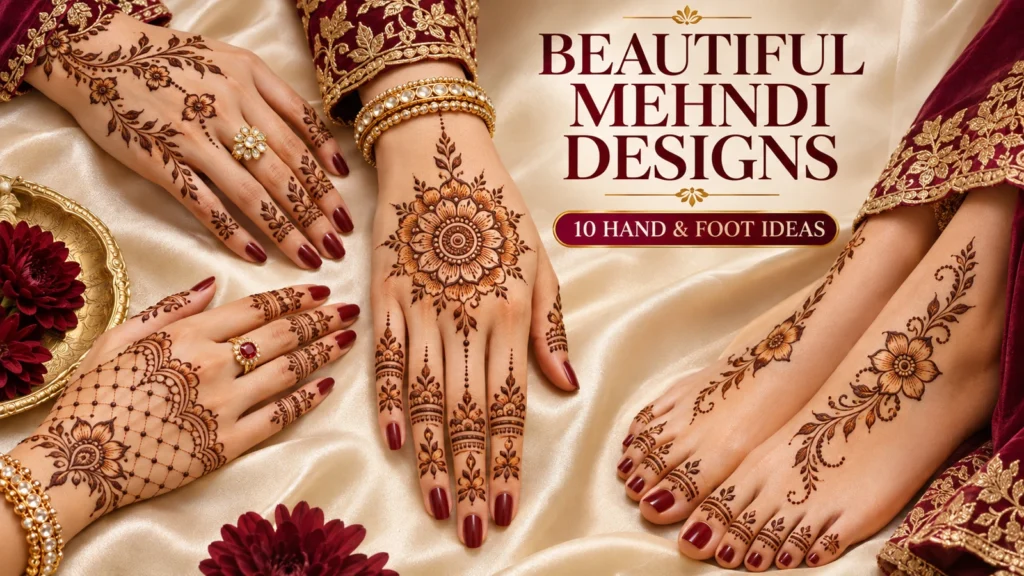
The best mehndi design for your next occasion depends on how much coverage you want and where you want the main pattern to sit. A small finger vine looks very different from a large circular mandala, while a detailed foot design needs a different layout from a bracelet-style hand pattern. This gallery brings together 10 hand and foot design references so you can compare those differences in one place.
Each image has a short explanation of its visible motifs, placement and styling possibilities. Some categories overlap: a back-hand design can also be floral, minimal or jewellery-inspired. Rather than treating every label as a separate technique, use the photographs to identify the specific elements you like and show those details to your artist.
10 mehndi images to compare
1. Detailed floral foot mehndi
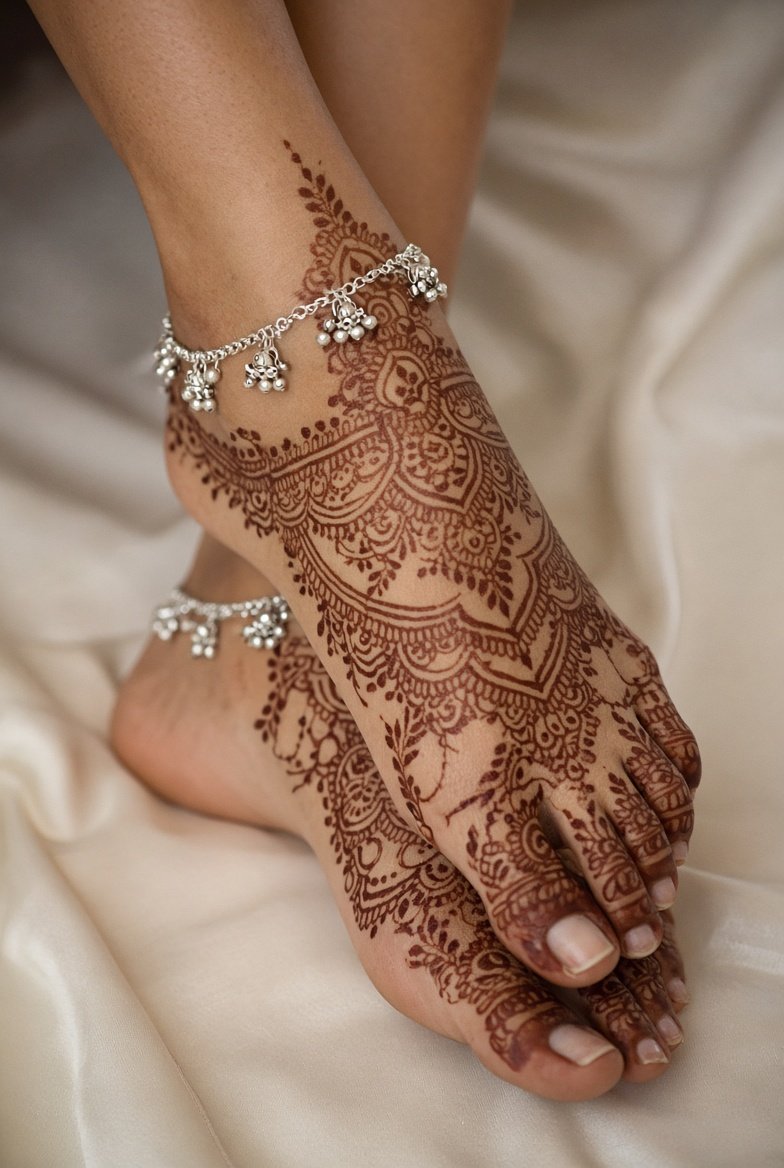
The first image shows a detailed pattern covering the top of the foot, with layered curves, floral elements and filled toe detailing. The silver anklet is separate jewellery, not a henna-drawn chain. That distinction matters when choosing a reference: copying the mehndi will not recreate the anklet itself. This is a fuller foot design rather than a minimal option. Compare the overall coverage with the shoes you plan to wear, especially if straps cross the centre of the foot.
2. Floral and paisley palm mehndi
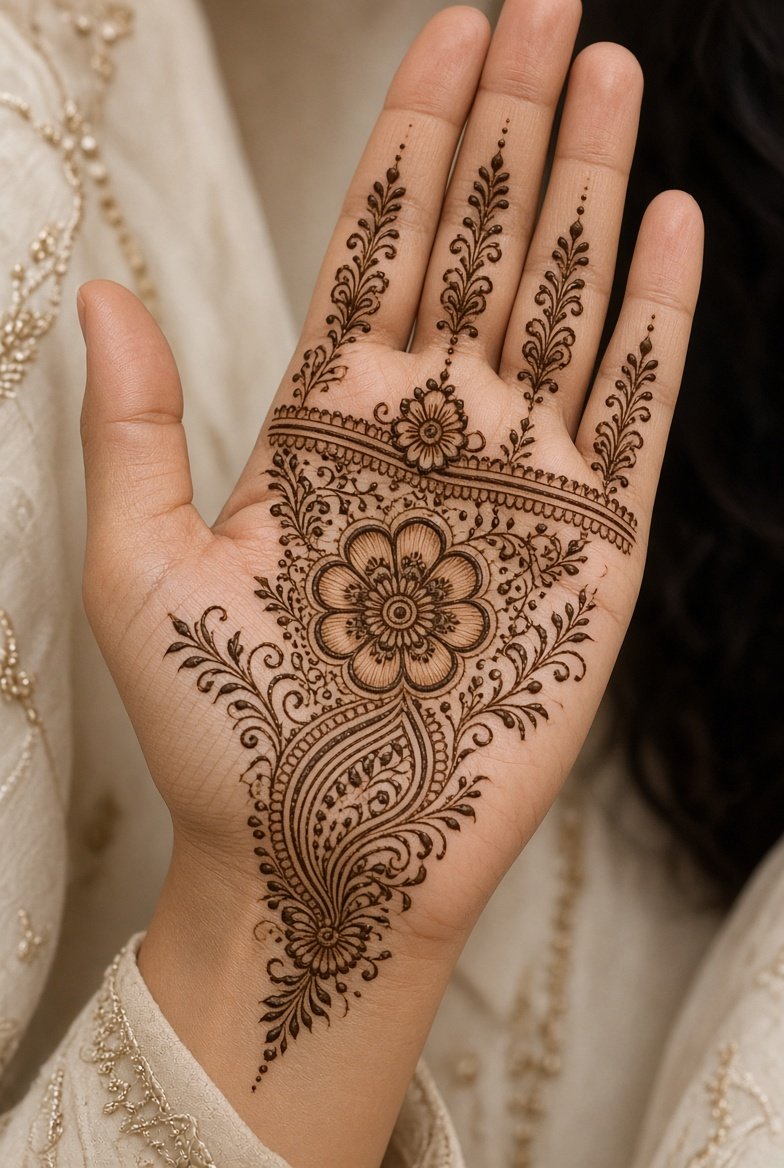
A central flower, a paisley-shaped extension and leafy finger trails give this palm design a clear direction. The wrist-side band creates a boundary, while the lower portion tapers instead of filling every space. It is a useful front hand mehndi reference when you like a defined centre with smaller surrounding details. Notice the balance between filled leaves and open petals. Keeping those contrasts can help preserve the design’s character if your artist develops a smaller version.
3. Circular mandala on the back of the hand
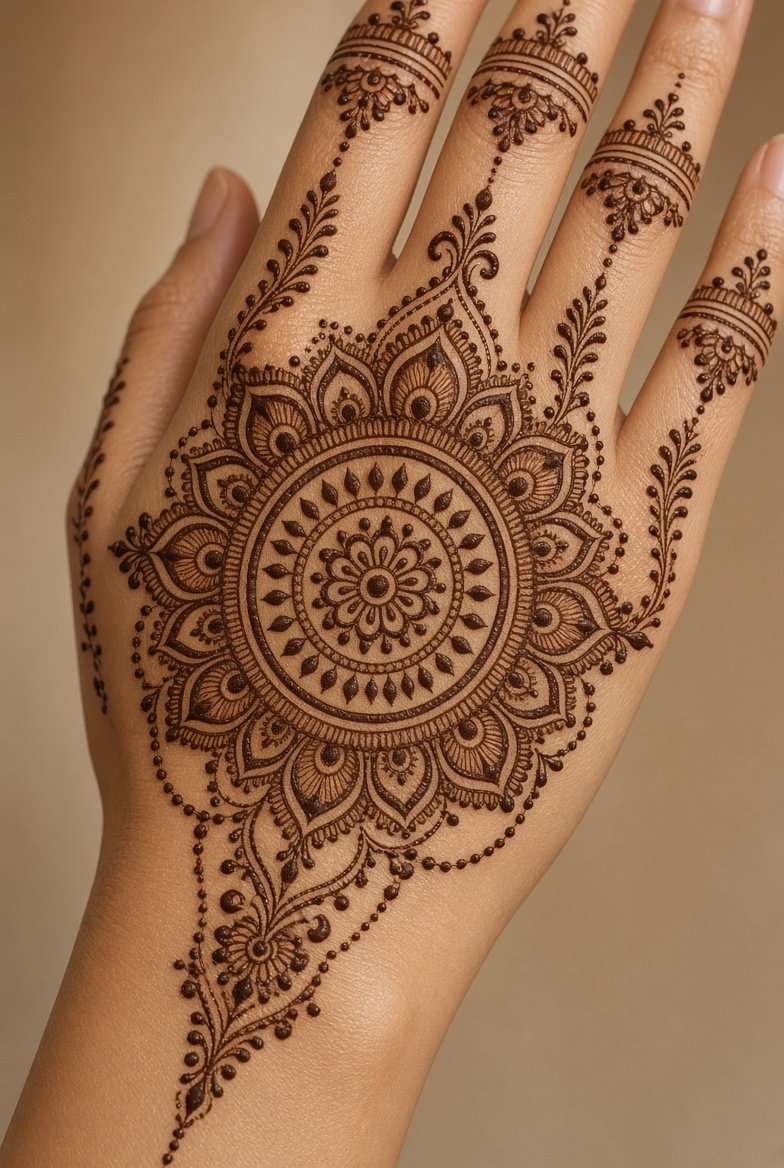
This back-hand mandala uses a circular centre surrounded by repeated petal shapes and an outer pointed border. Fine details continue toward the wrist and fingers, so it is more elaborate than a plain round dot. If you search for gol tikki mehndi designs, distinguish this layered mandala from the simplest circular styles. Decide how much of the outer border you want before application. Reducing the circle slightly may be more effective than compressing all its details into a narrow area.
4. Finger bands and side-hand floral mehndi
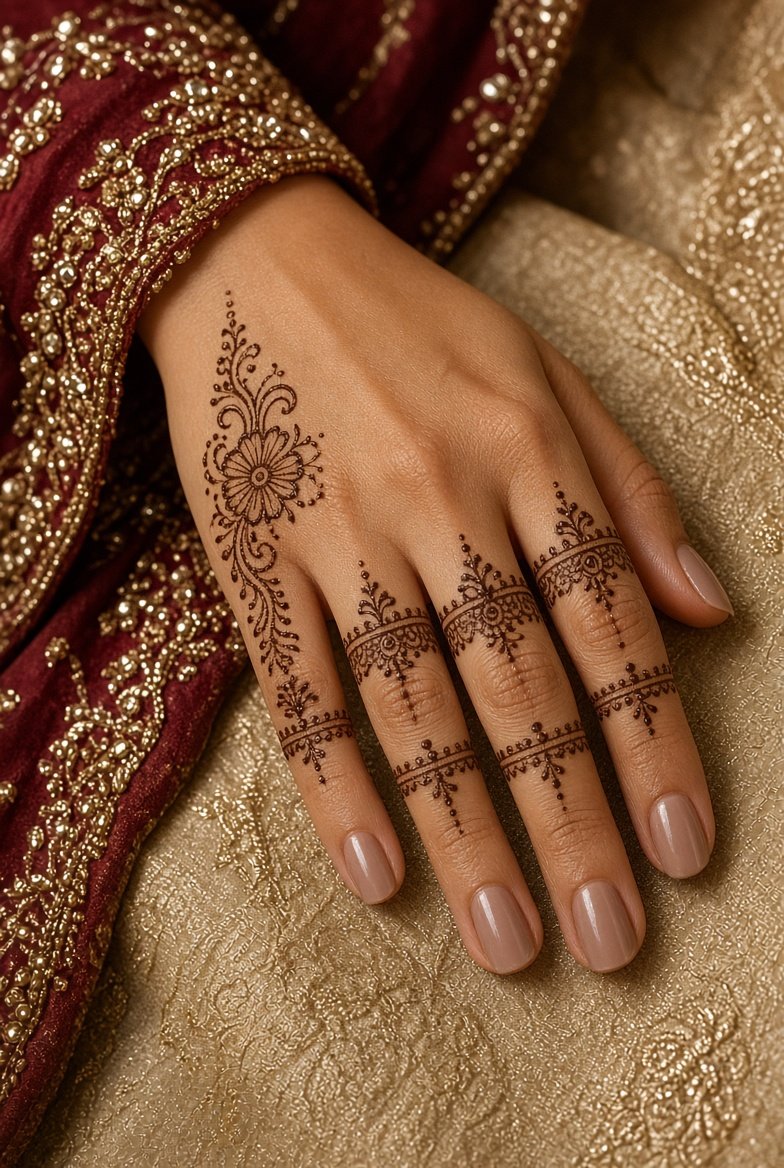
The fourth photograph combines decorative finger bands with a curved floral arrangement along one side of the hand. Much of the middle stays open, allowing the finger details to remain visible. This is a useful reference for finger mehndi designs with a small connecting hand motif. It is not a full palm pattern. Consider where rings will sit: a narrow band of henna may be hidden by jewellery, while a flower placed beside a ring can remain part of the overall composition.
5. Minimal finger and wrist mehndi
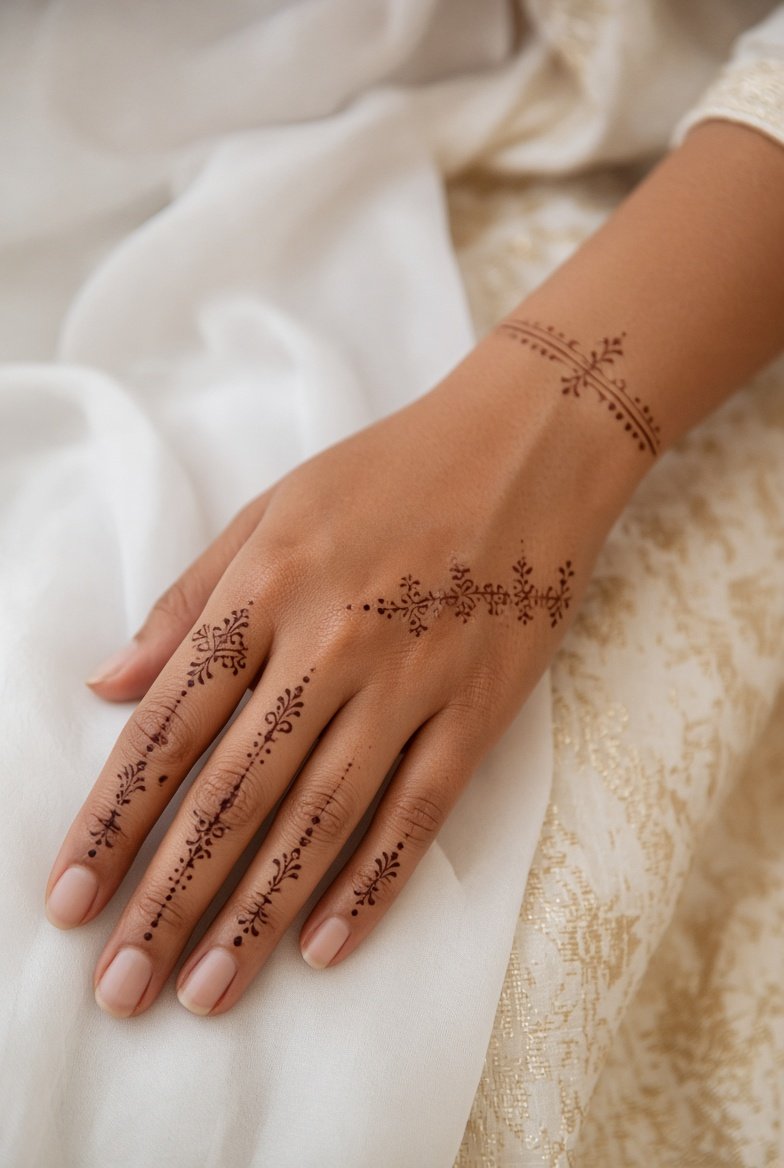
Fine finger trails, small floral accents and a narrow wrist detail make this one of the lighter arrangements in the gallery. The open skin between motifs is part of the design, rather than an unfinished section. If you want minimal mehndi designs, compare this image with the fuller mandala and lattice examples. Ask for a few clearly placed elements instead of simply shrinking a dense pattern. This reference also shows why minimal coverage does not have to mean plain fingertips alone.
6. Lotus and floral vine on the wrist
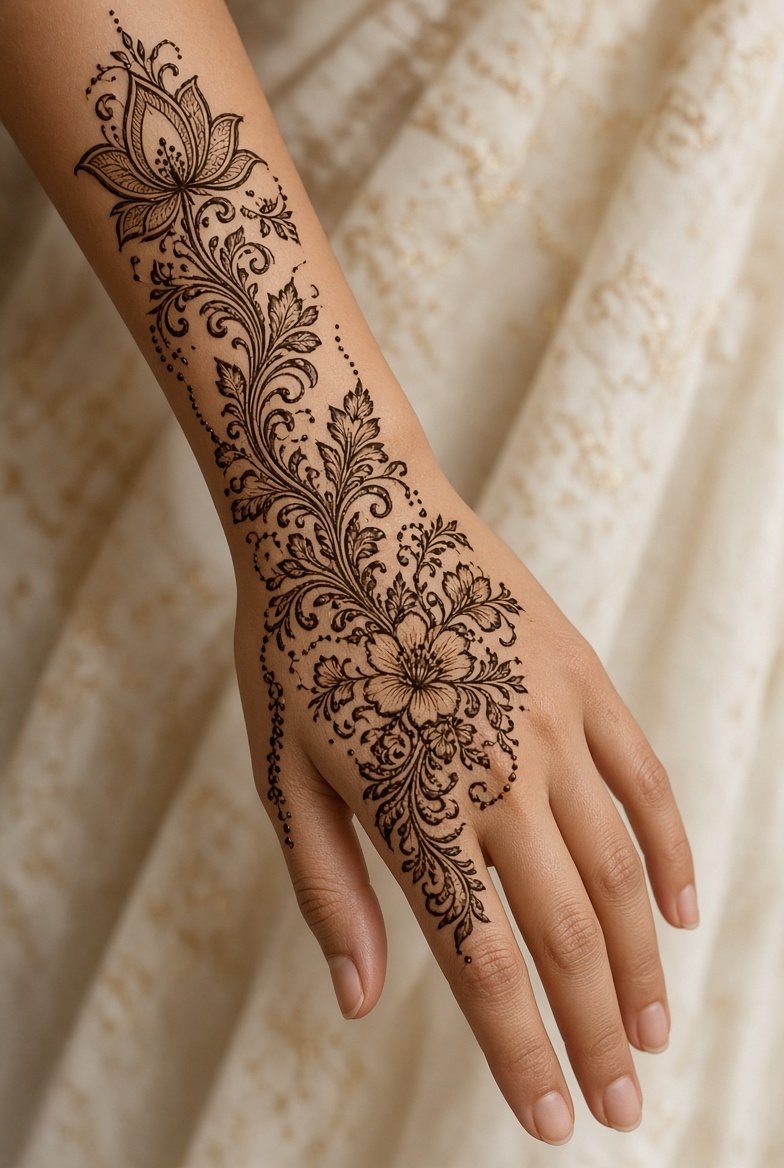
A lotus-shaped motif near the wrist connects with flowers and leaves flowing along the back of the hand. The composition extends lengthwise and has a different outline from a circular mandala. Its changing widths can help you explain the kind of bel mehndi design you prefer: a broader flower at one point and thinner connecting stems elsewhere. If you want less coverage, discuss shortening the vine. Removing a whole extension usually preserves the flow better than crowding all the flowers together.
7. Floral back-hand mehndi with finger detailing
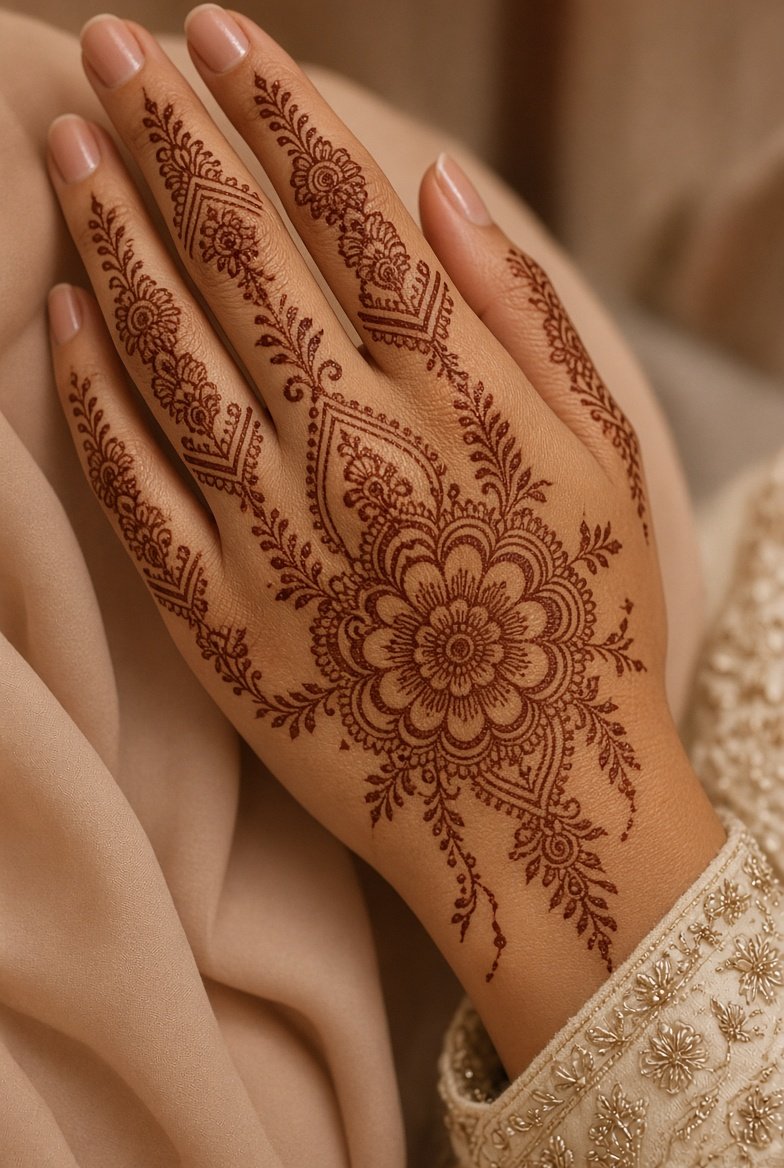
This floral back-hand arrangement has a central flower and decorative extensions that lead into separate finger motifs. The design covers a substantial part of the hand without turning into an all-over mesh. It is an option to compare with both mandala and Arabic-inspired floral references. The important detail is the relationship between the main flower and the narrower trails. When adapting it, leave enough separation between those elements so the central motif remains easy to recognise from a normal viewing distance.
8. Bracelet and hathphool-style mehndi
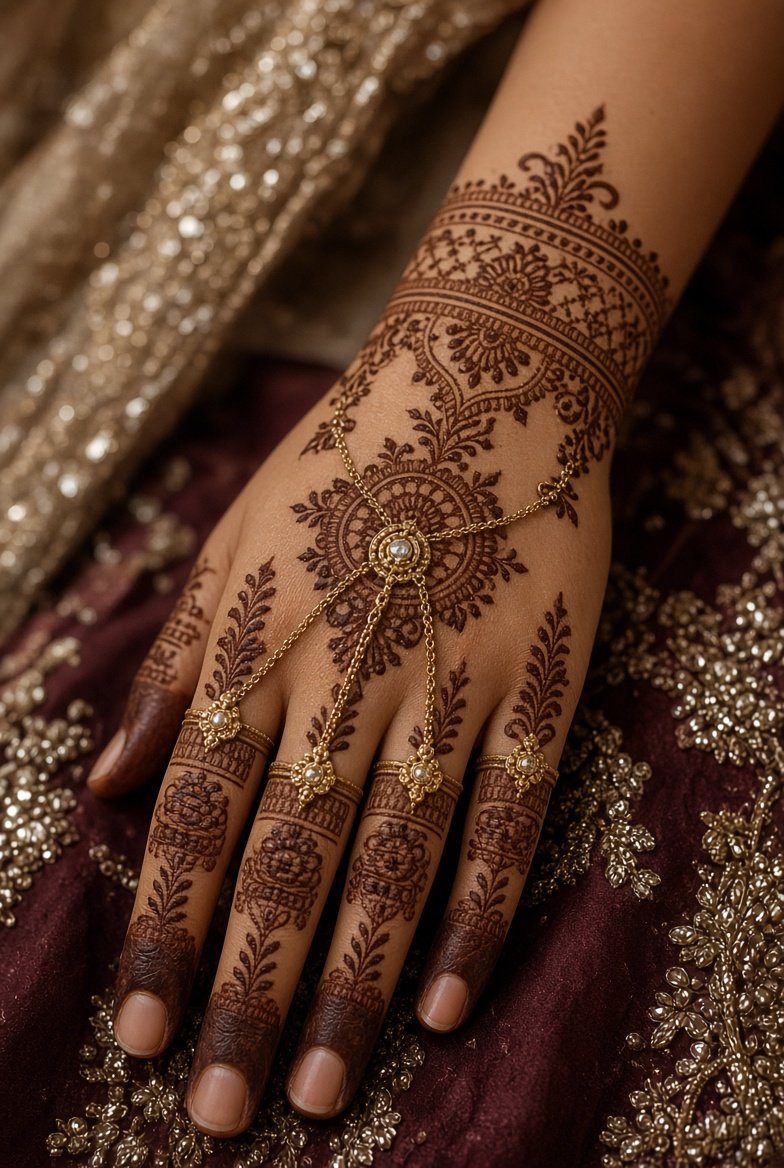
A decorative wrist band connects to a round centre and finer lines running toward the fingers, giving this design a jewellery-like structure. That is why bracelet mehndi and hathphool-style mehndi are useful descriptions here. The photograph also includes actual rings, which should not be confused with painted details. Plan the wrist area around bangles or a watch, then decide where the central motif should sit. You can choose a lighter interpretation without copying every tiny border and finger ornament.
9. Simple floral vines on the feet
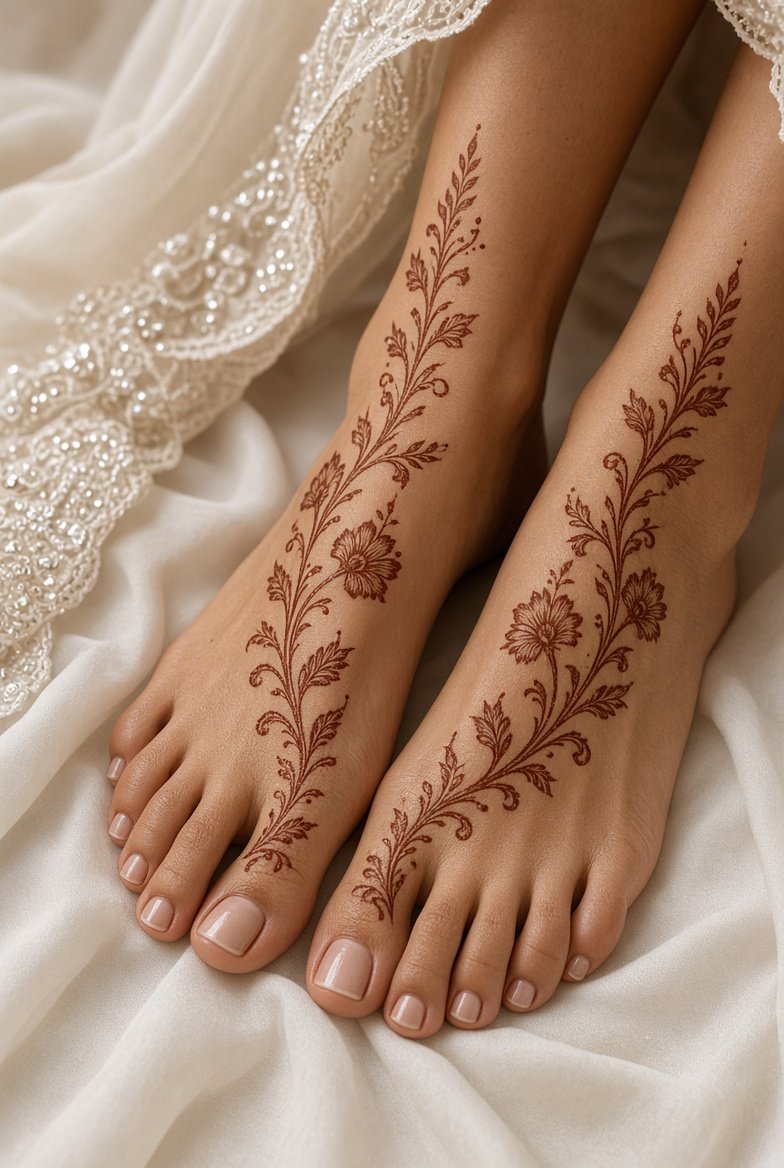
Both feet carry long floral vines made of small blossoms and leaves, with more open space than the first foot photograph. This is a useful simple foot mehndi reference if you like a flowing vertical layout. The image does not show a complete henna anklet circling either ankle, so it should not be labelled as a payal design. Compare how the vine meets your footwear and decide whether the upper stem should stop lower or extend toward the ankle.
10. Jaali lattice mehndi on the back of the hand
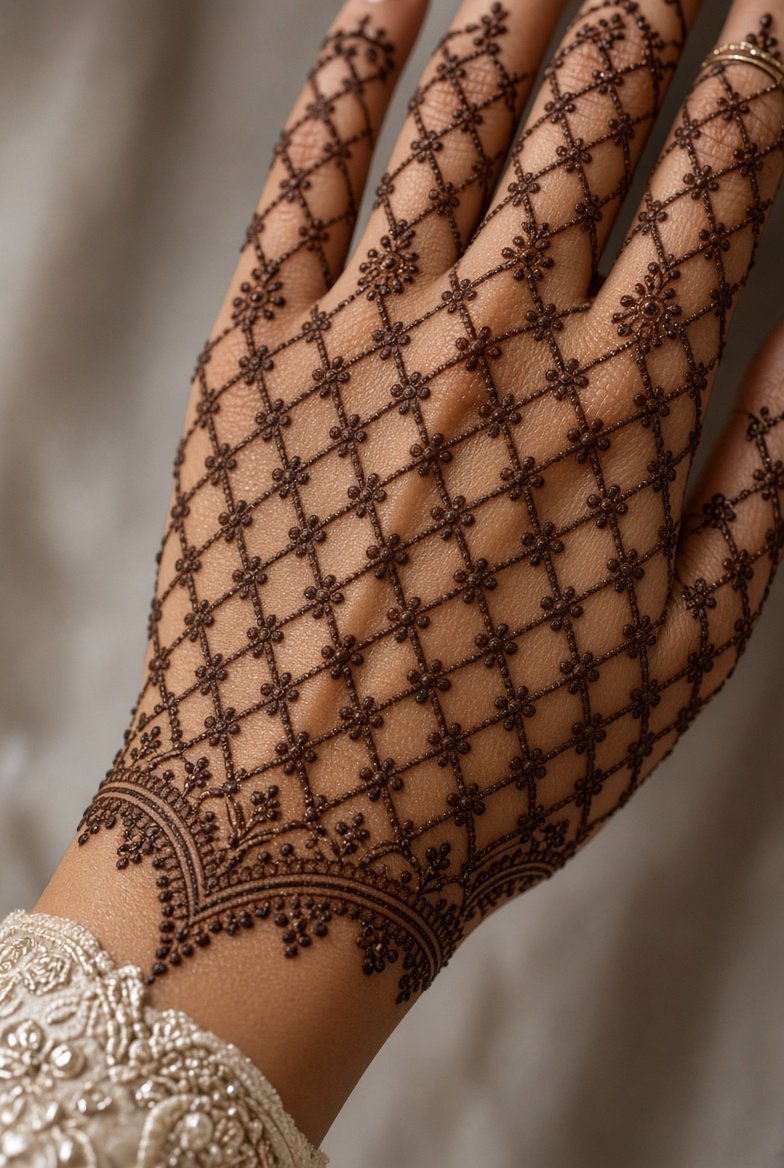
A repeated diamond-shaped net covers the back of the hand, with small accents at its intersections and a curved decorative border near the wrist. This is the clearest jaali mehndi design in the collection. Unlike a floral trail, it depends on consistent spacing across a broader area. If you prefer a lighter version, ask the artist about larger open diamonds or a smaller lattice section. Adding unrelated large flowers everywhere may hide the repeated structure that makes this style distinctive.
Choose coverage before choosing a style
Start by deciding whether you want one focal motif, a connecting trail or a largely filled surface. Minimal finger patterns leave the centre open; a mandala gives the hand a clear circular focus; jaali distributes repeated details across the area. None of these is automatically better for a particular occasion. The useful question is which arrangement matches your preference and the jewellery or clothing you plan to wear.
For feet, compare a full top-of-foot composition with a slim floral vine. The two can use similar flowers while producing very different coverage. Do not select a design from a tight crop alone: look at the whole hand or foot to understand how the pattern begins and ends.
How to use a reference with your artist
Save the specific image you like and identify two or three features: the central flower, the finger bands, the wrist border or the open spacing. Discuss those features separately rather than asking for every line to be copied at the same scale. Hand and foot proportions differ, and an artist may need to adjust the layout.
Ask to see where the main motif will sit before detailed work begins. Check the hand in a relaxed position and think about rings, bangles or footwear. A clear outline that fits the available area is more useful than extra decoration added only to fill space.
Keep design names accurate
Front hand describes the palm side; back hand describes the opposite side. Finger, wrist and foot describe placement, while floral, mandala and jaali describe the visible structure. These labels can overlap. A mandala can be on the back of a hand, and a simple vine can be on a foot.
The same care applies to jewellery styles. A real anklet in a photograph does not make the mehndi a painted anklet, and actual rings are not henna bands. Use the visible design as the reference, especially when searching for a particular element or describing it to an artist.
Product and application considerations
Arrange jewellery and clothing so they will not rub against fresh paste. Follow the product instructions and discuss application with the artist; a photograph cannot establish drying time or how long a stain will last. Lighting and image processing can also change how dark a design looks.
A photograph cannot confirm ingredients. The FDA reports reactions to henna and black-henna temporary tattoos and warns that added PPD can cause serious skin reactions. Ask what product is being used and do not use hair dye as body art. Stop using the product and seek medical advice if irritation occurs.
Frequently asked questions
Which image shows a simple mehndi design? Image 5 has lighter finger and wrist details; image 9 has relatively open floral foot vines. Simple describes coverage here, not a guaranteed application time.
Is gol tikki the same as mandala? The terms overlap in design searches. A plain round centre is simpler than the layered petal mandala in image 3.
Which is the hathphool-style reference? Image 8 connects a wrist band, central motif and finger-directed details in a jewellery-like arrangement.
Are these ten completely separate styles? They are ten images with different visible arrangements. Several share flowers, vines or circular elements, so their style labels naturally overlap.
Can I share a particular design? The button below each image shares a link to that section of the article. It does not send the image file as a WhatsApp attachment.
Keep your shortlist focused
Choose a fuller design and a lighter alternative, then compare them with your outfit and jewellery. For other placement ideas, see our neck mehndi gallery and back mehndi gallery. Those collections cover different areas; this page concentrates on hands, fingers, wrists and feet.
Editorial note: Gallery images were supplied by the user as design references. FDA: henna/black henna safety information