
What to do when your family fights every day
An argument about spending becomes an argument about respect. A late meal turns into accusations about who does more work. When this happens every day, home can start to feel exhausting. If you are wondering what to do when your family fights every day, begin by identifying the actual problem rather than blaming one person for everything.
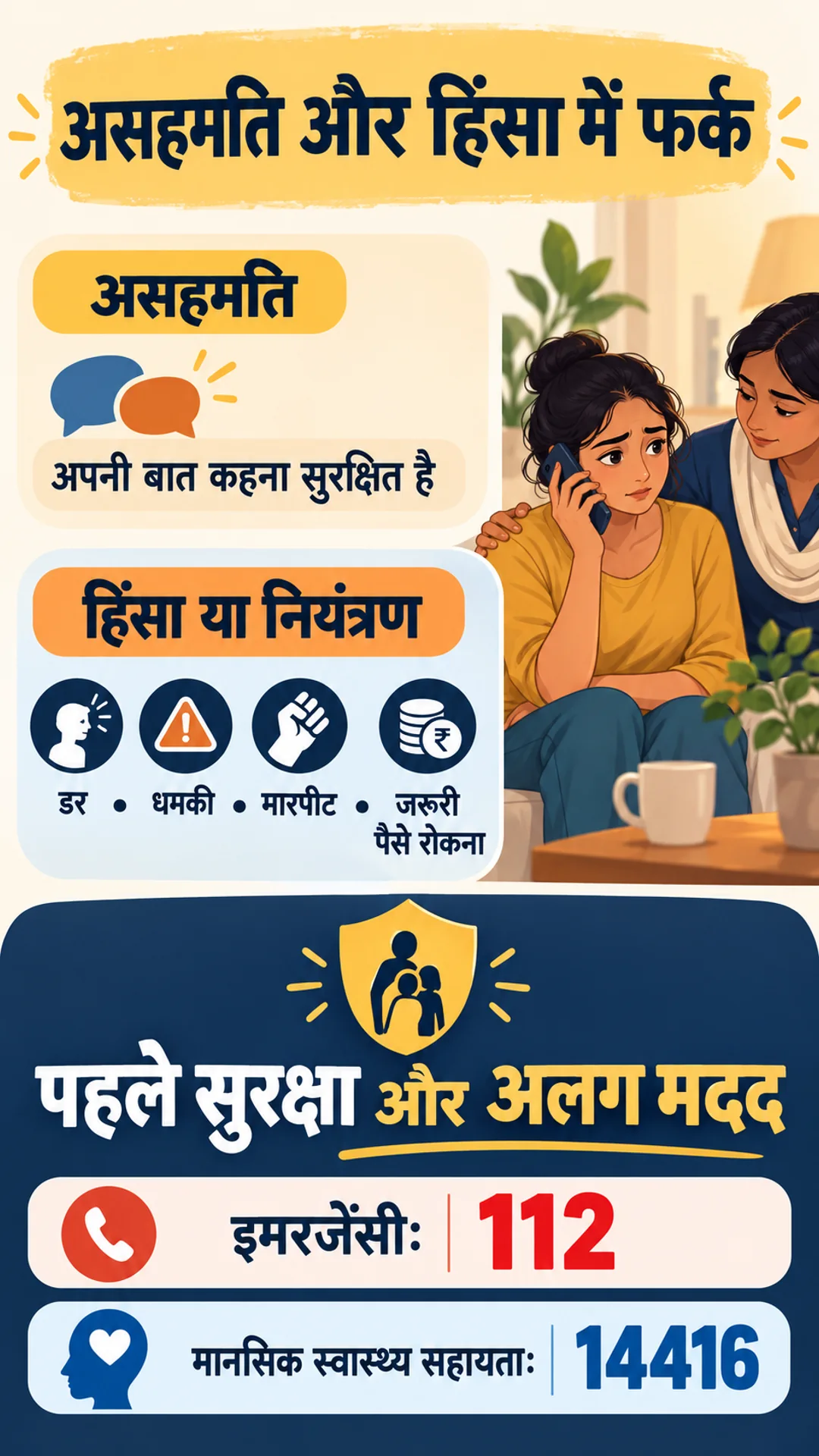
Disagreement is part of family life, but daily humiliation, fear, threats or violence should not be treated as ordinary disagreement. Calm discussion, a shared understanding of expenses and fair responsibilities can be useful starting points in safe relationships. If someone is in immediate danger or injured, prioritise safety and urgent assistance. In India, call 112 for emergency help.
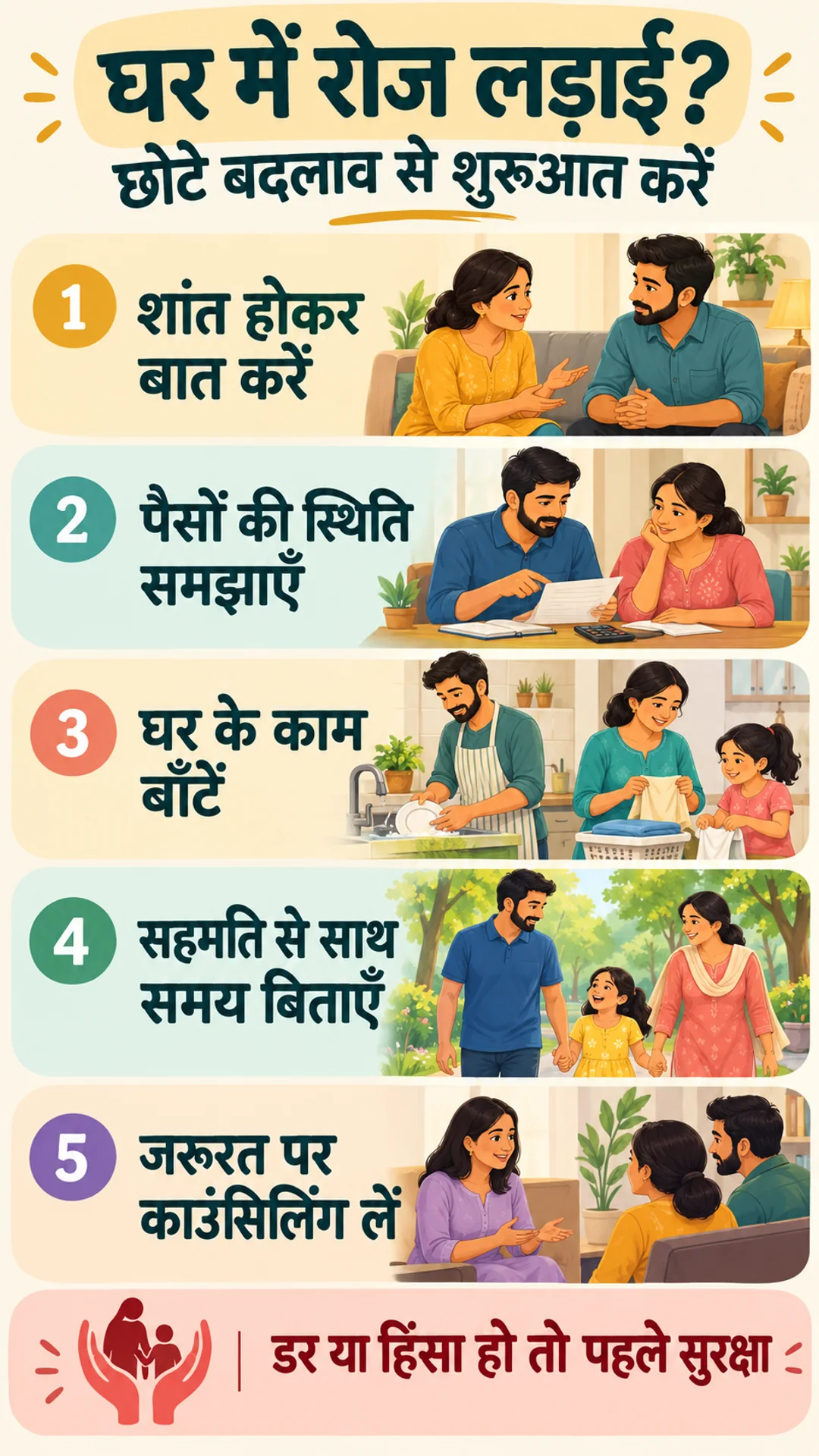
Different kinds of family arguments need different responses
Arguments between partners may involve time together, trust, intimacy, expectations or unequal domestic work. One person may feel that they carry all the responsibilities while the other feels that their paid work goes unrecognised. Listen to the specific concern rather than deciding that a husband or wife is always at fault.
Parents and children may disagree about studies, phones, friends and independence. Set age-appropriate rules and explain their purpose. Comparisons with other children and public humiliation can shut down conversation. A child should have a safe chance to explain their view, even when an adult still needs to set a reasonable boundary.
In-laws and extended families may clash over privacy, visitors, cooking and involvement in personal decisions. Respect is a responsibility for everyone, including older relatives. Clarify who handles which tasks and which decisions belong to an individual or couple. A boundary can be expressed politely without becoming an insult.
Siblings may argue about elder care, shared expenses or property. Keep responsibilities and accounts clear. Property disputes may require separate legal advice; repeatedly reopening them at every meal is unlikely to help daily family life. Involve a relative as a mediator only if they are fair, everyone agrees and nobody is frightened of speaking honestly.
Why a small issue becomes a big fight
The immediate trigger may be smaller than the pressure underneath it. ‘You spent again’ might reflect fear about debt. ‘You are always on your phone’ might reflect loneliness. ‘Why is dinner late?’ might hide exhaustion or an unfair workload. These are possibilities to explore, not conclusions about what another person must be feeling.
Work pressure, poor sleep, illness, persistent worry and unresolved resentment can affect reactions. This does not mean that every irritable person has a mental illness. Nor does stress excuse threats, violence or coercion. Each person remains responsible for their behaviour, including when they are tired or facing a difficult period.
Unequal household rules can also create resentment. Is one person's mistake forgiven while another is repeatedly criticised? Does one person rest while another works without a break? Asking whether the rules are fair can move the discussion away from personal attacks and towards an arrangement that people can actually follow.
What to do during an argument
Lower your own voice and discuss one issue at a time. Instead of ‘You never understand’, try ‘I feel worried when we do not discuss expenses clearly’. Let the other person finish. Listening does not require agreeing with every claim; it means making an honest effort to understand the concern before responding.
If emotions are rising, suggest a pause and a realistic time to return: ‘We are both upset. Let us settle down and talk this evening’. A break should help people regain control, not punish someone by refusing to speak for days. Return to the issue when it is safe and both people are ready.
Do not make children deliver messages, choose sides or judge adults. Do not share private arguments in a family messaging group to embarrass someone. Blocking a doorway, taking a phone, throwing objects and threats are not communication techniques. Move away if you can do so safely; you are not responsible for calming another person at the cost of your own safety.
Tell the family about money difficulties without blaming them
A person carrying financial worries may hide them and then react angrily to every small purchase. In a safe household, give responsible family members a clear picture of income, necessary expenses, debt payments and what remains. The purpose is cooperation, not criticism of someone's earnings or basic needs.
For example: ‘Income is lower this month. Rent, food and medicine need to come first. Can we postpone optional purchases and decide together?’ Write down the numbers. Separate needs from wishes and make spending limits fair. Quietly taking a new loan or hiding major expenses can damage trust and make planning harder.
Explain changes to children in age-appropriate language: a purchase may need to wait, but managing household debt is not their responsibility. Avoid making them frightened about whether the family will survive. If financial disclosure could expose someone to abuse or control, seek private support first. Withholding food, medicine or access to necessities is not budgeting.
Go outside and spend time together when it is safe
A short walk, tea together or sitting in a nearby park can offer a change from a tense room. This is an option for relationships where both people feel safe and agree. It does not require an expensive holiday or borrowing money. Put phones aside for a while and make room for ordinary conversation.
Not every shared moment needs to become a review of everything that went wrong. Talk about a good moment with the children, a pleasant memory or a small plan for the week. Shared time may create space for connection, but it does not resolve debt, broken trust or abuse on its own. The underlying issue still needs attention.
Do not force someone to go out together or imply that refusing an outing proves they do not care. A person may need time alone or support from a trusted friend. In a frightening or violent relationship, pressure to visit an isolated place together may increase risk. Choose safety and appropriate support first.
Mental wellbeing and when counselling may help
Persistent sadness, anxiety, sleep problems, difficulty concentrating or trouble managing anger deserve attention when they affect everyday life. Seek an assessment from a qualified mental health professional rather than diagnosing someone from an online list. A new or sudden behavioural change can also warrant a medical assessment for possible health problems.
Individual counselling can help a person understand feelings, reactions and boundaries. In safe relationships, couple or family counselling may help people work on communication and responsibilities. A counsellor is not a judge who instantly declares one person guilty. Improvement is not guaranteed after one session and depends on the situation and the work involved.
Ask about qualifications, experience, fees and the limits of confidentiality. Depending on the concern, a psychologist or psychiatrist may be appropriate. Do not start or stop medication independently. In India, Tele-MANAS can be reached on 14416 for mental health support. It is not a replacement for police or ambulance assistance in an emergency.
When substance use repeatedly precedes arguments, promises alone may not be enough. Treatment for substance use and responsibility for harmful behaviour may both be necessary. Where violence, coercion or controlling behaviour is present, joint counselling is not a routine first solution. Seek separate specialist support and prioritise safety.
Daily family fights are not evidence of black magic
There is no scientific basis for attributing daily household arguments to black magic. Arguments themselves are not evidence that someone has performed a spell. Focus on observable issues: money, behaviour, sleep, health, substance use, workload and relationship difficulties. Accusing a relative of causing supernatural harm without evidence can create additional conflict.
Prayer or worship may provide personal comfort, and people can choose their own beliefs. They should not replace medical care, counselling or safety support. Paying someone who uses fear to explain every problem can add to financial stress. Discuss what is happening in the household and which practical changes or professional help are needed.
Advice: try small changes over the next seven days
On day one, identify the most frequent issue. On day two, discuss it at a calm time. On day three, list essential expenses. On day four, share household and care work. On day five, spend a little time together by mutual agreement. On day six, listen without interrupting. On day seven, review what changed and whether professional help is needed. This is a practical exercise, not a promise to fix a family in a week.
Agree on basic boundaries: no abuse, no threats, no involving children in adult conflict and no withholding necessities. Offer a specific apology when you have behaved badly, then change the behaviour. Repeating the same harm after each apology does not restore trust. If the other person will not cooperate, you can still seek individual help and decide your own boundaries.
FACT BOX: In a disagreement, people can express a different view safely. Where there is fear, coercion, control or violence, better communication alone is insufficient. Seek a safe place and trusted support; call 112 in an emergency in India. Keep a safety plan private if revealing it could increase danger. You do not have to repair an unsafe relationship alone.
FAQ: family fights every day
Does daily fighting always mean mental illness?
No. There are many possible causes. Seek a professional assessment if distress or behaviour is affecting everyday functioning; avoid labels based on family opinion.
How can partners reduce repeated arguments?
In safe relationships, begin with calm discussion, clear responsibilities and a shared view of expenses. Consider counselling when needed. In abusive situations, safety comes first.
Will going out together fix everything?
Shared time can be a useful attempt at connection, but it cannot replace work on the underlying issue or provide a guarantee of safety.
Should children know about money problems?
Give a simple, age-appropriate explanation of changes without blaming them or making them responsible for household finances.
Can household conflict be caused by black magic?
There is no scientific basis for that explanation. Focus on actual circumstances and practical support.
What if someone threatens or hits a family member?
Prioritise a safe place and urgent assistance. In India, call 112. Do not sacrifice safety because someone pressures you to reconcile.
Can I get counselling if my partner refuses?
Yes. You can seek individual support without waiting for the other person to change or agree to participate.
Help and related reading
Tele-MANAS: 14416 · Emergency: 112
Related reading: Trouble sleeping at night: causes and practical steps.
Disclaimer: This is general awareness information, not individual diagnosis, treatment or legal advice. Prioritise safety and urgent assistance in actual danger. This article has not received an individual clinical review.
Information sources
NHS: relationships · WHO: stress · NHS: domestic abuse · Tele-MANAS / DGHS · India 112
Information checked: 12 October 2026.