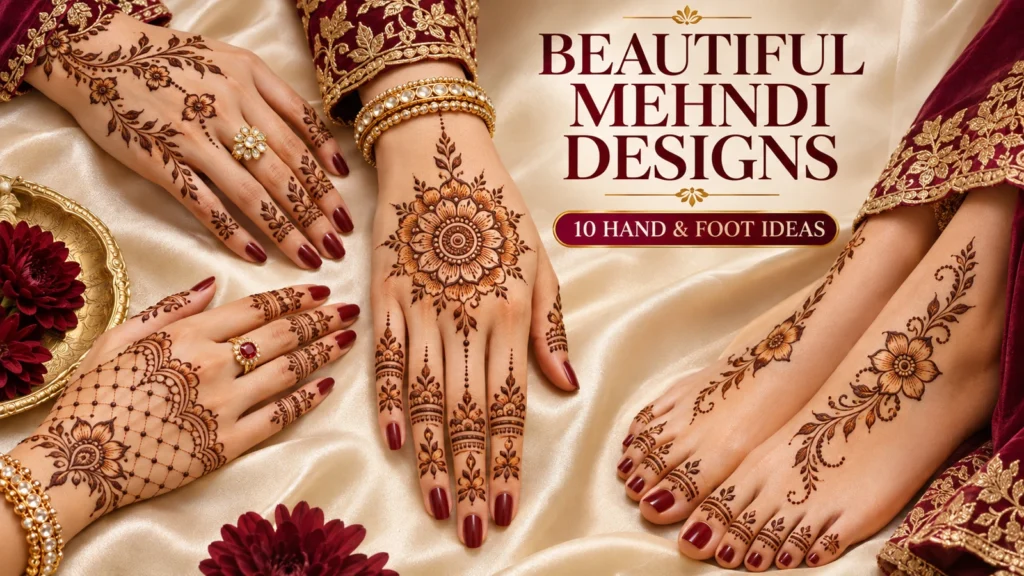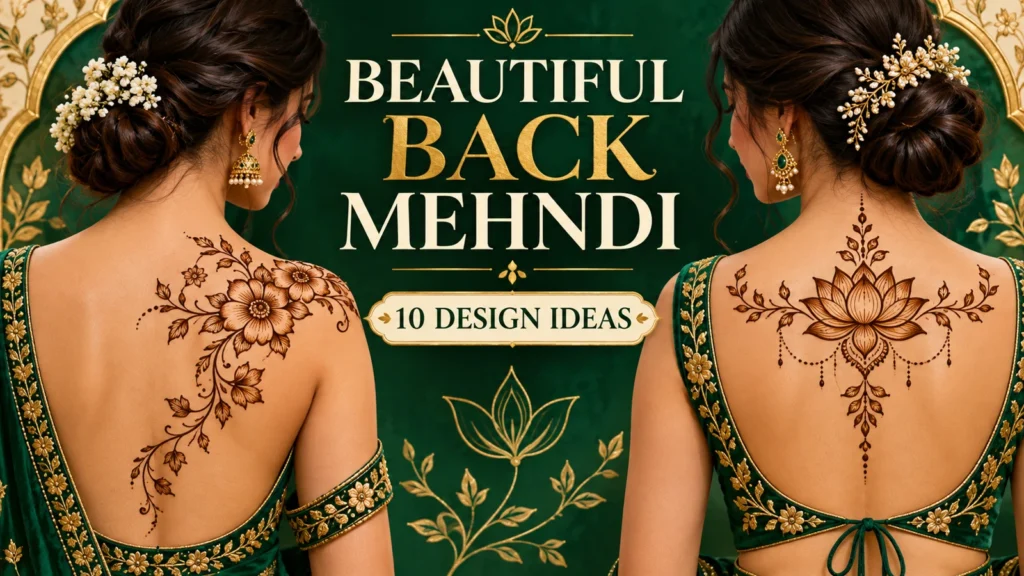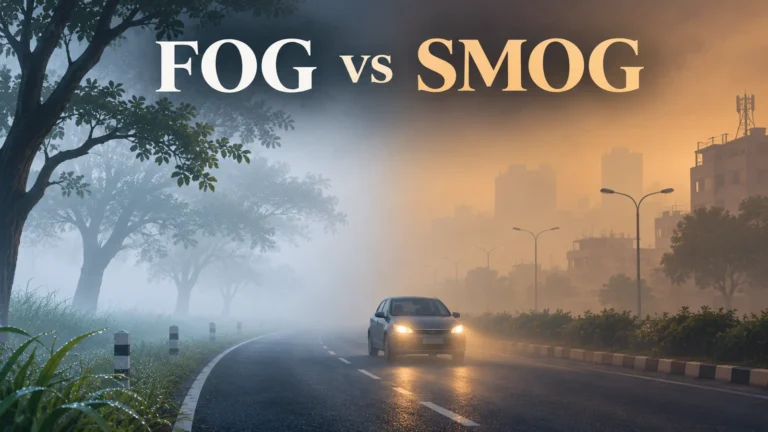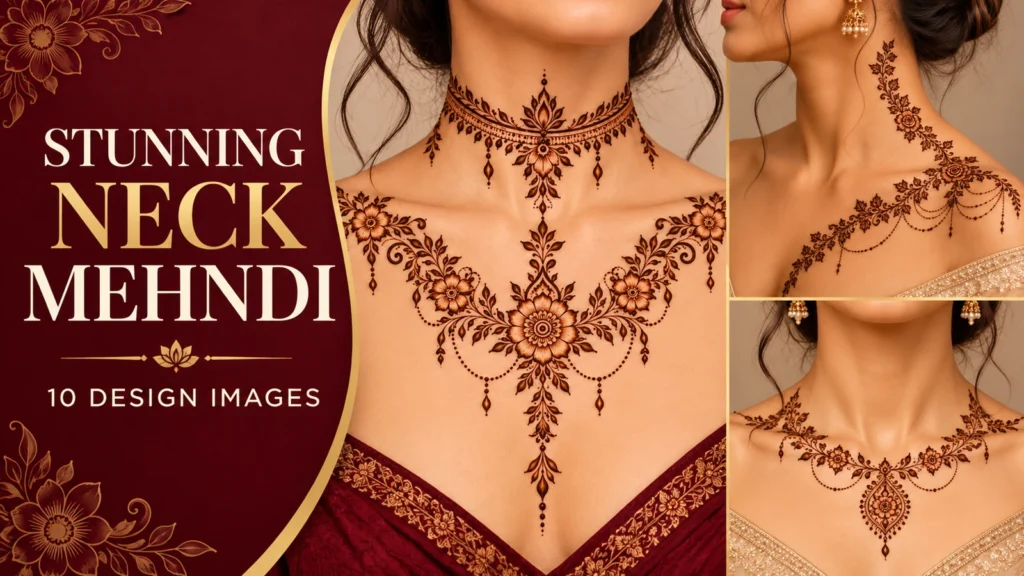
Neck mehndi designs can frame the neck like a choker, follow one side as a floral vine or sit more lightly along the collarbone. The best reference is not always the most elaborate picture. Placement, neckline and the amount of open space can change the entire effect. This gallery brings together ten supplied images so you can compare those choices before discussing a design with an artist.
One of the ten images contains a four-panel comparison; the others show individual neck, collarbone or shoulder arrangements. We are counting ten gallery images, not claiming ten entirely unrelated original patterns. Each image has a description and a WhatsApp sharing link. These are visual references, not proof of ingredients, application time or a guaranteed stain. The shared featured cover is an editorial illustration inspired by this style of body art.
1. Choose the placement before choosing the details
A front-neck pattern often works like jewellery: the centre, borders and pendant establish the shape. A side-neck vine moves in one direction, perhaps from below the ear towards the shoulder. Collarbone and shoulder examples are included because they help compare the space around the neck; they should not be mistaken for back-of-neck photographs. Identify the area you actually want decorated before saving a favourite.
Next, decide whether you want a small accent or a necklace-like statement. Consider the outfit, any real jewellery and whether your hair will cover part of the artwork. An intricate design can disappear behind a neckline. You can also borrow the structure of a reference without reproducing its full scale: one flower or a slim border may be enough. Tell the artist which elements matter most rather than asking vaguely for everything in a picture.
2. Front-neck chokers and necklace mehndi designs
1. Floral choker with an extended pendant
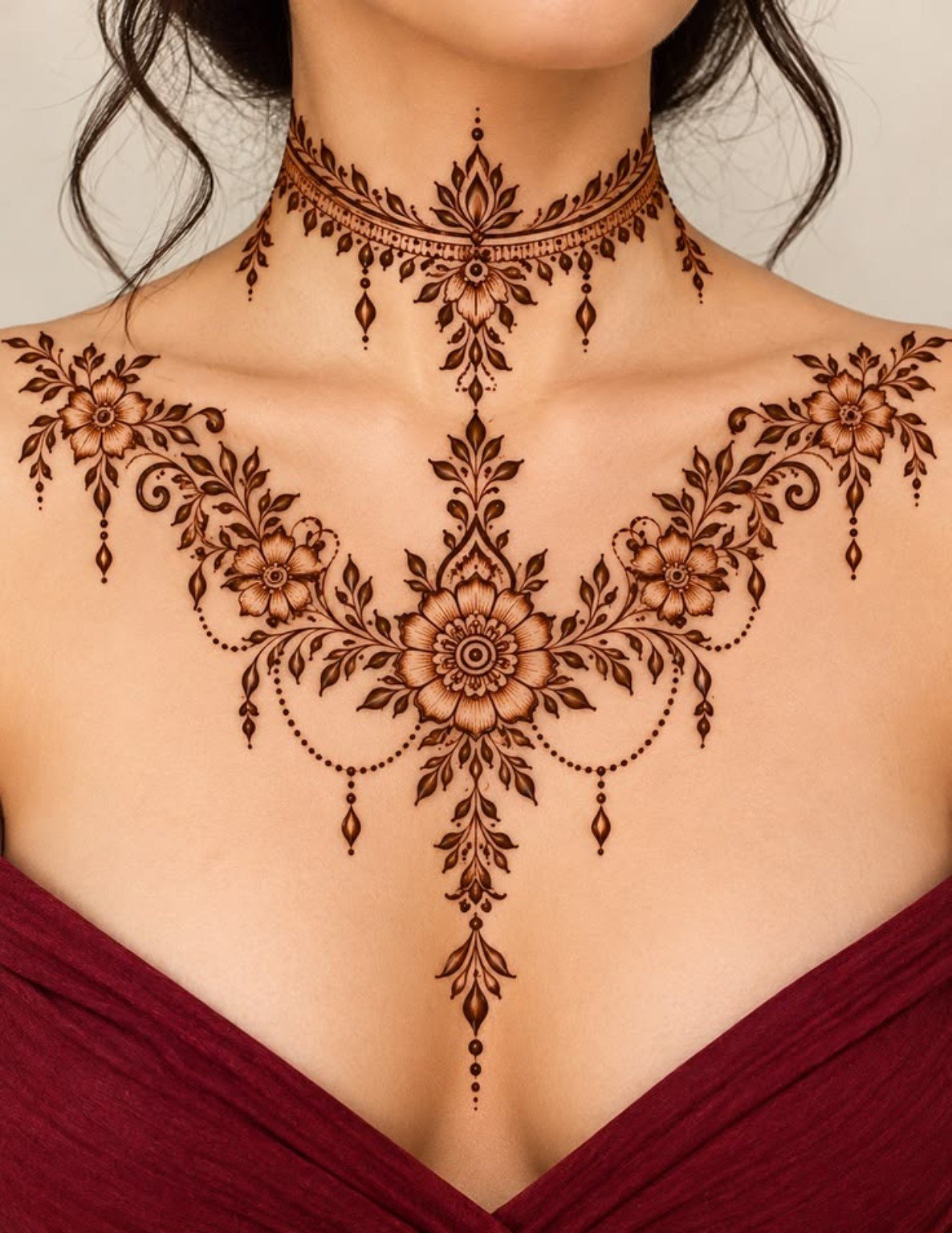
The slim band around the neck sits above a wide arrangement of flowers and dotted chains. A large central flower leads into an elongated pendant-like vine. This is a statement reference rather than a minimal one. Before choosing it, check where the lower part will meet your clothing. If you prefer less coverage, discuss a smaller version of the main structure rather than compressing every detail into a tiny space.
4. Layered floral choker
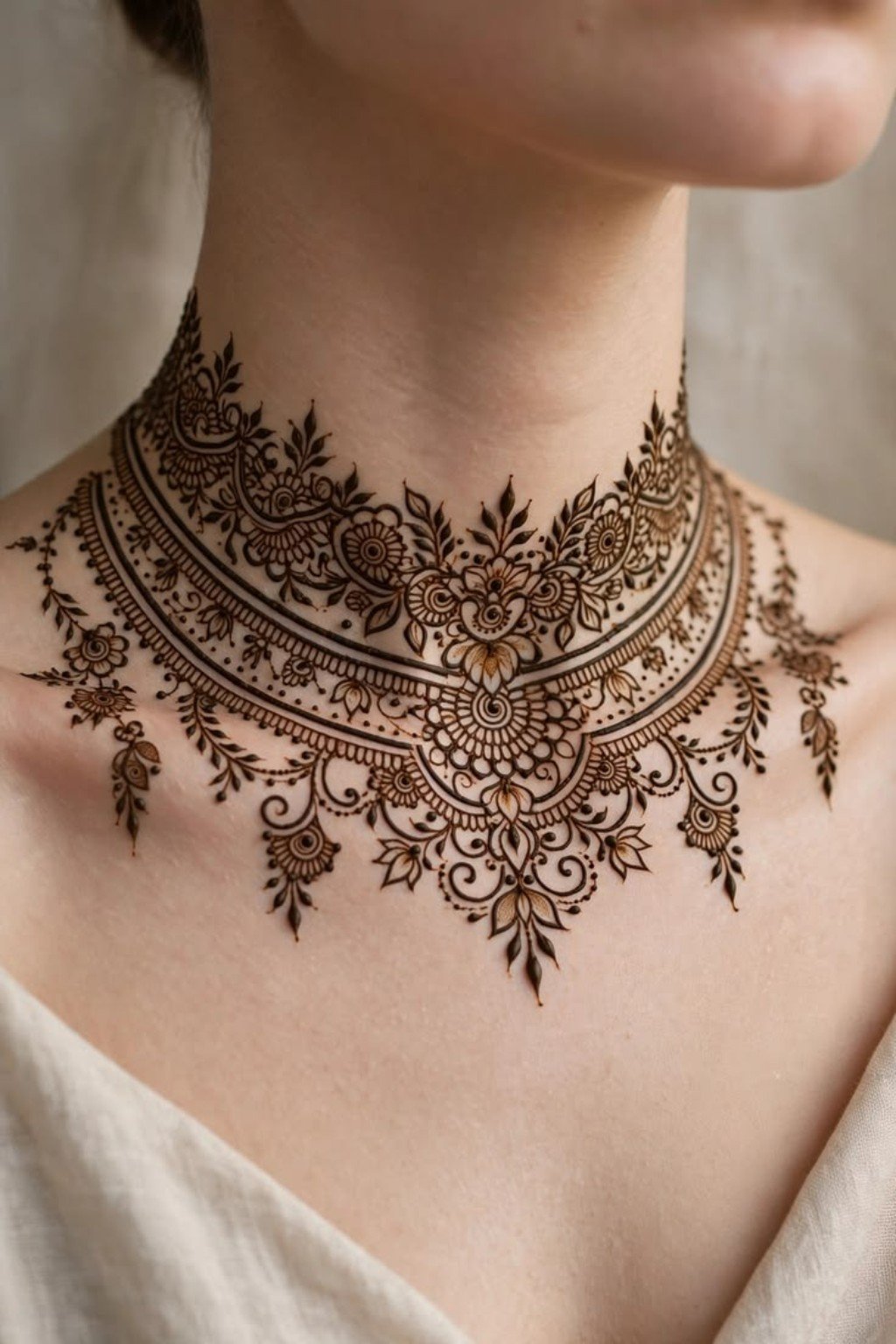
Here the artwork stays closer to the neck, using repeated borders and dense decorative detail. It creates a different outline from the extended necklace in the previous image. If you plan to wear a real necklace, compare their positions first. Overlapping jewellery can hide the fine lines you selected the reference for. Keep the discussion about the visible shape and spacing, not just how dark the design appears in the photograph.
6. V-shaped necklace with a floral pendant
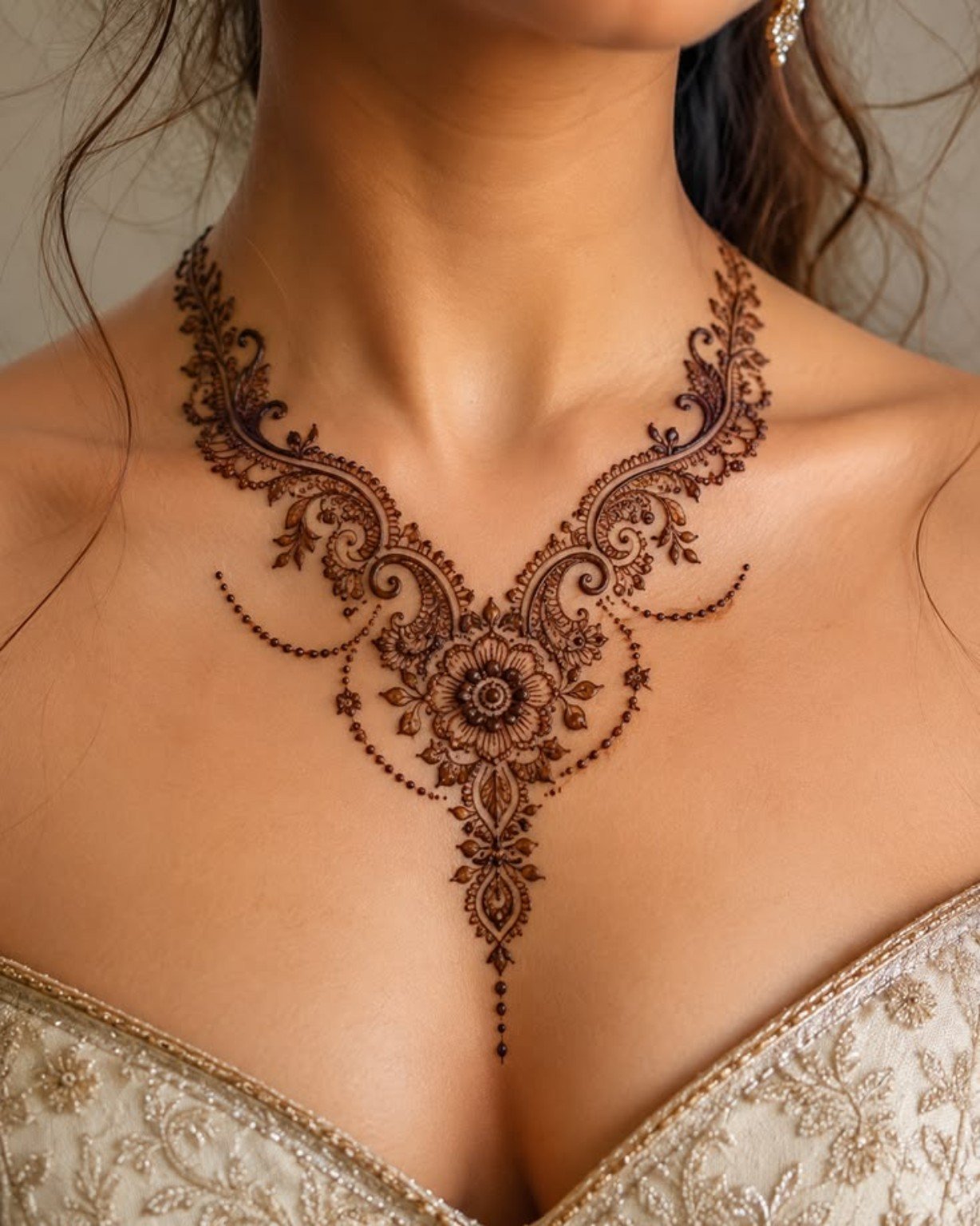
The two decorated sides meet in a central flower and pendant, leaving more open space around the throat than a closed choker. This is a useful reference if you want a necklace effect without a broad band. Establish the centre and lowest point before adding detail. A pendant that disappears beneath the outfit may no longer create the outline you liked. Ask the artist to explain any change needed for your neckline.
3. Side-neck vines, collarbone and shoulder florals
2. Rose vine from the side neck to the shoulder
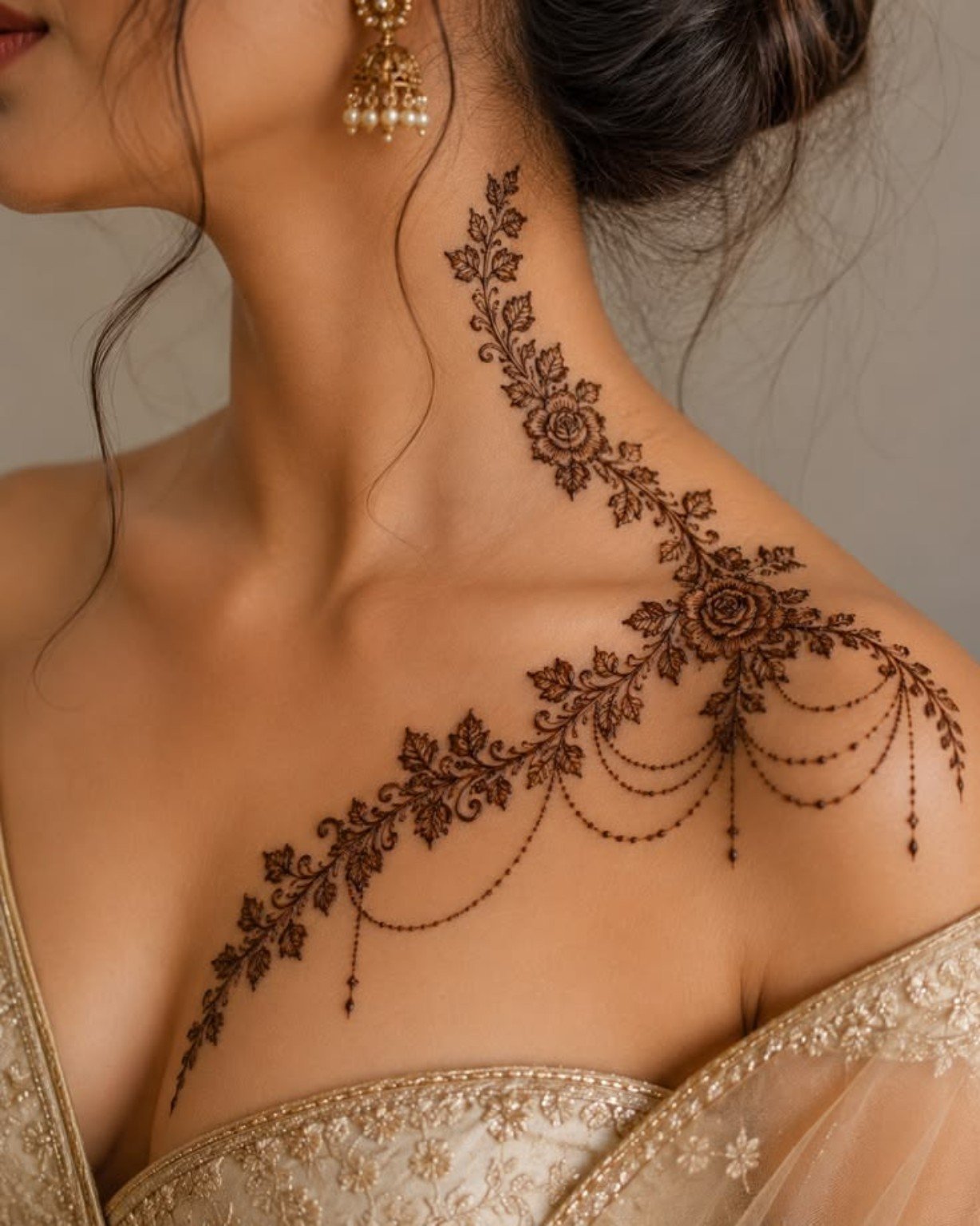
The vine begins below the ear and travels towards the shoulder and collarbone. Flowers create focal points while dotted chains extend below. The design does not need a matching arrangement on the other side to feel complete. Consider which side your hair or drape will cover. If the principal flower is hidden, the balance can look different from this reference. Show the artist the direction you want the vine to follow.
3. Large shoulder flowers with delicate chains
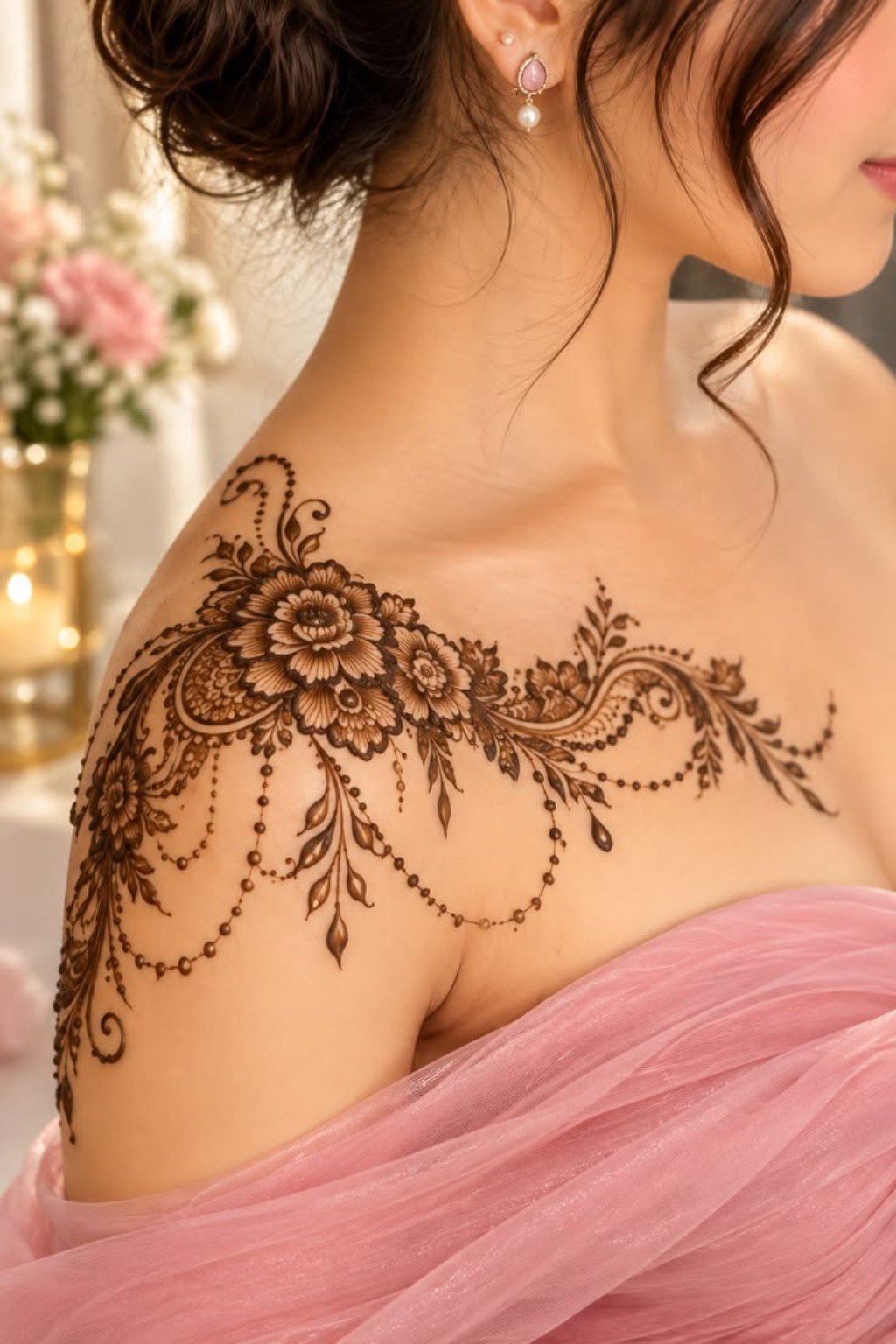
This arrangement puts the emphasis on the shoulder rather than filling the throat. Fine curves and chain-like details travel towards the front. It can help you compare a side-focused design with the full necklaces above. Discuss how far the outer edge should extend and where clothing will sit. The useful reference is the relationship between the main flower and the lighter details, not a promise that the same size suits every wearer.
7. Horizontal collarbone flower arrangement
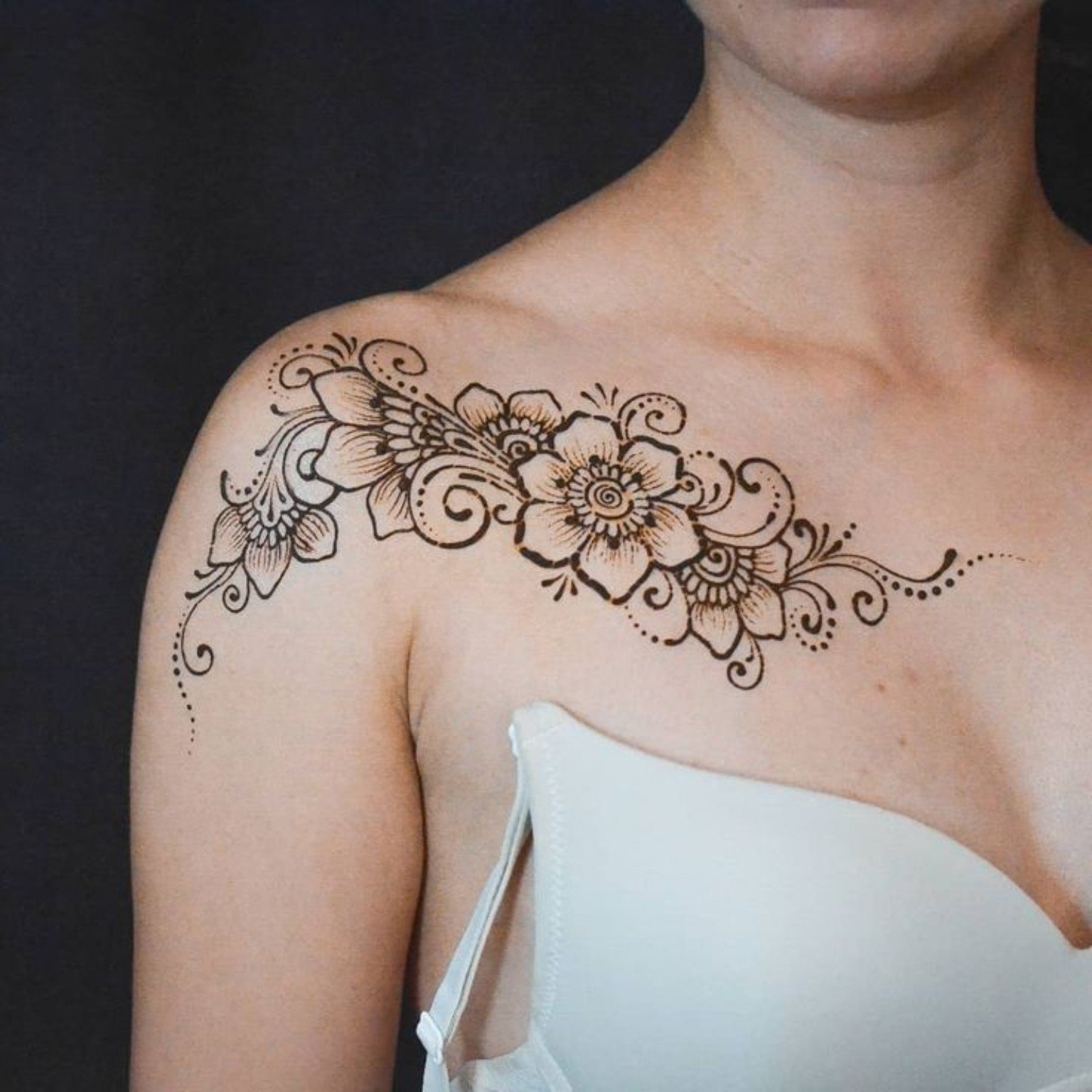
This image offers a more horizontal arrangement. It may help when planning separate spaces for a real necklace and the body-art reference. Enlarged flowers remain prominent while smaller curls connect them. Shrinking everything can crowd the fine lines, so decide which details to keep and which to simplify. A clear description of your preferred outline is more useful than asking an artist to copy a picture without discussing the available area.
8. Compact two-flower shoulder accent
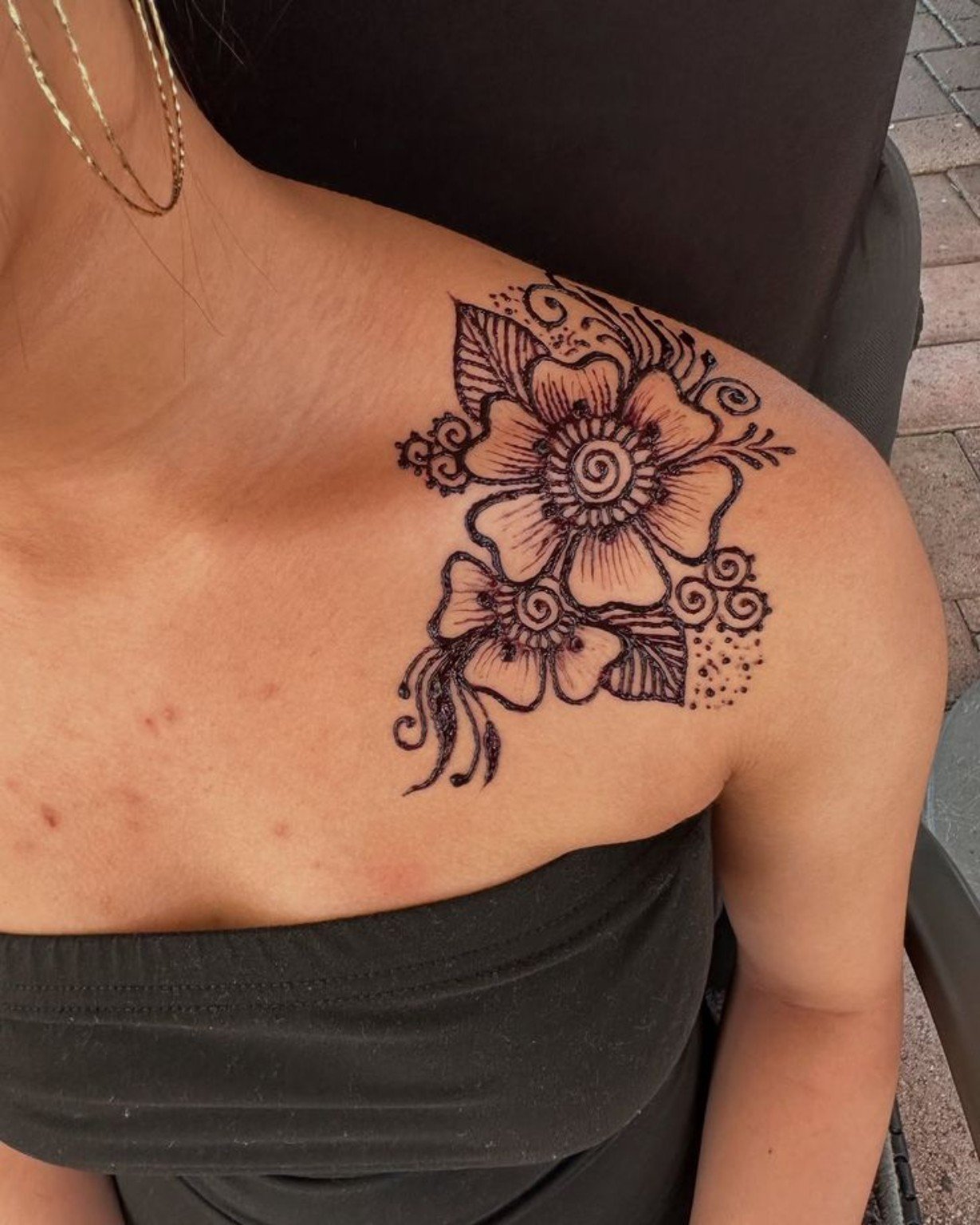
This is a shoulder accent rather than a complete neck garland. The flowers establish the design, with leaves and curves forming its boundary. Save it as a comparison if the necklace references feel too extensive. Moving the pattern elsewhere will change how its shape reads, so placement still needs planning. A compact design is not automatically a quick application: the amount of detail and the artist’s approach also matter.
9. Simple two-flower collarbone vine
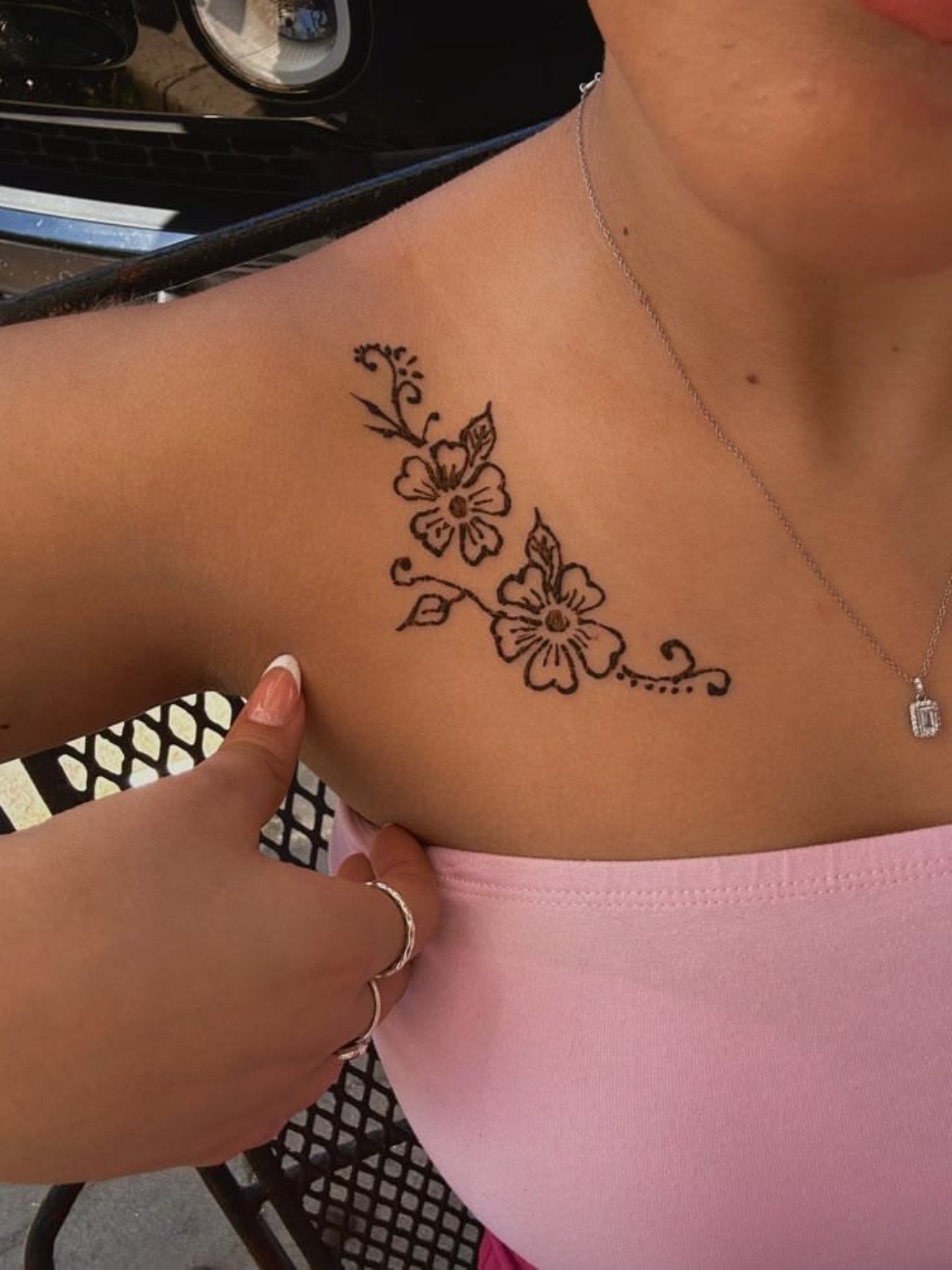
Two flowers and a short vine provide a simpler alternative to the layered jewellery-style examples. This is the kind of reference to separate out when searching for simple neck mehndi design ideas. Simplicity concerns the number of layers and the clarity of the outline, not merely the dimensions of an image. Agree on the basic shape first. Additional dots or chains can be a separate choice rather than an automatic addition.
10. Open floral vine with one main flower
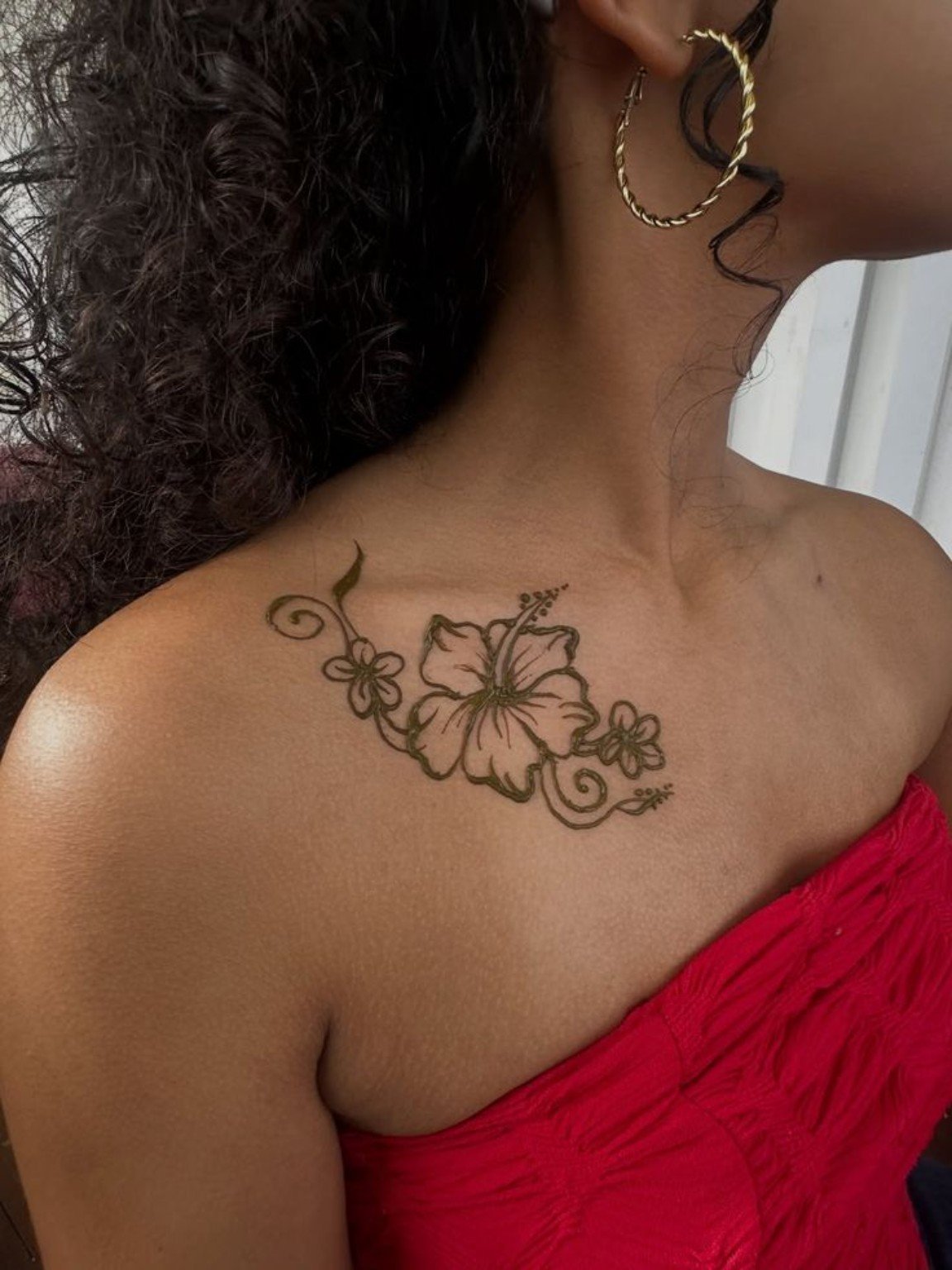
The neck remains largely open while the floral motif sits lower along the collarbone. It is a useful comparison if you want artwork beside the neckline rather than a full necklace shape. Choose the motif and direction you like, but do not treat the photograph’s lighting or colour as a guaranteed final stain. Product and application details should be discussed separately. The image alone cannot establish what paste was used.
4. Four neck-mehndi options in one comparison image
5. Floral vine, pendant and choker comparison
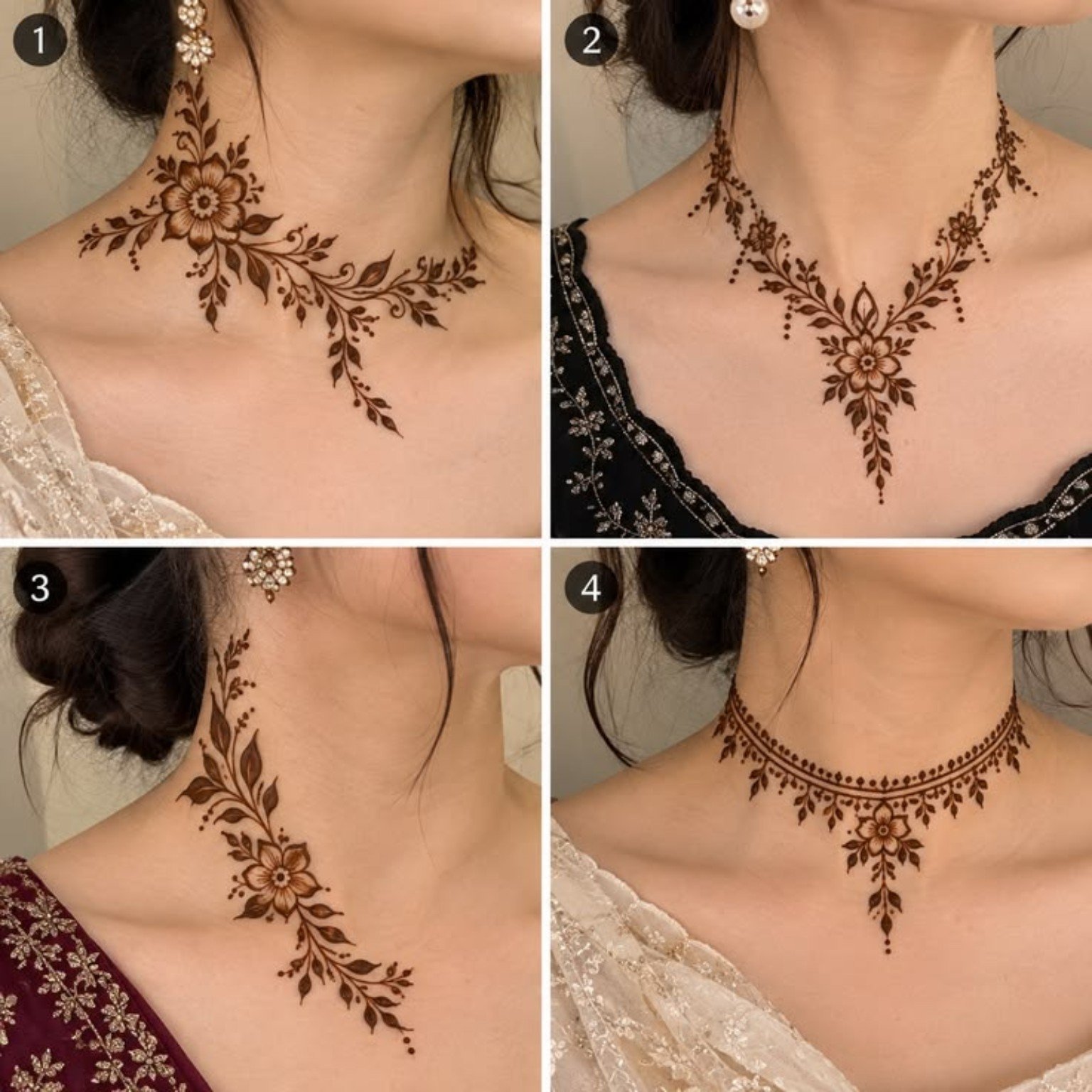
The first panel shows an asymmetric floral vine extending towards the front. The second uses a V-shaped arrangement with a central pendant. The third offers a more vertical side-neck vine, while the fourth frames the neck with a narrow band and central flower. When sharing this collage with an artist, include the panel number. Sending the full image without that detail leaves uncertainty about which placement you actually want.
5. A practical checklist before you finalise a reference
Start with one principal reference and, if necessary, one small detail from another. Combining several necklaces, flowers and borders does not automatically improve the result. A rough placement sketch can establish the centre, width and stopping point. This makes the difference between a light accent and a full necklace explicit before application begins.
Consider clothing, hair and jewellery together. A high neckline, a real choker and an open collarbone each create different limits. For an actual back-neck design, hair length and the position of a bun become important. Most images here show the front, side or shoulder, so this gallery should not be labelled as a collection of back-neck photographs. Ask for a separate placement plan if the back of the neck is your intended area.
6. Do not identify a product’s ingredients from its colour
A photograph cannot establish ingredients or skin safety. The FDA has reported reactions to products sold as henna and “black henna”; added PPD used to darken a product can cause serious reactions. Ask about ingredients and do not use hair dye as skin body art. Stop using a product and seek medical advice if irritation, itching or swelling develops. A dark-looking reference is not a recommendation for any particular paste.
7. Frequently asked questions
Which reference looks simplest? A two-flower collarbone accent or a slim side vine has fewer layers than a broad choker. That does not guarantee an application time. Ask the artist about the detail involved and the practical placement.
What is necklace mehndi? It describes a jewellery-like arrangement made with mehndi, such as a choker, a V-shaped pendant or an extended floral necklace. “Neck mehndi” describes the area more broadly; not every neck design needs a necklace shape.
Are these back-neck henna designs? Most supplied references show front-neck, side-neck, collarbone or shoulder placement. Do not use their labels as evidence of a back view. Choose a separate reference and hair arrangement for that location.
Does this gallery cover neck mehndi designs for men? The supplied images focus on women’s floral and necklace-style references. We are not presenting a separate matching men’s gallery. Individual motifs can be discussed with an artist according to personal preference.
How long will a design last? A fixed duration cannot be established from a photograph. Results depend on the product, skin and care. Ask the artist about the specific material and its instructions rather than adding unknown chemicals to reproduce a darker image.
Editorial note: Gallery images were supplied by the user as design references. FDA: henna/black henna safety information